Top Vídeos

Las mejores series del ayer aquí : www.facebook.com/rmtvseries www.rmtvseries.blogspot.com

http://www.aciprensa.com/puntodevista
El director del Grupo ACI, Alejandro Bermúdez, nos ofrece a diario reflexiones en audio y vídeo sobre temas de actualidad en los que los católicos necesitamos tener una posición clara e informada. Compártelo con tus amigos, tu comunidad o en tu medio de comunicación católico.
Puntos de vista por Alejandro Bermúdez: "¿Debemos esperar que todas las personas acojan la Palabra de Dios cuando se les hace un apostolado personal? ¿O debemos esperar que algunas no lo hagan como parte de su libre albedrío?"

Las mejores series del ayer aquí : www.facebook.com/groups/Seriesdelatv/
![Felix El Gato - Compilación #18 I Los nuevos cuentos de Felix el gato [Español Latino] (Re-subido)](https://i.ytimg.com/vi/Y1CrnOSagW0/maxresdefault.jpg)

Descrizione
Jesús Adrián Romero responde unas preguntas sobre el peregrinaje/retiro espiritual en el cual se encuentra.
--------
http://www.facebook.com/JARoficial
http://twitter.com/JARoficial
https://www.instagram.com/jesusadrian/
![Felix El Gato - Compilación #17 I Los nuevos cuentos de Felix el gato [Español Latino]](https://i.ytimg.com/vi/g0y_dah-ySM/mqdefault.jpg)
Los capítulos disponibles en español de la primer temporada de los nuevos cuentos de Felix el gato.

What do you do if you are a tiny caddisfly larva growing up in a torrent of water and debris? Simple. You build a shelter out of carefully selected pebbles and some homespun waterproof tape.
SUBSCRIBE to Deep Look! http://goo.gl/8NwXqt
DEEP LOOK is a ultra-HD (4K) short video series created by KQED San Francisco and presented by PBS Digital Studios. See the unseen at the very edge of our visible world. Get a new perspective on our place in the universe and meet extraordinary new friends. Explore big scientific mysteries by going incredibly small.
* NEW VIDEOS EVERY OTHER TUESDAY! *
We already mimic them to make fly-fishing lures. But now scientists believe copycatting one tiny insect could hold promise for repairing human tissues and setting bones.
Instead of stitches and screws, doctors may soon call on the next generation of medical adhesives — glues and tape — to patch us up internally.
The inspiration? Caddisflies, a type of stream-dwelling, fish-baiting insects that live in creeks all across the United States.
As a larva, the caddisfly constructs a tiny tube-like house for itself, called a case, entirely underwater, using pebbles and its incredible homespun tape as the mortar.
Thanks to the qualities of this amazing silk, the case not only holds up when submerged, it is strong enough to protect the caddisfly’s soft lower body amid forces many times its body weight.
Any tape, including this one, has two basic components: the flat ribbon, or backing, and the layer of sticky stuff, or the glue. From the materials science standpoint, caddisfly tape is extraordinary in both departments.
Caddisfly silk biomimicry is only in its infancy, but one day, a similar compound might be used inside the body, which is another watery environment, to mend soft tissues and even repair hard ones, such as teeth and bone.
In the streambed, or brook, the caddisfly’s case eventually becomes a cocoon. Like its land-based cousins, the butterflies and moths, from whom it diverged 250 millions years ago, the caddisfly larva undergoes a metamorphosis. It seals up its case with a so-called “hat stone” and emerges months later as a winged adult.
--- Where do caddisflies live?
Caddisflies are most common in shallow, cold, turbulent streams, where the water is highly oxygenated.
--- What do caddisflies eat?
Caddisflies are herbivores, they eat decaying plant matter and algae on the rocks in the streams where they live.
--- What is so special about caddisfly silk?
Engineers are interested in two attributes of caddisfly silk. First of all, it can bond to something, such as a pebble, underwater, which no glue people have made can replicate. Second its “viscoelastic” properties allow to it harmlessly absorb physical forces. When stretched, it doesn’t snap back like a rubber band. It returns to its original shape slowly and safely. It's an engineering marvel.
---+ Read the entire article on KQED Science:
https://ww2.kqed.org/science/2....016/08/09/sticky-str
---+ For more information:
Troutnut.com
http://www.troutnut.com/hatch/....12/Insect-Trichopter
---+ More Great Deep Look episodes:
This Vibrating Bumblebee Unlocks a Flower's Hidden Treasure
https://www.youtube.com/watch?v=SZrTndD1H10
These Carnivorous Worms Catch Bugs by Mimicking the Night Sky
https://www.youtube.com/watch?v=vLb0iuTVzW0
---+ See some great videos and documentaries from the PBS Digital Studios!
It's Okay to Be Smart: Venom: Nature’s Killer Cocktails
https://www.youtube.com/watch?v=Qd92MuVZXik
Gross Science: Sea Turtles Get Herpes, Too
https://www.youtube.com/watch?v=bpqP9bUUInI
---+ Follow KQED Science:
KQED Science: http://www.kqed.org/science
Tumblr: http://kqedscience.tumblr.com
Twitter: https://www.twitter.com/kqedscience
---+ About KQED
KQED, an NPR and PBS affiliate in San Francisco, CA, serves Northern California and beyond with a public-supported alternative to commercial TV, Radio and web media.
Funding for Deep Look is provided in part by PBS Digital Studios and the John S. and James L. Knight Foundation. Deep Look is a project of KQED Science, which is also supported by HopeLab, the S. D. Bechtel, Jr. Foundation, the Dirk and Charlene Kabcenell Foundation, the Vadasz Family Foundation, the Gordon and Betty Moore Foundation, the Smart Family Foundation and the members of KQED.
#deeplook
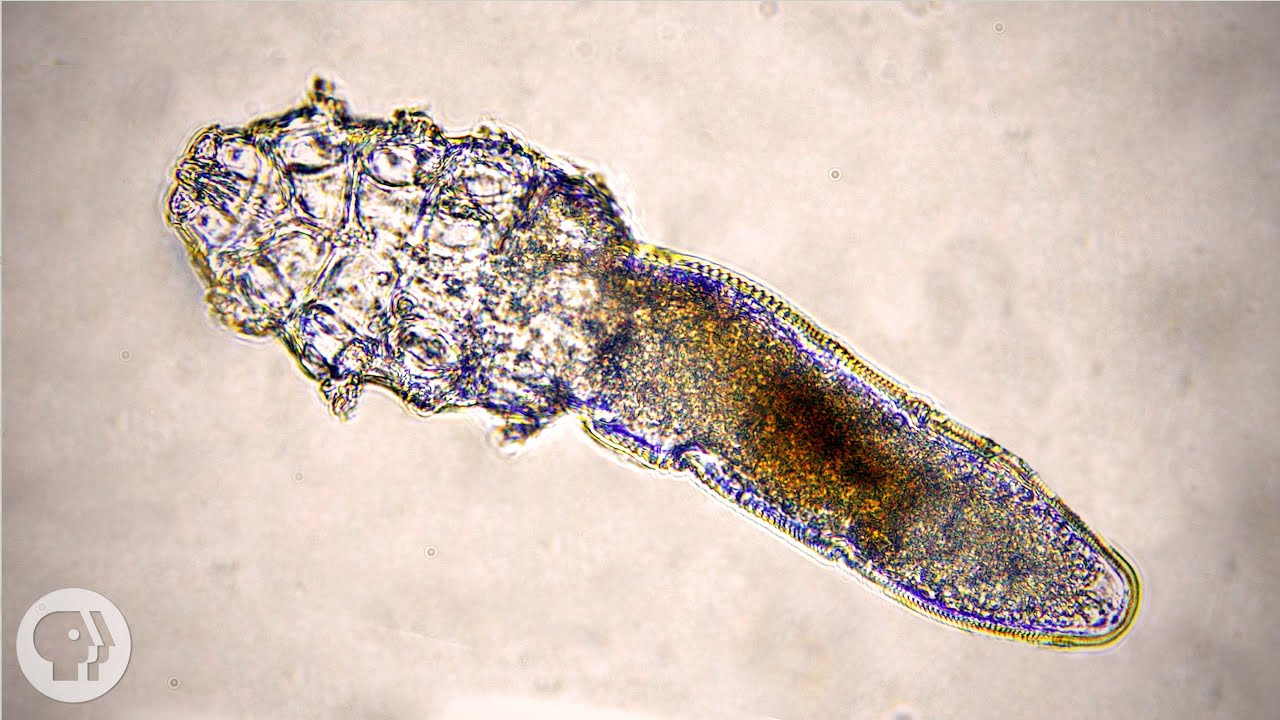
Yep, you probably have Demodex mites living on your face. These tiny arachnids feast on sebum, the greasy oil in your pores. But should you be worried about your eight-legged guests?
SUBSCRIBE to Deep Look! http://goo.gl/8NwXqt
Please support us on Patreon! https://www.patreon.com/deeplook
DEEP LOOK is a ultra-HD (4K) short video series created by KQED San Francisco and presented by PBS Digital Studios. See the unseen at the very edge of our visible world. Explore big scientific mysteries by going incredibly small.
Pretty much every adult human alive has a population of these mites living on them.
Also called eyelash mites, they’re too small to see with the naked eye. They’re mostly transparent, and at about .3 millimeters long, it would take about five face adult mites laid end to end to stretch across the head of a pin.
Face mites spend their days face-down inside your hair follicles nestled up against the hair shaft.
They eat sebum, that greasy oil your skin makes to protect itself and keep it from drying out. That’s why the greasiest parts of your body — like around the eyes, nose and mouth — likely harbor a higher concentration of mites than other areas.
They live about two weeks. They spend most of their time tucked inside our pores. But while we’re sleeping, they crawl out onto the surface of our skin to mate before crawling back into our pores to lay their eggs. Fun!
--- How common are face mites?
Pretty much everyone has some face mites on them. Babies are born without them but quickly receive them from their parents through direct contact. The amount of mites may increase during puberty when the skin starts to produce more oil.
--- How do you get rid of face mites?
There’s usually no need to try to rid yourself of face mites as they typically don’t cause any symptoms and are nearly impossible to fully eradicate. Since female face mites can also reproduce asexually, it only takes one mite to repopulate your skin. Some people experience an overpopulation of face mites resulting in an inflammatory disease called demodicosis which is easy to recognize sue to the many small evenly-sized pimples that appear quickly. Consult a dermatologist if you think you may have symptoms.
--- What do face mites eat?
Face mites consume the greasy oil that you skin produces to protect itself.
---+ Read the entire article on KQED
https://www.kqed.org/science/1....941506/these-face-mi
---+ More Great Deep Look episodes:
How Lice Turn Your Hair Into Their Jungle Gym | Deep Look
https://www.youtube.com/watch?v=Yb26BBvAAWU&t=1s
How Ticks Dig In With a Mouth Full of Hooks | Deep Look
https://www.youtube.com/watch?v=_IoOJu2_FKE
---+ Shoutout!
?Congratulations? to jac lyn, Vanessa C u later, aspireme_95, Émile Julien, and Nono Chan who correctly identified the part of this animal that is, well… missing. Demodex lack an anus! Se the Community Tab post here: https://www.youtube.com/channe....l/UC-3SbfTPJsL8fJAPK
---+ Thank you to our Top Patreon Supporters ($10+ per month)!
Ahegao Comics, Allen, Aurora Mitchell, Beckie, Ben Espey, Bill Cass, Breanna Tarnawsky, Carlos Zepeda, Chris B Emrick, Chris Murphy, Companion Cube, Cooper Caraway, Daisuke Goto, Daniel Weinstein, David Deshpande, Edwin Rivas, Elizabeth Ann Ditz, Elizabeth Wolden, Ivan Alexander, Iver Soto, Jane Orbuch, JanetFromAnotherPlanet, Jason Buberel, Jeanine Womble, Jenn's Bowtique, Jeremy Lambert, Jiayang Li, Joao Ascensao, johanna reis, Johnnyonnyful, Joshua Murallon Robertson, Justin Bull, Karen Reynolds, Kristell Esquivel , KW, Kyle Fisher, Laurel Przybylski, Levi Cai, Lyall Talarico, Mario Rahmani, Marjorie D Miller, Mark Joshua Bernardo, Michael Mieczkowski, Monica Albe, Nathan Padilla, Nathan Wright, Pamela Parker, PM Daeley, Ricardo Martinez, Robert Amling, Robert Warner, Sayantan Dasgupta, Sean Tucker, Shelley Pearson Cranshaw, Shirley Washburn, SueEllen McCann, Tatianna Bartlett, Tea Torvinen, TierZoo, Tommy Tran, Two Box Fish, WhatzGames, Willy Nursalim
---+ Follow KQED Science and Deep Look:
Patreon: https://www.patreon.com/deeplook
Instagram: https://www.instagram.com/kqedscience/
Twitter: https://www.twitter.com/kqedscience
KQED Science on kqed.org: http://www.kqed.org/science
Facebook Watch: https://www.facebook.com/DeepLookPBS/
---+ About KQED
KQED, an NPR and PBS affiliate in San Francisco, CA, serves Northern California and beyond with a public-supported alternative to commercial TV, Radio and web media.
Funding for Deep Look is provided in part by PBS Digital Studios. Deep Look is a project of KQED Science, which is also supported by the National Science Foundation, the Templeton Religion Trust, the Templeton World Charity Foundation, the S. D. Bechtel, Jr. Foundation, the Dirk and Charlene Kabcenell Foundation, the Vadasz Family Foundation, the Gordon and Betty Moore Foundation, the Fuhs Family Foundation and the members of KQED.
#facemites #demodex #deeplook

Turtles grow up without parents, which might sound lonely. But for threatened baby turtles raised in a zoo it’s an advantage: they can learn to catch crickets all by themselves. There’s a paradox, though. When they are ready to leave the nursery, there is little wilderness where they can make a home.
SUBSCRIBE to Deep Look! http://goo.gl/8NwXqt
DEEP LOOK: a new ultra-HD (4K) short video series created by KQED San Francisco and presented by PBS Digital Studios. See the unseen at the very edge of our visible world. Get a new perspective on our place in the universe and meet extraordinary new friends. Explore big scientific mysteries by going incredibly small.
Read more on baby turtles:
https://ww2.kqed.org/science/2....016/01/26/these-craz
Where do turtles live?
Western pond turtles live most of their lives in the water, in freshwater lakes.
What do turtles eat?
The meat-eaters feed on crustaceans like crayfish, dragonfly nymphs and fish.
Are turtles reptiles?
Turtles are reptiles not amphibians. They are considered reptiles since they live in water.
Are turtles endangered?
"There are only 300 species, and most of them are doing quite poorly." The turtles haven’t been doing well in their native habitat in the western United States. In California, they’re a species of “special concern.”
Why can turtles be raised in zoos?
Most turtle species grow up without parents, which makes them easy to raise in zoos and help conservation. Once a female western pond turtle lays her eggs near a lake or pond, she never returns to the nest. Because they lack parental care, turtles don’t imprint on zoo keepers.
More great Deep Look episodes:
Nature's Scuba Divers: How Beetles Breathe Underwater:
https://youtu.be/T-RtG5Z-9jQ
Nature's Mood Rings: How Chameleons Really Change Color:
https://youtu.be/Kp9W-_W8rCM
Newt Sex: Buff Males! Writhing Females! Cannibalism!
https://youtu.be/5m37QR_4XNY
See also another great video from the PBS Digital Studios!
It's Okay to Be Smart:
https://youtu.be/fWc46NCnldo
If you’re in the San Francisco Bay Area, The San Francisco Zoo is currently head-starting nine western pond turtle hatchlings and the Oakland Zoo, 16. The baby turtles at the San Francisco Zoo are on display in the Children’s Zoo, while the Oakland Zoo is raising theirs in a back room where six small tubs create the impression of a maternity ward.
http://www.sfzoo.org/
http://oaklandzoo.org/
KQED Science: http://www.kqed.org/science
Tumblr: http://kqedscience.tumblr.com
Twitter: https://www.twitter.com/kqedscience
Funding for Deep Look is provided in part by PBS Digital Studios and the John S. and James L. Knight Foundation. Deep Look is a project of KQED Science, which is also supported by HopeLab, the David B. Gold Foundation, the S. D. Bechtel, Jr. Foundation, the Dirk and Charlene Kabcenell Foundation, the Vadasz Family Foundation, the Gordon and Betty Moore Foundation, the Smart Family Foundation and the members of KQED.
#deeplook
Please support us on Patreon! https://www.patreon.com/deeplook
Take the PBSDS survey: https://to.pbs.org/2018YTSurvey
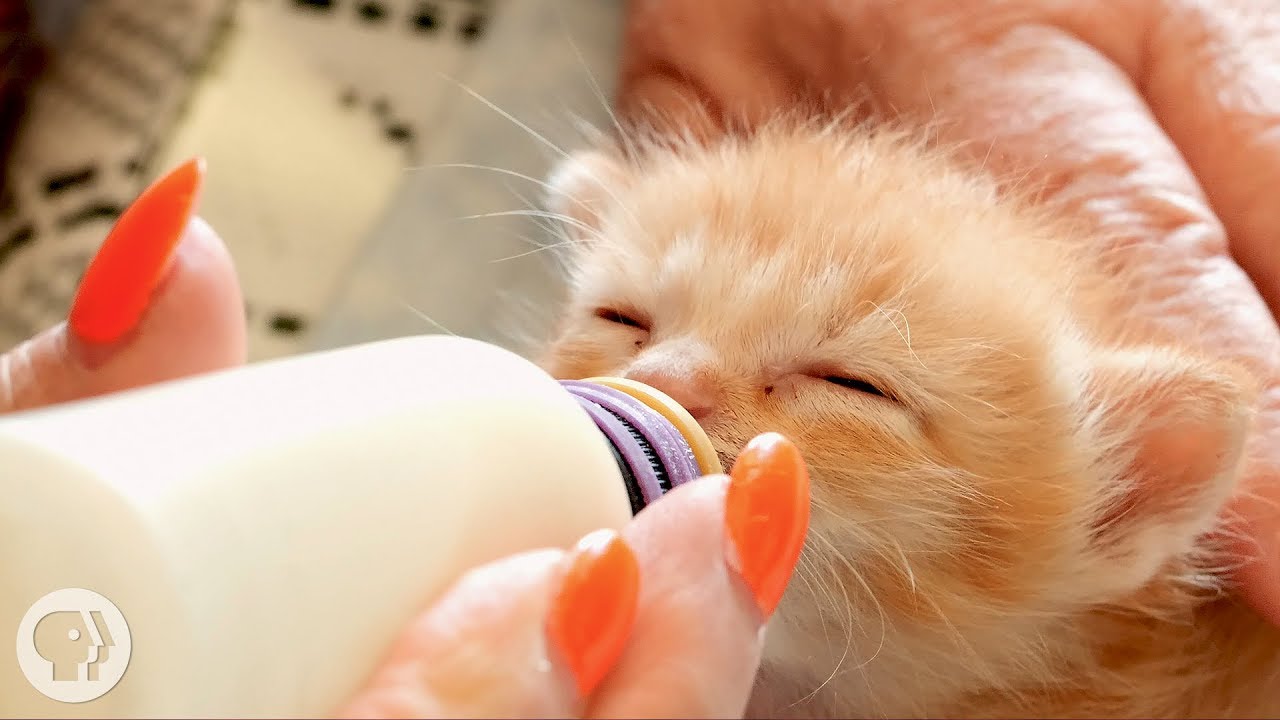
Fluffy kittens chasing a ball are beyond adorable -- but they sure aren't born that way. Practically deaf and blind, in their first few weeks they need constant warmth and milk to survive. This is a huge challenge for animal shelters, so they're working with researchers on ways to help motherless kittens flourish.
SUBSCRIBE to Deep Look! http://goo.gl/8NwXqt
DEEP LOOK is a ultra-HD (4K) short video series created by KQED San Francisco and presented by PBS Digital Studios. See the unseen at the very edge of our visible world. Get a new perspective on our place in the universe and meet extraordinary new friends. Explore big scientific mysteries by going incredibly small.
--
Every year, hundreds of thousands of kittens end up in animal shelters, in need of permanent homes.
But raising orphaned newborns into healthy, fluffy, frisky two-month-olds ready to be adopted requires an enormous behind-the-scenes effort. All across the country, volunteer foster parents log many sleepless nights bottle-feeding kittens every few hours. So researchers and shelters are trying to figure out ways to make it easier.
“A lot of people think fostering is taking kittens home and playing with them,” said Penny Dougherty, chief executive director of Kitten Central of Placer County, an animal shelter she runs from her house in Newcastle, California, 30 miles northeast of Sacramento.
Kitten Central receives most of its kittens from Placer County Animal Services. Dougherty cares for kittens up to one month old, as well as feral and stray cats with litters. Once the kittens weigh at least two pounds and have been spayed and neutered, she returns them to the agency so they can put them up for adoption.
“They’re very happy to have our services,” said Dougherty, “because so many shelters have to euthanize.”
When the days start getting longer, around January, cats start breeding. March is the beginning of what’s known among shelters as “kitten season.” The flow of kittens doesn’t slow down until November.
“Kitten season is kind of one of the banes of shelter existence,” said Cynthia Delany, supervising shelter veterinarian at Yolo County Animal Services, in Woodland, west of Sacramento. “Six or seven months out of the year we’re just flooded with these little guys.”
To steer clear of inundating shelters with newborn kittens, Delany’s advice is to leave any litters you might encounter alone unless they’re in immediate danger. Most of the time their mom will return, she said, so check back periodically.
In an effort to lessen the load on foster parents and increase newborn kittens’ chances of survival, Mikel Maria Delgado, a postdoctoral researcher in the School of Veterinary Medicine at the University of California, Davis, is joining forces with Kitten Central and other animal shelters to figure out if there are optimum temperature and humidity levels that make it possible to feed newborn kittens less frequently. She has distributed incubators to the groups so that two or three kittens can be kept in each one for about three weeks.
---How long do kittens' eyes stay closed?
During the first week-and-a-half of their lives, kittens’ eyes are sealed closed and their ears are folded up, making them practically blind and deaf. They’re born this way because their brains aren’t developed enough to use those senses.
---+ Read the entire article on KQED Science:
https://www.kqed.org/science/1....930803/how-kittens-g
---+ For more information:
If you find a litter of newborn kittens: https://eastbayspca.org/get-in....volved/community-res
---+ More Great Deep Look episodes:
Why Does Your Cat’s Tongue Feel Like Sandpaper?
https://www.youtube.com/watch?v=9h_QtLol75I&t=24s
Watch This Bee Build Her Bee-jeweled Nest
https://www.youtube.com/watch?v=oPbH1YhsdP8
---+ See some great videos and documentaries from PBS Digital Studios!
It’s Okay to Be Smart: Why Do Disney Princesses All Look Like Babies?
https://www.youtube.com/watch?v=T1gzpEktyKo
PBS Eons: The Story of Saberteeth
https://www.youtube.com/watch?v=hbjIhPHRZgc
---+ Follow KQED Science:
KQED Science: http://www.kqed.org/science
Tumblr: http://kqedscience.tumblr.com
Twitter: https://www.twitter.com/kqedscience
---+ About KQED
KQED, an NPR and PBS affiliate in San Francisco, CA, serves Northern California and beyond with a public-supported alternative to commercial TV, radio and web media.
Funding for Deep Look is provided in part by PBS Digital Studios. Deep Look is a project of KQED Science, which is supported by the Templeton Religion Trust and the Templeton World Charity Foundation, the S. D. Bechtel, Jr. Foundation, the Dirk and Charlene Kabcenell Foundation, the Vadasz Family Foundation, the Gordon and Betty Moore Foundation, the Fuhs Family Foundation Fund and the members of KQED.
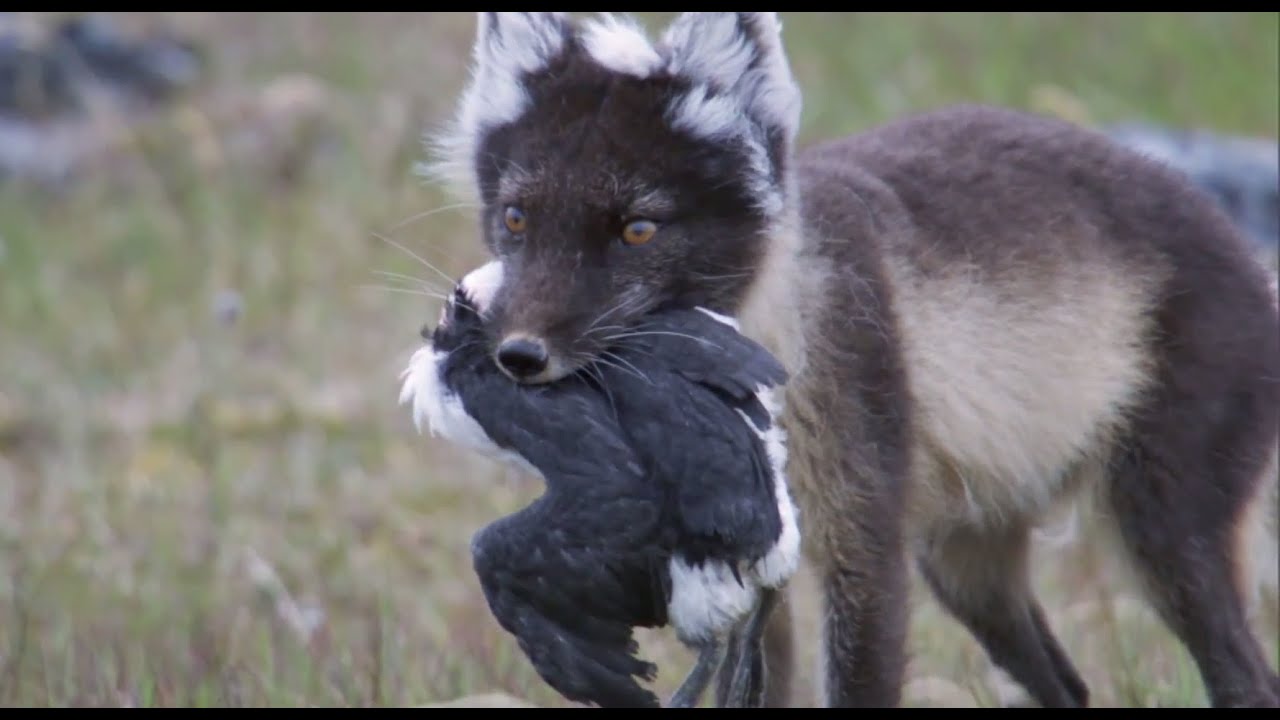
Guillemot chicks take their first heart-stopping flights from their precipitous sea cliff nests to the sea. But not all of them make it to water on their first flight, a boon for the Arctic fox waiting down below.
Subscribe to BBC Earth: http://bit.ly/BBCEarthSubBBC Earth YouTube Channel: http://www.youtube.com/BBCEarth
BBC Earth Facebook http://www.facebook.com/bbcearth (ex-UK only)
BBC Earth Twitter http://www.twitter.com/bbcearth
Visit http://www.bbc.com/earth/world for all the latest animal news and wildlife videos
This is a channel from BBC Studios who help fund new BBC programmes.
![Echosmith - Come Together [Official Lyric Video]](https://i.ytimg.com/vi/OeY78nJOQ08/maxresdefault.jpg)
© 2013 WMG The official lyric video for "Come Together" by Echosmith.
Echosmith's new album, Talking Dreams, is available now. Download on iTunes: http://bit.ly/176XsQK"
Download on iTunes: http://bit.ly/1aJ9LdU
For covers, original music, and more from Echosmith, subscribe to our YouTube channel: http://www.youtube.com/echosmith
Connect With Echosmith:
Website: http://echosmith.com
Facebook: http://www.facebook.com/echosmith
Twitter: https://twitter.com/#!/echosmith
"Come Together" Lyrics:
Here we are with our backs against the wall
We've got Big city dreams but we don't move from the asphalt
We run away from our own imagination
But at the same time we've got this amazing fascination
We've got hopes on the horizon
And we cant stop climbing the mountain
We're sick and tired of keeping silence
We are we are we are
We are gonna
Come together
Come together now
We're gonna run together
We're gonna turn it upside down
Cuz with this smoke in the mirror I cant see your face
So lets fun to the fire escape
And we'll come together
and we'll come together now
Who are they , with their so called innovations
they hold on like they've found their own salvation
they shy away from the slightest alteration
But at the same time they got the same fascinations
We've got hopes on the horizon
And we cant stop climbing the mountain
We're sick and tired of keeping silence
We are we are we are
We are gonna
Come together
Come together now
We're gonna run together
We're gonna turn it upside down
Cuz with this smoke in the mirror I cant see your face
So lets fun to the fire escape
And we'll come together
and we'll come together now
just let go
it's a free fall
we're almost home
it's a free fall
We are gonna
Come together
Come together now
We're gonna run together
We're gonna turn it upside down
Cuz with this smoke in the mirror I cant see your face
So lets fun to the fire escape
And we'll come together
and we'll come together now

Echosmith - "Inside A Dream" EP Available Now!
Available On: https://Echosmith.lnk.to/InsideADream
Spotify: https://Echosmith.lnk.to/InsideADream/Spotify
iTunes: https://Echosmith.lnk.to/InsideADream/iTunes
Apple Music: https://Echosmith.lnk.to/InsideADream/AppleMusic
Connect with us!
Website: http://echosmith.com
Spotify: https://open.spotify.com/artist/1PbBg...
Facebook: http://www.facebook.com/echosmith
Twitter: https://twitter.com/echosmith
YouTube: http://youtube.com/echosmith

How To Make An Origami Flower - DIY
Easy DIY
All You Will Need Is :
5 pieces of paper 10 x 10 cm
Glue Stick
Toothpick
Playlists :

Male side-blotched lizards have more than one way to get the girl. Orange males are bullies. Yellows are sneaks. Blues team up with a buddy to protect their territories. Who wins? It depends - on a genetic game of roshambo.
SUBSCRIBE to Deep Look! http://goo.gl/8NwXqt
DEEP LOOK is a ultra-HD (4K) short video series created by KQED San Francisco and presented by PBS Digital Studios. See the unseen at the very edge of our visible world. Get a new perspective on our place in the universe. Explore big scientific mysteries by going incredibly small.
* NEW VIDEOS EVERY OTHER TUESDAY! *
Every spring, keen-eyed biologists carrying fishing poles search the rolling hills near Los Banos, about two hours south of San Francisco. But they’re not looking for fish. They’re catching rock-paper-scissors lizards.
The research team collects Western side-blotched lizards, which come in different shades of blue, orange and yellow.
Barry Sinervo, a professor of ecology and evolutionary biology at UC Santa Cruz, leads the team. Their intricate mating strategies reminded the the researchers of the rock-paper-scissors game where rock beats scissors, scissors beats paper and paper beats rock.
It’s all about territories. Orange males tend to be the biggest and most aggressive. They hold large territories with several females each and are able to oust the somewhat smaller and less aggressive blues. Blue males typically hold smaller territories and more monogamous, each focusing his interest on a single female. Yellow males tend not to even form exclusive territories Instead they use stealth to find unaccompanied females with whom to mate.
The yellow males are particularly successful with females that live in territories held by their more aggressive orange competitors. Because the orange males spread their attention among several females, they aren’t able to guard each individual female against intruding yellow males. But the more monogamous blues males are more vigilant and chase sneaky yellow males away.
Their different strategies keep each other in check making the system stable. Sinervo believes this game has likely been in play for at least 15 million years.
--- How do side-blotched lizards choose a mate?
The males compete with each other, sometimes violently, for access to females. The females generally prefer males of their own color but also give preference to whichever color male is more rare that mating season.
--- Why do lizards do push up and down?
Male lizards do little pushups as a territorial display meant to tell competitors to back off. It’s best to use a warning instead of fighting right away because there’s always a danger of getting hurt in a fight. Some lizards like side-blotched lizards also use slow push ups to warn their neighbors of an incoming threat.
--- Why do side-blotched lizards fight?
Sometimes aggressive territorial displays are not enough to dissuade invaders so side-blotched lizards will resort to fighting. They have small sharp teeth and will lunge at each other inflicting bites and headbutts.
---+ Read the entire article on KQED Science: https://ww2.kqed.org/science/2....016/05/17/these-liza
---+ For more information:
The Lab of Dr. Barry Sinervo, LizardLand, University of California, Santa Cruz http://bio.research.ucsc.edu/~....barrylab/lizardland/
---+ More Great Deep Look episodes:
Meet the Dust Mites, Tiny Roommates That Feast On Your Skin
https://www.youtube.com/watch?v=ACrLMtPyRM0
Stinging Scorpion vs. Pain-Defying Mouse
https://www.youtube.com/watch?v=w-K_YtWqMro
These Crazy Cute Baby Turtles Want Their Lake Back
https://www.youtube.com/watch?v=YTYFdpNpkMY
---+ See some great videos and documentaries from the PBS Digital Studios!
It's Okay to Be Smart: The Cosmic Afterglow
https://www.youtube.com/watch?v=ZvrHL7-c1Ys
It's Okay to Be Smart: The Most Important Moment in the History of Life
https://www.youtube.com/watch?v=Jf06MlX8yik
---+ Follow KQED Science:
KQED Science: http://www.kqed.org/science
Tumblr: http://kqedscience.tumblr.com
Twitter: https://www.twitter.com/kqedscience
---+ About KQED
KQED, an NPR and PBS affiliate based in San Francisco, serves the people of Northern California and beyond with a public-supported alternative to commercial media. KQED is also a leader and innovator in interactive media and technology, taking people of all ages on journeys of exploration — exposing them to new people, places and ideas.
Funding for Deep Look is provided in part by PBS Digital Studios and the John S. and James L. Knight Foundation. Deep Look is a project of KQED Science, which is also supported by HopeLab, the David B. Gold Foundation, the S. D. Bechtel, Jr. Foundation, the Dirk and Charlene Kabcenell Foundation, the Vadasz Family Foundation, the Gordon and Betty Moore Foundation, the Smart Family Foundation and the members of KQED.
#deeplook #lizards #rockpaperscissorslizardspock

Echosmith - Goodbye (Official Music Video)
"Goodbye" now available! https://WBR.lnk.to/Goodbye
Connect with us!
Website: http://echosmith.com
Spotify: https://open.spotify.com/artist/1PbBg...
Facebook: http://www.facebook.com/echosmith
Twitter: https://twitter.com/echosmith
YouTube: http://youtube.com/echosmith
Directed by Gus Black
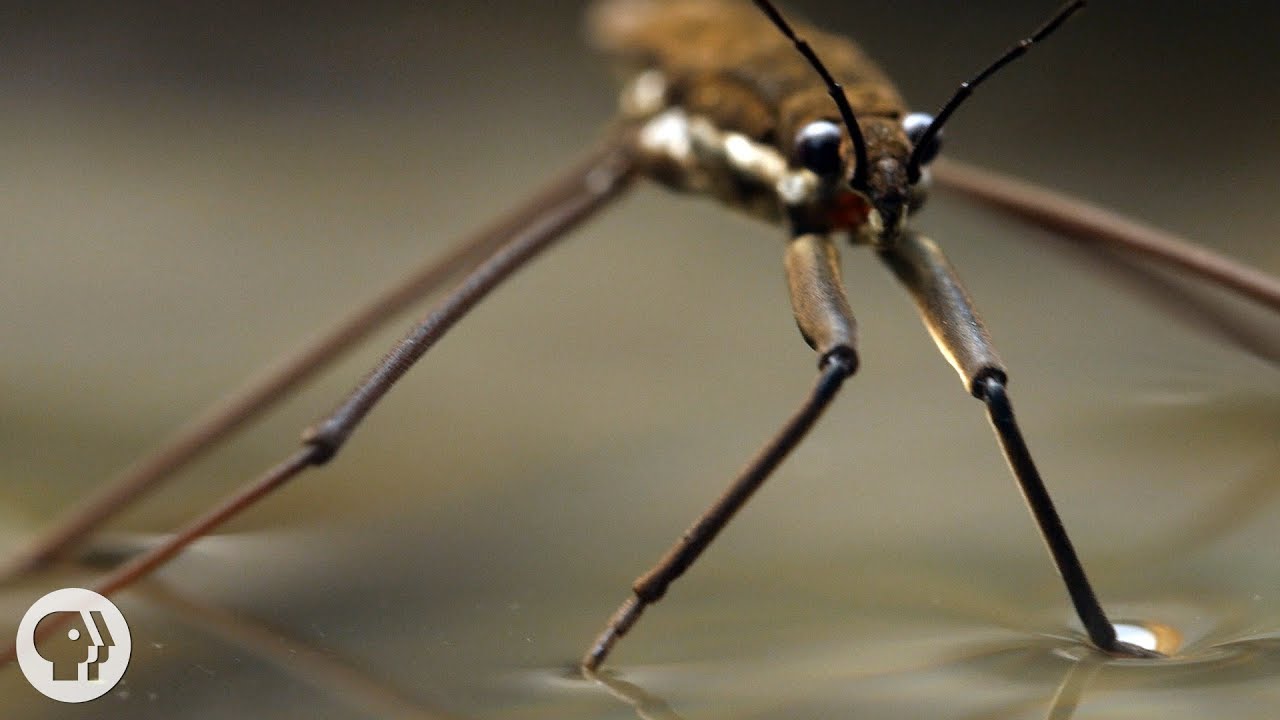
They may look serene as they glide across the surface of a stream, but don't be fooled by water striders. They're actually searching for prey for whom a babbling brook quickly becomes an inescapable death trap.
SUBSCRIBE to Deep Look! http://goo.gl/8NwXqt
DEEP LOOK is a ultra-HD (4K) short video series created by KQED San Francisco and presented by PBS Digital Studios. See the unseen at the very edge of our visible world. Get a new perspective on our place in the universe. Explore big scientific mysteries by going incredibly small.
* NEW VIDEOS EVERY OTHER TUESDAY! *
With the drought officially over and the summer heat upon us, people all across California are heading outdoors. For many, that means a day on the river or relaxing by the lake. The wet winter means there’s plenty of habitat for one of nature’s most curious creatures.
Water striders, also called pond skaters, seem to defy gravity. You’ve probably seen them flitting across the water’s surface, dodging ripples as they patrol streams and quiet backwater eddies.
Scientists like David Hu at Georgia Institute of Technology study how water striders move and how they make their living as predators lurking on the water’s surface. It’s an amazing combination of biology and physics best understood by looking up close. Very close.
--- What are water striders?
The common water strider (Gerris lacustris) is an insect typically found in slowly moving freshwater streams and ponds. They are able to move on the water's surface without sinking. They are easy to spot because they create circular waves on the surface of the water.
--- How do water striders walk on water?
Water tends to stick to itself (cohesion), especially at the surface where it meets the air (surface tension). Water striders don’t weigh very much and they spread their weight out with their long legs. Striders are also covered in microscopic hairs called micro-setae that repel water. Instead of sinking into the water, their legs push down and create dimples.
--- What do water striders eat?
Water striders are predators and scavengers. They use their ability to walk on water to their advantage, primarily eating other insects that fall into the water at get trapped by the surface tension. A water strider uses its tube-shaped proboscis to penetrate their prey’s exoskeleton, inject digestive enzymes and suck out the prey’s pre-digested innards.
---+ Read the entire article on KQED Science:
https://ww2.kqed.org/science/2....017/08/01/this-is-wh
---+ For more information:
http://www.nature.com/nature/j....ournal/v424/n6949/ab
---+ More Great Deep Look episodes:
These Fish Are All About Sex on the Beach | Deep Look
https://www.youtube.com/watch?v=j5F3z1iP0Ic&list=PLdKlciEDdCQDxBs0SZgTMqhszst1jqZhp&index=3
How Do Pelicans Survive Their Death-Defying Dives? | Deep Look
https://www.youtube.com/watch?v=BfEboMmwAMw
Decorator Crabs Make High Fashion at Low Tide | Deep Look
https://www.youtube.com/watch?v=OwQcv7TyX04
Why Is The Very Hungry Caterpillar So Dang Hungry? | Deep Look
https://www.youtube.com/watch?v=el_lPd2oFV4&list=PLdKlciEDdCQDxBs0SZgTMqhszst1jqZhp
---+ See some great videos and documentaries from the PBS Digital Studios!
Beavers: The Smartest Thing in Fur Pants | It’s Okay To Be Smart
https://www.youtube.com/watch?v=Zm6X77ShHa8
Can Genetically Engineered Mosquitoes Help Fight Disease? | Above The Noise
https://www.youtube.com/watch?v=CB_h7aheAEM
How Do Glaciers Move? | It’s Okay To Be Smart
https://www.youtube.com/watch?v=RnlPrdMoQ1Y
Your Biological Clock at Work | BrainCraft
https://www.youtube.com/watch?v=8Q8djfQlYwQ
---+ Follow KQED Science:
KQED Science: http://www.kqed.org/science
Tumblr: http://kqedscience.tumblr.com
Twitter: https://www.twitter.com/kqedscience
---+ About KQED
KQED, an NPR and PBS affiliate based in San Francisco, serves the people of Northern California and beyond with a public-supported alternative to commercial media. Home to one of the most listened-to public radio station in the nation, one of the highest-rated public television services and an award-winning education program, KQED is also a leader and innovator in interactive media and technology, taking people of all ages on journeys of exploration — exposing them to new people, places and ideas.
Funding for Deep Look is provided in part by PBS Digital Studios and the John S. and James L. Knight Foundation. Deep Look is a project of KQED Science, which is also supported by HopeLab, the David B. Gold Foundation, the S. D. Bechtel, Jr. Foundation, the Dirk and Charlene Kabcenell Foundation, the Vadasz Family Foundation, the Gordon and Betty Moore Foundation, the Smart Family Foundation and the members of KQED.
#deeplook
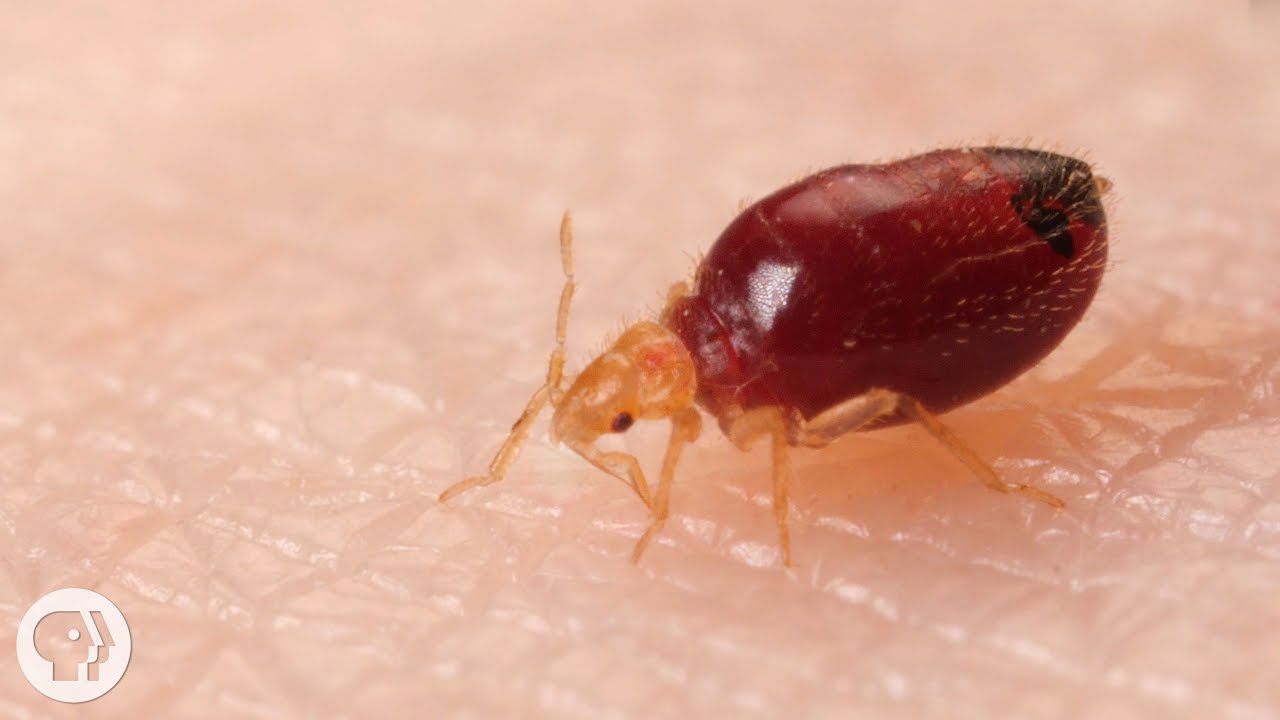
At night, these parasites crawl onto your bed, bite you and suck your blood. Then they find a nearby hideout where they leave disgusting telltale signs. But these pests have an Achilles’ heel that stops them cold.
SUBSCRIBE to Deep Look! http://goo.gl/8NwXqt
Join our community on Patreon! https://www.patreon.com/deeplook
DEEP LOOK is a ultra-HD (4K) short video series created by KQED San Francisco and presented by PBS Digital Studios. See the unseen at the very edge of our visible world. Explore big scientific mysteries by going incredibly small.
Adult bed bugs are about the size and color of an apple seed. After biting, they hide in a nearby cranny, like the seam of the mattress.
At the University of California, Irvine, biologist and engineer Catherine Loudon is working to create synthetic surfaces that could trap bed bugs. She was inspired by the tiny hooked hairs that grow from the leaves of some varieties of beans, such as kidney and green beans. In nature, these hairs, called trichomes, pierce through the feet of the aphids and leafhoppers that like to feed on the plants.
Researchers have found that these pointy hairs are just as effective against bed bugs, even though the bloodsucking parasites don’t feed on leaves. Loudon’s goal is to mimic a bean leaf’s mechanism to create an inexpensive, portable bed bug trap.
“You could imagine a strip that would act as a barrier that could be placed virtually anywhere: across the portal to a room, behind the headboard, on subway seats, an airplane,” Loudon said. “They have six legs, so that’s six opportunities to get trapped.”
--- Where do bed bugs come from?
Bed bugs don’t fly or jump or come in from the garden. They crawl very quickly and hide in travelers’ luggage. They also move around on secondhand furniture, or from apartment to apartment.
--- How can I avoid bringing bed bugs home?
“It would probably be a prudent thing to do a quick bed check if you’re sleeping in a strange bed,” said Potter. His recommendation goes for hotel rooms, as well as dorms and summer camp bunk beds. He suggests pulling back the sheet at the head of the bed and checking the seams on the top and bottom of the mattress and the box spring.
---+ For more tips, read the entire article on KQED Science:
https://www.kqed.org/science/1....944245/watch-bed-bug
---+ More Great Deep Look Episodes:
‘Parasites are Dynamite’ Playlist: https://www.youtube.com/playli....st?list=PLdKlciEDdCQ
---+ ?Congratulations ?to the following fans for correctly identifying the creature's species name in our community tab challenge:
Stay in Your Layne
Brian Lee
Brad Denney
Elise Wade
Raminta’s Photography
https://www.youtube.com/channe....l/UC-3SbfTPJsL8fJAPK
---+ Thank you to our Top Patreon Supporters ($10+ per month)!
Allen, Aurora Mitchell, Beckie, Ben Espey, Bill Cass, Bluapex, Breanna Tarnawsky, Carl, Chris B Emrick, Chris Murphy, Cindy McGill, Companion Cube, Cory, Daisuke Goto, Daisy Trevino , Daniel Voisine, Daniel Weinstein, David Deshpande, Dean Skoglund, Edwin Rivas, Elizabeth Ann Ditz, Eric Carter, Geidi Rodriguez, Gerardo Alfaro, Ivan Alexander, Jane Orbuch, JanetFromAnotherPlanet, Jason Buberel, Jeanine Womble, Jeanne Sommer, Jiayang Li, Joao Ascensao, johanna reis, Johnnyonnyful, Joshua Murallon Robertson, Justin Bull, Kallie Moore, Karen Reynolds, Katherine Schick, Kendall Rasmussen, Kenia Villegas, Kristell Esquivel, KW, Kyle Fisher, Laurel Przybylski, Levi Cai, Mark Joshua Bernardo, Michael Mieczkowski, Michele Wong, Nathan Padilla, Nathan Wright, Nicolette Ray, Pamela Parker, PM Daeley, Ricardo Martinez, riceeater, Richard Shalumov, Rick Wong, Robert Amling, Robert Warner, Samuel Bean, Sayantan Dasgupta, Sean Tucker, Shelley Pearson Cranshaw, Shirley Washburn, Sonia Tanlimco, SueEllen McCann, Supernovabetty, Tea Torvinen, TierZoo, Titania Juang, Two Box Fish, WhatzGames, Willy Nursalim, Yvan Mostaza
---+ Follow KQED Science and Deep Look:
Patreon: https://www.patreon.com/deeplook
Instagram: https://www.instagram.com/kqedscience/
Twitter: https://www.twitter.com/kqedscience
KQED Science on kqed.org: http://www.kqed.org/science
Facebook Watch: https://www.facebook.com/DeepLookPBS/
---+ About KQED
KQED, an NPR and PBS affiliate in San Francisco, CA, serves Northern California and beyond with a public-supported alternative to commercial TV, radio and web media.
Funding for Deep Look is provided in part by PBS Digital Studios. Deep Look is a project of KQED Science, which is also supported by the National Science Foundation, the S. D. Bechtel, Jr. Foundation, the Dirk and Charlene Kabcenell Foundation, the Vadasz Family Foundation, the Fuhs Family Foundation, Campaign 21 and the members of KQED.
#bedbug #bedbugtrap #bedbugbite

Echosmith - "Goodbye" (Official Lyric Video)
"Goodbye" now available! https://WBR.lnk.to/Goodbye
"Goodbye" Official Music Video: https://WBR.lnk.to/Goodbye_Video
Connect with us!
Website: http://echosmith.com
Spotify: https://open.spotify.com/artist/1PbBg...
Facebook: http://www.facebook.com/echosmith
Twitter: https://twitter.com/#!/echosmith
YouTube: http://youtube.com/echosmith