Top Vídeos
Tracklist below.
Online purchase or streaming (Spotify, iTunes, Amazon Music, Deezer, Google Play): https://brilliant-classics.lnk.to/RiesCelloSonatas
More Information: https://www.brilliantclassics.....com/articles/r/ries-
Brilliant Classics Spotify: https://open.spotify.com/user/....brilliantclassics?si
Brilliant Classics Facebook: https://www.facebook.com/brilliantclassics
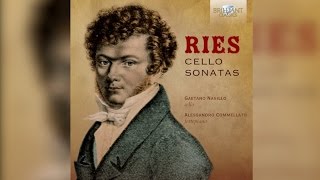
Best known now as a young friend and ever-patient amanuensis to the increasingly cantankerous Beethoven, Ferdinand Ries was himself the most talented member in a distinguished family of musicians. It was his father Franz who taught piano to both him and Beethoven in Bonn, and had the melancholy fortune to outlive his son by eight years after Ferdinand’s death in 1838. The son became Beethoven’s pupil in 1801, and while the teacher’s comment that ‘he imitates me too much’ is not unfair, one can only extend sympathy to poor Ries: what was he to do with such a master?
Certainly the Polonaise of the Op.20 Cello Sonata proceeds with the swagger of Beethoven in popular style, bouncing along like the finale of the latter’s Triple Concerto. The dates of this work and the one immediately following it are uncertain, but they bear a dedication to Bernhard Romberg, author of the influential method for the cello, and teacher of Ries from the age of five. Once Ries had left Vienna in 1809 to pursue a career as a touring virtuoso he met Romberg in St Petersburg and toured Russia with him; the sonatas may date from this period.
The Op.125 Sonata, however, definitively bears the date of 1823 on its autograph and is fully a work of Ries’s maturity, written once he had settled in London where, to quote Greene’s Biographical Encyclopedia of Musicians, ‘he settled down… concertized, taught, composed and acquired fame, money, and a charming wife named Harriet Mangean.’ The scale of the Sonata is positively Schubertian; so, too, the cast of its long-breathed melodies, and the Romantic gloom of its Grave introduction.
These historically informed recordings are the work of two experienced Italian musicians who have played with many distinguished ensembles specialising in music of the Baroque and Classical periods.
Ferdinand Ries (1784-1838) was born in Bonn and moved to Vienna in 1801, where his life became closely related to that of Ludwig van Beethoven (also a native of Bonn..). Ries studied piano with him, copied his scores and was the interpreter of several new works, notably the premiere of the Third Piano Concerto. Ries also wrote the first biography of Beethoven, an invaluable source of first-hand information. Ries’s style inevitably is modelled on that of his master Beethoven, he was however strong enough to stand on his own. His three cello sonatas are masterworks of the genre, both instruments being equal partners in a highly virtuoso musical discourse.
Played on period instruments by Gaetano Nasillo, one of today’s most renowned baroque cellists, and Alessandro Comellato, excellent fortepianist, who recorded Hummel Piano Concertos to great critical acclaim for Brilliant Classics (BC 94338).
00:00:00 Cello Sonata in C Major, Op. 20: I. Allegro con brio
00:08:46 Cello Sonata in C Major, Op. 20: II. Adagio
00:11:53 Cello Sonata in C Major, Op. 20: III. Polonaise, allegretto moderato
00:20:28 Cello Sonate in G Minor, Op. 125: I. Grave-Allegro-Grave-Allegro-Grave-Allegro
00:36:39 Cello Sonate in G Minor, Op. 125: II. Larghetto con moto
00:43:40 Cello Sonate in G Minor, Op. 125: III. Rondo, allegretto
00:50:58 Cello Sonate in A Major, Op. 21: I. Allegro
01:02:46 Cello Sonate in A Major, Op. 21: II. Andantino quasi allegretto
01:08:41 Cello Sonate in A Major, Op. 21: III. Menuetto, allegretto
01:12:39 Cello Sonate in A Major, Op. 21: IV. Rondo, allegro ma non troppo
Artist:
Gaetona Nasillo (cello)
Alessandro Commellato (fortepiano)

Download on iTunes: https://itunes.apple.com/album..../locatelli-concerti-
For physical sales: http://www.brilliantclassics.c....om/articles/l/locate
Listen via Spotify: https://open.spotify.com/album..../7G8E61QOvd8KwAIodFh
Composer: Pietro Antonio Locatelli
Artists: Igor Ruhadze (violin), Ensemble Violine Capricciosi
Virtuosity, showy improvisation and stratospherically high violin playing are the characteristics of Baroque composer Pietro Antonio Locatelli’s theatrical concerti grossi for soloists and ripieno. While concerti grossi from this time could usually be divided into two types, ‘da camera’ and ‘da chiesa’ – with the former containing more dance movements – Locatelli went down his own distinct path, creating a new model more like that of Torelli. His ripieno section was larger than the traditional accompanying group, and his slow movements contained drawn-out notes over which the first violinist or harpsichordist was free to improvise. Indeed, one harpsichord passage in Op.7 is so extraordinarily virtuosic that Locatelli labelled it ‘ad libitum’, presumably to avoid frightening the amateur musician.
Only the most consummate and accomplished musicians can perform works of this calibre. Igor Ruhadze and his ensemble Violini Capricciosi have spent years recording Locatelli’s works, having previously released his violin concertos and trio sonatas, described by Gramophone magazine as ‘brilliantly and at times breathtakingly performed’. They bring their expertise to this release once more, with a tight and supple ripieno section supporting the sumptuous, virtuosic solo playing.
The Concerto Grosso is a popular Baroque form, in which two instrumental groups complete against each other: a small group of soloists and the tutti of the orchestral group. It is the forerunner of the solo concerto form, which features only one solo instrument.
This set present the complete Concerti Grossi by Pietro Antonio Locatelli, modelled on the popular concerti grossi of his teacher Corelli. The writing, as might be expected from Locatelli the devil violinist, is highly virtuosic and brilliant, inventive in harmony and counterpoint, written to impress and entertain.
This set is part of the Locatelli Edition, the complete works by Locatelli, as performed by Igor Ruhadze and his early music band Violini Capricciosi, playing with great gusto, zest and dazzling virtuosity.

Facebook page: https://www.facebook.com/brilliantclassics/
This set includes over 7 hours of the most memorable romantic melodies played by some of the world’s finest pianists. The collection contains the most beautiful compositions of great composers including:
Liebestraum - Liszt
Für Elise - Beethoven
Träumerei - Schumann
Nocturne - Chopin
Rosamunde Impromptu - Schubert
Rondo alla Turca - Mozart
Wiegenlied - Brahms
Mondschein Adagio - Beethoven
Raindrop Prelude - Chopin
Clair de lune - Debussy
Hungarian Rhapsody - Liszt
and many others
Tracklist can be found in the comment section!

Online purchase or streaming (Spotify, iTunes, Amazon Music, Deezer, Google Play): https://brilliant-classics.lnk.....to/PisendelViolinSo
Physical purchase: http://www.brilliantclassics.c....om/articles/p/pisend
Facebook page: https://www.facebook.com/brilliantclassics/
Composers: Johann Georg Pisendel, Silvius Leopold Weiss
Artists: Thomasz Aleksander Plusa (violin), Robert Smith (cello), Earl Christy (lute), Ere Lievonen (harpsichord)
Johann Pisendel was the German violinist of his age; one whose total mastery of the instrument, and its expressive possibilities as filtered through both the Italian and German styles prevalent in the high Baroque era, made a fundamental impression on both Telemann and Bach. Without Pisendel, it is fair to say, there would be no Sonatas and Partitas for solo violin; Pisendel’s own fiendish unaccompanied sonata served as a model to Bach and survives partially in a publication by his great friend Georg Philipp Telemann.
As is the case with Bach, Pisendel’s ‘accompanied’ violin sonatas, in which the violin is joined by a continuo ensemble, are scarcely less demanding. They, too, are four-movement works, often in the classic slow-fast-slow-fast pattern laid down by Geminiani and Corelli and doubtless taught to Pisendel when he was a boy in Ansbach by Giuseppe Torelli, a musician in the court chapel and a fine composer in his own right.
Further instruction was provided by the powerfully individual leader of music at the court chapel in Dresden, Johann David Heinichen; throughout his career, Pisendel enjoyed happy association, often close friendship, with the great composers of his day; later in life, these included both Telemann and Zelenka. Perhaps because of these associations, Pisendel set himself the highest standards in composition; unlike most of his contemporaries, he subjected what he wrote to continual correction and revision, which may also account for the relatively succinct nature of his output.
Four such sonatas are presented here, and divided from each other by movements from the many lute sonatas by Pisendel’s exact contemporary Sylvius Leopold Weiss. They are played here by the young Czech early-music virtuoso, who in his own, extended booklet notes, gives an account not only of Pisendel’s life and work but also of his affinity with this music: ‘Each one was as surprisingly beautiful as the previous, and no less unique… [in Pisendel] the idiom of the violin is brought to its peak.’
Johann Georg Pisendel (1687-1755) was born into a musical family (his father was Cantor), and from an early age he received lessons as a chorister and in violin, his teacher being the famous Giuseppe Torelli. Further studies brought him to Weimar where he met Johann Sebastian Bach (his near-contemporary) and Leipzig, where he met Telemann. In 1712 he joined the famous court orchestra of Dresden, where he stayed till his death in 1755.
The acquaintance and friendship of the two musical giants of the time, Bach and Telemann, left a firm imprint on him as a composer and violinist. On the other hand Pisendel’s astonishing virtuosity influenced Bach to a great extent, Bach’s solo violin sonatas & partitas would not have been the same without Pisendel.
This new recording presents three violin sonatas and one violin solo sonata by Pisendel, works of staggering technical demands, rich in harmony and freedom of expression. As interludes we hear solo lute works by Silvius Leopold Weiss.
Played with immense dedication and conviction by young Polish violinist Tomasz Aleksander Plusa, who studied with Lucy van Dael, Christoph Rousset, Simon Standage, Sigiswald Kuijken and others.
00:00:00 Ouverture from Sonata for Lute, No. 39 in C Major
00:04:46 Violin Sonata in C Minor: I. Adagio – Andante
00:06:39 Violin Sonata in C Minor: II. Allegro
00:11:20 Violin Sonata in C Minor: III. Largo
00:14:03 Violin Sonata in C Minor: IV. Allegro assai
00:19:09 Sarabande from Sonata for Lute, No. 40 in C Major
00:26:28 Violin Sonata in G Minor: I. Larghetto
00:30:11 Violin Sonata in G Minor: II. Allegro
00:33:49 Violin Sonata in G Minor: III. Largo
00:38:06 Violin Sonata in G Minor: IV. Allegro
00:41:04 Violin Sonata in A Minor: I. —
00:43:51 Violin Sonata in A Minor: II. Allegro
00:49:23 Violin Sonata in A Minor: III.Giga
00:54:00 Violin Sonata in A Minor: IV. Variatione
00:59:42 Presto from Sonata for Lute, No. 39 in C Major
01:06:12 Violin Sonata in C Minor: I. Adagio
01:09:08 Violin Sonata in C Minor: II. Presto
01:12:52 Violin Sonata in C Minor: III. Affettuoso
01:15:10 Violin Sonata in C Minor: IV. Vivace

Tracklist below.
Download via iTunes: https://itunes.apple.com/album..../czerny-viotti-piano
Buy CD: http://brilliantclassics.com/a....rticles/c/czerny-vio
Listen on Spotify: https://open.spotify.com/album..../42Kiqt7qDly0m2Rh2FR
Carl Czerny has yet to emerge fully from his established place in the shadow of Beethoven as principally a composer of punishing studies for young and developing pianists, but this release should help him on his way. The A minor Concerto Op.214 is a full-scale essay of early Romanticism, composed in Vienna in 1829, full of the technical challenges he understood so well but distinguished by moments of high drama, especially in the brilliant concluding Rondo.
A Rossinian influence comes to the fore in the concerto for two pianos Op.153 from four years earlier. It is as though Czerny conceived of this concerto as a way of testing the entire expressive potential of a piano entrusted to four hands. Ranging from almost imperceptible pianissimi to deafening fortissimo, the two pianists weave a tapestry of surprising complexity over the struts of the orchestral accompaniment.
If anything the works by Viotti are even less often encountered, but no less charming to the ear. The composer is well-known as a founder of the Italian virtuoso violin tradition – just a little before Paganini – but he was also a skilled pianist. David Boldrini has recorded here contemporaneous arrangements (probably not made by the composer) of a pair of Viotti’s violin concertos, No.19 and No.9, in which parts of the solo violin part survive as an important concertante element.
This 2 CD set contains some seldom heard early 19th century concertos in which the piano plays the leading role.
Carl Czerny, a famous pianist and teacher, student of Beethoven, wrote an immense oeuvre for the piano, in which his prodigious technique could be shown to the greatest advantage. This recording features a Piano Concerto in A minor and a Concerto for Piano 4-hands: good tunes, brilliant pianism: highly attractive!
Giovanni Viotti made world fame as a violinist, his many concertos for this instrument are standard repertoire. Viotti arranged one of his most famous concertos, the G minor, for piano solo and orchestra. Also featured is the double concerto for piano, violin and orchestra in A major.
Played with obvious zest and “Spielfreude” by David Boldrini as soloist, the Rami Musicali Orchestra is conducted by Massimo Belli.
Tracklist:
00:00:00 Piano Concerto No. 1 in A Minor, Op. 214: I. Allegro moderato
00:16:34 Piano Concerto No. 1 in A Minor, Op. 214: II. Adagio con moto
00:20:43 Piano Concerto No. 1 in A Minor, Op. 214: Rondo, allegro con anima
00:32:16 Concerto No. 19 in G Minor: I. Maestoso e grandioso
00:49:27 Concerto No. 19 in G Minor: II. Andante sostenuto
00:57:59 Concerto No. 19 in G Minor: III. Allegretto con moto
01:09:16 Concerto for Piano 4 Hands and Orchestra in C Major, Op. 153: I. Allegro con brio
01:21:36 Concerto for Piano 4 Hands and Orchestra in C Major, Op. 153: II. Adagio espressivo
01:28:51 Concerto for Piano 4 Hands and Orchestra in C Major, Op. 153: III. Rondo alla polacca, Vivace
01:41:25 Violin Concerto No. 3 in A Major, WI:9: I. Allegro
01:51:47 Violin Concerto No. 3 in A Major, WI:9: II. Rondo, allegro
Artist:
David Boldrini piano
Rami Musicali Orchestra
Massimo Bell conductor
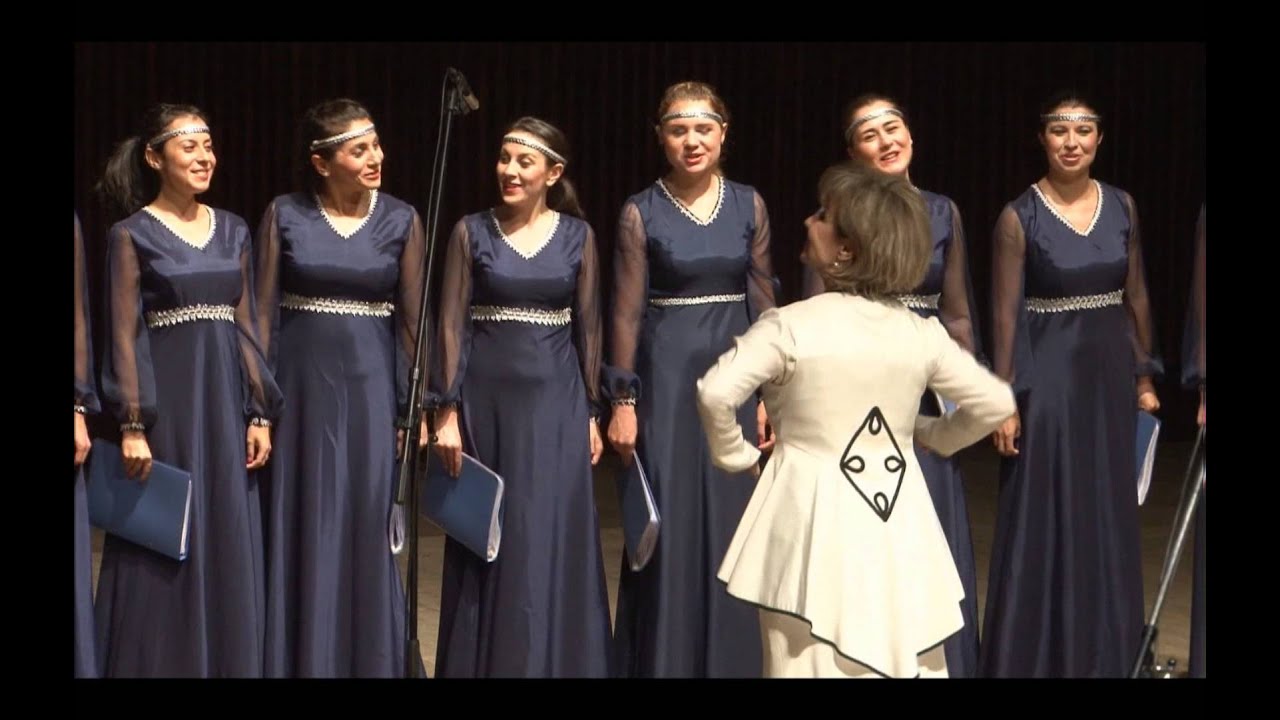
Картини от България
Част от проекта Гласове и ритъм от безкрая
Диригент Ваня Монева
Татяна Колева - маримба/перкусии
Младежка перкусионна формация с худ. ръководител Татяна Колева
Хор "Космически гласове" с диригент Ваня Монева
Варненско лято 2014
Paintings from Bulgaria
Part of the project Voices and Rhythms From The Infinity
Conductor: Vanya Moneva
Tatiana Koleva - marimba/percussions
Youth Percussion Pool - art. director Tatiana Koleva
Cosmic Voices choir - conductor Vanya Moneva
Varna Summer Festival 2014

Online Purchase/Streaming: https://VA.lnk.to/Top50nocturnes
Facebook page: https://www.facebook.com/brilliantclassics/
A moonlit summer night, an open window, the intoxicating sounds of a piano playing the dreamlike melodies of a Chopin Nocturne: this is the atmosphere of this selection of the most beautiful Noctunres and other night pieces written for piano by the great masters Chopin, Schumann (Des Abends), Tchaikovsky (Barcarolle), Debussy (Clair de Lune), Beethoven (Mondschein Sonata), Liszt (Liebestraum) and many others.
Frédéric Chopin:
00:00:00 Nocturnes, Op. 48: No. 1 in C Minor. Lento by Earl Wild
00:05:42 Nocturne in C-Sharp Minor, B. 49 by Earl Wild
00:09:35 Nocturnes, Op. 15: No. 2 in F-Sharp Major by Earl Wild
00:13:11 Nocturnes, Op. 32: No. 1 in B Major by Earl Wild
00:18:06 Nocturne in E Minor, Op. 72, No. 1 by Earl Wild
00:21:46 Nocturnes, Op. 62: No. 2 in E Major by Earl Wild
00:27:06 Nocturnes, Op. 9: No. 3 in B Major by Earl Wild
00:32:43 Nocturnes, Op. 37: No. 2 in G Major. Andantino by Earl Wild
00:38:09 Nocturnes, Op. 32: No. 2 in A-Flat Major by Earl Wild
00:43:44 Nocturnes, Op. 27: No. 2 in D-Flat Major. Lento sostenuto by Earl Wild
00:49:05 Nocturnes, Op. 9: No. 1 in B-Flat Minor. Larghetto by Earl Wild
00:54:28 Nocturnes, Op. 15: No. 3 in G Minor by Earl Wild
00:59:02 Nocturnes, Op. 48: No. 2 in F-Sharp Minor. Andantino by Earl Wild
01:06:11 Nocturnes, Op. 62: No. 1 in B Major by Earl Wild
01:12:30 Nocturnes, Op. 9: No. 2 in E-Flat Major by Earl Wild
01:16:42 Nocturnes, Op. 55: No. 1 in F Minor by Earl Wild
01:21:25 Nocturnes, Op. 55: No. 2 in E-Flat Major. Lento sostenuto by Earl Wild
01:25:40 Nocturnes, Op. 27: No. 1 in C-Sharp Minor by Earl Wild
01:30:16 Nocturnes, Op. 15: No. 1 in F Major by Earl Wild
01:34:38 Nocturnes, Op. 37: No. 11 in G Minor by Earl Wild
01:42:21 Nocturne No. 21 in C Minor, Op. Posth. by Earl Wild
01:45:30 Franz Liszt -Liebesträume, S. 541: No. 3 in A-Flat Major by Pieter van Winkel
01:50:06 Ludwig van Beethoven - I. Adagio sostenuto by Pieter van Winkel
01:55:46 Robert Schumann - No. 1, Des Abends in D-Flat Major by Pieter van Winkel
01:59:11 Claude Debussy - Reverie, L. 68 by Pieter van Winkel
02:02:55 Robert Schumann - No. 2, Romance in F-Sharp Major by Pieter van Winkel
02:06:18 Franz Liszt - No. 3, Lento placido in D-Flat Major by Pieter van Winkel
02:09:23 Claude Debussy - No. 3, Clair de lune by Pieter van Winkel
02:14:23 Robert Schumann - No. 7, Träumerei by Pieter van Winkel
02:17:34 Frédéric Chopin - Berceuse in D-Flat Major, Op. 57 by Alwin Bär
02:22:37 Edvard Hagerup Grieg - No. 1, Cradle Song by Håkon Austbö
02:24:54 Erik Satie - No. 1, Lent et douloureux in D Major by Håkon Austbö
02:28:33 Erik Satie - Gnossiennes: 5. Modéré by Håkon Austbö
02:31:25 Charles Henri Valentin Alkan - Nocturne, Op. 22 by Alan Weiss
02:37:50 Robert Schumann - No. 5, In der Nacht in F Minor by Klára Würtz
02:41:38 Robert Schumann - No. 12, Kind im Einschlummern by Klára Würtz
02:43:48 Piotr Ilyich Tchaikovsky - No. 10, October. Autumn Song in D Minor. Andante doloroso e molto cantabile by Alexander Warenberg
02:47:13 Maurice Ravel - Pavane pour une infante défunte in G Major, M. 19 by Michelangelo Carbonara
02:53:37 Robert Schumann - No. 7, Vogel als Prophet by Klára Würtz
02:56:28 Piotr Ilyich Tchaikovsky - No. 6, June. Barcarolle in G Minor. Andante cantabile by Alexander Warenberg
03:00:11 Camille Pleyel - Nocturne alla Field in B-Flat Major, Op. 52 by Bart van Oort
03:04:53 Friedrich Wilhelm Michael Kalkbrenner - No. 1 in A-Flat Major "Les soupirs de la harpe eolienne" by Bart van Oort
03:09:04 Friedrich Wilhelm Michael Kalkbrenner - No. 2 in F Major (A trois mains) by Bart van Oort & Agnieszka Chabowska
03:13:08 Clara Schumann - No. 2, Nocturne in F Major by Bart van Oort
03:18:17 Louis Lefèbure-Wély - Nocturne in D-Flat Major by Bart van Oort
03:23:30 Edmond Weber - Nocturne in D-Flat Major, Op. 1 by Bart van Oort
03:27:18 Charles Henri Valentin Alkan - Notturnino innamorato in F-Sharp Minor, Op. 63 No. 43 by Bart van Oort
03:29:27 Michael Glinka - Nocturne in E-Flat Major by Bart van Oort
03:35:12 Maria Szymanowska - La Murmure. Nocturne in A-Flat Major by Bart van Oort
03:38:15 Ignacy Feliks Dobrzynski - No. 1 in G Minor by Bart van Oort

Check our reaction below for the playlist.
Listen via Spotify: https://open.spotify.com/album..../0Q9UHIADAujGD1wHYCA
Download on iTunes: https://itunes.apple.com/album/id895566322?ls=1&app=itunes
Facebook page: https://www.facebook.com/brilliantclassics/

Streaming & Downloads: https://VA.lnk.to/Top30FavouriteClassicalChillout
Physical purchase: https://www.brilliantclassics.....com/articles/t/top-3
Brillant Classics Spotify: https://brilliant-classics.lnk.to/Spotify
A classical TOP 30 with the intention of relaxation and chillin'. Sit back, relax, and enjoy these Chillout Tunes.
00:00:00 Piano Concerto No. 21 in C Major, K. 467: II. Andante 'Elvira Madigan'
00:06:07 Carnival of the Animals: XIII. The Swan
00:09:12 Liebestraum, S. 541: No. 3, Oh Lieb, so lang du lieben kannst in A-Flat Major
00:13:16 Serenade No. 13 in G Major, K. 525 ‘Eine kleine Nachtmusik’: II. Romanze
00:18:19 Pictures at an Exhibition: Promenade No. 2 - No. 2, The Old Castle
00:23:35 Nocturnes, Op. 9: No. 2, Nocturne in E-Flat Major
00:27:56 Orfeo ed Euridice, Act 2: Dance of the Blessed Spirits
00:35:01 Concerto in F Minor, Op. 8 No. 4, RV 297 "Winter": II. Largo
00:37:05 Symphony No. 3 in F Major, Op. 90: III. Poco allegretto
00:43:05 Thaïs, Act 2: Méditation
00:47:47 Preludes, Op. 28: No. 15, Prelude in D-Flat Major 'Raindrop'
00:52:37 Violin Concerto in D Major, Op. 77: II. Adagio
01:02:24 Piano Sonata No. 8 in C Minor, Op. 13 ‘Pathétique’: II. Adagio cantabile
01:07:11 Piano Sonata No. 14 in C-Sharp Minor, Op. 27 No. 2 ‘Moonlight’: I. Adagio sostenuto
01:12:54 Piano Concerto No. 27 in B-Flat Major, K. 595: II. Larghetto
01:19:47 Bagatelle No. 25 in A Minor WoO 59 ‘Für Elise’
01:22:41 Symphony No. 5: IV. Adagietto
01:31:04 Piano Concerto No. 1 in E Minor, Op. 11: II. Romanze. Larghetto
01:41:52 Suite Bergamasque, L. 75: III. Clair de Lune
01:46:50 3 Gymnopédies: No. 1, Lent et douloureux in D Major
01:50:32 Mass in A Major, Op. 12: No. 5, Panis angelicus
01:54:04 Jesu, meine Freude, BWV 227
01:57:06 Vesperae solennes de confessore in C Major, K. 339: No. 5, Laudate Dominum
02:02:15 Sicilienne for Flute and Orchestra, Op. 78
02:05:39 Piano Concerto No. 23 in A Major, K. 488: II. Adagio
02:11:59 Ave verum corpus in D Major, K. 618
02:15:36 Berceuse, Op. 16
02:19:06 Élégie for Cello and Orchestra, Op. 24
02:25:35 Piano Trio No. 1 in D Minor, Op. 49: II. Andante con molto tranquillo
02:32:00 Dido and Aeneas, Act 3, Z. 626: When I Am Laid in Earth

? SUSCRIBETE A #BEBEMILO AQUÍ: https://goo.gl/mDu2Ad
? Aplicación Campanita de Bebe milo: https://bit.ly/2GKkqHH
? Contacto: bebemilocontacto@gmail.com
✅ Canales de los AMIWITOS
Vita: https://goo.gl/53Qtpv
Adri: https://goo.gl/qBMQzu
✅ Aplicación Bebe Milo Aventuras ? https://goo.gl/PzZEuv
✅ Juega en Bebe Milo Server: https://goo.gl/Wrx3ih
? Redes sociales de Bebe Milo:
? Instagram: https://www.instagram.com/bebemiloyt/
? Twitter: https://twitter.com/BebeMiloYT
? Facebook: https://www.facebook.com/bebemiloyt
======================================================
? MIS LISTAS DE REPRODUCCIÓN
✅ LO MEJOR de BEBE MILO y sus AMIGOS: https://goo.gl/9MgnWZ
✅ BEBE MILO AVENTURAS: https://goo.gl/VQhwNq
✅ LAS AVENTURAS DEL NOOB: https://goo.gl/gP8lwG
✅ CANCIONES DE BEBE MILO: https://goo.gl/swgdwg
✅ EL ESCONDITE: https://goo.gl/45L2yT
✅ ISLA VS ISLA: https://goo.gl/euAmDc
✅ BEBE MILO DIMENSIONES: https://goo.gl/rHVcU2
======================================================
El canal de Bebe milo es para publico infantil. Podrás encontrar canciones infantiles, música infantil para niños y niñas, chicos y chicas. También podrás ver jugar juegos como minecraft gratis, roleplay muy entretenido y en español latino, roblox y mucho mas.
Lo importante es divertirse y tener lo mejor de minecraft para bebes en 2018!

Tracklist below.
Online purchase or streaming (Spotify, iTunes, Amazon Music, Deezer, Google Play): https://brilliant-classics.lnk.....to/BeethovenPianoTr
More Information: https://www.brilliantclassics.....com/articles/b/beeth
Brilliant Classics Spotify: https://open.spotify.com/user/....brilliantclassics?si
Brilliant Classics Facebook: https://www.facebook.com/brilliantclassics
Artist:
François Dumont (piano)
Laurent Le Flécher (violin)
Virginie Constant (cello)
Trio Élégiaque
00:00:00 Piano Trio in G Major, Op. 1 No. 2: I. Adagio – Allegro vivace
00:12:05 Piano Trio in G Major, Op. 1 No. 2: II. Largo con espressione
00:21:57 Piano Trio in G Major, Op. 1 No. 2: III. Scherzo. Allegro
00:25:40 Piano Trio in G Major, Op. 1 No. 2: IV. Finale. Presto
00:33:30 Piano Trio in D Major, Op. 70 No. 1 “Ghost”: I. Allegro vivace
00:43:58 Piano Trio in D Major, Op. 70 No. 1 “Ghost”: II. Largo assai ed espressivo
00:55:02 Piano Trio in D Major, Op. 70 No. 1 “Ghost”: III. Presto
01:03:28 Piano Trio in E-Flat Major, WoO 38: I. Allegro moderato
01:07:36 Piano Trio in E-Flat Major, WoO 38: II. Scherzo. Allegro ma non troppo
01:12:01 Piano Trio in E-Flat Major, WoO 38: III. Rondo. Allegretto
01:17:05 Piano Trio in C Minor, Op. 1 No. 3: I. Allegro con brio
01:26:22 Piano Trio in C Minor, Op. 1 No. 3: II. Andante cantabile con variazioni
01:33:26 Piano Trio in C Minor, Op. 1 No. 3: III. Menuetto. Quasi allegro – Trio
01:36:54 Piano Trio in C Minor, Op. 1 No. 3: IV. Finale. Prestissimo
01:44:43 Piano Trio in E-Flat Major, Op. 70 No. 2: I. Poco sostenuto – Allegro ma non troppo
01:55:04 Piano Trio in E-Flat Major, Op. 70 No. 2: II. Allegretto
02:00:01 Piano Trio in E-Flat Major, Op. 70 No. 2: III. Allegretto ma non troppo
02:04:47 Piano Trio in E-Flat Major, Op. 70 No. 2: IV. Finale. Allegro
02:12:39 Piano Trio in E-Flat Major, Op. 44: 14 Variations on an Original Theme: Tema. Andante con variazioni
02:25:22 Piano Trio in E-Flat Major, Op. 1 No. 1: I. Allegro
02:35:00 Piano Trio in E-Flat Major, Op. 1 No. 1: II. Adagio cantabile
02:42:02 Piano Trio in E-Flat Major, Op. 1 No. 1: III. Scherzo. Allegro assai
02:46:56 Piano Trio in E-Flat Major, Op. 1 No. 1: IV. Finale. Presto
02:54:23 Piano Trio in D Major, After Symphony No. 2, Op. 36: I. Adagio – Allegro con brio
03:06:37 Piano Trio in D Major, After Symphony No. 2, Op. 36: II. Larghetto quasi andante
03:17:33 Piano Trio in D Major, After Symphony No. 2, Op. 36: III. Scherzo
03:21:14 Piano Trio in D Major, After Symphony No. 2, Op. 36: IV. Allegro molto
03:27:54 Triosatz in E-Flat Major, Op. Posth. (Allegretto)
03:31:18 Piano Trio in B-Flat Major, Op. 97 “Archduke”: I. Allegro moderato03:44:09 Piano Trio in B-Flat Major, Op. 97 “Archduke”: II. Scherzo. Allegro
03:50:29 Piano Trio in B-Flat Major, Op. 97 “Archduke”: III. Andante cantabile, ma però con moto – Poco più adagio
04:02:27 Piano Trio in B-Flat Major, Op. 97 “Archduke”: IV. Allegro moderato
04:09:26 Piano Trio in B-Flat Major WoO39 (Allegretto)
04:15:39 Piano Trio in E-Flat Major, Op. 63, After String Quintet, Op. 4: I. Allegro con brio
04:23:43 Piano Trio in E-Flat Major, Op. 63, After String Quintet, Op. 4: II. Andante
03:30:23 Piano Trio in E-Flat Major, Op. 63, After String Quintet, Op. 4: III. Menuetto – Trio
04:36:36 Piano Trio in E-Flat Major, Op. 63, After String Quintet, Op. 4: IV. Finale. Presto
04:42:32 Piano Trio in B-Flat Major, Op. 11 “Gassenhauer”: I. Allegro con brio
04:51:23 Piano Trio in B-Flat Major, Op. 11 “Gassenhauer”: II. Adagio
04:56:30 Piano Trio in B-Flat Major, Op. 11 “Gassenhauer”: III. Tema. Pria ch'io l'impegno allegretto con variazioni
05:03:15 Piano Trio in G Major, Op. 121a “Ich bin der Schneider Kakadu” (Introduzione. Adagio assai – Tema. Allegretto con variazioni)
05:19:19 Piano Trio in E-Flat Major, Op. 38, After the Septet, Op. 20: I. Adagio – Allegro con brio
05:26:38 Piano Trio in E-Flat Major, Op. 38, After the Septet, Op. 20: II. Adagio cantabile
05:34:54 Piano Trio in E-Flat Major, Op. 38, After the Septet, Op. 20: III. Tempo di menuetto
05:37:54 Piano Trio in E-Flat Major, Op. 38, After the Septet, Op. 20: IV. Andante con variazioni
05:44:44 Piano Trio in E-Flat Major, Op. 38, After the Septet, Op. 20: V. Scherzo. Allegro molto e vivace
05:48:01 Piano Trio in E-Flat Major, Op. 38, After the Septet, Op. 20: VI. Andante con moto alla marcia – Presto

No more than a handful of pieces represent the entire musical heritage for baroque lute by Johann Sebastian Bach – not a lot when we consider the enormity of the composer’s total output. Although it is not known whether Bach himself played the instrument, the seven works which are ascribable to it continue to enjoy extraordinary attention on the part of musicians due to their exceptional quality, and indeed the majority originate from the areas of Germany that were home to the lute’s greatest exponents – musicians who we can be almost certain the composer came into contact with.
This recording thus presents four compositions in suite form and three pieces of a different nature, all belonging to the florid repertoire of the courtly Salonmusik that was in vogue among the German upper classes at the time. Performing them is acclaimed Italian lutenist Mario D’Agosto, whose changes in tonality aim to better serve the capacities of the instrument (BWV 996 and 997, for instance, were written for the ‘Lautenwerk’, a sort of lute-harpsichord favoured by Bach) and whose embellishments are testament to the high level of ornamentation which played such an intrinsic role in baroque performance practice.
Online purchase or streaming (Spotify, iTunes, Amazon Music, Deezer, Google Play): https://brilliant-classics.lnk.to/BachCompleteLute
More Information: https://www.brilliantclassics.....com/articles/j/js-ba
Brilliant Classics Facebook: https://www.facebook.com/brilliantclassics
Brilliant Classics’ Spotify:
https://brilliant-classics.lnk.to/Spotify
Spotify playlist:Most Popular Piano Music
https://brilliant-classics.lnk.to/MostPopularPiano
Composer: Johann Sebastian Bach
Artist: Mario D'Agosto (lute)
00:00:00 Suite in E Minor, BWV 996: I. Prelude
00:03:11 Suite in E Minor, BWV 996: II. Allemande
00:06:25 Suite in E Minor, BWV 996: III. Courante
00:09:03 Suite in E Minor, BWV 996: IV. Sarabande
00:13:02 Suite in E Minor, BWV 996: V. Bourrée
00:14:43 Suite in E Minor, BWV 996: VI. Gigue
00:18:09 Prelude, fugue and allegro in E-Flat Major, BWV 998: I. Prelude
00:21:13 Prelude, fugue and allegro in E-Flat Major, BWV 998: II. Fugue
00:28:00 Prelude, fugue and allegro in E-Flat Major, BWV 998: III. Allegro
00:32:18 Suite in G Minor, BWV 995: I. Prelude
00:38:15 Suite in G Minor, BWV 995: II. Allemande
00:43:20 Suite in G Minor, BWV 995: III. Courante
00:45:48 Suite in G Minor, BWV 995: IV. Sarabande
00:49:18 Suite in G Minor, BWV 995: V. Gavottes I & II ‘en Rondeau’
00:54:05 Suite in G Minor, BWV 995: VI. Gigue
00:56:37 Partita in C Minor, BWV 997: I. Prelude
01:00:28 Partita in C Minor, BWV 997: II. Fugue
01:08:08 Partita in C Minor, BWV 997: III. Sarabande
01:12:31 Partita in C Minor, BWV 997: IV. Gigue - Double
01:16:01 Partita in E Major, BWV 1006a: I. Prelude
01:20:47 Partita in E Major, BWV 1006a: II. Loure
01:23:55 Partita in E Major, BWV 1006a: III. Gavotte ‘en Rondeau’
01:27:31 Partita in E Major, BWV 1006a: IV. Menuets I & II
01:32:54 Partita in E Major, BWV 1006a: V. Bourrée
01:35:19 Partita in E Major, BWV 1006a: VI. Gigue
01:38:09 Prelude in C Minor, BWV 999
01:39:47 Fugue in G Minor, BWV 1000
✅ Aplicación Bebe Milo Aventuras ? https://goo.gl/PzZEuv
✅ Juega en Bebe Milo Server: https://goo.gl/Wrx3ih
? Contacto: bebemilocontacto@gmail.com
? Redes sociales de Bebe Milo:
? Instagram: https://www.instagram.com/bebemiloyt/
? Twitter: https://twitter.com/BebeMiloYT
? Facebook: https://www.facebook.com/bebemiloyt
======================================================
? Colaboradores del canal:
Walky & Vita: https://goo.gl/7ka4ss
? MIS LISTAS DE REPRODUCCIÓN
✅ LO MEJOR de BEBE MILO y sus AMIGOS: https://goo.gl/9MgnWZ
✅ BEBE MILO AVENTURAS: https://goo.gl/VQhwNq
✅ LAS AVENTURAS DEL NOOB: https://goo.gl/gP8lwG
✅ CANCIONES DE BEBE MILO: https://goo.gl/swgdwg
✅ EL ESCONDITE: https://goo.gl/45L2yT
✅ ISLA VS ISLA: https://goo.gl/euAmDc
✅ BEBE MILO DIMENSIONES: https://goo.gl/rHVcU2
======================================================
El canal de Bebe milo es para publico infantil. Podrás encontrar canciones infantiles, música infantil para niños y niñas, chicos y chicas. También podrás ver jugar juegos como minecraft gratis, roleplay muy entretenido y en español latino.
Lo importante es divertirse y tener lo mejor de minecraft para bebes en 2017 y 2018!

Online purchase or streaming (Spotify, iTunes, Amazon Music, Deezer, Google Play): https://VA.lnk.to/ChopinFavPiano
Physical purchase: http://www.brilliantclassics.c....om/articles/c/chopin
Facebook page: https://www.facebook.com/brilliantclassics/
Composer: Frédéric Chopin
Artists: Alwin Bär, Folke Nauta, Pieter van Winkel, Martijn van den Hoek, Paolo Giacometti (pianos)
A CD filled with short characteristic pieces by Frédéric Chopin. Played by several Dutch pianists, including International Franz Liszt Piano Competition winner Martijn van den Hoek and Alwin Bär.
00:00:00 Berceuse in D-Flat Major, Op. 57
00:05:06 Polonaise in A-Flat Major, Op. 53, “Heroic”
00:12:07 Nocturne in E-Flat Major, Op. 9 No. 2
00:16:22 Waltz in D-Flat Major, Op. 64 No. 1, “Minute Waltz”
00:18:06 Waltz in C-Sharp Minor, Op. 64 No. 2
00:21:45 Ballade No. 3 in A-Flat Major, Op. 47
00:29:06 Souvenir de Paganini
00:33:21 Fantasie-Impromptu in C-Sharp Minor, Op. 66
00:38:29 Etude in E Major, Op. 10 No. 3
00:42:30 Scherzo No. 2 in B-Flat Minor, Op. 31
00:52:19 Prelude in D-Flat Major, Op. 28 No. 15, “Raindrop”
00:57:32 Etude in C Minor, Op. 10 No. 12, “Revolutionary”
01:00:16 Nocturne in B-Flat Minor, Op. 9 No. 1
01:05:41 Barcarolle in F-Sharp Major, Op. 60

Spotify: https://open.spotify.com/album..../5VrkA4ovpByMDuXqlfS
Physical CD: http://brilliantclassics.com/a....rticles/m/mozart-com
iTunes: https://itunes.apple.com/album..../mozart-complete-sym
The year was 1778. Mozart (22 Years old) was in Paris, trying to break into musical society and get a well-payed placement.
It was first the first trip he had made without his father Leopold. But the places he visited weren't impressed by his skills now, even though they'd been whipped into a wild frenzy by Mozart when he was a 6 year old performing prodigy.
His entire Paris trip was catastrophic, personally and professionally. Aside from his mother dying during his stay there (she had accompanied him), French musicians and listeners were snobby and rude to Mozart. He deeply resented them for the rest of his life.
Worse still, his job search was futile. Nobody wanted to hire him!
But a fantastic opportunity presented itself at one point. Mozart was asked to write a symphony to open Paris's most famous concert series, with a fantastically large orchestra at his disposal.
Perfect - a chance to make a huge splash, and get himself noticed by Paris's elite!
He finished the piece, his 31st symphony, in June 1778. The premiere was at a private concert at an ambassador's house, and the public premiere followed a few days later.
Mozart had tried hard to fit his symphony into the mold of French tastes. The audiences in Paris at that time loved raw excitement and flashy colors in their music. Mozart delivered in spades, using his large orchestra to dazzle and delight.
The audience were very pleased with the symphony, even applauding in the middle of it at certain points!
Composer:
Wolfgang Amadeus Mozart
Artist:
Mozart Akademie Amsterdam
Jaap ter Linden (conductor)

Tracklist below.
iTunes: https://itunes.apple.com/album..../mozart-great-piano-
Physical Sale: http://brilliantclassics.com/a....rticles/m/mozart-the
Spotify: https://open.spotify.com/album..../3Tfozl3YUXqrJaIvpQJ
This an issue of series consisting of 14 3CD-sets with selected highlights taken from our Mozart complete edition, intented for those who prefer to buy more selectively.
This release contains the following works: K. 41, K. 271 “Jeunehomme”, K. 449, K. 456, K. 491, K. 537 “Coronation Concerto“ and K. 595.
00:00:00 Piano Concerto No. 18 in B-Flat Major, KV 456: Allegro vivace
00:12:36 Piano Concerto No. 18 in B-Flat Major, KV 456: Andante un poco sostenuto
00:22:12 Piano Concerto No. 18 in B-Flat Major, KV 456: Allegro vivace
00:30:21 Piano Concerto No. 26 in D Major, KV 537, “Coronation Concerto”: Allegro
00:44:51 Piano Concerto No. 26 in D Major, KV 537, “Coronation Concerto”: Larghetto
00:50:58 Piano Concerto No. 26 in D Major, KV 537, “Coronation Concerto”: Allegretto
01:01:52 Piano Concerto No. 14 in E-Flat Major, KV 449: Allegro vivace
01:10:45 Piano Concerto No. 14 in E-Flat Major, KV 449: Andantino
01:17:06 Piano Concerto No. 14 in E-Flat Major, KV 449: Allegro ma non troppo
01:23:24 Piano Concerto No. 4 in G Major, KV 41: Allegro
01:28:29 Piano Concerto No. 4 in G Major, KV 41: Andante
01:32:20 Piano Concerto No. 4 in G Major, KV 41: Molto allegro
01:36:10 Piano Concerto No. 27 in B-Flat Major, KV 595: Allegro
01:50:21 Piano Concerto No. 27 in B-Flat Major, KV 595: Larghetto
01:57:15 Piano Concerto No. 27 in B-Flat Major, KV 595: Rondo, alelgro
02:06:35 Piano Concerto E-Flat Major, KV 271, “Jeunehomme”: Allegro
02:16:49 Piano Concerto E-Flat Major, KV 271, “Jeunehomme”: Andantino
02:27:00 Piano Concerto E-Flat Major, KV 271, “Jeunehomme”: Rondeau. Presto
02:37:19 Piano Concerto in C Minor, KV 491: Allegro
02:50:50 Piano Concerto in C Minor, KV 491: Larghetto
02:58:30 Piano Concerto in C Minor, KV 491: Allegretto
Artist:
Derek Han (piano)
Philharmonia Orchestra
Paul Freeman (conductor)

Online purchase or streaming (Spotify, iTunes, Amazon Music, Deezer, Google Play): https://brilliant-classics.lnk.to/BachHamburg
More Information: https://www.brilliantclassics.....com/articles/c/cpe-b
Brilliant Classics Spotify: https://open.spotify.com/user/....brilliantclassics?si
Brilliant Classics Facebook: https://www.facebook.com/brilliantclassics
Composers: Carl Philipp Emanuel Bach
Artists: Solamente Naturali, Didier Talpain (conductor), Marek Toporowski (conductor)
This release presents the 4 symphonies that Carl Philipp Emanuel Bach wrote during his stay in Hamburg. In these large-scale works the string section is extended with 2 flutes, 2 oboes, 2 horns and bassoon, instruments which are treated quasi solistically, so that one can almost speak of a Sinfonia Concertante.
The musical language is clearly “Sturm und Drang”, full of vehement dynamics and changes of sentiment, the fingerprint of this most famous son of Johann Sebastian.
Brilliant performances on period instruments by Solamente Naturali, an exciting group of early music players from Bratislava.
00:00:00 Symphony Wq183/1 (H663) in D Allegro di molto
00:05:35 Symphony Wq183/1 (H663) in D Largo
00:07:20 Symphony Wq183/1 (H663) in D Presto
00:10:10 Symphony Wq183/2 (H664) in E flat Allegro di molto
00:14:00 Symphony Wq183/2 (H664) in E flat Larghetto
00:15:28 Symphony Wq183/2 (H664) in E flat Presto
00:20:52 Symphony Wq183/2 (H664) in E flat Allegro assai
00:24:20 Harpsichord Concerto Wq43/4 (H474) in C Minor Poco adagio
00:26:30 Harpsichord Concerto Wq43/4 (H474) in C Minor Tempo di menuetto
00:29:16 Harpsichord Concerto Wq43/4 (H474) in C Minor Allegro assai
00:33:54 Symphony Wq183/3 (H665) in F Allegro di molto
00:38:54 Symphony Wq183/3 (H665) in F Larghetto
00:41:26 Symphony Wq183/3 (H665) in F Presto
00:44:14 Symphony Wq183/4 (H666) in G Allegro assai
00:47:12 Symphony Wq183/4 (H666) in G Poco andante
00:52:12 Symphony Wq183/4 (H666) in G Presto
Tracklist below.
Online purchase or streaming (Spotify, iTunes, Amazon Music, Deezer, Google Play): https://brilliant-classics.lnk.to/Paganini
More Information: https://www.brilliantclassics.....com/articles/p/pagan
Brilliant Classics Spotify: https://open.spotify.com/user/....brilliantclassics?si
Brilliant Classics Facebook: https://www.facebook.com/brilliantclassics
Among the most revered virtuosos of all time, Nicolò Paganini was a true musical legend of his era, inspiring musicians such as Roberto Schumann to forge his own career as a pianist. Franz Schubert was also a regular audience member at Paganini’s concerts, despite the outlandish ticket prices.
Paganini often remarked that, despite his legendary status as a violinist, he found it rather difficult to compose for the instrument. This release brings together the Italian maestro’s two violin concertos: No.1, his first large work, was written around 1817 but published posthumously in 1851, and the second dates from 1826. Audiences were wowed at the premiere of No.1, thanks to its many extended passages of double-stopping and harmonics. Concerto No.2 in B minor is nicknamed ‘La campanella’, famous for its third-movement Rondo that employs a small bell at each reinstatement of the theme.
Kristóf Baráti is the soloist, performing the works on his much-loved ‘Lady Harmsworth’ Stradivarius violin. The release is a welcome addition to his ever-growing Brilliant Classics discography, of which Beethoven’s Complete Violin Sonatas (94310) garnered such reviews as ‘today’s reference recording’ (Frankfurte Allgemeine). Here he is joined by esteemed conductor Eiji Oue and the NDR Radiophilharmonie Hannover.
Composer:
Nicolò Paganini
Artist:
Kristóf Baráti violin
NDR Radiophilharmonie Hannover
Eiji Oue conductor
00:00:00 Violin Concerto No. 1 in D Major, Op. 6: I. Allegro maestoso (Cadenza by Émile Sauret)
00:20:23 Violin Concerto No. 1 in D Major, Op. 6: II. Adagio
00:25:20 Violin Concerto No. 1 in D Major, Op. 6: III. Rondo. Allegro spiritoso
00:35:20 Violin Concerto No. 2 in B Minor, Op. 7: I. Allegro maestoso (Cadenza by Kristóf Baráti)
00:49:48 Violin Concerto No. 2 in B Minor, Op. 7: II. Adagio
00:56:08 Violin Concerto No. 2 in B Minor, Op. 7: III. Rondo à la clochette "La campanella"
Tracklist below.
Online purchase or streaming (Spotify, iTunes, Amazon Music, Deezer, Google Play): https://brilliant-classics.lnk.to/MozartOganMusic
More Information: https://www.brilliantclassics.....com/articles/m/mozar
Brilliant Classics Spotify: https://open.spotify.com/user/....brilliantclassics?si
Brilliant Classics Facebook: https://www.facebook.com/brilliantclassics
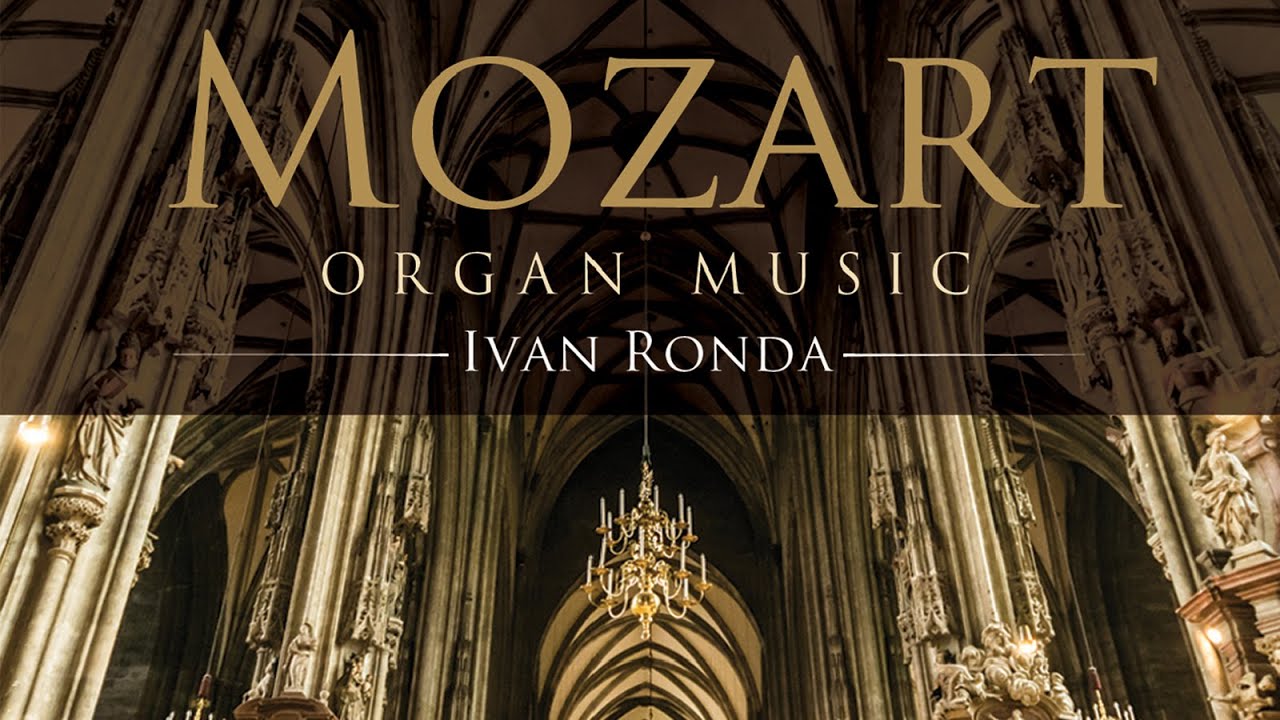
Described by the composer himself as ‘the king of instruments’, the organ and its music form a small but not insignificant part of Mozart’s vast œuvre. This new release, performed by acclaimed Italian organist Ivan Ronda, comprises all of his major works for the instrument, including the extended Adagio and Rondo in C minor and the small-scale works from the London Sketchbook. Also included is the charming Adagio in C for the glass harmonica: just 28 bars in length, the work was originally conceived for this curious instrument, which consists of glass bowls that rotate in water, but is equally effective on the organ. Mozart’s output of Church Sonatas – notable for their single movement form – are represented here by the Sonata in C K336, the only one to have a proper solo part for the organ, and was specially transcribed by André Isoir for this recording.
The disc is rounded off with the imposing Fantasia in F minor. Described in Mozart’s own catalogue of work as ‘an organ piece for a clock’, it was commissioned by Count Joseph Deym for a musical automaton that contained a small pipe organ. When transferred to an organ on the scale of that at the Church of Maria Vergine Immacolata in Gallo Cavour, Italy, where this recording was made, it takes on a certain grandeur, and exploits the various echo and dialogue effects of the instrument.
00:00:00 Suite in C Major, K. 399: I. Overture
00:05:00 Andante in F Major, K. 616
00:12:41 Adagio and Allegro in F Minor, K. 594
00:25:10 Adagio in C Major, K. 356
00:29:23 Church Sonata in C Major, K. 336
00:34:28 Piece in F Major, K. 33b
00:35:57 The London Sketchbook: Rondo in F Major, K. 15hh
00:37:23 The London Sketchbook: Allegro in F Major, K. 15a
00:38:39 The London Sketchbook: Rondo in D Major, K. 15d
00:40:16 Adagio and Rondo in C Minor, K. 617
00:53:10 Fantasia in F Minor, K. 608

Online purchase or streaming (Spotify, iTunes, Amazon Music, Deezer, Google Play): https://brilliant-classics.lnk.to/VivaldiOboe
More Information: https://www.brilliantclassics.....com/articles/v/vival
Brilliant Classics Spotify: https://open.spotify.com/user/....brilliantclassics?si
Brilliant Classics Facebook: https://www.facebook.com/brilliantclassics
Composers: Antonio Vivaldi
Artist: Ensemble J.M. Anciuti , Paolo Pollastri baroque (oboe), Gaetano Nasillo (cello), Alberto Guerra (baroque bassoon), Giovanna Losco (harpsichord)
This addition to Brilliant Classics’ ever-growing recorded catalogue of music by the asthmatic ‘Red Priest’ of Venice, Antonio Vivaldi, is of oboe sonatas, played (as are most of the recordings in that catalogue) by an Italian ensemble with full awareness of the latest scholarly research into Vivaldi’s manuscripts and performing styles, and on period instruments, soaked in an appreciation of how most stylishly to realise the music of the Italian Baroque.
The oboist himself, Paolo Pollastri, is oboist with Rome’s Orchestra nazionale di Santa Cecilia, which works with many of the world’s great conductors; he has also contributed fine booklet notes to this release. So both technical and scholarly address are not lacking for this album of sprightly chamber music, which was composed not for the usual crowd of orphaned prodigies at the Ospedale della Pietà, but more likely for travelling virtuosi who made Venice a stop on their itinerary. Consequently the manuscripts for the sonatas here are scattered far and wide, from Cambridge to Dresden. Pollastri also includes an apocryphal work, once attributed to Vivaldi but now ascribed to the Frenchman de Chédeville, for its smooth Francophone style and pastoral idiom.
00:00:00 Sonata No. 5 in G Minor, FXIII, RV 28: I. [Largo]
00:04:09 Sonata No. 5 in G Minor, FXIII, RV 28: II. [Allegro]
00:06:21 Sonata No. 5 in G Minor, FXIII, RV 28: III. Largo
00:09:18 Sonata No. 5 in G Minor, FXIII, RV 28: IV. Allegro
00:11:32 Sonata No. 3 in C, FXV, RV 48: I. Affettuoso
00:15:04 Sonata No. 3 in C, FXV, RV 48: II. Allegro assai
00:17:15 Sonata No. 3 in C, FXV, RV 48: III. Larghetto
00:19:15 Sonata No. 3 in C, FXV, RV 48: IV. Allegro
00:21:28 Sonata No. 16 in B-Flat, FXII, RV 34: I. Adagio
00:22:56 Sonata No. 16 in B-Flat, FXII, RV 34: II. Allegro
00:25:16 Sonata No. 16 in B-Flat, FXII, RV 34: III. Largo
00:26:55 Sonata No. 16 in B-Flat, FXII, RV 34: IV. Allegro
00:29:10 Sonata No. 9 in G Minor, FXV, RV 51: I. Largo
00:32:37 Sonata No. 9 in G Minor, FXV, RV 51: II. Allegro
00:34:23 Sonata No. 9 in G Minor, FXV, RV 51: III. Andante
00:36:31 Sonata No. 9 in G Minor, FXV, RV 51: IV. Allegro
00:37:50 Sonata No. 2 in C Minor, FXV, RV 53: I. Adagio
00:40:28 Sonata No. 2 in C Minor, FXV, RV 53: II. Allegro
00:42:42 Sonata No. 2 in C Minor, FXV, RV 53: III. Andante
00:46:48 Sonata No. 2 in C Minor, FXV, RV 53: IV. Allegro
00:49:41 Sonata No. 10 in G Minor, FXVI, RV 58, from Il pastor fido Op.13 No.6 by Chédeville, once attributed to Vivaldi: I. Vivace
00:51:00 Sonata No. 10 in G Minor, FXVI, RV 58, from Il pastor fido Op.13 No.6 by Chédeville, once attributed to Vivaldi: II. Fuga da Cappella (Alla breve)
00:53:00 Sonata No. 10 in G Minor, FXVI, RV 58, from Il pastor fido Op.13 No.6 by Chédeville, once attributed to Vivaldi: III. Largo
00:54:20 Sonata No. 10 in G Minor, FXVI, RV 58, from Il pastor fido Op.13 No.6 by Chédeville, once attributed to Vivaldi: IV. Allegro ma non presto