Top Vídeos

The definitive answer about the direction water swirls in two hemispheres
Sync the videos yourself: http://toiletswirl.com
For the record Destin and I repeated the experiment 3-4 times each in each hemisphere and got the same results every time.
The idea that water going down a drain or flushed down a toilet swirls in opposite directions in the Northern and Southern Hemispheres has a long history. But few have ever done the experiment. Destin from Smarter Every Day and I performed identical experiments in the Northern and Southern hemispheres. What we found is the direction of water swirl in a toilet, sink, or bathtub is determined by other sources of angular momentum. However if the body of water is big enough, e.g. a kiddy pool, and left still for long enough (at least 24 hours), then the Coriolis effect is observable with water swirling counterclockwise in the Northern hemisphere and clockwise in the Southern hemisphere.
Veritasium on Instagram: http://instagram.com/veritasium
Patreon Support Link: http://www.patreon.com/veritasium
Twitter: http://twitter.com/veritasium
http://www.facebook.com/veritasium
Smarter Every Day Instagram: http://instagram.com/smartereveryday
Patreon Support Link: http://www.patreon.com/smartereveryday
Twitter: http://twitter.com/smartereveryday
www.facebook.com/SmarterEveryDay
Gordon McGladdery did all of the sound design for the video. We used two songs from other artists (licensed of course). Derek split the first one up so it fades from video to video, and Gordon split the instruments up on the second one. There are violins on one video and percussion on the other for example. It's really neat.
The neat earth animation at the beginning and the synchronizing timer was made by http://eisenfeuer.com/. He also made still images of the earth from the top and the bottom.
Thanks to Vanessa for filming in Sydney: http://youtube.com/braincraftvideo
MORE INFO:
There was a study performed at MIT years ago (http://web.mit.edu/hml/ncfmf/09VOR.pdf) that explained the physics involved. We repeated some of these demonstrations, but on opposite sides of the globe…and in a way that can be easily understood.
This site is a great resource on the Coriolis effect and ways people have gotten it wrong:
http://www.ems.psu.edu/~fraser/Bad/Ba...

When a tube spins with an X and an O labelled at either end, why do we see only one letter during the rotation?

The sun has been producing light for about five billion years but where does all its energy come from? The most common idea is that the sun is burning gas - like a giant fireball in the sky. If this were true, the sun would have gone out long ago. So how is the sun actually fuelling itself? It is converting its own mass into energy. By combining protons (the nucleus of hydrogen) into helium, it squeezes some mass into energy - 4.3 billion kg per second. It is Einstein's famous E=mc^2 which gives us the quantitative relationship between mass and energy, where c is the speed of light.

Panem finds power in the radiance of the sun, and the water which rains down upon us! District 5’s Chief Energy Researcher Derek Muller takes CapitolTV on a tour of our nation's cutting edge renewable technologies, and demonstrates one of the largest ‘Kelvin’s Thunderstorm’ experiments ever built to date… all for a brighter and more efficient Panem.
Sanctioned by the Capitol Ministry of Information, DISTRICT VOICES was made with friends from Google - http://artcopycode.com/campaign/lionsgate
For more of Panem’s finest programming, and to register for updates, visit http://CapitolTV.pn
#CapitolTV - #DistrictVoices
The Hunger Games: Mockingjay Part 1 – In theaters November 21
http://TheHungerGamesExplorer.com
#Mockingjay

The strange thing about high jump is that the technique changed dramatically after 1968, when Dick Fosbury used his trademark flop to win the gold medal at the Olympics in Mexico City.
Previously the scissors and straddle had been the most common jumping technique, but after the introduction of safer landing matts, the new unorthodox Fosbury Flop became the jump of choice. There are good physical reasons for this - the style allows the jumper to pass over the bar while his or her centre of mass actually passes below the bar.
Huge thanks to Elly (Appchat http://bit.ly/NxAMlX ) for filming, editing, and music!
numberphile http://bit.ly/numberphile
efit30 http://bit.ly/O4CMme
appchat http://bit.ly/NxAMlX
erikaanear http://bit.ly/MdyUzQ
whoisjimmy http://bit.ly/LtFzpW
minutephysics http://bit.ly/Muh6CC
1veritasium http://bit.ly/MrupzL

Scientists have JUST published this new observation. On January 4th, 2017 they detected the merger of two black holes 3 billion light-years away. This marks the furthest detection they've been able to make and increases confidence that these events will be seen with increasing frequency as the LIGO interferometers become more sensitive to low amplitude gravitational waves (as sources of noise are eliminated).
Special thanks to:
Prof. Rana Adhikari
Prof. David Reitze
Resources by:
Binary Neutron Star merger: Relastro @ ITP - Goethe University, Frankfurt https://www.youtube.com/watch?v=nOTXC4FG9gU
Numerical simulation of black hole merger:
S. Ossokine/A. Buonanno/T. Dietrich (MPI for Gravitational Physics)/R. Haas (NCSA)/SXS project
Artist's impression of merger and chart: LIGO/Caltech/MIT/Sonoma State (Aurore Simonnet)
Simulation of black hole merger: SXS Collaboration
Special thanks to Patreon Supporters:
Tony Fadell, Donal Botkin, Jeff Straathof, Zach Mueller, Ron Neal, Nathan Hansen
Support Veritasium on Patreon: http://ve42.co/patreon
Sound Recording by Raquel Nuno

Chaos theory means deterministic systems can be unpredictable. Thanks to LastPass for sponsoring this video. Click here to start using LastPass: https://ve42.co/VeLP
Animations by Prof. Robert Ghrist: https://ve42.co/Ghrist
Want to know more about chaos theory and non-linear dynamical systems? Check out: https://ve42.co/chaos-math
Butterfly footage courtesy of Phil Torres and The Jungle Diaries: https://ve42.co/monarch
Solar system, 3-body and printout animations by Jonny Hyman
Some animations made with Universe Sandbox: https://universesandbox.com/
Special thanks to Prof. Mason Porter at UCLA who I interviewed for this video.
I have long wanted to make a video about chaos, ever since reading James Gleick's fantastic book, Chaos. I hope this video gives an idea of phase space - a picture of dynamical systems in which each point completely represents the state of the system. For a pendulum, phase space is only 2-dimensional and you can get orbits (in the case of an undamped pendulum) or an inward spiral (in the case of a pendulum with friction). For the Lorenz equations we need three dimensions to show the phase space. The attractor you find for these equations is said to be strange and chaotic because there is no loop, only infinite curves that never intersect. This explains why the motion is so unpredictable - two different initial conditions that are very close together can end up arbitrarily far apart.
Music from https://epidemicsound.com "The Longest Rest" "A Sound Foundation" "Seaweed"

My PhD: http://www.physics.usyd.edu.au..../super/theses/PhD(Mu
It is a common view that "if only someone could break this down and explain it clearly enough, more students would understand." Khan Academy is a great example of this approach with its clear, concise videos on science. However it is debatable whether they really work. Research has shown that these types of videos may be positively received by students. They feel like they are learning and become more confident in their answers, but tests reveal they haven't learned anything. The apparent reason for the discrepancy is misconceptions. Students have existing ideas about scientific phenomena before viewing a video. If the video presents scientific concepts in a clear, well illustrated way, students believe they are learning but they do not engage with the media on a deep enough level to realize that what was is presented differs from their prior knowledge. There is hope, however. Presenting students' common misconceptions in a video alongside the scientific concepts has been shown to increase learning by increasing the amount of mental effort students expend while watching it.

If you drop a heavy object and a light object simultaneously, which one will reach the ground first? A lot of people will say the heavy object, but what about those who know both will land at the same time? What do they think? Some believe both objects have the same gravitational pull on them and/or both fall to the ground with the same constant speed. Neither of these things is true, however. The force is greater on the heavy object and both objects accelerate at the same rate as they approach the earth, i.e. they both speed up but at the same rate.

How Schlieren imaging works in color, black and white and slow-mo.
Get a free audiobook with a 30 day free trial at http://www.audible.com/veritasium
Special thanks to Patreon supporters:
Tony Fadell, Donal Botkin, Curational, Jeff Straathof, Zach Mueller, Ron Neal, Nathan Hansen, Corvi
Support Veritasium on Patreon: http://ve42.co/patreon
Filming by Raquel Nuno
Sound Effects by A Shell in the Pit

Droplets levitate on a bath of liquid nitrogen and are spontaneously self-propelled. Thanks Audible! Start a 30-day trial and your first audiobook is free. Go to https://audible.com/VERITASIUM or text VERITASIUM to 500500.
Special thanks to Dr. Anaïs Gauthier
Physics of Fluids: https://pof.tnw.utwente.nl/
Self-propulsion of inverse Leidenfrost drops on a cryogenic bath
Anaïs Gauthier, Christian Diddens, Rémi Proville, Detlef Lohse, and Devaraj van der Meer
PNAS January 22, 2019 116 (4) 1174-1179; published ahead of print January 22, 2019
https://www.pnas.org/content/116/4/1174
For a detailed description of the setup:
http://www.lps.ens.fr/~adda/pa....piers/Langmuir2016.p
And self-propulsion is also seen: http://www.lps.ens.fr/~adda/pa....piers/InvLeidenfrost
Other recent (hot) Leidenfrost experiments that might be interesting:
* Leidenfrost wheels: https://www.youtube.com/watch?v=glRGl-eYuXo
* Leidenfrost maze: https://www.youtube.com/watch?time_continue=174&v=vPZ7sx3EwUY
* Leidenfrost explosions: https://www.youtube.com/watch?v=z0sp3AjgUy4
Special thanks to Patreon supporters:
Donal Botkin, James M Nicholson, Michael Krugman, Nathan Hansen, Ron Neal, Stan Presolski, Terrance Shepherd
Thanks to Prof. Kevin McKeegan at UCLA for the liquid nitrogen
Filming by Raquel Nuno
Additional animations by Alan Chamberlain

A bisected grape in the microwave makes plasma. But how does it work? A grape is the right size and refractive index to trap microwaves inside it. When you place two (or two halves) close together the fields interact with each other creating a maximum of electromagnetic energy where they touch. This creates heating, sparks, and plasma, which is further fed with energy directly by the microwaves.
Huge thanks to Hamza Khattak, Prof. Pablo Bianucci and Prof. Aaron Slepkov (unavailable for the call) for chatting to me and helping me understand the physics of this cool phenomenon.
Linking plasma formation in grapes to microwave resonances of aqueous dimers
https://www.pnas.org/cgi/doi/1....0.1073/pnas.18183501
Special thanks to Patreon supporters:
Donal Botkin, James M Nicholson, Michael Krugman, Nathan Hansen, Ron Neal, Stan Presolski, Terrance Shepherd
Thanks also to Steve Bosi, my original plasma collaborator.
Animations by Alan Chamberlain
Music from http://epidemicsound.com "Seaweed"

Newton's Law of Universal Gravitation can be summarized as "all mass attracts all other mass." But if this is true, why don't we notice the gravitational force of attraction between everyday objects? The reason is because the gravitational force is quite weak.

We talk about all the potentially challenging situations autonomous cars could get into but not about how human drivers are not very good. Tens of thousands die on the roads every year in collisions, most of which could be prevented by autonomous vehicles.
Sponsored by BMW
I wanted to make a video about autonomous cars for some time but I hadn't had the opportunity. The self-driving technology is already at a state where it can save lives if only it were more widely implemented.
Links to original clips:
TED-Ed https://www.youtube.com/watch?v=ixIoDYVfKA0
BBC Newsnight: https://www.youtube.com/watch?v=FypPSJfCRFk&t=172s
Music from http://www.epidemicsound.com "Ambient Electronic Groove," "Pet Animals 2," "The Long Ride."
Filmed by Raquel Nuno
Edited by Trevor Carlee
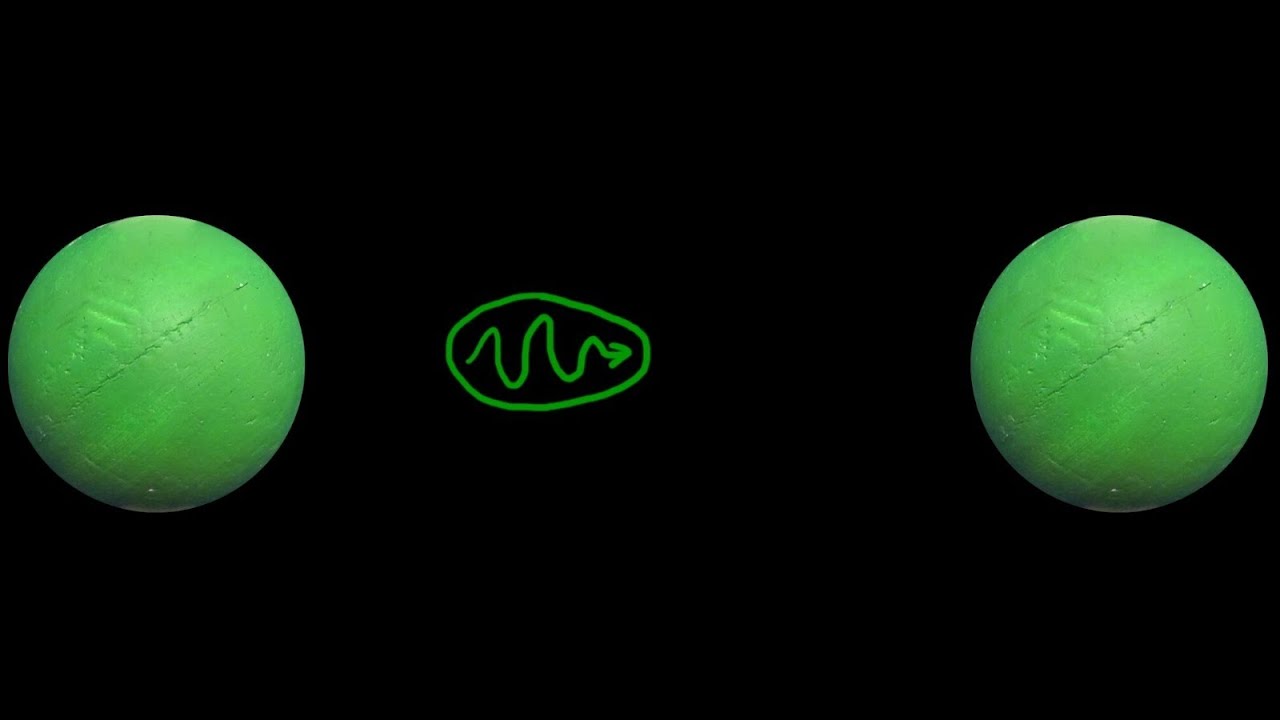
Can we really touch things? Well if by touch we mean exchange a force-carrying particle with, then yes. The photon is the force-carrier of the electromagnetic interaction. But if the photon is also a particle of light then why aren't magnets glowing? Because the photons are virtual particles, which means they can't be directly detected (without changing the outcome we are trying to measure.
Supported by Audible: http://bit.ly/ZJ5Q6z
Who would win in a chin-up competition between me and MinutePhysics? What is going to be the most exciting area of scientific discovery in the next few decades? Where can you get a Veritasium t-shirt? http://dft.ba/-vetshirt
Huge thanks to Brady, CGP Grey, and Henry for their cameos.
Thank you to PhET for the Bohr model simulation: http://phet.colorado.edu/
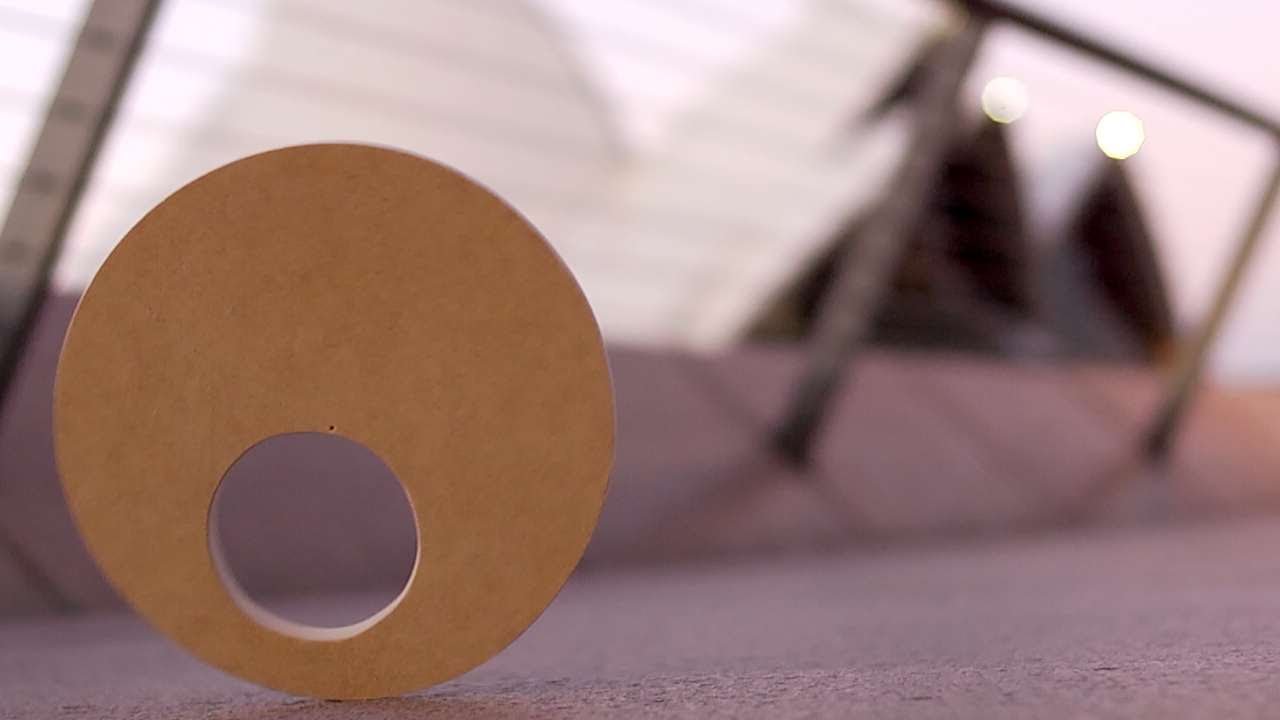
Objects hang heavy side down, but what happens when you spin an asymmetrically weighted disk - well the heavy part actually rises to the top. Why is this?

We also made a video about laser cooling! http://bit.ly/PhysGirl
Check out Audible: http://bit.ly/AudibleVe
Check out Beyond Slow Motion: http://bit.ly/VeBeyondSlowMo
More on this topic: http://wke.lt/w/s/ef3eV
Special thanks to Laser Away in Santa Monica for helping make this happen - your staff was awesome! http://bit.ly/VeLaserAway
Research and filming by Raquel Nuno and Aaron White.

In Queenstown, New Zealand, I jumped off the Kawarau Bridge - the site of the first bungy jump. It was a thrilling experience, preceded by a terrifying, gut-wrenching half hour wait. All in all an awesome adventure, even if the woman fitting my harness didn't know the first thing about the acceleration of free-falling bodies.

When is the acceleration (rate of speeding up or slowing down) greatest during a bungy jump?

A quote by Einstein: A human being is a part of the whole, called by us "Universe", a part limited in time and space. He experiences himself, his thoughts and feelings as something separated from the rest — a kind of optical delusion of his consciousness. This delusion is a kind of prison for us, restricting us to our personal desires and to affection for a few persons nearest to us. Our task must be to free ourselves from this prison by widening our circle of compassion to embrace all living creatures and the whole of nature in its beauty. Nobody is able to achieve this completely, but the striving for such achievement is in itself a part of the liberation and a foundation for inner security.
