Top Vídeos

Rheingold - River (Fluss English Version)
River, you're flowing on the ????
Picking out your programmed way
Trace, your timeless trip through
Deutschland
????????????? super regional
Tones keep flowing like currents steadily
Currents are controlling our melody
You, know fortresses in ruins
Mirror glass and stainless steel
We, will build on microcircuits
And we're thinking digitally
Tones keep flowing like currents steadily
Currents are controlling our melody
River, we're living by your sides now
Transforming you into AC [Alternate Current]
You, you tell of days gone bye
Waves reflecting chromatically
Tones keep flowing like currents steadily
Currents are controlling our melody
River, you're flowing on the ????
Picking out your programmed way
Trace, your timeless trip through
Deutschland
????????????? super regional
Tones keep flowing like currents steadily
Currents are controlling our melody
----------------------------------------------
Fluss, Du fließt in alter Weise
durch Dein programmiertes Tal
in zeitloser Deutschlandreise
so schön und überregional.
Töne fließen wie ein Strom den Fluss
hinauf
Ströme steuern diesen neuen Tonverlauf.
Du kennst Burgen und Ruinen,
Spiegelglas und Edelstahl.
Wir, wir bauen auf Platinen
und denken digital.
Töne fließen wie ein Strom den Fluss
hinauf
Ströme steuern diesen neuen Tonverlauf.
Fluß, man lebt an Deinen Seiten
und macht dicht zum Wechselstrom,
du erzählst von alten Zeiten,
Wellen spiegeln sich in Chrom.
Töne fließen wie ein Strom den Fluss
hinauf
Ströme steuern diesen neuen Tonverlauf.
Fluss, Du fließt in alter Weise
durch Dein programmiertes Tal
in zeitloser Deutschlandreise
so schön und überregional.
Töne fließen wie ein Strom den Fluss
hinauf
Ströme steuern diesen neuen Tonverlauf.

(0:00) 1.White China________________________(17:53) 5.Man of Two Worlds
(3:51) 2.One Small Day______________________(22:22) 6.Heart of the Country
(8:25) 3.Dancing with Tears in My Eyes_______(27:31) 7.When the Time Comes
(13:09) 4.Lament____________________________(32:32) 8.A Friend I Call Desire
Ⓟ&Ⓒ 1984 Chrysalis.
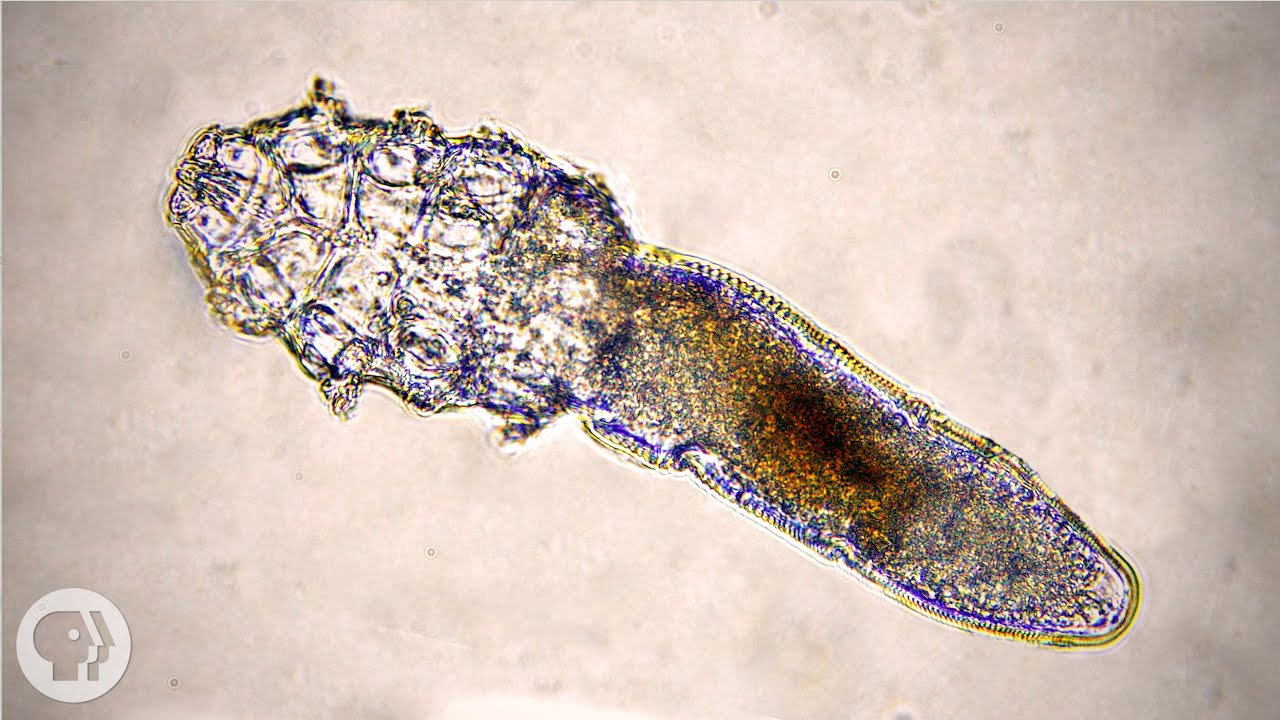
Yep, you probably have Demodex mites living on your face. These tiny arachnids feast on sebum, the greasy oil in your pores. But should you be worried about your eight-legged guests?
SUBSCRIBE to Deep Look! http://goo.gl/8NwXqt
Please support us on Patreon! https://www.patreon.com/deeplook
DEEP LOOK is a ultra-HD (4K) short video series created by KQED San Francisco and presented by PBS Digital Studios. See the unseen at the very edge of our visible world. Explore big scientific mysteries by going incredibly small.
Pretty much every adult human alive has a population of these mites living on them.
Also called eyelash mites, they’re too small to see with the naked eye. They’re mostly transparent, and at about .3 millimeters long, it would take about five face adult mites laid end to end to stretch across the head of a pin.
Face mites spend their days face-down inside your hair follicles nestled up against the hair shaft.
They eat sebum, that greasy oil your skin makes to protect itself and keep it from drying out. That’s why the greasiest parts of your body — like around the eyes, nose and mouth — likely harbor a higher concentration of mites than other areas.
They live about two weeks. They spend most of their time tucked inside our pores. But while we’re sleeping, they crawl out onto the surface of our skin to mate before crawling back into our pores to lay their eggs. Fun!
--- How common are face mites?
Pretty much everyone has some face mites on them. Babies are born without them but quickly receive them from their parents through direct contact. The amount of mites may increase during puberty when the skin starts to produce more oil.
--- How do you get rid of face mites?
There’s usually no need to try to rid yourself of face mites as they typically don’t cause any symptoms and are nearly impossible to fully eradicate. Since female face mites can also reproduce asexually, it only takes one mite to repopulate your skin. Some people experience an overpopulation of face mites resulting in an inflammatory disease called demodicosis which is easy to recognize sue to the many small evenly-sized pimples that appear quickly. Consult a dermatologist if you think you may have symptoms.
--- What do face mites eat?
Face mites consume the greasy oil that you skin produces to protect itself.
---+ Read the entire article on KQED
https://www.kqed.org/science/1....941506/these-face-mi
---+ More Great Deep Look episodes:
How Lice Turn Your Hair Into Their Jungle Gym | Deep Look
https://www.youtube.com/watch?v=Yb26BBvAAWU&t=1s
How Ticks Dig In With a Mouth Full of Hooks | Deep Look
https://www.youtube.com/watch?v=_IoOJu2_FKE
---+ Shoutout!
?Congratulations? to jac lyn, Vanessa C u later, aspireme_95, Émile Julien, and Nono Chan who correctly identified the part of this animal that is, well… missing. Demodex lack an anus! Se the Community Tab post here: https://www.youtube.com/channe....l/UC-3SbfTPJsL8fJAPK
---+ Thank you to our Top Patreon Supporters ($10+ per month)!
Ahegao Comics, Allen, Aurora Mitchell, Beckie, Ben Espey, Bill Cass, Breanna Tarnawsky, Carlos Zepeda, Chris B Emrick, Chris Murphy, Companion Cube, Cooper Caraway, Daisuke Goto, Daniel Weinstein, David Deshpande, Edwin Rivas, Elizabeth Ann Ditz, Elizabeth Wolden, Ivan Alexander, Iver Soto, Jane Orbuch, JanetFromAnotherPlanet, Jason Buberel, Jeanine Womble, Jenn's Bowtique, Jeremy Lambert, Jiayang Li, Joao Ascensao, johanna reis, Johnnyonnyful, Joshua Murallon Robertson, Justin Bull, Karen Reynolds, Kristell Esquivel , KW, Kyle Fisher, Laurel Przybylski, Levi Cai, Lyall Talarico, Mario Rahmani, Marjorie D Miller, Mark Joshua Bernardo, Michael Mieczkowski, Monica Albe, Nathan Padilla, Nathan Wright, Pamela Parker, PM Daeley, Ricardo Martinez, Robert Amling, Robert Warner, Sayantan Dasgupta, Sean Tucker, Shelley Pearson Cranshaw, Shirley Washburn, SueEllen McCann, Tatianna Bartlett, Tea Torvinen, TierZoo, Tommy Tran, Two Box Fish, WhatzGames, Willy Nursalim
---+ Follow KQED Science and Deep Look:
Patreon: https://www.patreon.com/deeplook
Instagram: https://www.instagram.com/kqedscience/
Twitter: https://www.twitter.com/kqedscience
KQED Science on kqed.org: http://www.kqed.org/science
Facebook Watch: https://www.facebook.com/DeepLookPBS/
---+ About KQED
KQED, an NPR and PBS affiliate in San Francisco, CA, serves Northern California and beyond with a public-supported alternative to commercial TV, Radio and web media.
Funding for Deep Look is provided in part by PBS Digital Studios. Deep Look is a project of KQED Science, which is also supported by the National Science Foundation, the Templeton Religion Trust, the Templeton World Charity Foundation, the S. D. Bechtel, Jr. Foundation, the Dirk and Charlene Kabcenell Foundation, the Vadasz Family Foundation, the Gordon and Betty Moore Foundation, the Fuhs Family Foundation and the members of KQED.
#facemites #demodex #deeplook

Porcupines may be adorable, but their quills are razor-sharp, designed to impale and next to impossible to remove. But it's not all bad news. Researchers are designing new surgical staples that mimic the quill's shape to better close wounds and promote healing.
Check our PBS Sound Field!
https://www.youtube.com/channe....l/UCvMLMyKPomE6kTTL9
Meet Seth Samuel, Deep Look Composer!
https://www.patreon.com/posts/25828498
SUBSCRIBE to Deep Look! http://goo.gl/8NwXqt
DEEP LOOK is a ultra-HD (4K) short video series created by KQED San Francisco and presented by PBS Digital Studios. Explore big scientific mysteries by going incredibly small.
The quills of North American porcupines have microscopic backward-facing barbs on the tips. Those barbs make the quills slide in easy but very difficult to remove.
Researchers at Harvard are looking to porcupine quills for inspiration in designing a new type of surgical staple that would also use tiny barbs to keep itself lodged into the patient’s skin. This helps because traditional staples curve in under the skin to keep the staple in place. This creates more damage and can provide a place for bacteria to infect the wound.
--- How do porcupines defend themselves?
If threatened, a porcupine will bristle, raising its quills. The quills are densest in an area on the porcupine's back called the rosette. The quills are coated in a grease secreted by the porcupine’s skin. When the porcupine exposes its quills it releases a musky odor unique to porcupines that serves as a warning.
The porcupine turns so that it’s head faces away from the attacker and chatters its teeth to make an audible warning. If that’s not enough, he porcupine will use its muscular tail, covered in quills, to slap their attacker if they get too close.
--- Do porcupines shoot their quills?
Porcupines do not shoot their quills out. That’s a myth. Porcupine quills are held by their skin in a way that makes them difficult to fall out unless pushed in first, usually by contact with an attacker. The tail moves so quickly that it can appear that it is shooting the quills out.
---+ Read the entire article on KQED Science:
https://ww2.kqed.org/science/2....019/04/09/porcupines
---+ For more information:
Professor Uldis Roze studies North American porcupines at Queens College at the City University of New York:
http://biology.qc.cuny.edu/peo....ple/faculty/dr-uldis
Dr. Jeff Karp is developing a new type of surgical staple inspired by the barbs on North American porcupine quills.
http://www.karplab.net/portfol....io-item/porcupine-in
---+ More Great Deep Look episodes:
How Lice Turn Your Hair Into Their Jungle Gym | Deep Look
https://www.youtube.com/watch?v=Yb26BBvAAWU&list=PLdKlciEDdCQBpNSC7BIONruffF_ab4cqK&index=47
Take Two Leeches and Call Me in the Morning | Deep Look
https://www.youtube.com/watch?v=O-0SFWPLaII&list=PLdKlciEDdCQBpNSC7BIONruffF_ab4cqK&index=19
---+ Shoutout!
Congratulations to ?Snowcube94, Marley Kang, Mr Spooks, David Bouslov, and NonEuclideanDreams?, who were the first to correctly ID the muscle (arrector pili) and a scientific name for the phenomenon known as goose bumps (piloerection, horripilation, or cutis anserina), over at the Deep Look Community Tab:
https://www.youtube.com/channe....l/UC-3SbfTPJsL8fJAPK
---+ Thank you to our Top Patreon Supporters ($10+ per month)!
Bill Cass, Justin Bull, Daniel Weinstein, Chris B Emrick, Karen Reynolds, Jeremy Lambert, David Deshpande, Daisuke Goto, Bugeyed.fr, WhatzGames, Elizabeth Ann Ditz, Robert Warner, Shirley Washburn, Tatianna Bartlett, KW, Tanya Finch, Elizabeth Wolden, Sayantan Dasgupta, Monica Albe, Willy Nursalim, Jenn's Bowtique, Jane Orbuch, Laurel Przybylski, Johnnyonnyful, Levi Cai, Jason Buberel, Mark Joshua Bernardo, Michael Mieczkowski, Jeanine Womble, Aurora Mitchell, Edwin Rivas, Marjorie D Miller, Companion Cube, Chris Murphy, Joao Ascensao, Two Box Fish, PM Daeley, TierZoo, Robert Amling, Shelley Pearson Cranshaw, Mario Rahmani
---+ Follow KQED Science and Deep Look:
Patreon: https://www.patreon.com/deeplook
Instagram: https://www.instagram.com/kqedscience/
Twitter: https://www.twitter.com/kqedscience
KQED Science on kqed.org: http://www.kqed.org/science
Facebook Watch: https://www.facebook.com/DeepLookPBS/
---+ About KQED
KQED, an NPR and PBS affiliate in San Francisco, CA, serves Northern California and beyond with a public-supported alternative to commercial TV, Radio and web media.
Funding for Deep Look is provided in part by PBS Digital Studios. Deep Look is a project of KQED Science, which is also supported by the National Science Foundation, the Templeton Religion Trust, the Templeton World Charity Foundation, the S. D. Bechtel, Jr. Foundation, the Dirk and Charlene Kabcenell Foundation, the Vadasz Family Foundation, the Gordon and Betty Moore Foundation, the Fuhs Family Foundation and the members of KQED.
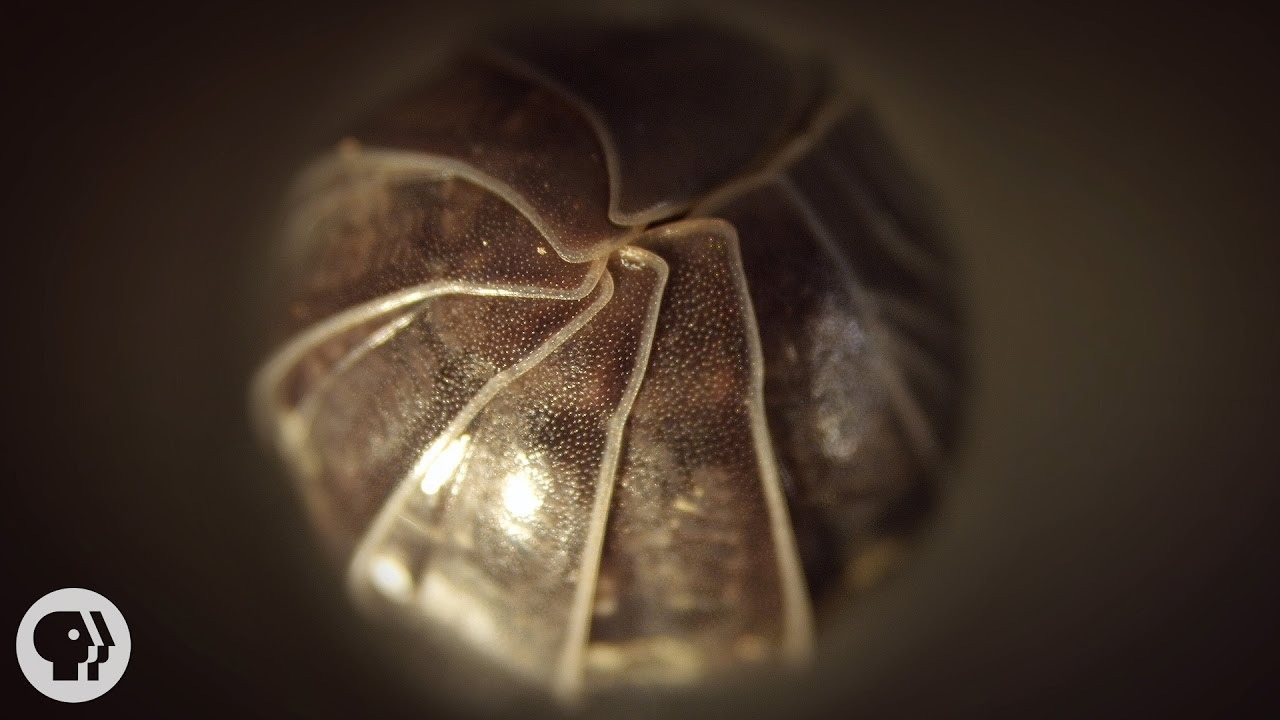
Pill bugs. Doodle bugs. Potato bugs. Wood Shrimp. Whatever you call them, there’s something less creepy about these critters than other insects. Maybe it’s because they’re not insects at all.
SUBSCRIBE to Deep Look! http://goo.gl/8NwXqt
DEEP LOOK is a ultra-HD (4K) short video series created by KQED San Francisco and presented by PBS Digital Studios. See the unseen at the very edge of our visible world. Get a new perspective on our place in the universe. Explore big scientific mysteries by going incredibly small.
* NEW VIDEOS EVERY OTHER TUESDAY! *
With winter rains, Bay Area pill bugs are out in force. Fortunately, they’re one of our most beloved “bugs.” Pill bugs. Doodle bugs. Potato bugs. Wood Shrimp. Whatever you call them, there’s something less creepy about these critters than other insects. Maybe it’s because they’re not insects at all.
Pill bugs are more closely related to a shrimp and lobsters than crickets or butterflies. Their ancestors lived in the sea, but ancient pill bugs crawled out millions of years ago to carve a life for themselves on dry land.
You can see the evidence if you take a close look at them, so that’s exactly what we did for this episode of Deep Look, an ultra-high definition wildlife video series produced by KQED and PBS DIgital Studios.
“Kids love them,” said Jonathan Wright, a professor of biology at Pomona College who studies the charismatic creepy-crawlies. After all, who hasn’t delighted as a youth in annoying a pill bug until it defensively curls up into a little armored ball?
Some adventurous foragers even eat pill bugs. Their flavor is said to resemble other crustaceans, earning pill bugs the moniker “wood shrimp”.
“I personally haven’t tasted one,” said Wright, “but I’ve spoken to people that have. They didn’t get a particularly high approval rating. Pill bugs have a lot of soil in their gut.”
They may not be ready to replace shrimp as an appetizer, but according to Wright, the evidence of the pill bug’s evolutionary lineage lies underneath its shell.
--- What are pill bugs related to?
Pill bugs are terrestrial crustaceans. They’re more closely related to marine creatures like lobsters and shrimp than crickets or other insects.
--- If pill bugs have gills, can they survive underwater?
Most pill bugs will drown within a few hours if submerged because their pleopod gills have become better at removing oxygen from air and less good at removing oxygen from water
--- Why do pill bugs roll into a ball?
Pill bugs roll into a ball to protect themselves from potential predators. They will also roll up, a process called conglobation, to keep from drying out if they don’t have access to enough moisture.
--- What do pill bugs eat?
Pill bugs mostly eat decaying plant matter but also consume fungus, algae and lichens.
---+ Read the entire article on KQED Science:
https://ww2.kqed.org/science/2....017/01/17/roly-polie
---+ For more information:
Respiratory physiology of the Oniscidea: Aerobic capacity and the significance of pleopodal lungs. Jonathan C. Wright and Kevin Ting
---+ More Great Deep Look episodes:
The Double-Crossing Ants to Whom Friendship Means Nothing
https://www.youtube.com/watch?v=fguo3HvWjb0
The Snail-Smashing, Fish-Spearing, Eye-Popping Mantis Shrimp
https://www.youtube.com/watch?v=Lm1ChtK9QDU
These Termites Turn Your House into a Palace of Poop
https://www.youtube.com/watch?v=DYPQ1Tjp0ew&t=83s
---+ See some great videos and documentaries from the PBS Digital Studios!
A Venus Flytrap Works Just Like Your Brain | Brain Craft
https://www.youtube.com/watch?v=s0prAxQTuAA
What are antibubbles? | Physics Girl
https://www.youtube.com/watch?v=w5UMyck8D64
---+ Follow KQED Science:
KQED Science: http://www.kqed.org/science
Tumblr: http://kqedscience.tumblr.com
Twitter: https://www.twitter.com/kqedscience
---+ About KQED
KQED, an NPR and PBS affiliate in San Francisco, CA, serves Northern California and beyond with a public-supported alternative to commercial TV, Radio and web media.
Funding for Deep Look is provided in part by PBS Digital Studios and the John S. and James L. Knight Foundation. Deep Look is a project of KQED Science, which is also supported by HopeLab, the S. D. Bechtel, Jr. Foundation, the Dirk and Charlene Kabcenell Foundation, the Vadasz Family Foundation, the Gordon and Betty Moore Foundation, the Smart Family Foundation and the members of KQED.
#deeplook #pillbug #isopod

Join Deep Look on Patreon NOW!
https://www.patreon.com/deeplook
Cone Snails have an arsenal of tools and weapons under their pretty shells. These reef-dwelling hunters nab their prey in microseconds, then slowly eat them alive.
SUBSCRIBE to Deep Look! http://goo.gl/8NwXqt
DEEP LOOK is a ultra-HD (4K) short video series created by KQED San Francisco and presented by PBS Digital Studios. See the unseen at the very edge of our visible world. Explore big scientific mysteries by going incredibly small.
New research shows that cone snails — ocean-dwelling mollusks known for their brightly colored shells — attack their prey faster than almost any member of the animal kingdom.
There are hundreds of species of these normally slow-moving hunters found in oceans across the world. They take down fish, worms and other snails using a hollow, harpoon-like tooth that acts like a spear and a hypodermic needle. When they impale their prey, cone snails inject a chemical cocktail that subdues their meal and gives them time to dine at their leisure.
Cone snails launch their harpoons so quickly that scientists were previously unable to capture the movement on camera, making it impossible to calculate just how speedy these snails are. Now, using super-high-speed video, researchers have filmed the full flight of the harpoon for the first time.
From start to finish, the harpoon’s flight takes less than 200 micro-seconds. That’s one five-thousandth of a second. It launches with an acceleration equivalent to a bullet fired from a pistol.
So how do these sedentary snails pull off such a high-octane feat? Hydrostatic pressure — the pressure from fluid — builds within the half of the snail’s proboscis closest to its body, locked behind a tight o-ring of muscle. When it comes time to strike, the muscle relaxes, and the venom-laced fluid punches into the harpoon’s bulbous base. This pressure launches the harpoon out into the snail’s unsuspecting prey.
As fast as the harpoon launches, it comes to an even more abrupt stop. The base of the harpoon gets caught at the end of the proboscis so the snail can reel in its meal.
The high-speed action doesn’t stop with the harpoon. Cone snail venom acts fast, subduing fish in as little as a few seconds. The venom is filled with unique molecules, broadly referred to as conotoxins.
The composition of cone snail venom varies from species to species, and even between individuals of the same species, creating a library of potential new drugs that researchers are eager to mine. In combination, these chemicals work together to rapidly paralyze a cone snail’s prey. Individually, some molecules from cone snail venom can provide non-opioid pain relief, and could potentially treat Parkinson’s disease or cancer.
--- Where do cone snails live?
There are 500 species of cone snails living in the Indian and Pacific Oceans, the Caribbean and Red Seas, and the Florida coast.
--- Can cone snails kill humans?
Most of them do not. Only eight of those 500 species, including the geography cone, have been known to kill humans.
--- Why are scientists interested in cone snails?
Cone snail venom is derived from thousands of small molecules call peptides that the snail makes under its shell. These peptides produce different effects on cells, which scientists hope to manipulate in the treatment of various diseases.
---+ Read the entire article on KQED Science:
https://wp.me/p6iq8L-84uC
---+ For more information:
Here’s what WebMD says about treating a cone snail sting:
https://www.webmd.com/a-to-z-g....uides/cone-snail-sti
---+ More Great Deep Look episodes:
This Mushroom Starts Killing You Before You Even Realize It
https://www.youtube.com/watch?v=bl9aCH2QaQY
Take Two Leeches and Call Me in the Morning
https://youtu.be/O-0SFWPLaII
---+ See some great videos and documentaries from the PBS Digital Studios!
Space Time: Quantum Mechanics Playlist
https://www.youtube.com/watch?v=-IfmgyXs7z8&list=PLsPUh22kYmNCGaVGuGfKfJl-6RdHiCjo1
Above The Noise: Endangered Species: Worth Saving from Extinction?
https://www.youtube.com/watch?v=h5eTqjzQZDY
---+ Follow KQED Science:
KQED Science: http://www.kqed.org/science
Tumblr: http://kqedscience.tumblr.com
Twitter: https://www.twitter.com/kqedscience
---+ About KQED
KQED, an NPR and PBS affiliate in San Francisco, CA, serves Northern California and beyond with a public-supported alternative to commercial TV, Radio and web media.
Funding for Deep Look is provided in part by PBS Digital Studios. Deep Look is a project of KQED Science, which is supported by the Templeton Religion Trust and the Templeton World Charity Foundation, the S. D. Bechtel, Jr. Foundation, the Dirk and Charlene Kabcenell Foundation, the Vadasz Family Foundation, the Gordon and Betty Moore Foundation, the Fuhs Family Foundation Fund and the members of KQED.
#deeplook
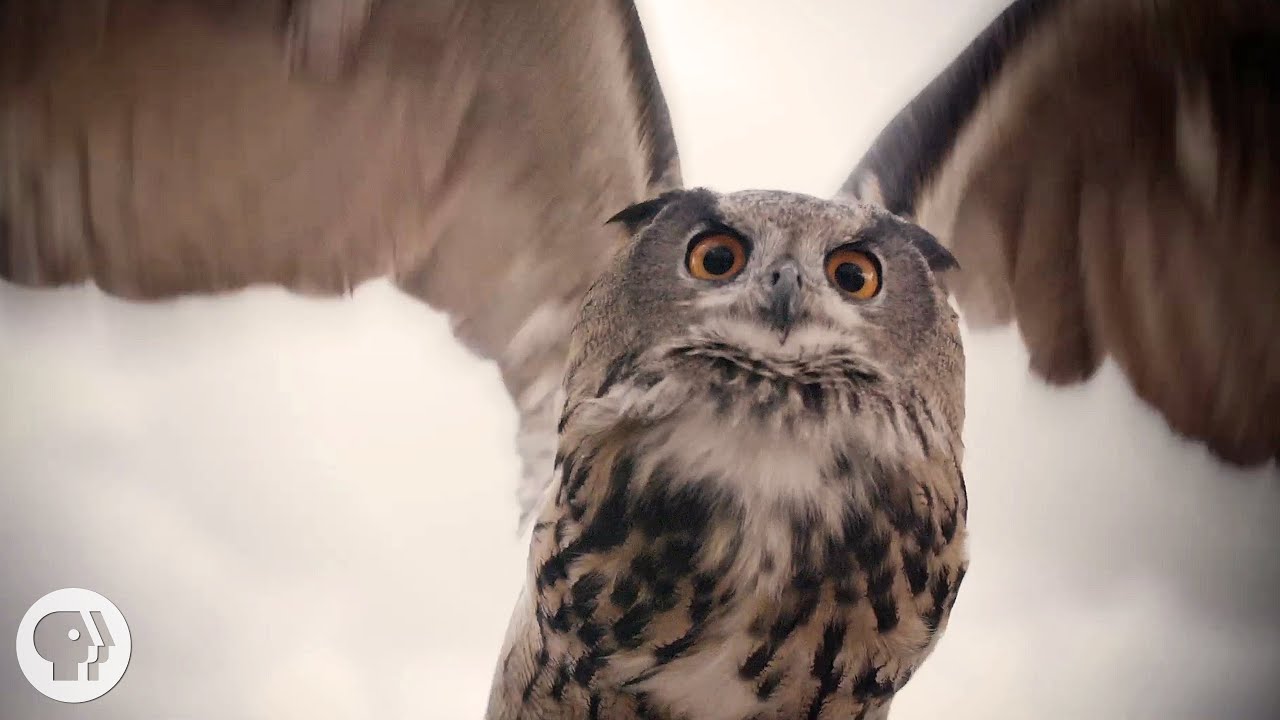
It's stealth, not speed that makes owls such exceptional hunters. Zoom way in on their phenomenal feathers to see what makes them whisper-quiet.
SUBSCRIBE to Deep Look! http://goo.gl/8NwXqt
DEEP LOOK: a new ultra-HD (4K) short video series created by KQED San Francisco and presented by PBS Digital Studios. See the unseen at the very edge of our visible world. Get a new perspective on our place in the universe and meet extraordinary new friends. Explore big scientific mysteries by going incredibly small.
--- How do owls hunt silently?
When birds flap their wings it creates turbulences in the air as it rushes over their wings. In general, the larger a bird is and the faster it flies, the larger the turbulence created and that means more sound.
The feathers at the leading edge of an owl’s wings have an unusual serrated appearance, referred to as a comb or fringe. The tiny hooked projections stick out and break up the wind as it flows over the owl’s wings reducing the size and sound of the turbulences.
Owl feathers go one step further to control sound. When viewed up-close, owl feathers appear velvety. The furry texture absorbs and dampens sound like a sound blanket. It also allows the feathers to quietly slide past each other in flight, reducing rusting sounds.
--- Why do owls hunt at night?
Owls belong to a group called raptors which also so includes with hawks, eagles and falcons. Most of these birds of prey hunt during the day and rely on. But unlike most other raptors, the roughly 200 species of owl are generally nocturnal while others are crepuscular, meaning that they’re active around dawn and dusk.
They have extremely powerful low-light vision, and finely tuned hearing which allows them to locate the source of even the smallest sound. Owls simply hide and wait for their prey to betray its own location. As ambush hunters, owls tend to rely on surprise more often than their ability to give chase.
--- Why do owls hoot?
With Halloween around the corner, you might have noticed a familiar sound in the night. It’s mating season for owls and the sound of their hooting fills the darkness.
According to Chris Clark, an an assistant professor of biology at UC Riverside,, “The reason why owls are getting ready to breed right now in the late fall is because they breed earlier than most birds. The bigger the bird the longer it takes for them to incubate their eggs and for the nestlings to hatch out and or the fledglings to leave the nest. Owls try to breed really early because they want their babies to be leaving the nest and practicing hunting right when there are lots of baby animals around like baby rabbits that are easy prey.”
--- More great DEEP LOOK episodes:
Halloween Special: Watch Flesh-Eating Beetles Strip Bodies to the Bone
https://www.youtube.com/watch?v=Np0hJGKrIWg
What Happens When You Put a Hummingbird in a Wind Tunnel?
https://www.youtube.com/watch?v=JyqY64ovjfY
You're Not Hallucinating. That's Just Squid Skin.
https://www.youtube.com/watch?v=0wtLrlIKvJE
--- Super videos from the PBS Digital Studios Network!
Did Dinosaurs Really Go Extinct? - It's Okay to be Smart
https://www.youtube.com/watch?v=3_RLz0whDv4
The Surprising Ways Death Shapes Our Lives - BrainCraft
https://www.youtube.com/watch?v=Joalg73L_gw
Crazy pool vortex - Physics Girl
https://www.youtube.com/watch?v=pnbJEg9r1o8
--- More KQED SCIENCE:
Tumblr: http://kqedscience.tumblr.com
Twitter: https://www.twitter.com/kqedscience
KQED Science: http://www.kqed.org/science
Funding for Deep Look is provided in part by PBS Digital Studios and the John S. and James L. Knight Foundation. Deep Look is a project of KQED Science, which is supported by HopeLab, The David B. Gold Foundation; S. D. Bechtel, Jr. Foundation; The Dirk and Charlene Kabcenell Foundation; The Vadasz Family Foundation; Smart Family Foundation and the members of KQED.
#deeplook

Take the PBSDS survey: https://to.pbs.org/2018YTSurvey
Explore our VR slug and support us on Patreon! https://www.patreon.com/deeplook
Nudibranchs may look cute, squishy and defenseless ... but watch out. These brightly-colored sea slugs aren't above stealing weapons from their prey.
SUBSCRIBE to Deep Look! http://goo.gl/8NwXqt
DEEP LOOK is a ultra-HD (4K) short video series created by KQED San Francisco and presented by PBS Digital Studios. See the unseen at the very edge of our visible world. Explore big scientific mysteries by going incredibly small.
The summer months bring low morning tides along the California coast, providing an opportunity to see one of the state’s most unusual inhabitants, sea slugs.
Also called nudibranchs, many of these relatives of snails are brightly colored and stand out among the seaweed and anemones living next to them in tidepools.
“Some of them are bright red, blue, yellow -- you name it,” said Terry Gosliner, senior curator of invertebrate zoology and geology at the California Academy of Sciences in San Francisco. “They're kind of designer slugs.”
But without a protective shell, big jaws or sharp claws, how do these squishy little creatures get away with such flamboyant colors in a habitat full of predators?
As it turns out, the nudibranchs’ colors serve as a warning to predators: These sea slugs are packing some very sophisticated defenses. And some aren’t above stealing weapons from their prey.
Gosliner and Brenna Green and Emily Otstott, graduate students at San Francisco State University, were out at dawn earlier this summer searching tidepools and floating docks around the Bay Area. They want to learn more about how these delicate little sea slugs survive and how changing ocean temperatures might threaten their futures.
Nudibranchs come in a staggering variety of shapes and sizes. Many accumulate toxic or bad-tasting chemicals from their prey, causing predators like fish and crabs to learn that the flashy colors mean the nudibranch wouldn’t make a good meal.
--- What are nudibranchs?
Nudibranchs are snails that lost their shell over evolutionary time. Since they don’t have a shell for protection, they have to use other ways to defend themselves like accumulating toxic chemicals in their flesh to make them taste bad to predators. Some species of nudibranchs eat relatives of jellyfish and accumulate the stingers within their bodies for defense.
--- Why do nudibranchs have such bright colors?
The bright colors serve as a signal to the nudibranch’s predators that they are not good to eat. If a fish or crab bites a nudibranch, it learns to associate the bad taste with the bright colors which tends to make them reluctant to bite a nudibranch with those colors in the future.
--- What does nudibranch mean?
The word nudibranch comes from Latin. It means naked gills. They got that name because some species of nudibranchs have an exposed ring of gills on their back that they use to breath.
---+ Read the entire article on KQED Science:
https://www.kqed.org/science/1....929993/this-adorable
---+ For more information:
Learn more about Terry Gosliner’s work with nudibranchs
https://www.calacademy.org/sta....ff/ibss/invertebrate
Learn more about Chris Lowe’s work with plankton
http://lowe.stanford.edu/
Learn more about Jessica Goodheart’s study of nematocyst sequestration
https://onlinelibrary.wiley.co....m/doi/full/10.1111/i
---+ More Great Deep Look episodes:
From Drifter to Dynamo: The Story of Plankton | Deep Look
https://youtu.be/jUvJ5ANH86I
For Pacific Mole Crabs It's Dig or Die | Deep Look
https://youtu.be/tfoYD8pAsMw
The Amazing Life of Sand | Deep Look
https://youtu.be/VkrQ9QuKprE
---+ See some great videos and documentaries from PBS Digital Studios!
Why Are Hurricanes Getting Stronger? | Hot Mess
https://youtu.be/2E1Nt7JQRzc
When Fish Wore Armor | Eons
https://youtu.be/5pVTZH1LyTw
Why Do We Wash Our Hands After Going to the Bathroom? | Origin of Everything
https://youtu.be/fKlpGs34-_g
---+ Follow KQED Science and Deep Look:
Instagram: https://www.instagram.com/kqedscience/
Twitter: https://www.twitter.com/kqedscience
KQED Science on kqed.org: http://www.kqed.org/science
Facebook Watch: https://www.facebook.com/DeepLookPBS/
Patreon: https://www.patreon.com/deeplook
---+ About KQED
KQED, an NPR and PBS affiliate in San Francisco, CA, serves Northern California and beyond with a public-supported alternative to commercial TV, Radio and web media.
Funding for Deep Look is provided in part by PBS Digital Studios. Deep Look is a project of KQED Science, which is supported by the Templeton Religion Trust and the Templeton World Charity Foundation, the S. D. Bechtel, Jr. Foundation, the Dirk and Charlene Kabcenell Foundation, the Vadasz Family Foundation, the Gordon and Betty Moore Foundation, the Fuhs Family Foundation Fund and the members of KQED.
#deeplook #nudibranch #seaslug

Dermestid Beetles are fast and fastidious eaters. They can pick a carcass clean in just days leaving even the most delicate bone structures intact. This makes them the perfect tool for museum scientists-- if you keep them far, far away from valuable collections.
SUBSCRIBE: http://goo.gl/8NwXqt
In nature, Dermestid Beetles are death-homing devices. They’ll find a dead body about a week after death and lay eggs in the drying flesh. The larvae emerge with a voracious appetite, outgrowing their skins six to eight times in just days before pupating, becoming adults and flying away to start a new colony.
These Dermestid Beetles at the Museum of Vertebrate Zoology at UC Berkeley are direct descendants from the original colony established in this museum in 1924. The process now used at museums around the world was pioneered here. These are the beetles you see here in this flesh-eating beetles time lapse.
Scientists in the prep lab downstairs receive nearly a thousand carcasses a year. It’s their job to preserve each animal for long-term use in the collections upstairs. And the work is not for the squeamish.
What makes beetles ideal for cleaning museum specimens is that they’re fast and fastidious eaters. They can pick a carcass clean while leaving even the most delicate bone structures intact.
It takes a large beetle colony 24 – 48 hours to clean the bones of small animals like rabbits and owls, and they can work on 100 - 200 specimens at a time. Larger animals like deer or coyotes take about a week.
But the alliance between beetles and museum is an uneasy one. Downstairs the beetles are a critical tool. But if Dermestids got loose upstairs, they could wreak havoc in the library stacks, munching through specimen drawers and ruining entire collections.
--- More KQED SCIENCE:
Tumblr: http://kqedscience.tumblr.com
Twitter: https://www.twitter.com/kqedscience
KQED Science: http://ww2.kqed.org/science
---
More great DEEP LOOK episodes:
Where Are the Ants Carrying All Those Leaves?
https://www.youtube.com/watch?v=-6oKJ5FGk24
What Happens When You Put a Hummingbird in a Wind Tunnel?
https://www.youtube.com/watch?v=JyqY64ovjfY
Pygmy Seahorses: Masters of Camouflage
https://www.youtube.com/watch?v=Q3CtGoqz3ww
Related videos from the PBS Digital Studios Network!
Can Microbes Solve Murder Mysteries? - Gross Science
https://www.youtube.com/watch?v=kRUt9pqMCSg
The Surprising Ways Death Shapes Our Lives - BrainCraft
https://www.youtube.com/watch?v=Joalg73L_gw
Do Animals Mourn Their Dead? - It's Okay to Be Smart (ft. BrainCraft and Gross Science!)
https://www.youtube.com/watch?v=rHJDmMSKlHM
--- More KQED SCIENCE:
Tumblr: http://kqedscience.tumblr.com
Twitter: https://www.twitter.com/kqedscience
KQED Science: http://ww2.kqed.org/science
Funding for Deep Look is provided in part by PBS Digital Studios and the John S. and James L. Knight Foundation. Deep Look is a project of KQED Science, which is supported by HopeLab, The David B. Gold Foundation; S. D. Bechtel, Jr. Foundation; The Dirk and Charlene Kabcenell Foundation; The Vadasz Family Foundation; Smart Family Foundation and the members of KQED.
#deeplook #dermestids #dermestidbeetle
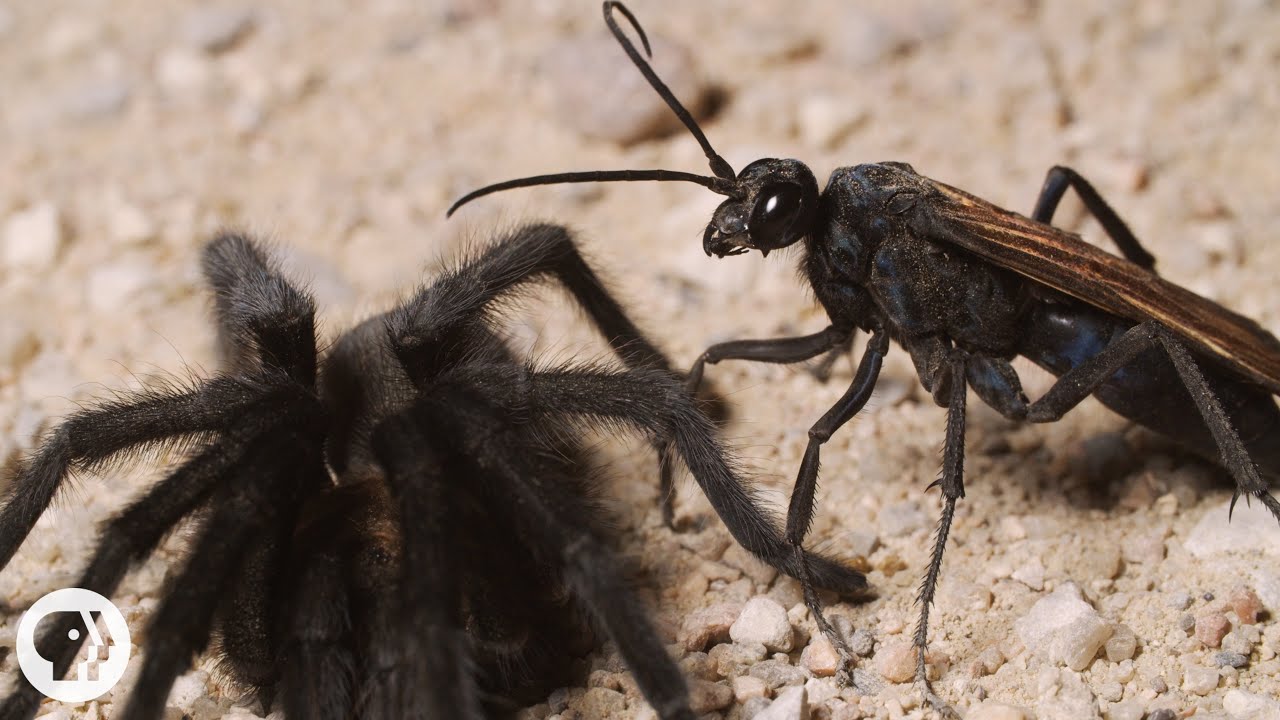
Every fall, male tarantulas leave home for good with one thing on their minds: sex. But before these spiders can make the ultimate connection, they have to survive the perils of the open road...which include their potential mates.
Please join our community on Patreon! https://www.patreon.com/deeplook
SUBSCRIBE to Deep Look! http://goo.gl/8NwXqt
DEEP LOOK is a ultra-HD (4K) short video series created by KQED San Francisco and presented by PBS Digital Studios. See the unseen at the very edge of our visible world. Explore big scientific mysteries by going incredibly small.
--
Every September, a generation of newly mature male tarantulas leave their underground homes to wander the landscape south of La Junta, Colorado, to look for mates. The lucky males will find females, who remain near their dens the whole lives, and possibly mate. But this so-called “migration” is a one‐way trip.
Among the many risks for these itinerant tarantulas, besides running out of time and becoming roadkill, are the local tarantula hawks. The two‐inch long, blue‐and‐gold wasps pounce on the unsuspecting arachnid travelers, hit them with a paralyzing sting, then drag them off to their lairs. Once there, the female wasp lays an egg on the spider that eventually hatches into a larva. The larva burrows inside him to feast and grow before emerging from his body, Alien‐like, as an adult.
If a male does survive long enough to find a den, he courts the female by first “knocking” at the entrance by tapping the ground with his front mouth parts, called pedipalps. He must rely on vibration to communicate his intentions, since tarantulas are mostly blind. If the larger and more dangerous female comes out to investigate, they face off at the den entrance. She may reply with drumming of her own to indicate that she’s receptive ‐‐ or she might try to eat him.
But he’s come prepared. When male tarantulas reach maturity, right before they set out on their quest, they develop a special set of clasps on their front legs called “tibial hooks.” Tibial hooks serve a single purpose: to fasten underneath the female’s fangs during courtship, allowing him to keep danger at arm’s length, so to speak.
--- Are tarantulas dangerous?
Though they do have venom, tarantulas don’t typically bite humans. If they do, the bite hurts no more than a papercut.
--- How long do tarantulas live?
The adult males of this species usually only live ten years, but females can live much longer, 30-40 years.
---+ Read the entire article on KQED Science:
https://www.kqed.org/science/1....950117/tarantulas-ta
---+ For more information:
Visit the Colorado State University Bug Zoo site:
https://bspm.agsci.colostate.edu/the-bug-zoo/
---+ More Great Deep Look episodes about spiders:
Turret Spiders Launch Sneak Attacks From Tiny Towers
https://www.youtube.com/watch?v=9bEjYunwByw
Why the Male Black Widow is a Real Home Wrecker
https://www.youtube.com/watch?v=NpJNeGqExrc
---+ Shoutout!
?Congratulations ?to the following fans on our YouTube community tab for correctly identifying the body part that male tarantulas use for drumming up interest from females - the pedipalps!
Mitchel Castellon
TheWhiteScatterbug
Ian B
Dragim Yutto
Lydia Liu
---+ Thank you to our Top Patreon Supporters ($10+ per month)!
Alice Kwok
Aurora
Bethany
Bill Cass
Caitlin McDonough
Cameron
Carlos Carrasco
Chris B Emrick
Cindy McGill
Daisuke Goto
Daniel Weinstein
David Deshpande
David Esperanza
Dean Skoglund
Egg-Roll
Elizabeth Ann Ditz
Gerardo Alfaro
Guillaume Morin
Ivan Alexander
Jane Orbuch
JanetFromAnotherPlanet
johanna reis
Johnnyonnyful
Joshua Murallon Robertson
Kallie Moore
Karen Reynolds
Kendall Rasmussen
Kristy Freeman
KW
Laura Sanborn
Laurel Przybylski
Leonhardt Wille
Levi Cai
lunafaaye
Mary Truland
monoirre
Natalie Banach
Nathan Wright
Nikita
Pamela Parker
Richard Shalumov
Rick Wong
Robert Amling
Robert Warner
Roberta K Wright
Sayantan Dasgupta
Shelley Pearson Cranshaw
Shirley Washburn
Silvan Wendland
Sonia Tanlimco
Supernovabetty
Syniurge
Tea Torvinen
Titania Juang
Trae Wright
Two Box Fish
---+ Follow KQED Science and Deep Look:
Patreon: https://www.patreon.com/deeplook
Instagram: https://www.instagram.com/kqedscience/
Twitter: https://www.twitter.com/kqedscience
KQED Science on kqed.org: http://www.kqed.org/science
Facebook Watch: https://www.facebook.com/DeepLookPBS/
---+ About KQED
KQED, an NPR and PBS affiliate in San Francisco, CA, serves Northern California and beyond with a public-supported alternative to commercial TV, Radio and web media.
Funding for Deep Look is provided in part by PBS Digital Studios. Deep Look is a project of KQED Science, which is also supported by the National Science Foundation, the S. D. Bechtel, Jr. Foundation, the Dirk and Charlene Kabcenell Foundation, the Vadasz Family Foundation, the Fuhs Family Foundation, Campaign 21 and the members of KQED.
#tarantula #deeplook #spiders
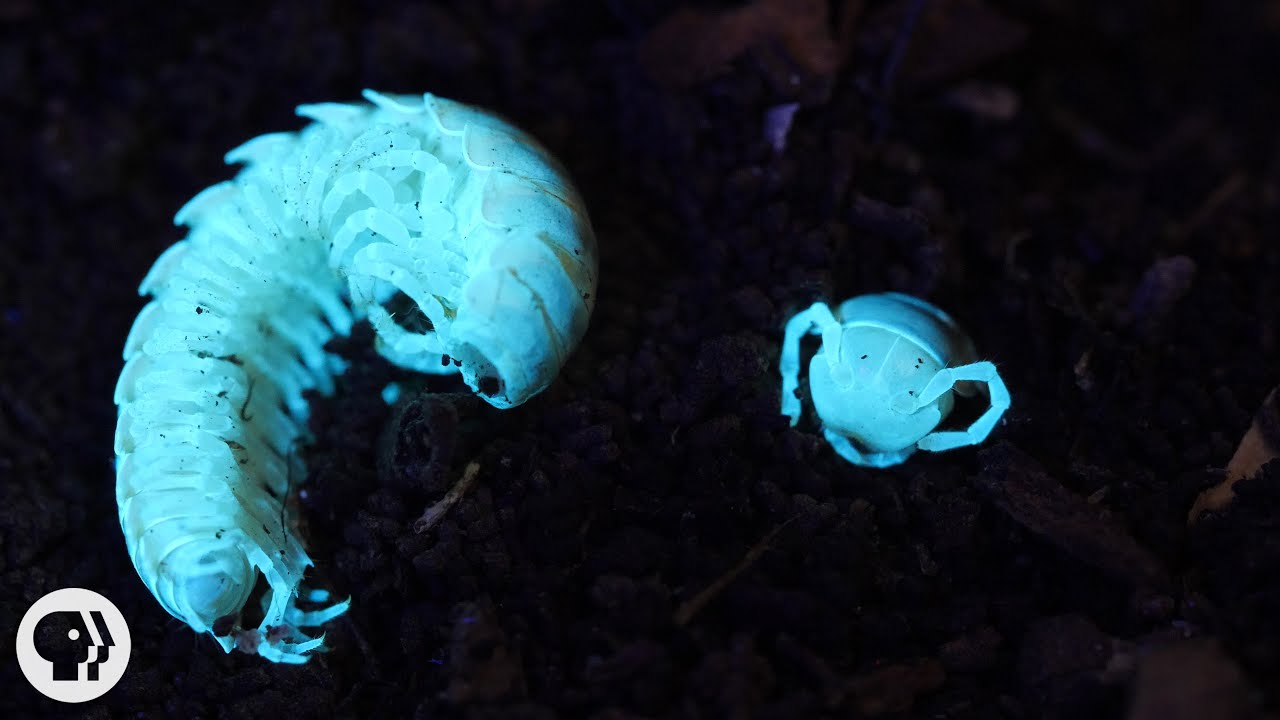
This millipede uses deadly cyanide gas to keep predators at bay. But one beetle can tolerate the toxic defense and rides the millipede like a bucking bronco. Who will win this showdown in the forest?
SUBSCRIBE to Deep Look! http://goo.gl/8NwXqt
Please support us on Patreon! https://www.patreon.com/deeplook
DEEP LOOK is a ultra-HD (4K) short video series created by KQED San Francisco and presented by PBS Digital Studios. See the unseen at the very edge of our visible world. Explore big scientific mysteries by going incredibly small.
---
Across Northern California, as the rainy season is ending and spring is taking hold, bees are buzzing, flowers are growing and hikers are hitting the trails.
But down at ground level, the pastoral scenery is concealing a surprising battle: relentless chemical warfare between bugs.
More than 200 species of millipedes emerge from their underground lairs every year during the winter and early spring months to forage for food and seek mates.
They have to fend off insects, mammals, reptiles and amphibians looking for a tasty meal. But they have a secret weapon – toxic chemicals they shoot from special glands. One Bay Area species, Xystocheir dissecta, carries deadly cyanide and benzaldehyde.
If they’re feeling threatened, these millipedes produce an invisible, odorless hydrogen cyanide gas that they spray at predators, and which is virtually toxic to all organisms. One byproduct is benzaldehyde, which gives off the scent of bitter almonds, as an additional signal that they’re secreting poison.
The millipedes don’t poison themselves, however. They’ve developed an immunity.
The cyanide can kill nearly any other animal trying to dine on the millipedes. Except one.
New research has found that one tough beetle is the only known predator in the world that can survive a direct blast of cyanide gas and keep going.
Brandt Weary, an entomologist, studied these hardy beetles last year for his senior thesis at the University of California Berkeley.
The beetles, known as Promecognathus crassus, love to eat millipedes, even though they are only one-fifth the millipedes’ size.
Weary wanted to know more about how the beetles withstood the millipedes’ tough chemical defense. He found that while many other beetles will avoid the cyanide-spraying millipedes, Promecognathus seeks them out.
--- How many legs do millipedes have?
Most millipedes have between 34-400 legs, and the record is 750!
--- Why do these millipedes “glow” or fluoresce?
One theory behind millipede fluorescence is that it's a warning sign. Moonlight has some UV light, so maybe an animal with better night vision can see the fluorescence even if we can't.
--- Which millipedes produce cyanide?
Only millipedes in the order Polydesmida produce cyanide. It's the largest order of millipedes with about 3500 species.
---+ Read the entire article on KQED Science:
https://www.kqed.org/science/1....939811/this-milliped
---+ For more information:
Kip Will at UC Berkeley: https://ourenvironment.berkele....y.edu/people/kipling
Science on the SPOT: Glowing Millipedes of Alcatraz: https://ww2.kqed.org/quest/201....3/03/19/science-on-t
---+ Shoutout!
?Congratulations ?to these fans for suggesting our *5 favorite common names* for Xystocheir dissecta, on our Community Tab: https://www.youtube.com/channe....l/UC-3SbfTPJsL8fJAPK
#5 Unom Auhasard: Walking rave stick
#4 F E: "Lumilipede"
#3 Mr.salty: " hell no"
#2 Mystery Bomb Noel: "blue galaxy"
#1 Tinkili: "Glowy Feets McGee"
---+ Thank you to our Top Patreon Supporters ($10+ per month)!
Bill Cass, Justin Bull, Daniel Weinstein, Chris B Emrick, Karen Reynolds, Jeremy Lambert, David Deshpande, Daisuke Goto, Bugeyed.fr, WhatzGames, Elizabeth Ann Ditz, Robert Warner, Shirley Washburn, Tatianna Bartlett, KW, Tanya Finch, Elizabeth Wolden, Sayantan Dasgupta, Monica Albe, Willy Nursalim, Jenn's Bowtique, Jane Orbuch, Laurel Przybylski, Johnnyonnyful, Levi Cai, Jason Buberel, Mark Joshua Bernardo, Michael Mieczkowski, Jeanine Womble, Aurora Mitchell, Edwin Rivas, Marjorie D Miller, Companion Cube, Chris Murphy, Joao Ascensao, Two Box Fish, PM Daeley, TierZoo, Robert Amling, Shelley Pearson Cranshaw, Mario Rahmani
---+ About KQED
KQED, an NPR and PBS affiliate in San Francisco, CA, serves Northern California and beyond with a public-supported alternative to commercial TV, Radio and web media.
Funding for Deep Look is provided in part by PBS Digital Studios. Deep Look is a project of KQED Science, which is also supported by the National Science Foundation, the Templeton Religion Trust, the Templeton World Charity Foundation, the S. D. Bechtel, Jr. Foundation, the Dirk and Charlene Kabcenell Foundation, the Vadasz Family Foundation, the Gordon and Betty Moore Foundation, the Fuhs Family Foundation and the members of KQED.
#millipede #beetle #deeplook
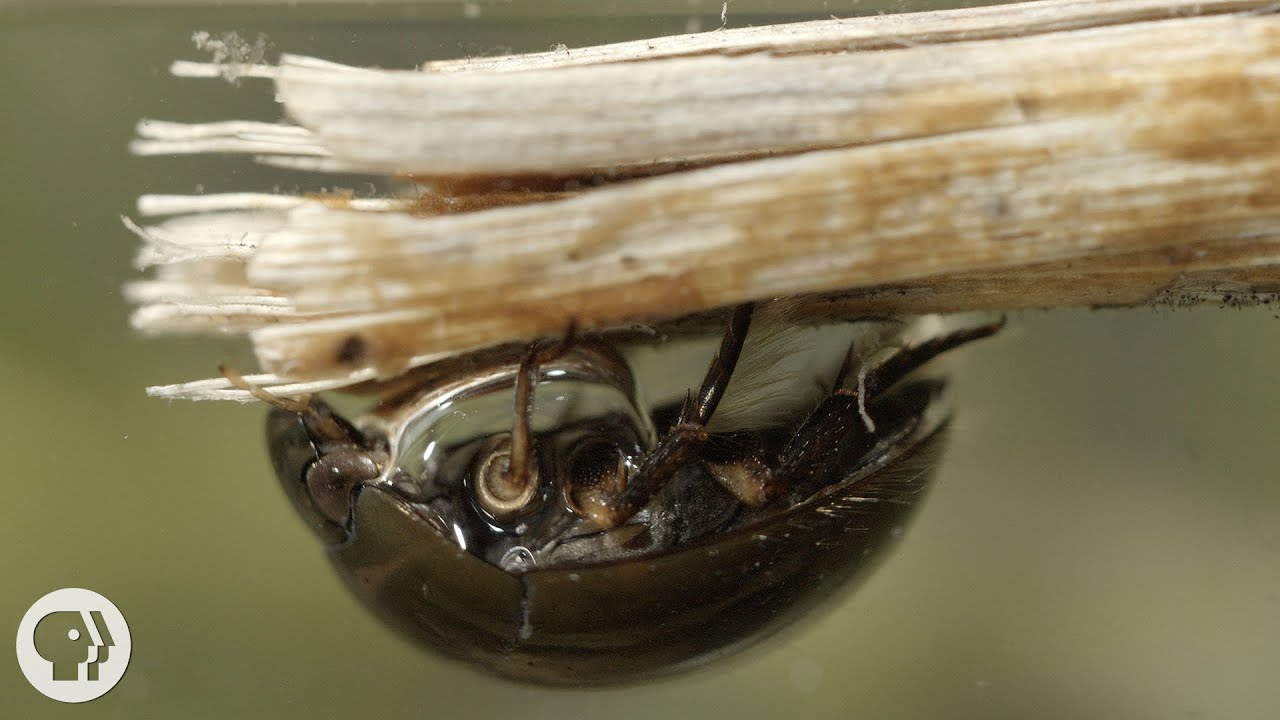
Bugs and beetles can’t hold their breath underwater like we do. But some aquatic insects can spend their whole adult lives underwater. How do they do it? Meet nature’s Scuba divers. They carry their air with them—in some cases, for a lifetime.
SUBSCRIBE to Deep Look! http://goo.gl/8NwXqt
DEEP LOOK: a new ultra-HD (4K) short video series created by KQED San Francisco and presented by PBS Digital Studios. See the unseen at the very edge of our visible world. Get a new perspective on our place in the universe and meet extraordinary new friends. Explore big scientific mysteries by going incredibly small.
--- How do some insects breathe underwater?
Air-breathing aquatic bugs and beetles don’t hold their breath the way sea mammals do, nor do they have gills like fish.
So how do they do it? The answer lies in their small size. Insect scuba strategies hinge on a property of water that relative giants like us usually overlook: surface tension.
People first crossed the line between land and sea to become scuba divers more than 70 years ago, when Jacques Cousteau pioneered the Aqua-Lung in Nazi-occupied France.
But some species of aquatic insects have been doing it for millions of years.
“Water beetles have been breathing underwater since before the dinosaurs existed,” said Crystal Maier, an entomologist at The Field Museum in Chicago. “It has evolved at least 10 times across the insect tree of life.”
--- What is surface tension?
Surface tension is the property of any liquid that describes how its particles stick together. In the case of water, surface tension is especially strong, enough to form a kind of film where it meets the air, whether at the surface or in a bubble.
The film is so strong, in fact, that a paper clip, which should sink because of its density, will float.
Surface tension is a delicate force, vulnerable to changes temperature, turbulence or the introduction of contaminants, like soap. A sudden drop in surface tension can drown a whole insect community in an instant.
Though it might not seem to affect our world to the same degree, surface tension is active all around us. It allows raindrops to form, trees to bring water to their leaves and ice to float. So in a sense, we too live on a thin boundary, ruled by the same subtle properties of water.
--- How do beetles use surface tension to breathe underwater?
If you’re a bug the size of a paperclip, in other words, surface tension makes a difference. Harnessing it, some aquatic beetles carry the oxygen they need underwater in the form of a temporary bubble, sort of like a natural scuba tank. Others encase themselves in a layer of air and draw oxygen from it their whole lives.
“It’s a pretty successful group of insects. They’re on every continent, except Antarctica,” said Cheryl Barr, collection manger emeritus at the Essig Museum of Entomology at UC Berkeley.
--- Super videos from the PBS Digital Studios Network!
Seven Surface Tension Experiments | Physics Girl
https://www.youtube.com/watch?v=WsksF...
Nature's Most Amazing Animal Superpowers | It's Okay to Be Smart
https://www.youtube.com/watch?v=e69ya...
Why Don’t These Cicadas Have Butts? | Gross Science
https://www.youtube.com/watch?v=IDBkj...
Read the full article on KQED Science:
http://ww2.kqed.org/science/20....15/11/10/natures-scu
--- More great DEEP LOOK episodes:
Halloween Special: Watch Flesh-Eating Beetles Strip Bodies to the Bone
https://www.youtube.com/watch?v=Np0hJ...
What Happens When You Put a Hummingbird in a Wind Tunnel?
https://www.youtube.com/watch?v=JyqY6...
You're Not Hallucinating. That's Just Squid Skin.
https://www.youtube.com/watch?v=0wtLr...
--- More KQED SCIENCE:
Tumblr: http://kqedscience.tumblr.com
Twitter: https://www.twitter.com/kqedscience
KQED Science: http://ww2.kqed.org/science
Funding for Deep Look is provided in part by PBS Digital Studios and the John S. and James L. Knight Foundation. Deep Look is a project of KQED Science, which is supported by HopeLab, The David B. Gold Foundation; S. D. Bechtel, Jr. Foundation; The Dirk and Charlene Kabcenell Foundation; The Vadasz Family Foundation; Smart Family Foundation and the members of KQED.
#deeplook
Check out America From Scratch: https://youtu.be/LVuEJ15J19s
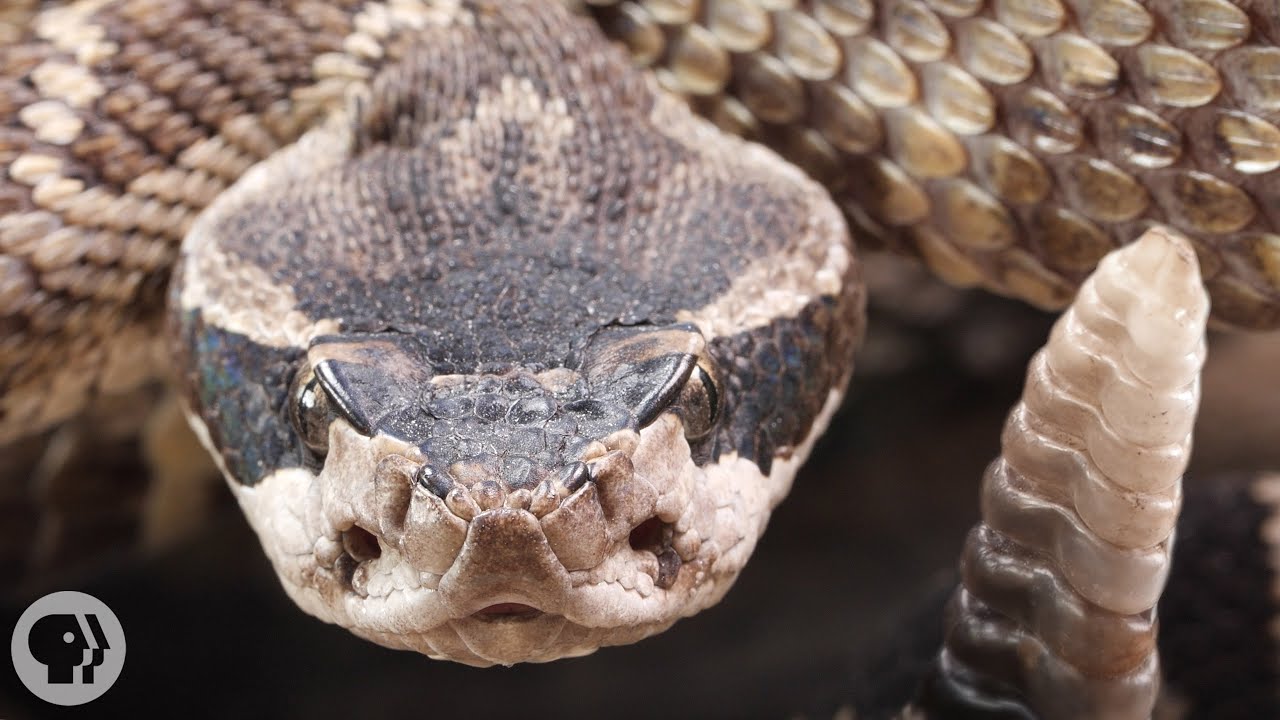
A rattlesnake's rattle isn't like a maraca, with little bits shaking around inside. So how exactly does it make that sound?
SUBSCRIBE to Deep Look! http://goo.gl/8NwXqt
Please support us on Patreon! https://www.patreon.com/deeplook
Watch America From Scratch: https://www.youtube.com/channe....l/UClSZ6wHgU2h1W7eAG
DEEP LOOK is a ultra-HD (4K) short video series created by KQED San Francisco and presented by PBS Digital Studios. See the unseen at the very edge of our visible world. Explore big scientific mysteries by going incredibly small.
Rattlesnakes are ambush predators, relying on staying hidden to get close to their prey. They don’t sport the bright colors that some venomous snakes use as a warning to predators.
Fortunately, rattlesnakes have an unmistakable warning, a loud buzz made to startle any aggressor and hopefully avoid having to bite.
If you hear the rattlesnake’s rattle here’s what to do: First, stop moving! You want to figure out which direction the sound is coming from. Once you do, slowly back away.
If you do get bitten, immobilize the area and don't overly exert yourself. Immediately seek medical attention. You may need to be treated with antivenom.
DO NOT try to suck the venom out using your mouth or a suction device.
DO NOT try to capture the snake and stay clear of dead rattlesnakes, especially the head.
--- How do rattlesnakes make that buzzing sound?
The rattlesnake’s rattle is made up of loosely interlocking segments made of keratin, the same strong fibrous protein in your fingernails. Each segment is held in place by the one in front and behind it, but the individual segments can move a bit. When the snake shakes its tail, it sends undulating waves down the length of the rattle, and they click against each other. It happens so fast that all you hear is a buzz and all you see is a blur.
--- Why do rattlesnakes flick their tongue?
Like other snakes, rattlesnakes flick their tongues to gather odor particles suspended in liquid. The snake brings those scent molecules back to a special organ in the roof of their mouth called the vomeronasal organ or Jacobson's organ. The organ detects pheromones originating from prey and other snakes.
---+ Read the entire article on KQED:
https://www.kqed.org/science/1....945648/5-things-you-
---+ More Great Deep Look episodes:
Stinging Scorpion vs. Pain-Defying Mouse | Deep Look
https://www.youtube.com/watch?v=w-K_YtWqMro&t=35s
---+ ?Congratulations ?to the following fans for coming up with the *best* new names for the Jacobson's organ in our community tab challenge:
Pigeon Fowl - "Noodle snoofer"
alex jackson - "Ye Ol' Factory"
Aberrant Artist - "Tiny boi sniffer whiffer"
vandent nguyen - "Smeller Dweller" and "Flicker Snicker"
---+ Thank you to our Top Patreon Supporters ($10+ per month)!
Allen, Aurora Mitchell, Beckie, Ben Espey, Bill Cass, Bluapex, Breanna Tarnawsky, Carl, Chris B Emrick, Chris Murphy, Cindy McGill, Companion Cube, Cory, Daisuke Goto, Daisy Trevino , Daniel Voisine, Daniel Weinstein, David Deshpande, Dean Skoglund, Edwin Rivas, Elizabeth Ann Ditz, Eric Carter, Geidi Rodriguez, Gerardo Alfaro, Ivan Alexander, Jane Orbuch, JanetFromAnotherPlanet, Jason Buberel, Jeanine Womble, Jeanne Sommer, Jiayang Li, Joao Ascensao, johanna reis, Johnnyonnyful, Joshua Murallon Robertson, Justin Bull, Kallie Moore, Karen Reynolds, Katherine Schick, Kendall Rasmussen, Kenia Villegas, Kristell Esquivel, KW, Kyle Fisher, Laurel Przybylski, Levi Cai, Mark Joshua Bernardo, Michael Mieczkowski, Michele Wong, Nathan Padilla, Nathan Wright, Nicolette Ray, Pamela Parker, PM Daeley, Ricardo Martinez, riceeater, Richard Shalumov, Rick Wong, Robert Amling, Robert Warner, Samuel Bean, Sayantan Dasgupta, Sean Tucker, Shelley Pearson Cranshaw, Shirley Washburn, Sonia Tanlimco, SueEllen McCann, Supernovabetty, Tea Torvinen, TierZoo, Titania Juang, Two Box Fish, WhatzGames, Willy Nursalim, Yvan Mostaza,
---+ Follow KQED Science and Deep Look:
Patreon: https://www.patreon.com/deeplook
Instagram: https://www.instagram.com/kqedscience/
Twitter: https://www.twitter.com/kqedscience
KQED Science on kqed.org: http://www.kqed.org/science
---+ About KQED
KQED, an NPR and PBS affiliate in San Francisco, CA, serves Northern California and beyond with a public-supported alternative to commercial TV, Radio and web media.
Funding for Deep Look is provided in part by PBS Digital Studios. Deep Look is a project of KQED Science, which is also supported by the National Science Foundation, the S. D. Bechtel, Jr. Foundation, the Dirk and Charlene Kabcenell Foundation, the Vadasz Family Foundation, the Fuhs Family Foundation, Campaign 21 and the members of KQED.
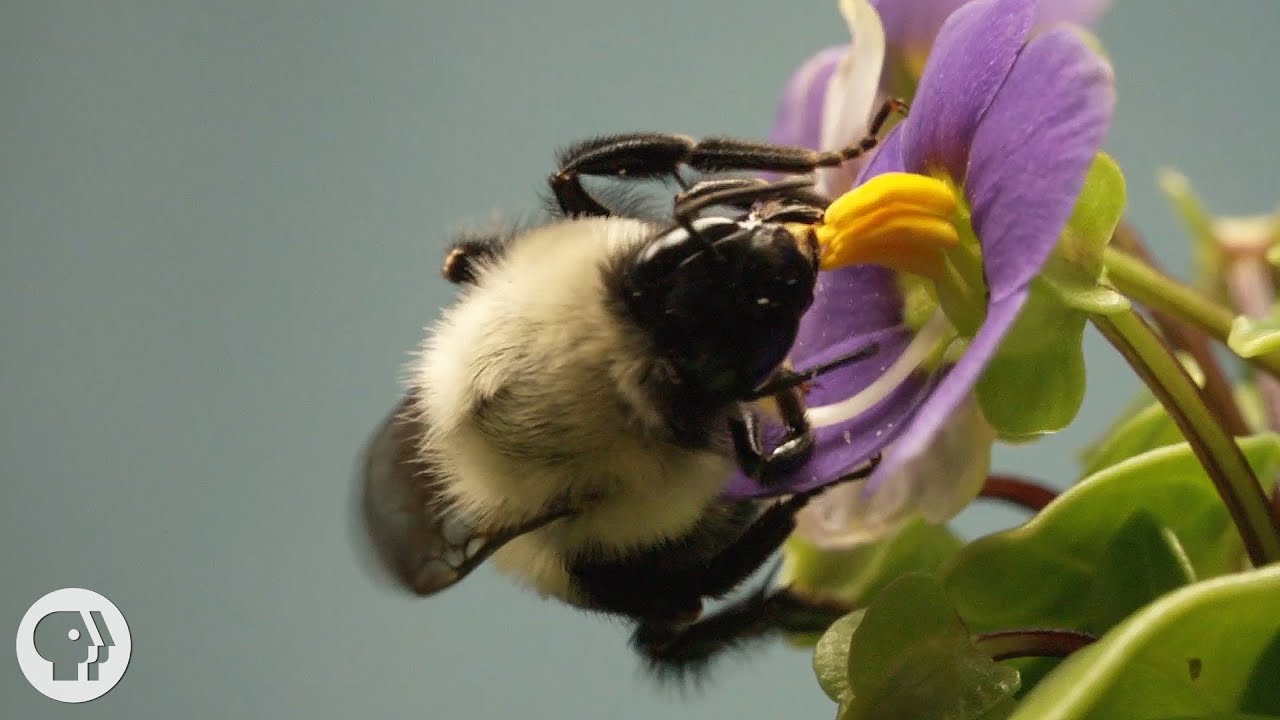
Most flowering plants are more than willing to spread their pollen around. But some flowers hold out for just the right partner. Bumblebees and other buzz pollinators know just how to handle these stubborn flowers. They vibrate the blooms, shaking them until they give up the nutritious pollen.
SUBSCRIBE to Deep Look! http://goo.gl/8NwXqt
DEEP LOOK is a ultra-HD (4K) short video series created by KQED San Francisco and presented by PBS Digital Studios. See the unseen at the very edge of our visible world. Get a new perspective on our place in the universe and meet extraordinary new friends. Explore big scientific mysteries by going incredibly small.
* NEW VIDEOS EVERY OTHER TUESDAY! *
In the summertime, the air is thick with the low humming of bees delivering pollen from one flower to the next. If you listen closely, a louder buzz may catch your ear.
This sound is the key to a secret stash of pollen that some flowers hide deep within their anthers, the male parts of the plant. Only pollinators that buzz in just the right way can vibrate tiny grains out of minuscule holes at the top of the anthers for a protein-rich snack.
The strategy, called buzz-pollination, is risky. But it’s also critical to human agriculture. Tomatoes, potatoes and eggplants need wild populations of buzz pollinators, such as bumblebees, to produce fruit. Honeybees can’t do it.
Plants need a way to get the pollen — basically sperm — to the female parts of another flower. Most plants lure animal pollinators to spread these male gametes by producing sugary nectar. The bee laps up the sweet reward, is dusted with pollen and passively delivers it to the next bloom.
In contrast, buzz-pollinated flowers encourage bees to eat the pollen directly and hope some grains will make it to another flower. The evolutionary strategy is baffling to scientists.
“The flower is almost like playing hard to get,” says Anne Leonard, a biologist at the University of Nevada, Reno who studies buzz pollination. “It’s intriguing because these buzz-pollinated plants ask for a huge energy investment from the bees, but don’t give much back.”
--- What is buzz pollination?
Most flowering plants use sugary nectar as bait to attract bees and other pollinators, which get coated in pollen along the way. And since bees are messy, they inadvertently scatter some of that pollen onto the female part of the next flower they visit.
But some flowers lock their pollen up in their anthers, the male parts of the flower, instead of giving it away freely. The only way for the pollen to escape is through small holes called pores. Some pollinators like bumblebees (but not honeybees) are able to vibrate the flower’s anthers which shakes up the pollen and causes it to spew out of the pores.
The bumblebee collects the pollen and uses it as a reliable and protected source of protein.
--- What important crops use buzz pollination to make food?
The most important crops that use buzz pollination are potatoes, tomatoes, pumpkins, eggplants, cranberries and blueberries
--- What animals are capable of buzz pollination?
Many types of bees engage in buzz pollination, also called sonication. The most common is probably the bumblebee. Honeybees generally don’t use buzz pollination.
---+ Read the entire article on KQED Science:
https://ww2.kqed.org/science/2....016/07/19/this-vibra
---+ For more information:
Anne Leonard Lab, University of Nevada, Reno | Department of Biology
http://www.anneleonard.com/buzz-pollination/
---+ More Great Deep Look episodes:
These Lizards Have Been Playing Rock-Paper-Scissors for 15 Million Years | Deep Look
https://www.youtube.com/watch?v=rafdHxBwIbQ
Winter is Coming For These Argentine Ant Invaders | Deep Look
https://www.youtube.com/watch?v=boyzWeHdtiI
---+ See some great videos and documentaries from the PBS Digital Studios!
It's Okay to Be Smart: Why Don't Other Animals Wear Glasses?
https://www.youtube.com/watch?v=LhubEq6W9GE
Gross Science: The World's Most Expensive Fungus
https://www.youtube.com/watch?v=iV4WHFU2Id8
---+ Follow KQED Science:
KQED Science: http://www.kqed.org/science
Tumblr: http://kqedscience.tumblr.com
Twitter: https://www.twitter.com/kqedscience
---+ About KQED
KQED, an NPR and PBS affiliate in San Francisco, CA, serves Northern California and beyond with a public-supported alternative to commercial TV, Radio and web media.
Funding for Deep Look is provided in part by PBS Digital Studios and the John S. and James L. Knight Foundation. Deep Look is a project of KQED Science, which is also supported by HopeLab, the David B. Gold Foundation, the S. D. Bechtel, Jr. Foundation, the Dirk and Charlene Kabcenell Foundation, the Vadasz Family Foundation, the Gordon and Betty Moore Foundation, the Smart Family Foundation and the members of KQED.
#deeplook
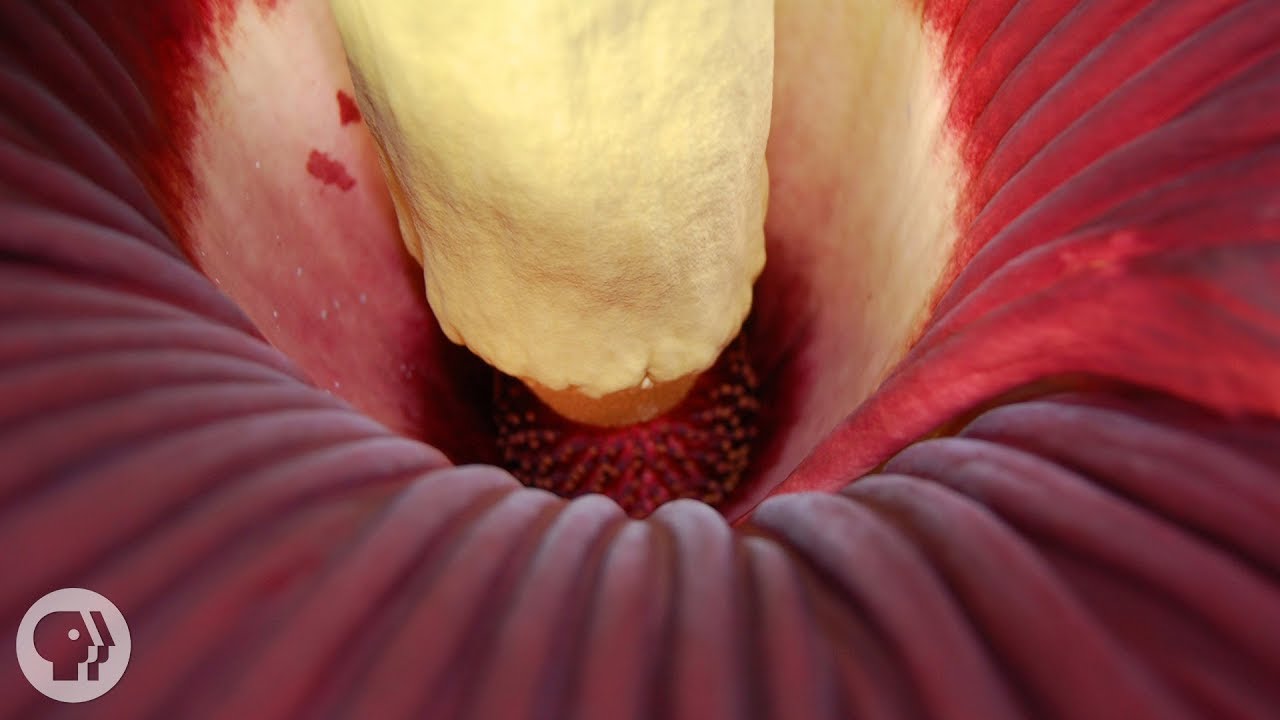
With rows of Dr. Seuss-like flowers hidden deep inside, the corpse flower plays dead to lure some unusual pollinators.
SUBSCRIBE to Deep Look! http://goo.gl/8NwXqt
DEEP LOOK is a ultra-HD (4K) short video series created by KQED San Francisco and presented by PBS Digital Studios. See the unseen at the very edge of our visible world. Get a new perspective on our place in the universe and meet extraordinary new friends. Explore big scientific mysteries by going incredibly small.
* NEW VIDEOS EVERY OTHER TUESDAY! *
For a plant that emits an overpowering stench of rotting carcass, you’d think the corpse flower would have a PR problem.
But it’s quite the opposite: Anytime a corpse flower opens up at a botanical garden somewhere in the world visitors flock to catch a whiff and get a glimpse of the giant plant, which can grow up to 10 feet tall when it blooms and generally only does so every two to 10 years.
A corpse flower’s whole survival strategy is based on deception. It’s not a flower and it’s not a rotting dead animal, but it mimics both. Pollination remains out of sight, deep within the plant. KQED’s Deep Look staff was able to film inside a corpse flower, revealing the rarely-seen moment when the plant’s male flowers release glistening strings of pollen.
It’s not that the corpse flower is the only plant to attract pollinators like flies and beetles by putting out bad smells. Nor is it the only one that produces male and female flowers at the same time.
“The fact that it does all of this at this outsized scale – all of this together – is what’s so unique about it, biologically,” said Pati Vitt, senior scientist at the Chicago Botanic Garden.
When a titan arum is ready to flower, a stalk starts to grow out of the soil. Once it has reached four to 10 feet, a red “skirt” unfurls. Though it has the appearance of a petal, it’s really a modified leaf called a spathe that looks like a raw steak.
The yellow stalk underneath is called the spadix and it gives the plant its scientific name, Amorphophallus titanum, or roughly “giant deformed phallus.”
In its native Sumatra, the corpse flower opens for only 24 hours. In captivity, it often lasts longer. With just a day to reproduce, the stakes are high.
--- How many chemicals make up the smell of the corpse flower?
More than 30 chemicals make up the scent of the corpse flower, according to the 2017 paper “Studies on the floral anatomy and scent chemistry of titan arum” by researchers at the University of Mississippi, University of Florida, Gainsville, and Anadolu University in Turkey:
http://journals.tubitak.gov.tr..../botany/issues/bot-1
Some of the chemicals have a pleasant scent. But mostly, the corpse flower at first smells like funky cheese and rotting garlic, as a result of sulphur-smelling compounds. Hours later, the stink changes to what Vanessa Handley, at the University of California Botanical Garden at Berkeley describes as “dead rat in the walls of your house.”
---+ Read the entire article:
https://ww2.kqed.org/science/2....018/01/23/this-giant
---+ For more information:
Great illustration on the lifecycle of the corpse flower by the Chicago Botanic Garden:
https://www.chicagobotanic.org/titan/faq
University of California Davis Botanical Conservatory:
http://greenhouse.ucdavis.edu/conservatory/
---+ More Great Deep Look episodes:
This Mushroom Starts Killing You Before You Even Realize It
https://www.youtube.com/watch?v=bl9aCH2QaQY
A Real Alien Invasion Is Coming to a Palm Tree Near You
https://www.youtube.com/watch?v=S6a3Q5DzeBM
---+ See some great videos and documentaries from PBS Digital Studios!
It’s Okay To Be Smart: How to Figure Out the Day of the Week For Any Date Ever
https://www.youtube.com/watch?v=714LTMNJy5M
Above The Noise: Can Genetically Engineered Mosquitoes Help Fight Disease?
https://www.youtube.com/watch?v=CB_h7aheAEM
---+ Follow KQED Science:
KQED Science: http://www.kqed.org/science
Tumblr: http://kqedscience.tumblr.com
Twitter: https://www.twitter.com/kqedscience
---+ About KQED
KQED, an NPR and PBS affiliate in San Francisco, CA, serves Northern California and beyond with a public-supported alternative to commercial TV, radio and web media.
Funding for Deep Look is provided in part by PBS Digital Studios. Deep Look is a project of KQED Science, which is supported by the S. D. Bechtel, Jr. Foundation, the Dirk and Charlene Kabcenell Foundation, the Vadasz Family Foundation, the Gordon and Betty Moore Foundation, the Fuhs Family Foundation Fund and the members of KQED.
#deeplook
Support Deep Look on Patreon! https://www.patreon.com/deeplook
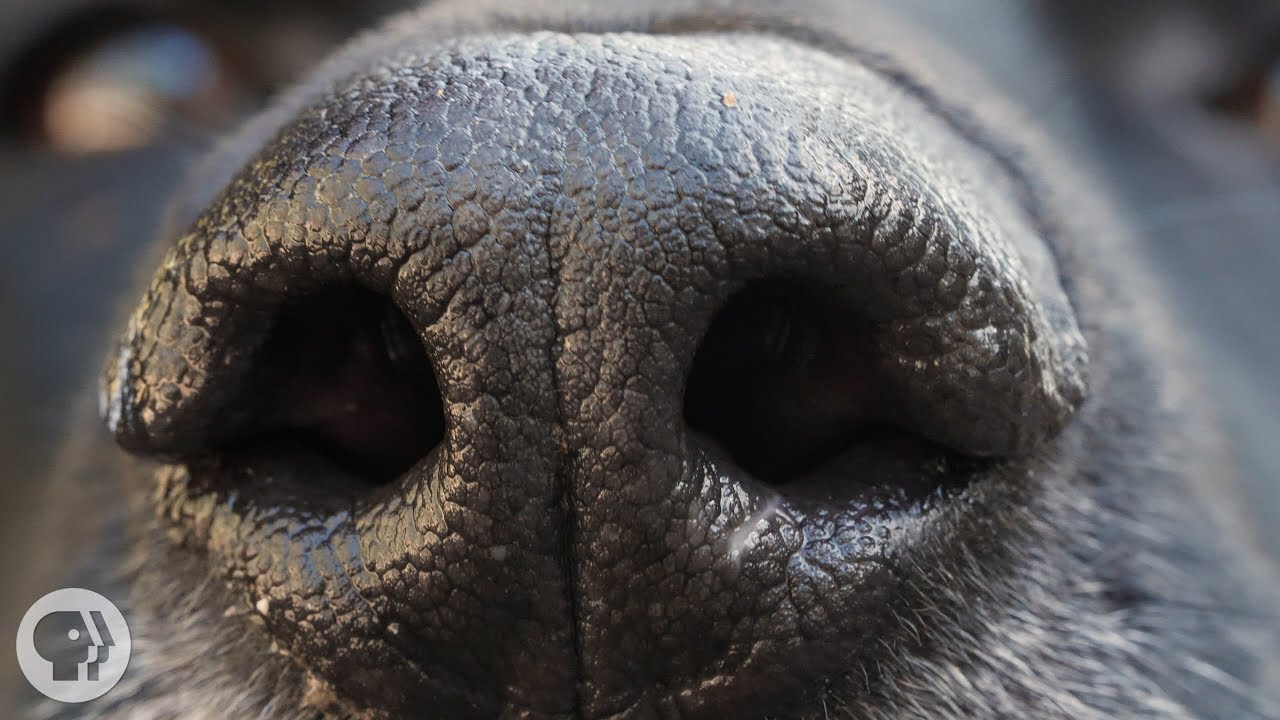
Dogs have a famously great sense of smell, but what makes their noses so much more powerful than ours? They're packing some sophisticated equipment inside that squishy schnozz.
SUBSCRIBE to Deep Look! http://goo.gl/8NwXqt
DEEP LOOK is a ultra-HD (4K) short video series created by KQED San Francisco and presented by PBS Digital Studios. See the unseen at the very edge of our visible world. Explore big scientific mysteries by going incredibly small.
--- How much more powerful is a dog’s sense of smell compared to a human?
According to one estimate, dogs are 10,000-100,000 times more sensitive to smell than humans. They have about 15 times more olfactory neurons that send signals about odors to the brain. The neurons in a dog’s nose are spread out over a much larger and more convoluted area allowing them more easily decipher specific chemicals in the air.
--- Why are dog noses wet?
Dog noses secrete mucus which traps odors in the air and on the ground. When a dog licks its nose, the tongue brings those odors into the mouth allowing it to sample those smells. Dogs mostly cool themselves by panting but the mucus on their noses and sweat from their paws cool through evaporation.
--- Why do dog nostrils have slits on the side?
Dogs sniff about five times per second. The slits on the sides allows exhaled air to vent towards the sides and back. That air moving towards the back of the dog creates a low air pressure region in front of it. Air from in front of the dog rushes in to fill that low pressure region. That allows the nose to actively bring odors in from in front and keeps the exhaled air from contaminating new samples.
---+ Read the entire article on KQED Science:
https://ww2.kqed.org/science/2....019/02/26/how-your-d
---+ For more information:
The Odor Navigation Project funded NSF Brain Initiative
https://odornavigation.org/
Jacobs Lab of Cognitive Biology at UC Berkeley
http://jacobs.berkeley.edu/
Ecological Fluid Dynamics Lab at University of Colorado Boulder
https://www.colorado.edu/lab/ecological-fluids/
The fluid dynamics of canine olfaction: unique nasal airflow patterns as an explanation of macrosmia (Brent A. Craven, Eric G. Paterson, and Gary S. Settles)
https://royalsocietypublishing.....org/doi/full/10.109
---+ More Great Deep Look episodes:
The Fantastic Fur of Sea Otters | Deep Look
https://www.youtube.com/watch?v=Zxqg_um1TXI
You've Heard of a Murder of Crows. How About a Crow Funeral? | Deep Look
https://www.youtube.com/watch?v=ixYVFZnNl6s&t=85s
Newt Sex: Buff Males! Writhing Females! Cannibalism! | Deep Look
https://www.youtube.com/watch?v=5m37QR_4XNY
What Makes Owls So Quiet and So Deadly? | Deep Look
https://www.youtube.com/watch?v=a68fIQzaDBY
---+ See some great videos and documentaries from PBS Digital Studios!
How James Brown Invented Funk | Sound Field
https://www.youtube.com/watch?v=AihgZv1D5-4
How To Suck Carbon Dioxide Out of the Sky | Hot Mess
https://www.youtube.com/watch?v=tKtXojkwlK8
What’s the Real Cost of Owning A Pet? | Two Cents
https://www.youtube.com/watch?v=ma3Mt5BPlTE
---+ Follow KQED Science:
KQED Science: http://www.kqed.org/science
Tumblr: http://kqedscience.tumblr.com
Twitter: https://www.twitter.com/kqedscience
---+ Shoutout!
?Congratulations ? to Branden W., Edison Lewis, Vampire Wolf, Haithem Ghanem and Droidtigger who won our GIF CHALLENGE over at the Deep Look Community Tab, by identifying the special region in the canine skull which houses much of the smell ability: https://www.youtube.com/channe....l/UC-3SbfTPJsL8fJAPK
---+ Thank you to our Top Patreon Supporters ($10+ per month)
Bill Cass
Justin Bull
Daniel Weinstein
David Deshpande
Daisuke Goto
Karen Reynolds
Yidan Sun
Elizabeth Ann Ditz
KW
Shirley Washburn
Tanya Finch
johanna reis
Shelley Pearson Cranshaw
Johnnyonnyful
Levi Cai
Jeanine Womble
Michael Mieczkowski
SueEllen McCann
TierZoo
James Tarraga
Willy Nursalim
Aurora Mitchell
Marjorie D Miller
Joao Ascensao
PM Daeley
Two Box Fish
Tatianna Bartlett
Monica Albe
Jason Buberel
---+ About KQED
KQED, an NPR and PBS affiliate in San Francisco, CA, serves Northern California and beyond with a public-supported alternative to commercial TV, radio and web media.
Funding for Deep Look is provided in part by PBS Digital Studios. Deep Look is a project of KQED Science, which is also supported by the National Science Foundation, the Templeton Religion Trust, the Templeton World Charity Foundation, the S. D. Bechtel, Jr. Foundation, the Dirk and Charlene Kabcenell Foundation, the Vadasz Family Foundation, the Gordon and Betty Moore Foundation, the Fuhs Family Foundation and the members of KQED.

Giant Malaysian leaf insects stay still – very still – on their host plants to avoid hungry predators. But as they grow up, they can't get lazy with their camouflage. They change – and even dance – to blend in with the ever-shifting foliage.
SUBSCRIBE to Deep Look! http://goo.gl/8NwXqt
Please support us on Patreon! https://www.patreon.com/deeplook
DEEP LOOK is a ultra-HD (4K) short video series created by KQED San Francisco and presented by PBS Digital Studios. See the unseen at the very edge of our visible world. Explore big scientific mysteries by going incredibly small.
---
You’ll have to look closely to spot a giant Malaysian leaf insect when it’s nibbling on the leaves of a guava or mango tree. These herbivores blend in seamlessly with their surroundings because they look exactly like their favorite food: fruit leaves.
But you can definitely see these fascinating creatures at the California Academy of Sciences, located in the heart of San Francisco's Golden Gate Park, through the spring of 2022.
An ongoing interactive exhibit, ‘Color of Life,’ explores the role of color in the natural world. It's filled with a variety of critters, including Gouldian finches, green tree pythons, Riggenbach's reed frogs, and of course, giant leaf insects.
---+ Read the entire article on KQED Science:
https://www.kqed.org/science/1....947830/these-giant-l
--- What do giant leaf insects eat?
They’re herbivores, so they stick to eating leaves from their habitats, like guava and mango.
--- What’s one main difference between male and female giant leaf insects?
Males can actually fly as they have wings, which they use for mating.
--- But did you know that females don’t need males for mating?
They are facultatively parthenogenetic, which means they sometimes mate or sometimes reproduce asexually. If they mate with a male, they produce both males and females, but if the eggs remain unfertilized – only females are produced.
---+ For more information:
Visit California Academy of Sciences
https://calacademy.org/
---+ More Great Deep Look episodes:
It’s a Bug’s Life: https://www.youtube.com/playli....st?list=PLdKlciEDdCQ
---+ Shoutout!
?Congratulations ?to the following fans on our YouTube community tab for correctly identifying the type of reproduction female leaf insects can use in the absence of a suitable male - parthenogenesis.
Sylly
Jim Spencer
Rikki Anne
Cara Rose
GOT7 HOT7 THOT7 VISUAL7
---+ Thank you to our Top Patreon Supporters ($10+ per month)!
Trae Wright
Justin Bull
Bill Cass
Alice Kwok
Sarah Khalida Mohamad
Stefficael Uebelhart
Daniel Weinstein
Chris B Emrick
Seghan Seer
Karen Reynolds
Tea Torvinen
David Deshpande
Daisuke Goto
Amber Miller
Companion Cube
WhatzGames
Richard Shalumov
Elizabeth Ann Ditz
Robert Amling
Gerardo Alfaro
Mary Truland
Shirley Washburn
Robert Warner
johanna reis
Supernovabetty
Kendall Rasmussen
Sayantan Dasgupta
Cindy McGill
Leonhardt Wille
Joshua Murallon Robertson
Pamela Parker
Roberta K Wright
Shelley Pearson Cranshaw
KW
Silvan Wendland
Two Box Fish
Johnnyonnyful
Aurora
George Koutros
monoirre
Dean Skoglund
Sonia Tanlimco
Guillaume Morin
Ivan Alexander
Laurel Przybylski
Allen
Jane Orbuch
Rick Wong
Levi Cai
Titania Juang
Nathan Wright
Syniurge
Carl
Kallie Moore
Michael Mieczkowski
Kyle Fisher
Geidi Rodriguez
JanetFromAnotherPlanet
SueEllen McCann
Daisy Trevino
Jeanne Sommer
Louis O'Neill
riceeater
Katherine Schick
Aurora Mitchell
Cory
Nousernamepls
Chris Murphy
PM Daeley
Joao Ascensao
Nicolette Ray
TierZoo
---+ Follow KQED Science and Deep Look:
Patreon: https://www.patreon.com/deeplook
Instagram: https://www.instagram.com/kqedscience/
Twitter: https://www.twitter.com/kqedscience
KQED Science on kqed.org: http://www.kqed.org/science
Facebook Watch: https://www.facebook.com/DeepLookPBS/
---+ About KQED
KQED, an NPR and PBS affiliate in San Francisco, CA, serves Northern California and beyond with a public-supported alternative to commercial TV, Radio and web media.
Funding for Deep Look is provided in part by PBS Digital Studios. Deep Look is a project of KQED Science, which is also supported by the National Science Foundation, the S. D. Bechtel, Jr. Foundation, the Dirk and Charlene Kabcenell Foundation, the Vadasz Family Foundation, the Fuhs Family Foundation, Campaign 21 and the members of KQED.
#leafinsects #insect #deeplook
Support Deep Look on Patreon!! https://www.patreon.com/deeplook
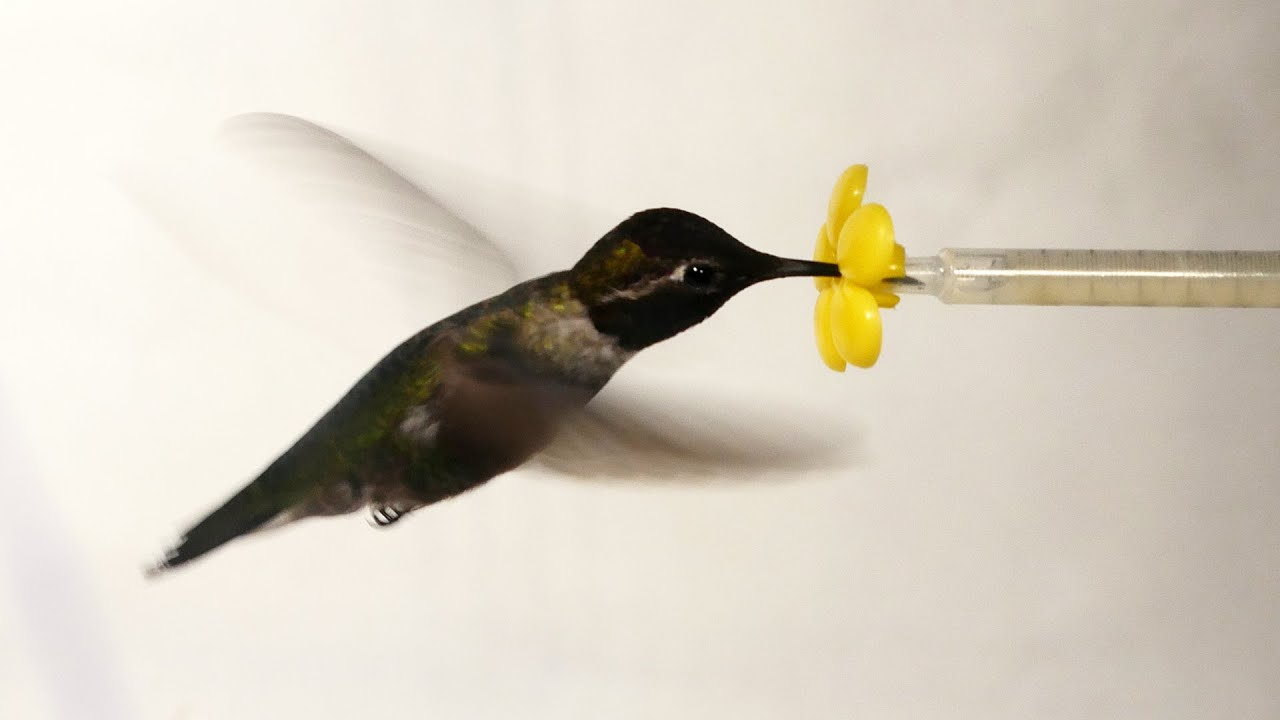
Scientists have used a high-speed camera to film hummingbirds' aerial acrobatics at 1000 frames per second. They can see, frame by frame, how neither wind nor rain stop these tiniest of birds from fueling up.
DEEP LOOK: a new ultra-HD (4K) short video series created by KQED San Francisco and presented by PBS Digital Studios. See the unseen at the very edge of our visible world. Get a new perspective on our place in the universe and meet extraordinary new friends. Explore big scientific mysteries by going incredibly small.
How do hummingbirds eat?
With spring in full bloom, hummingbirds can be spotted flitting from flower to flower and lapping up the sugary nectar inside. These tiniest of birds have the highest metabolism of any warm-blooded animal, requiring them to consume their own body weight in nectar each day to survive.
By comparison, if a 150-pound human had the metabolism of a hummingbird, he or she would need to consume the caloric equivalent of more than 300 hamburgers a day.
But it's not just an extreme appetite that sets hummingbirds apart from other birds. These avian acrobats are the only birds that can fly sideways, backwards and hover for long stretches of time. In fact, hovering is essential to hummingbirds' survival since they have to keep their long, thin beaks as steady as a surgeon's scalpel while probing flowers for nectar.
How do Hummingbirds fly?
Hummingbirds don't just hover to feed when the weather is nice. They have to keep hovering and feeding even if it's windy or raining, a remarkable feat considering most of these birds weigh less than a nickel.
More great Deep Look episodes:
Newt Sex: Buff Males! Writhing Females! Cannibalism!
https://www.youtube.com/watch?v=5m37QR_4XNY
Pygmy Seahorses: Masters of Camouflage
https://www.youtube.com/watch?v=Q3CtGoqz3ww
Banana Slugs: Secret of the Slime
https://youtu.be/mHvCQSGanJg
--
See also another great video from the PBS Digital Studios!
Where Do Birds Go In Winter? - It's Okay to be Smart
https://www.youtube.com/watch?v=ds2XFvSQzBg
Read the extended article on how hummingbirds hover at KQED Science:
http://blogs.kqed.org/science/....2015/03/31/what-happ
SUBSCRIBE: http://goo.gl/8NwXqt
KQED Science: http://kqed.org/science
Funding for Deep Look is provided in part by PBS Digital Studios and the John S. and James L. Knight Foundation. Deep Look is a project of KQED Science, which is supported by HopeLab, The David B. Gold Foundation; S. D. Bechtel, Jr. Foundation; The Dirk and Charlene Kabcenell Foundation; The Vadasz Family Foundation; Smart Family Foundation and the members of KQED.
#deeplook #hummingbirds #wings

Male jumping spiders perform courtship dances that would make Bob Fosse proud. But if they bomb, they can wind up somebody's dinner instead of their mate.
SUBSCRIBE to Deep Look! http://goo.gl/8NwXqt
DEEP LOOK is a ultra-HD (4K) short video series created by KQED San Francisco and presented by PBS Digital Studios. See the unseen at the very edge of our visible world. Get a new perspective on our place in the universe and meet extraordinary new friends. Explore big scientific mysteries by going incredibly small.
* NEW VIDEOS EVERY OTHER TUESDAY! *
During courtship, the male jumping spider performs an exuberant dance to get the female’s attention. Like a pint-sized Magic Mike working for twenties, he shimmies from side to side, waves his legs, and flaps his front appendages (called pedipalps) in her direction.
If she likes what she sees, the female may allow him to mate. But things can also go terribly wrong for these eight-legged suitors. She might decide to attack him, or even eat him for lunch. Cannibalism is the result about seven percent of the time.
These mating rituals were first described more than 100 years ago. Their study took on a new dimension, however, when scientists discovered that the males also sing when they attempt to woo their lady loves.
By rubbing together their two body segments, equipped with a comb-shaped instrument, the males create vibrations that travel through the ground. The female spiders can “hear” the male songs through ear-like slits in their legs, called sensilla.
A male spider’s coordination of the dance and the song seems to affect his reproductive success — in other words, his ability to stay alive during this risky courtship trial. But what exactly the signals mean remains mysterious to scientists.
Scientists ultimately hope to understand how a female decides whether she’s looking at a stud — or a dud.
--- Where do jumping spiders get their name?
Jumping spiders don’t spin webs to catch food. They stalk their prey like cats. They use their silk as a drag line while they hop around.
--- What do jumping spiders eat?
Jumping spiders are carnivorous and eat insects like flies, bees, and crickets.
--- Where do jumping spiders live?
A map of jumping spider habitat looks like the whole world! Tropical forests contain the greatest number, but they live just about everywhere, even the Himalayan Mountains.
---+ Read the entire article on KQED Science:
https://ww2.kqed.org/science/2....016/10/04/for-these-
---+ For more information:
Elias Lab at U.C. Berkeley: https://nature.berkeley.edu/eliaslab/
---+ More great Deep Look episodes:
This Vibrating Bumblebee Unlocks a Flower's Hidden Treasure
https://www.youtube.com/watch?v=SZrTndD1H10
The Ladybug Love-In: A Valentine's Special
https://www.youtube.com/watch?v=c-Z6xRexbIU
---+ See some great videos and documentaries from the PBS Digital Studios!
Idea Channel: Do You Pronounce it GIF or GIF?
https://www.youtube.com/watch?v=bmqy-Sp0txY
Gross Science: Are There Dead Wasps In Figs?
https://www.youtube.com/watch?v=9DQTjv_u3Vc
---+ Follow KQED Science:
KQED Science: http://www.kqed.org/science
Tumblr: http://kqedscience.tumblr.com
Twitter: https://www.twitter.com/kqedscience
---+ About KQED
KQED, an NPR and PBS affiliate in San Francisco, CA, serves Northern California and beyond with a public-supported alternative to commercial TV, Radio and web media.
Funding for Deep Look is provided in part by PBS Digital Studios and the John S. and James L. Knight Foundation. Deep Look is a project of KQED Science, which is also supported by HopeLab, the S. D. Bechtel, Jr. Foundation, the Dirk and Charlene Kabcenell Foundation, the Vadasz Family Foundation, the Gordon and Betty Moore Foundation, the Smart Family Foundation and the members of KQED.
#deeplook

Every one of us started out as an embryo, but only a few early embryos – about one in three – grow into a baby. Researchers are unlocking the mysteries of our embryonic clock and helping patients who are struggling to get pregnant.
SUBSCRIBE: http://goo.gl/8NwXqt
Funding for Deep Look is provided in part by PBS Digital Studios and the John S. and James L. Knight Foundation. Deep Look is a project of KQED Science, which is supported by HopeLab, The David B. Gold Foundation; S. D. Bechtel, Jr. Foundation; The Dirk and Charlene Kabcenell Foundation; The Vadasz Family Foundation; Smart Family Foundation and the members of KQED.
#deeplook
