Top Vídeos

Vampirina y sus amigas viajan a Transilvania para participar en un concurso musical ¡Baila, canta y disfruta con su canción!
Suscríbete al canal de Disney Junior Youtube Oficial http://bit.ly/1lZqZIe.
¿Quieres que tu hij@ se divierta con sus personajes favoritos? ¡Hazte con la

Caniche, la estrella más glamurosa va a la boutique de Minnie buscando algo increíble que ponerse. ¡Descubrid la maravillosa creación de Minnie Mouse!
¡Bienvenidos a Minnie Boutique! ¡Minnie Mouse tiene unas ideas geniales! Siempre se le ocurre la manera de solucionar los problemas de la forma más fácil y sencilla.
Suscríbete al canal de Disney Junior Youtube Oficial http://bit.ly/1lZqZIe.
¿Quieres que tu hij@ se divierta con sus personajes favoritos? ¡Hazte con la

Vamos a conocer detalles curiosos de frutas y verduras que comemos a diario.
Suscríbete a nuestro canal: http://bit.ly/1lZqZIe
Más novedades en el canal oficial de Facebook de Disney Junior: http://on.fb.me/1arQif0

Ámber utiliza los trucos de magia de Cedric para hacerse un disfraz y ganar el concurso de disfraces. Sin embargo, algo sale mal y se convierte en una mariposa, por lo que le pide a Sofía su amuleto para deshacer el hechizo.
Suscríbete al canal de Disney Junior Youtube Oficial http://bit.ly/1lZqZIe.
¿Quieres que tu hij@ se divierta con sus personajes favoritos? ¡Hazte con la

Disfruta de una divertida historia en la tienda de Minnie.
Bienvenidos a Minnie Boutique! ¡Minnie Mouse tiene unas ideas geniales! Siempre se le ocurre la manera de solucionar los problemas de la forma más fácil y sencilla.
Suscríbete al canal de Disney Junior Youtube Oficial http://bit.ly/1lZqZIe.
¿Quieres que tu hij@ se divierta con sus personajes favoritos? ¡Hazte con la

Vamos a conocer detalles curiosos de frutas y verduras que comemos a diario.
Si quieres saber más sobre nuestro canal de televisión, visítanos en la web http://www.disney.es/disney-junior/ y síguenos en Facebook: http://on.fb.me/1arQif0
Suscríbete a nuestro canal: http://bit.ly/1lZqZIe

Disfruta de una divertida historia en la tienda de Minnie.
¡Bienvenidos a Minnie Boutique! ¡Minnie Mouse tiene unas ideas geniales! Siempre se le ocurre la manera de solucionar los problemas de la forma más fácil y sencilla.
Suscríbete al canal de Disney Junior Youtube Oficial http://bit.ly/1lZqZIe.
¿Quieres que tu hij@ se divierta con sus personajes favoritos? ¡Hazte con la

Descubre a Henry y su monstruosa familia, protagonistas de la nueva serie de Disney Junior.
Suscríbete a nuestro canal: http://bit.ly/1lZqZIe
Más novedades en el canal oficial de Facebook de Disney Junior: http://on.fb.me/1arQif0

Cuando el pequeño limpiador se enamora de la protagonista de una película muda, adopta el papel del cómico protagonista.
¿Quieres llegar a crear tu propia película? No te pierdas las técnicas de Lexi. ¡Sólo en Disney Junior!
Suscríbete a nuestro canal: http://bit.ly/1lZqZIe
Más novedades en el canal oficial de Facebook de Disney Junior: http://on.fb.me/1arQif0

¡Si quieres saberlo todo sobre tus series favoritas entra en http://www.facebook.com/DisneyJuniorES!
Entonad con Leo, June, Annie y Quincy el Do, Re, Mi. ¡Mirad qué es lo que pasa!
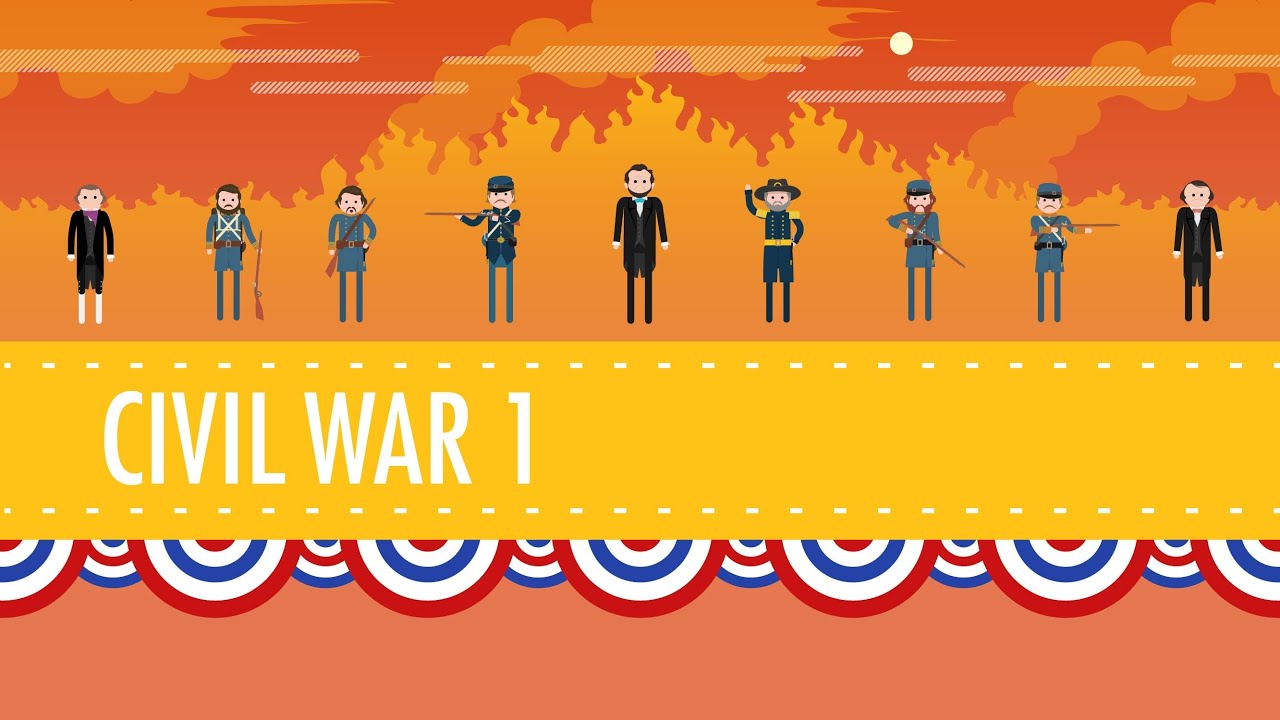
In which John Green ACTUALLY teaches about the Civil War. In part one of our two part look at the US Civil War, John looks into the causes of the war, and the motivations of the individuals who went to war. The overarching causes and the individual motivations were not always the same, you see. John also looks into why the North won, and whether that outcome was inevitable. The North's industrial and population advantages are examined, as are the problems of the Confederacy, including its need to build a nation at the same time it was fighting a war. As usual, John doesn't get much into the actual battle by battle breakdown. He does talk a little about the overarching strategy that won the war, and Grant's plan to just overwhelm the South with numbers. Grant took a lot of losses in the latter days of the war, but in the end, it did lead to the surrender of the South. If you want to learn more about the Civil War, we recommend these books:
Battle Cry of Freedom by James McPherson
The Civil War by Shelby Foote
Hey teachers and students - Check out CommonLit's free collection of reading passages and curriculum resources to learn more about the events of this episode. There were many causes of the American Civil War and events that led to disunion: https://www.commonlit.org/text....s/causes-of-the-amer
Once the war started, its outcome was determined by the different abilities and resources of the divided North and South: https://www.commonlit.org/text....s/a-nation-divided-n
follow us!
@thecrashcourse
@realjohngreen
@raoulmeyer
@crashcoursestan
@saysdanica
@br8ybrunch Support CrashCourse on Patreon: https://www.patreon.com/crashcourse
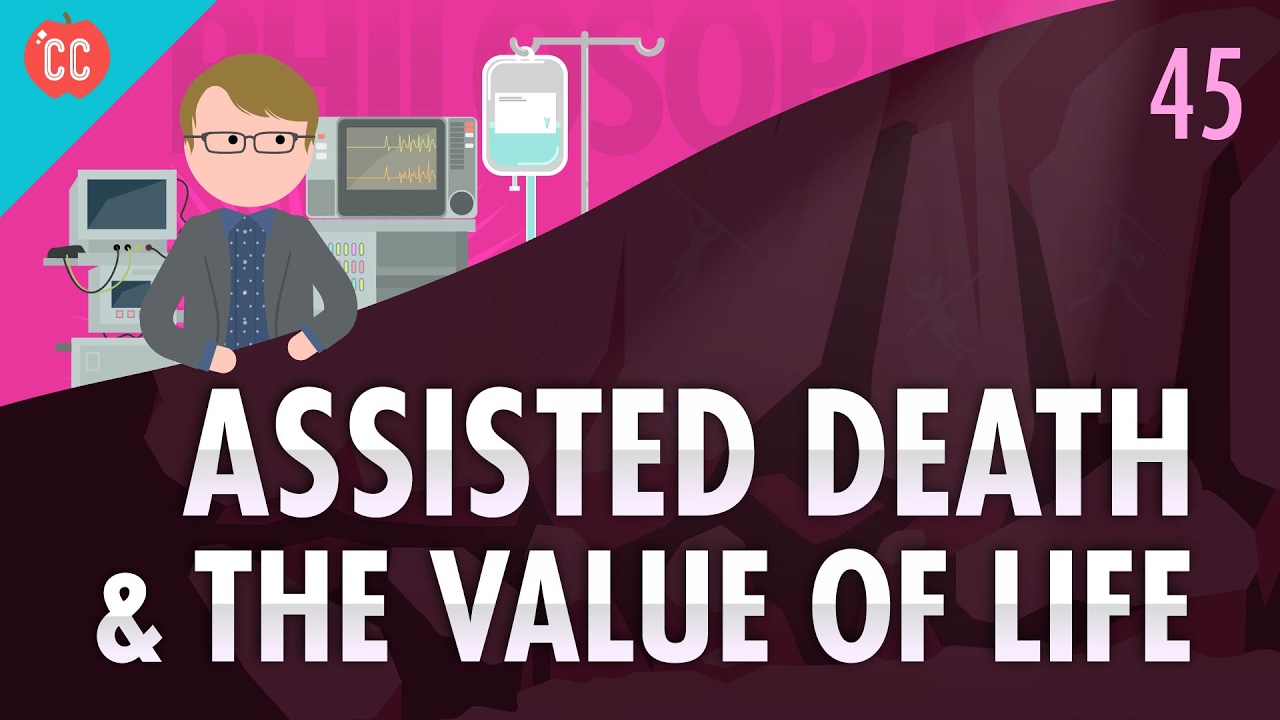
As we wrap up Crash Course Philosophy, we’re using the things we’ve learned to explore big issues like the value of life. Today, we’re discussing abortions in cases of fetal abnormality, assisted suicide, and euthanasia. We will consider the standard of substituted judgment and the values people hold on both sides of these issues—values about the sacredness of life, and the importance of a life of quality, as well as the values of personal liberty and avoiding pain.
Want more Crash Course in person? We'll be at NerdCon: Nerdfighteria in Boston on February 25th and 26th! For more information, go to http://www.nerdconnerdfighteria.com/
Get your own Crash Course Philosophy mug or Chom Chom shirt from DFTBA: https://store.dftba.com/collections/crashcourse
The Latest from PBS Digital Studios: https://www.youtube.com/playli....st?list=PL1mtdjDVOoO
--
Produced in collaboration with PBS Digital Studios: http://youtube.com/pbsdigitalstudios
--
Want to find Crash Course elsewhere on the internet?
Facebook - http://www.facebook.com/YouTubeCrashC...
Twitter - http://www.twitter.com/TheCrashCourse
Tumblr - http://thecrashcourse.tumblr.com
Support CrashCourse on Patreon: http://www.patreon.com/crashcourse
CC Kids: http://www.youtube.com/crashcoursekids
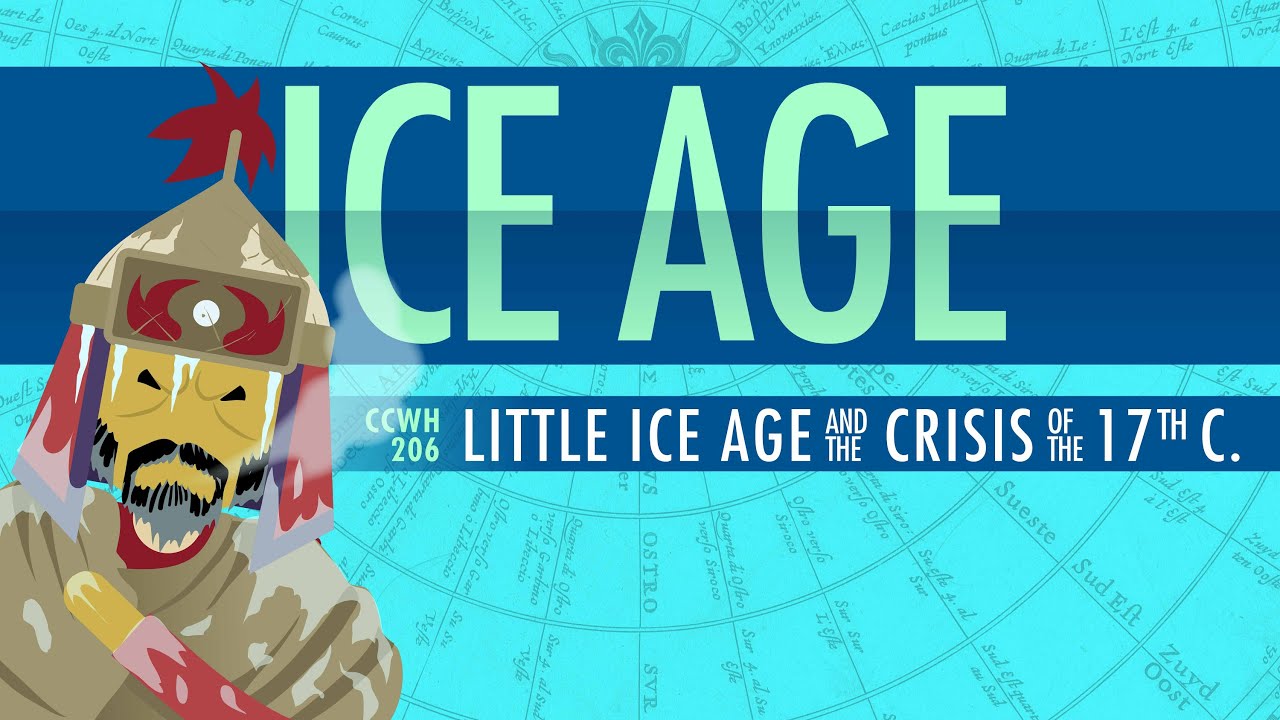
In which John Green teaches you about the Little Ice Age. The Little Ice Age was a period of global cooling that occurred from the 13th to the 19th centuries. This cooling was likely caused by a number of factors, including unusual solar activity and volcanic eruptions. The Little Ice Age greatly impacted human social orders, especially during the 17th century. When the climate changed, and weather became unpredictable, the world changed profoundly. Poor harvests led to hunger, which led to even less productivity, which even resulted in violent upheaval in a lot of places. All this from a little change in the temperature? Definitely.
You can directly support Crash Course at https://www.patreon.com/crashcourse Subscribe for as little as $0 to keep up with everything we're doing. Free is nice, but if you can afford to pay a little every month, it really helps us to continue producing this content.
Read more about The Little Ice Age here: http://www.amazon.com/Global-C....risis-Climate-Catast

How do astronomers make sense out of the vastness of space? How do they study things so far away? Today Phil talks about distances, going back to early astronomy. Ancient Greeks were able to find the size of the Earth, and from that the distance to and the sizes of the Moon and Sun. Once the Earth/Sun distance was found, parallax was used to find the distance to nearby stars, and that was bootstrapped using brightness to determine the distances to much farther stars.
--
Table of Contents
Ancient Greeks Finding the Size of the Earth 1:07
Earth/Sun Distance Began Our Use of Parallax 5:39
Brightness Relation to Distance 9:07
--
PBS Digital Studios: http://youtube.com/pbsdigitalstudios
Follow Phil on Twitter: https://twitter.com/badastronomer
Want to find Crash Course elsewhere on the internet?
Facebook - http://www.facebook.com/YouTubeCrashCourse
Twitter - http://www.twitter.com/TheCrashCourse
Tumblr - http://thecrashcourse.tumblr.com
Support CrashCourse on Patreon: http://www.patreon.com/crashcourse
--
PHOTOS/VIDEOS
Lunar Ecplise http://www.slate.com/content/d....am/slate/blogs/bad_a [credit: Phil Plait]
Venus & Mercury [credit: Phil Plait]
Venus Transit https://www.youtube.com/watch?v=34mXua1n_FQ [credit: NASA]
Black Drop Venus Transit https://en.wikipedia.org/wiki/....Black_drop_effect#me [credit: Wikimedia Commons, H. Raab, Johannes-Kepler-Observatory]
New Horizons Approaching Pluto and Charon https://en.wikipedia.org/wiki/....New_Horizons#/media/ [credit: NASA/JHU APL/SwRI/Steve Gribben]
Radio Telescopes Diagram http://scitechdaily.com/images..../Radio-Telescopes-Se [credit: Alexandra Angelich, NRAO/AUI/NSF]
61 Cygni https://archive.stsci.edu/cgi-bin/dss_search?v=poss1_red&r=21+06+54.60&d=%2B38+44+44.9&e=J2000&h=30&w=30&f=gif&c=none&fov=NONE&v3= [credit: Caltech / National Geographic Society / STScI]
Proxima Centauri https://www.spacetelescope.org/images/potw1343a/ [credit: ESA/Hubble & NASA]
Dying Star http://www.nasa.gov/images/con....tent/64884main_image [credit: NASA, ESA, HEIC, and The Hubble Heritage Team (STScI/AURA)]
Exploding Star http://www.nasa.gov/multimedia..../imagegallery/image_ [credit: NASA, ESA, J. Hester, A. Loll (ASU)]
Animation of a Variable Star http://www.spacetelescope.org/videos/heic1323j/ [credit: NASA, ESA, M. Kornmesser]
Hubble's High-Definition Panoramic View of the Andromeda Galaxy http://hubblesite.org/newscent....er/archive/releases/ [credit: NASA, ESA, J. Dalcanton, B.F. Williams, and L.C. Johnson (University of Washington), the PHAT team, and R. Gendler]
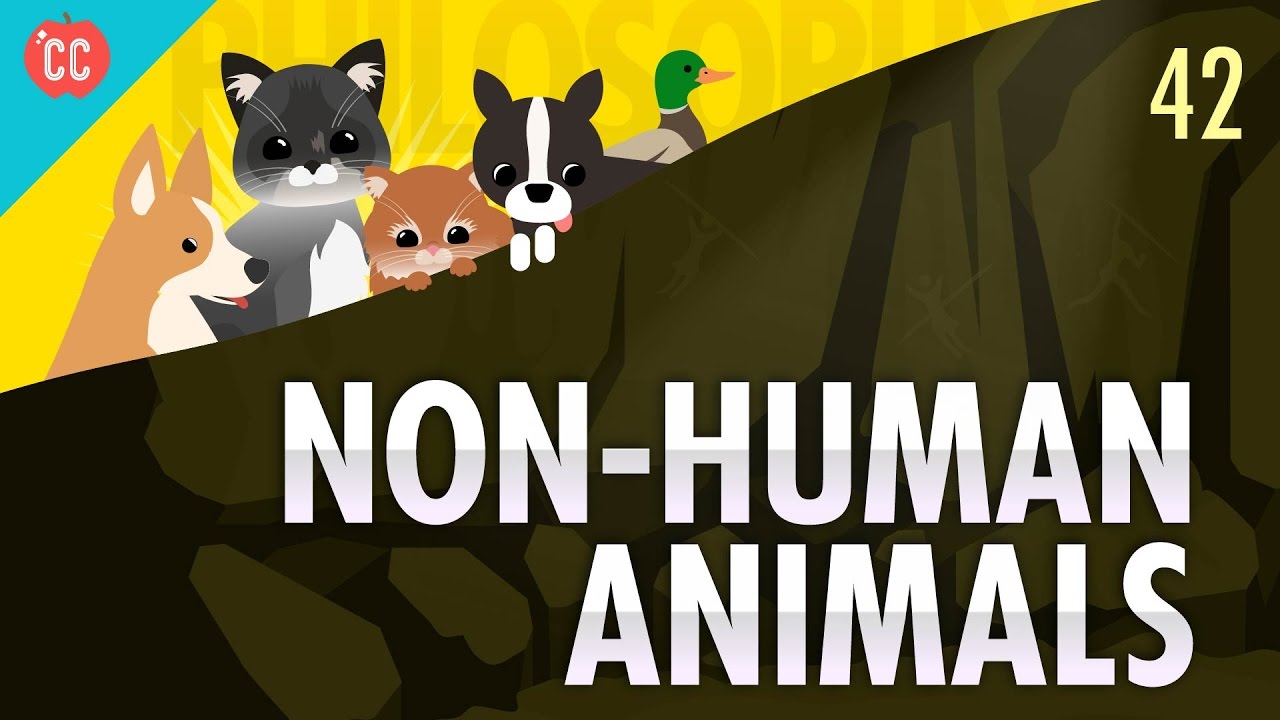
Today we are taking all the things we have learned this year about doing philosophy and applying that to moral considerations regarding non-human animals. We’ll explore what philosophers like Peter Singer and Carl Cohen have to say about their use, including the concept of equal consideration of interests.
Want more Crash Course in person? We'll be at NerdCon: Nerdfighteria in Boston on February 25th and 26th! For more information, go to http://www.nerdconnerdfighteria.com/
Get your own Crash Course Philosophy mug or Chom Chom shirt from DFTBA: https://store.dftba.com/collections/crashcourse
The Latest from PBS Digital Studios: https://www.youtube.com/playli....st?list=PL1mtdjDVOoO
--
All other images and video either public domain or via VideoBlocks, or Wikimedia Commons, licensed under Creative Commons BY 4.0: https://creativecommons.org/licenses/by/4.0/
Produced in collaboration with PBS Digital Studios: http://youtube.com/pbsdigitalstudios
--
Want to find Crash Course elsewhere on the internet?
Facebook - http://www.facebook.com/YouTubeCrashC...
Twitter - http://www.twitter.com/TheCrashCourse
Tumblr - http://thecrashcourse.tumblr.com
Support CrashCourse on Patreon: http://www.patreon.com/crashcourse
CC Kids: http://www.youtube.com/crashcoursekids
Hello, world! Welcome to Crash Course Computer Science! So today, we’re going to take a look at computing’s origins, because even though our digital computers are relatively new, the need for computation is not. Since the start of civilization itself, humans have had an increasing need for special devices to help manage laborious tasks, and as the scale of society continued to grow, these computational devices began to play a crucial role in amplifying our mental abilities. From the abacus and astrolabe to the difference engine and tabulating machine, we’ve come a long way to satisfying this increasing need, and in the process completely transformed commerce, government, and daily life.
Produced in collaboration with PBS Digital Studios: http://youtube.com/pbsdigitalstudios
Want to know more about Carrie Anne?
https://about.me/carrieannephilbin
Want more Crash Course in person? We'll be at NerdCon: Nerdfighteria in Boston on February 25th and 26th! For more information, go to http://www.nerdconnerdfighteria.com/
The Latest from PBS Digital Studios: https://www.youtube.com/playlist?list...
Want to find Crash Course elsewhere on the internet?
Facebook - http://www.facebook.com/YouTubeCrashC...
Twitter - http://www.twitter.com/TheCrashCourse
Tumblr - http://thecrashcourse.tumblr.com
Support Crash Course on Patreon: http://patreon.com/crashcourse
CC Kids: http://www.youtube.com/crashcoursekids
In which John Green teaches you about the presidency of Andrew Jackson So how did a president with astoundingly bad fiscal policies end up on the $20 bill? That's a question we can't answer, but we can tell you how Jackson got to be president, and how he changed the country when he got the job. Jackson's election was more democratic than any previous presidential election. More people were able to vote, and they picked a doozie. Jackson was a well-known war hero, and he was elected over his longtime political enemy, John Quincy Adams. Once Jackson was in office, he did more to expand executive power than any of the previous occupants of the White House. He used armed troops to collect taxes, refused to enforce legislation and supreme court legislation, and hired and fired his staff based on support in elections. He was also the first president to regularly wield the presidential veto as a political tool. Was he a good president? Watch this video and draw your own conclusions. Support CrashCourse on Patreon: https://www.patreon.com/crashcourse
Hey teachers and students - Check out CommonLit's free collection of reading passages and curriculum resources to learn more about the events of this episode. On of Andrew Jackson's most lasting and memorable policies was that of Indian removal: https://www.commonlit.org/text....s/andrew-jackson-s-s
Jackson’s promotion of this cause led to the infamous Trail of Tears: https://www.commonlit.org/text....s/excerpt-from-trail
Hank fills us in on the endocrine system - the system of glands which produce and secrete different types of hormones directly into the bloodstream to regulate the body's growth, metabolism, and sexual development & function.
Like CrashCourse on Facebook: http://www.facebook.com/YouTubeCrashCourse
Follow CrashCourse on Twitter: http://www.twitter.com/TheCrashCourse
References for this episode can be found in the Google document here: http://dft.ba/-1lsU
Table of Contents
1) Signalling Systems 2:07:0
2) Pituitary 3:19:1
3) Hypothalamus 4:17:1
4) Thyroid 4:52:1
5) Adrenal 5:38:1
6) Pancreas 6:51:1
7) Biolography 8:49:2
biology, crash course, crashcourse, hank green, anatomy, physiology, endocrine system, hormone, gland, human, body, science, exocrine, pituitary, thyroid, adrenal, pancreas, gonads, paracrine signalling, autocrine signalling, signal receptor, steroids, peptides, monoamines, brain, hypothalamus, oxytocin, negative feedback loop, kidney, stress, ACTH, epinephrine, organ, glucose, insulin, glucagon, testes, androgen, testosterone, ovaries, estrogen, progestin, estradiol, progesterone, sex, alfred jost, embryologist, secretion, embryonic development, embryo, mammal, fetal development, puberty, reproductive organs Support CrashCourse on Subbable: http://subbable.com/crashcourse

In which John Green teaches you about the Democratic Republic of the Congo, which used to be Zaire, which used to be The Belgian Congo, which used to be the Congo Free State, which used to be the region surrounding the Congo River Basin in central Africa. So the history of this place is a little convoluted. The history of Congo is central to the history of central Africa, and the Congo Wars embroiled neighboring countries like Uganda and Rwanda. John will talk you through the history of Congo and the region.
You can directly support Crash Course at http://www.subbable.com/crashcourse Subscribe for as little as $0 to keep up with everything we're doing. Free is nice, but if you can afford to pay a little every month, it really helps us to continue producing this content.
Citation 1: David van Reybrouck, Congo: The Epic History of a People. Trans. Sam Garrett. Harper Collins. 2014.
Citation 2: van Reybrouck. p 468

Hank introduces us to one of the most diverse and important families in the tree of life - the vascular plants. These plants have found tremendous success and the their secret is also their defining trait: conductive tissues that can take food and water from one part of a plant to another part. Though it sounds simple, the ability to move nutrients and water from one part of an organism to another was a evolutionary breakthrough for vascular plants, allowing them to grow exponentially larger, store food for lean times, and develop features that allowed them to spread farther and faster. Plants dominated the earth long before animals even showed up, and even today hold the world records for the largest, most massive, and oldest organisms on the planet.
Crash Course Biology is now available on DVD! http://dft.ba/-8bCC
Like CrashCourse @ http://www.facebook.com/YouTubeCrashCourse
Follow CrashCourse @ http://www.twitter.com/TheCrashCourse
Table of Contents
1) 3 Tissue Types 02:37
2) Primary Growth 03:04
3) Secondary Growth 03:28
4) Dermal Tissue 04:47
a) Epidermis 04:54
5) Parenchyma Cells 05:39
6) Vascular Tissue 05:58
7) Xylem 05:58
8) Collenchyma 07:10
9) Sclerenchyma 07:35
10) Ground Tissue 08:25
a) Mesophyll 08:17
b) Photosynthesis 08:47
11) Phloem 09:54
References
http://www.uic.edu/classes/bio....s/bios100/lecturesf0
http://www.deseretnews.com/art....icle/700071982/Centr
http://www.popsci.com/science/....article/2012-02/2000
crashcourse, biology, vascular plant, plant, successful, diversity, diverse, conductive tissue, evolution, growth, largest, most massive, oldest, dermal tissue, vascular tissue, ground tissue, photosynthesis, sprout, germination, primary growth, herbaceous, secondary growth, woody tissue, organ, root, stem, meristem, leaf, epidermis, cuticle, trichomes, root hairs, parenchyma, cortex, xylem, evapotranspiration, collenchyma, sclerenchyma, lignin, mesophyll, chloroplasts, stomata, phloem, sieve cells, sieve-tube elements, internal pressure, diffusion Support CrashCourse on Subbable: http://subbable.com/crashcourse
