Top Vídeos
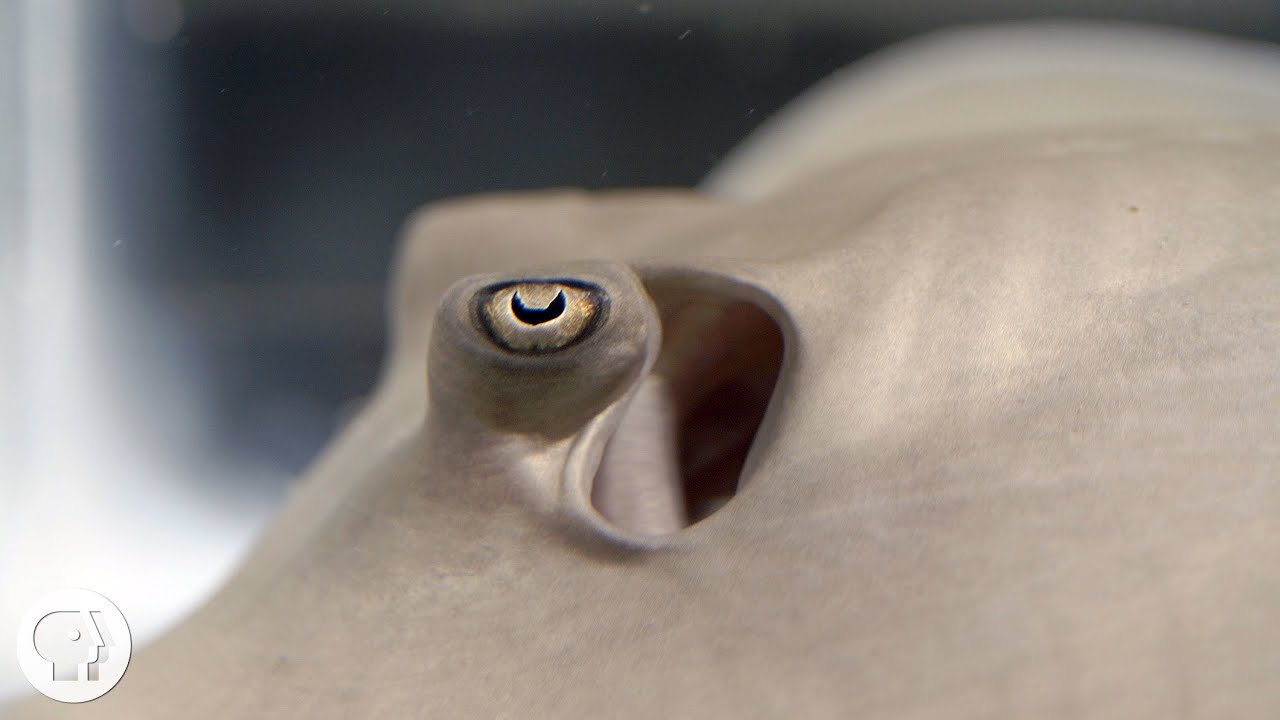
When it comes to spotting prey, sharks and rays have a secret sense beyond sight and smell. Tiny goo-filled organs called Ampullae of Lorenzini detect the invisible electric fields produced by all living creatures.
DEEP LOOK: a new ultra-HD (4K) short video series created by KQED San Francisco and presented by PBS Digital Studios. See the unseen at the very edge of our visible world. Get a new perspective on our place in the universe and meet extraordinary new friends. Explore big scientific mysteries by going incredibly small.
How do Sharks and Rays Sense Electric Fields?
Most animals don’t have the ability to detect electric fields. But sharks, rays, skates and sawfish — members of a group called Elasmobranchii — are masters of detecting electric signals. It’s one of their defining features. Elasmobranchs have specialized organs called Ampullae of Lorenzini. These tiny structures allow them to home in on weak bioelectric fields generated by nearby prey.
Elasmobranch’s electrosensory organs are named after a 17th century Italian physician, Stefano Lorenzini, who first identified them while dissecting an electric ray. Lorenzini noticed dozens of tiny pores around the animal’s mouth. Each of the pores led to jelly-filled canals that ended in pocket-like structures that he called ampullae, the Latin word for a type of round-bottomed flask.
Animals emit low frequency electric fields due to a process known as osmoregulation. This process allows the concentration of ions (charged atoms or molecules) to flow between the inside of our bodies and the outside. In order for our cells to stay intact, the flow of ions needs to be balanced.
But balanced doesn’t necessarily mean equal. The concentration of ions within a shrimp’s body is much lower than that of the sea water it swims in. Their voltage, or potential difference generated between the two concentrations across “leaky” surfaces, can then be detected by the ampullae.
More KQED SCIENCE:
Tumblr: http://kqedscience.tumblr.com
Twitter: https://www.twitter.com/kqedscience
KQED Science: http://ww2.kqed.org/science
---
Read the article for this video on KQED Science:
http://ww2.kqed.org/science/2015/08/11/sharks-and-rays-sense-electricity-fish-cant-hide/
#deeplook

Peregrine falcons catch other birds mid-flight by diving at more than 200 mph. To do it, they need some high-precision gear: special eyesight, talons and aerodynamics that can't be beat.
SUBSCRIBE to Deep Look! http://goo.gl/8NwXqt
Please support us on Patreon! https://www.patreon.com/deeplook
DEEP LOOK is a ultra-HD (4K) short video series created by KQED San Francisco and presented by PBS Digital Studios. See the unseen at the very edge of our visible world. Explore big scientific mysteries by going incredibly small.
---
While known for being the world’s fastest bird–peregrines have been clocked at diving more than 200 miles per hour–these majestic birds were at risk for going extinct 50 years ago. Widespread use of pesticides such as DDT decimated native populations of peregrine falcons.
By 1970, California’s peregrine population had dwindled to only two known nesting pairs statewide. The federal government banned DDT in 1972. And successful restoration efforts spearheaded by organizations like The Peregrine Fund helped revive their numbers. By 1999, they were removed from the federal Endangered Species List. Recent surveys estimate that there are now 300 to 350 nesting pairs in California and more than 2400 pairs nationwide.
---+ Read the entire article on KQED Science:
https://www.kqed.org/science/1....944037/peregrine-fal
--- What’s the origin of the Peregrine Falcon's name?
Peregrine is Latin for "Peregrinus," which means “traveler” or “pilgrim.”
--- How many eyelids do raptors, or birds or prey, like peregrine falcons have?
They have three! Two eyelids are used for closing their eyes, while the third is used for blinking. It’s also called the nictitating membrane and helps to protect their eyes and keep them moist and clean. It’s semi-transparent, so they can actually still see through it when it’s closed.
--- Did you know they have a special bone to protect their eyes?
It’s called a sclerotic ring and helps support and secure their eyeballs within their skulls.
---+ For more information:
Visit The Peregrine Fund
https://www.peregrinefund.org/
---+ More Great Deep Look episodes:
Things With Wings: https://youtu.be/a68fIQzaDBY
---+ Shoutout!
---+ ?Congratulations ?to the following fans for coming up with the best emoji or ASCII tributes to this fine feathered bird in our community tab challenge:
Sandcastle •
ɐɯɹɐʞ ɐıuɐɯ
lieutenant giwaffe
Sectumsempra, b****!
Sweetle pie.3.
Go look at all the entries here!
https://www.youtube.com/channe....l/UC-3SbfTPJsL8fJAPK
---+ Thank you to our Top Patreon Supporters ($10+ per month)!
Allen, Aurora Mitchell, Beckie, Ben Espey, Bill Cass, Breanna Tarnawsky, Carl, Chris B Emrick, Chris Murphy, Cindy McGill, Companion Cube, Cory, Daisuke Goto, Daisy Trevino , Daniel Voisine, Daniel Weinstein, David Deshpande, Dean Skoglund, Edwin Rivas, Elizabeth Ann Ditz, Geidi Rodriguez, Gerardo Alfaro, Ivan Alexander, Jane Orbuch, JanetFromAnotherPlanet, Jason Buberel, Jeanne Sommer, Joao Ascensao, johanna reis, Johnnyonnyful, Joshua Murallon Robertson, Justin Bull, Kallie Moore, Karen Reynolds, Katherine Schick, Kendall Rasmussen, Kenia Villegas, Kristell Esquivel, KW, Kyle Fisher, Laurel Przybylski, Leonhardt Wille, Levi Cai, Louis O'Neill, Michael Mieczkowski, Michele Wong, monoirre, Nathan Padilla, Nathan Wright, Nicolette Ray, NoahCXXIII, Pamela Parker, PM Daeley, Ricardo Martinez, riceeater, Richard Shalumov, Rick Wong, Robert Amling, Robert Warner, Sayantan Dasgupta, Shelley Pearson Cranshaw, Shirley Washburn, Sonia Tanlimco, SueEllen McCann, Supernovabetty, Tea Torvinen, TierZoo, Titania Juang, Two Box Fish, WhatzGames, Willy Nursalim
---+ Follow KQED Science and Deep Look:
Patreon: https://www.patreon.com/deeplook
Instagram: https://www.instagram.com/kqedscience/
Twitter: https://www.twitter.com/kqedscience
KQED Science on kqed.org: http://www.kqed.org/science
Facebook Watch: https://www.facebook.com/DeepLookPBS/
---+ About KQED
KQED, an NPR and PBS affiliate in San Francisco, CA, serves Northern California and beyond with a public-supported alternative to commercial TV, Radio and web media.
Funding for Deep Look is provided in part by PBS Digital Studios. Deep Look is a project of KQED Science, which is also supported by the National Science Foundation, the S. D. Bechtel, Jr. Foundation, the Dirk and Charlene Kabcenell Foundation, the Vadasz Family Foundation, the Fuhs Family Foundation, Campaign 21 and the members of KQED.
#peregrinefalcon #bird #deeplook
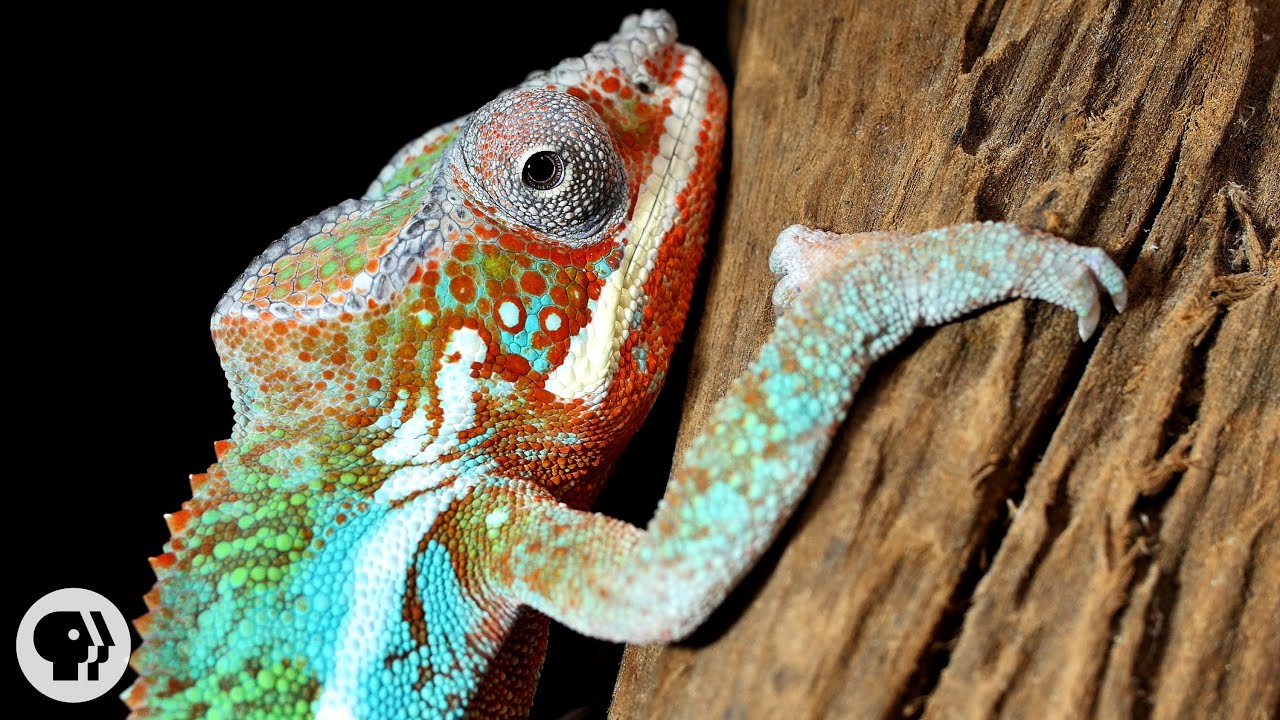
Chameleons don't change color to match their environment; it’s just the opposite. How do they do it? By manipulating tiny crystals in their skin. Now, UC Berkeley researchers are on a quest to create synthetic chameleon skin inspired by these reptiles’ uncanny ability.
DEEP LOOK: a new ultra-HD (4K) short video series created by KQED San Francisco and presented by PBS Digital Studios. See the unseen at the very edge of our visible world. Get a new perspective on our place in the universe and meet extraordinary new friends. Explore big scientific mysteries by going incredibly small.
--- How do Chameleons Change Color?
Chameleons are some of the most brilliantly colored animals on the planet. But how did they evolve the ability to change color?
Scientists used to believe that chameleons changed color by spreading out pigments in their skin, much like octopuses or squid do.
The top layer of chameleon skin – called the epidermis – contains yellow pigment cells called xanthophores, and red pigment cells called erythrophores. But the amount of pigment in the cells stays the same, even when the chameleon changes color.
Just beneath the chameleon’s skin is a layer of cells called iridophores. These cells contain microscopic salt crystals, which are arranged in a three-dimensional pattern like oranges stacked on a fruit stand.
When light hits the crystals, some wavelengths are absorbed and some are reflected. The result, to our eyes, is the beautiful rainbow of colors on the chameleon’s skin. But what we’re actually seeing is light that is bouncing off of these tiny crystals. What we perceive as green, for example, is blue wavelengths of light being reflected off the crystals and through the layer of yellow xanthophore cells in the chameleon’s epidermis. The result is bright green skin that contains no green pigment!
The process of changing color is called metachrosis.
--- Why do Chameleons Change Color?
Chameleons don’t change color to match their environment. In fact, it’s just the opposite.
Their baseline is camouflage.
When chameleons are relaxed, they’re mostly green. They naturally blend into their home in the forest canopy. They even mimic leaves by dancing around a little.
But when they feel threatened, annoyed, or just want to show a little swagger, that’s when their color changes.
Scientists once thought that chameleons color-changing abilities allowed them to better camouflage themselves. Most species of chameleons live high in the forest canopy and their various shades of green provide natural camouflage. Even their movement provides camouflage – they dance around to mimic leaves blowing in the wind.
In fact, chameleons change color primarily to communicate with each other, as though they were living mood rings. Males will warn each other about their territory and females will change color to let males know whether they’re interested in breeding.
Chameleons also have a second layer of iridiophore cells just beneath the first. The crystals in that layer are larger and reflect light waves in the infrared wavelengths. This suggests that chameleons are also changing colors to regulate their temperature, according to Milinkovitch. Chameleons are cold-blooded and heat their bodies with the warmth of the sun.
Read the article for this video on KQED Science:
http://ww2.kqed.org/science/20....15/08/25/natures-moo
--- More great DEEP LOOK episodes:
Where Are the Ants Carrying All Those Leaves?
https://www.youtube.com/watch?v=-6oKJ5FGk24
What Happens When You Put a Hummingbird in a Wind Tunnel?
https://www.youtube.com/watch?v=JyqY64ovjfY
Pygmy Seahorses: Masters of Camouflage
https://www.youtube.com/watch?v=Q3CtGoqz3ww
--- Related video from the PBS Digital Studios Network!
Nature's Most Amazing Animal Superpowers - It’s Okay to be Smart
https://www.youtube.com/watch?v=e69yaWDkVGs
--- Other Great Science Videos About Chameleons
How Do Chameleons Change Color? - Veritasium
https://www.youtube.com/watch?v=SQggDnScsvI
True Facts About The Chameleon - zefrank1
https://www.youtube.com/watch?v=UR_byRbXxvs
--- More KQED SCIENCE:
Tumblr: http://kqedscience.tumblr.com
Twitter: https://www.twitter.com/kqedscience
KQED Science: http://ww2.kqed.org/science
Funding for Deep Look is provided in part by PBS Digital Studios and the John S. and James L. Knight Foundation. Deep Look is a project of KQED Science, which is supported by HopeLab, The David B. Gold Foundation; S. D. Bechtel, Jr. Foundation; The Dirk and Charlene Kabcenell Foundation; The Vadasz Family Foundation; Smart Family Foundation and the members of KQED.
#deeplook
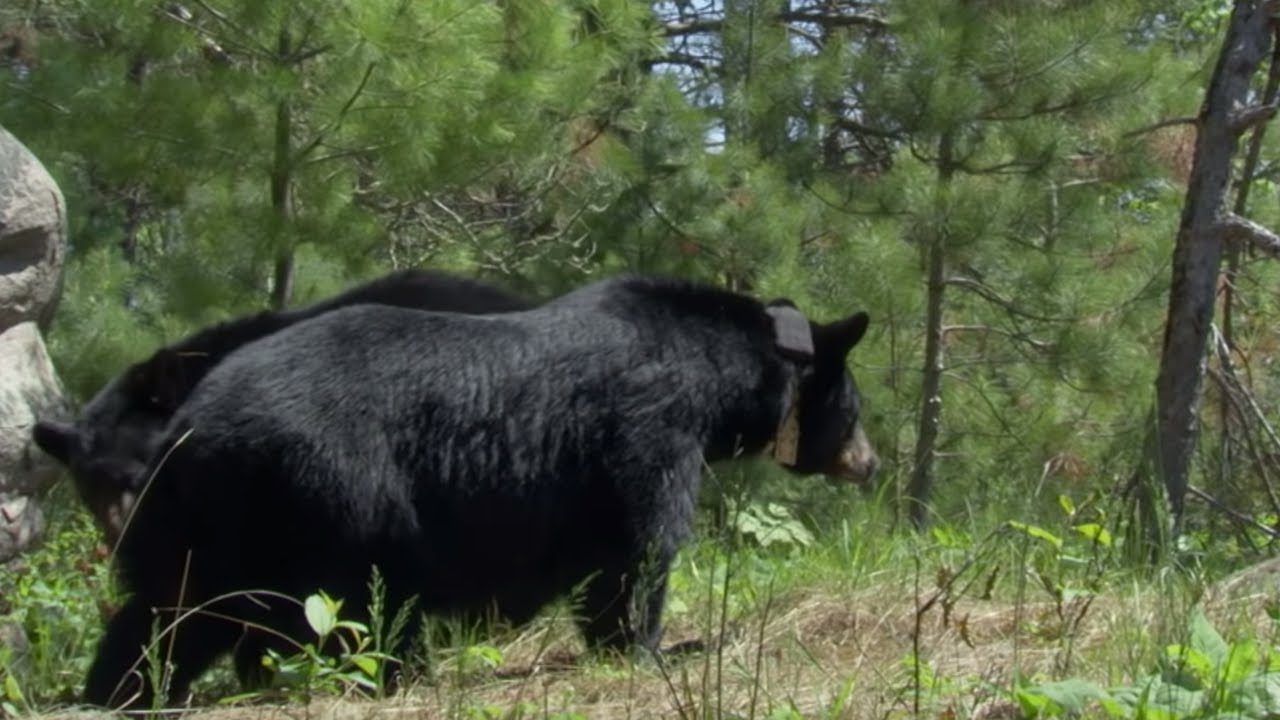
Watch this happy go lucky black bear as he picks up the scent of a female and successfully mates!
Subscribe to BBC Earth: http://bit.ly/BBCEarthSub
Planet Earth http://bit.ly/PlanetEarthPlaylist
Blue Planet http://bit.ly/BluePlanetPlaylist
Planet Earth II http://bit.ly/PlanetEarthIIPlaylist
Planet Dinosaur http://bit.ly/PlanetDinoPlaylist
24/7 Wild:
Witness the most charismatic animals on earth as they experience life's ultimate challenges in the first few vulnerable weeks of life. 24/7 Wild journeys with them to understand their tough rites of passage to adulthood and survival.
Welcome to BBC EARTH! The world is an amazing place full of stories, beauty and natural wonder. Here you'll find 50 years worth of astounding, entertaining, thought-provoking and educational natural history content. Dramatic, rare, and exclusive, nature doesn't get more exciting than this.
Want to share your views with the team behind BBC Earth and win prizes? Join our fan panel here: http://tinyurl.com/YouTube-BBCEarth-FanPanel
This is a channel from BBC Worldwide who help fund new BBC programmes
Service information and feedback: http://bbcworldwide.com/vod-fe....edback--contact-deta

The detective bananas hide and wait to catch the fruit salad snitcher in the act.
This Clip is from season 1 episode 28 called "The Sleepy Snitcher".
B1, B2 and their adorable friends the Teddies and the ever mischievous Rat in a Hat romp their way through the magical world of Cuddletown. There are new friends to meet too; Topsy the kangaroo, Charlie the inventive monkey and Bernard the wise old dog.
Stay Tuned! https://www.youtube.com/channe....l/UCug61OHMkz5GgJkey
Bananas in Pyjamas Theme Song : https://youtu.be/6hPsXh5k0d8
Welcome to the Official Bananas in Pyjamas Channel.
On this channel you will find classic and animated full episodes! Your favourite clips and compilations and much more! Tune in every week and see the antics of B1, B2 and there many friends!
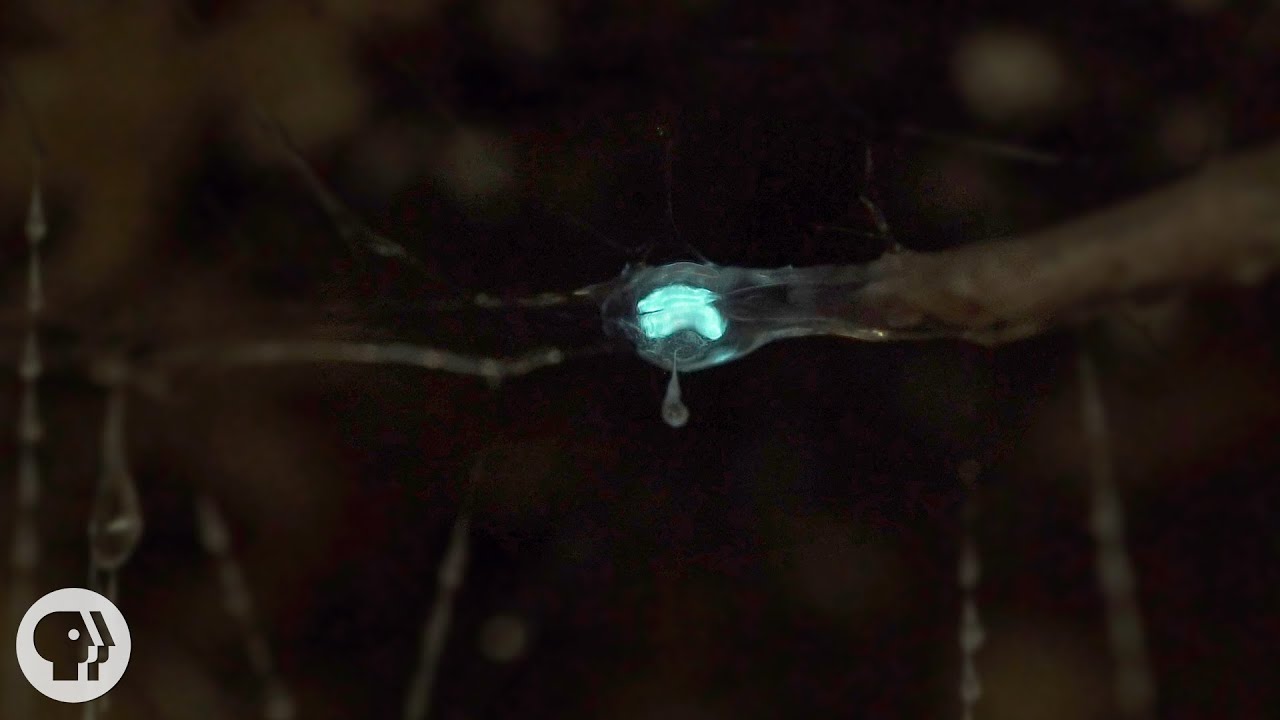
The glow worm colonies of New Zealand's Waitomo Caves imitate stars to confuse flying insects, then trap them in sticky snares and eat them alive.
SUBSCRIBE to Deep Look! http://goo.gl/8NwXqt
DEEP LOOK is science up close - really, really close. An ultra-HD (4K) short video series created by KQED San Francisco and presented by PBS Digital Studios. See the unseen at the very edge of our visible world. Get a new perspective on our place in the universe and meet extraordinary new friends. Explore big scientific mysteries by going incredibly small.
Like fireflies, the spectacular worms of New Zealand’s Waitomo Caves glow by breaking down a light-emitting protein. But unlike the yellow mating flashes of fireflies, the glow worms’ steady blue light has a more insidious purpose: it’s bait.
The strategy is simple. Many of the glow worms’ prey are insects, including moths, that navigate by starlight. With imposter stars all around, the insects become disoriented and fly into a waiting snare. Once the victim has exhausted itself trying to get free, the glow worm reels in the catch.
The prey is typically still alive when it arrives at the glow worm’s mouth, which has teeth sharp enough to bore through insect exoskeletons.
Glow worms live in colonies, and researchers have noticed that individual worms seem to sync their lights to the members of their colony, brightening and dimming on a 24-hour cycle. There can be several colonies of glow worms in a cave, and studies have shown that different colonies are on different cycles, taking turns at peak illumination, when they’re most attractive to prey.
Not surprisingly, the worms glow brighter when they’re hungry.
--- How do glow worms glow?
Their light is the result of a chemical reaction. The worms break down a protein called luciferin using an enzyme, luciferase, in a specialized section of their digestive tract. The glow shines through their translucent skin.
--- Why do glow worms live in caves?
The glow worms need to be in a dark environment where their light can be seen. Caves also shelter them from the wind, which can tangle their dangling snares.
--- Where can I see glow worms?
The Waitomo Caves are on New Zealand’s North Island. Other New Zealand glow worm sites include the Te Anau caves, Lake Rotoiti, Paparoa National Park, and Waipu. A related species inhabits similar caves in eastern Australia.
---+ Read the entire article on KQED Science:
https://ww2.kqed.org/science/2....016/06/28/these-carn
---+ For more information:
Discover Waitomo: http://www.waitomo.com/
---+ More Great Deep Look episodes:
Winter is Coming For These Argentine Ant Invaders
https://www.youtube.com/watch?v=boyzWeHdtiI
The Bombardier Beetle And Its Crazy Chemical Cannon
https://www.youtube.com/watch?v=BWwgLS5tK80
---+ See some great videos and documentaries from the PBS Digital Studios!
It's Okay to Be Smart: Are You Smarter Than A Slime Mold?
https://www.youtube.com/watch?v=K8HEDqoTPgk
Gross Science: Hookworms and the Myth of the "Lazy Southerner"
https://www.youtube.com/watch?v=7BwgpYexMjk
---+ Follow KQED Science:
KQED Science: http://www.kqed.org/science
Tumblr: http://kqedscience.tumblr.com
Twitter: https://www.twitter.com/kqedscience
---+ About KQED
KQED, an NPR and PBS affiliate in San Francisco, CA, serves Northern California and beyond with a public-supported alternative to commercial TV, Radio and web media.
Funding for Deep Look is provided in part by PBS Digital Studios and the John S. and James L. Knight Foundation. Deep Look is a project of KQED Science, which is also supported by HopeLab, the David B. Gold Foundation, the S. D. Bechtel, Jr. Foundation, the Dirk and Charlene Kabcenell Foundation, the Vadasz Family Foundation, the Gordon and Betty Moore Foundation, the Smart Family Foundation and the members of KQED.
#deeplook

Marvel Mash-Up: Iron Man, Episode 7 - Dark Aegis
The Marvel Universe is turned upside down with these humorous and unexpected takes on iconic Marvel heroes and villains - featuring classic animation with new voices and editing.
---
Guest Starring: Iron Man, Jarvis, War Machine, Howard Stark, Firebrand, Mandarin, Hulk, MODOK, Dark Aegis
---
Director Kalia says, "Gas station nachos are better than gas station sushi. Trust."
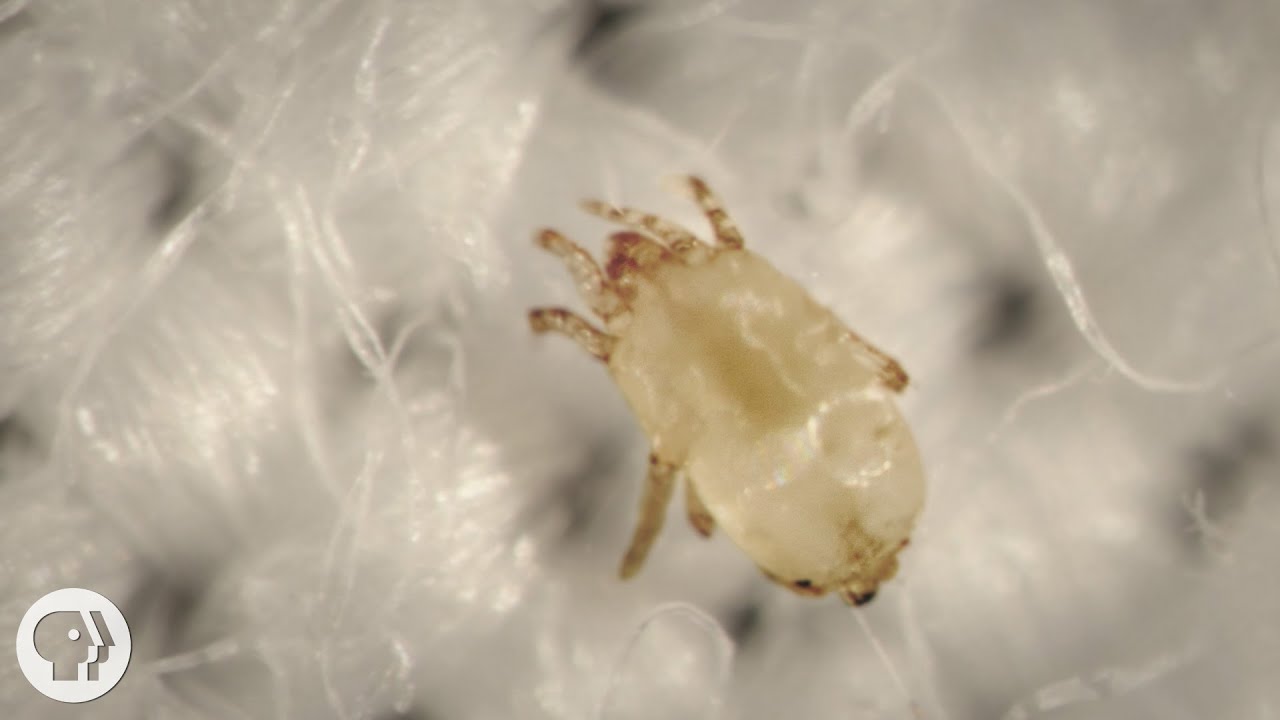
You may think that you've got the house to yourself, but chances are you have about 100 different types of animals living with you. Many of them are harmless, but a few can be dangerous in ways you wouldn't expect. New research explores exactly whom you share your home with and how they got there.
SUBSCRIBE to Deep Look! http://goo.gl/8NwXqt
DEEP LOOK: a new ultra-HD (4K) short video series created by KQED San Francisco and presented by PBS Digital Studios. See the unseen at the very edge of our visible world. Get a new perspective on our place in the universe and meet extraordinary new friends. Explore big scientific mysteries by going incredibly small.
---+ About Dust Mites
With the warming weather it’s the season for spring cleaning. But before you reach for the broom and mop, take a moment to look at who else is sharing your home with you. The number of uninvited guests you find in your dustpan may surprise you.
A recent study published in the journal PeerJ took up the challenge of cataloging the large numbers of tiny animals that live in human dwellings. The researchers found that the average home contains roughly 100 different species of arthropods, including familiar types like flies, spiders and ants, but also some kinds that are less well known like gall wasps and book lice. And no matter how much human residents may clean, there will always be a considerable number of mini-roommates.
“Even as entomologists we were really surprised. We live in our houses all the time, so we thought we’d be more familiar with the kind of things we’d come across. There was a surprising level of biodiversity,” said Michelle Trautwein, assistant curator of entomology at the California Academy of Sciences in San Francisco.
---+ What are dust mites?
Dust mites are tiny animals, related to spiders, that are usually too small to be seen with the naked eye. They feed on dead skin that humans shed every day and their droppings may cause allergic reactions and may aggravate asthma, especially in children.
---+ How do you minimize dust mites?
It’s practically impossible to completely rid a home of dust mites, but frequent cleaning and removing carpeting can help. Wet cleaning like mopping helps keep from stirring up dust while cleaning. The most effective way to keep dust mite populations down is to keep the indoor humidity level low. Dust mites can only survive in humid environments.
---+ How do you see dust mites?
Dust mites are about .2mm long. You can see dust mites with a powerful magnifying glass, but you can get a better view by using a microscope.
Read the entire article on KQED Science:
http://ww2.kqed.org/science/20....16/04/05/meet-the-du
---+ More great DEEP LOOK episodes:
The Bombardier Beetle And Its Crazy Chemical Cannon
http://ww2.kqed.org/science/20....16/04/05/meet-the-du
Where Are the Ants Carrying All Those Leaves?
https://www.youtube.com/watch?v=-6oKJ5FGk24
Banana Slugs: Secret of the Slime
https://www.youtube.com/watch?v=mHvCQSGanJg
--- Super videos from the PBS Digital Studios Network!
It's Okay To Be Smart: How Do Bees Make Honey?
https://youtu.be/nZlEjDLJCmg
Gross Science: What's Living On Your Contact Lenses?
https://www.youtube.com/watch?v=wRMKzsU9zec
Gross Science: You Have Mites Living On Your Face
https://www.youtube.com/watch?v=oMmCWx8vySs
--- More content from KQED Science, Northern California's PBS and NPR affiliate:
KQED Science: http://www.kqed.org/science
Tumblr: http://kqedscience.tumblr.com
Twitter: https://www.twitter.com/kqedscience
Funding for Deep Look is provided in part by PBS Digital Studios and the John S. and James L. Knight Foundation. Deep Look is a project of KQED Science, which is also supported by HopeLab, the David B. Gold Foundation, the S. D. Bechtel, Jr. Foundation, the Dirk and Charlene Kabcenell Foundation, the Vadasz Family Foundation, the Gordon and Betty Moore Foundation, the Smart Family Foundation and the members of KQED.
#deeplook

Bebé Juan y su familia recordaran momentos muy tiernos al ver el álbum de fotos de cada uno de los miembros de esta hermosa familia. Todos se veían muy lindos de bebés y creo que se parecían bastante. Mamá y Papá también tienen sus propios álbumes de fotos y hasta bingo tenía uno. ¿Te gusta ver fotos de tu familia y de cuando eras más pequeño?
¡Aprende y disfruta con todos nuestros divertidos videos para niños en 3D! #bebejuan #cancionesinfantiles #littleangelespañol #bebejuanenespañol
(?️) Subscríbete a Little Angel Español para ver videos nuevos en cuanto salgan ?►► http://bit.ly/suscribete_LittleAngel_Esp
¡Ve a tu canción favorita eligiendo en el título debajo!
00:04 El Álbum de Fotos de la Familia
04:09 ¡Mamá, Yo no me quiero bañar!: https://youtu.be/SJxhGPfXgao
07:23 El Bebé Aprende a Nadar ?♀️ : https://youtu.be/U4fs2sinzNU
Letra: Cuando era bebé
---------------------------------------------------
Fotos de nuestra familia
la familia, la familia
Son bastantes y muy bonitas
Hey-ho, Hey-ho, Hey-ho
Oh, qué fotos tan divertidas
Divertidas, divertidas
Miren que linda la sonrisa
del tierno bebé Juan
Cuando eras un bebito
Un bebito, un bebito
ropa pequeña y juguetitos
Hey-ho, Hey-ho, Hey-ho
Muchas fotos de bebé Juan
bebé Juan, bebé Juan
Eras tan chico bebé Juan
Hey-ho, Hey-ho, Hey-ho
Cuando eras una bebita
una bebita, una bebita
te mecía en tu cunita
Hey-ho, Hey-ho, Hey-ho
Muchas fotos de bebé sofi
bebé Sofi, bebé Sofi
Eras tan chica bebé Sofi
Hey-ho, Hey-ho, Hey-ho
Cuando eras un bebito
Un bebito, un bebito
El baño era tan divertido
Hey-ho, Hey-ho, Hey-ho
Muchas fotos de bebé Nico
bebé Nico, bebé Nico
Eras tan chico bebé Nico
Hey-ho, Hey-ho, Hey-ho
Cuando Papá era un bebé
un bebé, un bebé
El broccoli le hizo mucho bien
Hey-ho, Hey-ho, Hey-ho
Muchas fotos de bebé Papá
bebé Papá, bebé Papá
Eras tan chico bebé Papá
Hey-ho, Hey-ho, Hey-ho
Cuando Mamá era bebé
una bebé, una bebé
Con conejitos salía a correr
Hey-ho, Hey-ho, Hey-ho
Muchas fotos de bebé Mamá
bebé Mamá, bebé Mamá
Eras tan chica bebé Mamá
Hey-ho, Hey-ho, Hey-ho
Cuando Bingo era cachorrito
cachorrito, cachorrito
Su plato dejaba vacío
Hey-ho, Hey-ho, Hey-ho
Muchas fotos de bebé Bingo
bebé Bingo,bebé Bingo
Eras tan chico bebé Bingo
Hey-ho, Hey-ho, Hey-ho
---------------------------------------------------
Nuestras canciones para niños enseñan habilidades básicas y mejoran su habilidad para comprender y seguir instrucciones. Las canciones infantiles aceleran las capacidades fonéticas y mejoran la comprensión oral, de lectura y escritura.
No olvides darnos un LIKE (?) si disfrutaste este video.
Descubre el universo Little Angel en www.littleangel.com
Síguenos en redes sociales para nuestras últimas novedades:
★ Facebook: https://www.facebook.com/littleangelespanol/
★ Instagram: https://www.instagram.com/littleangel_esp/
★ Twitter: https://twitter.com/Little_angel_es?lang=es
Música infantil, canciones para niños, Spanish for kids, nursery rhymes Spanish, Spanish kids songs.

You've probably noticed that a lot of recipes for things like cookies and cakes all seem to call for the same temperature: 350 degrees Fahrenheit. You'd think there would be some variation there, so why 350? It's not actually arbitrary, and the reasons why are an interesting mixture of science and history.
Mankind has been baking for a long, long time, but it was only at the end of World War II that ovens started to come with exact temperature controls. In the few decades before that, ovens tended to come with only three options for temperature: slow, moderate, and hot.
If you happened to dig out any of your great-grandmother's recipes, you might be baffled by the bit that calls for baking in a "moderate" oven. It seems archaic today, but it was a huge step forward over how Victorian-era bakers judged whether or not their ovens were hot enough. They estimated oven temperature by sprinkling the bottom of the oven with flour. If it didn't catch fire and only started to blacken, then it was perfect. Don't try this at home!
Over the years, recipes have changed along with the technology we use to cook them. Old terminology was updated to new technology, and when recipes that called for a "moderate" oven were updated, the temperature was just estimated to be 350. A temperature which, incidentally, is usually in the middle of most oven dials.
Watch the video for more on the real reason we bake everything at 350 degrees.
#Baking #BakingTips
A moderate proposal | 0:17
Precision decisions | 1:18
Mind your Maillard | 1:56
Caramelization | 2:56
Movin' on up | 3:31
Exceptions to the rule | 4:09

Fermilab recently hosted more than 300 middle school students from 13 schools for a special showing of Hidden Figures and a panel discussion with four Fermilab scientists, including Karl Warburton. This video was played as part of the panel introductions.
The goal of the program was to show fifth- to eighth-grade students that entering a STEM field was possible for them – no matter their background. You can read more about the event here:
http://news.fnal.gov/2018/02/f....ermilab-organizes-hi
Karl Warburton discusses how every physicist always adds something to the field since every individual approaches the study in a new way. A scientist on the Deep Underground Neutrino Experiment, Warburton draws new information from pictures of simulated events, and each piece, collaboratively sewn together, contributes to our understanding of the universe.

Ellie y sus amigos quieren salir a jugar con el Señor Sol. ¡Canta con ellos! #littleangel #littleangelespañol
(?) Subscríbete a Little Angel para ver videos nuevos en cuánto salgan►► http://bit.ly/suscribete_LittleAngel_Esp
Nuestras canciones para niños enseñan habilidades básicas y mejoran su habilidad para comprender y seguir instrucciones. Las canciones infantiles aceleran las capacidades fonéticas y mejoran la comprensión oral, de lectura y escritura.
No olvides darnos un LIKE (?) si disfrutaste este video.
Descubre el universo Little Angel en www.littleangel.com
Síguenos en redes sociales para nuestras últimas novedades:
★ Facebook: https://www.facebook.com/littleangelvideo/
★ Instagram: https://www.instagram.com/littleangel_esp/
Nursery rhymes and kids songs, músicas para crianças, música infantil, canciones para niños, अंग्रेजी में बच्चों के गाने, детские песни для детей, comptines en espagnol, bata kanta sa ingles, lagu kanak-kanak Inggeris, lagu anak-anak dalam bahasa inggris, أغاني الأطفال باللغة الإنجليزية, 兒童歌曲英文.
Animations by: Valnet Inc.
Copyright 2018 Valnet
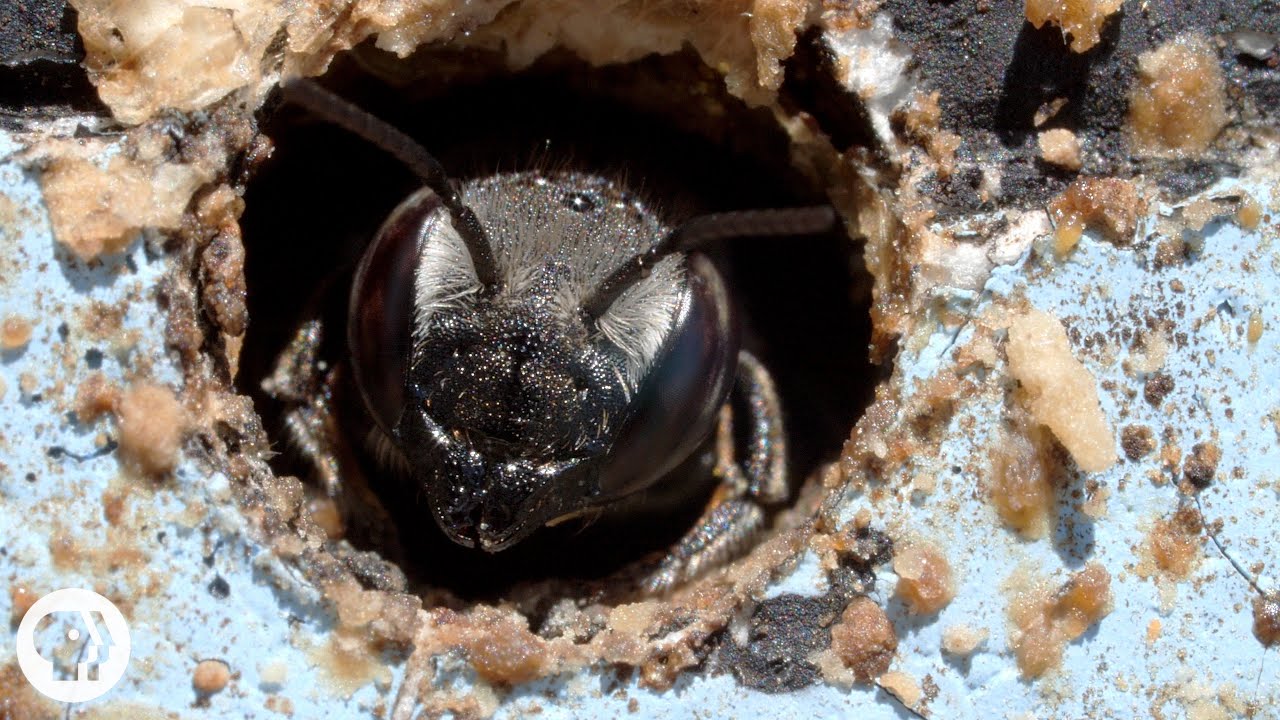
Alfalfa leafcutting bees are way better at pollinating alfalfa flowers than honeybees. They don’t mind getting thwacked in the face by the spring-loaded blooms. And that's good, because hungry cows depend on their hard work to make milk.
Join our community on Patreon! https://www.patreon.com/deeplook
Please take our annual PBSDS Survey, for a chance to win a T-shirt! https://www.pbsresearch.org/c/r/DL_YTvideo
DEEP LOOK is a ultra-HD (4K) short video series created by KQED San Francisco and presented by PBS Digital Studios. See the unseen at the very edge of our visible world. Explore big scientific mysteries by going incredibly small.
---
Sure, cows are important. But next time you eat ice cream, thank a bee.
Every summer, alfalfa leafcutting bees pollinate alfalfa in an intricate process that gets them thwacked by the flowers when they release the pollen that allows the plants to make seeds. The bees’ hard work came to fruition last week when growers in California finished harvesting the alfalfa seeds that will be grown to make nutritious hay for dairy cows.
This is how it works.
To produce alfalfa seeds, farmers let their plants grow until they bloom. They need help pollinating the tiny purple flowers, so that the female and male parts of the flower can come together and produce fertile seeds. That’s where the grayish, easygoing alfalfa leafcutting bees come in. Seed growers in California release the bees – known simply as cutters – in June and they work hard for a month.
Alfalfa’s flowers keep their reproductive organs hidden away inside a boat-shaped bottom petal called the keel petal, which is held closed by a thin membrane that creates a spring mechanism.
Cutter bees come up to the flower looking for nectar and pollen to feed on. When they land on the flower, the membrane holding the keel petal breaks and the long reproductive structure pops right up and smacks the upper petal or the bee, releasing its yellow pollen. This process is called “tripping the flower.”
When the flower is tripped, pollen falls on its female reproductive organ and fertilizes it; bees also carry pollen away on their hairy bodies and help fertilize other flowers. In a few weeks, each flower turns into a curly pod with seven to 10 seeds growing inside.
Cutters trip 80 percent of flowers they visit, compared to honeybees, which only trip about 10 percent.
---
--- What kind of a plant is alfalfa?
Alfalfa is a legume, like beans and chickpeas. Other legumes also hold their reproductive organs within a keel petal.
--- What do bees use leaves for?
Alfalfa leafcutting bees and other leafcutter bees cut leaf and petal pieces to build their nest inside a hole, such as a nook and cranny in a log. Alfalfa farmers provide bees with holes in styrofoam boards.
---+ Read the entire article on KQED Science:
https://www.kqed.org/science/1....946996/this-bee-gets
---+ Shoutout!
?Congratulations ?to the following fans for correctly identifying the bee body part coated in pollen, on our Leafcutting Bee - the scopa or scopae!
Punkonthego
GamingCuzWhyNot
Galatians 4:16
Gil AGA
Edison Lewis
---+ Thank you to our Top Patreon Supporters ($10+ per month)!
Leonhardt Wille
Justin Bull
Bill Cass
Sarah Khalida Mohamad
Daniel Weinstein
Chris B Emrick
Karen Reynolds
Tea Torvinen
David Deshpande
Daisuke Goto
Companion Cube
WhatzGames
Richard Shalumov
Elizabeth Ann Ditz
Gerardo Alfaro
Robert Amling
Shirley Washburn
Robert Warner
Supernovabetty
johanna reis
Kendall Rasmussen
Pamela Parker
Sayantan Dasgupta
Joshua Murallon Robertson
Cindy McGill
Kenia Villegas
Shelley Pearson Cranshaw
Aurora
Dean Skoglund
Silvan Wendland
Ivan Alexander
monoirre
Sonia Tanlimco
Two Box Fish
Jane Orbuch
Allen
Laurel Przybylski
Johnnyonnyful
Rick Wong
Levi Cai
Titania Juang
Nathan Wright
Carl
Michael Mieczkowski
Kyle Fisher
JanetFromAnotherPlanet
Kallie Moore
SueEllen McCann
Geidi Rodriguez
Louis O'Neill
Edwin Rivas
Jeanne Sommer
Katherine Schick
Aurora Mitchell
Cory
Ricardo Martinez
riceeater
Daisy Trevino
KW
PM Daeley
Joao Ascensao
Chris Murphy
Nicolette Ray
TierZoo
---+ Follow KQED Science and Deep Look:
Patreon: https://www.patreon.com/deeplook
Instagram: https://www.instagram.com/kqedscience/
Twitter: https://www.twitter.com/kqedscience
KQED Science on kqed.org: http://www.kqed.org/science
Facebook Watch: https://www.facebook.com/DeepLookPBS/
---+ About KQED
KQED, an NPR and PBS affiliate in San Francisco, CA, serves Northern California and beyond with a public-supported alternative to commercial TV, radio and web media.
Funding for Deep Look is provided in part by PBS Digital Studios. Deep Look is a project of KQED Science, which is also supported by the National Science Foundation, the S. D. Bechtel, Jr. Foundation, the Dirk and Charlene Kabcenell Foundation, the Vadasz Family Foundation, the Fuhs Family Foundation, Campaign 21 and the members of KQED.
#leafcutter #bees #deeplook

Disfruta nuestras 3 mejores canciones de princesas para celebrar que mañana tenemos un NUEVO ESTRENO de Princesas. En la compilación encontraras: Vamos a Jugar a las Princesas, Soy una Princesa y Somos las Princesas. ¡Aprende y disfruta con todos nuestros divertidos videos para niños en 3D! #littleangel #littleangelespañol #bebejuan
?️) Subscríbete a Little Angel Español para ver videos nuevos en cuanto salgan ?►► http://bit.ly/suscribete_LittleAngel_Esp
¡Ve a tu canción favorita eligiendo en el título debajo!
00:04 Vamos a Jugar a las Princesas : https://youtu.be/V4zVEVq81pc
03:28 Soy una Princesa : https://youtu.be/V4zVEVq81pc
07:03 Somos las Princesas : https://youtu.be/xc4wqlwwD_Q
Letra: Somos las Princesas
----------------------------------------------------
Soy una princesa
Princesa, princesa
Soy una princesa
Y esto hago yo.
Rapunzel se cepilla así
Cepilla así, cepilla así
Rapunzel se cepilla así
Una y otra vez
Blanca Nieves baila así
Baila así, baila así
Blanca Nieves baila así
Baila sin parar
Somos las princesas
Las princesas, las princesas
Somos las princesas
Te vamos a mostrar
Bella Durmiente duerme así
Duerme así, duerme así
Bella Durmiente duerme así
Toda la noche
La Sirenita nada así
Nada así, nada así
La Sirenita nada así
Por todo el mar
Somos las princesas
Las princesas, las princesas
Somos las princesas
Te vamos a mostrar
A Elsa le gusta cantar
Canta así, canta así
A Elsa le gusta cantar
A todo pulmón
Moana sabe navegar
Navegar, navegar
Moana sabe navegar
A través del mar
Somos las princesas
Las princesas, las princesas
Somos las princesas
Te vamos a mostrar
----------------------------------------------------
Nuestras canciones para niños enseñan habilidades básicas y mejoran su habilidad para comprender y seguir instrucciones. Las canciones infantiles aceleran las capacidades fonéticas y mejoran la comprensión oral, de lectura y escritura.
No olvides darnos un LIKE (?) si disfrutaste este video.
Descubre el universo Little Angel en www.littleangel.com
Síguenos en redes sociales para nuestras últimas novedades:
★ Facebook: https://www.facebook.com/littleangelespanol/
★ Instagram: https://www.instagram.com/littleangel_esp/
★ Twitter: https://twitter.com/Little_angel_es?lang=es
Música infantil, canciones para niños, Spanish for kids, nursery rhymes Spanish, Spanish kids songs.
Animaciones por: Valnet Inc.
Copyright 2019 Valnet
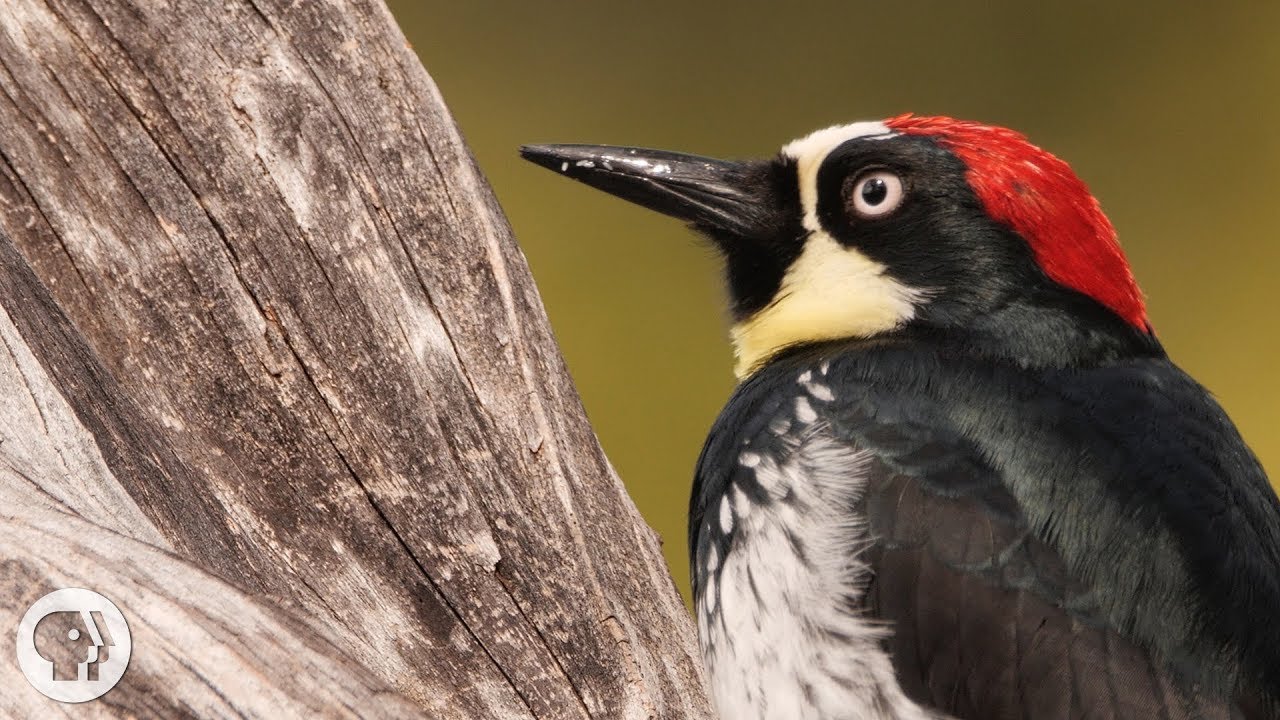
OK. Maybe you would. But the lengths they have to go to to stock up for the winter *will* surprise you. When you see how carefully they arrange each acorn, you might just need to reorganize your pantry.
You can learn more about CuriosityStream at https://curiositystream.com/deeplook.
Join Deep Look on Patreon NOW! https://www.patreon.com/deeplook
You can learn more about CuriosityStream at https://curiositystream.com/deeplook .
SUBSCRIBE to Deep Look! http://goo.gl/8NwXqt
DEEP LOOK is a ultra-HD (4K) short video series created by KQED San Francisco and presented by PBS Digital Studios. See the unseen at the very edge of our visible world. Get a new perspective on our place in the universe and meet extraordinary new friends. Explore big scientific mysteries by going incredibly small.
* NEW VIDEOS EVERY OTHER TUESDAY! *
Have you ever wondered why woodpeckers pound so incessantly?
In the case of acorn woodpeckers – gregarious black and red birds in California’s oak forests – they’re building an intricate pantry, a massive, well-organized stockpile of thousands of acorns to carry them through the winter.
“They’re the only animals that I know of that store their acorns individually in holes in trees,” said biologist Walter Koenig, of the Cornell Lab of Ornithology, who has studied acorn woodpeckers for decades at the University of California’s Hastings Natural History Reservation in Carmel Valley.
Over generations, acorn woodpeckers can drill thousands of small holes into one or several trees close to each other, giving these so-called granaries the appearance of Swiss cheese.
This sets them apart from other birds that drop acorns into already-existing cavities in trees, and animals like squirrels and jays that bury acorns in the ground.
In spring and summer, hikers in California commonly see acorn woodpeckers while the birds feed their chicks and care for their granaries. They don’t mind people staring at them and they’re easy to find. They greet each other with loud cries that sound like “waka-waka-waka.”
They’re also found in Oregon, Arizona, New Mexico and Texas, and all the way south to Colombia.
These avian performers are constantly tapping, drilling and pounding at their granaries.
“They’ll usually have a central granary, maybe two trees that a group is using,” said Koenig. “Those trees are going to be close together.”
Acorn woodpeckers make their granaries in pines, oaks, sycamores, redwoods and even in the palm trees on the Stanford University campus.
Their holes rarely hurt the trees. The birds only bore into the bark, where there’s no sap, or they make their granaries in snags.
“They don’t want sap in the hole because it will cause the acorn to rot,” said Koenig. “The point of storing the acorns is that it protects them from other animals getting them and it allows them to dry out.”
--- What is an acorn?
It’s the fruit of the oak.
--- Do acorn woodpeckers only eat acorns?
In the spring, acorn woodpeckers have their choice of food. They catch insects, eat oak flowers and suck the sap out of shallow holes on trees like coast live oaks.
---+ Read the entire article on KQED Science:
https://www.kqed.org/science/1....925251/youd-never-gu
---+ For more information:
Cornell Lab of Ornithology: https://www.allaboutbirds.org/....guide/Acorn_Woodpeck
---+ More Great Deep Look episodes:
What Gall! The Crazy Cribs of Parasitic Wasps
https://www.youtube.com/watch?v=lOgP5NzcTuA
How Ticks Dig in With a Mouth Full of Hooks
https://www.youtube.com/watch?v=_IoOJu2_FKE
Why is the Hungry Caterpillar So Dang Hungry?
https://www.youtube.com/watch?v=el_lPd2oFV4
---+ See some great videos and documentaries from PBS Digital Studios!
Eons: Why Triassic Animals Were Just the Weirdest
https://www.youtube.com/watch?v=moxu_uTemNg
Physics Girl: Why this skateboarding trick should be IMPOSSIBLE ft. Rodney Mullen
https://www.youtube.com/watch?v=yFRPhi0jhGc
---+ Follow KQED Science and Deep Look:
Instagram: https://www.instagram.com/kqedscience/
Twitter: https://www.twitter.com/kqedscience
KQED Science on kqed.org: http://www.kqed.org/science
Facebook Watch: https://www.facebook.com/DeepLookPBS/
Patreon: https://www.patreon.com/deeplook
---+ About KQED
KQED, an NPR and PBS affiliate in San Francisco, CA, serves Northern California and beyond with a public-supported alternative to commercial TV, radio and web media.
Funding for Deep Look is provided in part by PBS Digital Studios. Deep Look is a project of KQED Science, which is supported by the Templeton Religion Trust and the Templeton World Charity Foundation, the S. D. Bechtel, Jr. Foundation, the Dirk and Charlene Kabcenell Foundation, the Vadasz Family Foundation, the Gordon and Betty Moore Foundation, the Fuhs Family Foundation Fund and the members of KQED.
#deeplook
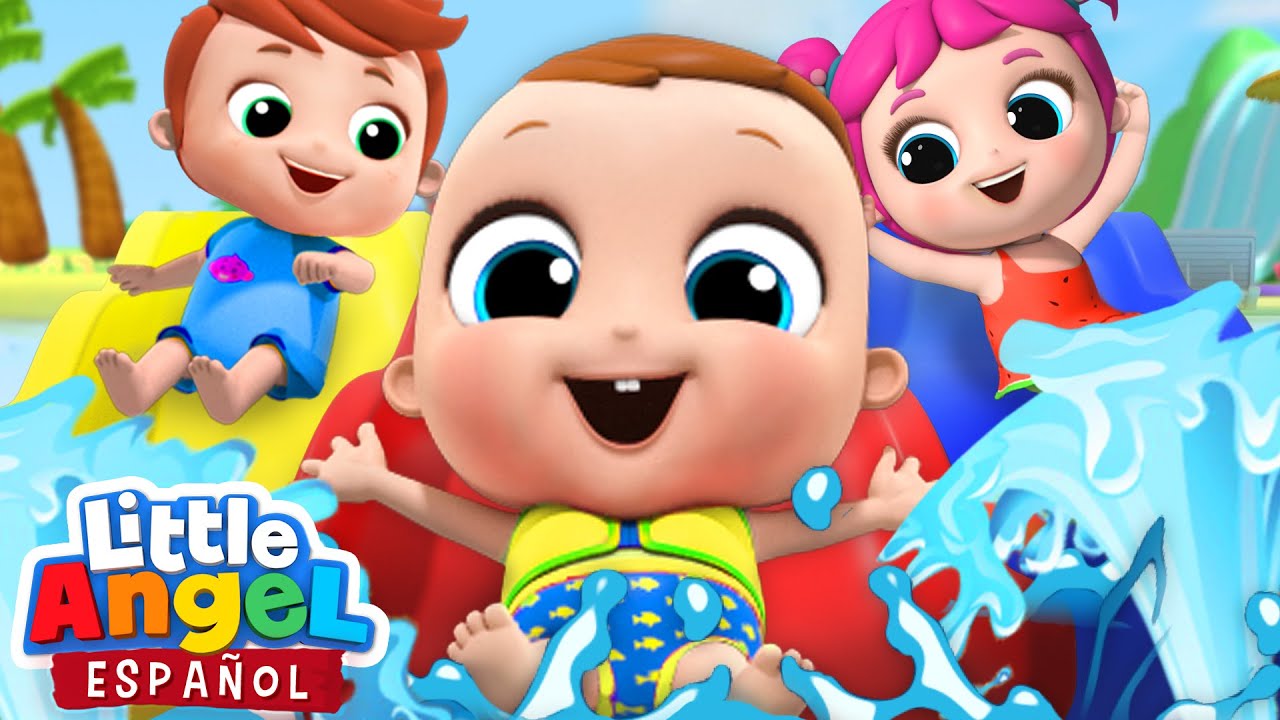
Bebe Juan adora jugar en el agua y pasa un excelente día visitando el Parque Acuático. En los siguientes videos encontrarás las mejores aventuras fuera de casa, visitando el Zoológico, el parque infantil y mucho más. ¡No te los pierdas! ¡Aprende y disfruta con todos nuestros divertidos videos para niños en 3D! #littleangel #littleangelespañol #bebejuan
?️) Subscríbete a Little Angel Español para ver videos nuevos en cuanto salgan ?►► http://bit.ly/suscribete_LittleAngel_Esp
¡Ve a tu canción favorita eligiendo en el título debajo!
00:04 El Bebé visita el Parque Acuático ? : https://youtu.be/h1ZVwRf6Om4
03:14 Vamos al Zoológico con Bebé Juan ????: https://youtu.be/16K7L-MYqVo
07:36 ¡Vamos al Parque Infantil! ? : https://youtu.be/orCJTmhj8CE
10:00 Canción de la Carrera de Globos? : https://youtu.be/MFcXdNyP9zM
Nuestras canciones para niños enseñan habilidades básicas y mejoran su habilidad para comprender y seguir instrucciones. Las canciones infantiles aceleran las capacidades fonéticas y mejoran la comprensión oral, de lectura y escritura.
No olvides darnos un LIKE (?) si disfrutaste este video.
Descubre el universo Little Angel en www.littleangel.com
Síguenos en redes sociales para nuestras últimas novedades:
★ Facebook: https://www.facebook.com/littleangelespanol/
★ Instagram: https://www.instagram.com/littleangel_esp/
★ Twitter: https://twitter.com/Little_angel_es?lang=es
Música infantil, canciones para niños, Spanish for kids, nursery rhymes Spanish, Spanish kids songs.
Animaciones por: Valnet Inc.
Copyright 2019 Valnet

Con esta hermosa canción infantil Bebé Juan aprenderá a comportarse adecuadamente cuando quiere algo y también aprenderá a compartir con cariño y esperar.
¡Aprende y disfruta con todos nuestros divertidos videos para niños en 3D! #bebejuan #cancionesinfantiles #littleangelespañol
(?️) Subscríbete a Little Angel Español para ver videos nuevos en cuanto salgan ?►► http://bit.ly/suscribete_LittleAngel_Esp
¡Ve a tu canción favorita eligiendo en el título debajo!
00:04 Aprendiendo Buenos Modales y a Compartir
04:19 Aprendiendo a Compartir los Juguetes:https://youtu.be/CfnFk7Nee98
07:25 Aprendiendo en la Escuela: https://youtu.be/SrWLpgeE89I
10:39 Canción el Baile de los Animales: https://youtu.be/d9LbDG8hCt8
14:54 Incy Wincy Araña nos ayuda en el Parque: https://youtu.be/uFz8ct6l1I8
18:45 Buenos Modales al Comer: https://youtu.be/ahERYs_96f8
Letra: Aprendiendo Buenos Modales
---------------------------------------------------
Si manejando ves que estoy,
mejor espera un rato,
Demuestra tus buenos modales,
Tu puedes lograrlo!
Es muy bueno esperar,
Saber ser paciente,
Mami te puede ayudar
si esperas suficiente.
Bebe juan al jugar,
Junto a tus amigos,
con ellos compartirás
será más divertido.
Ves que es bueno compartir,
les muestras tu cariño,
tus modales usarás
junto a tus amigos
El letrero que está acá,
debes respetarlo,
y las reglas cumpliras,
hay que comportarnos.
Grandes, medianos, o chiquitos,
Todos son amigos,
y muy bien los cuidaras,
ves, es muy sencillo! .
Bebé Juan ya te escuché
Solo espera un rato,
Puedes mostrarme tus modales?
Tu puedes lograrlo!
Esperar difícil es
pero necesario
Puedes hacerlo yo lo se!
Siéntate a mi costado
----------------------------------------------
Nuestras canciones para niños enseñan habilidades básicas y mejoran su habilidad para comprender y seguir instrucciones. Las canciones infantiles aceleran las capacidades fonéticas y mejoran la comprensión oral, de lectura y escritura.
No olvides darnos un LIKE (?) si disfrutaste este video.
Descubre el universo Little Angel en www.littleangel.com
Síguenos en redes sociales para nuestras últimas novedades:
★ Facebook: https://www.facebook.com/littleangelespanol/
★ Instagram: https://www.instagram.com/littleangel_esp/
★ Twitter: https://twitter.com/Little_angel_es?lang=es
Música infantil, canciones para niños, Spanish for kids, nursery rhymes Spanish, Spanish kids songs.
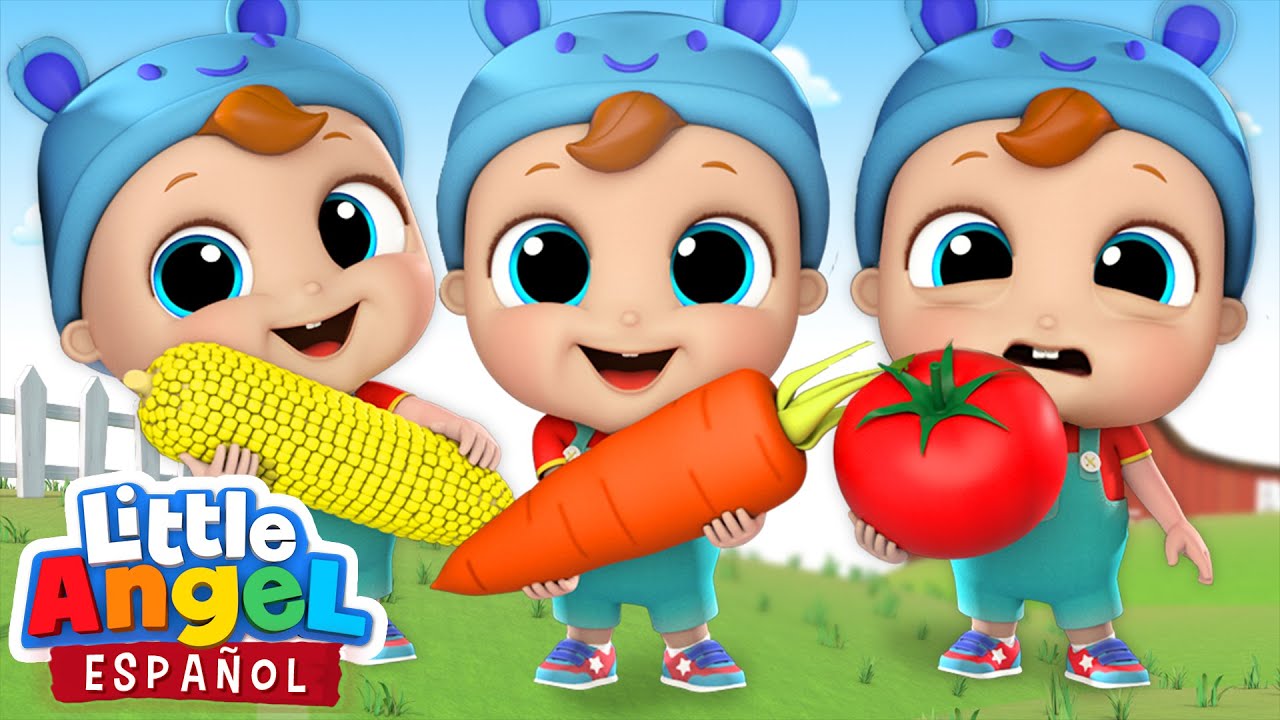
La Canción de los Vegetales para niños es una excelente idea cuando los pequeñitos no quieren comerse sus verduras ???? ¡Las verduras saben y te hacen bien! Mira cómo Bebé Juan y sus hermanitos las disfrutan, aunque al principio no querían. ¿Cuál es tu verdura favorita? ¡Aprende y disfruta con todas nuestras divertidas canciones para niños en 3D! #littleangel #littleangelespañol #bebejuan
(?️) Subscríbete a Little Angel Español para ver videos nuevos en cuanto salgan ?►► http://bit.ly/suscribete_LittleAngel_Esp
Letra: Come Más Verduras
-----------------------------------------------------
Las verduras hacen bien
Hacen bien, hacen bien
Cómelas todos los días
Un gran alimento son
El maíz es delicioso
Cómelo, cómelo
El maíz es delicioso
Y es bueno para ti
Los tomates frescos son
Frescos son, frescos son
A lavarlos y a comerlos
¡Tienes que probarlos!
Los tomates sabrosos son
Sabrosos son, sabrosos son
Nutritivos y jugosos
Los voy a probar
Bajo tierra crecieron ya
Crecieron ya, crecieron ya
Bajo tierra crecieron ya
Las voy a saborear
Son crujientes y muy dulces
Y muy dulces, y muy dulces
Son crujientes y muy dulces
Las vamos a probar
El brócoli parece un árbol
Parece un árbol, parece un árbol
El brócoli parece un árbol
Me encanta el brócoli
El brócoli es muy sabroso
Muy sabroso, muy sabroso
El brócoli es muy sabroso
Me encanta el brócoli
Las legumbres son mis favoritas
Favoritas, favoritas
Las legumbres son mis favoritas
Son tan sabrositas
Es divertido probar verduras
Probar verduras, probar verduras
Las comemos a toda hora
Son una delicia
-----------------------------------------------------
¡Ve a tu canción favorita eligiendo en el título debajo!
00:04 Las Verduras Te Hacen Bien??
03:17 Vamos al Zoológico con Bebé Juan ????: https://youtu.be/16K7L-MYqVo
07:39 Es Hora de Dormir Bebé ? : https://youtu.be/jtBrrK3oYmc
Nuestras canciones para niños enseñan habilidades básicas y mejoran su habilidad para comprender y seguir instrucciones. Las canciones infantiles aceleran las capacidades fonéticas y mejoran la comprensión oral, de lectura y escritura.
No olvides darnos un LIKE (?) si disfrutaste este video.
Descubre el universo Little Angel en www.littleangel.com
Síguenos en redes sociales para nuestras últimas novedades:
★ Facebook: https://www.facebook.com/littleangelespanol/
★ Instagram: https://www.instagram.com/littleangel_esp/
★ Twitter: https://twitter.com/Little_angel_es?lang=es
Música infantil, canciones para niños, nursery rhymes in Spanish.
Animaciones por: Valnet Inc.
Copyright 2019 Valnet

A deadly fungus is attacking frogs’ skin and wiping out hundreds of species worldwide. Can anyone help California's remaining mountain yellow-legged frogs? In a last-ditch effort, scientists are trying something new: build defenses against the fungus through a kind of frog “vaccine.”
SUBSCRIBE to Deep Look! http://goo.gl/8NwXqt
DEEP LOOK is a ultra-HD (4K) short video series created by KQED San Francisco and presented by PBS Digital Studios. See the unseen at the very edge of our visible world. Get a new perspective on our place in the universe. Explore big scientific mysteries by going incredibly small.
* NEW VIDEOS EVERY OTHER TUESDAY! *
Chytrid fungus has decimated some 200 amphibian species around the world, among them the mountain yellow-legged frogs of California’s Sierra Nevada mountain range.
Frogs need healthy skin to survive. They breathe and drink water through it, and absorb the sodium and potassium their hearts need to work.
In the late 1970s, chytrid fungus started getting into mountain yellow-legged frogs through their skin, moving through the water in their alpine lakes, or passed on by other frogs. The fungus destroys frogs’ skin to the point where they can no longer absorb sodium and potassium. Eventually, they die.
At the University of California, Santa Barbara, biologists Cherie Briggs and Mary Toothman did an experiment to see if they could save mountain yellow-legged frogs by immunizing them against chytrid fungus.
They grew some frogs from eggs. Then they infected them with chytrid fungus. The frogs got sick. Their skin sloughed off, as happens typically to infected frogs. But before the fungus could kill the frogs, the researchers treated them with a liquid antifungal that stopped the disease.
When the frogs were nice and healthy again, researchers re-infected them with chytrid fungus. They found that all 20 frogs they had immunized survived. Now the San Francisco and Oakland zoos are replicating the experiment and returning dozens of mountain-yellow legged frogs to the Sierra Nevada’s alpine lakes.
--- How does chytrid fungus kill frogs?
Spores of chytrid fungus burrow down into frogs’ skin, which gets irritated. They run out of energy. Sick frogs’ legs lock in the straight position when they try to hop. As they get sicker, their skin sloughs off in translucent sheets. The frogs can no longer absorb sodium and potassium their hearts needs to function. “It takes 2-3 weeks for a yellow-legged frog to die from chytridiomycosis,” said mountain yellow-legged frog expert Vance Vredenburg , of San Francisco State University. “Eventually they die from a heart attack.”
--- How does chytrid fungus spread?
Fungus spores, which have a little tail called a flagellum, swim through the water and attack a frog’s skin. The fungus can also get passed on from amphibian to amphibian.
---+ Read the entire article on KQED Science:
https://ww2.kqed.org/science/2....016/09/06/can-a-new-
---+ For more information:
AmphibiaWeb
http://www.amphibiaweb.org/chy....trid/chytridiomycosi
---+ More Great Deep Look episodes:
These Crazy Cute Baby Turtles Want Their Lake Back
https://www.youtube.com/watch?v=YTYFdpNpkMY
Newt Sex: Buff Males! Writhing Females! Cannibalism!
https://www.youtube.com/watch?v=5m37QR_4XNY
Sticky. Stretchy. Waterproof. The Amazing Underwater Tape of the Caddisfly
https://www.youtube.com/watch?v=Z3BHrzDHoYo
---+ See some great videos and documentaries from PBS Digital Studios!
It’s Okay To Be Smart: Do Plants Think?
https://www.youtube.com/watch?v=zm6zfHzvqX4
Gross Science: Why Get Your Tetanus Shot?
https://www.youtube.com/watch?v=O4jrqj5Dr8s
---+ Follow KQED Science:
KQED Science: http://www.kqed.org/science
Tumblr: http://kqedscience.tumblr.com
Twitter: https://www.twitter.com/kqedscience
---+ About KQED
KQED, an NPR and PBS affiliate in San Francisco, CA, serves Northern California and beyond with a public-supported alternative to commercial TV, Radio and web media.
Funding for Deep Look is provided in part by PBS Digital Studios and the John S. and James L. Knight Foundation. Deep Look is a project of KQED Science, which is also supported by HopeLab, the S. D. Bechtel, Jr. Foundation, the Dirk and Charlene Kabcenell Foundation, the Vadasz Family Foundation, the Gordon and Betty Moore Foundation, the Smart Family Foundation and the members of KQED.
#deeplook

Steve faces off with a known maneating lion.
Subscribe to BBC Earth: http://bit.ly/BBCEarthSubBBC Earth YouTube Channel: http://www.youtube.com/BBCEarth
BBC Earth Facebook http://www.facebook.com/bbcearth (ex-UK only)
BBC Earth Twitter http://www.twitter.com/bbcearth
Visit http://www.bbc.com/earth/world for all the latest animal news and wildlife videos
This is a channel from BBC Studios who help fund new BBC programmes.
Subscribe: http://bit.ly/BBCEarthSub
WATCH MORE:
New on Earth: https://bit.ly/2M3La96
Oceanscapes: https://bit.ly/2Hmd2kZ
Wild Thailand: https://bit.ly/2kR7lmh
Welcome to BBC EARTH! The world is an amazing place full of stories, beauty and natural wonder. Here you'll find 50 years worth of astounding, entertaining, thought-provoking and educational natural history content.
Want to share your views with the team behind BBC Earth and win prizes? Join our BBC Studios Voice: https://www.bbcstudiosvoice.com/register
This is a channel from BBC Worldwide who help fund new BBC programmes. Service information and feedback: http://bbcworldwide.com/vod-fe....edback--contact-deta