Top Vídeos


Suscríbete ► http://bit.ly/SuscribeteElReinoInfantil
Síguenos/Follow us:
Facebook ► https://www.facebook.com/ElReinoInfantil
Instagram► https://www.instagram.com/reino_infantil/
Twitter ► https://twitter.com/Reino_Infantil
¡Encuentra todos nuestros productos exclusivos aquí!
►http://bit.ly/ElReinoInfantilWEB
Autores: Marceillac, Eduardo Alberto - Rogier, Cecilia María Teresa
Intérprete: Dúo Tiempo de Sol
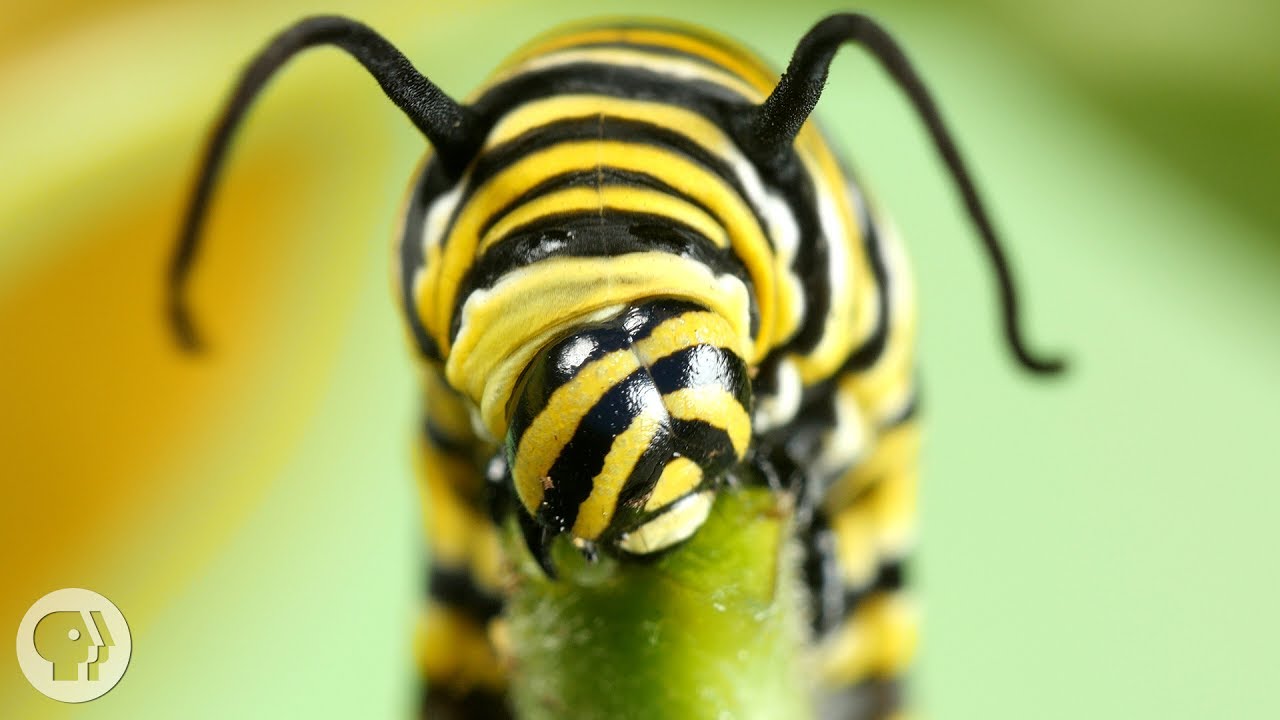
Support Deep Look on Patreon!! https://www.patreon.com/deeplook
Because it's hoarding protein. Not just for itself, but for the butterfly it will become and every egg that butterfly will lay. And it's about to lose its mouth... as it wriggles out of its skin during metamorphosis.
DEEP LOOK is a ultra-HD (4K) short video series created by KQED San Francisco and presented by PBS Digital Studios. See the unseen at the very edge of our visible world. Get a new perspective on our place in the universe and meet extraordinary new friends. Explore big scientific mysteries by going incredibly small.
* NEW VIDEOS EVERY OTHER TUESDAY! *
That caterpillar in your backyard is chewing through your best leaves for a good reason.
“Caterpillars have to store up incredible reserves of proteins,” said Carol Boggs, an ecologist at the University of South Carolina. “Nectar doesn’t have much protein. Most of the protein that goes to making eggs has to come from larval feeding.”
Caterpillars are the larval stage of a butterfly. Their complete transformation to pupa and then to butterfly is a strategy called holometaboly. Humans are in the minority among animals in that we don’t go through these very distinct, almost separate, lives. We start out as a smaller version of ourselves and grow bigger.
But from an evolutionary point of view, the way butterflies transform make sense.
“You have a larva that is an eating machine,” said Boggs. “It’s very well-suited to that. Then you’re turning it into a reproduction machine, the butterfly.”
Once it becomes a butterfly it will lose its mouth, grow a straw in its place and go on a liquid diet of sugary nectar and rotten fruit juices. Its main job will be to mate and lay eggs. Those eggs started to develop while it was a pupa, using protein that the caterpillar stored by gorging on leaves. We think of leaves as carbohydrates, but the nitrogen they contain makes them more than one quarter protein, said Boggs.
-- What are the stages of a butterfly?
Insects such as butterflies undergo a complete transformation, referred to by scientists as holometaboly. A holometabolous insect has a morphology in the juvenile state which is different from that in the adult and which undergoes a period of reorganization between the two, said Boggs. The four life stages are egg, larva (caterpillar), pupa (also known as chrysalis) and butterfly.
-- What if humans developed like butterflies?
“We’d go into a quiescent period when we developed different kind of eating organs and sensory organs,” said Boggs. “It would be as if we went into a pupa and developed straws as mouths and developed more elaborate morphology for smelling and developed wings. It brings up science fiction images.”
---+ Read the entire article on KQED Science:
https://ww2.kqed.org/science/2....017/07/11/why-is-the
---+ For more information:
Monarch Watch: http://www.monarchwatch.org
California Pipevine Swallowtail Project:
https://www.facebook.com/Calif....orniaPipevineSwallow
A forum organized by Tim Wong, who cares for the butterflies in the California Academy of Sciences’ rainforest exhibit. Wong’s page has beautiful photos and videos of California pipevine swallowtail butterflies at every stage – caterpillar, pupa and butterfly – and tips to create native butterfly habitat.
---+ More Great Deep Look episodes:
What Gives the Morpho Butterfly Its Magnificent Blue?
https://www.youtube.com/watch?v=29Ts7CsJDpg
This Vibrating Bumblebee Unlocks a Flower's Hidden Treasure
https://www.youtube.com/watch?v=SZrTndD1H10
Roly Polies Came From the Sea to Conquer the Earth
https://www.youtube.com/watch?v=sj8pFX9SOXE
In the Race for Life, Which Human Embryos Make It?
https://www.youtube.com/watch?v=9mv_kuwQvoc
---+ See some great videos and documentaries from the PBS Digital Studios!
PBS Eons: When Did the First Flower Bloom?
https://www.youtube.com/watch?v=13aUo5fEjNY
CrashCourse: The History of Life on Earth - Crash Course Ecology #1
https://www.youtube.com/watch?v=sjE-Pkjp3u4
---+ Follow KQED Science:
KQED Science: http://www.kqed.org/science
Tumblr: http://kqedscience.tumblr.com
Twitter: https://www.twitter.com/kqedscience
---+ About KQED
KQED, an NPR and PBS affiliate in San Francisco, CA, serves Northern California and beyond with a public-supported alternative to commercial TV, Radio and web media.
Funding for Deep Look is provided in part by PBS Digital Studios and the John S. and James L. Knight Foundation. Deep Look is a project of KQED Science, which is also supported by HopeLab, the S. D. Bechtel, Jr. Foundation, the Dirk and Charlene Kabcenell Foundation, the Vadasz Family Foundation, the Gordon and Betty Moore Foundation, the Smart Family Foundation and the members of KQED.
#deeplook #caterpillars #butterflies
Hermosa Versión, Nuestro Salvador, Que Seria De Nosotros Sino Fuera Por El.
"Airaos, pero no pequéis; no se ponga el sol sobre vuestro enojo." Efesios 4:26
PARA PETICIONES DE ORACIÓN MANDAR CORREO CON SU NOMBRE A
SALMOVEINTETRES@GMAIL.COM
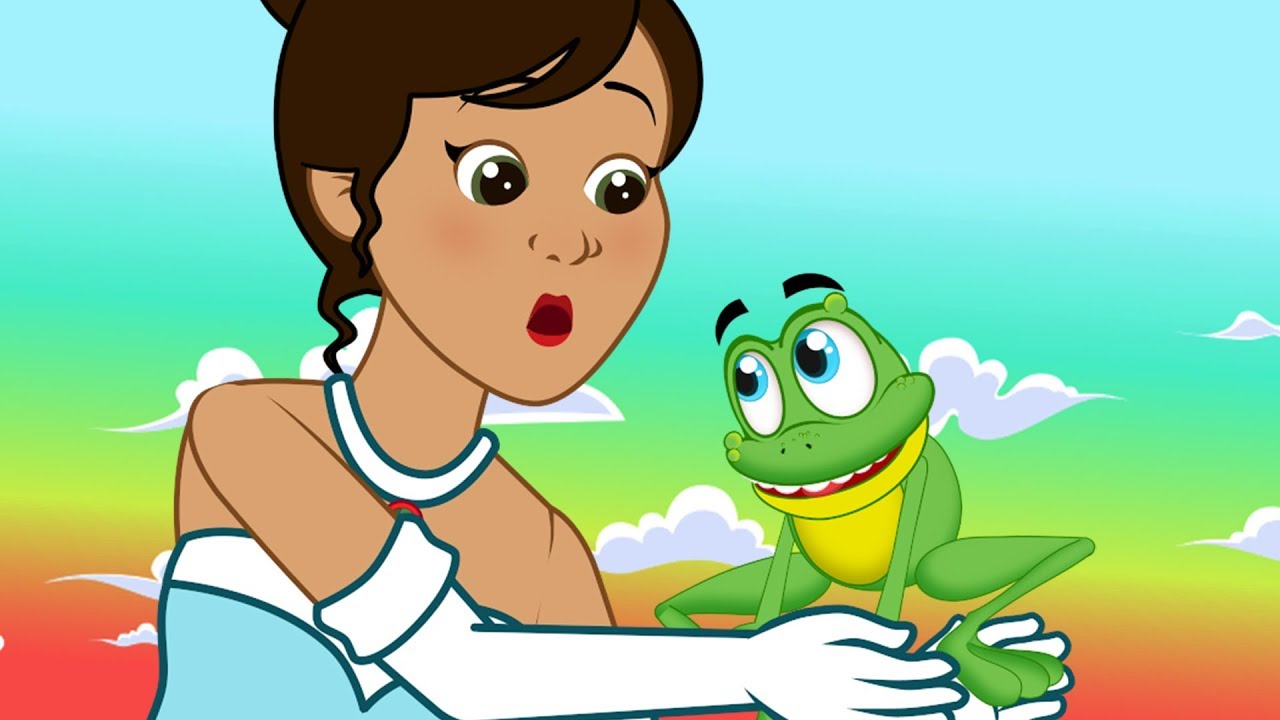
El Principe Rana + La Princesa y El Guisante cuentos infantiles para dormir & animados
Cuentos Infantiles en Español : https://goo.gl/rYviG8

Those hundreds of powerful suckers on octopus arms do more than just stick. They actually smell and taste. This contributes to a massive amount of information for the octopus’s brain to process, so octopuses depend on their eight arms for help. (And no, it's not 'octopi.')
To keep up with Amy Standen, subscribe to her podcast The Leap - a podcast about people making dramatic, risky changes:
https://ww2.kqed.org/news/programs/the-leap/
DEEP LOOK is a ultra-HD (4K) short video series created by KQED San Francisco and presented by PBS Digital Studios. Explore big scientific mysteries by going incredibly small.
SUBSCRIBE to Deep Look! http://goo.gl/8NwXqt
* NEW VIDEOS EVERY OTHER TUESDAY! *
Everyone knows that an octopus has eight arms. And similar to our arms it uses them to grab things and move around. But that’s where the similarities end. Hundreds of suckers on each octopus arm give them abilities people can only dream about.
“The suckers are hands that also smell and taste,” said Rich Ross, senior biologist and octopus aquarist at the California Academy of Sciences.
Suckers are “very similar to our taste buds, from what little we know about them,” said University of North Carolina, Chapel Hill, cephalopod biologist William Kier.
If these tasting, smelling suckers make you think of a human hand with a tongue and a nose stuck to it, that’s a good start. It all stems from the unique challenges an octopus faces as a result of having a flexible, soft body.
“This animal has no protection and is a wonderful meal because it’s all muscle,” said Kier.
So the octopus has adapted over time. It has about 500 million neurons (dogs have around 600 million), the cells that allow it to process and communicate information. And these neurons are distributed to make the most of its eight arms. An octopus’ central brain – located between its eyes – doesn’t control its every move. Instead, two thirds of the animal’s neurons are in its arms.
“It’s more efficient to put the nervous cells in the arm,” said neurobiologist Binyamin Hochner, of Hebrew University, in Jerusalem. “The arm is a brain of its own.”
This enables octopus arms to operate somewhat independently from the animal’s central brain. The central brain tells the arms in what direction and how fast to move, but the instructions on how to reach are embedded in each arm.
Octopuses have also evolved mechanisms that allow their muscles to move without the use of a skeleton. This same muscle arrangement enables elephant trunks and mammals’ tongues to unfurl.
“The arrangement of the muscle in your tongue is similar to the arrangement in the octopus arm,” said Kier.
In an octopus arm, muscles are arranged in different directions. When one octopus muscle contracts, it’s able to stretch out again because other muscles oriented in a different direction offer resistance – just as the bones in vertebrate bodies do. This skeleton of muscle, called a muscular hydrostat, is how an octopus gets its suckers to attach to different surfaces.
--- How many suction cups does an octopus have on each arm?
It depends on the species. Giant Pacific octopuses have up to 240 suckers on each arm.
--- Do octopuses have arms or tentacles?
Octopuses have arms, not tentacles. “The term ‘tentacle’ is used for lots of fleshy protuberances in invertebrates,” said Kier. “It just happens that the eight in octopuses are called arms.”
--- Can octopuses regrow a severed arm?
Yes!
---+ Read the entire article on KQED Science:
https://ww2.kqed.org/science/2....017/02/14/if-your-ha
---+ For more information:
The octopus research group at the Hebrew University of Jerusalem: https://www.youtube.com/watch?v=gN81dtxilhE
---+ More Great Deep Look episodes:
You're Not Hallucinating. That's Just Squid Skin.
https://www.youtube.com/watch?v=0wtLrlIKvJE
Watch These Frustrated Squirrels Go Nuts!
https://www.youtube.com/watch?v=ZUjQtJGaSpk
---+ See some great videos and documentaries from the PBS Digital Studios!
It’s Okay To Be Smart: Is This A NEW SPECIES?!
https://www.youtube.com/watch?v=asZ8MYdDXNc
BrainCraft: Your Brain in Numbers
https://www.youtube.com/watch?v=FFcbnf07QZ4
---+ Follow KQED Science:
KQED Science: http://www.kqed.org/science
Tumblr: http://kqedscience.tumblr.com
Twitter: https://www.twitter.com/kqedscience
---+ About KQED
KQED, an NPR and PBS affiliate in San Francisco, CA, serves Northern California and beyond with a public-supported alternative to commercial TV, Radio and web media.
Funding for Deep Look is provided in part by PBS Digital Studios and the John S. and James L. Knight Foundation. Deep Look is a project of KQED Science, which is also supported by HopeLab, the S. D. Bechtel, Jr. Foundation, the Dirk and Charlene Kabcenell Foundation, the Vadasz Family Foundation, the Gordon and Betty Moore Foundation, the Smart Family Foundation and the members of KQED.
#deeplook

Tiempo Ordinario, Domingo XVIII (Ciclo A)
SALMO Sal 144, 8-9. 15-16. 17-18 (R.: cf. 16)
C Am F G
R. Abres tu mano, Señor, y nos colmas de tus bienes.
C Am
El Señor es bondadoso y compasivo,
F G
lento para enojarse y de gran misericordia;
C Am
el Señor es bueno con todos
F G
y tiene compasión de todas sus criaturas. R.
Los ojos de todos esperan en ti,
y Tú les das la comida a su tiempo;
abres tu mano y colmas de favores
a todos los vivientes. R.
El Señor es justo en todos sus caminos
y bondadoso en todas sus acciones;
está cerca de aquellos que lo invocan,
de aquéllos que lo invocan de verdad. R.
Athenas - Voz y Composición
Tobías Buteler - Piano y Composición
Francesco Mazza - Producción musical
Buenos Aires 2017

Suscríbete ► http://bit.ly/SuscribeteElReinoInfantil
Síguenos/Follow us:
Facebook ► https://www.facebook.com/ElReinoInfantil
Instagram► https://www.instagram.com/reino_infantil/
Twitter ► https://twitter.com/Reino_Infantil
¡Encuentra todos nuestros productos exclusivos aquí!
►http://bit.ly/ElReinoInfantilWEB

Alicia en el país de las Maravillas en La Granja de Mi Tío | Canciones infantiles para dormir ♫
Cuentos Infantiles en Español : https://goo.gl/rYviG8
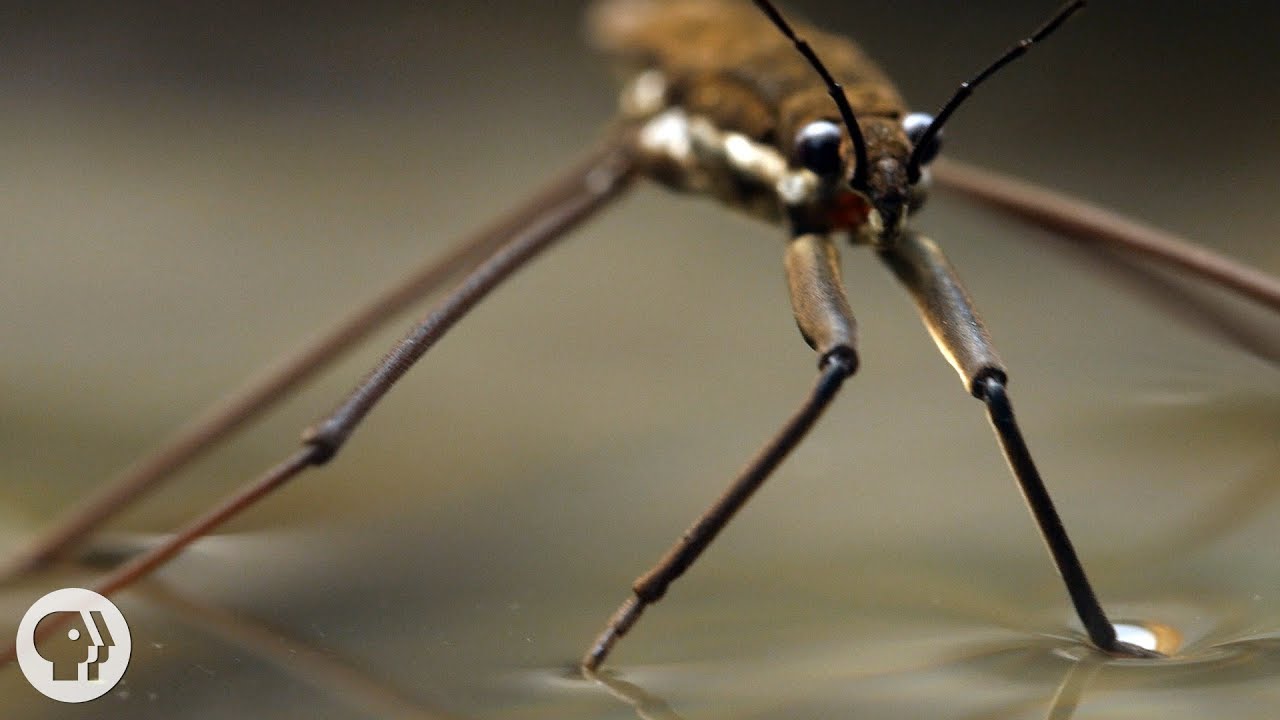
They may look serene as they glide across the surface of a stream, but don't be fooled by water striders. They're actually searching for prey for whom a babbling brook quickly becomes an inescapable death trap.
SUBSCRIBE to Deep Look! http://goo.gl/8NwXqt
DEEP LOOK is a ultra-HD (4K) short video series created by KQED San Francisco and presented by PBS Digital Studios. See the unseen at the very edge of our visible world. Get a new perspective on our place in the universe. Explore big scientific mysteries by going incredibly small.
* NEW VIDEOS EVERY OTHER TUESDAY! *
With the drought officially over and the summer heat upon us, people all across California are heading outdoors. For many, that means a day on the river or relaxing by the lake. The wet winter means there’s plenty of habitat for one of nature’s most curious creatures.
Water striders, also called pond skaters, seem to defy gravity. You’ve probably seen them flitting across the water’s surface, dodging ripples as they patrol streams and quiet backwater eddies.
Scientists like David Hu at Georgia Institute of Technology study how water striders move and how they make their living as predators lurking on the water’s surface. It’s an amazing combination of biology and physics best understood by looking up close. Very close.
--- What are water striders?
The common water strider (Gerris lacustris) is an insect typically found in slowly moving freshwater streams and ponds. They are able to move on the water's surface without sinking. They are easy to spot because they create circular waves on the surface of the water.
--- How do water striders walk on water?
Water tends to stick to itself (cohesion), especially at the surface where it meets the air (surface tension). Water striders don’t weigh very much and they spread their weight out with their long legs. Striders are also covered in microscopic hairs called micro-setae that repel water. Instead of sinking into the water, their legs push down and create dimples.
--- What do water striders eat?
Water striders are predators and scavengers. They use their ability to walk on water to their advantage, primarily eating other insects that fall into the water at get trapped by the surface tension. A water strider uses its tube-shaped proboscis to penetrate their prey’s exoskeleton, inject digestive enzymes and suck out the prey’s pre-digested innards.
---+ Read the entire article on KQED Science:
https://ww2.kqed.org/science/2....017/08/01/this-is-wh
---+ For more information:
http://www.nature.com/nature/j....ournal/v424/n6949/ab
---+ More Great Deep Look episodes:
These Fish Are All About Sex on the Beach | Deep Look
https://www.youtube.com/watch?v=j5F3z1iP0Ic&list=PLdKlciEDdCQDxBs0SZgTMqhszst1jqZhp&index=3
How Do Pelicans Survive Their Death-Defying Dives? | Deep Look
https://www.youtube.com/watch?v=BfEboMmwAMw
Decorator Crabs Make High Fashion at Low Tide | Deep Look
https://www.youtube.com/watch?v=OwQcv7TyX04
Why Is The Very Hungry Caterpillar So Dang Hungry? | Deep Look
https://www.youtube.com/watch?v=el_lPd2oFV4&list=PLdKlciEDdCQDxBs0SZgTMqhszst1jqZhp
---+ See some great videos and documentaries from the PBS Digital Studios!
Beavers: The Smartest Thing in Fur Pants | It’s Okay To Be Smart
https://www.youtube.com/watch?v=Zm6X77ShHa8
Can Genetically Engineered Mosquitoes Help Fight Disease? | Above The Noise
https://www.youtube.com/watch?v=CB_h7aheAEM
How Do Glaciers Move? | It’s Okay To Be Smart
https://www.youtube.com/watch?v=RnlPrdMoQ1Y
Your Biological Clock at Work | BrainCraft
https://www.youtube.com/watch?v=8Q8djfQlYwQ
---+ Follow KQED Science:
KQED Science: http://www.kqed.org/science
Tumblr: http://kqedscience.tumblr.com
Twitter: https://www.twitter.com/kqedscience
---+ About KQED
KQED, an NPR and PBS affiliate based in San Francisco, serves the people of Northern California and beyond with a public-supported alternative to commercial media. Home to one of the most listened-to public radio station in the nation, one of the highest-rated public television services and an award-winning education program, KQED is also a leader and innovator in interactive media and technology, taking people of all ages on journeys of exploration — exposing them to new people, places and ideas.
Funding for Deep Look is provided in part by PBS Digital Studios and the John S. and James L. Knight Foundation. Deep Look is a project of KQED Science, which is also supported by HopeLab, the David B. Gold Foundation, the S. D. Bechtel, Jr. Foundation, the Dirk and Charlene Kabcenell Foundation, the Vadasz Family Foundation, the Gordon and Betty Moore Foundation, the Smart Family Foundation and the members of KQED.
#deeplook
Suscríbete ► http://bit.ly/SuscribeteElReinoInfantil
Síguenos/Follow us:
Facebook ► https://www.facebook.com/ElReinoInfantil
Instagram► https://www.instagram.com/reino_infantil/
Twitter ► https://twitter.com/Reino_Infantil
¡Encuentra todos nuestros productos exclusivos aquí!
►http://bit.ly/ElReinoInfantilWEB

Suscríbete ► http://bit.ly/SuscribeteElReinoInfantil
Síguenos/Follow us:
Facebook ► https://www.facebook.com/ElReinoInfantil
Instagram► https://www.instagram.com/reino_infantil/
Twitter ► https://twitter.com/Reino_Infantil
¿Quieres más videos? ¡Escucha esta divertida playlist de Dino Aventuras!
►http://bit.ly/Dinoaventuras
¡Encuentra todos nuestros productos exclusivos aquí!
►http://bit.ly/ElReinoInfantilWEB
Esta noche es la Noche de la Nieve Brillante, así que va a nevar. Dino, Kika, Lip y Cacau viajan a la Isla de la Nariz Congelada para disfrutar de esta noche tan especial.
La Nieve Brillante - Dino Aventuras | El Reino Infantil

Calling all Shimmer and Shine super fans! It’s time to test your genie knowledge. If you love playing guessing games, challenge yourself with this preschool-friendly trivia quiz! Want more Shimmer and Shine? Find full episodes in the FREE Nick Jr. App.
In this video you will be asked five simple questions about cartoon characters Shimmer, Shine, Zeta, Princess Samira, and Zac. Get encouraged to call out the answers to each question before the stopwatch runs out of time! Once time runs out, the correct answer will be revealed with a short animated clip. If you do a Zahramazing job, you’ll know you are a Shimmer and Shine super fan!
#ShimmerAndShine #NickJr #Games #Videos #Nickelodeon #Trivia #Quiz
Watch full episodes of PAW Patrol, Shimmer and Shine, Blaze and the Monster Machines, Bubble Guppies, Team Umizoomi, Peppa Pig, and more—anytime, anywhere with the Nick Jr. App!
Watch Shimmer and Shine, weekdays on Nickelodeon: http://nickjr.com/tvschedule/
***ADVERTISEMENT***
Preschoolers can watch full episodes of Shimmer and Shine in the FREE Nick Jr. App.
iTunes: https://itunes.apple.com/us/app/nick-jr./id911115712?ls=1&mt=8
Google: https://play.google.com/store/....apps/details?id=com.
Amazon: https://www.amazon.com/gp/product/B01LQP0EL2
Stream Shimmer and Shine for free in the Nick Jr. App on Roku and Apple TV or download full episodes for offline viewing on iTunes or Google Play: https://play.google.com/store/apps/developer?id=Nickelodeon&hl=en
Download premium apps featuring your child's favorite Nick Jr. shows on iTunes, Google Play, and Amazon:
iTunes: https://itunes.apple.com/us/de....veloper/nickelodeon/ Google Play:https://play.google.com/store/apps/developer?id=Nickelodeon&hl=en
Amazon: https://www.amazon.com/s/ref=bl_sr_mobile-apps?_encoding=UTF8&field-brandtextbin=Nickelodeon&node=2350149011
You can also download Shimmer & Shine premium games and Nick Jr. apps on iTunes, Google Play, and Amazon:
Shimmer and Shine Enchanted Carpet Ride:
iPhone: https://itunes.apple.com/us/app/shimmer-shine-enchanted-carpet/id1034934076?ls=1&mt=8
iPad: https://itunes.apple.com/us/app/shimmer-shine-enchanted-carpet/id1034933180?ls=1&mt=8
Google Play: https://play.google.com/store/....apps/details?id=com.
Amazon: https://www.amazon.com/gp/product/B01AX3HU7Y
Nick Jr. Draw and Play
iPhone: https://itunes.apple.com/us/app/nick-jr-draw-play/id513395037?ls=1&mt=8
iPad: https://itunes.apple.com/us/app/nick-jr-draw-play-hd/id513414742?ls=1&mt=8
Google Play (Phone): https://play.google.com/store/....apps/details?id=com.
Google Play (Tablet): https://play.google.com/store/....apps/details?id=com.
Amazon: https://www.amazon.com/gp/product/B00ED0R0EW
Nick Jr. Let’s Learn
iPhone: https://itunes.apple.com/us/ap....p-bundle/id918620400
iPad: https://itunes.apple.com/us/ap....p-bundle/id918650760
Conoce los beneficios de visitar a Jesus en el Sagrario y en la adoración eucaristica
Tekton es un canal de noticias católicas nacido en Barcelona (España), puedes encontrar noticias relacionadas con la Iglesia Católica, y recursos de otro tipo como vidas de Santos, el Evangelio del día, y otras muchas cosas más. No dudes en entrar y ver el contenido que sin duda te gustará, nuestra web es http://www.tekton.info
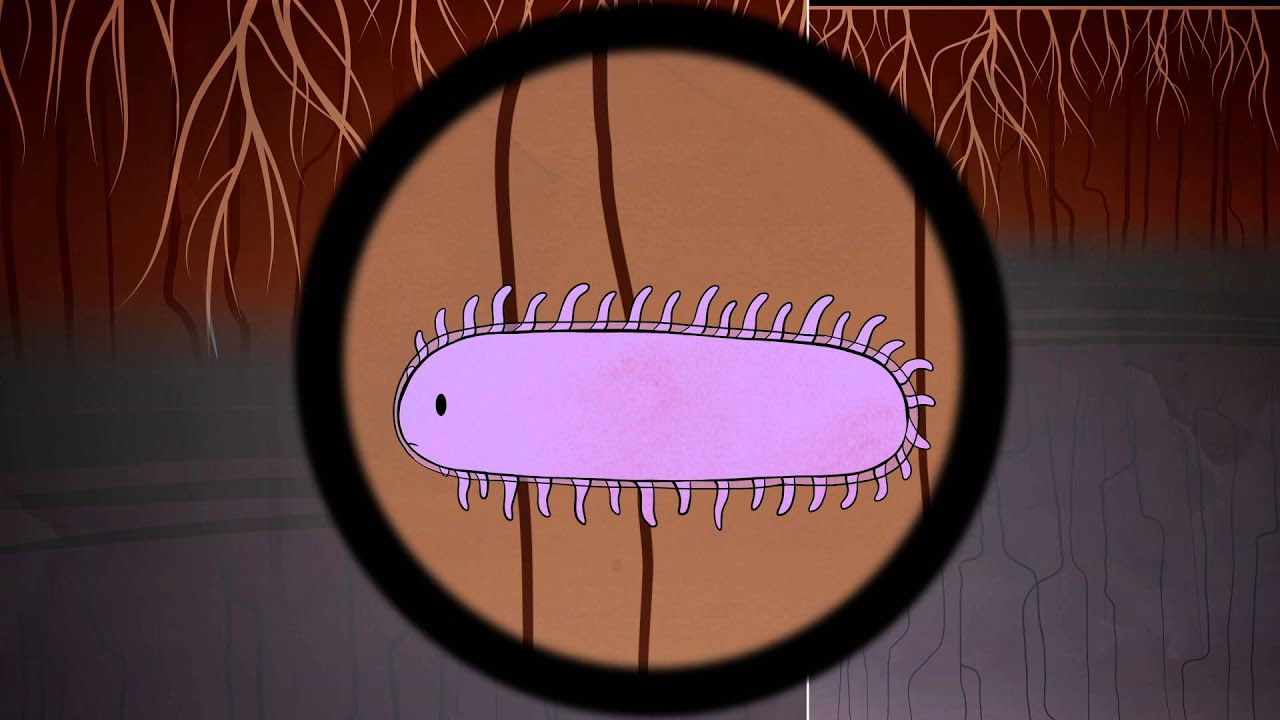
For thousands of years, mysterious bacteria have remained dormant in the Arctic permafrost. Now, a warming climate threatens to bring them back to life. What does that mean for the rest of us?
SUBSCRIBE: http://goo.gl/8NwXqt
Funding for Deep Look is provided in part by PBS Digital Studios and the John S. and James L. Knight Foundation. Deep Look is a project of KQED Science, which is supported by HopeLab, The David B. Gold Foundation; S. D. Bechtel, Jr. Foundation; The Dirk and Charlene Kabcenell Foundation; The Vadasz Family Foundation; Smart Family Foundation and the members of KQED.
#deeplook
It’s hearts and hugs day and all your favorite characters are celebrating! Find full episodes of your favorite shows weekday mornings on Nickelodeon, and everywhere you find Nick Jr.
Sing a Valentine’s Day song that’ll make you feel warm and fuzzly! Abby Hatcher and her fuzzly friends invite all their Nick Jr. friends in spreading love to each other on hearts and hugs day (also known as Valentine’s Day!). In this video, you can watch a super special supercut video of Blaze, Shimmer and Shine, Butterbean and her friends from Butterbean’s Café, Sunny, Rox, Blair, and all the PAW Patrol pups, showing just how sweet friendship is. Learn the lyrics to this song by singing along for Valentine’s Day!
Fuzzly Valentine Lyrics
Every time we get together for a little fun
I feel so happy even after all the playing's done
We laugh and run and dance and ride a bike and climb a tree
But just that warm and fuzzly feeling is enough for me
Oo, Oo, Oo, Oo
I'll always be here for you
Oo, Oo, Oo, Oo
I'm gonna sing loud and clear for me and for you
You're such a friend of mine
I'm happy all the time
And every day is sunny 'cause we make each other shine
I don't care what we do
As long as it's with you
'Cause you're my silly sunny friendly fuzzly Valentine
We may be different but you're always perfect in my eyes
Remember friendship comes in every color, shape and size
You might be furry, fuzzly, slow or speedy, big or small
It doesn't matter I will always catch you when you fall
Oo, Oo, Oo, Oo
I'll always be here for you
Oo, Oo, Oo, Oo
I'm gonna sing loud and clear for me and for you
You're such a friend of mine
I'm happy all the time
And every day is sunny 'cause we make each other shine
I don't care what we do
As long as it's with you
'Cause you're my silly sunny friendly fuzzly Valentine
You're such a friend of mine
I'm happy all the time
And every day is sunny 'cause we make each other shine
I don't care what we do
As long as it's with you
'Cause you're my silly sunny friendly fuzzly Valentine
My silly Valentine
My sunny Valentine
My pawsome Valentine
My fuzzly Valentine
Kids can watch their favorite Nick Jr. shows weekdays on Nickelodeon and all week long on the Nick Jr. channel: http://nickjr.com/tvschedule/
#AbbyHatcher #NickJr #ValentinesDay #Song #Fuzzly #Kids
***ADVERTISEMENT***
Preschoolers can watch full episodes of their favorite shows in the free Nick Jr. App.
iTunes: https://itunes.apple.com/us/app/nick-jr./id911115712?ls=1&mt=8
Google: https://play.google.com/store/....apps/details?id=com.
Amazon: https://www.amazon.com/gp/product/B01LQP0EL2
Stream Nick Jr. for free in the Nick Jr. App on Roku and Apple TV or download full episodes for offline viewing on iTunes or Google Play: https://play.google.com/store/apps/developer?id=Nickelodeon&hl=en
You can also download premium apps featuring your child's favorite Nick Jr. shows on iTunes, Google Play, and Amazon:
iTunes: https://itunes.apple.com/us/de....veloper/nickelodeon/ Google Play:https://play.google.com/store/apps/developer?id=Nickelodeon&hl=en
Amazon: https://www.amazon.com/s/ref=bl_sr_mobile-apps?_encoding=UTF8&field-brandtextbin=Nickelodeon&node=2350149011
Download premium Nick Jr. games and apps on iTunes, Google Play, and Amazon:
Nick Jr. Draw and Play
iPhone: https://itunes.apple.com/us/app/nick-jr-draw-play/id513395037?ls=1&mt=8
iPad: https://itunes.apple.com/us/app/nick-jr-draw-play-hd/id513414742?ls=1&mt=8
Google Play (Phone): https://play.google.com/store/....apps/details?id=com.
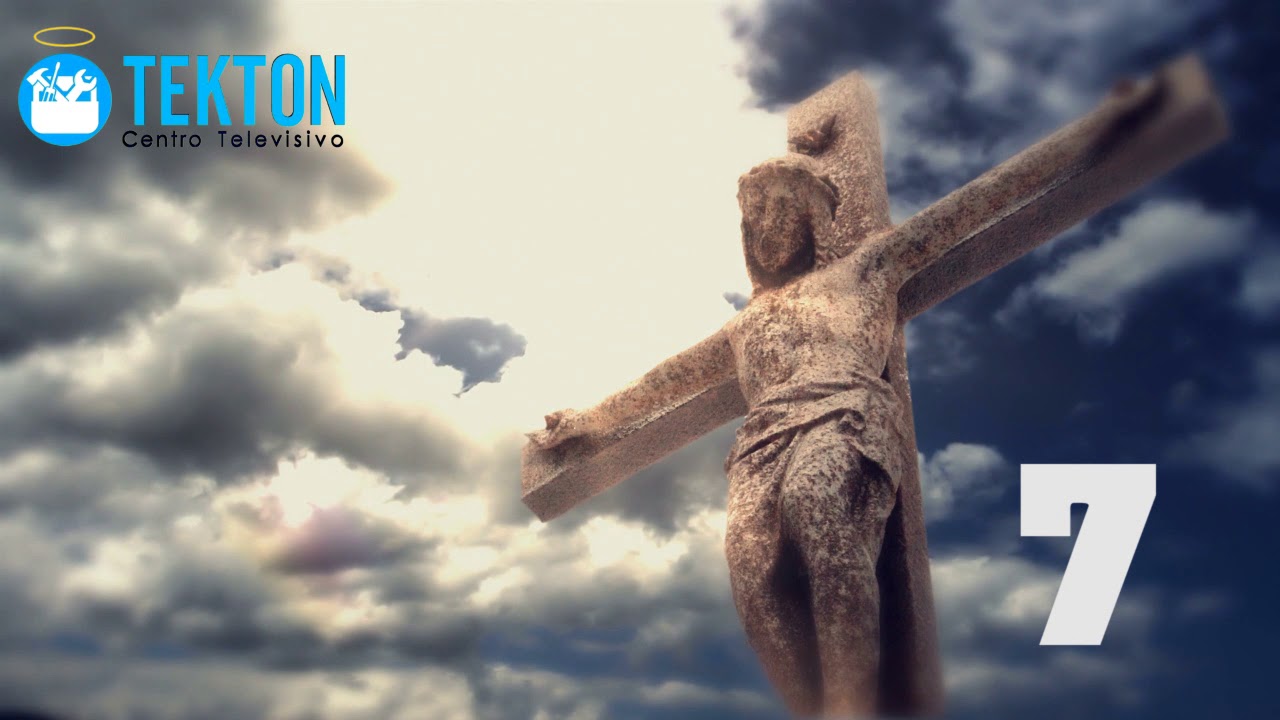
10 ejemplos que te harán entender porque no puedes comulgar en pecado mortal
Tekton es un canal de youtube católico nacido en Barcelona (España), puedes encontrar noticias relacionadas con la Iglesia Católica, y recursos de otro tipo como formación católica, oraciones, música católica, vídeos del Papa Francisco, curiosidades, vidas de Santos, el Evangelio del día, y otras muchas cosas más. No dudes en entrar y ver el contenido que sin duda te gustará
Twitter de Marcos Vera: https://twitter.com/MarcosVeraPrez1
Twitter de Jesus Sellas: https://twitter.com/JesusSellas
Hacer un donativo: https://www.tekton.info/hacer-caridad/
Tienda de merchandising de Tekton: https://teespring.com/stores/t....ekton-centro-televis
Web: http://www.tekton.info
Facebook: https://www.facebook.com/productoratekton/
Twitter: https://twitter.com/productoratekto?s=09
Instagram: https://www.instagram.com/productoratekton/
Google+: https://plus.google.com/u/1/+T....ektonTekton?hl=es-41
#Tekton
#TektonCentroTelevisivo
#TektonYouTube
#CanalCatolicoYouTube

Suscríbete ► http://bit.ly/suscribeteagranja
Síguenos/Follow us:
Facebook ► http://bit.ly/CancionesdelaGranja
Comprar/Purchase
ARGENTINA - http://smarturl.it/elreinoinfantilweb
¡Enganchado Especial 10 Millones! - La Granja de Zenón
►TRACKLIST
Medio Peso
El Pavo y La pava
Bartolito
Asi es la granja
Pajaritos a Bailar
La Gallina Bataraza
Allá en el Campo
En la Escuela
Gaita Pajarona
Pollito pio

¡Atención Argentina!
La Granja de Zenón llegó al Teatro Broadway de Buenos Aires con un nuevo y espectacular show: Las Travesuras de Bartolito.
Conseguí tus entradas aquí: http://bit.ly/GranjaTeatroYT
El pícaro Bartolito solo quiere ganar en todos los juegos y para lograrlo hará un montón de travesuras… ¡Pero cuidado! El Lobo Beto podría estar armando un plan para asustarlos a todos.
La Vaca Lola, Percherón, el Gallo Pinto y todos los animales de la granja deberán encontrar la forma para que todo vuelva a la normalidad.
No te pierdas este show increíble para disfrutar en familia en estas vacaciones de inverno.
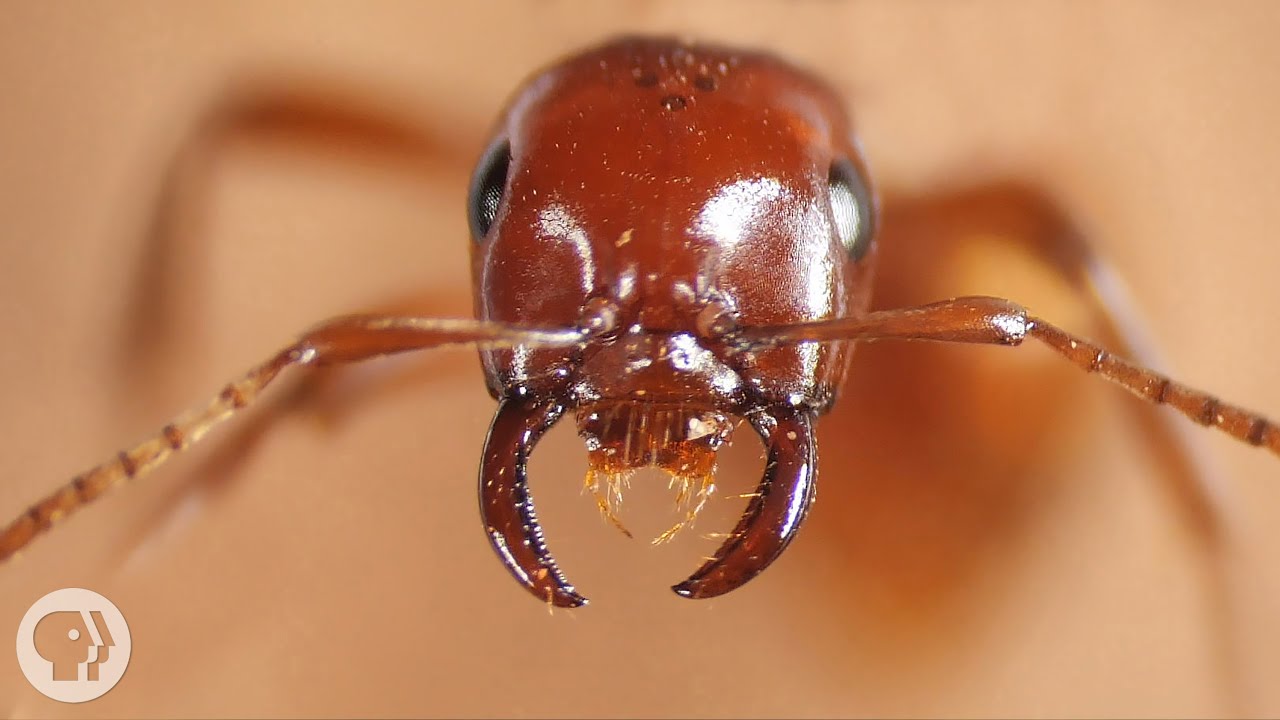
Kidnapper ants raid other ant species' colonies, abduct their young and take them back to their nest. When the enslaved babies grow up, the kidnappers trick them into serving their captors – hunting, cleaning the nest, even chewing up their food for them.
Please join our community on Patreon! https://www.patreon.com/deeplook
SUBSCRIBE to Deep Look! http://goo.gl/8NwXqt
DEEP LOOK is a ultra-HD (4K) short video series created by KQED San Francisco and presented by PBS Digital Studios. See the unseen at the very edge of our visible world. Explore big scientific mysteries by going incredibly small.
A miniature drama is playing out on the forest floor in California’s preeminent mountain range, the Sierra Nevada, at this time of year. As the sun sets, look closely and you might see a stream of red ants frantically climbing over leaves and rocks.
They aren’t looking for food. They’re looking for other ants. They’re kidnappers.
“It’s hard to know who you're rooting for in this situation,” says Kelsey Scheckel, a graduate student at UC Berkeley who studies kidnapper ants. “You're just excited to be a bystander.”
On this late summer afternoon, Scheckel stares intently over the landscape at the Sagehen Creek Field Station, part of the University of California’s Natural Reserve System, near Truckee, California.“The first thing we do is try to find a colony with two very different-looking species cohabitating,” Scheckel says.
“That type of coexistence is pretty rare. As soon as we find that, we can get excited.”
--- How do ants communicate?
Ants mostly use their sense of smell to learn about the world around themselves and to recognize nestmates from intruders. They don’t have noses. Instead, they use their antennae to sense chemicals on surfaces and in the air. Ants’ antennae are porous like a kitchen sponge allowing chemicals to enter and activate receptors inside. You will often see ants tap each other with their antennae. That behavior, called antennation, helps them recognize nestmates who will share the same chemical nest signature.
---Can ants bite or sting?
Many ants will use their mandibles, or jaws, to defend themselves but that typically just feels like a pinch. Some ants have a stinger at the end of their abdomen that can deliver a venomous sting. While the type of venom can vary across species, many ants’ sting contains formic acid which causes a burning sensation. Some have special glands containing acid that can spray at attackers causing burning and alarming odors.
---+ Read the entire article on KQED Science:
https://www.kqed.org/science/1....947369/kidnapper-ant
---+ For more information:
Neil Tsutsui Lab of Evolution, Ecology and Behavior of Social Insects at the University of California, Berkeley
https://nature.berkeley.edu/tsutsuilab/
---+ Shoutout!
?Congratulations ?to the following fans for correctly naming and describing the inter-species, mandible-to-mandible ant behavior we showed on our Deep Look Community Tab… "trophallaxis:"
Senpai
Ravinraven6913
CJ Thibeau
Maksimilian Tašler
Isha
https://www.youtube.com/channe....l/UC-3SbfTPJsL8fJAPK
---+ Thank you to our Top Patreon Supporters ($10+ per month)!
Leonhardt Wille
Justin Bull
Bill Cass
Sarah Khalida Mohamad
Daniel Weinstein
Chris B Emrick
Karen Reynolds
Tea Torvinen
David Deshpande
Daisuke Goto
Companion Cube
WhatzGames
Richard Shalumov
Elizabeth Ann Ditz
Gerardo Alfaro
Robert Amling
Shirley Washburn
Robert Warner
Supernovabetty
johanna reis
Kendall Rasmussen
Pamela Parker
Sayantan Dasgupta
Joshua Murallon Robertson
Cindy McGill
Kenia Villegas
Shelley Pearson Cranshaw
Aurora
Dean Skoglund
Silvan Wendland
Ivan Alexander
monoirre
Sonia Tanlimco
Two Box Fish
Jane Orbuch
Allen
Laurel Przybylski
Johnnyonnyful
Rick Wong
Levi Cai
Titania Juang
Nathan Wright
Carl
Michael Mieczkowski
Kyle Fisher
JanetFromAnotherPlanet
Kallie Moore
SueEllen McCann
Geidi Rodriguez
Louis O'Neill
Edwin Rivas
Jeanne Sommer
Katherine Schick
Aurora Mitchell
Cory
Ricardo Martinez
riceeater
Daisy Trevino
KW
PM Daeley
Joao Ascensao
Chris Murphy
Nicolette Ray
TierZoo
---+ Follow KQED Science and Deep Look:
Patreon: https://www.patreon.com/deeplook
Instagram: https://www.instagram.com/kqedscience/
Twitter: https://www.twitter.com/kqedscience
KQED Science on kqed.org: http://www.kqed.org/science
Facebook Watch: https://www.facebook.com/DeepLookPBS/
---+ About KQED
KQED, an NPR and PBS affiliate in San Francisco, CA, serves Northern California and beyond with a public-supported alternative to commercial TV, Radio and web media.
Funding for Deep Look is provided in part by PBS Digital Studios. Deep Look is a project of KQED Science, which is also supported by the National Science Foundation, the S. D. Bechtel, Jr. Foundation, the Dirk and Charlene Kabcenell Foundation, the Vadasz Family Foundation, the Fuhs Family Foundation, Campaign 21 and the members of KQED.