Top Vídeos

In the mid 1800's scientists successfully passed an electric current through a vacuum in a glass tube. They saw a glow from the tube that seemed to emanate from the negatively charged plate called the cathode. Since scientists didn't know what the glow was they called it a cathode ray. There was debate over whether the cathode ray was a wave phenomenon like light or a stream of negatively charged particles. JJ Thomson effectively resolved the debate in 1897 by performing a clever experiment that determined the charge to mass ratio of the particles making up the cathode ray. He also showed that this same particle was in all different cathode materials so it must be a constituent common to all atoms. This changed our understanding of the atom from the previous billiard ball model to Thomson's plum pudding model of the atom.
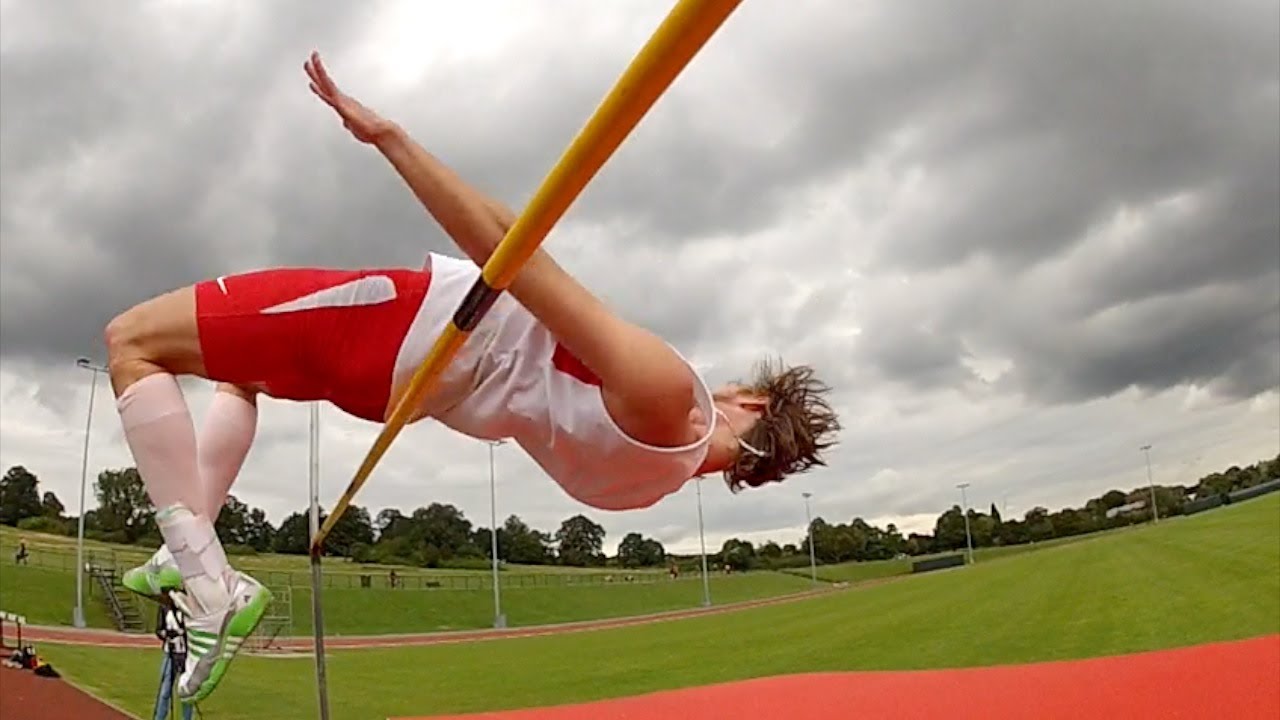
The strange thing about high jump is that the technique changed dramatically after 1968, when Dick Fosbury used his trademark flop to win the gold medal at the Olympics in Mexico City.
Previously the scissors and straddle had been the most common jumping technique, but after the introduction of safer landing matts, the new unorthodox Fosbury Flop became the jump of choice. There are good physical reasons for this - the style allows the jumper to pass over the bar while his or her centre of mass actually passes below the bar.
Huge thanks to Elly (Appchat http://bit.ly/NxAMlX ) for filming, editing, and music!
numberphile http://bit.ly/numberphile
efit30 http://bit.ly/O4CMme
appchat http://bit.ly/NxAMlX
erikaanear http://bit.ly/MdyUzQ
whoisjimmy http://bit.ly/LtFzpW
minutephysics http://bit.ly/Muh6CC
1veritasium http://bit.ly/MrupzL

Scientists have to work with some very large and some very small numbers. To represent these numbers more easily, they use scientific notation. Scientific notation relies on powers of 10. This video gives examples of how to represent a large and small number and explains powers of ten.

Scientists have JUST published this new observation. On January 4th, 2017 they detected the merger of two black holes 3 billion light-years away. This marks the furthest detection they've been able to make and increases confidence that these events will be seen with increasing frequency as the LIGO interferometers become more sensitive to low amplitude gravitational waves (as sources of noise are eliminated).
Special thanks to:
Prof. Rana Adhikari
Prof. David Reitze
Resources by:
Binary Neutron Star merger: Relastro @ ITP - Goethe University, Frankfurt https://www.youtube.com/watch?v=nOTXC4FG9gU
Numerical simulation of black hole merger:
S. Ossokine/A. Buonanno/T. Dietrich (MPI for Gravitational Physics)/R. Haas (NCSA)/SXS project
Artist's impression of merger and chart: LIGO/Caltech/MIT/Sonoma State (Aurore Simonnet)
Simulation of black hole merger: SXS Collaboration
Special thanks to Patreon Supporters:
Tony Fadell, Donal Botkin, Jeff Straathof, Zach Mueller, Ron Neal, Nathan Hansen
Support Veritasium on Patreon: http://ve42.co/patreon
Sound Recording by Raquel Nuno

The Nobel Prize for physics in 2011 was awarded to Brian Schmidt, Adam Riess, and Saul Perlmutter for discovering that the universe is expanding at an accelerating rate. This finding was completely unexpected because it was thought that gravity should slow the expansion of the cosmos. The best current explanation of why the universe is accelerating is that there is some energy tied to empty space which pushes matter apart. This 'Dark Energy' makes up 73% of the universe but is very difficult to detect. Images courtesy of NASA/NASAimages.org and Maritza A. Lara-Lopez

UV cameras expose a hidden world and reveal the incompleteness of our perception
The Physics Girl looks at sunscreen: https://youtu.be/GRD-xvlhGMc
How to make sunscreen from scratch: https://youtu.be/lMXAY5F28L0
In summary, ultraviolet light interacts differently with matter for a number of reasons:
1. Some pigments selectively absorb UV so they may appear white in the visible but dark in the UV. The pigments usually dissipate the UV energy as heat, though the breaking of bonds can also occur.
2. Fluorescent molecules absorb UV light and re-radiate that energy as visible light. This makes them look dark in the UV but glowing under black light.
3. Ultraviolet light scatters more than visible light because the wavelength is shorter and Raleigh scattering is proportional to the reciprocal of wavelength to the power of four.
Special thanks to HHMI BioInteractive for their awesome animations of melanocytes and how the melanin in melanosomes protect your DNA. To see the full video explaining how we get our skin color, check out: https://www.youtube.com/watch?v=VC0TL_lYLm8
Special thanks to Patreon supporters:
Donal Botkin, Michael Krugman, Jeff Straathof, Zach Mueller, Ron Neal, Nathan Hansen, Yildiz Kabaran, Terrance Snow, Stan Presolski
References:
Overview of main UV effects:
Visualizing Rayleigh Scattering through UV Photography
https://journals.ametsoc.org/d....oi/pdf/10.1175/BAMS-
Arctic animals are photographed in the UV to increase visibility and get an accurate count:
Lavigne, D. (1976). Counting Harp Seals with ultra-violet photography. Polar Record, 18(114), 269-277. doi:10.1017/S0032247400000310
Absorption spectrum of melanin: http://www.cl.cam.ac.uk/~jgd1000/melanin.html
"The spectroscopy of human melanin pigmentation," by N. Kollias. In: Melanin: Its Role in Human Photoprotection, pp. 31 - 38. Valdenmar Publishing Co. (1995).
"Optical properties of human sclera, and their consequences for transscleral laser applications," by A. Vogel, C. Dlugos, and R. Nuffer, Lasers in Surgery and Medicine 11(4), pp. 331 - 340 (1991).
"The incidence and time-course of latanoprost-induced iridial pigmentation as a function of eye color," by P. Wistrand, J. Stjernschantz, and K. Olsson, Survey of Ophthalmology 41(S2), pp. S129 - S138 (1997).
Music by Epidemic Sound: https://www.epidemicsound.com "Spring Moods 5"

Have your voice heard at the UN Climate Summit in NYC, September 23: http://bit.ly/WhyNotVe
Interview filming by Chris Cassella: http://bit.ly/ScienceAlertVe

Everyone is familiar with liquid water, ice and water vapour, but what are the differences between these three states of matter? Solids, liquids and vapours of the same substance differ in the motion of the molecules and the distance between them.
Animations courtesy of VisChem (Trade Mark), Copyright 1995, Roy Tasker. Thanks for all your help!
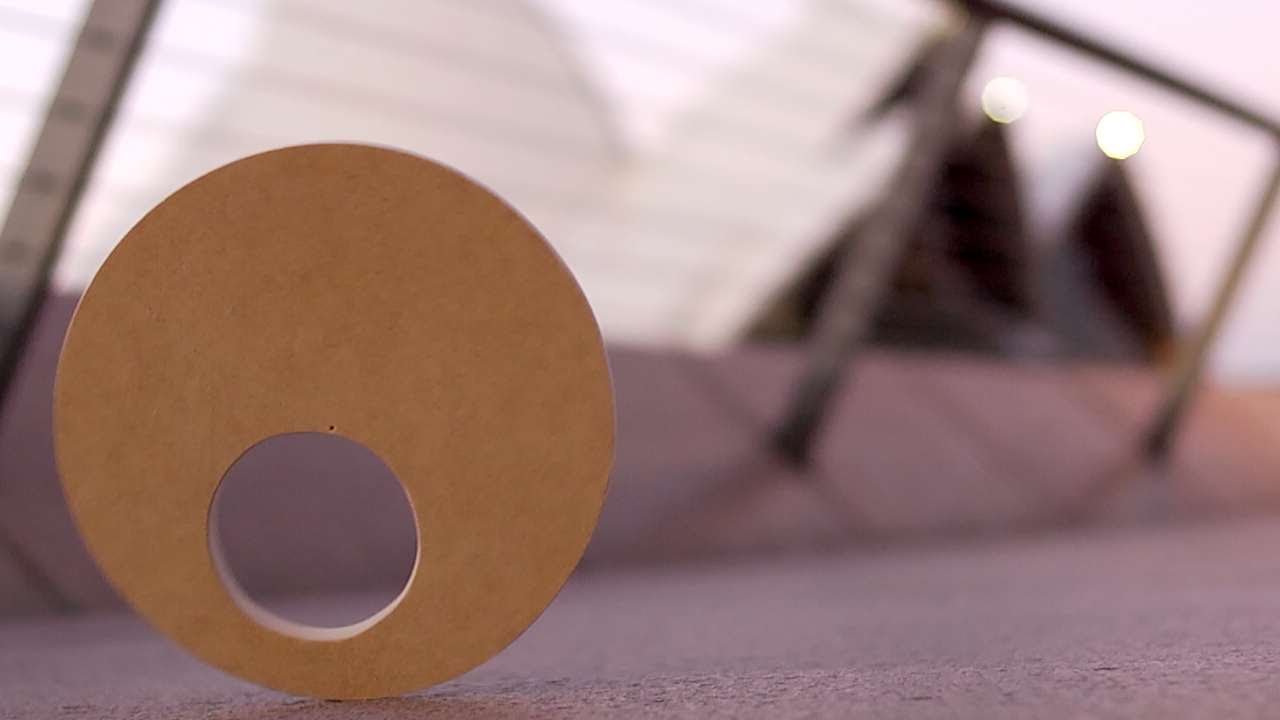
Objects hang heavy side down, but what happens when you spin an asymmetrically weighted disk - well the heavy part actually rises to the top. Why is this?

Origami is inspiring a plethora of new engineering designs. Try yourself: https://ve42.co/Origami
Thanks Audible! Start listening with a 30-day trial and your first audiobook, plus two Audible Originals free when you go to https://audible.com/veritasium or text veritasium to 500500
Huge thanks to:
Dr. Robert Lang https://langorigami.com
Prof. Larry Howell https://www.compliantmechanisms.byu.edu/
On first glance it's surprising that origami -- a centuries old art of folding paper to achieve particular aesthetics -- is applicable to engineering. But upon closer consideration there are a lot of reasons methods developed for paper folding are also applicable to engineering: origami allows you to take a flat sheet of material and convert it to almost any shape only by folding. Plus for large flat structures, origami provides a way of shrinking dimensions while ensuring simply deployment - this is particularly useful for solar arrays in space applications. Furthermore, motions designed to take advantage of the flexibility of paper can also be used to form compliant mechanisms for engineering like the kaleidocycle. Since the principles of origami are scalable, mechanisms can also be dramatically miniaturized.
Some of the work shown is based upon work supported by the National Science Foundation and the Air Force Office of Scientific Research under Grant No. EFRI-ODISSEI-1240417. Any opinions, findings, and conclusions or recommendations expressed in this material are those of the author(s) and do not necessarily reflect the views of the National Science Foundation.
Special thanks to Patreon supporters:
Alfred Wallace, Arjun Chakroborty, Bryan Baker, Chris Vargas, Chuck Lauer Vose, DALE HORNE, Donal Botkin, halyoav, James Knight, Jasper Xin, Joar Wandborg, Kevin Beavers, kkm, Leah Howard, Lyvann Ferrusca, Michael Krugman, Noel Braganza, Pindex, Ron Neal, Sam Lutfi, Stan Presolski, Tige Thorman
Edited by
Jonny Hyman, Isaac Frame, and Derek Muller
Music by
Jonny Hyman
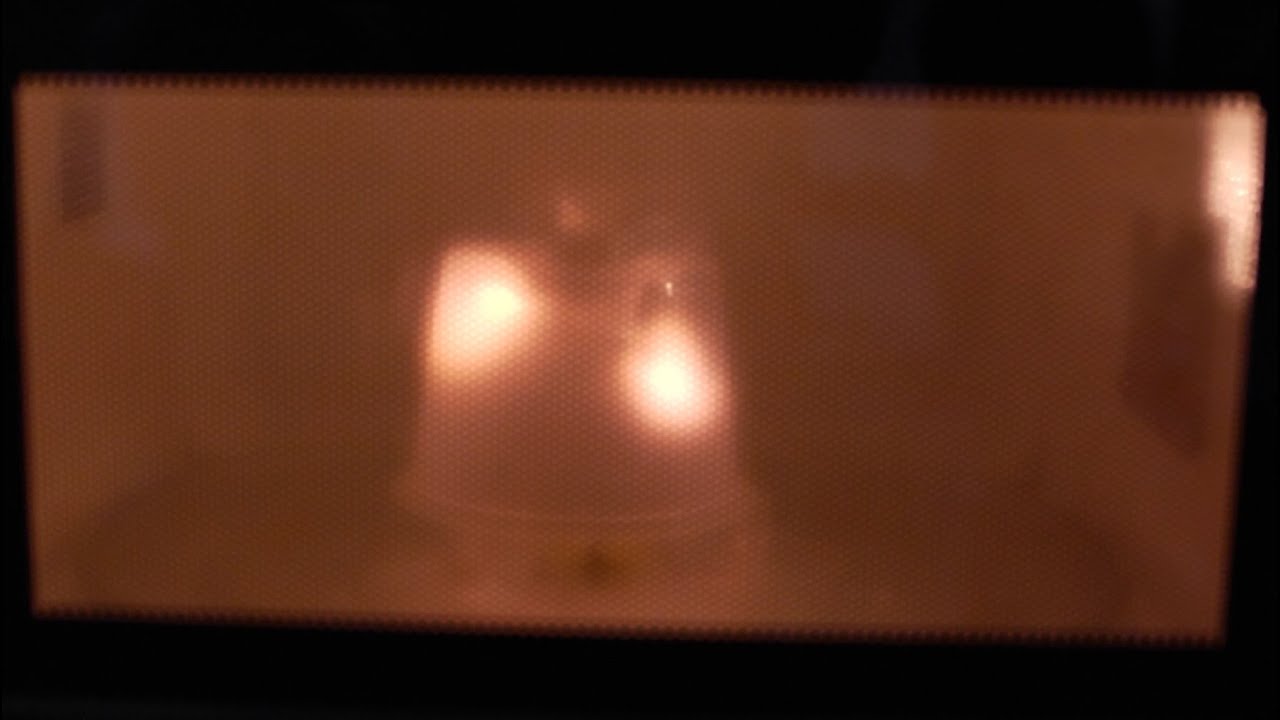
When a grape is cut nearly in half and placed in a microwave, plasma is produced. Please use caution if attempting this experiment: don't leave the microwave on for too long, make sure the area is well ventilated, and stand back. Remember the contents will be very hot afterwards.

When is the acceleration (rate of speeding up or slowing down) greatest during a bungy jump?

What causes the phases of the moon? The common incorrect answer is the shadow of the Earth. The phases of the moon are actually just a result of our perception of the moon's half-illuminated surface. When the moon does pass through Earth's shadow the result is a lunar eclipse. This can be spectacular as the moon turns a deep shade of red.
Images courtesy of NASAimages.org and Geoff Wyatt, Senior Astronomy Educator Powerhouse Museum

I'm going to London! And I'm leading a team of YouTubers. For the next few weeks we will all be doing videos themed around the Olympics so I'm tackling the science of sport and science in and around London.
The Team!
HOWRIDICULOUS: http://bit.ly/LtFzpW
APPCHAT: http://bit.ly/NxAMlX
ERIKAANEAR: http://bit.ly/MdyUzQ
MINUTEPHYSICS: http://bit.ly/Muh6CC
EFIT30: http://bit.ly/O4CMme
2VERITASIUM http://youtube.com/2veritasium
Music by Alankeys86 and Kevin McLeod (Incompetech.com)
For the London 2012 Summer Olympics creators from all over the world are taking over YouTube with the most awesome Olympics videos ever. Go to YouTube.com/CreatorHub to see all the amazing gold medal videos.

NASA is preparing to send a chimpanzee, Ham, into space to test the effects of space on a living creature. He’s received a training regiment to prepare him for the mission ahead.
From the Series: Apollo's Moon Shot: Rocket Fever http://bit.ly/2MHAm4y
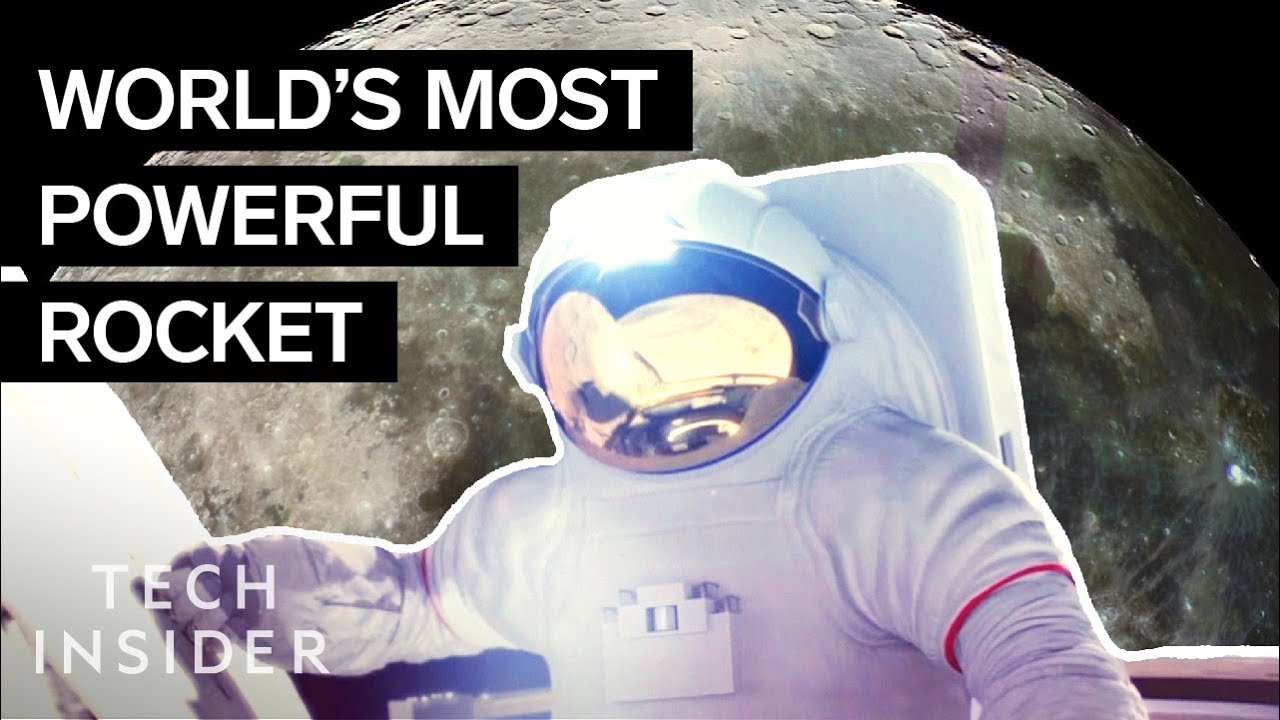
NASA announced its returned mission to the moon by 2024, titled Artemis it will cost an estimated $20-$30 billion. They plan to go to the moon in their SLS mega-rocket and begin building a lunar gateway. The mission will focus on the possibilities of mining resources on the moon, including water for rocket fuel and will lead to future deep space travel and lunar bases in what can be considered the new era of space exploration.
MORE SPACE CONTENT:
What Happens To The Human Body In Space
https://www.youtube.com/watch?v=1xQx5d0RI3M
Elon Musk's Multibillion Dollar Mars Rocket, Explained
https://www.youtube.com/watch?v=FIn6r9RKVVM
NASA’s 4-Year Twin Experiment Takes Us Closer To Mars Than Ever Before
https://www.youtube.com/watch?v=ZVRft7r8-Ds
------------------------------------------------------
#NASA #Moon #TechInsider
Tech Insider tells you all you need to know about tech: gadgets, how-to's, gaming, science, digital culture, and more.
Visit us at: https://www.businessinsider.com
TI on Facebook: https://www.facebook.com/techinsider
TI on Instagram: https://www.instagram.com/tech_insider/
TI on Twitter: https://twitter.com/techinsider
TI on Amazon Prime: http://read.bi/PrimeVideo
INSIDER on Snapchat: https://insder.co/2KJLtVo
------------------------------------------------------
NASA’s $30 Billion Moon Return Mission, Explained | Beyond Earth
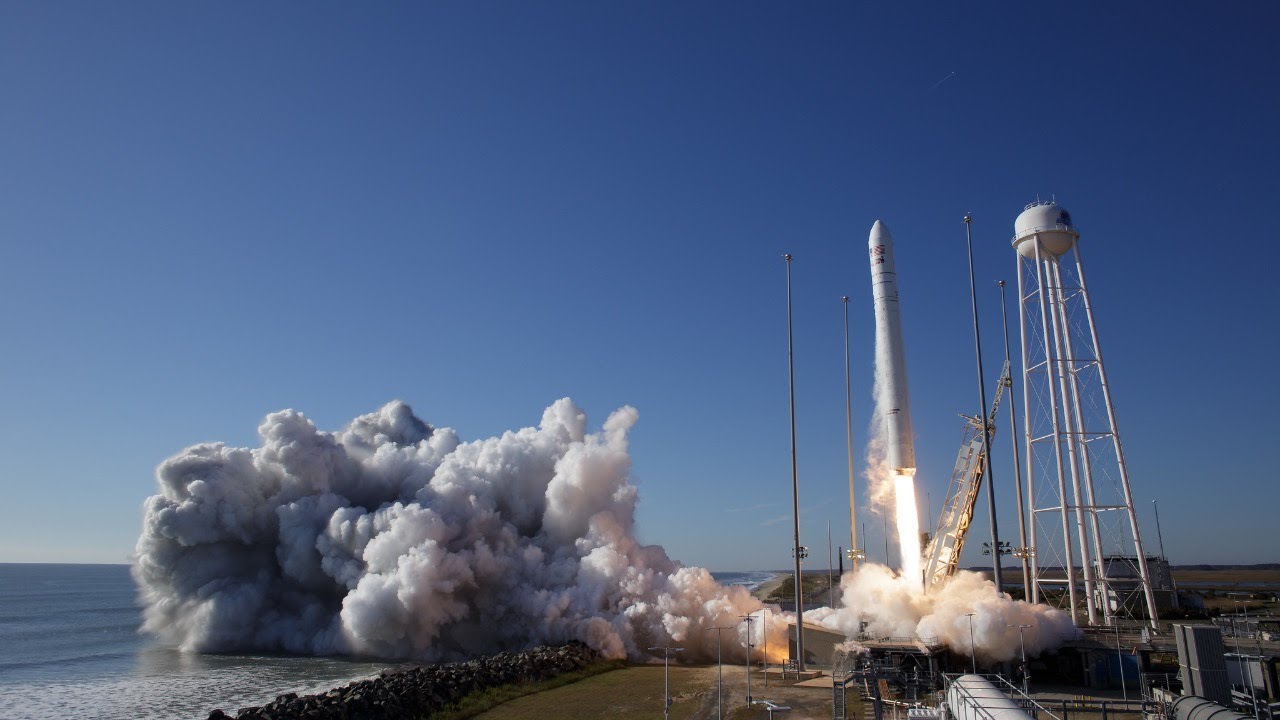
Watch a cargo spacecraft lift off from NASA's Wallops Flight Facility in Virginia on a resupply mission to the International Space Station! ?
On Sat., Feb. 15 at 3:21 p.m. EST, Northrop Grumman's 13th commercial resupply services mission launched on a resupply mission to the station. A previous launch attempt on Feb. 9 was scrubbed after off-nominal readings from a ground support sensor. The Cygnus cargo spacecraft, loaded with approximately 7,500 pounds of research, supplies and hardware, lifted off atop an Antares rocket from the Mid-Atlantic Regional Spaceport. This Cygnus spacecraft is named the S.S. Robert H. Lawrence in honor of the first African American to be selected as an astronaut.

Could a liquid water ocean beneath the surface of Jupiter’s moon Europa have the ingredients to support life? Here's how NASA's mission to Europa would find out.
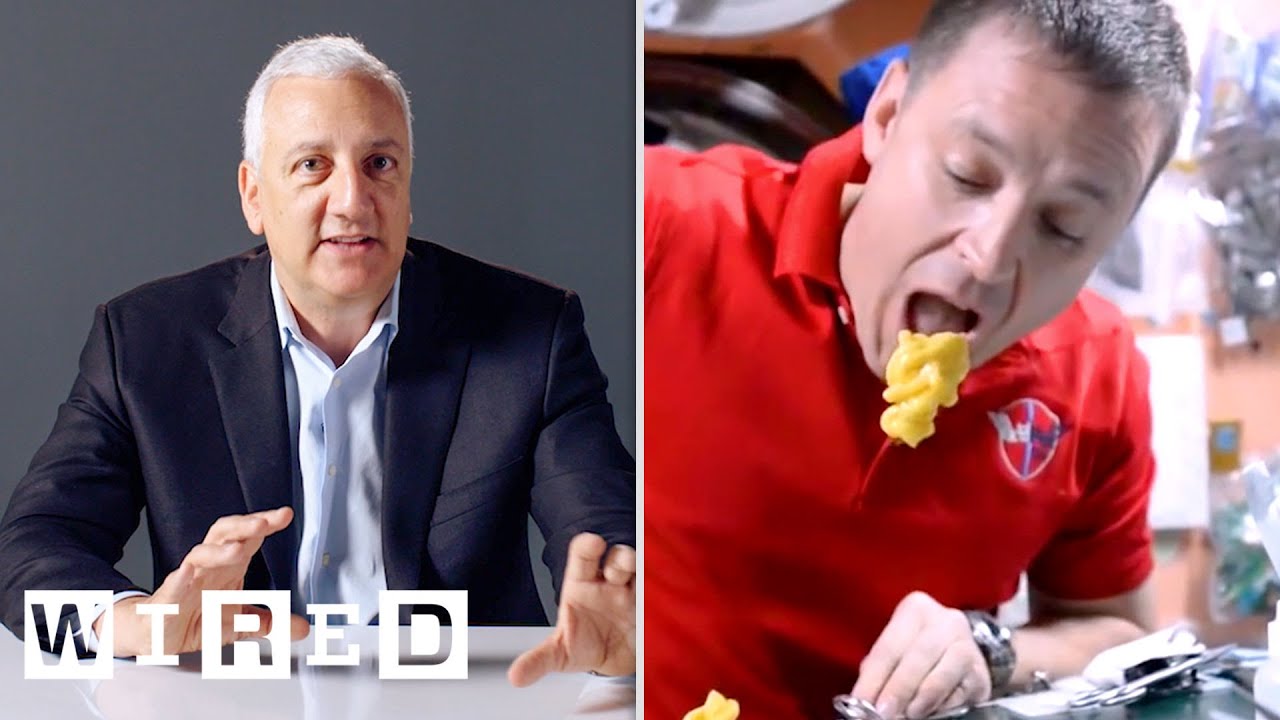
What's different about food in space? Former NASA astronaut Mike Massimino breaks down all the differences between eating on Earth and eating in space. Is astronaut ice cream REALLY a thing? Who decides what food is brought to space? Can you eat burgers in space? Why do astronauts use tortillas instead of bread?
Mike Massimino is a former NASA astronaut, senior advisor for space programs at the Intrepid Museum, and professor at Columbia University.
Still haven’t subscribed to WIRED on YouTube? ►► http://wrd.cm/15fP7B7
Get more incredible stories on science and tech with our daily newsletter: https://wrd.cm/DailyYT
Also, check out the free WIRED channel on Roku, Apple TV, Amazon Fire TV, and Android TV. Here you can find your favorite WIRED shows and new episodes of our latest hit series Tradecraft.
ABOUT WIRED
WIRED is where tomorrow is realized. Through thought-provoking stories and videos, WIRED explores the future of business, innovation, and culture.
Former NASA Astronaut Explains How Food Is Different in Space | WIRED