Top Vídeos
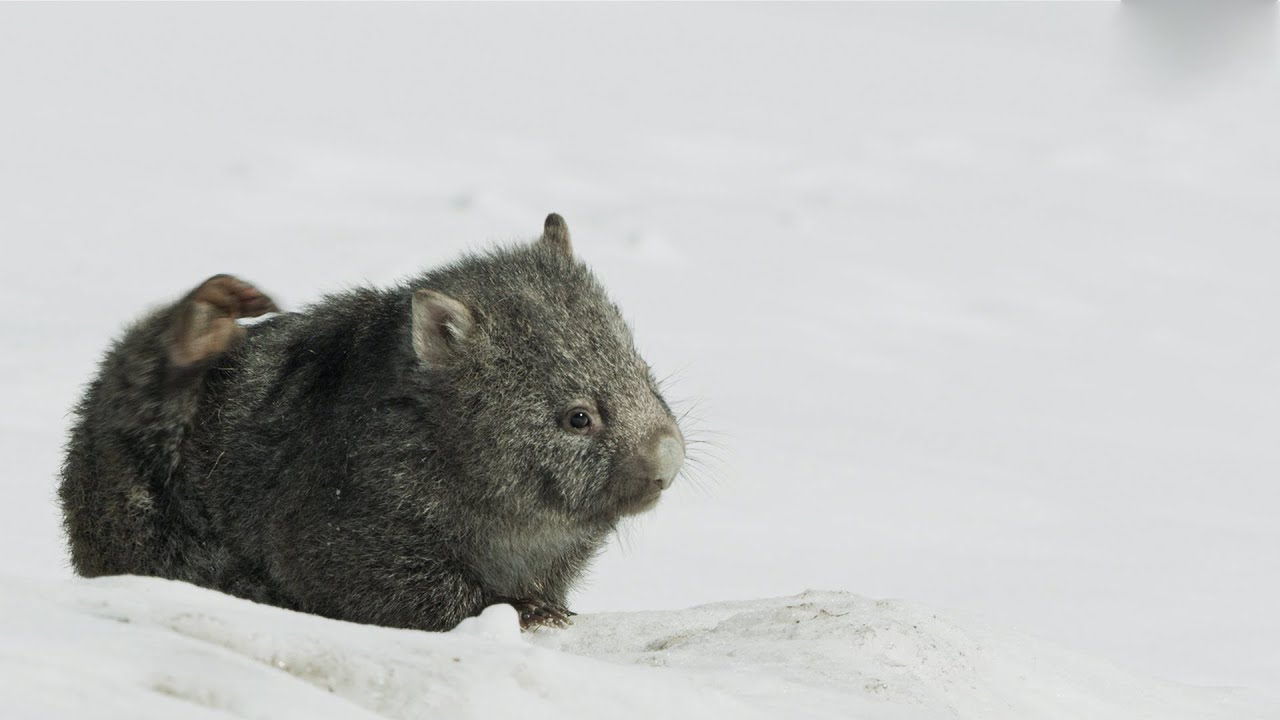
These brave wombats scour the snowy slopes in search of something tasty to nibble on.
Subscribe: http://bit.ly/BBCEarthSub
Watch more:
Planet Earth http://bit.ly/PlanetEarthPlaylist
Blue Planet http://bit.ly/BluePlanetPlaylist
Planet Earth II http://bit.ly/PlanetEarthIIPlaylist
Planet Dinosaur http://bit.ly/PlanetDinoPlaylist
Seven Worlds, One Planet Episode 4 'Australia'
Millions of years ago incredible forces ripped apart the Earth’s crust creating seven extraordinary continents. Seven Worlds, One Planet, narrated by Sir David Attenborough, will reveal how each distinct continent has shaped the unique animal life found there.
Welcome to BBC EARTH! The world is an amazing place full of stories, beauty and natural wonder. Here you'll find 50 years worth of entertaining and thought-provoking natural history content. Dramatic, rare, and exclusive, nature doesn't get more exciting than this.
Want to share your views with the team? Join our BBC Studios Voice: https://www.bbcstudiosvoice.com/register
This is a page from BBC Studios who help fund new BBC programmes. Service information and feedback: http://bbcworldwide.com/vod-fe....edback--contact-deta

Take a journey through some of the coolest parts of our blue planet in this voyage around our beautiful poles with this 10 hour loop.
Subscribe: http://bit.ly/BBCEarthSub
#OurBluePlanet is a digital collaboration between BBC Earth and Ocean X Media with featured media from both companies. Join the conversation over on Twitter @OurBluePlanet.
Ocean X Media are a team of scientists, explorers and filmmakers driven to discover what lies beneath the waves and to document untold ocean stories. You can find out more here: http://www.oceanx.org
Watch more videos from BBC Earth:
Planet Earth http://bit.ly/PlanetEarthPlaylist
Blue Planet http://bit.ly/BluePlanetPlaylist
Planet Earth II http://bit.ly/PlanetEarthIIPlaylist
Planet Dinosaur http://bit.ly/PlanetDinoPlaylist
About BBC Earth:
The world is an amazing place full of stories, beauty and natural wonder. Explore the official BBC Earth YouTube channel and meet the animals and wildlife of your planet. Here you'll find 50 years worth of astounding, entertaining, thought-provoking and educational natural history documentaries. Dramatic, rare and wild nature doesn't get more exciting than this. Subscribe to be the first to view new animal documentary videos. You can also become part of the BBC Earth community on Facebook, Twitter and Instagram. Here you'll find the best natural history content from the web, exclusive videos and images and a thriving, vibrant community.
Want to share your views with the team behind BBC Earth and win prizes? Join our fan panel here: http://tinyurl.com/YouTube-BBCEarth-FanPanel
This is a channel from BBC Studios who help fund new BBC programmes.
Check out BBC Earth on BBC online - http://www.bbc.com/earth/world
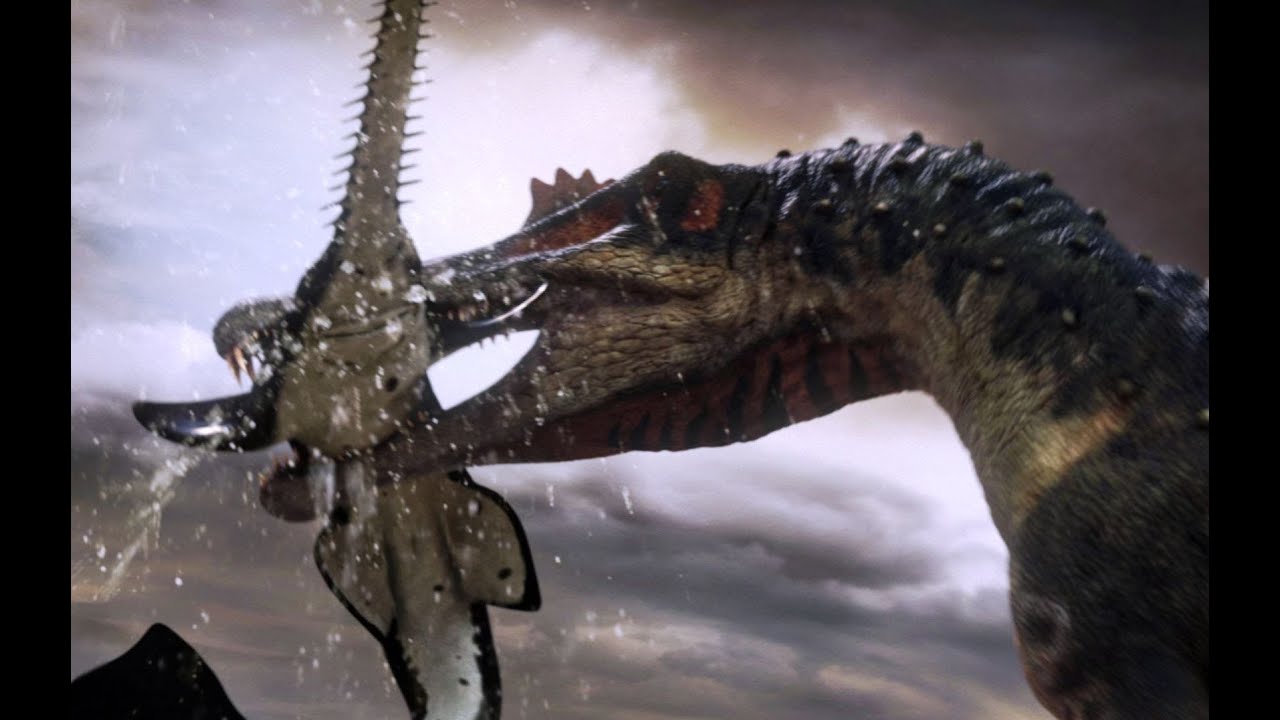
John Hurts tells the stories of the biggest, deadliest and weirdest Dinosaurs ever to walk the Earth. Massive carnivorous hunter Spinosaurus hunts the giant fresh water fish Onchopristis.
Planet Dinosaur tells the stories of the biggest, deadliest and weirdest creatures ever to walk the Earth, using the latest fossil evidence and immersive computer graphics. Narrated by John Hurt.
Visit http://www.bbcearth.com for all the latest animal news and wildlife videos
BBC Earth Facebook http://www.facebook.com/bbcearth (ex-UK only)
BBC Earth Twitter http://www.twitter.com/bbcearth
Subscribe to BBC Earth: http://bit.ly/ydxvrP
BBC Earth Channel: http://www.youtube.com/BBCEarth
Latest BBC Earth videos: http://bit.ly/y1wtbi
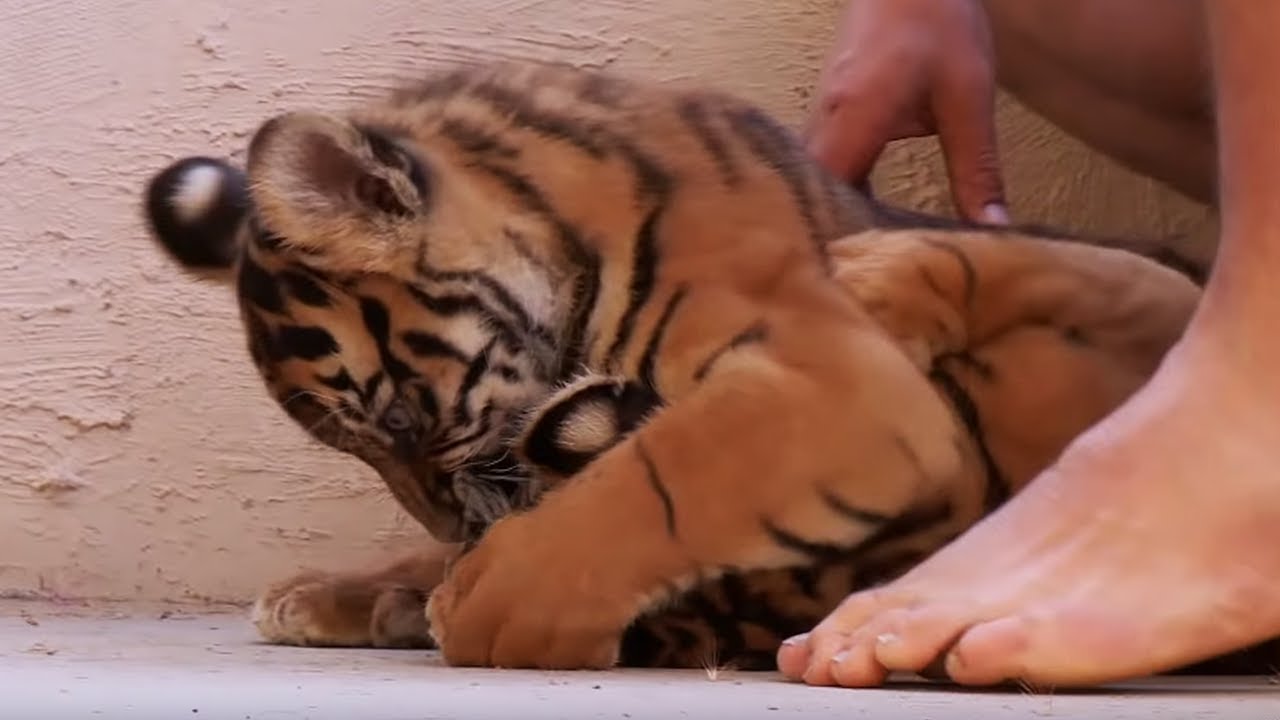
The cubs are using anyone and anything to try out their new teeth so Giles wants to put them to the test.Taken from Tigers About The House.
Subscribe to BBC Earth: http://bit.ly/BBCEarthSubBBC Earth YouTube Channel: http://www.youtube.com/BBCEarth
BBC Earth Facebook http://www.facebook.com/bbcearth (ex-UK only)
BBC Earth Twitter http://www.twitter.com/bbcearth
Visit http://www.bbc.com/earth/world for all the latest animal news and wildlife videos
This is a channel from BBC Studios who help fund new BBC programmes.

Just for plane buffs. re-edited footage
From the "Quartet" album Produced by Sir George Martin. If you search for original footage Sky fighters (les chevaliers du ciel). Try this one also https://www.youtube.com/watch?v=dRn_NJI_Q-Q its a WW2 P-40 on my channel.

Follow Ultravox:
Ultravox's Music Online: https://Ultravox.lnk.to/Listen
Subscribe: https://Ultravox.lnk.to/Subscribe
Website: https://Ultravox.lnk.to/Web
Facebook: https://Ultravox.lnk.to/FB
Instagram: https://Ultravox.lnk.to/IN
Twitter: https://Ultravox.lnk.to/TW
Lyrics:
We came to dance
Making moves from a passion play
The ties that bind us just slip away.
We came to dance
The piper calls out a different rhyme
He cracks the whip and we step in time.
Standing as the parade goes passing by
I hear a voice around my cry.
Like the sound of a distant drums
Rejected and alone.
A heart without a home
Then someone said:
We came to dance
Making moves from a passion play...
We came to dance.
Waiting as the panic grips my hand
Hearing prose from high command
Like a million times before
No dignity or grace
It's the price and not the race
And someone said:
We came to dance
Making moves from a passion play...
We came to dance.
We came to dance
Making moves from a passion play
The ties that bind us just slip away.
Take what you can
They said take it while you may.
But keep in mind penalty fits the crime
And it deals no softened blow.
We came to dance
Making moves from a passion play...
We came to dance
Making moves from a passion play...
We came to dance
Making moves from a passion play...
![Ultravox - Sleepwalk - TOTP 1980 [HD]](https://i.ytimg.com/vi/TtJ2qU-HTLs/maxresdefault.jpg)
Ultravox perform Sleepwalk on Top of the Pops, 1980.
HD broadcast of SD content.

Planarians are tiny googly-eyed flatworms with an uncanny ability: They can regrow their entire bodies, even a new head. So how do they do it?
You can learn more about CuriosityStream at https://curiositystream.com/deeplook
Support Deep Look on Patreon!! https://www.patreon.com/deeplook
DEEP LOOK is a ultra-HD (4K) short video series created by KQED San Francisco and presented by PBS Digital Studios. Explore big scientific mysteries by going incredibly small.
Nelson Hall wants you to know that the googly-eyed flatworm he just sliced into four pieces is going to be OK.
Three of the flatworm’s four pieces have started to wriggle away from each other and its head is moving in circles under Hall’s microscope. “The head will just go off and do its own thing,” said Hall, a doctoral student of bioengineering at Stanford University.
But in three weeks, the head, as well as the other pieces, will each have grown into a complete flatworm just like the one Hall sliced up, dark brown and about a half-inch long.
Hall and researchers around the world are hard at work trying to understand how these flatworms, called planarians, use powerful stem cells to regenerate their entire bodies, an ability humans can only dream of.
Animals like starfish, salamanders and crabs can regrow a tail or a leg. Planarians, on the other hand, can regrow their entire bodies – even their heads, which only a few animals can do.
---What is the difference between healing and regeneration?
When we suffer a severe injury, the best we can hope for is that our wounds will heal. “Healing is more like closing the wound and cleaning debris. It’s too short of a process to have tissue replacement,” said Hall. “Regeneration is replacing the tissue that was lost.”
---What are pluripotent stem cells?
If planarians can regrow body parts, why can’t we? Key to planarians’ regenerative ability are powerful cells called pluripotent stem cells, which make up one-fifth of their bodies and can grow into every new body part. Humans only have pluripotent stem cells during the embryonic stage, before birth. After that, we mostly lose our ability to sprout new organs.
“We have a couple of tissues that can regenerate, like the liver, the outer layers of the skin and the inner layers of the intestine, and the bone marrow,” said Dr. Stephen Badylak, Deputy Director of the McGowan Institute for Regenerative Medicine at the University of Pittsburgh. “But the way we heal most tissues is by forming scar tissue.”
Scientists hope that studying planarians could lead to treatments for humans in which our stem cells could be coaxed one day to regrow severed limbs or sick organs.
---How to grow a fingertip.
Doctors are limited in what they can currently do to help people who lose a limb or part of one. Badylak, who doesn’t study planarians, has developed a treatment at the University of Pittsburgh that helps patients regrow their fingertips after an accident.
He applies a powder made of animal collagen and substances that stimulate cells to grow, to help form a scaffold that attracts stem cells from the parts of the nail that weren’t cut off. The stem cells regrow the fingertip, which isn’t identical to the one that was cut off, but is functional.
---+ Read the entire article on KQED Science:
https://www.kqed.org/science/1....933246/want-a-whole-
---+ For more information:
Regeneration in Nature: Francesc Cebrià’s blog on animal regeneration: https://regenerationinnature.wordpress.com
---+ More great Deep Look episodes:
Daddy Longlegs Risk Life ... and Especially Limb ... to Survive
https://www.youtube.com/watch?v=tjDmH8zhp6o
Take Two Leeches and Call Me in the Morning
https://www.youtube.com/watch?v=O-0SFWPLaII
These Fighting Fruit Flies Are Superheroes of Brain Science
https://www.youtube.com/watch?v=yvd3X1N0jUU
---+ See some great videos and documentaries from PBS Digital Studios!
Reactions: Why Tardigrades are Some of the Most Hardcore Critters on the Planet
https://www.youtube.com/watch?v=dEW1_Pba3z4
It’s Okay to Be Smart: Is Height All In Our Genes?
https://www.youtube.com/watch?v=0cuO5OSDMbw
---+ Follow KQED Science:
KQED Science: http://www.kqed.org/science
Tumblr: http://kqedscience.tumblr.com
Twitter: https://www.twitter.com/kqedscience
---+ About KQED
KQED, an NPR and PBS affiliate in San Francisco, CA, serves Northern California and beyond with a public-supported alternative to commercial TV, radio and web media.
Funding for Deep Look is provided in part by PBS Digital Studios. Deep Look is a project of KQED Science, which is also supported by the National Science Foundation, the Templeton Religion Trust, the Templeton World Charity Foundation, the S. D. Bechtel, Jr. Foundation, the Dirk and Charlene Kabcenell Foundation, the Vadasz Family Foundation, the Gordon and Betty Moore Foundation, the Fuhs Family Foundation and the members of KQED.
#deeplook #planaria #flatworm
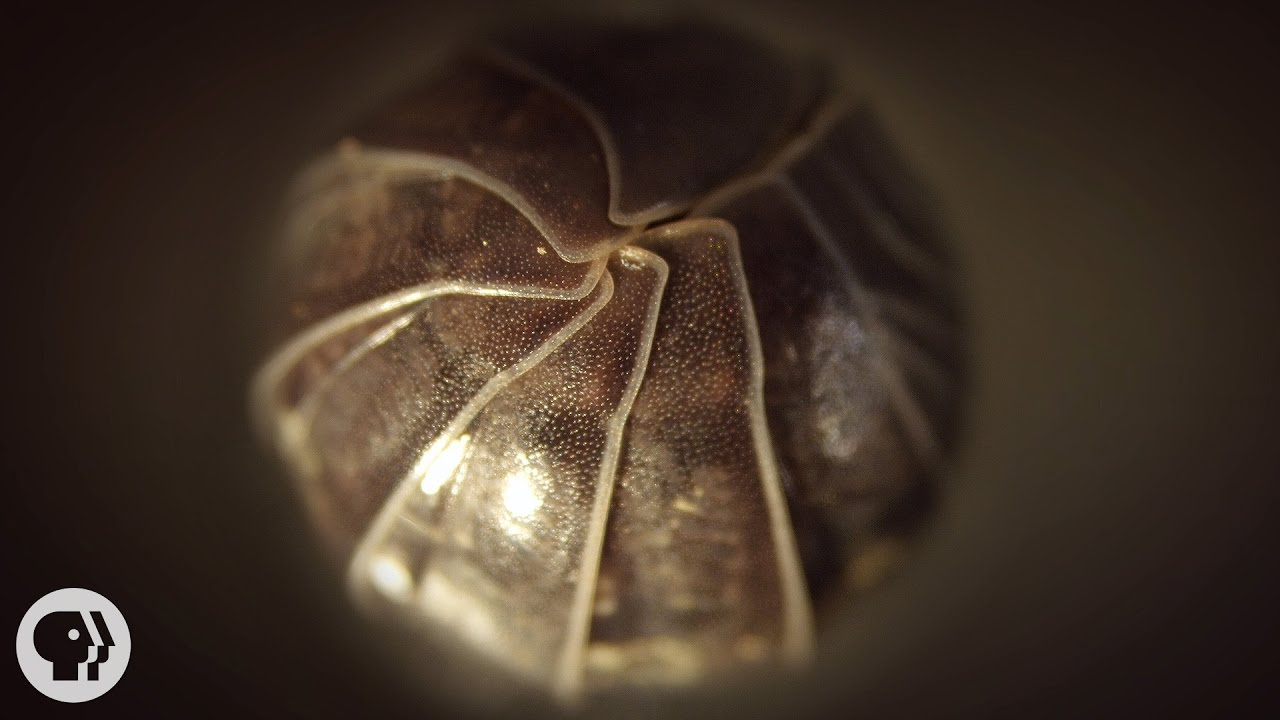
Pill bugs. Doodle bugs. Potato bugs. Wood Shrimp. Whatever you call them, there’s something less creepy about these critters than other insects. Maybe it’s because they’re not insects at all.
SUBSCRIBE to Deep Look! http://goo.gl/8NwXqt
DEEP LOOK is a ultra-HD (4K) short video series created by KQED San Francisco and presented by PBS Digital Studios. See the unseen at the very edge of our visible world. Get a new perspective on our place in the universe. Explore big scientific mysteries by going incredibly small.
* NEW VIDEOS EVERY OTHER TUESDAY! *
With winter rains, Bay Area pill bugs are out in force. Fortunately, they’re one of our most beloved “bugs.” Pill bugs. Doodle bugs. Potato bugs. Wood Shrimp. Whatever you call them, there’s something less creepy about these critters than other insects. Maybe it’s because they’re not insects at all.
Pill bugs are more closely related to a shrimp and lobsters than crickets or butterflies. Their ancestors lived in the sea, but ancient pill bugs crawled out millions of years ago to carve a life for themselves on dry land.
You can see the evidence if you take a close look at them, so that’s exactly what we did for this episode of Deep Look, an ultra-high definition wildlife video series produced by KQED and PBS DIgital Studios.
“Kids love them,” said Jonathan Wright, a professor of biology at Pomona College who studies the charismatic creepy-crawlies. After all, who hasn’t delighted as a youth in annoying a pill bug until it defensively curls up into a little armored ball?
Some adventurous foragers even eat pill bugs. Their flavor is said to resemble other crustaceans, earning pill bugs the moniker “wood shrimp”.
“I personally haven’t tasted one,” said Wright, “but I’ve spoken to people that have. They didn’t get a particularly high approval rating. Pill bugs have a lot of soil in their gut.”
They may not be ready to replace shrimp as an appetizer, but according to Wright, the evidence of the pill bug’s evolutionary lineage lies underneath its shell.
--- What are pill bugs related to?
Pill bugs are terrestrial crustaceans. They’re more closely related to marine creatures like lobsters and shrimp than crickets or other insects.
--- If pill bugs have gills, can they survive underwater?
Most pill bugs will drown within a few hours if submerged because their pleopod gills have become better at removing oxygen from air and less good at removing oxygen from water
--- Why do pill bugs roll into a ball?
Pill bugs roll into a ball to protect themselves from potential predators. They will also roll up, a process called conglobation, to keep from drying out if they don’t have access to enough moisture.
--- What do pill bugs eat?
Pill bugs mostly eat decaying plant matter but also consume fungus, algae and lichens.
---+ Read the entire article on KQED Science:
https://ww2.kqed.org/science/2....017/01/17/roly-polie
---+ For more information:
Respiratory physiology of the Oniscidea: Aerobic capacity and the significance of pleopodal lungs. Jonathan C. Wright and Kevin Ting
---+ More Great Deep Look episodes:
The Double-Crossing Ants to Whom Friendship Means Nothing
https://www.youtube.com/watch?v=fguo3HvWjb0
The Snail-Smashing, Fish-Spearing, Eye-Popping Mantis Shrimp
https://www.youtube.com/watch?v=Lm1ChtK9QDU
These Termites Turn Your House into a Palace of Poop
https://www.youtube.com/watch?v=DYPQ1Tjp0ew&t=83s
---+ See some great videos and documentaries from the PBS Digital Studios!
A Venus Flytrap Works Just Like Your Brain | Brain Craft
https://www.youtube.com/watch?v=s0prAxQTuAA
What are antibubbles? | Physics Girl
https://www.youtube.com/watch?v=w5UMyck8D64
---+ Follow KQED Science:
KQED Science: http://www.kqed.org/science
Tumblr: http://kqedscience.tumblr.com
Twitter: https://www.twitter.com/kqedscience
---+ About KQED
KQED, an NPR and PBS affiliate in San Francisco, CA, serves Northern California and beyond with a public-supported alternative to commercial TV, Radio and web media.
Funding for Deep Look is provided in part by PBS Digital Studios and the John S. and James L. Knight Foundation. Deep Look is a project of KQED Science, which is also supported by HopeLab, the S. D. Bechtel, Jr. Foundation, the Dirk and Charlene Kabcenell Foundation, the Vadasz Family Foundation, the Gordon and Betty Moore Foundation, the Smart Family Foundation and the members of KQED.
#deeplook #pillbug #isopod
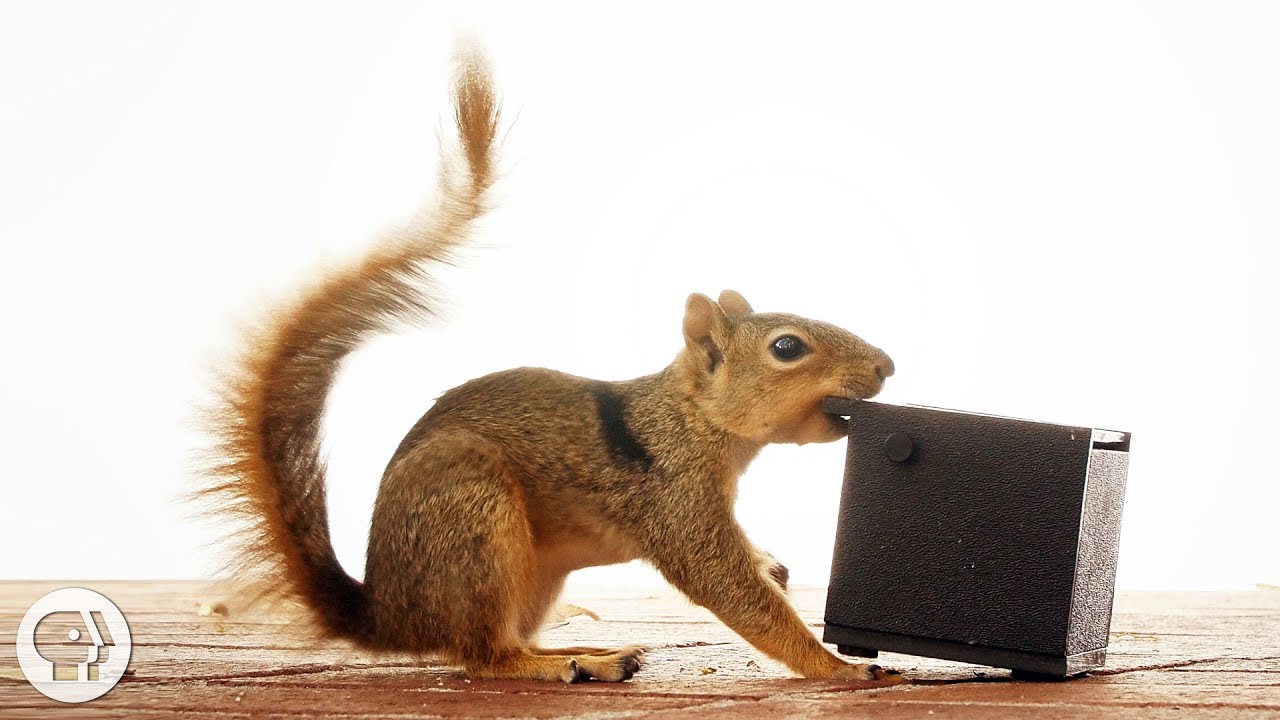
Humans aren’t the only creatures that get frustrated. Squirrels do too. One researcher wants to know, could there be an evolutionary benefit to losing your cool?
SUBSCRIBE to Deep Look! http://goo.gl/8NwXqt
DEEP LOOK is a ultra-HD (4K) short video series created by KQED San Francisco and presented by PBS Digital Studios. See the unseen at the very edge of our visible world. Get a new perspective on our place in the universe and meet extraordinary new friends. Explore big scientific mysteries by going incredibly small.
* NEW VIDEOS EVERY OTHER TUESDAY! *
YouTube viewers are well-acquainted with the squirrel genre: Thousands of videos that show squirrels going to great lengths to extract seeds from bird feeders (https://www.youtube.com/watch?v=FgDa_cpgHWs), or the old favorite, squirrels stuffing their cheeks (https://www.youtube.com/watch?v=_15UrPHkVQo).
Maybe squirrels are so popular because we see some of ourselves in them. This is part of what fueled Mikel Delgado’s interest in the fox squirrels she saw at the University of California, Berkeley. An animal behaviorist and doctoral student there, she likes to quote from Charles Darwin’s book “The Descent of Man, and Selection in Relation to Sex,” in which the English naturalist proposed that the differences between humans and other animals aren’t that clear-cut.
“It was controversial because people thought animals were machines and didn’t feel pain,” she said.
Inspired by Darwin, Delgado was intrigued by squirrels’ emotional worlds. The way to tell what they’re feeling, researchers have found, is to watch their tails. When threatened by a predator like a dog, a fox squirrel whips its tail in an s-shaped pattern that researchers call “flagging.”
Delgado wondered what else she could learn from watching squirrels flag their tails. For instance, do they get frustrated, the way that people do? So she devised an experiment to explore this question.
She taught some of the fox squirrels on campus to lift the lid of a plastic box to find a walnut inside. When the squirrel ate the nut, she dropped another one in. This way, she trained the squirrels to expect a walnut when they looked inside. This training was important because frustration is usually defined as not getting what you expect.
Then she replaced the walnut with corn – which squirrels don’t like as much – or left the box empty. These squirrels flagged their tails. For a third group, she locked the box. They flagged their tails the most. They got aggressive, a hallmark of frustration. And they bit, toppled and dragged the box, trying to open it.
That makes Delgado think that perhaps frustration has an evolutionary purpose, that it isn’t just for blowing off steam, but is instead a way to gather up energy to “brute-force” a solution.
--+ Is frustration an emotion?
“It’s a little bit controversial,” said Delgado. “It depends on who you talk to.”
Researchers don’t consider frustration one of the basic, or universal, emotions. In the 1960s, psychologist Paul Ekman identified six universal emotions: joy, anger, sadness, surprise, fear and disgust:
https://www.youtube.com/watch?v=-PFqzYoKkCc
Frustration is related to anger, but researchers don’t consider frustration a basic emotion. “There’s a question as to what exactly it is,” said Delgado. “Sometimes you see it described very specifically as a task: For example, when you expect a soda and you don’t get it from the vending machine. And sometimes you see it described as the response to the task.”
---+ Read the entire article on KQED Science:
https://ww2.kqed.org/science/2....016/09/20/watch-thes
---+ For more information:
The lab of Lucia Jacobs, where Mikel Delgado does her research: http://jacobs.berkeley.edu/
---+ More Great Deep Look episodes:
Can a New “Vaccine” Stem the Frog Apocalypse?
https://www.youtube.com/watch?v=-IXVcyCZVBg
These Crazy Cute Turtles Want Their Lake Back
https://www.youtube.com/watch?v=YTYFdpNpkMY
---+ See some great videos and documentaries from PBS Digital Studios!
BrainCraft: The Power of Sadness in Inside Out
https://www.youtube.com/watch?v=ST97BGCi3-w
PBS Idea Channel: 3 Fallacies For Election Season!
https://www.youtube.com/watch?v=REp4zCum3XY
---+ About KQED
KQED, an NPR and PBS affiliate in San Francisco, CA, serves Northern California and beyond with a public-supported alternative to commercial TV, Radio and web media.
Funding for Deep Look is provided in part by PBS Digital Studios and the John S. and James L. Knight Foundation. Deep Look is a project of KQED Science, which is also supported by HopeLab, the S. D. Bechtel, Jr. Foundation, the Dirk and Charlene Kabcenell Foundation, the Vadasz Family Foundation, the Gordon and Betty Moore Foundation, the Smart Family Foundation and the members of KQED.
#deeplook #squirrel #squirrelbehavior

Support Deep Look on Patreon! https://www.patreon.com/deeplook
Yep, brown marmorated stink bugs are stinky, but that’s not the worst thing about them. They're imported agricultural pests eating their way across North America. But a native enemy from Asia – the tiny samurai wasp – has a particularly nasty method of stopping stink bugs in their tracks.
SUBSCRIBE to Deep Look! http://goo.gl/8NwXqt
DEEP LOOK is an ultra-HD (4K) short video series created by KQED San Francisco and presented by PBS Digital Studios. See the unseen at the very edge of our visible world. Explore big scientific mysteries by going incredibly small.
---
It looks rather harmless at first glance. With a speckled exterior and a shield-like shape, the brown marmorated stink bug doesn’t appear to be any different from any other six-legged insect that might pop up in your garden. But this particular bug, which arrived in the U.S. from Asia in the mid-1990s and smells like old socks when it is squashed, is a real nuisance. Not only can it invade homes by the thousands in the wintertime, it’s one formidable agricultural pest, eating millions of dollars of peaches, apples and other crops since 2010.
Scientists are now investigating a new tactic in the war on the stink bugs: the possibility of relying on one of the bug’s natural enemies, the samurai wasp.
Also native to Asia, this parasitic wasp keeps the stink bug population in check there. How?
---+ Read the entire article on KQED Science:
https://www.kqed.org/science/1....937639/samurai-wasps
---+ For more information:
Brown Marmorated Stink Bug Research at Oregon State University
http://bit.ly/2GB8RFs
---+ More Great Deep Look episodes:
These Hairworms Eat a Cricket Alive and Control Its Mind
https://youtu.be/YB6O7jS_VBM
Jerusalem Crickets Only Date Drummers
https://youtu.be/mHbwC-AIyTE
Turret Spiders Launch Sneak Attacks From Tiny Towers
https://youtu.be/9bEjYunwByw
---+ Shoutout!
?Congratulations ?to bujur10514, Ace _YT13, Iridescent Moonbeam, Salina Tran, and Noke Noke over at the Deep Look Community Tab, for correctly identifying the term 'Thigmotaxis:'
https://www.youtube.com/channe....l/UC-3SbfTPJsL8fJAPK
---+ Thank you to our Top Patreon Supporters ($10+ per month)!
Bill Cass, Justin Bull, Daniel Weinstein, David Deshpande, Daisuke Goto, Karen Reynolds, Yidan Sun, Elizabeth Ann Ditz, KW, Shirley Washburn, Tanya Finch, johanna reis, Shelley Pearson Cranshaw, Johnnyonnyful, Levi Cai, Jeanine Womble, Michael Mieczkowski, SueEllen McCann, TierZoo, James Tarraga, Willy Nursalim, Aurora Mitchell, Marjorie D Miller, Joao Ascensao, PM Daeley, Two Box Fish, Tatianna Bartlett, Monica Albe, Jason Buberel
---+ Follow KQED Science and Deep Look:
Instagram: https://www.instagram.com/kqedscience/
Twitter: https://www.twitter.com/kqedscience
KQED Science on kqed.org: http://www.kqed.org/science
Facebook Watch: https://www.facebook.com/DeepLookPBS/
Patreon: https://www.patreon.com/deeplook
---+ About KQED
KQED, an NPR and PBS affiliate in San Francisco, CA, serves Northern California and beyond with a public-supported alternative to commercial TV, Radio and web media.
Funding for Deep Look is provided in part by PBS Digital Studios. Deep Look is a project of KQED Science, which is also supported by the National Science Foundation, the Templeton Religion Trust, the Templeton World Charity Foundation, the S. D. Bechtel, Jr. Foundation, the Dirk and Charlene Kabcenell Foundation, the Vadasz Family Foundation, the Gordon and Betty Moore Foundation, the Fuhs Family Foundation and the members of KQED. #deeplook #stinkbugs #wildlife
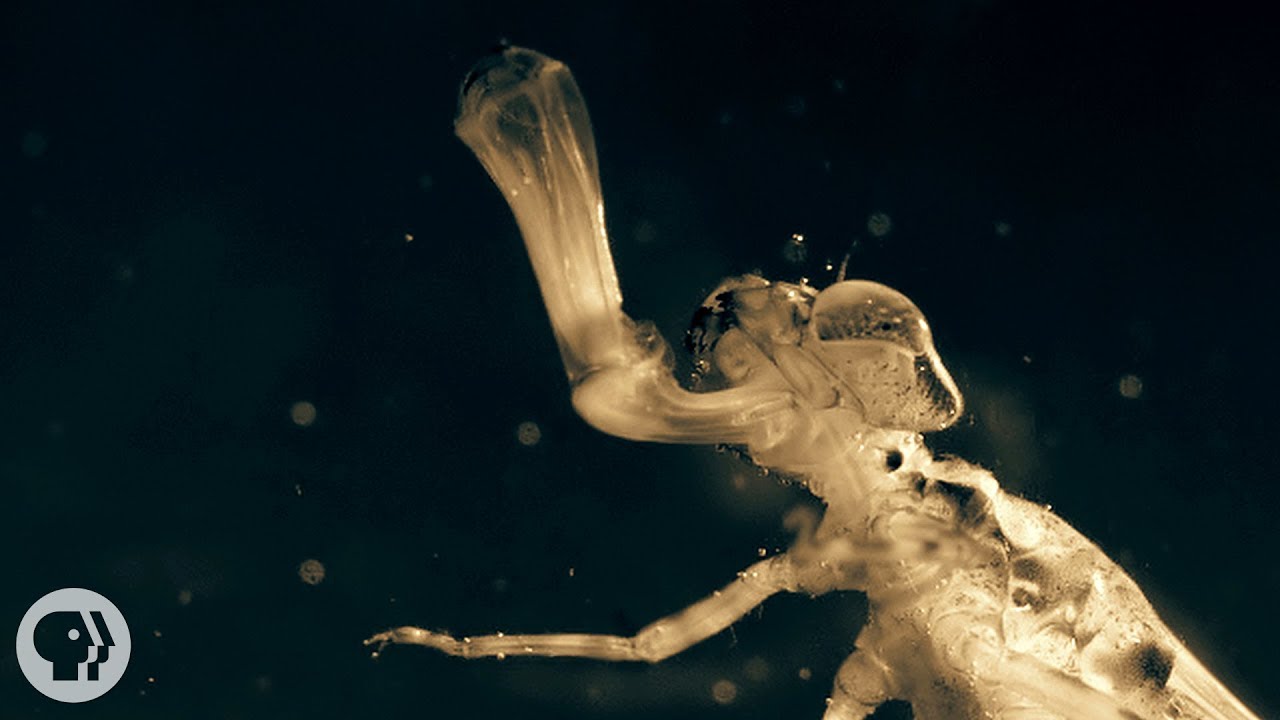
Dragonflies might rule the skies, but their babies grow up underwater in a larva-eat-larva world. Luckily for them, they have a killer lip that snatches prey, Alien-style, at lightning speed.
SUBSCRIBE to Deep Look! http://goo.gl/8NwXqt
DEEP LOOK: a new ultra-HD (4K) short video series created by KQED San Francisco and presented by PBS Digital Studios. See the unseen at the very edge of our visible world. Get a new perspective on our place in the universe and meet extraordinary new friends. Explore big scientific mysteries by going incredibly small.
* NEW VIDEOS EVERY OTHER TUESDAY! *
If adult dragonflies are known to be precise hunters, capable of turning on a dime and using their almost-360-degree vision to nab mosquitoes and flies in midair, their dragon-looking babies are even more fearsome.
Dragonflies and damselflies lay their eggs in water. After they hatch, their larvae, also known as nymphs, spend months or years underwater growing wings on their backs.
Without those versatile four wings that adults use to chase down prey, nymphs rely on a mouthpart they shoot out. It’s like a long, hinged arm that they keep folded under their head and it’s eerily similar to the snapping tongue-like protuberance the alien shoots out at Ripley in the sci-fi movie Aliens.
A nymph’s eyesight is almost as precise as an adult dragonfly’s and when they spot something they want to eat, they extrude this mouthpart, called a labium, to engulf, grab, or impale their next meal and draw it back to their mouth. Only dragonfly and damselfly nymphs have this special mouthpart.
“It’s like a built-in spear gun,” said Kathy Biggs, the author of guides to the dragonflies of California and the greater Southwest.
With their labium, nymphs can catch mosquito larvae, worms and even small fish and tadpoles.
“It’s obviously an adaptation to be a predator underwater, where it’s not easy to trap things,” said Dennis Paulson, a dragonfly biologist retired from the University of Puget Sound.
Also known among biologists as a “killer lip,” the labium comes in two versions. There’s the spork-shaped labium that scoops up prey, and a flat one with a pair of pincers on the end that can grab or impale aquatic insects.
-- How many years have dragonflies been around?
Dragonflies have been around for 320 million years, said Ed Jarzembowski, who studies fossil dragonflies at the Nanjing Institute of Geology and Paleontology. That means they were here before the dinosaurs.
-- How big did dragonflies used to be?
Prehistoric dragonflies had a wingspan of 0.7 meters (almost 28 inches). That’s the wingspan of a small hawk today.
---+ Read the entire article on KQED Science:
https://ww2.kqed.org/science/2....017/09/12/a-baby-dra
---+ For more information:
This web site, run by Kathy and David Biggs, has photos and descriptions of California dragonflies and damselflies and information on building a pond to attract the insects to your backyard: http://bigsnest.members.sonic.net/Pond/dragons/
The book "A Dazzle of Dragonflies," by Forrest Mitchell and James Lasswell, has good information on dragonfly nymphs.
---+ More great Deep Look episodes:
Why Is The Very Hungry Caterpillar So Dang Hungry?
https://www.youtube.com/watch?v=el_lPd2oFV4
This Mushroom Starts Killing You Before You Even Realize It
https://www.youtube.com/watch?v=bl9aCH2QaQY&t=57s
Daddy Longlegs Risk Life ... and Especially Limb ... to Survive
https://www.youtube.com/watch?v=tjDmH8zhp6o
This Is Why Water Striders Make Terrible Lifeguards
https://www.youtube.com/watch?v=E2unnSK7WTE
---+ See some great videos and documentaries from PBS Digital Studios!
PBS Eons: The Biggest Thing That Ever Flew
https://www.youtube.com/watch?v=scAp-fncp64
PBS Infinite Series: A Breakthrough in Higher Dimensional Spheres
https://www.youtube.com/watch?v=ciM6wigZK0w
---+ Follow KQED Science:
KQED Science: http://www.kqed.org/science
Tumblr: http://kqedscience.tumblr.com
Twitter: https://www.twitter.com/kqedscience
---+ About KQED
KQED, an NPR and PBS affiliate based in San Francisco, serves the people of Northern California and beyond with a public-supported alternative to commercial media. Home to one of the most listened-to public radio stations in the nation, one of the highest-rated public television services and an award-winning education program, KQED is also a leader and innovator in interactive media and technology, taking people of all ages on journeys of exploration – exposing them to new people, places and ideas.
Funding for Deep Look is provided in part by PBS Digital Studios and the John S. and James L. Knight Foundation. Deep Look is a project of KQED Science, which is supported by HopeLab, The David B. Gold Foundation; S. D. Bechtel, Jr. Foundation; The Dirk and Charlene Kabcenell Foundation; The Vadasz Family Foundation; Smart Family Foundation and the members of KQED.
#deeplook #dragonflies #dragonflynymph
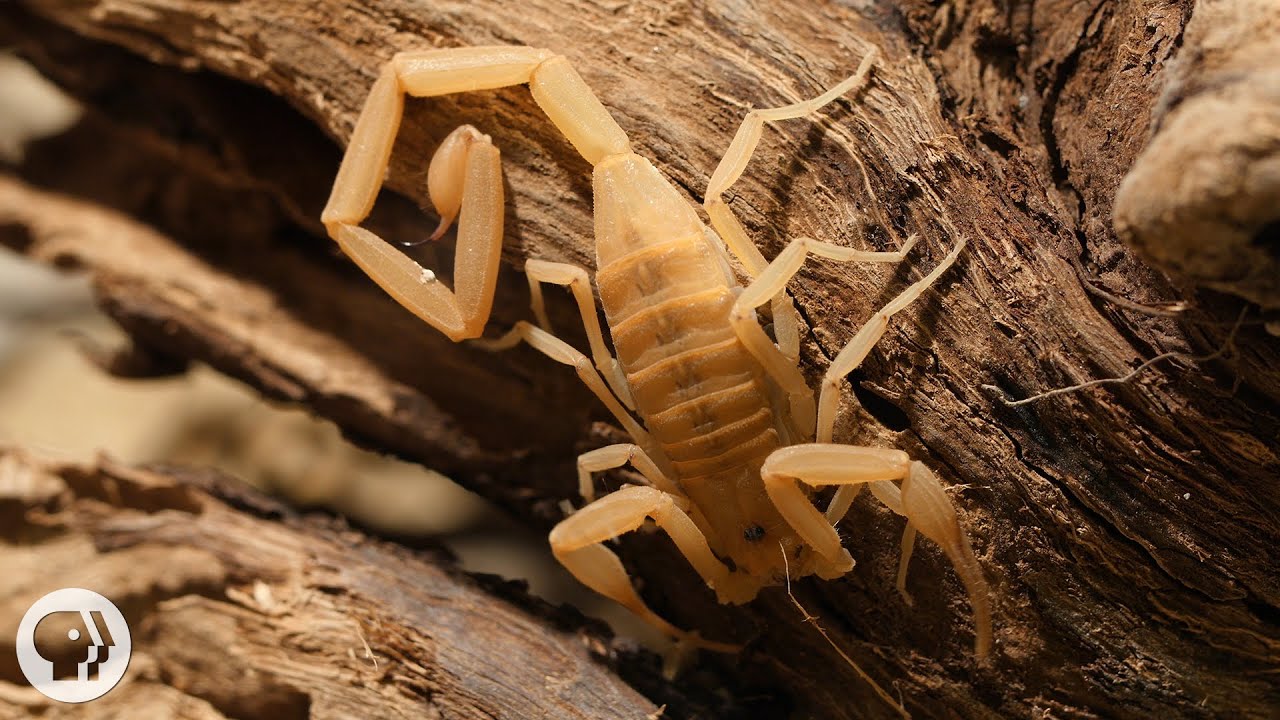
There's a chemical arms race going on in the Sonoran Desert between a highly venomous scorpion and a particularly ferocious mouse. The outcome of their battle may one day change the way doctors treat pain in people.
SUBSCRIBE to Deep Look! http://goo.gl/8NwXqt
DEEP LOOK: a new ultra-HD (4K) short video series created by KQED San Francisco and presented by PBS Digital Studios. See the unseen at the very edge of our visible world. Get a new perspective on our place in the universe and meet extraordinary new friends. Explore big scientific mysteries by going incredibly small.
Commonly found in the Sonoran Desert, the Arizona bark scorpion (Centruroides sculpturatus) is the most dangerous scorpion in the continental United States. According to Keith Boesen, Director of the Arizona Poison & Drug Information Center, about 15,000 Americans report being stung by scorpions every year in the U.S. The worst stings, about 200 annually, are attributed to this one species. Its sting can cause sharp pain along with tingling, swelling, numbness, dizziness, shortness of breath, muscular convulsions, involuntary eye movements, coughing and vomiting. Children under two years old are especially vulnerable. Since 2000, three human deaths have been attributed to the Arizona bark scorpion in the United States, all within Arizona.
But there is one unlikely creature that appears unimpressed. While it may not look the part, the Southern grasshopper mouse (Onychomys torridus) is an extremely capable hunter. It fearlessly stalks and devours any beetles or grasshoppers that have the misfortune to cross its path. But this mouse has a particular taste for scorpions.
The scorpion venom contains neurotoxins that target sodium and potassium ion channels, proteins embedded within the surface of the nerve and muscle cells that play an important role in regulating the sensation of pain. Activating these channels sends signals down the nerves to the brain. That’s what causes the excruciating pain that human victims have described as the feeling like getting jabbed with a hot needle. Others compare the pain to an electric shock. But the grasshopper mouse has an entirely different reaction when stung.
Within the mouse, a special protein in one of the sodium ion channels binds to the scorpion’s neurotoxin. Once bound, the neurotoxin is unable to activate the sodium ion channel and send the pain signal. Instead it has the entirely opposite effect. It shuts down the channel, keeping it from sending any signals, which has a numbing effect for the mouse.
--- How many species of scorpion are there?
There are almost 2,000 scorpion species, but only 30 or 40 have strong enough poison to kill a person.
--- Are scorpions insects?
Scorpions are members of the class Arachnida and are closely related to spiders, mites, and ticks.
--- Where do Arizona bark scorpions live?
Commonly found in the Sonoran Desert, the Arizona bark scorpion (Centruroides sculpturatus) is the most dangerous scorpion in the continental United States. The Arizona bark scorpion’s preference for hanging to the underside of objects makes dangerous encounters with humans more likely.
Read the entire article on KQED Science:
http://ww2.kqed.org/science/20....16/03/08/stinging-sc
For more information:
Michigan State University Venom Evolution: http://venomevolution.zoology.msu.edu/
Institute for Biodiversity Science and Sustainability at the California Academy of Sciences: http://www.calacademy.org/scientists
More great Deep Look episodes:
What Happens When You Zap Coral With The World's Most Powerful X-ray Laser?
https://youtu.be/aXmCU6IYnsA
These 'Resurrection Plants' Spring Back to Life in Seconds
https://youtu.be/eoFGKlZMo2g
See some great videos and documentaries from the PBS Digital Studios!
It's Okay to Be Smart: Your Salad Is Trying To Kill You
https://youtu.be/8Ofgj2KDbfk
It's Okay to Be Smart: The Oldest Living Things In The World
https://youtu.be/jgspUYDwnzQ
For more content from KQED Science:
KQED Science: http://www.kqed.org/science
Tumblr: http://kqedscience.tumblr.com
Twitter: https://www.twitter.com/kqedscience
Funding for Deep Look is provided in part by PBS Digital Studios and the John S. and James L. Knight Foundation. Deep Look is a project of KQED Science, which is also supported by HopeLab, the David B. Gold Foundation, the S. D. Bechtel, Jr. Foundation, the Dirk and Charlene Kabcenell Foundation, the Vadasz Family Foundation, the Gordon and Betty Moore Foundation, the Smart Family Foundation and the members of KQED.
#deeplook

When predators attack, daddy longlegs deliberately release their limbs to escape. They can drop up to three and still get by just fine.
SUBSCRIBE to Deep Look! http://goo.gl/8NwXqt
DEEP LOOK: a new ultra-HD (4K) short video series created by KQED San Francisco and presented by PBS Digital Studios. See the unseen at the very edge of our visible world. Get a new perspective on our place in the universe and meet extraordinary new friends. Explore big scientific mysteries by going incredibly small.
We all know it’s not nice to pull the legs off of bugs.
Daddy longlegs don’t wait for that to happen. These arachnids, related to spiders, drop them deliberately. A gentle pinch is enough to trigger an internal system that discharges the leg. Whether it hurts is up for debate, but most scientists think not, given the automatic nature of the defense mechanism.
It’s called autotomy, the voluntary release of a body part.
Two of their appendages have evolved into feelers, which leaves the other six legs for locomotion. Daddy longlegs share this trait with insects, and have what scientists call the “alternate tripod gate,” where three legs touch the ground at any given point.
That elegant stride is initially hard-hit by the loss of a leg. In the daddy longlegs’ case, the lost leg doesn’t grow back.
But they persevere: A daddy longlegs that is one, two, or even three legs short can recover a surprising degree of mobility by learning to walk differently. And given time, the daddy longlegs can regain much of its initial mobility on fewer legs.
Once these adaptations are better understood, they may have applications in the fields of robotics and prosthetic design.
--- Are daddy longlegs a type of spider?
No, though they are arachnids, as spiders are. Daddy longlegs are more closely related to scorpions.
--- How can I tell a daddy longlegs from a spider?
Daddy longlegs have one body segment (like a pea), while spiders have two (like a peanut). Also, you won’t find a daddy longlegs in a web, since they don’t make silk.
--- Can a daddy longlegs bite can kill you?
Daddy longlegs are not venomous. And despite what you’ve heard about their mouths being too small, they could bite you, but they prefer fruit.
---+ Read the entire article on KQED Science:
https://ww2.kqed.org/science/2....017/08/22/daddy-long
---+ For more information:
Visit the Elias Lab at UC Berkeley:
https://nature.berkeley.edu/eliaslab/
---+ More Great Deep Look episodes:
Stinging Scorpion vs. Pain-Defying Mouse | Deep Look
https://www.youtube.com/watch?v=w-K_YtWqMro
For These Tiny Spiders, It's Sing or Get Served | Deep Look
https://www.youtube.com/watch?v=y7qMqAgCqME
---+ See some great videos and documentaries from the PBS Digital Studios!
Gross Science: What Happens When You Get Rabies?
https://www.youtube.com/watch?v=eiUUpF1UPJc
Physics Girl: Mantis Shrimp Punch at 40,000 fps! - Cavitation Physics
https://www.youtube.com/watch?v=m78_sOEadC8
---+ Follow KQED Science:
KQED Science: http://www.kqed.org/science
Tumblr: http://kqedscience.tumblr.com
Twitter: https://www.twitter.com/kqedscience
---+ About KQED
KQED, an NPR and PBS affiliate based in San Francisco, serves the people of Northern California and beyond with a public-supported alternative to commercial media. Home to one of the most listened-to public radio station in the nation, one of the highest-rated public television services and an award-winning education program, KQED is also a leader and innovator in interactive media and technology, taking people of all ages on journeys of exploration — exposing them to new people, places and ideas.
Funding for Deep Look is provided in part by PBS Digital Studios and the John S. and James L. Knight Foundation. Deep Look is a project of KQED Science, which is supported by HopeLab, The David B. Gold Foundation; S. D. Bechtel, Jr. Foundation; The Dirk and Charlene Kabcenell Foundation; The Vadasz Family Foundation; Smart Family Foundation and the members of KQED.
#deeplook #daddylonglegs #harvestman

Pobres gansos: eles foram aprisionados pelos crocodilos e agora correm o sério risco de virarem ensopado! Só o habilidoso e destemido Po, do alto de toda a sua técnica e habilidade em Kung Fu, poderá ajudá-los! Vamos apertar start?

Final level: The Final Battle Kung Fu Panda ending walkthrough Xbox 360 PS3 Wii PS2 PC full Walkthrough / Playthrough & movie Gameplay no commentary
Kung Fu Panda Walkthrough Part 13 No Commentary (X360, PS3, PS2, Wii) Ending
https://www.youtube.com/watch?v=Lf676UPIgrk
WishingTikal
https://www.youtube.com/user/WishingTikal
SUBSCRIBE to my channel! http://bit.ly/subwishingtikal
Follow Me!
Twitter: https://twitter.com/WishingTikal
Facebook: https://www.facebook.com/WishingTikal
Business inquiries: wishingtikal@gmail.com
♥♥♥♥♥ #WishingTikal About: Hey there, I'm Gen, or Tikal. I worked years on Gamefaqs writing walkthroughs. Now I make video guides out of them. I do 100% collectibles runs to show where all of the secrets are. I record all footage all by myself, every single one, and edit them together to remove mistakes, or loading times, to make for the best and most fluid viewing experience possible and help others. My walkthroughs are usually of superior quality, so pick mines! I record in 1080p most of the time, except my older videos which are in 720p. I use HDPVR2 to record. I work the hardest possible to provide you the best gaming help. All games are posted with permission from the owners and some game codes are also often given by the publisher.

Kung Fu Panda: Showdown of Legendary Legends will release in March 2016 on PS3, PS4, XBOX 360, XBOX ONE, WII U, 3DS and Steam!
Like us: https://www.facebook.com/bandainamcoeu
Follow us: https://twitter.com/Bandainamcoeu
Visit us: https://www.bandainamcoent.eu and talk about this game, share tips & win goodies at http://www.bandainamcoent.eu/community
![Kung Fu Panda: Showdown of Legendary Legends - Gameplay Walkthrough Part 1 - ENDING [ HD ]](https://i.ytimg.com/vi/A0iPSSajGfg/maxresdefault.jpg)
Kung Fu Panda: Showdown of Legendary Legends - Gameplay Walkthrough Part 1 - ENDING [ HD ]
►Twitter : https://twitter.com/Xcagegame
►Future Walkthroughs / Gameplays: http://goo.gl/wCvNro
►Plattforms: 3DS WiiU Xbox One PS3 & PS4
►Release Dates: EU November 27 ; US December 1
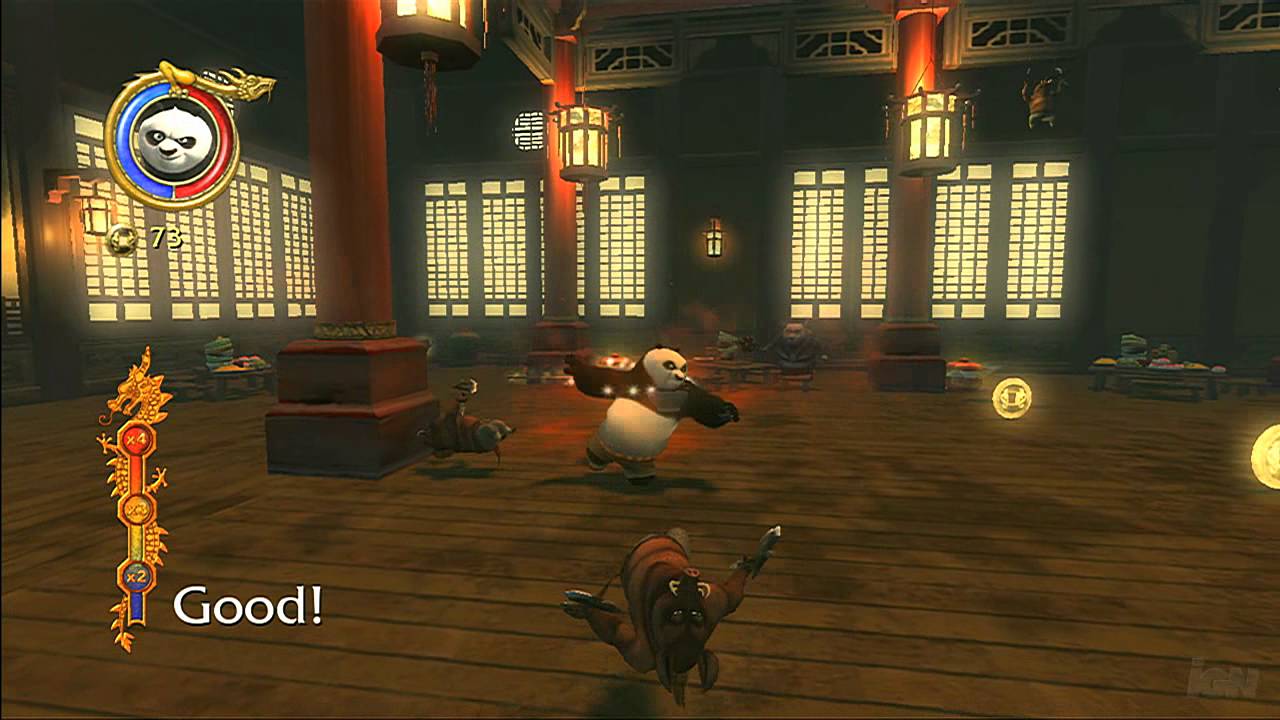
None
![Kung Fu Panda - Walkthrough Part 6 - Let's Play | Gameplay Commentary [Xbox 360]](https://i.ytimg.com/vi/9tBPFNh0Kb8/maxresdefault.jpg)
Kung Fu Panda The Video Game of the Movie Gameplay Walkthrough Part 6 | (Let's Play Commentary) (Full Movie Video Game)
Kung Fu Panda The Video Game walkthrough will be completed showcasing every level, mission, boss, and story ending.
Walkthrough and Let's Play Playthrough of Kung Fu Panda The Video Game with Live Gameplay Commentary.