Top Vídeos
In July of 2012, physicists found a particle that might be the long-sought Higgs boson. In the intervening months, scientists have worked hard to pin down the identity of this newly-found discovery. In this video, Fermilab's Dr. Don Lincoln describes researcher's current understanding of the particle that might be the Higgs. The evidence is quite strong but the final chapter of this story might well require the return of the Large Hadron Collider to full operations in 2015.
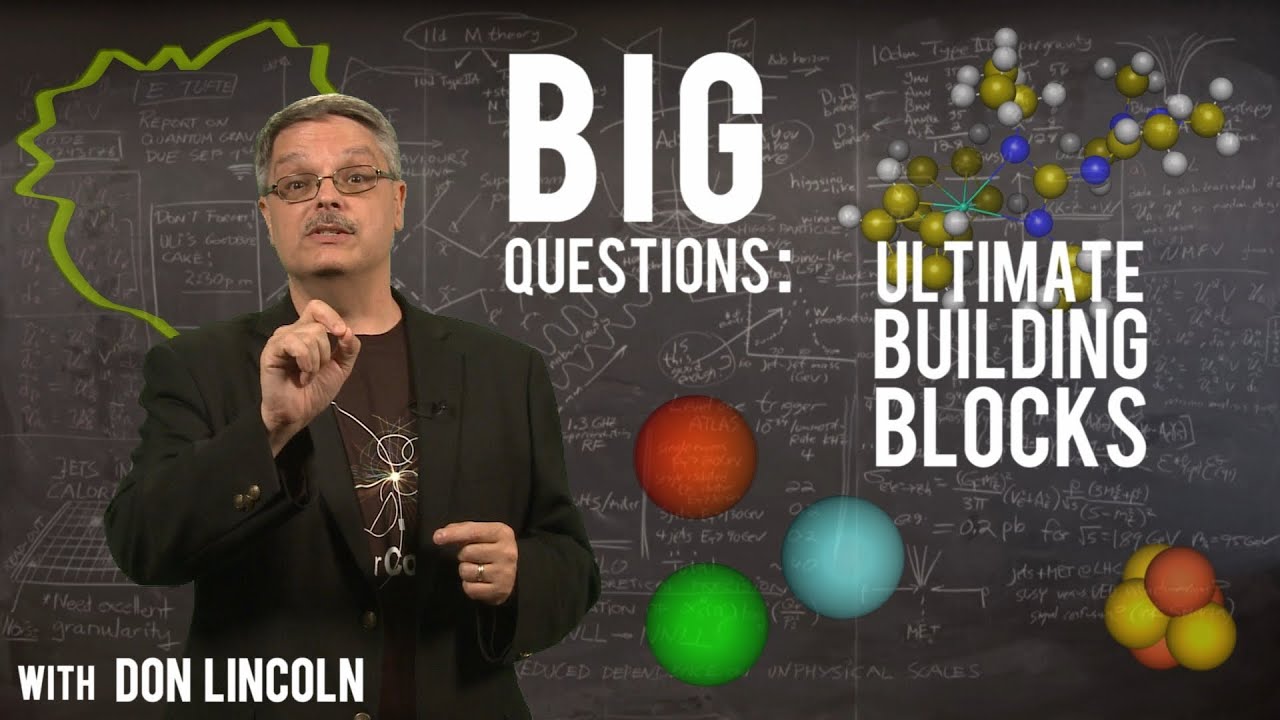
The Standard Model of particle physics treats quarks and leptons as having no size at all. Quarks are found inside protons and neutrons and the most familiar lepton is the electron. While the best measurements to date support that idea, there is circumstantial evidence that suggests that perhaps the these tiny particles might be composed of even smaller building blocks. This video explains this circumstantial evidence and introduces some very basic ideas of what those building blocks might be.
Related video:
http://www.youtube.com/watch?v=CaQnC_UmxA4

While the LHC is currently the highest energy particle accelerator ever built, nothing is forever. In this video, Fermilab’s Dr. Don Lincoln discusses a new particle accelerator currently under discussion. This accelerator will dwarf the LHC, fully 60 miles around and will accelerate protons to seven times higher energy. The project is merely in the discussion stages and it is a staggering endeavor, but it is the next natural step in our millennium long journey to understand the universe.

There are a few people in the history of physics who have made insights that have revolutionized our understanding of the interactions of math and physics and given us real insights into the meaning of our theories. In this video, Fermilab’s Dr. Don Lincoln tells us of the tale of Emmy Noether – one of the most significant geniuses of the last century.

This 4-minute animation shows how the international Deep Underground Neutrino Experiment will help scientists understand how the universe works. DUNE will use a huge particle detector a mile underground to embark on a mission with three major science goals: 1.) Study an intense, 1,300-kilometer-long neutrino beam to discover what happened after the big bang: Are neutrinos the reason the universe is made of matter? 2.) Use 70,000 tons of liquid argon to look for proton decay and move closer to realizing Einstein’s dream of a unified theory of matter and energy. 3.) Catch neutrinos from a supernova to watch the formation of neutron stars and black holes in real time. About 1,000 scientists from 160 institutions in 30 countries are working on the Deep Underground Neutrino Experiment, hosted at the Department of Energy’s Fermi National Accelerator Laboratory and South Dakota’s Sanford Underground Research Facility. DUNE collaborators come from institutions in Armenia, Brazil, Bulgaria, Canada, Chile, China, Colombia, Czech Republic, Finland, France, Greece, India, Iran, Italy, Japan, Madagascar, Mexico, Netherlands, Peru, Poland, Romania, Russia, South Korea, Spain, Sweden, Switzerland, Turkey, Ukraine, United Kingdom, and the United States of America.

Particle accelerator are scientific instruments that allow scientists to collide particles together at incredible energies to study the secrets of the universe. However, there are many manners in which particle accelerators can be constructed. In this video, Fermilab’s Dr. Don Lincoln explains the pros and cons of circular and linear accelerators.

A cancer diagnosis can be a devastating thing to hear, but new treatments are greatly improving a person’s chance of being cured. In this video, Fermilab’s Dr. Don Lincoln explains the physics of an exciting treatment option, called proton radiation therapy, which is far superior to traditional therapy, at least in some cases.

Einstein’s special theory of relativity is notorious for being easy to misuse, with the result that sometimes result in claims of paradoxes. When one digs more carefully into the theory, you find that no such paradoxes actually exist. In this video, Fermilab’s Dr. Don Lincoln describes a commonly claimed time dilation paradox and shows how to resolve it.
Related videos:
https://www.youtube.com/watch?v=qXxtqK7G4Uw
https://www.youtube.com/watch?v=CB1QFUCga0I
https://www.youtube.com/watch?v=Txv7V_nY2eg

The Axion Dark Matter Experiment (ADMX) is on the hunt for theoretical particles called axions, which may solve the dark matter mystery. ADMX, managed by Fermilab and housed at the University of Washington, is the first and only experiment of its type with the sensitivity to detect axion dark matter particles. For more information, please visit http://news.fnal.gov/2018/04/a....dmx-announces-breakt and http://www.fnal.gov/pub/scienc....e/particle-physics/e

Radiation is all around us, ranging from the non-dangerous to the lethal. In this video, Fermilab’s Dr. Don Lincoln talks about the radiation and gives you the real deal on whether it is dangerous or not. (Spoiler alert: Sometimes!)

The Twin Paradox is the most famous of all of the seeming-inconsistencies of special relativity. In this video, Fermilab’s Dr. Don Lincoln explains it without using mathematics. This is a companion video for his earlier one in which the same question was handled mathematically.
Related videos:
https://www.youtube.com/watch?v=GgvajuvSpF4
https://www.youtube.com/watch?v=svwWKi9sSAA

If there’s one thing that we think we understand, it’s matter. After all, matter makes up everything around us; it even makes up you. However, all is not as it seems. Over the last century, scientists have learned about the building blocks of matter, starting with atoms. It turns out that matter is very different than you think. In this video, Fermilab’s Dr. Don Lincoln will give you an entirely new way to think about the world around us. You will never think of the universe in the same way again.
Scientists on Fermilab's Muon g-2 experiment are using a finely tuned clock to precisely measure how fast the muon — a heavy cousin of the electron — precesses, or wobbles, in the presence of a magnetic field.
To remove subconscious bias from the experiment's measurements, in March 2018, two Fermilab scientists outside the Muon g-2 collaboration set the clock to a certain frequency. For the period that Muon g-2 is taking data, only they will know that setting. This bias-removal technique is called clock blinding.

The international Deep Underground Neutrino Experiment, hosted by Fermilab, will investigate the role neutrinos play in the universe. To test the technologies used by DUNE, scientists are building two large prototype detectors at CERN. Filled with 800 tons of liquid argon, the ProtoDUNE detectors are the largest particle detectors of their kind. The actual DUNE detector modules, which will be assembled 1.5 kilometers underground at the Sanford Underground Research Facility, will be 20 times bigger than these test beds. More than 1,000 scientists from research institutions in 32 countries are working on DUNE.
On Sept. 18, 2018, DUNE scientists announced the observation of the first particle tracks with the first of the two prototype detectors:
http://news.fnal.gov/2018/09/f....irst-tracks-in-proto

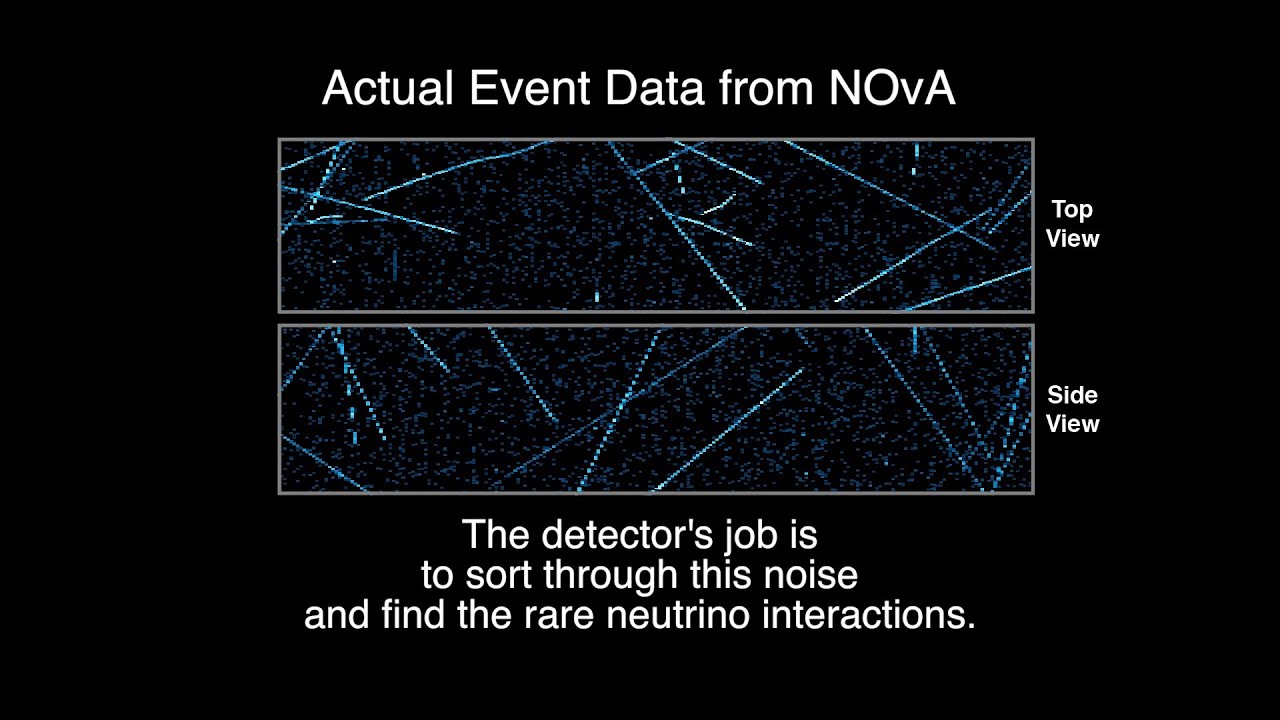
Neutrinos are a mystery to physicists. They exist in three different flavors and mass states and may be able to give hints about the origins of the matter-dominated universe. A new long-baseline experiment led by Fermilab called NOvA may provide some answers. There is a live feed of the first detector block being moved at http://www.fnal.gov/pub/webcam....s/nova_webcam/index.
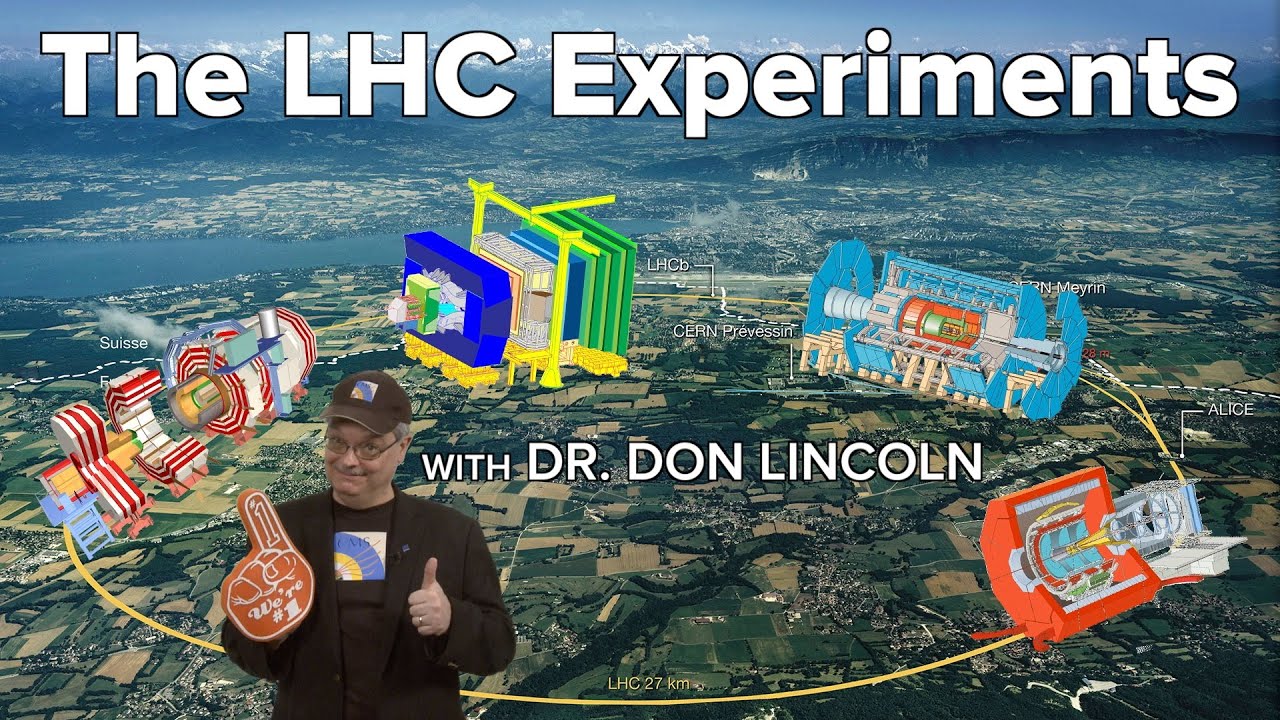
The Large Hadron Collider or LHC is the world’s biggest particle accelerator, but it can only get particles moving very quickly. To make measurements, scientists must employ particle detectors. There are four big detectors at the LHC: ALICE, ATLAS, CMS, and LHCb. In this video, Fermilab’s Dr. Don Lincoln introduces us to these detectors and gives us an idea of each one’s capabilities.
Related videos:
http://www.youtube.com/watch?v=debQ60QVtYQ
http://www.youtube.com/watch?v=-d6sKfPfYTU

Most particle physics research is publicly funded, so it is fair that society asks if this is a good use of taxpayers’ money. In this video, Fermilab’s Dr. Don Lincoln explains how this research attempts to answer questions that have bothered humanity since time immemorial. And, for those with a more practical bent, he explains how this research is an excellent investment with a high rate of return for society.
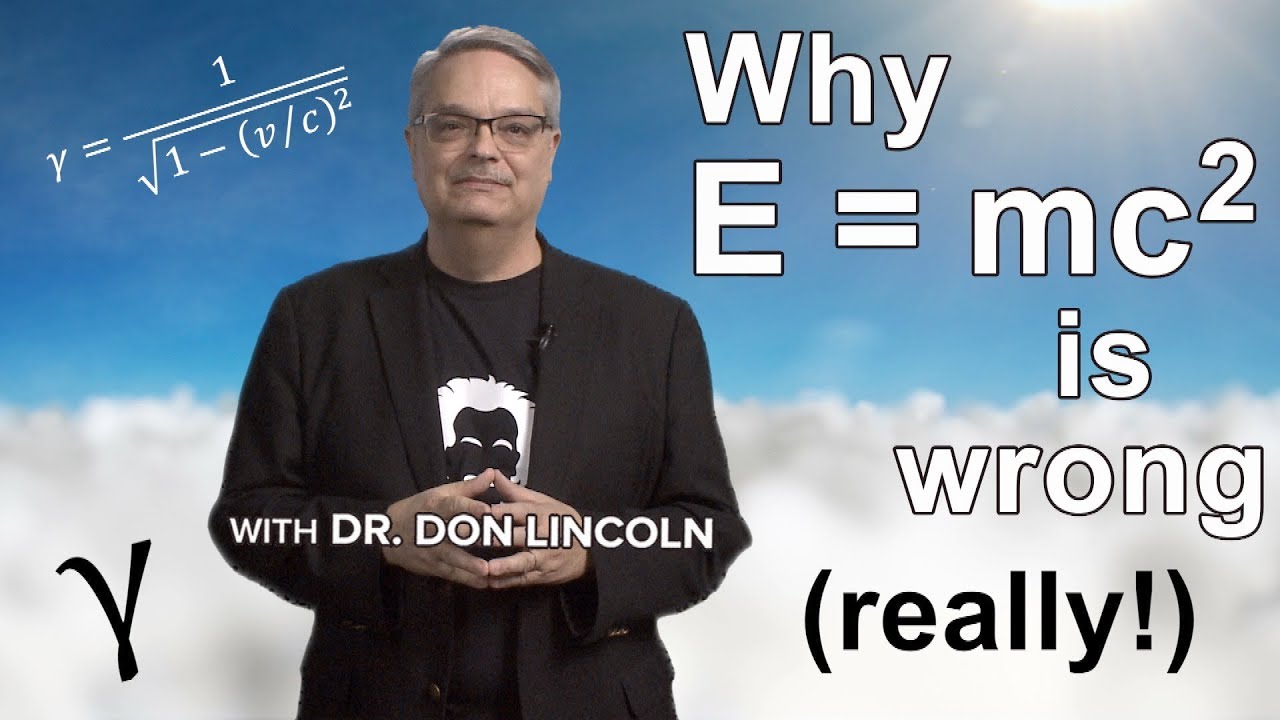
The most famous equation in all of science is Einstein’s E = mc2, but it is also frequently horribly misunderstood and misused. In this video, Fermilab’s Dr. Don Lincoln explains the real truth about this equation and how people often use it wrong.
Related videos:
www.youtube.com/watch?v=LTJauaefTZM
www.youtube.com/watch?v=qXxtqK7G4Uw
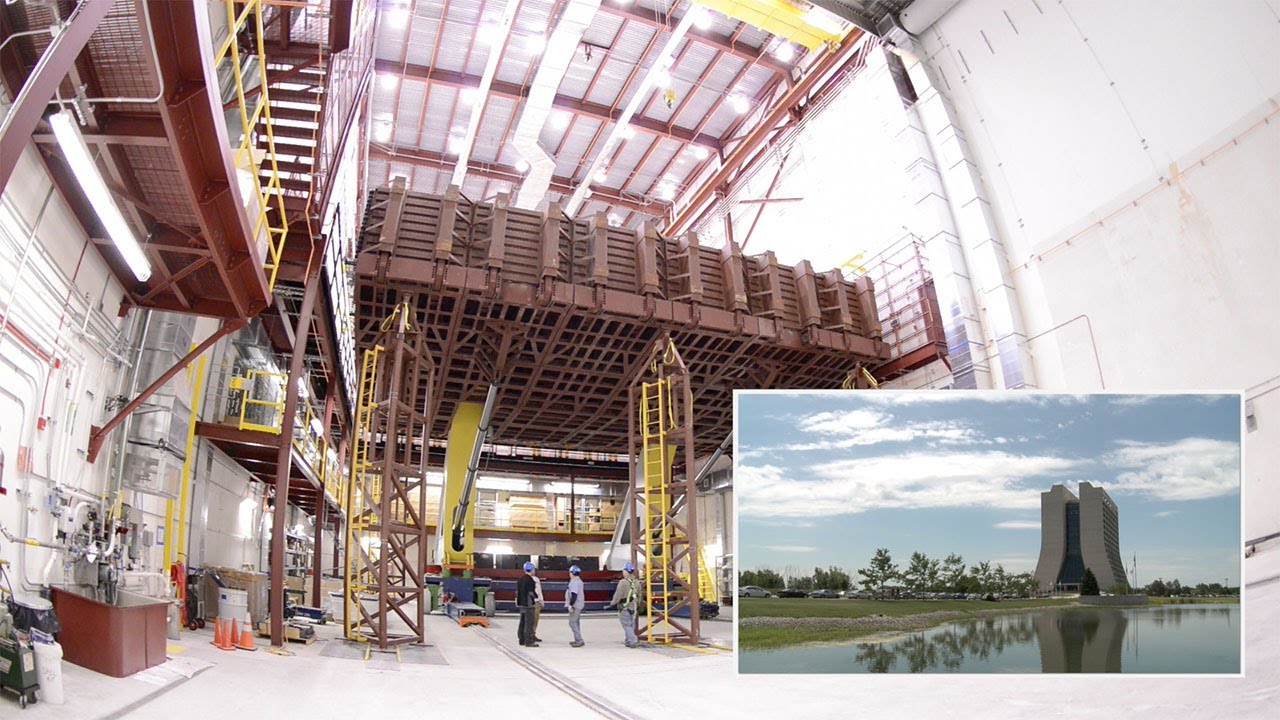
The NOvA neutrino experiment is searching for the answers to some of the most fundamental questions of the universe. This video documents how collaboration between government research institutions like Fermilab, academia and industry can create one of the largest neutrino detectors in the world.