Top Vídeos
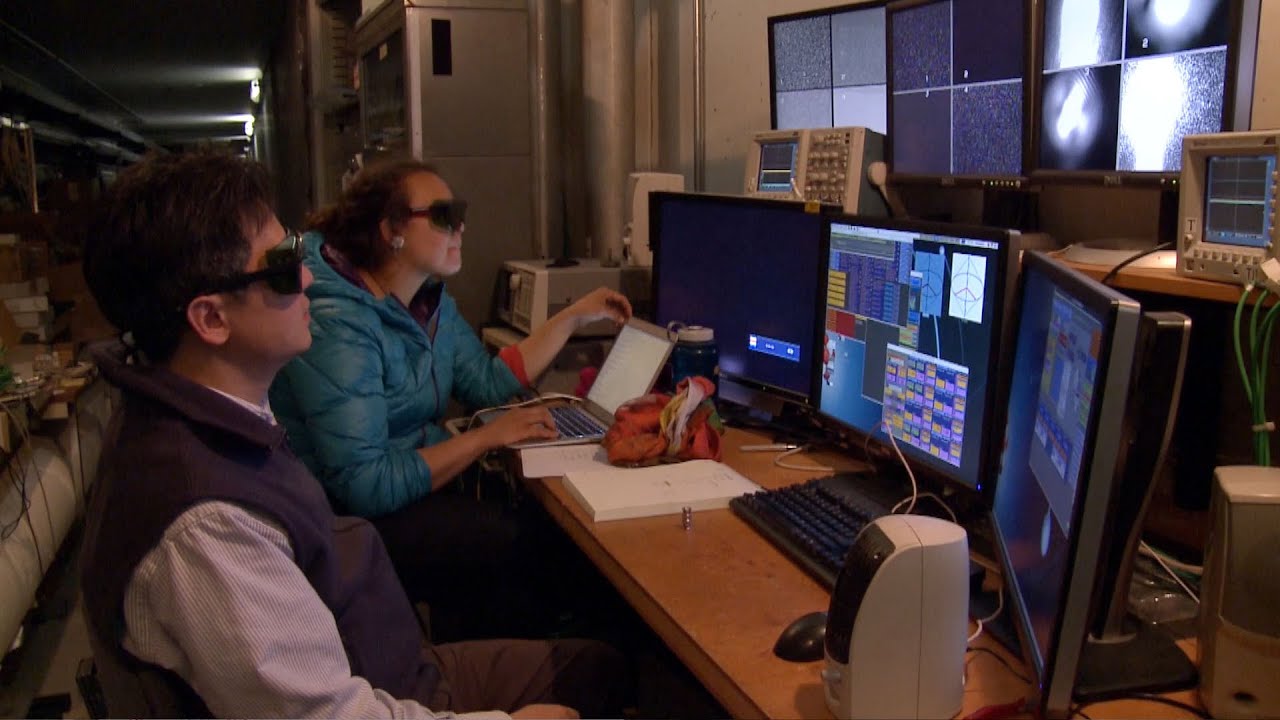
Do we live in a two-dimensional hologram? A group of Fermilab scientists has designed an experiment to find out. It’s called the Holometer, and this video gives you a behind-the-scenes look at the device that could change the way we see the universe. Find out more at http://holometer.fnal.gov.

There is no more famous conundrum in special relativity than the Twin Paradox. One twin travels at great distance at the speed of light and returns, much younger than the other twin. Yet who is moving and who isn’t? It is commonly claimed that acceleration is crucial to explaining this paradox, yet it turns out to not be the important point. In this video, Fermilab’s Dr. Don Lincoln explains the real answer to this perplexing puzzle.
Related videos:
https://www.youtube.com/watch?v=CB1QFUCga0I
https://www.youtube.com/watch?v=qXxtqK7G4Uw
https://www.youtube.com/watch?v=Txv7V_nY2eg
https://www.youtube.com/watch?v=svwWKi9sSAA
CORRECTION: There is a typo in the video. At 10:23, it says that the x position for observer C at event II is γL, but it should be 2γL. Dr. Lincoln is suitably embarrassed and apologetic.

The hunt for the top quark at Fermilab was heating up in 1994 when scientist Mike Albrow and his colleagues on the CDF experiment felt they were close to cornering the last, undiscovered member of the quark family. Albrow tells one story about the lead-up to the discovery of the particle by CDF and DZero.

Why I Love Neutrinos is a series spotlighting those mysterious, abundant, ghostly particles that are all around us. This installment features Dr. Steve Brice, deputy director of the Fermilab Neutrino Division. For more information on neutrinos, visit the Fermilab website at http://www.fnal.gov.
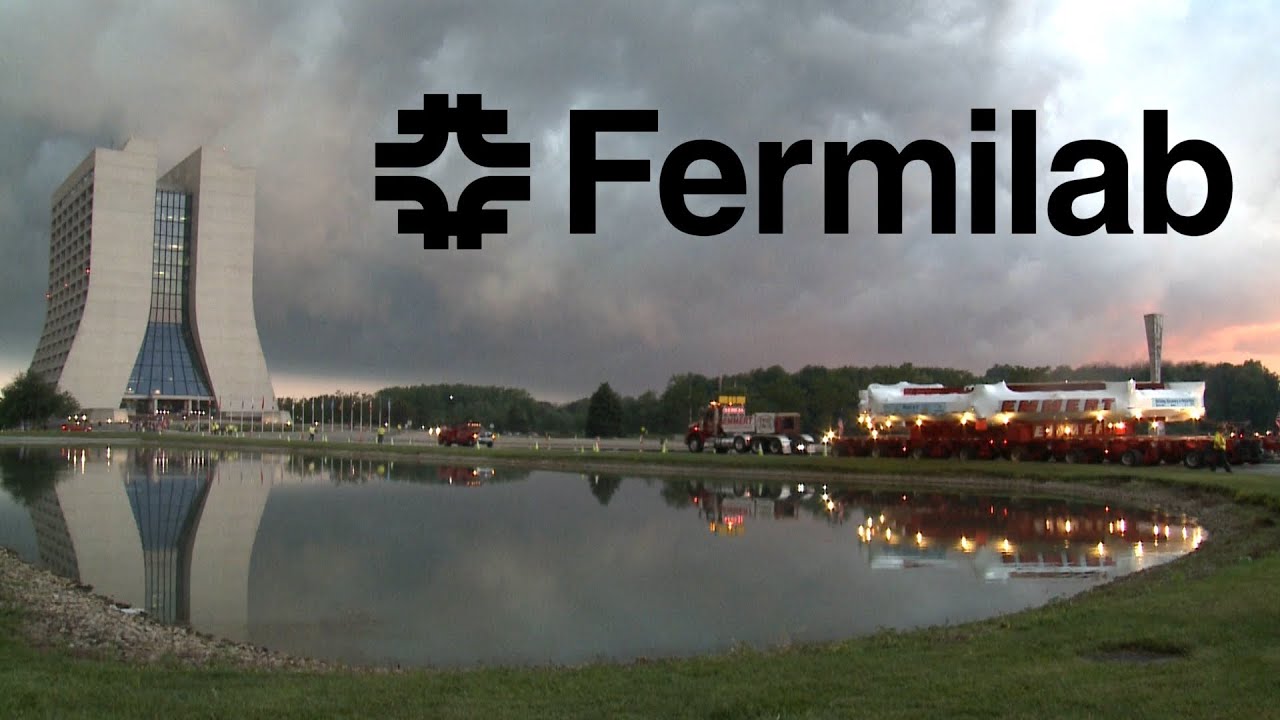
A very large group of people gathered to watch the muon g-2 ring on its last leg of the big move from Brookhaven National Laboratory in Long Island, NY to Fermilab in Batavia, IL.
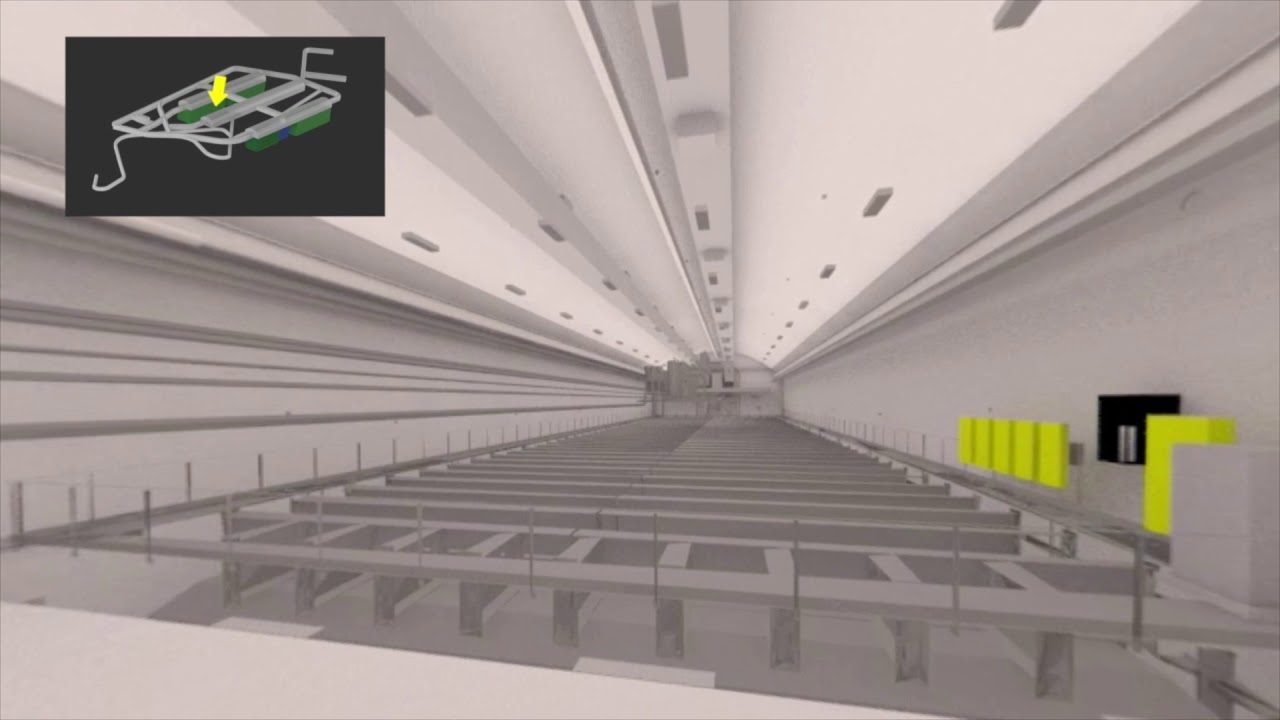
This 2-minute animation shows a virtual walk through the large caverns of the Long-Baseline Neutrino Facility, which will house the Deep Underground Neutrino Experiment. To create the caverns for the huge DUNE particle detectors, construction crews will excavate more than 800,000 tons of rock a mile underground at the Sanford Underground Research Facility in South Dakota. Scientists and dignitaries broke ground for this project on July 21, 2017. When construction is complete, DUNE scientists will send an intense neutrino beam through 1,300 kilometers of rock from the Department of Energy’s Fermilab to the DUNE particle detectors to understand the role that neutrinos – the most abundant matter particles in the universe – play in our cosmos. About 1,000 scientists from more than 160 institutions in 30 countries work on the Deep Underground Neutrino Experiment. More info is at http://dunescience.org

This 3-minute video shows the highlights of the visit and statements made by a bipartisan delegation from the U.S. House of Representatives Committee on Science, Space, and Technology when they toured research facilities at the U.S. Department of Energy’s Fermi National Accelerator Laboratory on May 12, 2018. Five Members of Congress toured R&D facilities and discussed with Fermilab scientists the lab’s flagship neutrino research program. The video includes footage of Fermilab’s accelerator technology research areas, neutrino experiments located 350 feet underground, the Muon g-2 experiment, the lab’s quantum computing laboratory and remote control rooms for particle physics experiments. Statements were made by Energy Subcommittee Chairman Randy Weber (R-Texas), House Science Committee Vice Chairman Frank Lucas (R-Oklahoma), Representative Bill Foster (D-Illinois), Environment Subcommittee Chairman Andy Biggs (R-Arizona) and Representative Neal Dunn (R-Florida). Science Committee staff members also participated in the tour.

After a long water journey, a large crowd gathers to watch the muon-g-2 ring being placed onto the Emmert transporter for its journey to Fermilab.
In this public lecture, Fermilab physicist Dan Bauer explains what scientists know about dark matter, the mysterious, invisible stuff that accounts for most of the matter in the universe. After presenting evidence for the existence of dark matter, he describes some of the physics experiments that scientists build and operate to look for signals from dark matter particles. From going deep underground to operating equipment at temperatures close to absolute zero to operating the most powerful particle collider in the world, scientists are pushing technological boundaries in their quest to discover the building blocks of dark matter. This lecture was held at Fermilab in October 2018 as part of a worldwide series of events to celebrate Dark Matter Day.
For more information visit https://www.darkmatterday.org

A time-lapse of the Fermilab muon g-2 ring being installed and prepped, from June 27, 2014 to June 5, 2015.

On Jan. 23, 2012, Fermilab broke ground for a one-of-its-kind research facility to develop and operate particle detectors that use liquid-argon technology to explore the mysteries of energy, matter, space and time. The new generation of liquid-argon detectors will allow scientists to observe neutrino interactions with greater precision and resolution than ever before. The MicroBooNE experiment (URL: http://www.fnal.gov/pub/today/....archive_2011/today11 ), which comprises a 170-ton neutrino detector, will be the first to move into the new facility. Reposted 12/30.
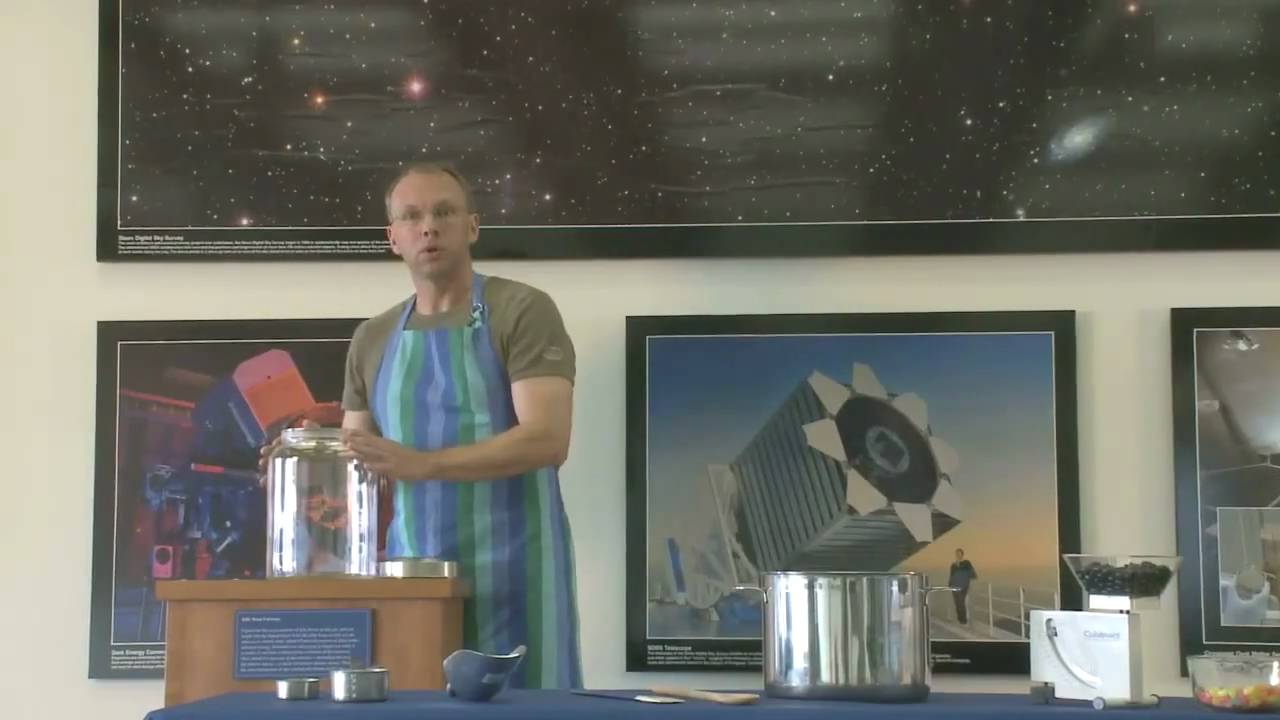
Fermilab's Kurt Riesselmann explains how to make a jelly bean universe to help explain the mysteries of dark matter and dark energy.
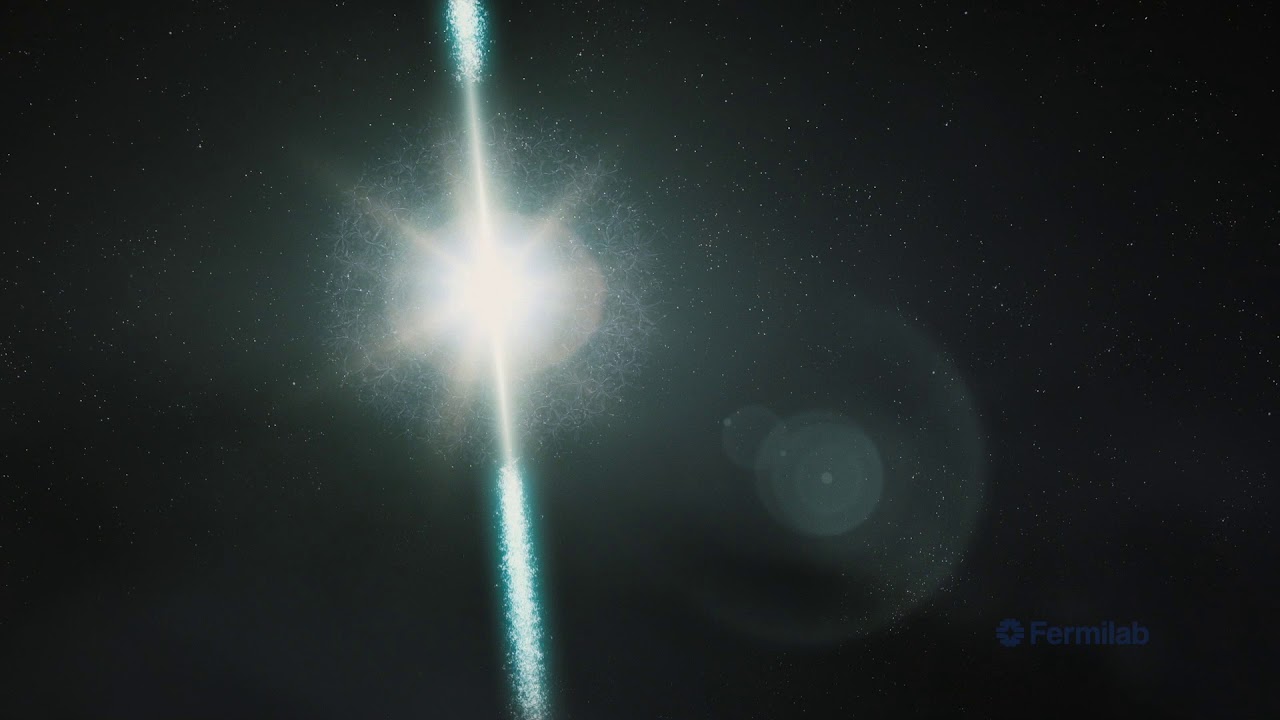
Astronomy collaborations like the Dark Energy Survey, which Fermilab leads, can track down the visible sources of gravitational waves caused by binary neutron stars. This animation takes you through the collision of two neutron stars, and shows you the explosion of light and energy seen by the Dark Energy Camera on August 17, 2017.

In 1967, Fermi National Accelerator Laboratory began to grow on the Illinois prairie, forty miles west of Chicago. Through the intelligence, ingenuity and commitment of many people, it grew into one of the world’s great research institutions—a truly international resource for physicists from around the world. In this hour-long presentation, Dr. Chris Quigg, who’s worked at Fermilab since 1974, traces the lab’s evolution from start-up to world-leading research center, highlighting landmark discoveries while recalling iconic moments and extraordinary characters. The presentation was given in Fermilab’s Ramsey Auditorium on Jan. 27, 2017, as part of Fermilab’s 50-year anniversary activities.
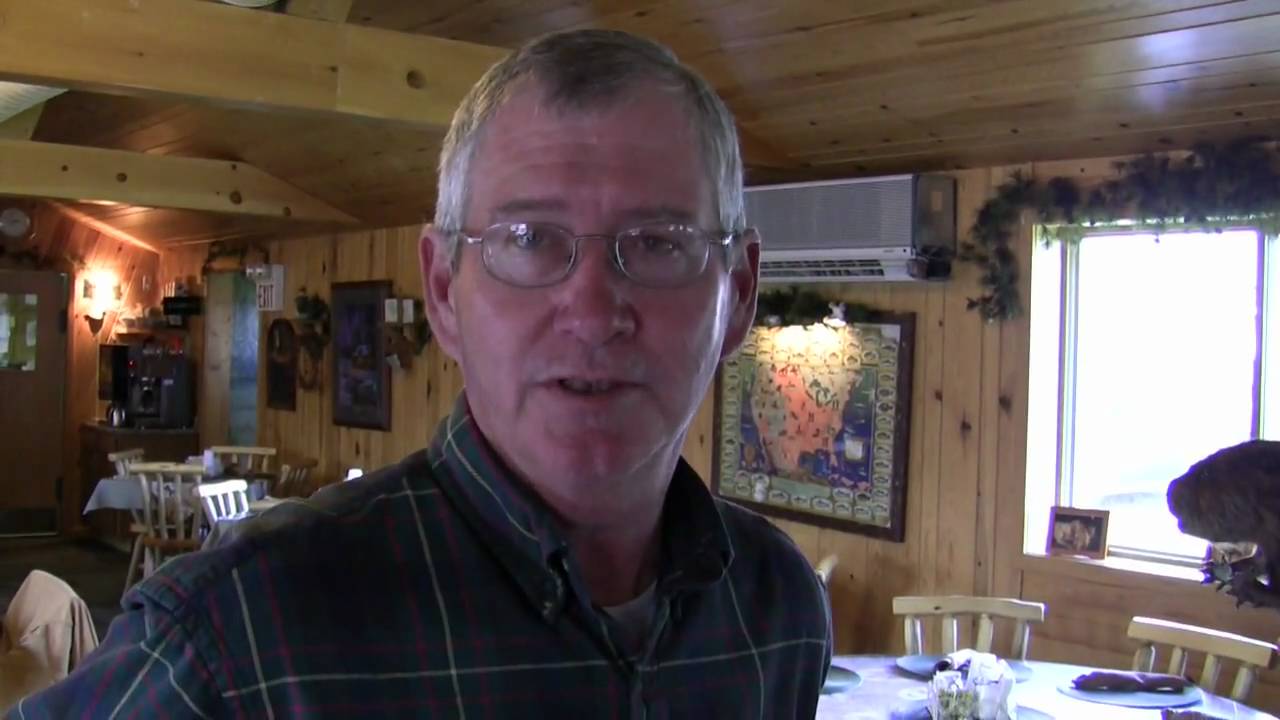
Local proprietors Steve and Deb Wieber discuss the impact of the NOvA experiment on their community.

Scientists, engineers and technicians are preparing for the assembly of a 15,000-ton neutrino detector in Ash River, Minnesota.
They gather at Fermilab to test a very large, critical piece of equipment that will be used in the assembly of this detector

Brian Ingram of Argonne National Laboratories makes a presentation on his battery research at the 2015 Fermilab Physics Slam.

This clip shows the "Miss Katie" pushing the muon g-2 ring upstream on the Illinois River, and passing through the Peoria Lock and Dam as it travels toward Lemont, where it will be unloaded onto the special Emmert transporter and driven to Fermilab.
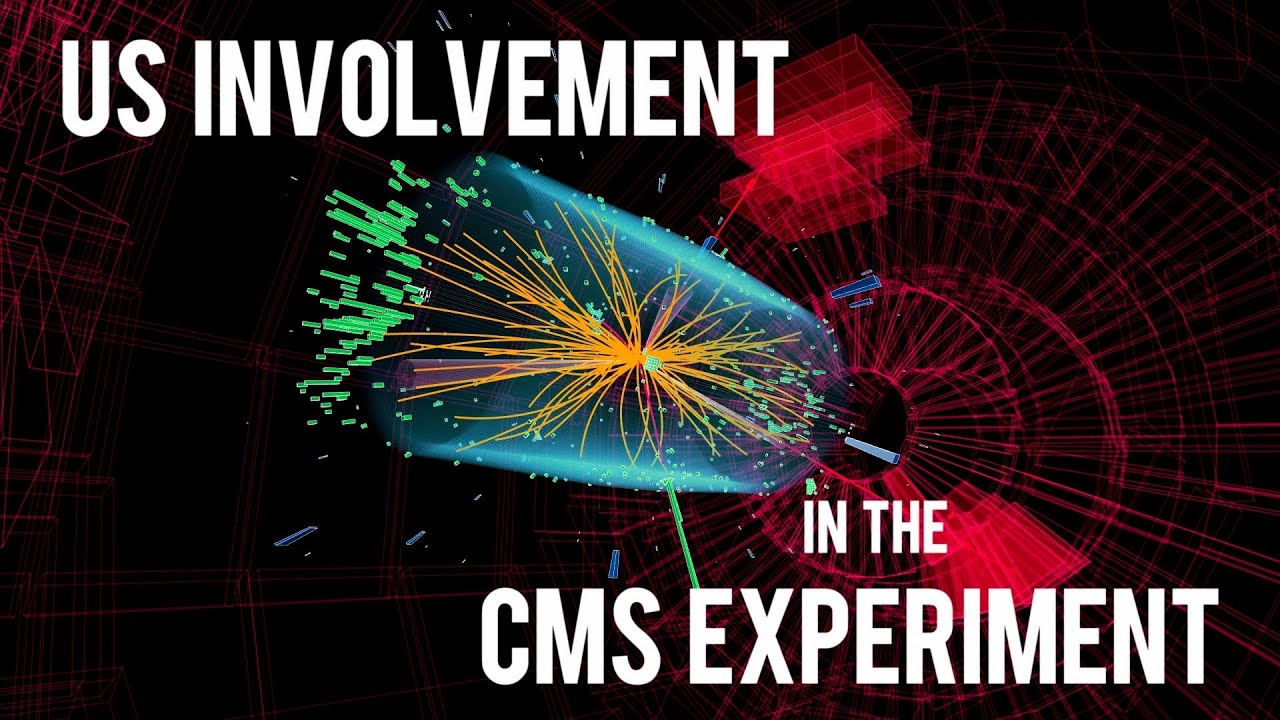
Scientists from US institutions form the single largest national group working on the Compact Muon Solenoid experiment at the Large Hadron Collider. While the location of the accelerator is in Europe, US scientists are an integral part of the effort and have held leadership roles, including in the recent discovery of the Higgs boson.

Fermilab's fourth annual Physics Slam, held on Nov. 20, 2015, featured five physicists vying to explain their area of study in the most entertaining way possible. Contestants included 9:28 Brian Ingram, 20:10 Brad Benson, 32:52 Cindy Joe, 43:50 Steve Nahn and 54:39 Chris Marshall, and the event was hosted by Chris Miller of the College of DuPage. Visit Fermilab online at http://www.fnal.gov. Follow the lab on Facebook at http://www.facebook.com/fermilab and on Twitter @FermilabToday.