Top Vídeos

Online purchase or streaming (Spotify, iTunes, Amazon Music, Deezer, Google Play): https://brilliant-classics.lnk.to/Frenchsuites
More Information: https://www.brilliantclassics.....com/articles/j/js-ba
Brilliant Classics Spotify: https://open.spotify.com/user/....brilliantclassics?si
Brilliant Classics Facebook: https://www.facebook.com/brilliantclassics
Composers: Johann Sebastian Bach
Artist: Pieter-Jan Belder (harpsichord)
Bachs French Suites are the ultimate expression of the composer in this genre. This music for keyboard solo is totally autonomous and only stylistically refers to dance forms.
This is a brand new recording by harpsichordist Pieter-Jan Belder playing on an instrument made by Cornelis Bom after Ruckers, Schoonhoven 1999.
The French Suites are combined here with two more suites by Bach, BWV 818 and 819. Excellent performances with a fine ear for Bach’s music.
00:00:00 French Suite I in D Minor, BWV 812: Allemande
00:04:03 French Suite I in D Minor, BWV 812: Courante
00:00:59 French Suite I in D Minor, BWV 812: Sarabande.
00:09:44 French Suite I in D Minor, BWV 812: Menuet I & II
00:12:44 French Suite I in D Minor, BWV 812: Gigue
00:16:33 French Suite II in C Minor, BWV 813: Allemande
00:19:57 French Suite II in C Minor, BWV 813: Courante
00:21:52 French Suite II in C Minor, BWV 813: Sarabande
00:25:33 French Suite II in C Minor, BWV 813: Air
00:26:54 French Suite II in C Minor, BWV 813: Menuet
00:29:55 French Suite II in C Minor, BWV 813: Gigue
00:32:13 French Suite III in B Minor, BWV 814: Allemande
00:35:54 French Suite III in B Minor, BWV 814: Courante
00:37:58 French Suite III in B Minor, BWV 814: Sarabande
00:41:11 French Suite III in B Minor, BWV 814: Anglaise
00:42:36 French Suite III in B Minor, BWV 814: Menuet & Trio
00:45:34 French Suite III in B Minor, BWV 814: Gigue
00:47:39 French Suite IV in E-Flat Major, BWV 815: Allemande
00:51:10 French Suite IV in E-Flat Major, BWV 815: Courante
00:53:00 French Suite IV in E-Flat Major, BWV 815: Sarabande
00:56:34 French Suite IV in E-Flat Major, BWV 815: Gavotte
00:58:01 French Suite IV in E-Flat Major, BWV 815: Air
00:59:40 French Suite IV in E-Flat Major, BWV 815: Menuet
01:00:31 French Suite IV in E-Flat Major, BWV 815: Gigue
01:03:09 French Suite V in G Major, BWV 816: Allemande
01:06:45 French Suite V in G Major, BWV 816: Courante
01:08:40 French Suite V in G Major, BWV 816: Sarabande
01:14:09 French Suite V in G Major, BWV 816: Gavotte
01:15:21 French Suite V in G Major, BWV 816: Bourrée
01:16:32 French Suite V in G Major, BWV 816: Loure
01:19:15 French Suite V in G Major, BWV 816: Gigue
01:22:41 French Suite VI in E Major, BWV 817: Allemande
01:26:17 French Suite VI in E Major, BWV 817: Courante
01:28:04 French Suite VI in E Major, BWV 817: Sarabande
01:31:25 French Suite VI in E Major, BWV 817: Gavotte
01:32:34 French Suite VI in E Major, BWV 817: Menuet polonais
01:33:50 French Suite VI in E Major, BWV 817: Bourrée
01:35:28 French Suite VI in E Major, BWV 817: Gigue
01:37:55 French Suite VI in E Major, BWV 817: Petit Menuet
01:39:10 Suite in E-Flat Major, BWV 819: Allemande
01:42:24 Suite in E-Flat Major, BWV 819: Allemande (BWV 819a)
01:46:07 Suite in E-Flat Major, BWV 819: Courante
01:48:02 Suite in E-Flat Major, BWV 819: Sarabande
01:51:52 Suite in E-Flat Major, BWV 819: Bourée
01:53:29 Suite in E-Flat Major, BWV 819: Menuet I & II
01:55:46 Suite in A Minor, BWV 818: Allemande
01:59:45 Suite in A Minor, BWV 818: Courante
02:01:01 Suite in A Minor, BWV 818: Sarabande simple
02:04:49 Suite in A Minor, BWV 818: Sarabande double
02:07:34 Suite in A Minor, BWV 818: Gigue

Online purchase or streaming (Spotify, iTunes, Amazon Music, Deezer, Google Play): https://brilliant-classics.lnk.to/Vocalise
More Information: https://www.brilliantclassics.....com/articles/v/vocal
Brilliant Classics Facebook: https://www.facebook.com/brilliantclassics
Spotify Playlists:
Brilliant Classics Spotify: https://brilliant-classics.lnk.to/Spotify
The best of Liszt: https://brilliant-classics.lnk.to/Playliszt
The best of Bach: https://brilliant-classics.lnk.....to/BestOfBachPlayli
Most popular piano music: https://brilliant-classics.lnk.to/MostPopularPiano
Beautiful classical Music: https://brilliant-classics.lnk.....to/BeautifulClassic
Classical music for dinnertime: https://brilliant-classics.lnk.....to/ClassicalMusicfo
Composers: Alessandro Longo, Felix Mendelssohn, Robert Schumann
Artists: Massimo Data (bassoon), Piero Barbareschi (piano)
The chamber literature for bassoon is not as rich and varied as the instrument deserves. Despite its widely recognised beauty of timbre and expressive potentialities, used and celebrated in solos from many significant orchestral and operatic compositions, a fitting chamber literature in the 19th and 20th centuries, especially in duo with the piano, is conspicuously absent. The pieces recorded on this CD are an attempt to demonstrate how this repertoire may be expanded and built upon, both by using original compositions for bassoon and piano and by transcribing significant pieces by Romantic and 20th-century authors originally intended for other expressive instruments.
The pieces themselves range from atmospheric 19th-century compositions such as Schumann’s Drei Romanzen Op.98, in which the bassoon takes on a distinctly vocal quality, to beautiful and at times melancholic 20th-century pieces, including Piazzolla’s Oblivion, in which the flexibility of the instrument’s timbre truly comes to the fore. Bridging these two groups is the ‘title track’ by Rachmaninoff, the implications of whose name are certainly done justice in this set, for the bassoon truly ‘finds its own voice’ here.
Bassoonist Massimo Data has played as principal bassoonist for several orchestras in Italy and beyond, and has given masterclasses across the world. He is accompanied by pianist Piero Barbareschi, who collaborates on chamber music duos with a wide variety of instrumentalists and plays a broad repertoire of music ranging from the 17th century to the present day.
The Bassoon, the bass member of the woodwind family, is a surprisingly versatile, agile, and expressive instrument. Its expression ranges from the joyful and even comic, sonorous, melancholic to the mournful. Regretfully classical composers wrote little of substance for the solo bassoon, therefore this new recording presents a selection of delightful arrangements of classical evergreens: Schumann’s Fantasiestücke Op. 73 (itself written for clarinet or cello), a Mendelssohn Lied ohne Worte, Rachmaninoff’s Vocalise, an original piece by Gabriel Pierné, a heartbreaking Pavane by Ravel, and two raucous Piazzolla tangos.
00:00:00 Lied ohne Worte in E Major, Op. 19 No. 1
00:03:48 Fantasiestücke, Op. 73: I. Zart und mit Ausdruck
00:06:58 Fantasiestücke, Op. 73: II. Lebhaft, leicht
00:10:57 Fantasiestücke, Op. 73: III. Rasch und mit Feuer
00:15:29 Suite for Bassoon and Piano: I. Andante con variazioni
00:20:08 Suite for Bassoon and Piano: II. Romanza
00:25:06 Suite for Bassoon and Piano: III. Vivace
00:28:41 14 Romances, Op. 34: No. 14, Vocalise
00:34:25 Drei Romanzen, Op. 98: I. Nicht schnell
00:37:42 Drei Romanzen, Op. 98: II. Einfach, innig
00:41:39 Drei Romanzen, Op. 98: III. Nicht schnell
00:45:45 Enrico IV: Oblivion
00:48:45 Solo de concert, Op. 35
00:54:42 Pavane pour une infante défunte in G Major, M. 19
00:59:03 Libertango

Tracklist in the Comment Section:
Spotify: https://open.spotify.com/album..../2QxN1IuNDfpMAmqKBKh
Physical CD: http://brilliantclassics.com/a....rticles/t/tessarini-
iTunes: https://itunes.apple.com/album..../tessarini-violin-so
The 18th-century Italian Carlo Tessarini has only emerged relatively recently as the brilliant musician and composer that he was (thanks, in part, to an in-depth study published in 2012). He travelled widely, taking on diverse forms of work, and remaining musically active until a ripe old age – remembered by one of his contemporaries as a ‘lively 70-year-old who still regularly played the violin’.
We are treated here to an album consisting almost entirely of world premiere recordings. Within Tessarini’s exclusively instrumental oeuvre, he was in particular a prolific solo sonata writer. His works oscillated between virtuosity and accessibility – reflecting in part the commercial considerations attached to the publication of his work – though there is more than enough of the former here to excite the listener’s ear. Equally manifest are his subtle compositional innovations, such as the fluid approach to melodic counterpoint discernible in the Sonata in C major Op.2. The result is an album sure to convince listeners of the deeper attention that this skilful composer merits.
The sonatas are played by Valerio Losito, an esteemed violinist and viola d’amore player as well as a musicologist, whose first recording for Brilliant Classics was a Scarlatti album in 2011. The basso continuo is played by harpsichordist, professor and radio broadcaster Federico del Sordo.
Other information:
- Rarely recorded repertoire.
- Carlo Tessarini received his musical tuition in Venice, probably with Vivaldi and Corelli (whose musical heir he clearly is). He became a famous virtuoso on the violin, travelling Europe like a modern day pop star. He died in Amsterdam, leaving a substantial oeuvre mainly written for his own instrument.
- His violin sonatas are firmly rooted in the baroque tradition, but already pointing towards the “galante style” of the late 18th century, with an emphasis on belcanto melodies and cler and transparent structures.

Online purchase or streaming (Spotify, iTunes, Amazon Music, Deezer, Google Play): https://brilliant-classics.lnk.....to/BrahmsCompleteVa
Physical Sale: https://www.brilliantclassics.....com/articles/b/brahm
Facebook: https://www.facebook.com/brilliantclassics/
Composer: Johannes Brahms
Artist: Wolfram Schmitt-Leonardy (piano)
Being a talented pianist Brahms often improvised on the instrument. From the extensive body of works written for the piano by Brahms, Wolfram Schmitt-Leonardy has chosen all five sets of variations. This music shows the composer in all his different appearances: from simple lines and texture to almost bombastic bravura. Wolfram Schmitt-Leonardy is one of the leading pianists of his generation. At university he passed all his examinations with highest distinction and since he was a child he has been winning an impressing amount of top-prizes in international piano competitions throughout the world. He constantly expands his worldwide concert activity.
In his playing Schmitt manages to unravel complex structures without destroying them. His performances are attractively light and transparent with a wide range of colours.
00:00:00 Variations on a theme of Paganini in A Minor Studies, Op. 35, Book I
00:14:03 Variations on a theme of Paganini in A Minor Studies, Op. 35, Book II
00:26:20 Variations and Fugue on a theme of Handel in B-Flat Major, Op. 24 (1861)
00:53:32 Variations on an original theme in D Major, Op. 21 No. 1, (1856-57)
01:11:40 Variations on a Hungarian Song in D Major, Op. 21 No. 2 (c 1853-54)
01:18:54 Variations on a theme of Robert Schumann in F-Sharp Minor, Op. 9 (1854)
Complete tracklist can be found in the comments!
Tracklist below.
Online purchase or streaming (Spotify, iTunes, Amazon Music, Deezer, Google Play): https://brilliant-classics.lnk.to/MozartMagicFlute
More Information: https://www.brilliantclassics.....com/articles/m/mozar
Brilliant Classics Spotify: https://open.spotify.com/user/....brilliantclassics?si
Brilliant Classics Facebook: https://www.facebook.com/brilliantclassics
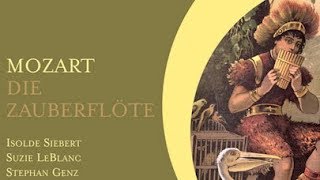
One of the giants of the historically informed performance world needs little introduction; nor indeed his sympathy to Mozart’s oeuvre as already demonstrated in recordings of the three da Ponte operas that have met with wide acclaim and many awards for their closely observed intimacy, their sense of fun and drama and their well-chosen casts, at one with Kuijken’s vision of these jewels of human and music drama.
His recording of Mozart’s magical last opera, however, has not received wide availability until now, in its appearance as part of Brilliant Classics’s comprehensive Opera Collection. The recording was made live at the Notre-Dame Church in Beaune, in France, in 2004. The cast is highly recognisable from many other fine productions of Baroque and early music, including Suzie LeBlanc (Pamina); Cornelius Hauptmann (Tamino); Stephan Genz (Papageno) and Isolde Siebert (Queen of Night).
Of course the orchestral contribution to this recording is no less distinguished: La Petite Bande features the cream of Continental period-instrument musicians, and is led by Kuijken himself, a violinist as much at home in Mozart’s world as he is in Bach’s.
00:00:00 Die Zauberflöte: Act 1: Overture (Orchestra)
00:06:17 Die Zauberflöte: Act 1: No. 1. Introduction: Zu Hilfe! Zu Hilfe! (Tamino/Three Ladies)
00:12:11 Die Zauberflöte: Act 1: Dialogue: Wo bin ich? Ist’s Phantasie, daß ich noch lebe?
00:12:26 Die Zauberflöte: Act 1: No. 2. Song: Der Vogelfänger bin ich ja (Papageno)
00:15:03 Die Zauberflöte: Act 1: Dialogue: He da! (Tamino/Papageno/Three Ladies)
00:21:21 Die Zauberflöte: Act 1: No. 3. Aria: Dies Bildnis ist bezaubernd schön (Tamino)
00:24:50 Die Zauberflöte: Act 1: Dialogue: Rüste dich mit Mut und Standhaftigkeit (Three Ladies/Tamino)
00:26:40 Die Zauberflöte: Act 1: No. 4. Recitative und Aria: O zittre nicht, mein lieber Sohn! ( Queen of the Night)
00:31:18 Die Zauberflöte: Act 1: Dialogue: Ist’s denn auch Wirklichkeit was ich sah (Tamino)
00:31:40 Die Zauberflöte: Act 1: No. 5. Quintet: Hm, hm, hm, hm, hm! (Papageno/Tamino/Three Ladies)
00:37:30 Die Zauberflöte: Act 1: Dialogue: Ha, ha, ha! (Slaves/Monostatos)
00:38:43 Die Zauberflöte: Act 1: No. 6. Trio: Du feines Täubchen (Monostatos/Pamina/Papageno)
00:40:27 Die Zauberflöte: Act 1: Dialogue: Mutter – Mutter – Mutter! (Pamina/Papageno)
00:45:28 Die Zauberflöte: Act 1: No. 7. Duet: Bei Männern, welche Liebe fühlen (Pamina/Papageno)
00:48:29 Die Zauberflöte: Act 1: No. 8. Finale: Zum Ziele führt dich diese Bahn (Three Boys/Tamino)
00:49:59 Die Zauberflöte: Act 1: Recitative: Die Weisheitslehre dieser Knaben (Tamino/First Priest)
00:56:56 Die Zauberflöte: Act 1: Andante: Wie stark ist nicht dein Zauberton (Tamino)
00:59:40 Die Zauberflöte: Act 1: Andante: Schnelle Füße, rascher Mut (Pamina/Papageno/Monostatos/Slaves)
01:02:41 Die Zauberflöte: Act 1: Chorus: Es lebe Sarastro! Sarastro lebe! (Chorus/Papageno/Pamina)
01:04:14 Die Zauberflöte: Act 1: Larghetto: Herr, ich bin zwar Verbrecherin (Pamina/Sarastro)
01:06:35 Die Zauberflöte: Act 1: Allegro: Nun stolzer Jüngling, nur hierher! (Monostatos/Pamina/Tamino/All/Sarastro)
01:08:34 Die Zauberflöte: Act 1: Chorus: Wenn Tugend und Gerechtigkeit (Chorus)

This collection provides a complete account of Robert Schumann’s works for viola and piano. Schumann was a real innovator, who would often explore new instrumental combinations, sometimes bringing neglected or forgotten instruments back into the limelight. The works on this recording show just how many different moods the composer could evoke using the unusual combination of viola and piano, from the changeable nature of the Fantasiestücke Op.73 and the array of emotions portrayed in the Märchenbilder Op.113 to the passion of the Adagio and Allegro Op.70 and finally the intricacies of the Märchenerzählungen Op.132, with a little help from the clarinet.
The successful partnership of violist Lorenzo Falconi and pianist Sara Bacchini has been described by acclaimed performer, Pier Narciso Masi, as ‘a real Duo, in the most complete sense of the word. Their profound understanding of chamber music is supported by considerable talent, sensitivity and personality, and they are great communicators.’ They are joined for the recording by clarinettist Darlo Goracci.
Composer: Robert Schumann
Artists: Lorenzo Falconi (viola), Sara Bacchini (piano), Dario Goracci (clarinet)
Online purchase or streaming (Spotify, iTunes, Amazon Music, Deezer, Google Play): https://brilliant-classics.lnk.....to/SchumannComplete
More Information: https://www.brilliantclassics.....com/articles/s/schum
Brilliant Classics Spotify: https://brilliant-classics.lnk.to/Spotify
Brilliant Classics Facebook: https://www.facebook.com/brilliantclassics
00:00:00 Fantasiestücke, Op. 73: I. Zart und mit Ausdruck
00:03:23 Fantasiestücke, Op. 73: II. Lebhaft, leicht
00:07:05 Fantasiestücke, Op. 73: III. Rasch und mit Feuer
00:11:41 Märchenbilder, Op. 113: I. Nicht schnell
00:15:35 Märchenbilder, Op. 113: II. Lebhaft
00:19:31 Märchenbilder, Op. 113: III. Rasch (mit springendem Bogen)
00:22:38 Märchenbilder, Op. 113: IV. Langsam, mit melancholischem Ausdruck
00:28:58 Adagio and Allegro in A-Flat Major, Op. 70: Langsam, mit innigem Ausdruck (Adagio)
00:33:12 Adagio and Allegro in A-Flat Major, Op. 70: Rasch und feurig (Allegro con brio)
00:38:35 Märchenerzählungen for Clarinet, Viola and Piano, Op. 132: I. Lebhaft, nicht zu schnell
00:41:35 Märchenerzählungen for Clarinet, Viola and Piano, Op. 132: II. Lebhaft und sehr markiert
00:44:56 Märchenerzählungen for Clarinet, Viola and Piano, Op. 132: III. Ruhiges Tempo, mit zartem Ausdruck
00:49:02 Märchenerzählungen for Clarinet, Viola and Piano, Op. 132: IV. Lebhaft, sehr markiert

Tracklist Below:
Spotify:https://open.spotify.com/album..../6wWT1ly3WDO6RXC9B5n
Physical Sale: http://brilliantclassics.com/a....rticles/t/ten-holt-c
iTunes: https://itunes.apple.com/album..../ten-holt-canto-osti
Following on from Canto Ostinato XL earlier this year, Brilliant Classics is proud to present Canto Ostinato XXL, a recording that brings a new perspective to Simeon ten Holt’s minimalist composition by adding a Romantic organ to the work’s original scoring for four pianos – a combination never before attempted. The result is the most beautiful and harmonious of sounds, one that captures Canto Ostinato’s emotional variety and depth through building on the sweetness and simplicity that inhabit this acclaimed composition, first performed in 1979.
Canto Ostinato is all to do with time: ‘taking your time, passing time, making time,’ as Jeroen van Veen, and one of the performers on the four-disc set, explains; and this is partly effected through the artists’ decision to repeat certain of the composition’s sections (106 in total) ad lib, thus inducing a sort of alienation of the part of the listener (because of the repetition’s posterior relationship to the harmony) and creating a hypnotic effect, a regular feature of minimalist music. Recorded over the course of just one day, this four-hour arrangement slows the tempo down a little, in order to accommodate the magnificent acoustics of the Muziekgebouw Eindhoven. Joining organist Aaart Bergwerff and Brilliant Classics regulars Sandra and Jeroen van Veen, all of whom feature on XL, are the acclaimed piano duo Elizabeth and Marcel Bergmann, both experts in the minimalist genre and who also enjoy separate international careers. Jeroen van Veen chairs the Simeon ten Holt Foundation, dedicated to keeping the wonderful music of this late Dutch composer alive.
Other information:
- Recorded 19 May 2014.
00:00:00 Canto Ostinato: Section 1
00:05:00 Canto Ostinato: Section 5
00:12:10 Canto Ostinato: Section 10
00:32:10 Canto Ostinato: Section 17
00:38:42 Canto Ostinato: Section 20
00:46:46 Canto Ostinato: Section 23
00:58:28 Canto Ostinato: Section 34
01:02:11 Canto Ostinato: Section 37
01:03:23 Canto Ostinato: Section 37
01:08:05 Canto Ostinato: Section 41
01:18:51 Canto Ostinato: Section 56
01:22:35 Canto Ostinato: Section 60
01:31:04 Canto Ostinato: Section 69
01:39:33 Canto Ostinato: Section 74. Cumulation No. 1
01:53:02 Canto Ostinato: Section 83
02:03:33 Canto Ostinato: Section 88
02:07:14 Canto Ostinato: Section 88 A
02:10:54 Canto Ostinato: Section 88 B
02:13:35 Canto Ostinato: Section 88 C
02:33:02 Canto Ostinato: Section 88 A
02:42:15 Canto Ostinato: Section 88 F
02:56:05 Canto Ostinato: Section 88 H
03:02:04 Canto Ostinato: Section 89
03:05:50 Canto Ostinato: Section 91 A
03:07:49 Canto Ostinato: Section 91 A
03:16:25 Canto Ostinato: Section 91 C
03:22:38 Canto Ostinato: Section 91 E
03:38:30 Canto Ostinato: Section 91 I
03:46:18 Canto Ostinato: Section 92
03:51:12 Canto Ostinato: Theme No. 2. Cumulation No. 2
04:02:20 Canto Ostinato: Section 105
04:04:21 Canto Ostinato: Section 106
Artist:
Jeroen van Veen (piano)
Sandra van Veen (piano)
Marcel Bergmann (piano)
Elizabeth Bergmann (piano)
Aart Bergwerff (organ)

Online purchase or streaming (Spotify, iTunes, Amazon Music, Deezer, Tidal, Google Play):
https://brilliant-classics.lnk.....to/BrahmsViolaSonat
Physical Purchase:
https://www.brilliantclassics.....com/articles/b/brahm
Spotify Playlists:
Brilliant Classics Spotify: https://brilliant-classics.lnk.to/Spotify
The best of Liszt: https://brilliant-classics.lnk.to/Playliszt
The best of Bach: https://brilliant-classics.lnk.....to/BestOfBachPlayli
Most popular piano music: https://brilliant-classics.lnk.to/MostPopularPiano
Beautiful classical Music: https://brilliant-classics.lnk.....to/BeautifulClassic
Classical music for dinnertime: https://brilliant-classics.lnk.....to/ClassicalMusicfo
Composer: Johannes Brahms
Artists: Sara Mingardo alt
Luca Sanzò viola
Maurizio Paciariello piano
About this Album:
Brahms had already declared to his long-suffering publisher Simrock that he was done with the business of composition before producing these, his final pieces of chamber music. He was inspired by the clarinettist Richard Mühlfeld, a player in the court orchestra of Meiningen, where Hans von Bülow conducted the composer’s music including all the symphonies. Mühlfeld’s breath control and superb melodic sensitivity evidently reawakened in the composer the long-breathed melodies which mark out his chamber music throughout his career, but Brahms soon declared that the sonatas could just as well be played on the viola, perhaps with one eye on his royalties from Simrock, but violists have been glad to seize on their ‘own’ Brahms ever since.
Melancholy is perhaps inevitably the major key of both sonatas – Brahms had been drawn to express autumnal loneliness even 40 years before – but they are not gloomy works, and are built with undimmed ingenuity as masterfully organic structures in which the usual contrast of first and second themes is forsaken for the kind of continuous variation which Arnold Schoenberg could justly and admiringly describe as ‘musical prose’.
Tracklist:
00:00:00 Violin Sonata No. 1 in F Minor, Op. 120: I. Allegro appassionato
00:08:32 Violin Sonata No. 1 in F Minor, Op. 120: II. Andante un poco adagio
00:13:20 Violin Sonata No. 1 in F Minor, Op. 120: III. Alegretto grazioso
00:18:11 Violin Sonata No. 1 in F Minor, Op. 120: IV. Vivace
00:23:44 2 Gesänge, Op. 91: I. Gestillte Sehnsucht
00:29:53 2 Gesänge, Op. 91: II. Geistliches Wiegenlied
00:35:25 Violin Sonata No. 2 in E-Flat Major, Op. 120: I. Allegro amabile
00:44:14 Violin Sonata No. 2 in E-Flat Major, Op. 120: II. Allegro appassionato
00:50:13 Violin Sonata No. 2 in E-Flat Major, Op. 120: III. Andante con moto
Thanks for watching! Feel free to subscribe and visit our channel for the best classical music from the greatest composers like: Bach, Satie, Mozart, Tchaikovsky, Beethoven, Chopin, Haydn, Ravel, Debussy, Verdi, Vivaldi, Handel, Brahms, Liszt, Schubert, Mendelssohn, Rachmaninoff, Wagner, Strauss, Handel, Dvorak, Schubert and many more! We upload complete albums, music for relaxing, working, studying, meditating, concentrating, instrumental music, opera, violin, classical piano music, sonatas and more!
#Classical #BrilliantClassics #Music #Composer #ClassicalMusic #Brahms

Online purchase or streaming (Spotify, iTunes, Amazon Music, Deezer, Google Play):
https://brilliant-classics.lnk.to/molterorchestral
Physical purchase:
http://www.brilliantclassics.c....om/articles/m/molter
Artist:Camerata Bachiensis, Julia Kirchner (soprano)
Johann Melchior Molter (1696-1765) was a younger contemporary of J.S. Bach. The two composers were born in small Thuringian towns half a day’s ride away from each other, and then travelled farther afield to make their names in major cities: Bach, south to Leipzig, Molter north to Karlsruhe.
The quantity of Molter’s extant music as well as its relative simplicity preclude more detailed comparison with the Kapellmeister of Leipzig, but he deserves to be known for a great deal more than the odd trumpet concerto which has made his name as part of the repertoires of (for example) Maurice Andre, Ludwig Guttler and John Wallace. This album valuably redresses that balance of neglect with historically informed studio recordings of vocal and chamber music which reveal a surprisingly cosmopolitan, vivacious and inventive personality in music. Most of these works are either hitherto unrecorded or long unavailable in any other version. Thus the album is essential listening for Baroque aficionados.
Johann Melchior Molter was born in 1696 in Thüringen, where his musical talent was quickly recognised. He served in the orchestra at the court of Karlsruhe. Later he broadened his horizon by going to Italy, where he encountered Albinoni, Vivaldi and Alessandro Scarlatti. He imbued their melodious gifts, studied their instrumental skills and went home to Karlsruhe, where he spent the rest of his life as court composer.
Molter’s works are festive and ceremonial, a happy mix of German counterpoint, Italian brilliance and French grandeur.
This new recording presents an attractive variety of orchestral works and cantatas: a Symphony, an Overture, a Flute Concerto and Oboe Sonata, combined with two Italian secular cantatas, dealing with the vicissitudes of love.
Performed on period instruments by the Camerata Bachiensis, soprano Julia Kirchner and Roberto De Franceschi, playing the oboe and traverso.
Excellent liner notes in both English and German.
00:00:00 Sinfonia in D Major, MWV 7.24: I. —
00:01:57 Sinfonia in D Major, MWV 7.24: II. Andante
00:06:08 Sinfonia in D Major, MWV 7.24: III. —
00:09:44 Cantata in G Major, MWV 2.26: I. Aria “In petto ho un certo affanno”
00:16:43 Cantata in G Major, MWV 2.26: II. Recitativo “Ardo tacita amante”
00:17:56 Cantata in G Major, MWV 2.26: III. Aria “L’adorar beltà che piace”
00:23:54 Concerto in A Major, MWV 6.13: I. —
00:28:01 Concerto in A Major, MWV 6.13: II. Adagio
00:32:06 Concerto in A Major, MWV 6.13: III. —
00:35:05 Sonata à quadro in F Major, MWV 9.20: I. Allegro
00:37:10 Sonata à quadro in F Major, MWV 9.20: II. Largo
00:40:15 Sonata à quadro in F Major, MWV 9.20: III. Allegro
00:42:11 Overture in B-Flat Major, MWV 3.7: I. Overture
00:46:44 Overture in B-Flat Major, MWV 3.7: II. Paisan. Viste
00:48:22 Overture in B-Flat Major, MWV 3.7: III. Passecaille
00:51:13 Overture in B-Flat Major, MWV 3.7: IV. Menuet
00:52:30 Cantata in E-Flat Major, MWV 2.25: I. Aria “Care erbette amiche piante”
01:00:16 Cantata in E-Flat Major, MWV 2.25: II. Recitativo “Dilettissimo tirso”
01:01:05 Cantata in E-Flat Major, MWV 2.25: III. Aria “Colle ninfe e coi pastori”

Tracklist in the comment section:
TOP 50 Best Piano Classics For Kids
A wonderful selection of the most famous piano pieces written for children, by the great composers.
These charming and appealing pieces stimulate the imagination and brings you in the world of Fairy Tales (Grieg’s March of the Dwarfs, riding a wooden horse (Schumann’s Kinderszenen), playing in the snow (Debussy’Children’s Corner), and ending in a peaceful slumber of the Berceuse by Chopin.
Played by world renowned pianists Klára Würtz and Alexander Warenberg.
![J.S. Bach Cello Suites [ Complete ]](https://i.ytimg.com/vi/bqUTk_UR5Ng/mqdefault.jpg)
Tracklist Below:
Spotify: https://open.spotify.com/album..../0Uz47rRlD6wISxgknzs
Physicale Sale: http://brilliantclassics.com/a....rticles/j/js-bach-ce
iTunes: https://itunes.apple.com/album..../bach-cello-solo-sui
Bach’s famous cello suites, recorded by cellist and early music specialist Jaap ter Linden. In addition to his increasing number of performances as a conductor, Ter Linden also remains active as an instrumentalist.
Ter Linden has worked together with the creamn of early music specialist such as Andrew Manze, Richard Eggarr, Emma Kirkby and Andreas Staier. For any cellist the suites are an important touchstone. Some careers can even be measured by the recordings of these works. Until the present day they remain the ultimate challenge.
True to his reputation, Ter Linden gives profound interpretations which invite the listener to play these performances time after time again.
Composer:
J.S. Bach
Artist:
Jaap ter Linden
00:00:00 Suite No. 1 in G Major / G Dur BWV 1007 : Prelude
00:03:13 Suite No. 1 in G Major / G Dur BWV 1007 : Allemande
00:08:03 Suite No. 1 in G Major / G Dur BWV 1007 : Courante
00:11:02 Suite No. 1 in G Major / G Dur BWV 1007 : Sarabande
00:14:07 Suite No. 1 in G Major / G Dur BWV1007 : Minuet I & II
00:17:27 Suite No. 1 in G Major / G Dur BWV 1007 : Gigue
00:19:19 Suite No. 3 in C Major / C Dur BWV 1009 : Prelude
00:22:56 Suite No. 3 in C Major / C Dur BVW 1009 : Allemande
00:27:21 Suite No. 3 in C Major / C Dur BVW 1009 : Courante
00:31:01 Suite No. 3 in C Major / C Dur BWV 1009 : Sarabande
00:35:08 Suite No. 3 in C Major / C Dur BWV 1009 : Bourrée I & II
00:38:52 Suite No. 3 in C Major / C Dur BWV 1009 : Gigue
00:42:23 Suite No. 5 in C Minor / C Moll BWV 1011 : Prelude
00:48:47 Suite No. 5 In C Minor / C Moll BWV 1011 : Allemande
00:55:34 Suite No. 5 in C Minor / C Moll BWV 1011 : Courante
00:58:01 Suite No. 5 in C Minor / C Moll BWV 1011 : Sarabande
01:01:03 Suite No. 5 in C Minor / C Moll BWV 1011 : Gavotte I & II
01:06:23 Suite No. 5 in C Minor / C Moll BWV 1011 : Gigue
01:08:53 Suite No. 2 in D Minor / D Moll BWV 1008: Prelude
01:12:53 Suite No. 2 in D Minor / D Moll BWV 1008: Allemande
01:16:34 Suite No. 2 in D Minor / D Moll BWV 1008: Courante
01:19:00 Suite No. 2 in D Minor / D Moll BWV 1008: Sarabande
01:23:47 Suite No. 2 in D Minor / D Moll BWV 1008: Minuet I & II
01:27:01 Suite No. 2 in D Minor / D Moll BWV 1008: Gigue
01:29:51 Suite No. 4 in E flat major/Es Dur BWV1010: Prelude
01:34:13 Suite No. 4 in E flat major/Es Dur BWV1010: Allemande
01:39:01 Suite No. 4 in E flat major/Es Dur BWV1010: Courante
01:42:48 Suite No. 4 in E flat major/Es Dur BWV1010: Sarabande
01:47:37 Suite No. 4 in E flat major/Es Dur BWV1010: Bourrée I & II
01:52:45 Suite No. 4 in E flat major/Es Dur BWV1010: Gigue
01:55:36 Suite No. 6 in D Major / D Dur BWV 1012: Prelude
02:00:37 Suite No. 6 in D Major / D Dur BWV 1012: Allemande
02:08:08 Suite No. 6 in D Major / D Dur BWV 1012: Courante
02:11:58 Suite No. 6 in D Major / D Dur BWV 1012: Sarabande
02:16:23 Suite No. 6 in D Major / D Dur BWV 1012: Gavotte I & II
02:20:42 Suite No. 6 in D Major / D Dur BWV 1012: Gigue

Online purchase or streaming (Spotify, iTunes, Amazon Music, Deezer, Tidal, Google Play):
https://brilliant-classics.lnk.to/GattiViolinViola
Physical Purchase:
https://www.brilliantclassics.....com/articles/g/gatti
Spotify Playlists:
Brilliant Classics Spotify: https://brilliant-classics.lnk.to/Spotify
The best of Liszt: https://brilliant-classics.lnk.to/Playliszt
The best of Bach: https://brilliant-classics.lnk.....to/BestOfBachPlayli
Most popular piano music: https://brilliant-classics.lnk.to/MostPopularPiano
Beautiful classical Music: https://brilliant-classics.lnk.....to/BeautifulClassic
Classical music for dinnertime: https://brilliant-classics.lnk.....to/ClassicalMusicfo
Composer & Artist:
Composer: Luigi Gatti
Artists: Paolo Ghidoni (violin), Alfredo Zamarra (viola)
About this Album:
The sonatas presented in this recording, labelled as Sonate à Violino e Viola in the autograph score at the Biblioteca Musicale Greggiati in Ostiglia and as Sonate Per Violin solo con accompagnamento di Viola in the parts at the Salzburg Museum, are likely to date back to the very beginning of Gatti’s stay in Salzburg. The autograph is written on paper whose watermarks suggest a date of about 1783. If so, the works were probably commissioned by archbishop Colloredo, for whom a similar cycle of six sonatas was composed in the same year by Michael Haydn, MH 335–38, and W. A. Mozart, K 423–24. (Another set of six by Joseph Hafeneder in the Toggenburg Collection of Bolzano, minus the first sonata, may share the same origin). In which case, the violin part was probably intended for Colloredo himself, a “good performer on the violin” according to Charles Burney. The archbishop was also said to “enjoy performing on the violin, which he played very well” and to be in the habit of “mingling with the court musicians and playing the violin with them” before dinner.
Tracklist:
00:00:00 Sonata in B-Flat Major, No. 1: Allegro aperto
00:07:59 Sonata in B-Flat Major, No. 1: Adagio
00:11:01 Sonata in B-Flat Major, No. 1: Rondo: Allegro con moto
00:16:49 Sonata in D Major, No. 2: Andante
00:23:08 Sonata in D Major, No. 2: Adagio cantabile
00:25:49 Sonata in D Major, No. 2: Tempo di minuetto
00:31:28 Sonata in A Major, No. 3: Allegro aperto
00:35:05 Sonata in A Major, No. 3: Adagio
00:38:13 Sonata in A Major, No. 3: Rondo: Allegretto
00:42:40 Sonata in F Major, No. 4: Cantabile - Allegro con spirito
00:48:50 Sonata in F Major, No. 4: Minuetto
00:57:45 Sonata in F Major, No. 4: Finale: Allegro assai
01:00:46 Sonata in E-Flat Major, No. 5: Moderato
01:04:01 Sonata in E-Flat Major, No. 5: Larghetto espressivo
01:07:13 Sonata in E-Flat Major, No. 5: Allegretto grazioso
01:11:01 Sonata in C Major, No. 6: Un allegro vivace
01:17:13 Sonata in C Major, No. 6: Adagio cantabile
01:22:46 Sonata in C Major, No. 6: Rondo: Allegretto
Thanks for watching! Feel free to subscribe and visit our channel for the best classical music from the greatest composers like: Bach, Satie, Mozart, Tchaikovsky, Beethoven, Chopin, Haydn, Ravel, Debussy, Verdi, Vivaldi, Handel, Brahms, Liszt, Schubert, Mendelssohn, Rachmaninoff, Wagner, Strauss, Handel, Dvorak, Schubert and many more! We upload complete albums, music for relaxing, working, studying, meditating, concentrating, instrumental music, opera, violin, classical piano music, sonatas and more!
#LuigiGatti #PaoloGhidoni #AlfredoZamarra #viola #Violin #Classical #BrilliantClassics #Music #Composer #ClassicalMusic

Download & Streaming
https://brilliant-classics.lnk.....to/Martucci6PianoPi
Physical Purchase
https://www.brilliantclassics.....com/articles/m/martu
Follow Brilliant Classics on Spotify:
https://brilliant-classics.lnk.to/Spotify
Spotify playlist: Brain Training – Classical Music
https://brilliant-classics.lnk.....to/BrainTrainingCla
Composer: Giuseppe Martucci
Artist: Alberto Miodini piano
The symphonies and tone-poems of Giuseppe Martucci (1856-1909) have retained a place on the fringes of the repertoire outside his native Italy thanks to advocacy by Arturo Toscanini and, latterly, Riccardo Muti.
Martucci was a man of protean talents and unflagging energy, who excelled as a composer, pianist, conductor, teacher
and moving force in musical culture. The direction of that force was set against the prevailing operatic scene of contemporary Italy – except, notably, where it intersected with German music. Thus he conducted Brahms, Liszt and especially Beethoven, as well as the Italian premiere of Tristan und Isolde. His own piano music is a continuation of the Lisztian tradition – at least, it becomes so, after flirting with the world of salon music in his early 20s.
The six Op.44 pieces are a much more substantial synthesis of elements from Italian popular culture – the gondoliers’ barcarola, the mule-drivers’ tarantella among them – with a wide-ranging, elaborately contrapuntal and fiendishly virtuosic style which owes much not only to Brahms and Liszt but to the composer’s formidable powers of performance. The Novella
Op.50 and Fantasia Op.51 experiment with more delicate textures in the manner of Chopin, and this tendency is further explored in the two Nocturnes Op.70, which move the form into late Lisztian realms of crepuscular harmony and dreamy phrases; the first of these Nocturnes became known in the early years of the last century through an orchestral transcription
which was often programmed by Toscanini. The pianist Alberto Miodini has studied these little-known works for years and written the introductory essay for these new recordings. This is his second recording for Brilliant Classics, after a well-received 4CD set (BC94806) of Schubert’s piano miniatures and free-standing pieces such as the Impromptus.
After years of comparative neglect Giuseppe Martucci is taking his rightful place as one of the most important late romantic Italian composers. His style is a happy and individual mix of Wagner and Verdi, dramatic chromatism softened by lyrical, bel canto style melodies. Martucci was a composer, conductor, teacher and excellent pianist, who made extensive European tours as a soloist. His piano music from his early period is written in sophisticated salon style, charming and picturesque. Later Martucci wrote more substantial works, like the Fantasia Op. 50 and Novella Op. 51, reminiscent of Chopin’s Scherzi and Ballades. The virtuoso pianism is proof of Martucci’s great gift as a performer.
Played with strong dedication and feeling for atmosphere by Italian pianist Alberto Miodini, pianist of the famous Trio di Parma, who already recorded successfully for Brilliant Classics the Klavierstücke by Schubert (BC94806).
00:00:00 6 Pezzi Op. 44: I. Capriccio. Allegro risoluto
00:02:51 6 Pezzi Op. 44: II. Pezzo fantastico. Allegro
00:08:47 6 Pezzi Op. 44: III. Colore orientale. Tempo di Marcia – Poco più mosso
00:19:01 6 Pezzi Op. 44: IV. Barcarola. Andantino con moto – Animato
00:24:16 6 Pezzi Op. 44: V. Notturno. Moderato, ma non troppo – Animato molto e con agitazione
00:29:29 6 Pezzi Op. 44: VI. Tarantella. Allegro molto
00:35:53 Novella in B-Flat Major, Op. 50
00:47:10 Fantasia in G Minor, Op. 51
00:59:10 2 Notturni, Op. 70: No. 1 in G-Flat Major. Moderato
01:04:24 2 Notturni, Op. 70: No. 2 in F-Sharp Minor. Andantino
Online purchase or streaming (Spotify, iTunes, Amazon Music, Deezer, Tidal, Google Play):
https://brilliant-classics.lnk.....to/CzechStringQuart
Physical Purchase:
https://www.brilliantclassics.....com/articles/c/czech
Spotify Playlists:
Brilliant Classics Spotify: https://brilliant-classics.lnk.to/Spotify
The best of Liszt: https://brilliant-classics.lnk.to/Playliszt
The best of Bach: https://brilliant-classics.lnk.....to/BestOfBachPlayli
Most popular piano music: https://brilliant-classics.lnk.to/MostPopularPiano
Beautiful classical Music: https://brilliant-classics.lnk.....to/BeautifulClassic
Classical music for dinnertime: https://brilliant-classics.lnk.....to/ClassicalMusicfo
Composer & Artist:
Composers: Antonín Dvorák, Bedrich Smetana, Bohuslav Martinu, Leoš Janácek
Artists: Stamitz Quartet, Bohuslav Matoušek (first violin), Josef Kekula (second violin), Jan Peruška (viola), Vladimír Leixner (cello)
About this Album:
Those by Dvořák chart the evolution of his style, from his interest in Wagnerian music in the years prior to 1870 – String Quartet in D major – to the folk-infused works of his later life, such as the String Quartet in G major Op.106, and show the influence of his time in the United States, with the String Quartet in F Op.96 ‘American’. The quartets of Smetana have a distinctive neo-classical flavour while those of Janáček show strong links to his operatic works. Prolific composer Bohuslav Martinů composed six quartets, of which two were mislaid during the war. One of these, his fifth string quartet, is widely considered to be one of the most pivotal works in the composer’s oeuvre, written in 1938, a year of much upheaval in Martinů’s life. Many of the quartets in the collection hold an emotional dimension, all of which are exquisitely brought to life by the Stamitz Quartet.
Established in 1985, the Stamitz Quartet quickly became known as leading interpreters of Czech repertory. Winners of the 1986 National Broadcasting Union Competition in Salzburg, the Quartet’s rise to fame was meteoric; they have since participated in tours throughout Europe and America and undertaken a variety of recording projects, of which this collection is one.
Tracklist:
The tracklist can be found in the comments!
Thanks for watching! Feel free to subscribe and visit our channel for the best classical music from the greatest composers like: Bach, Satie, Mozart, Tchaikovsky, Beethoven, Chopin, Haydn, Ravel, Debussy, Verdi, Vivaldi, Handel, Brahms, Liszt, Schubert, Mendelssohn, Rachmaninoff, Wagner, Strauss, Handel, Dvorak, Schubert and many more! We upload complete albums, music for relaxing, working, studying, meditating, concentrating, instrumental music, opera, violin, classical piano music, sonatas and more!
#Czech #CzechMusic #Classical #BrilliantClassics #Music #Composer #ClassicalMusic

Online purchase or streaming (Spotify, iTunes, Amazon Music, Deezer, Tidal, Google Play):
https://brilliant-classics.lnk.to/MirtoNocturnes
Physical Purchase:
https://www.brilliantclassics.....com/articles/m/mirto
Spotify Playlists:
Brilliant Classics Spotify: https://brilliant-classics.lnk.to/Spotify
The best of Liszt: https://brilliant-classics.lnk.to/Playliszt
The best of Bach: https://brilliant-classics.lnk.....to/BestOfBachPlayli
Most popular piano music: https://brilliant-classics.lnk.to/MostPopularPiano
Beautiful classical Music: https://brilliant-classics.lnk.....to/BeautifulClassic
Classical music for dinnertime: https://brilliant-classics.lnk.....to/ClassicalMusicfo
Composer & Artist:
Composer: Angel E. Lasala, Andrew York, Giorgio Mirto, Giorgio Signorile, Giovanni Albini, Livio Torresan, Maximo Diego Pujol, Miklós Rózsa, Roberto Manca, Rosolino Di Salvo
Artists: Giorgio Mirto (guitar)
About this Album:
A highly original selection of guitar works in which the night is the inspiration: darkness, suspense and fright for the unknown, but also the mystery, the sense of the supernatural and the immaterial.
With its romantic and mystical connotations, ‘night’ has long been the inspiration behind many works of art. This release presents an alternative reading of its beguiling message, detailing a selection of little-known and contemporary compositions that have all been written for guitar.
The compilation contains expert performances by Giorgio Mirto and begins with his 3 Nocturnes – the first of several Italian works featured on this disc. As well as revisiting the music of Máximo Diego Pujol,
whose complete guitar duets are detailed in a former Brilliant Classics’ release and whose exotic Nocturno brilliantly captures the sights and sounds of Buenos Aires, the collection also includes Valse crépusculaire – written by Hungarian-born Miklós Rózsa for the award-winning film Providence. Andrew York’s spirited Into dark completes the survey, a work that perfectly encapsulates the American’s predilection for mixing classical music with folk and rock elements.
Brimming with colour and expression, these miniature and highly varied evocations form a gem of a recording that is not to be passed up. The compilation is a worthy addition to the guitar enthusiast’s library, with the instrument’s subtle nuances perfectly capturing night’s enigmatic nature.
Tracklist:
00:00:00 Nocturnes: No. 1
00:05:33 Nocturnes: No. 2
00:10:27 Nocturnes: No. 3
00:15:30 Notturno
00:20:34 Notturno No. 3
00:24:51 Ulisse
00:27:40 La notte di Penelope
00:33:16 Ninna nanna a Donegal
00:38:00 Le colline di Karen, notturno africano
00:42:19 Corale No. 45, notturno
00:47:58 Nocturno
00:52:09 Nocturno
00:56:00 Valse crepusculaire
01:00:28 Into dark
Thanks for watching! Feel free to subscribe and visit our channel for the best classical music from the greatest composers like: Bach, Satie, Mozart, Tchaikovsky, Beethoven, Chopin, Haydn, Ravel, Debussy, Verdi, Vivaldi, Handel, Brahms, Liszt, Schubert, Mendelssohn, Rachmaninoff, Wagner, Strauss, Handel, Dvorak, Schubert and many more! We upload complete albums, music for relaxing, working, studying, meditating, concentrating, instrumental music, opera, violin, classical piano music, sonatas and more!
#GiorgioMirto #Guitar #Guitarmusic #Classical #BrilliantClassics #Music #Composer #ClassicalMusic

Download & Streams:
https://brilliant-classics.lnk.....to/VeraciniViolinSo
Physical purchase:
https://www.brilliantclassics.....com/articles/v/verac
Brilliant Classics Spotify:
https://brilliant-classics.lnk.to/Spotify
Spotify Classical Piano Playlist:
https://brilliant-classics.lnk.....to/ClassicalPianoPl
The Veracini who wrote these playful and virtuosic trio sonatas is not Francesco Maria but his uncle, Antonio. The nephew’s work is relatively well-known, including an Op.1 set of twelve sonatas which has already received a recording on Brilliant Classics (BC93809) by Enrico Casazza and La Magnifica Comunita. Antonio was also born and raised a Florentine, taught by his father and in time director of the school of music which Veracini pere had founded. This duty was the likely obstacle to his forging an international career, despite promising and well-received visits to Rome and Vienna.
Composer: Antonio Veracini
Artist: El Arte Mvsico
Angel Sampedro (violin)
Teresa Casanova (violin)
Isabel Goméz-Serranillos (cello)
Diego Fernández (harpsichord)
00:00:00 Trio Sonatas, Op. 1 No. 4: I. Adagio. Presto
00:01:50 Trio Trio Sonatas, Op. 1 No. 4: II. Vivace
00:02:41 Trio Trio Sonatas, Op. 1 No. 4: III. Canzona
00:04:37 Trio Trio Sonatas, Op. 1 No. 4: IV. Vivace
00:05:56 Trio Violin Sonata, Op. 2 No. 1: I. Grave
00:07:56 Trio Violin Sonata, Op. 2 No. 1: II. Vivace
00:10:06 Trio Violin Sonata, Op. 2 No. 1: III. Largo affettuoso
00:12:21 Trio Violin Sonata, Op. 2 No. 1: IV. Vivace
00:14:14 Trio Violin Sonata, Op. 3 No. 4: I. Grave
00:15:48 Trio Violin Sonata, Op. 3 No. 4: II. Vivace
00:17:58 Trio Violin Sonata, Op. 3 No. 4: III. Largo
00:19:10 Trio Violin Sonata, Op. 3 No. 4: IV. Vivace
00:20:51 Trio Violin Sonata, Op. 2 No. 8: I. Grave
00:22:23 Trio Violin Sonata, Op. 2 No. 8: II. Aria affettuosa
00:23:49 Trio Violin Sonata, Op. 2 No. 8: III. Veloce
00:24:38 Trio Violin Sonata, Op. 2 No. 8: IV. Largo
00:25:53 Trio Violin Sonata, Op. 2 No. 8: V. Affettuoso
00:27:43 Trio Violin Sonata, Op. 3 No. 7: I. Largo
00:29:57 Trio Violin Sonata, Op. 3 No. 7: II. Allegro
00:31:12 Trio Violin Sonata, Op. 3 No. 7: III. Largo
00:33:22 Trio Violin Sonata, Op. 3 No. 7: IV. Vivace
00:34:47 Trio Trio Sonatas, Op. 1 No.1: I. Largo
00:36:31 Trio Trio Sonatas, Op. 1 No.1: II. Vivace
00:38:57 Trio Trio Sonatas, Op. 1 No.1: III. Largo
00:40:07 Trio Trio Sonatas, Op. 1 No.1: IV. Allegro
00:41:02 Trio Violin Sonata, Op. 3 No. 8: I. Grave
00:43:16 Trio Violin Sonata, Op. 3 No. 8: II. Vivace
00:45:57 Trio Violin Sonata, Op. 3 No. 8: III. Largo
00:47:56 Trio Violin Sonata, Op. 3 No. 8: IV. Presto
00:49:44 Trio Violin Sonata, Op. 2 No. 4: I. Grave
00:51:21 Trio Violin Sonata, Op. 2 No. 4: II. Presto assai
00:52:27 Trio Violin Sonata, Op. 2 No. 4: III. Allegro
00:53:55 Trio Violin Sonata, Op. 3 No. 9: I. Largo
00:55:30 Trio Violin Sonata, Op. 3 No. 9: II. Vivace
00:57:57 Trio Violin Sonata, Op. 3 No. 9: III. Largo
00:59:49 Trio Violin Sonata, Op. 3 No. 9: IV. Vivace
01:01:27 Trio Trio Sonatas, Op. 1 No. 2: I. Largo
01:03:08 Trio Trio Sonatas, Op. 1 No. 2: II. Affettuoso
01:05:40 Trio Trio Sonatas, Op. 1 No. 2: III. Largo
01:06:41 Trio Trio Sonatas, Op. 1 No. 2: IV. Vivace

Composer: J.S Bach
Artist:
Pieter-Jan Belder harpsichord
Christine Schornsheim harpsichord
Musica Amphion
Neues Bachisches Collegium Musicum
Netherlands Bach Ensemble
Online purchase or streaming (Spotify, iTunes, Amazon Music, Deezer, Google Play): https://brilliant-classics.lnk.....to/BachCompleteConc
More Information: https://www.brilliantclassics.....com/articles/j/js-ba
Brilliant Classics Spotify: https://open.spotify.com/user/....brilliantclassics?si
Brilliant Classics Facebook: https://www.facebook.com/brilliantclassics
00:00:00 Concerto for 2 Harpsichords in C Major, BWV 1061: I. —
00:06:58 Concerto for 2 Harpsichords in C Major, BWV 1061: II. Adagio ovvero largo
00:12:08 Concerto for 2 Harpsichords in C Major, BWV 1061: III. Fugue
00:17:49 Concerto for 2 Harpsichords in C Minor, BWV 1062: I. —
00:21:29 Concerto for 2 Harpsichords in C Minor, BWV 1062: II. Andante
00:27:12 Concerto for 2 Harpsichords in C Minor, BWV 1062: III. Allegro assai
00:31:44 Concerto for 3 Harpsichords in D Minor, BWV 1063: I. —
00:36:30 Concerto for 3 Harpsichords in D Minor, BWV 1063: II. Alla siciliana
00:40:17 Concerto for 3 Harpsichords in D Minor, BWV 1063: III. Allegro
00:45:09 Concerto for 3 Harpsichords in C Major, BWV 1064: I. —
00:51:14 Concerto for 3 Harpsichords in C Major, BWV 1064: II. Adagio
00:56:32 Concerto for 3 Harpsichords in C Major, BWV 1064: III. Allegro
01:01:03 Concerto for Flute, Violin and Harpsichord in A Minor, BWV 1044: I. Allegro
01:09:58 Concerto for Flute, Violin and Harpsichord in A Minor, BWV 1044: II. Adagio
01:15:59 Concerto for Flute, Violin and Harpsichord in A Minor, BWV 1044: III. Alla breve
01:23:37 Oboe Concerto in A Major, BWV 1055: I. Allegro
01:28:41 Oboe Concerto in A Major, BWV 1055: II. Larghetto
01:34:29 Oboe Concerto in A Major, BWV 1055: III. Allegro ma non tanto
01:38:14 Concerto for 3 Violins in D Major, BWV 1064: I. Allegro
01:44:07 Concerto for 3 Violins in D Major, BWV 1064: II. Adagio
01:49:18 Concerto for 3 Violins in D Major, BWV 1064: III. Allegro
01:53:33 Oboe Concerto in F Major, BWV 1053: I. Allegro
02:00:48 Oboe Concerto in F Major, BWV 1053: II. Siciliano
02:05:42 Oboe Concerto in F Major, BWV 1053: III. Allegro
02:11:36 Oboe d’amore Concerto in A Major, BWV 1055R: I. Allegro
02:15:49 Oboe d’amore Concerto in A Major, BWV 1055R: II. Larghetto
02:19:51 Oboe d’amore Concerto in A Major, BWV 1055R: III. Allegro ma non tanto
02:24:26 Oboe Concerto in G Minor, BWV 1056R: I. Allegro
02:27:41 Oboe Concerto in G Minor, BWV 1056R: II. Largo
02:30:03 Oboe Concerto in G Minor, BWV 1056R: III. Presto
02:33:29 Concerto for Oboe d’amore in G Major: I. [Bass aria] (from BWV 100)
02:36:53 Concerto for Oboe d’amore in G Major: II. [Alto aria] (from BWV 170)
02:43:09 Concerto for Oboe d’amore in G Major: III. [Bass aria] (from BWV 30)
02:47:26 Concerto for Oboe and Violin in C Minor, BWV 1060R: I. Allegro
02:51:49 Concerto for Oboe and Violin in C Minor, BWV 1060R: II. Adagio
02:56:03 Concerto for Oboe and Violin in C Minor, BWV 1060R: III. Allegro
02:59:14 Harpichord Concerto in D Minor, BWV 1052: I. Allegro
03:06:54 Harpichord Concerto in D Minor, BWV 1052: II. Adagio
03:14:21 Harpichord Concerto in D Minor, BWV 1052: III. Allegro
03:22:23 Harpsichord Concerto in D Minor, BWV 1059: I. —
03:28:31 Harpsichord Concerto in D Minor, BWV 1059: II.
03:33:44 Harpsichord Concerto in D Minor, BWV 1059: III. Presto
03:37:12 Concerto for viola da braccio in G Major, BWV 1055: I. Allegro
03:41:34 Concerto for viola da braccio in G Major, BWV 1055: II. Larghetto
03:46:59 Concerto for viola da braccio in G Major, BWV 1055: III. Allegro ma non tanto
03:51:31 Concerto for Three Violins in D Major, BWV 1064R: I. Allegro
03:58:02 Concerto for Three Violins in D Major, BWV 1064R: II. Adagio
04:03:41 Concerto for Three Violins in D Major, BWV 1064R: III. Allegro

Tracklist below.
Download via iTunes: https://itunes.apple.com/album..../das-husumer-orgelbu
Listen via Spotify: https://play.spotify.com/album..../1uiFM9RlSWUWgDkGUoZ
Buy CD: http://brilliantclassics.com/a....rticles/d/das-husume
The late 17th century was a golden age for the proliferation of organ music in Northern Germany. While J.S. Bach – alongside Buxtehude – may be the first name to come to mind when we consider composers of this period, more provincial towns were also surprisingly rich centres of music-making. The Husumer Orgelbuch of 1758 comprises a collection of works for organ from Husum, a coastal town situated at the tip of Germany. Organist Bendix Friedrich Zinck, whose life spanned the second half of the 18th century, chose 17 compositions for the organ to include in the collection, mostly made up of parts of old compositions. We have one example of an Adagio by Nicolaus Bruhns, also known to be active in Husum, though many years before Bendix. A more substantial body has survived of music by Druckenmüller, an almost exact contemporary of J.S. Bach. His compositions for organ are some of the first examples of the ‘Italian concerto’ style in northern Germany, a concerto with three movements (fast-slow-fast) resembling the Italian concerto grosso. Another remarkable feature of this manuscript is the fact that a vast majority of the works are original compositions rather than transcriptions – a novelty for organ music at this time, which more often involved arrangements of orchestral works, such as Bach’s transcriptions of Vivaldi or Walther’s of Torelli.
Italian organist Manuel Tomadin is an enthusiastic advocate of music of this period, having recently released a CD of the complete organ works of Druckenmüller alongside Daniel Erich and Georg Wilhelm Dietrich Saxer on Brilliant Classics. As always, he has carefully selected his performing instruments, choosing a Baroque organ by Arp Schnitger – the most important organ builder of this period, who worked closely with Druckenmüller – and an organ by Albertus Hinsz in Leens, one of the closest to the tradition of Schnitger. For lovers of Baroque organ music looking to explore outside the established canon of Bach, Buxtehude and Walther, this release represents an exciting opportunity to discover some of the wealth of music-making in Northern Germany during this period.
00:00:00 Praeludium in D Major
00:02:29 Chaconne in D Major
00:08:52 Concerto in A Major: I. Allegro
00:12:01 Concerto in A Major: II. Siciliana
00:13:21 Concerto in A Major: III. Vivace
00:16:34 Concerto in F Major: I. Allegro
00:18:34 Concerto in F Major: II. Adagio
00:20:08 Concerto in F Major: III. Vivace
00:22:38 Concerto in D Major: I. Allegro
00:25:51 Concerto in D Major: II. Largo
00:27:45 Concerto in D Major: III. Vivace
00:29:11 Concerto in G Major: I. Allegro
00:32:15 Concerto in G Major: II. Adagio
00:33:57 Concerto in G Major: III. Allegro
00:35:49 Fuge in D Major
00:39:34 Concerto in A Major: I. Allegro
00:41:11 Concerto in A Major: II. Adagio
00:43:04 Concerto in A Major: III. Vivace
00:45:30 Concerto in E Major: I. Allegro
00:48:10 Concerto in E Major: II. Adagio
00:49:30 Concerto in E Major: III. Vivace
00:51:40 Concerto in B Major: I. Allegro
00:53:33 Concerto in B Major: II. Siciliana
00:54:51 Concerto in B Major: III. Allegro
00:58:02 Praeludium in D Major
01:00:04 Fuge in D Major
01:01:29 Adagio in D Major
01:03:00 Chaconne in D Major
01:08:49 Adagio in D Major
01:11:57 Concerto in G Major: I. Allegro
01:14:03 Concerto in G Major: II. Adagio
01:16:05 Concerto in G Major: III. Allegro
01:19:18 Concerto in D Major: I. Allegro
01:21:13 Concerto in D Major: II. Adagio
01:22:51 Concerto in D Major: III. Largo
01:23:35 Concerto in D Major: IV Allegro
01:27:31 Concerto in A Minor: I. Preludio
01:28:53 Concerto in A Minor: II. Vivace
01:30:58 Concerto in A Minor: III. Adagio
01:32:56 Concerto in A Minor: IV Allegro
01:34:40 Concerto in D Minor: I. Allegro
01:36:53 Concerto in D Minor: II. Adagio
01:39:53 Concerto in D Minor: III. Vivace
01:41:18 Concerto in G Minor: I. Allegro
01:43:18 Concerto in G Minor: II. Affettuoso
01:45:45 Concerto in G Minor: III. Allegro fuga
01:48:57 Praeludium in C Minor
01:49:53 Fuge in C Minor
01:51:16 Allegro – Adagio in C Minor
Artist:
Manuel Tomadin (organ)

Tracklist Below:
Spotify: https://open.spotify.com/album..../51wlGsxOX9TOmYBwO7M
Physical sale: http://brilliantclassics.com/a....rticles/m/mozart-sym
iTunes: https://itunes.apple.com/album/id722419655?ls=1&app=itunes
Haydn had been his great example: Mozart himself wrote 41 symphonies. On this release are the two final symphonies. They are K550 and 551 “Jupiter”. Performances by the Mozart Akademie Amsterdam.
Composer:
Mozart
Artist:
Mozart Akademie Amsterdam
Jaap ter Linden (conductor)
00:00:00 Symphony No. 40 in G Minor, KV.550 (Second version with clarinets): Molto allegro
00:07:28 Symphony No. 40 in G Minor, KV.550 (Second version with clarinets): Andante
00:17:22 Symphony No. 40 in G Minor, KV.550 (Second version with clarinets): Menuetto
00:21:12 Symphony No. 40 in G Minor, KV.550 (Second version with clarinets): Allegro assai
00:28:15 Symphony No. 41 in C Major, KV.551, “Jupiter”: Allegro vivace
00:39:57 Symphony No. 41 in C Major, KV.551, “Jupiter”: Andante cantabile
00:50:12 Symphony No. 41 in C Major, KV.551, “Jupiter”: Menuetto
00:54:36 Symphony No. 41 in C Major, KV.551, “Jupiter”: Molto allegro
Online purchase or streaming (Spotify, iTunes, Amazon Music, Deezer, Google Play): https://brilliant-classics.lnk.....to/BachJohannesPass
More information: http://www.brilliantclassics.c....om/articles/j/js-bac
Facebook: https://www.facebook.com/brilliantclassics/
Subscribe here: https://www.youtube.com/user/B....rilliantClassics?sub
Composer: Johann Sebastian Bach
Artists: John Mark Ainsley (tenor), Stephen Richardson (bass), Catherine Bott (soprano), Choir of King’s College Cambridge, Stephen Cleobury (conductor)
Bach produced his St John Passion in 1724, and it was his first setting of the Passion story. The premiere of the first version of the Johannes-Passion took place on Good Friday in Leipzig at the Nicolaikirche. Johann Kuhnau had introduced the tradition of Passion oratorios to Leipzig a few years earlier. Bach’s work underwent several revisions right up to the late 1740s, and was performed regularly in all versions.
Part 1
00:00:00 Chorus: Herr, unser Herrscher
00:08:34 Recitative: Jesus ging mit seinen Jüngern
00:11:02 Chorale: O große Lieb
00:11:49 Recitative: Auf daß das Wort erfüllet wurde
00:12:56 Chorale: Dein Will gescheh, Herr Gott, zugleich
00:13:50 Recitative: Die Schar aber und der Oberhauptmann
00:14:43 Aria (Alto): Von den Stricken meiner Sünden
00:19:28 Recitative: Simon Petrus aber folgete Jesu nach
00:19:43 Aria (Soprano): Ich folge dir gleichfalls mit freudigen Schritten
00:23:36 Recitative: Derselbige Jünger war dem Hohenpriester bekannt
00:26:51 Chorale: Wer hat dich so geschlagen
00:28:29 Recitative: Und Hannas sandte ihn gebunden
00:31:00 Aria (Tenor): Ach, mein Sinn
00:33:29 Chorale: Petrus, der nicht denkt zurück
00:34:38 Chorale: Christus, der uns selig macht
Part 2
00:35:40 Recitative: Da führeten sie Jesum von Kaipha vor das Richthaus
00:39:55 Chorale: Ach großer König
00:41:24 Recitative: Da sprach Pilatus zu ihm
00:43:26Arioso (Bass): Betrachte, meine Seele
00:45:58 Aria (Tenor): Erwäge, wie sein blutgefärbter Rücken
00:54:40 Recitative: Und die Kriegsknechte flochten eine Krone
01:00:26 Chorus: Durch dein Gefängnis, Gottes Sohn
01:01:20 Recitative: Die Juden aber schrieen und sprachen
01:05:34 Aria (Bass): Eilt, ihr angefochtnen Seelen
01:09:39 Recitative: Allda kreuzigten sie ihn
01:11:52 Chorale: In meines Herzens Grunde
01:12:57 Recitative: Die Kriegsknechte aber
01:16:52 Chorale: Er nahm alles wohl in acht
01:17:53 Recitative: Und von Stund an nahm sie die Jünger
01:19:24 Aria (Alto): Es ist vollbracht!
01:24:56 Recitative: Und neiget das Haupt und verschied
01:25:24 Aria (Bass): Mein teurer Heiland, laß dich fragen
01:30:07 Recitative: Und siehe da, der Vorhang im Tempel zerriß
01:30:40 Arioso (Tenor): Mein Herz, indem die ganze Welt
01:31:39 Aria (Soprano): Zerfließe, mein Herze
01:38:49 Recitative: Die Juden aber, dieweil es der Rüsttag war
01:41:06 Chorale: O hilf, Christe, Gottes Sohn
01:42:04 Recitative: Darnach bat Pilatum Joseph von Arimathia
01:44:23 Chorus: Ruht wohl, ihr heiligen Gebeine
01:50:48 Chorale: Ach Herr, laß dein lieb Engelein
01:52:39 Johannes Passion: Appendix: Chorale: O Mensch, bewein dein Sünde groß
01:58:26 Johannes Passion: Appendix: Aria (Bass): Himmel reiße, Welt erbebe
02:02:24 Johannes Passion: Appendix: Aria (Tenor): Zerschmettert mich
02:07:55 Johannes Passion: Appendix: Aria (Tenor): Ach windet euch nicht so
02:14:09 Johannes Passion: Appendix: Chorale: Christe, du Lamm Gottes