Top Vídeos

http://www.patreon.com/scifri . Please Help Support our Video Productions!
From bricks to furniture to leather, mushrooms can be made into a wide variety of materials. Philip Ross, of the San Fransisco based start-up, MycoWorks, explains how his company aims to fashion fungus into environmentally friendly clothing or structures in a fraction of the time and energy it takes when using traditional materials.
Produced by Luke Groskin
Filmed by Christian Baker
Music by Audio Network and Podington Bear (C.C. BY 3.0)
Additional Photos and Videos by Shutterstock.com , Pond5, Philip Ross, Michael Pisano (C.C. BY 3.0), Phillip Klawitter (C.C. BY 3.0), Paloma Ricon (C.C. BY 3.0)

Help support our video productions: http//www.patreon.com/scifri
*Correction May 1, 2017: At 2:06, a graphic in the video incorrectly wrote the formula for the golden ratio. It should be B/A = A/(A+B). We regret the error.
John Edmark's sculptures are both mesmerizing and mathematical. Using meticulously crafted platforms, patterns, and layers, Edmark's art explores the seemingly magical properties that are present in spiral geometries. In his most recent body of work, Edmark creates a series of animating “blooms” that endlessly unfold and animate as they spin beneath a strobe light.
Produced by Luke Groskin
Filmed by Christian Baker
Music by Audio Network
Additional Stills and Video by
John Edmark
Charlie Nordstrom
Shutterstock

The secret to animating hair? Physics. Kelly Ward, senior software engineer for Walt Disney Animation Studios, was responsible for bringing Rapunzel's locks to life in Disney's Tangled. The hair had to look realistic, but not too real -- otherwise Rapunzel would be dragging 80 pounds behind her.

http://www.sciencefriday.com
Biomechanists use many high-tech tools such as MRI or CT scanning to visualize the connective tissues of specimens. But for Dr. Adam Summers of the University of Washington's Friday Harbor Labs - none of these methods provide the inspiration of clearing and staining. Using a cocktail of chemicals, clearing and staining turns soft tissues transparent while tinting bones and cartilage bright red and blue. Preparing gobies, stingrays, and sharks in this manner has revealed to Dr. Adam Summers critical data while allowing him, and us, to appreciate the beauty of each fish's form.
Produced by Luke Groskin
Filmed by Ryan Hawk
Music by Audio Network
Additional Photos by Adam Summers and Shutterstock

http://www.patreon.com/scifri - Please Help Support Our Video Productions!
Paleoartist and scientific illustrator Gabriel Ugueto has a golden rule for his work: Accuracy. In order to resurrect the dinosaurs, Ugueto begins with a single bone and works his way from inside out. He researches whether there are any related animals alive today, or existing fossils that may shed light on how the bone fragment fits into a larger piece, and reconstructs the entire skeletal system. He then sketches in muscle groups, and adds skin and color considering where the animal lived and during what period of time.
But his resulting illustrations often don’t match the Jurassic Park-inspired dinosaurs that we’re used to.
Produced by Luke Groskin
Music by Audio Network
Illustrations by Gabriel Ugueto
Additional Images by Shutterstock and E. Frey

How do you become a scientist? "It's really easy: you start out as a little kid and then you never grow up," says explorer and biologist Sylvia Earle. In the latest installment of Science Friday's Desktop Diaries series, Her Deepness takes us on a tour on her Oakland office (Earle has desks all over the country) -- items of interest include a shrunken head, a life-size green moray, and a submersible capsule.
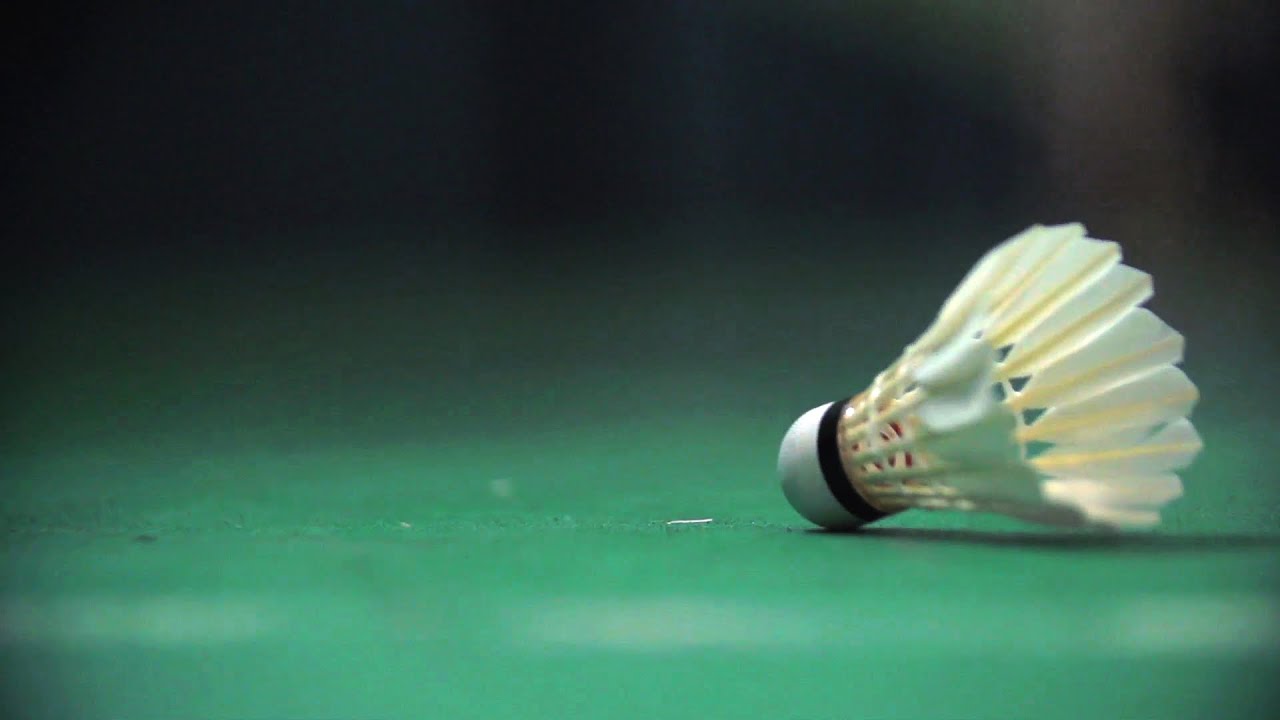
The badminton birdie many Americans hit around their backyards can fly faster than 200mph in professional games! The key to the birdie's speed is its unique aerodynamic shape and materials combined with a complicated kinetic chain of movements by players.
Credits
Produced by Emily V. Driscoll
Filmed By
Jon Foy
Emily V. Driscoll
Chris Colton
Narrated by Luke Groskin
Music by Audio Network
Stills by Shutterstock
Special Thanks
The Boston Open sponsored by MIT
Michele Cruz
Alex Liu
Kota Morikawa
Nilay Nanavanti
New York City Badminton
Victor Ng
Beth Sopka
Peter Teuben
Xun Wang
Chibing & Vernoica Wu

*** We're now on Patreon! http://www.patreon.com/scifri - Please Help Support Our Video Productions! ***
A new line of camouflage was designed with deer eyes in mind.
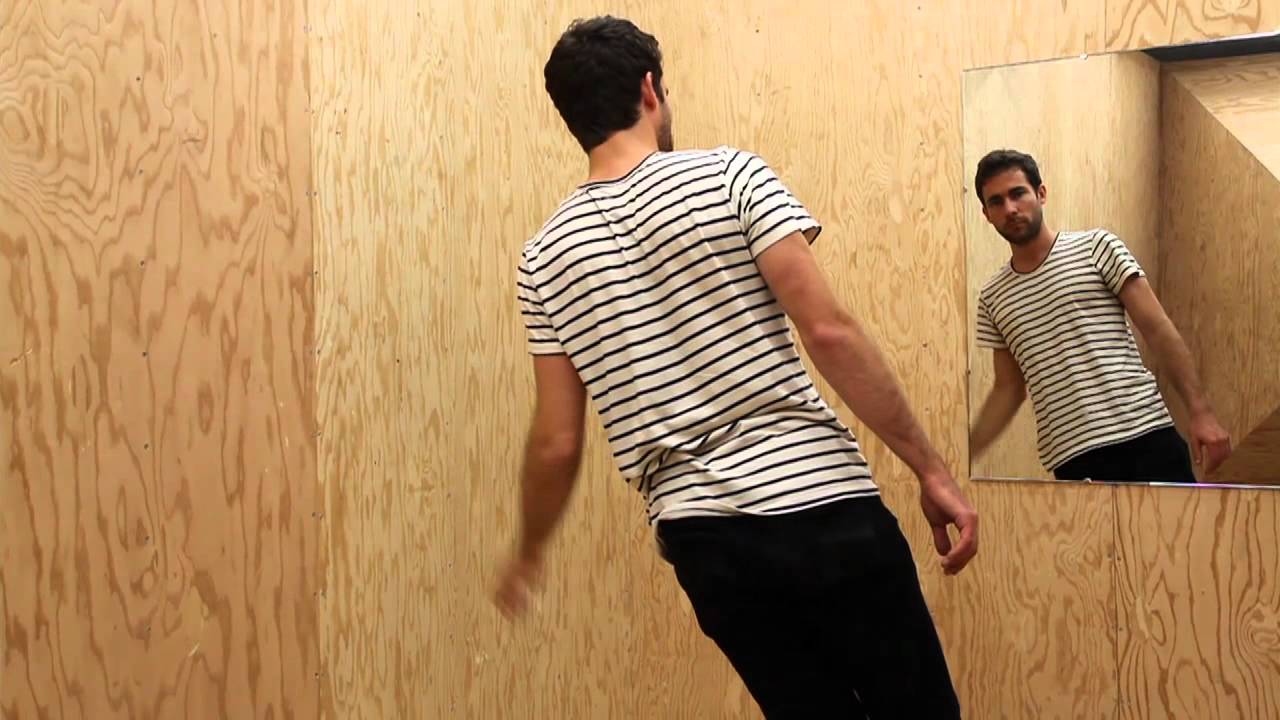
In Demon Hill, the rules of gravity don't apply as you expect them to. Down is not down, exactly. The room, created by Los Angeles artist Julian Hoeber and on display at the Harris Lieberman Gallery in New York, is modelled on a stock roadside attraction, Hoeber says. It's based on a simple trick: the room is tilted on a compound angle. The result is disorienting and highly popular -- drawing about 20,000 people when it appeared in L.A. Michael Landy, professor of neural science and psychology at New York University, explains how the piece creates a battle between our senses.
Astronauts are allowed to bring special “crew preference” items when they go up in space. NASA astronaut Don Pettit chose candy corn for his five and a half month stint aboard the International Space Station. But these candy corn were more than a snack, Pettit used them for experimentation.
Footage courtesy of Don Pettit. Music courtesy of Bardo Music/South Hill Project. Produced by Flora Lichtman

http://www.sciencefriday.com
The aptly named Northern clingfish uses its fins to suck onto the roughest and slimiest of marine surfaces. Where manmade suction cups consistently fail, the clingfish achieves suctorial glory. Dr. Adam Summers of the University of Washington's Friday Harbor Labs, details how this bottom dweller takes the art of suction to new heights.
Produced by Luke Groskin. Filmed by Ryan Hawk. Music by Audio Network. Additional stills and footage by University of Washington, Friday Harbor Labs, Central Michigan Department of Microscopy, Shutterstock.

Many of us spend more time at our desks than anywhere else. Theoretical physicist and futurist Michio Kaku takes us on a tour of his office, where he writes his bestsellers and records his radio shows. The futuristic 1950s TV show Flash Gordon jump-started his interest in science. Watching it as a kid, Kaku realized that it was the problem-solving scientist, not the chiseled crimefighter Flash, who was really the hero. Originally published May 20, 2011.

The axolotl is a Mexican salamander with an incredible ability: Cut its leg off, and the limb will grow right back! How it does this and why humans can't is still a bit of a mystery. Researchers like Susan Bryant of UC Irvine are studying these amphibians to understand the underlying mechanisms for their miraculous regenerative powers.
Produced by Christian Baker
Music by Audio Network
Additional Stills and Video by the Howard Hughes Medical Institute, Dr. Susan Bryant, Dr. David Gardiner, and Dr. Akira Satoh

http://www.sciencefriday.com
Are you dreaming of a white Christmas? Try making your own winter wonderland. Ken Libbrecht, Caltech physicist and author of The Secret Life of a Snowflake, devised an experiment to grow a snow crystal in an old plastic bottle. Dry ice required. Or maybe you'd rather go on a Snowflake Safari?

http://www.sciencefriday.com
Armed with appetites and attitudes, brush-clearing goats will mow down weeds and shrubs from even the steepest of Southern California's hillsides. Perfectly adapted to a life of constant browsing, these ruminants are being deployed as a shield against the region's rampant wildfires. We join Ian Newsam, owner of Brush Goats 4 Hire, and his "elite" herd of goats as they reduce the invasive plants and fuel that contributes to the fires.
Produced by Luke Groskin
Music by Audio Network
Additional Stills and Video Courtesy
Henry the Goat, California Office of Emergency Management, U.S. Geological Survey, Youtube User "thatlocalsportsguy"

A couple of neuroscientists saw Snowball, the dancing sulphur-crested cockatoo, on YouTube and decided to do a study on him.

*** Help Support Our Video Productions!!!
http://www.patreon.com/scifri ***
Musk oxen are not the only charismatic creatures perfectly suited to the wind-blasted, tundra of the Alaskan Arctic. Meet Joel Berger, Wildlife Conservation Society senior scientist, Colorado State University professor - as well as expert on hoofed mammals. In addition to gathering photos to track how fast musk oxen are growing, Berger conducts a seemingly hazardous test: He dresses up as a grizzly bear, approaches the herd, and gauges their reactions. Berger uses this unusual technique to find out whether the presence of more male oxen makes the herd safer from bears.
Produced by Luke Groskin
Filmed by Christian Baker and Luke Groskin
Music by Audio Network
Production Assistance and Guide by Erik Snuggerud
Additional Stills and Video by the Joel Berger/WCS , Shutterstock , Musk Oxen Hunt shots © GSSafaris
Special Thanks to Joel Berger, Erik Snuggarud, Ellen Cheng, Jenny Shalant, and Jessica Brunetto

http://www.sciencefriday.com
As the most common genetic disorder worldwide, colorblindness affects roughly 1 in 12 men and 1 in 200 women, the overwhelming majority of whom have trouble perceiving red and green. While this may be a minor inconvenience to some, being severely colorblind can taint seemingly ordinary experiences such as a enjoying a vivid sunset or picking out fresh produce. Colorblindness can even prevent some people from pursuing jobs where color vision is critical. With these grievances in mind, visionary researchers Maureen and Jay Neitz have spent over a decade researching and developing a cure. Using a virus-based gene therapy and a group of highly trained monkeys, the Neitzes may have finally created a cure for the colorblindness blues.

Want to see the biggest ant collection in the world? Welcome to ant central! In the latest installment of Science Friday's Desktop Diaries series, ecologist Edward O. Wilson takes us on a tour of his office, located in Harvard University's Museum of Comparative Zoology. Wilson, who has studied ants for 60 years and has won two Pulitzer prizes for his writing, shows off Harvard's ant collection (the largest in the world with about a million specimens), plays a backwoods fiddle and explains how he looks to Darwin (a bobble head doll, in this case) for encouragement.

http://www.sciencefriday.com
By looking at a face for less than a second, we can judge someone’s age, gender, race, emotional state and even their trustworthiness. High-speed scanning and perception experiments by social neurologist Dr. Jon Freeman have revealed our brain’s ability to generate character assessments in less than blink of an eye. These first impressions can linger in our brains and influence our real-world interactions.
Produced by Luke Groskin
Music by Audio Network
MRI Stand-in by Sarah Lewin
Footage ands Stills Provided by Dr. Jon Freeman, Shutterstock, Warren Goldswain, Glasgow Unfamiliar Face Database, Bruce Gionet (C.C. 3.0), Nina Paley (C.C. 3.0), Kim Cramer (C.C. 3.0), “Brain Optic Nerve Impulses,” Produced by Purdue University Calumet senior engineering students supervised by Professors Bin Chen, Ph.D, and Ge Jin Ph.D, with support of the university’s Center for Innovation through Visualization and Simulation. Full video is available at: http://webs.purduecal.edu/civs/brain-visualization
