Top Vídeos

http://www.sciencefriday.com
In the past, Olympic ski jumpers typically only had 3 to 4 seconds to practice their form and perfect their mid-air aerodynamics. Physics Professor Adam Johnston, explains how, with the help of a wind tunnel, U.S. ski jumpers can fine tune the physics of their jumps along with the flow of air around their bodies in order to attain Olympic gold.
Produced and filmed by Manjula Varghese
Edited by Manjula Varghese and Luke Groskin
Music by Audionetwork.com

http://sciencefriday.com
Everything is a little bit magnetic, says physicist Richard Hill, of The University of Nottingham. So with a powerful magnet, it is possible to levitate almost anything--strawberries, water, insects. In a recent study, Hill levitated fruit flies to see how they behaved when they didn't have gravity pulling them down.

Water bears, also known as tardigrades, can survive boiling, freezing, the vacuum of space and years of desiccation. Biologist Bob Goldstein, of the University of North Carolina Chapel Hill, describes water bears and explains why he studies them.

Imagine what you might do if you could print your own solar panels. That's kind of the dream behind Shawn Frayne and Alex Hornstein's Solar Pocket Factory -- although they see it more as the "microbrewery" of panel production rather than a tool for everyone's garage. With over $70,000 of backing from a successful Kickstarter campaign, the inventors are now working on refining the prototype. If all goes well, by April they'll have a machine that can spit out a micro solar panel every few seconds. In the meantime, Frayne stopped by Flora Lichtman's backyard with a few pieces of the prototype to explain how the mini-factory will work.

http://www.sciencefriday.com
Footage courtesy of Prelinger Archives, Bernard Wilets' "Discovering Electronic Music"
Music by Ego Plum and Paul Rothman
Produced by Luke Groskin
This video was not sponsored by LittleBits.

Find out why this special ice cream stretches like silly putty. It's all in the molecules.

So you want to jam like a rock star, but you don't want to shell out for an electric guitar? Make one yourself. Sound artist Ranjit Bhatnagar explains the art of a DIY instrument he calls a "junk guitar." You can piece one together using little more than a plank of wood, some wire, a magnet and a guitar string. Forget the air guitar solos. Plug in. Rock out.
Find out more about the projects featured in the video:
http://www.sciencefriday.com/a....rticles/a-peek-at-th
An air purifier filled with spider webs, a toilet insert that filters estrogen, a cactus-like water harvester—these were just a few of the ambitious and creative ideas presented at the first Biodesign Challenge, which took place on June 23, 2016. Held at the Museum of Modern Art, the gathering presented the work of 9 teams of students who designed a concept, product, or material that was biologically-inspired. The challenge—which scientists pitched and judged—gave students the unique opportunity to work with researchers to apply scientific principles to their particular field of design.
Produced by Luke Groskin
Music by Audio Network
Additional video and stills provided by:
"Bioesters" - FIT
Tessa Callaghan, Gian Cui, Aleksandra Gosiewski,
Aaron Nesser, Theanne Schiros, Asta Skocir
"Liver Clear" - RPI
Amanda Harrold, Kathleen McDermott, Jacob Steiner
and Perrine Papillaud
"Dewpoint" - SAIC
Bailey Beatt, Maurice Hampton, Jackie Huang, and Sam Scheib
"Mutua" - SCI-ARC
Mun Yi Cheng, Caleb Fisher, Fangyuan Hu, Brendan Ho,
Ryan Odom, Anthony Stoffella & Xiangtia Sun
"Stabilimentum" - UPenn
Mónica Butler, Jiwon Woo
Charged web footage from Oxford University
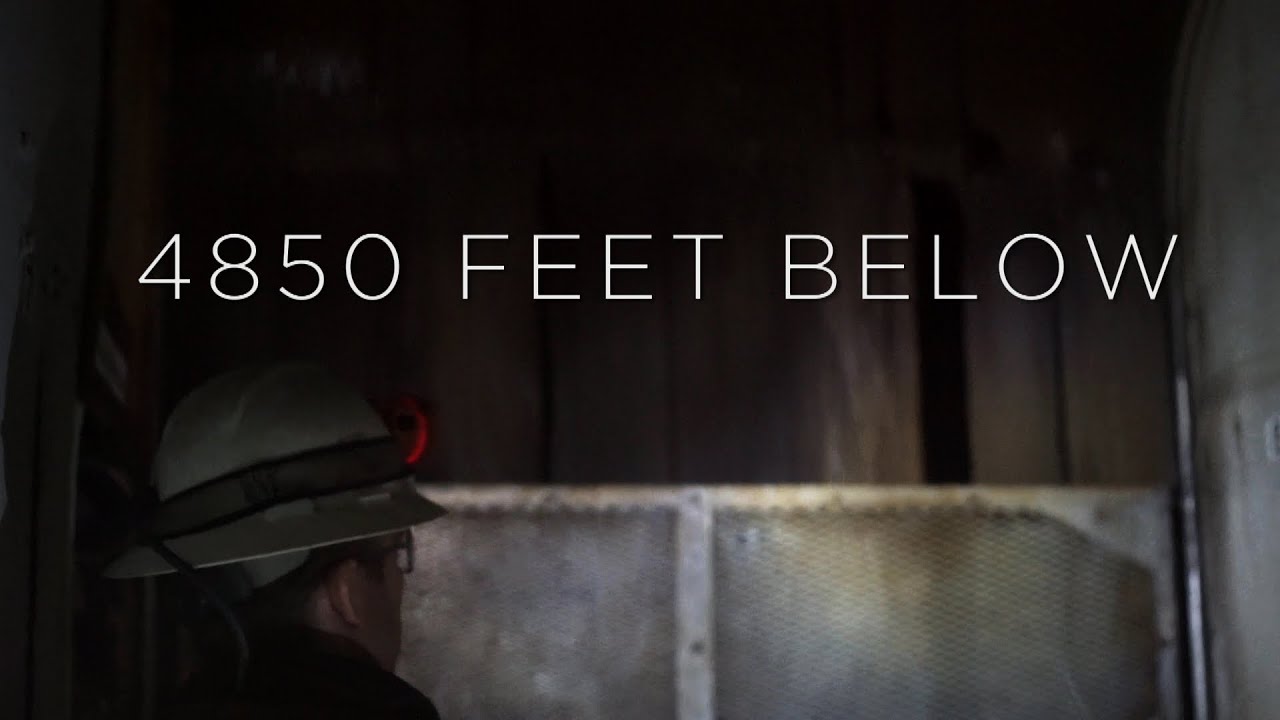
Deep in an abandoned gold mine in rural South Dakota, a team of physicists are hunting for astrophysical treasure. Their rare and elusive quarry is dark matter, a theoretical particle which has never been seen or directly detected. Yet its gravitational effect on distant galaxies hints at its existence and provides ample evidence to fuel the experiments and aspirations of scientists at the Sanford Underground Research Facility. Insulated by 4,850 feet of rock, the researchers have constructed the world's most sensitive particle detector, known as the Large Underground Xenon Experiment, or "LUX." Their goal is to use this complex device to capture an epiphanous event: the interaction between dark matter and atoms inside a chilled tank of liquid xenon. If they're successful, the researchers may not only solve some of the biggest mysteries in astrophysics but affirm their faith in the nature of dark matter.
"4850 Feet Below" was produced with generous support from the John Templeton Foundation.

http://www.sciencefriday.com
For over 70 years, no one had seen the oblong rocksnail. Declared extinct in 2000, the species was considered to be another native Alabaman mollusk gone and forgotten. But one day in the spring of 2011, biology grad student Nathan Whelan picked up a tiny rock and got a big surprise.
Produced by Luke Groskin
Music by Audio Network
Additional Stills and Photos by Shutterstock, Thomas Tarpley, Alabama Department of Conservation and Natural Resources, Alabama Aquatic Biodiversity Center, Nathan Whelan, Boris Datnow, Alabama Power, Annals of Lyceum, Wild Side TV, Paul Johnson, Masood Lohar, Bermuda Conservation Services, Jefferson County Environmental Services

75% of Southern California's water supply comes from the snowpack that adorns the Sierra Nevada Mountain Range. Keeping track of how much water is contained within the snowpack is a monumental task. Thankfully, NASA has developed the Airborne Snow Observatory, a relatively new program that uses specialized instrumentation to carefully measure the water content.
Produced by Christian Baker
Additional Footage by NASA/JPL-Caltech
Color Correction by Luke Cahill
Music by Audio Network

Typographer and illustrator Craig Ward heard an urban legend that "using the handrails on the subway is like shaking hands with 100 people." He decided to test that theory by sampling the bacteria on subway lines around New York City and photographing his findings. The results were striking and unconventional "portraits" of NYC commuters.
Produced by Emily V. Driscoll. Filmed by Jeff Nash. Music by Audio Network
Additional Photography © Tasha Sturm, The Mason Lab
The Wall Street Journal and Martin Burch, Chris Canipe,
Madeline Farbman, Rachel Feierman and Robert Lee Hotz
Thanks to Christopher Mason, Craig Ward and Weill Cornell Medical College

http://www.sciencefriday.com
A behind-the-scenes look at how the cast and crew of Walking - The Arena Spectacular with Dinosaurs brings life-size dinosaurs to life in an theatrical setting.
Produced by Luke Groskin
Footage Provided by Walking With Dinosaurs the Arena Show, Julie Leibach
"Walking with Dinosaurs" Documentary Footage ©BBC
Music by Audio Network

http://www.sciencefriday.com/cephalopodweek
We all know that squids use ink to disguise themselves while making a quick getaway, but what other uses might ink serve? Stephanie "Stephalopod" Bush, a scientist at the Monterey Bay Aquarium Research Institute (MBARI), suggests that these crafty cephalopods might use ink to attract a mate, repel a predator, or even confuse their prey.
Produced by Christian Baker
Music by Audio Network
Pygmy squid footage courtesy Dr. Noriyosi Sato
Additional Squid Footage by MBARI

http://www.sciencefriday.com
Did you know that most mammals, from a house cat to an elephant, take roughly the same amount of time to urinate? Researchers at Georgia Tech collected data, streamed via online video and in real life, and discovered that a combination of physiology and gravity enable this feat of fluid dynamics.

http://www.sciencefriday.com
Since the founding of colonial Jamestown, cockroaches have scuttled through the dark spaces of our homes and our nightmares. But just recently, a new roach has appeared on the New York scene; one with ability to tolerate the cold. What is this hearty roach and where did it come from? Join Rutgers University roach researchers as they unravel the clues to identify this intruder and what its emergence represents.
Produced by Emily Driscoll
Filmed by Stavros Basis
Lighting by Ben Effinger
Music by Audio Network
Narration by Travis
Additional video and Still courtesy of
Oswin Ambrice , Barcode of Life Data Systems , ELearningExamples.com, Joseph Evangelista, Shutterstock
Sydney King and National Park Service, Reto Stockli, NASA Earth Observatory, Peter Vransky, and Dusan Chorvat

Our skin is teeming with microbes. Visit a lab to find out what's living on you.

From Dipper, the celestial dolphin; to Alice and Jewel, the pink-skinned twins; to Jim Scott, the invisible man in the moon, children's imaginary friends come in innumerable shapes and sizes.
Categorizing these creations—while also trying to glean information about the mindset and personalities of their youthful creators—can be a daunting task for developmental psychologists.
Over the last two decades, researchers have pieced together unexpectedly diverse and nuanced profiles of the children who create imaginary companions. In the first episode of Science Friday's The Real Guide to Imaginary Companions, developmental psychologists Marjorie Taylor and Tracy Gleason describe how scientists study this playful phenomenon in order to understand the types of kids who have imaginary friends, why they create them, and what role these pretend pals play in childhood development.
Produced by Science Friday with generous support from the John Templeton Foundation
Produced, directed, and narrated by Luke Groskin
Filmed by Katie Graham, Luke Groskin and Patrick Pelham
Editor by Erika Sutter
Animations by Gabe Darling and Candice Aquino
Music by Audio Network
"Alice and Jewel" voiced by Annie Nero
Additional Footage by
The Shining Footage ©Warner Brothers, Inc. 1980
Calvin and Hobbes by Bill Watterson
Angry Boy, Affiliated Film Producers
Special Thanks to Danielle Dana, Jennifer Fenwick, Becky Geer, Tracy Gleason, Elizabeth Delucia Landon, Alex Riviello, Jenny Shalant, Christian Skotte, Marjorie Taylor, and Jacqueline Woolley.

Based outside of Seattle, Valid Cycles specializes in handcrafted bamboo bicycle frames. For bamboo to be bike-ready, it must be cooked in an oven, stripped, and sealed. But after that, the founders of Valid Cycles say the bikes last as long as metal ones. We stopped by their workshop -- a barn in Woodinville, Washington -- to see how the bikes are put together.

For USGS wildlife biologist Karyn Rode, tracking and tranquilizing polar bears from a helicopter are just the first thrilling steps in her research. After acquiring various samples from sleeping bears, Dr. Rode's unique understanding of what they eat and how quickly they metabolize nutrients allows her to determine the condition of each bear. Working with a team of scientists from the US Fish and Wildlife Service for nearly a decade, Dr. Rode's monitoring of polar bear health has helped reveal how well populations are adapting to the rapidly warming Arctic.
A film by Science Friday
Produced in collaboration with the Howard Hughes Medical Institute
Produced by Emily V. Driscoll and Luke Groskin
Directed by Luke Groskin
Filmed by Christian Baker, Luke Groskin, and Ryan Hawk
Edited by Sarah Galloway
Animations by Luke Groskin
Music by Audio Network
Color by Irving Harvey
Additional Photos and Video by
USGS, USFWS, NASA Goddard's Scientific Visualization Studio/C. Starr, Shutterstock, Pond5, Oxford Scientific, and Pascale Otis (C.C. BY 3.0)
Project Advisors:Laura A. Helft, Laura Bonetta, Dennis W.C. Liu and Sean B. Carroll - Howard Hughes Medical Institute
Special Thanks to Karyn Rode, Michelle St. Martin, Johnathan Larabee, The Staff of Red Dog Mine's Port Facility, Jenny Shalant, Jessica BrunettoChristian Skotte, Danielle Dana, Ariel Zych, and Jennifer Fenwick
Science Friday/HHMI © 2016
