Top Vídeos
Online purchase or streaming (Spotify, iTunes, Amazon Music, Deezer, Google Play): https://brilliant-classics.lnk.....to/PericoloCelloSon
Physical purchase: http://www.brilliantclassics.c....om/articles/p/perico
Facebook page: https://www.facebook.com/brilliantclassics/
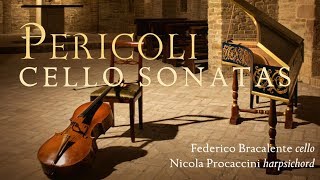
Composer: Pasquale Pericoli
Artists: Federico Bracalente (cello), Nicola Procaccini (harpsichord)
Pasquale Pericoli is now so obscured by time that neither his place and date of birth or death can be ascertained, though in the preface to these six sonatas he declares himself ‘a Neapolitan from Lecce’. Neapolitan should be loosely understood here, as the writ of its kingdom in the 18th century ran all the way east and south to the town of Lecce in the heel of Italy.
These sonatas are indeed Pericoli’s only extant works, and they are a most stylish, melodically appealing example of Neapolitan chamber music otherwise represented with greater renown by composers such as Leonardo Leo and Alessandro Scarlatti. His fame as both a performer and composer spread sufficiently far across Europe for him to work for an Italian theatre-opera company in Stockholm between 1752 and 1757. Although the style of these sonatas belongs recognisably to the Neapolitan school, Pericoli was far better than an epigone or slavish imitator, and his writing betrays first-hand knowledge of the cello and its technical possibilities, including much high writing and string-crossing in the quicker movements. The sonatas were published together as a set in 1769, and perhaps conceived as a single entity given that they were written in different keys, in an ascending scale of B flat major, C major, E flat major, F minor, G minor and A major.
Taken together, the sonatas embody a moment of significant development in the history of music in the movement from Baroque to Classical aesthetics. In this sense the Fourth Sonata is emblematic, with a sonata-form Allegro, an Aria in the guise
of a Siciliana, distinctly reminiscent of Pergolesi and Leo, and a severely contrapuntal quick finale.
The sonatas are played here by a pair of Italian musicians thoroughly versed in the historically informed performing traditions of the time.
First recording of Pericoli’s 6 Cello Sonatas.
Little is known about the life of Pasquale Pericoli, who lived and worked in the second half of the 18th century. He is known to have produced operas in Stockholm for some years, he himself claimed to be of Neapolitan origin.
His Neapolitan roots certainly are betrayed in his 6 Cello Sonatas, in which the formal structure of the Sonata (albeit in embryonic form, not yet fully developed as in the Classical Period) is imbued with melodic charm and cantabile, the cello seeming to sing instead of play.
Cellist Federico Bracalente specialised in the performance of Baroque music, playing in illustrious ensembles like the Orchestra da Camera di Mantova, and collaborates with artists such as Sara Mingardo, Alfredo Bernardini and Romina Basso.
Excellent liner notes written by a scholar, in both Italian and English.
00:00:00 Cello Sonata No. 1 in B-Flat Major: I. Allegretto
00:04:03 Cello Sonata No. 1 in B-Flat Major: II. Cantabile
00:09:07 Cello Sonata No. 1 in B-Flat Major: III. Spiritoso
00:12:37 Cello Sonata No. 2 in C Major: I. Allegro
00:15:30 Cello Sonata No. 2 in C Major: II. Cantabile
00:17:32 Cello Sonata No. 2 in C Major: III. Allegretto a modo di cembalo
00:20:00 Cello Sonata No. 3 in E-Flat Major: I. Allegretto cantabile
00:23:56 Cello Sonata No. 3 in E-Flat Major: II. Largo
00:26:51 Cello Sonata No. 3 in E-Flat Major: III. Allegro
00:29:16 Cello Sonata No. 4 in F Minor: I. Allegretto
00:33:21 Cello Sonata No. 4 in F Minor: II. Siciliana. Cantabile
00:36:30 Cello Sonata No. 4 in F Minor: III. Allegro
00:38:10 Cello Sonata No. 5 in G Minor: I. Allegretto
00:43:26 Cello Sonata No. 5 in G Minor: II. Cantabile
00:46:59 Cello Sonata No. 5 in G Minor: III. Allegro
00:49:06 Cello Sonata No. 6 in A Major: I. Allegro
00:52:48 Cello Sonata No. 6 in A Major: II. Largo
00:55:26 Cello Sonata No. 6 in A Major: III. Allegro
Tracklist below.
Online purchase or streaming (Spotify, iTunes, Amazon Music, Deezer, Google Play): https://brilliant-classics.lnk.....to/RussianPianoTrio
More Information: https://www.brilliantclassics.....com/articles/r/russi
Brilliant Classics Spotify: https://open.spotify.com/user/....brilliantclassics?si
Brilliant Classics Facebook: https://www.facebook.com/brilliantclassics
Composers: Anton Stepanovich Arensky, Alexander Borodin, Nikolai Andreyevich Rimsky-Korsakov, Piotr Ilyich Tchaikovsky, Sergei Ivanovich Taneyev
Artist: The Moscow Trio, Vladimir Ivanov (violin), Mikhail Utkin (cello), Alexander Bonduriansky (piano)
This 3-disc collection showcases Russian piano trios from the mid-nineteenth to early-twentieth centuries. Piano trios were unheard of for Russian composers until Mikhail Glinka wrote one in 1832; it earned the epithet ‘Pathétique’ as it seemed to be a reflection of Glinka’s general sadness at the time of writing, the piece alternating between caustic tension and attempts at light-hearted optimism. A mournful, melancholic influence then became characteristic of the Russian piano trio: Tchaikovsky unknowingly created a tradition when he composed his offering in 1882 – one of his greatest chamber works and which he dedicated to his recently deceased and much-missed friend Nikolay Rubinstein. On several subsequent occasions, piano trios were written as memorials.
The collection also includes the mathematically-governed trio of Sergey Taneyev, who had gained a reputation as a cerebral composer, and the trio of Rimsky-Korsakov, whose mastery of opera and vocal writing can be seen in the final movement as each instrument takes on its own ‘voice’ and emotion – thus resembling an interaction between characters. Alexander Borodin used the Classical model for his trio, although it contains surprising chromaticism as well as dramatic changes of temperament, including the tragic hymn in the second movement. Anton Arensky’s take on the genre completes the collection.
The Moscow Piano Trio was formed in 1976 and has achieved huge success in international competitions, notably winning the Maurice Ravel Gold Medal at the Bordeaux ‘Mai Musical’. The trio is comprised of pianist Alexander Bonduriansky, violinist Vladimir Ivanov and cellist Mikhail Utkin.
00:00:00 Piano Trio in A Minor, Op. 50: I. Pezzo elegiaco
00:22:40 Piano Trio in A Minor, Op. 50: IIa. Tema con variazione: Andante con moto
00:43:05 Piano Trio in A Minor, Op. 50: IIb. Variazione finale e coda
00:55:52 Trio pathétique in D Minor: I. Allegro moderato
01:01:08 Trio pathétique in D Minor: II. Scherzo: Vivacissimo
01:04:40 Trio pathétique in D Minor: III. Largo
01:09:42 Trio pathétique in D Minor: IV. Allegro con spirito
01:11:53 Piano Trio No. 1 in D Minor, Op. 32: I. Allegro moderato
01:25:18 Piano Trio No. 1 in D Minor, Op. 32: II. Scherzo: Allegro molto
01:31:27 Piano Trio No. 1 in D Minor, Op. 32: III. Élégie: Adagio
01:38:14 Piano Trio No. 1 in D Minor, Op. 32: IV. Finale: Allegro non troppo
01:44:53 Piano Trio in D Major, Op. 22: I. Allegro
01:57:07 Piano Trio in D Major, Op. 22: II. Allegro molto
02:09:29 Piano Trio in D Major, Op. 22: III. Andante espressivo
02:16:06 Piano Trio in D Major, Op. 22: IV. Finale
02:27:23 Piano Trio in C Minor: I. Allegro assai
02:42:48 Piano Trio in C Minor: II. Allegro
02:47:30 Piano Trio in C Minor: III. Adagio
02:56:54 Piano Trio in C Minor: IV. Allegro assai
03:12:25 Piano Trio in D Major (Unfinished): I. Allegro con brio
03:18:44 Piano Trio in D Major (Unfinished): II. Romance: Andante
03:26:29 Piano Trio in D Major (Unfinished): III. Intermezzo: Tempo di minuetto

Facebook page: https://www.facebook.com/brilliantclassics/
This set includes over 7 hours of the most memorable romantic melodies played by some of the world’s finest pianists. The collection contains the most beautiful compositions of great composers including:
Liebestraum - Liszt
Für Elise - Beethoven
Träumerei - Schumann
Nocturne - Chopin
Rosamunde Impromptu - Schubert
Rondo alla Turca - Mozart
Wiegenlied - Brahms
Mondschein Adagio - Beethoven
Raindrop Prelude - Chopin
Clair de lune - Debussy
Hungarian Rhapsody - Liszt
and many others
Tracklist can be found in the comment section!

Tracklist below.
Online purchase or streaming (Spotify, iTunes, Amazon Music, Deezer, Google Play): https://brilliant-classics.lnk.to/DebussyPianoDuo
More Information: https://www.brilliantclassics.....com/articles/d/debus
Brilliant Classics Spotify: https://open.spotify.com/user/....brilliantclassics?si
Brilliant Classics Facebook: https://www.facebook.com/brilliantclassics
If it is true that the end of Romanticism coincided with the invention of electric light, then we can date this to 1880 – the year in which Thomas Alva Edison patented the light bulb. At around this time, a brilliant student at the Paris Conservatoire, Claude Debussy, decided to embark upon a composing career that would soon ‘illuminate’ the history of music.
Debussy’s output is roughly divided into three periods, each of which is represented by one of the three discs in this set. Focusing solely on his works for piano duo, the collection effectively represents a vantage point from which to analyse his stylistic development, since it touches on both Debussy's piano and orchestral writing simultaneously: as well as original keyboard works (Lindaraja is one example, the composer's first work inspired by Spain), there are piano pieces arranged for orchestra, vice-versa compositions (Prélude a l'après-midi d'un faune, for instance) and music that was clearly intended for the orchestra or for specific ensembles (one example is Le triomphe de Bacchus, for which the orchestration was never completed).
Performing these works are two of Italy's most celebrated pianists, Massimiliano Damerini and Marco Rapetti. Their accomplished readings highlight the unique relationship that exists between piano and orchestra – the former can be seen as a monochromatic version of the latter, with the latter essentially describing the former in polychromatic terms – and, at the same time, draw the listener's attention towards an important area of 19th-century music-making: namely piano transcriptions’ vital role in making operatic and symphonic repertoire available to all.
00:00:00 Symphonie: Allegro
00:09:54 Andante cantabile
00:18:27 Diane: Ouverture
00:25:20 Le triomphe de Bacchus: Suite d’Orchestre: I. Divertissement
00:28:59 Le triomphe de Bacchus: Suite d’Orchestre: II. Andante
00:32:29 Le triomphe de Bacchus: Suite d’Orchestre: IV. Marche et Bacchanale: (fragment A)
00:33:39 Le triomphe de Bacchus: Suite d’Orchestre: IV. Marche et Bacchanale: (fragment B)
00:38:17 Intermezzo
00:42:49 Première Suite d’Orchestre: I. Fête
00:48:49 Première Suite d’Orchestre: II. Ballet
00:53:22 Première Suite d’Orchestre: III. Rêve
01:01:47 Première Suite d’Orchestre: IV. Cortège et Bacchanale
01:10:47 Divertissement
01:22:46 L’Enfant prodigue: Scène lyrique, three excerpts: I. Prélude
01:25:21 L’Enfant prodigue: Scène lyrique, three excerpts: II. Cortège - III. Air de danse
01:29:36 Printemps: Suite symphonique: I. Très modéré
01:39:54 Printemps: Suite symphonique: II. Modéré
01:47:45 Petite Suite: I. En bateau
01:51:26 Petite Suite: II. Cortège
01:54:56 Petite Suite: III. Menuet
01:58:16 Petite Suite: IV. Ballet
02:01:38 Marche écossaise sur un Thème populaire: ‘The Earl of Ross March’
02:09:09 Prélude à l’après-midi d’un Faune
02:19:36 Lindaraja
02:25:54 La Mer: Trois Esquisses symphoniques: I. De l’Aube à midi sur la Mer
02:34:40 La Mer: Trois Esquisses symphoniques: II. Jeux de vagues
02:42:17 La Mer: Trois Esquisses symphoniques: III. Dialogue du Vent et de la Mer
02:50:25 Danses: I. Danse sacrée
02:55:23 Danses: II. Danse profane
03:00:33 Six Épigraphes antiques: I. Pour invoquer Pan, dieu du Vent d’été
03:03:00 Six Épigraphes antiques: II. Pour un Tombeau sans Nom
03:06:55 Six Épigraphes antiques: III. Pour que la Nuit soit propice
03:09:18 Six Épigraphes antiques: IV. Pour la Danseuse aux crotales
03:11:53 Six Épigraphes antiques: V. Pour l’Égyptienne
03:15:03 Six Épigraphes antiques: VI. Pour remercier la Pluie au matin
03:17:15 En blanc et noir: I. Avec emportement
03:21:42 En blanc et noir: II. Lent, sombre
03:29:22 En blanc et noir: III. Scherzando
Online purchase or streaming (Spotify, iTunes, Amazon Music, Deezer, Tidal, Google Play): https://brilliant-classics.lnk.to/TchaikovskyNos12
Physical Purchase: https://www.brilliantclassics.....com/articles/t/tchai
Spotify Playlists:
Brilliant Classics Spotify: https://brilliant-classics.lnk.to/Spotify
The best of Liszt: https://brilliant-classics.lnk.to/Playliszt
The best of Bach: https://brilliant-classics.lnk.....to/BestOfBachPlayli
Most popular piano music: https://brilliant-classics.lnk.to/MostPopularPiano
Beautiful classical Music: https://brilliant-classics.lnk.....to/BeautifulClassic
Classical music for dinnertime: https://brilliant-classics.lnk.....to/ClassicalMusicfo
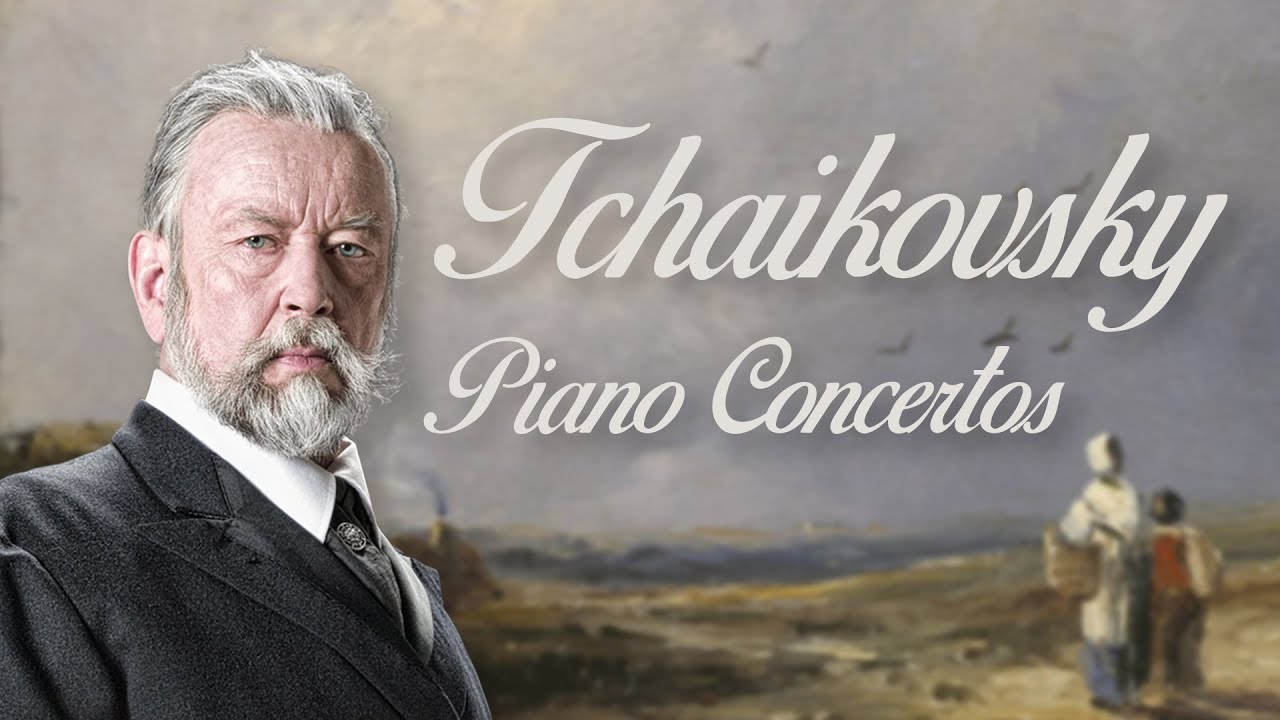
Composer: Piotr Ilyich Tchaikovsky
Artists: Derek Han (piano), St. Petersburg Philharmonic Orchestra, Paul Freeman (conductor)
About this Album:
This release features two piano concertos by Tchaikovsky: Concerto No. 1 and No. 2. Brilliant performance by Derek Han, accompanied by St. Petersburg Philharmonic under the baton of Paul Freeman.
Tracklist:
00:00:00 Piano Concerto No. 1 in B-Flat Minor, Op. 23: Allegro non troppo e molto maestoso; allegro con spirito
00:19:23 Piano Concerto No. 1 in B-Flat Minor, Op. 23: Andantino semplice; Prestissimo
00:25:49 Piano Concerto No. 1 in B-Flat Minor, Op. 23: Allegro con fuoco
00:32:42 Piano Concerto No. 2 in G Major, Op. 44: Allegro brillante
00:53:01 Piano Concerto No. 2 in G Major, Op. 44: Andante non troppo
01:01:57 Piano Concerto No. 2 in G Major, Op. 44: Allegro con fuoco
Thanks for watching! Feel free to subscribe and visit our channel for the best classical music from the greatest composers like: Bach, Satie, Mozart, Tchaikovsky, Beethoven, Chopin, Haydn, Ravel, Debussy, Verdi, Vivaldi, Handel, Brahms, Liszt, Schubert, Mendelssohn, Rachmaninoff, Wagner, Strauss, Handel, Dvorak, Schubert and many more! We upload complete albums, music for relaxing, working, studying, meditating, concentrating, instrumental music, opera, violin, classical piano music, sonatas and more!
#Classical #Tchaikovsky #BrilliantClassics #Music #Composer #ClassicalMusic #Piano #Pianoconcerto

Online purchase or streaming (Spotify, iTunes, Amazon Music, Deezer, Google Play): https://brilliant-classics.lnk.....to/RachmaninoffAndP
More Information: https://www.brilliantclassics.....com/articles/r/rachm
Brilliant Classics Spotify: https://open.spotify.com/user/....brilliantclassics?si
Brilliant Classics Facebook: https://www.facebook.com/brilliantclassics
Composers: Alexander Glazunov, Piotr Ilyich Tchaikovsky, Sergei Prokofiev, Sergei Rachmaninoff
Artists: Alexander Russakovsky (cello), Amber Shay Nicholson (piano)
Bringing together works for cello and piano by some of the greatest composers in Russian music history, the set begins with Rachmaninoff’s Cello Sonata – a landmark piece for the composer and whose highlights include a lyrical opening movement and the furiousness of an apparent snowstorm in the second-movement Scherzo. The Pas d’action from Tchaikovsky’s ballet Sleeping Beauty, which follows, depicts the moment where Prince Désiré, wandering alone in the forest, is approached by the Lilac Fairy who shows him a vision of the beautiful princess Aurora, and this is followed by Glazunov’s Sérénade espagnole – the first of the composer’s ‘Spanish’ works, one which employs a ringing tone reminiscent of a Spanish guitar or lute. Bringing the collection to an end is Prokofiev’s Cello Sonata. This piece, beginning with a distinctly serious tone, metamorphoses into a triumphant carnival-like finale, complete with the festive bells that are so symbolic of Russian music.
Cellist Alexander Russakovsky enjoys an international reputation as a performer and teacher. He has given masterclasses as far afield as Latin America and Taiwan, and in recent years has won first prize at the Angela and Maurice M. Clairmont Competition in Tel Aviv and the Performing Arts Foundation Competition in Santa Barbara. Pianist Amber Shay Nicholson won the 2001 Rachmaninoff Concerto No.3 competition at the Eastman School of Music; she is also a former member of the piano faculty of the University of Southern Mississippi.
00:00:00 Cello Sonata in G Minor, Op. 19: I. Lento – Allegro moderato
00:12:29 Cello Sonata in G Minor, Op. 19: II. Allegro scherzando
00:19:22 Cello Sonata in G Minor, Op. 19: III. Andante
00:25:07 Cello Sonata in G Minor, Op. 19: IV. Allegro mosso
00:36:16 Sleeping Beauty, Op. 66, Act 2: No. 15, Pas d’action. Andante cantabile (Arr .Albert Kleineke)
00:40:40 Pieces for Cello and Orchestra, Op.20: II. Sérénade Espagnole
00:43:30 Cello Sonata in C Major, Op. 119: I. Andante grave
00:55:12 Cello Sonata in C Major, Op. 119: II. Moderato
01:00:11 Cello Sonata in C Major, Op. 119: III. Allegro ma non troppo

Composer: François Couperin
Artist: Musica ad Rhenum, Jed Wentz conductor
For physical sales: http://www.brilliantclassics.c....om/articles/c/couper
Listen via Spotify: https://open.spotify.com/album..../7kccTMFjYPjka6VO4Qp
Thinking of Baroque music our minds turn nearly automatically to the German giants Bach, Handel, Telemann and the like, or to sunnier parts in Italy where Vivaldi, Corelli and Albinoni wrote their concertos: but one nearly forgets that also in France great music was composed in the Baroque! One of the most important composers was Francois Couperin (1668-1733), imperial court composer of the most charming, graceful music: look at the French pictures of that time and you can imagine what kind of music.
This release contains the complete chamber music of the French master, with the complete “Les Nations” (a musical depiction of nationalities), Concerts Royaux, Les Gouts réunis, L’Apothéose de Corelli and de Lully and other pieces.
Instrumentation is for traversos, violins, oboes, bassoon, viola da gamba, cello, archlute and harpsichord. Expertly played on original instruments by the ensemble Musica ad Rhenum conducted by specialist Jed Wentz.
As a motto for this set may serve a quotation from one of the pieces by Couperin himself: “One should not attach too much attention to the precise measure of this piece, but one should sacrifice everything to good taste.”

Composer: Frédéric Chopin
00:00:00 Berceuse in D-Flat Major, Op. 57 by Alwin Bär
00:05:06 Nocturne in E-Flat Major, Op. 9 No. 2 by Pieter van Winkel
00:09:21 Waltz in C-Sharp Minor, Op. 64 No. 2 by Martijn van den Hoek
00:13:00 Ballade No. 3 in A-Flat Major, Op. 47 by Pieter van Winkel
00:20:21 Souvenir de Paganini by Frank van de Laar
00:24:36 Etude in E Major, Op. 10 No. 3 by Martijn van den Hoek
Composer: Yann tiersen
00:28:37 Comptine d`un autre été: l`après midi By Jeroen van Veen
Composer: Erik satie
00:31:01 3 Sarabandes (1887): No. 1 by Håkon Austbö
00:36:35 3 Sarabandes (1887): No. 2 by Håkon Austbö
00:41:35 3 Sarabandes (1887): No. 3 by Håkon Austbö
00:45:49 3 Gymnopédies (1889): No. 1: Lent et douloureux by Håkon Austbö
00:49:29 3 Gymnopédies (1889): No. 2: Lent et triste by Håkon Austbö
00:52:47 3 Gymnopédies (1889): No. 3: Lent et grave by Håkon Austbö
00:55:40 Gnossiennes 1-3 (1890): No. 1 by Håkon Austbö
00:59:47 Gnossiennes 1-3 (1890): No. 2 by Håkon Austbö
01:01:47 Gnossiennes 1-3 (1890): No. 3 by Håkon Austbö
01:05:13 Gnossiennes 4-6 (1889-1897): No. 4 by Håkon Austbö
01:08:04 Gnossiennes 4-6 (1889-1897): No. 5 by Håkon Austbö
01:10:55 Gnossiennes 4-6 (1889-1897): No. 6 by Håkon Austbö
Composer: Wolfgang Amadeus Mozart
01:12:29 Piano Concerto No. 23 in A, KV 488 I Allegro - Mozart Akademie Amsterdam
01:23:17 Piano Concerto No. 23 in A, KV 488 II Andante - Mozart Akademie Amsterdam
01:29:32 Piano Concerto No. 23 in A, KV 488 III Allegro - Mozart Akademie Amsterdam

Online purchase or streaming (Spotify, iTunes, Amazon Music, Deezer, Google Play):
https://brilliant-classics.lnk.to/RussianBallet
Physical purchase:
http://www.brilliantclassics.c....om/articles/r/russia
Artists: Royal Philharmonic Orchestra, Novosibirsk Symphony Orchestra, Bolshoi Theatre Orchestra
This album contains a highly attractive selection of the most iconic ballet music by Russian composers: Nutcracker, Swan Lake, Sleeping Beauty (Piotr Ilyich Tchaikovsky), Cinderella, Romeo & Juliet, Stone Flower (Sergei Prokofiev) and Spartacus, Gayane (Aram Ilyich Khachaturian). Music full of enchanting melodies, weighless pas-de-deux, and exciting Russian Dances (Sabre Dance!). Superb performances by the Bolshoi Theatre Orchestra, the Novosibirsk SO and the famous Royal Philharmonic Orchestra.
00:00:00 Swan Lake, Op. 20, Act I: II. Waltz. Tempo di valse
00:07:19 Swan Lake, Op. 20, Act II: X. Scene – Swan Theme. Moderato
00:13:54 Swan Lake, Op. 20, Act II: XIII. Dance of the Little Swans. Allegro moderato
00:15:26 Swan Lake, Op. 20, Act II: XIII. Pas d’action – Second Dance of the Queen. Andante non troppo – Allegro
00:23:31 Swan Lake, Op. 20, Act III: XX. Hungarian Dance. Csárdás (Moderato assai – Allegro moderato – Vivace)
00:27:15 Swan Lake, Op. 20, Act III: XXI. Spanish Dance .Allegro non troppo. Tempo di bolero
00:29:49 Sleeping Beauty, Op. 66, Act I: The Spell. No. 6 Waltz. Allegro. Tempo di valse
00:34:49 Sleeping Beauty, Op. 66, Act I: The Spell. No. 8 pas d’action. Rose adagio. Andante – Adagio meastoso
00:41:25 Sleeping Beauty, Op. 66, Act II: The Vision. No. 17 Panorama A.ndantino
00:43:34 Sleeping Beauty, Op. 66, Act III: The Wedding. No. 24 pas de caractère. Allegro moderato
00:46:06 Sleeping Beauty, Op. 66, Act III: The Wedding. No. 28 pas de deux. Adagio. Andante non troppo
00:50:51 Sleeping Beauty, Op. 66, Act III: The Wedding. No. 28 pas de deux. Coda. Allegro vivace
00:52:14 Sleeping Beauty, Op. 66, Act III: The Wedding: No. 30 Finale. Alegro brillante. Tempo di mazurka
00:56:17 The Nutcracker, Op. 71: Miniature overture
00:59:42 The Nutcracker, Op. 71, Act I: II. March
01:02:04 The Nutcracker, Op. 71, Act II: No. 12 Divertissement. Coffee. Arabian Dance
01:05:27 The Nutcracker, Op. 71, Act II: No. 12 Divertissement. Tea. Chinese Dance
01:06:34 The Nutcracker, Op. 71, Act II: No. 12 Divertissement. Trepak. Russian Dance
01:07:44 The Nutcracker, Op. 71, Act II: No. 12 Divertissement. Dance of the Reed Pipes
01:10:06 The Nutcracker, Op. 71, Act II: No. 14 Pas de deux. Variation 2. Dance of the Sugar Plum Fairy
01:16:51 The Nutcracker, Op. 71, Act II: No. 13 Waltz of the Flowers
01:19:07 Cinderella – Suite No. 1, Op. 107: I. Cinderella
01:21:24 Cinderella – Suite No. 1, Op. 107: II. Pas de châle
01:25:08 Cinderella – Suite No. 1, Op. 107: III. Quarrel
01:28:35 Cinderella – Suite No. 1, Op. 107: IV. Fairy Godmother and the Winter Fairy
01:33:33 Cinderella – Suite No. 1, Op. 107: V. Mazurka
01:38:24 Cinderella – Suite No. 1, Op. 107: VI. Cinderella Goes to the Ball
01:41:10 Cinderella – Suite No. 1, Op. 107: VII. Cinderella’s Waltz
01:43:59 Cinderella – Suite No. 1, Op. 107: VIII. Midnight
01:46:09 The Stone Flower – Suite No. 1, Op. 126: I. Love Scene
01:54:04 The Stone Flower – Suite No. 1, Op. 126: II. Dance of the Groom's Men
01:56:14 The Stone Flower – Suite No. 1, Op. 126: III. Dance of the Young Girls
02:00:00 The Stone Flower – Suite No. 1, Op. 126: IV. Ritual Dance
02:02:20 The Stone Flower – Suite No. 1, Op. 126: V. Wedding Dance
02:05:49 Romeo And Juliet – Suite No. 2, Op. 64ter: I. Montagues and Capulets
02:10:49 Romeo And Juliet – Suite No. 2, Op. 64ter: II. Juliet as a Young Girl
02:14:41 Romeo And Juliet – Suite No. 2, Op. 64ter: III. Friar Laurence
02:17:43 Romeo And Juliet – Suite No. 2, Op. 64ter: IV. Dance
02:19:42 Romeo And Juliet – Suite No. 2, Op. 64ter: V. Romeo and Juliet Before Parting
02:29:16 Romeo And Juliet – Suite No. 2, Op. 64ter: VI. Dance of the Maids
02:31:35 Romeo And Juliet – Suite No. 2, Op. 64ter: VII. Romeo at Juliet’s Grave
02:37:58 Gayaneh – Ballet Suite: I. Dance of the Rose Maidens
02:40:41 Gayaneh – Ballet Suite: II. Aysha’s Dance
02:45:04 Gayaneh – Ballet Suite: III. Dance of the Highlanders
02:47:01 Gayaneh – Ballet Suite: IV. Lullaby
02:52:55 Gayaneh – Ballet Suite: V. Noune’s Dance
02:54:39 Gayaneh – Ballet Suite: VI. Armen’s Var
02:56:37 Gayaneh – Ballet Suite: VII. Gayaneh’s Adagio
03:00:38 Gayaneh – Ballet Suite: VIII. Lezghinka
03:03:35 Gayaneh – Ballet Suite: IX. Dance with Tambourines
03:06:35 Gayaneh – Ballet Suite: X. Sabre Dance
03:09:06 Spartacus – Ballet Suite: I. Introduction – Dance of the Nymphs
03:15:10 Spartacus – Ballet Suite: II. Aegina’s Dance
03:19:10 Spartacus – Ballet Suite: III. Scene and Dance with Crotalums
03:23:03 Spartacus – Ballet Suite: IV. Adagio of Spartacus and Phrygia
03:32:46 Spartacus – Ballet Suite: V. Dance of The Gaditan Maidens – Victory of Spartacus

Online purchase or streaming (Spotify, iTunes, Amazon Music, Deezer, Google Play): https://brilliant-classics.lnk.to/Frenchsuites
More Information: https://www.brilliantclassics.....com/articles/j/js-ba
Brilliant Classics Spotify: https://open.spotify.com/user/....brilliantclassics?si
Brilliant Classics Facebook: https://www.facebook.com/brilliantclassics
Composers: Johann Sebastian Bach
Artist: Pieter-Jan Belder (harpsichord)
Bachs French Suites are the ultimate expression of the composer in this genre. This music for keyboard solo is totally autonomous and only stylistically refers to dance forms.
This is a brand new recording by harpsichordist Pieter-Jan Belder playing on an instrument made by Cornelis Bom after Ruckers, Schoonhoven 1999.
The French Suites are combined here with two more suites by Bach, BWV 818 and 819. Excellent performances with a fine ear for Bach’s music.
00:00:00 French Suite I in D Minor, BWV 812: Allemande
00:04:03 French Suite I in D Minor, BWV 812: Courante
00:00:59 French Suite I in D Minor, BWV 812: Sarabande.
00:09:44 French Suite I in D Minor, BWV 812: Menuet I & II
00:12:44 French Suite I in D Minor, BWV 812: Gigue
00:16:33 French Suite II in C Minor, BWV 813: Allemande
00:19:57 French Suite II in C Minor, BWV 813: Courante
00:21:52 French Suite II in C Minor, BWV 813: Sarabande
00:25:33 French Suite II in C Minor, BWV 813: Air
00:26:54 French Suite II in C Minor, BWV 813: Menuet
00:29:55 French Suite II in C Minor, BWV 813: Gigue
00:32:13 French Suite III in B Minor, BWV 814: Allemande
00:35:54 French Suite III in B Minor, BWV 814: Courante
00:37:58 French Suite III in B Minor, BWV 814: Sarabande
00:41:11 French Suite III in B Minor, BWV 814: Anglaise
00:42:36 French Suite III in B Minor, BWV 814: Menuet & Trio
00:45:34 French Suite III in B Minor, BWV 814: Gigue
00:47:39 French Suite IV in E-Flat Major, BWV 815: Allemande
00:51:10 French Suite IV in E-Flat Major, BWV 815: Courante
00:53:00 French Suite IV in E-Flat Major, BWV 815: Sarabande
00:56:34 French Suite IV in E-Flat Major, BWV 815: Gavotte
00:58:01 French Suite IV in E-Flat Major, BWV 815: Air
00:59:40 French Suite IV in E-Flat Major, BWV 815: Menuet
01:00:31 French Suite IV in E-Flat Major, BWV 815: Gigue
01:03:09 French Suite V in G Major, BWV 816: Allemande
01:06:45 French Suite V in G Major, BWV 816: Courante
01:08:40 French Suite V in G Major, BWV 816: Sarabande
01:14:09 French Suite V in G Major, BWV 816: Gavotte
01:15:21 French Suite V in G Major, BWV 816: Bourrée
01:16:32 French Suite V in G Major, BWV 816: Loure
01:19:15 French Suite V in G Major, BWV 816: Gigue
01:22:41 French Suite VI in E Major, BWV 817: Allemande
01:26:17 French Suite VI in E Major, BWV 817: Courante
01:28:04 French Suite VI in E Major, BWV 817: Sarabande
01:31:25 French Suite VI in E Major, BWV 817: Gavotte
01:32:34 French Suite VI in E Major, BWV 817: Menuet polonais
01:33:50 French Suite VI in E Major, BWV 817: Bourrée
01:35:28 French Suite VI in E Major, BWV 817: Gigue
01:37:55 French Suite VI in E Major, BWV 817: Petit Menuet
01:39:10 Suite in E-Flat Major, BWV 819: Allemande
01:42:24 Suite in E-Flat Major, BWV 819: Allemande (BWV 819a)
01:46:07 Suite in E-Flat Major, BWV 819: Courante
01:48:02 Suite in E-Flat Major, BWV 819: Sarabande
01:51:52 Suite in E-Flat Major, BWV 819: Bourée
01:53:29 Suite in E-Flat Major, BWV 819: Menuet I & II
01:55:46 Suite in A Minor, BWV 818: Allemande
01:59:45 Suite in A Minor, BWV 818: Courante
02:01:01 Suite in A Minor, BWV 818: Sarabande simple
02:04:49 Suite in A Minor, BWV 818: Sarabande double
02:07:34 Suite in A Minor, BWV 818: Gigue

Online purchase or streaming (Spotify, iTunes, Amazon Music, Deezer, Google Play): https://brilliant-classics.lnk.....to/LocatelliCapricc
More Information: https://www.brilliantclassics.....com/articles/l/locat
Brilliant Classics Facebook: https://www.facebook.com/brilliantclassics
Spotify Playlists:
Brilliant Classics Spotify: https://brilliant-classics.lnk.to/Spotify
The best of Liszt: https://brilliant-classics.lnk.to/Playliszt
The best of Bach: https://brilliant-classics.lnk.....to/BestOfBachPlayli
Most popular piano music: https://brilliant-classics.lnk.to/MostPopularPiano
Beautiful classical Music: https://brilliant-classics.lnk.....to/BeautifulClassic
Classical music for dinnertime: https://brilliant-classics.lnk.....to/ClassicalMusicfo
The virtuosic, gloriously indulgent music of Pietro Antonio Locatelli has long been passed over in favour of later composers, such as the master of flamboyant showiness Niccolò Paganini (whose 24 Caprices were inspired by these works). Eighty years before Paganini, however, came these capricci (or capriccios), long soloistic passages for solo violin that were originally written as cadences within movements of violin concertos. But Locatelli’s knack for this style proved so popular that the works easily stand alone; indeed, some of the capriccios are so long that they actually exceed the length of the movement they originate from! Locatelli would write out the beginning of the capriccio, leaving the player to improvise the final cadenza, and Igor Ruhadze has followed that pattern here, improvising cadences to bridge between all 24 capriccios and as the final tuttis of the concerto movements to which they belong. Even Locatelli’s notated section still leaves plenty of room for interpretation; he would simply write the notes in a block chord, leaving the player to pick this apart in whatever style he wished. The writing is rapid, technically demanding and stratospherically high, making huge demands on the performer and providing a treat for the listener in search of a compelling alternative to Paganini.
Igor Ruhadze is a highly experienced performer of Locatelli’s works. In 2015 Brilliant Classics released a 21CD set of the composer’s ensemble music, featuring Mr. Ruhadze and his aptly-named ensemble Violini Capricciosi. A separately-released volume from the Edition, that of the Trio Sonatas, received a very favourable review from Gramophone magazine, which described the ensemble as ‘fine advocates’ of Locatelli’s music, and praised the ‘brilliantly and at times breathtakingly performed’ works.
Other information:
Recorded in The Netherlands in 2013.
Contains notes on the works.
Contains a biography of the artist.
Composer Pietro Antonio Locatelli
Artist Igor Ruhadze violin
Tracklist:
00:00:00 24 capriccios for Solo Violin: I. Capriccio No. 1 in D Major
00:03:30 24 capriccios for Solo Violin: II. Capriccio No. 2 in D Major
00:08:36 24 capriccios for Solo Violin: III. Capriccio No. 3 in C Minor
00:12:16 24 capriccios for Solo Violin: IV. Capriccio No. 4 in C Minor
00:17:26 24 capriccios for Solo Violin: V. Capriccio No. 5 in F Major
00:21:12 24 capriccios for Solo Violin: VI. Capriccio No. 6 in F Major
00:24:48 24 capriccios for Solo Violin: VII. Capriccio No. 7 in E Major
00:28:14 24 capriccios for Solo Violin: VIII. Capriccio No. 8 in E Major
00:32:02 24 capriccios for Solo Violin: IX. Capriccio No. 9 in C Major
00:36:16 24 capriccios for Solo Violin: X. Capriccio No. 10 in C Major
00:40:30 24 capriccios for Solo Violin: XI. Capriccio No. 11 in G Minor
00:44:39 24 capriccios for Solo Violin: XII. Capriccio No. 12 in G Minor
00:48:05 24 capriccios for Solo Violin: XIII. Capriccio No. 13 in B-Flat Major
00:51:28 24 capriccios for Solo Violin: XIV. Capriccio No. 14 in B-Flat Major
00:54:54 24 capriccios for Solo Violin: XV. Capriccio No. 15 in E Minor
00:57:42 24 capriccios for Solo Violin: XVI. Capriccio No. 16 in E Minor
01:02:23 24 capriccios for Solo Violin: XVII. Capriccio No. 17 in G Major
01:06:03 24 capriccios for Solo Violin: XVIII. Capriccio No. 18 in G Major
01:10:03 24 capriccios for Solo Violin: XIX. Capriccio No. 19 in F Major
01:13:01 24 capriccios for Solo Violin: XX. Capriccio No. 20 in F Major
01:15:45 24 capriccios for Solo Violin: XXI. Capriccio No. 21 in A Major
01:19:00 24 capriccios for Solo Violin: XXII. Capriccio No. 22 in A Major
01:22:11 24 capriccios for Solo Violin: XXIII. Capriccio No. 23 in D Major “Il labirinto armonico”
01:25:49 24 capriccios for Solo Violin: XXIV. Capriccio No. 24 in D Major “Il labirinto armonico”
01:31:31 Capriccio from Concerto in A Major
01:32:50 Capriccio “prova dell’intonazione” (from Sonata Op. 6 No. 12)

This collection provides a complete account of Robert Schumann’s works for viola and piano. Schumann was a real innovator, who would often explore new instrumental combinations, sometimes bringing neglected or forgotten instruments back into the limelight. The works on this recording show just how many different moods the composer could evoke using the unusual combination of viola and piano, from the changeable nature of the Fantasiestücke Op.73 and the array of emotions portrayed in the Märchenbilder Op.113 to the passion of the Adagio and Allegro Op.70 and finally the intricacies of the Märchenerzählungen Op.132, with a little help from the clarinet.
The successful partnership of violist Lorenzo Falconi and pianist Sara Bacchini has been described by acclaimed performer, Pier Narciso Masi, as ‘a real Duo, in the most complete sense of the word. Their profound understanding of chamber music is supported by considerable talent, sensitivity and personality, and they are great communicators.’ They are joined for the recording by clarinettist Darlo Goracci.
Composer: Robert Schumann
Artists: Lorenzo Falconi (viola), Sara Bacchini (piano), Dario Goracci (clarinet)
Online purchase or streaming (Spotify, iTunes, Amazon Music, Deezer, Google Play): https://brilliant-classics.lnk.....to/SchumannComplete
More Information: https://www.brilliantclassics.....com/articles/s/schum
Brilliant Classics Spotify: https://brilliant-classics.lnk.to/Spotify
Brilliant Classics Facebook: https://www.facebook.com/brilliantclassics
00:00:00 Fantasiestücke, Op. 73: I. Zart und mit Ausdruck
00:03:23 Fantasiestücke, Op. 73: II. Lebhaft, leicht
00:07:05 Fantasiestücke, Op. 73: III. Rasch und mit Feuer
00:11:41 Märchenbilder, Op. 113: I. Nicht schnell
00:15:35 Märchenbilder, Op. 113: II. Lebhaft
00:19:31 Märchenbilder, Op. 113: III. Rasch (mit springendem Bogen)
00:22:38 Märchenbilder, Op. 113: IV. Langsam, mit melancholischem Ausdruck
00:28:58 Adagio and Allegro in A-Flat Major, Op. 70: Langsam, mit innigem Ausdruck (Adagio)
00:33:12 Adagio and Allegro in A-Flat Major, Op. 70: Rasch und feurig (Allegro con brio)
00:38:35 Märchenerzählungen for Clarinet, Viola and Piano, Op. 132: I. Lebhaft, nicht zu schnell
00:41:35 Märchenerzählungen for Clarinet, Viola and Piano, Op. 132: II. Lebhaft und sehr markiert
00:44:56 Märchenerzählungen for Clarinet, Viola and Piano, Op. 132: III. Ruhiges Tempo, mit zartem Ausdruck
00:49:02 Märchenerzählungen for Clarinet, Viola and Piano, Op. 132: IV. Lebhaft, sehr markiert

Online purchase or streaming (Spotify, iTunes, Amazon Music, Deezer, Tidal, Google Play, Napster):
https://brilliant-classics.lnk.....to/BachOrchestralSu
Physical purchase:
http://www.brilliantclassics.c....om/articles/j/js-bac
Composer: Johann Sebastian Bach
Artists: Viruosi Saxoniae, Ludwig Guttler (conductor)
Can one ever tire of the dancing inspiration that animates these four portmanteau collections which have delighted both serious and casual listeners ever since Bach compiled them for use in social occasions as the 30-something Kapellmeister at the briefly enlightened court of Prince Leopold of Cöthen, exulting in the multifarious influences which he had absorbed and could place at the service of a compositional mind of unequalled intellectual brilliance yet always conscious of his music’s need to entertain, to give delight as well as accompany the sober thoughts of his congregations?
Not, at any rate, in these performances from a virtuoso German ensemble hailing from Bach’s own part of the world and masterminded by a superb trumpeter-turned-conductor who well understands the exuberant, public character of these suites, their occasional purposes, for all that in such moments as the famous Air from the G major Suite, No.3, they appear to take on a more confiding aspect, drawing the listener in before dispelling the tension with another jolly minuet or charming sarabande.
Bach’s Suites count among his most popular and most frequently performed works, they are quintessential Bach: majestic, noble, tender and full of energy. They contain some of Bach’s evergreens: the Air from the 3rd Suite and the Badinerie from the 2nd Suite.
Played by the Virtuosi Saxoniae conducted by trumpetist/conductor Ludwig Güttler, modern instruments in Historically Informed Performance Practice, the best of both worlds.
00:00:00 Suite in C Major, BWV 1066: I. Ouverture
00:05:38 Suite in C Major, BWV 1066: II. Courante
00:07:16 Suite in C Major, BWV 1066: III. Gavotte No. 1 - Gavotte No. 2
00:09:43 Suite in C Major, BWV 1066: IV. Forlane
00:11:00 Suite in C Major, BWV 1066: V. Menuet No. 1 - Menuet No. 2
00:13:45 Suite in C Major, BWV 1066: VI. Bourrée No. 1 - Bourrée No. 2
00:16:10 Suite in C Major, BWV 1066: VII. Passepied No. 1 - Passepied No. 2
00:19:20 Suite in B Minor, BWV 1067: I. Ouverture
00:25:45 Suite in B Minor, BWV 1067: II. Rondeau
00:27:25 Suite in B Minor, BWV 1067: III. Sarabande
00:30:18 Suite in B Minor, BWV 1067: IV. Bourrée No. 1 - Bourrée No. 2
00:32:09 Suite in B Minor, BWV 1067: V. Polonaise No. 1 - Polonaise No. 2
00:35:10 Suite in B Minor, BWV 1067: VI. Menuet
00:36:18 Suite in B Minor, BWV 1067: VII. Badinerie
00:37:45 Suite in D Major, BWV 1068: I. Ouverture
00:44:21 Suite in D Major, BWV 1068: II. Air
00:48:38 Suite in D Major, BWV 1068: III. Gavotte No. 1 - Gavotte No. 2
00:51:49 Suite in D Major, BWV 1068: IV. Bourrée
00:53:04 Suite in D Major, BWV 1068: V. Gigue
00:55:50 Suite in D Major, BWV 1069: I. Ouverture
01:02:39 Suite in D Major, BWV 1069: II. Bourrée No. 1 - Bourrée No. 2
01:05:32 Suite in D Major, BWV 1069: III. Gavotte
01:07:16 Suite in D Major, BWV 1069: IV. Menuet No. 1 - Menuet No. 2
01:10:45 Suite in D Major, BWV 1069: V. Réjouissance

Online purchase or streaming (Spotify, iTunes, Amazon Music, Deezer, Tidal, Google Play):
https://brilliant-classics.lnk.to/MirtoNocturnes
Physical Purchase:
https://www.brilliantclassics.....com/articles/m/mirto
Spotify Playlists:
Brilliant Classics Spotify: https://brilliant-classics.lnk.to/Spotify
The best of Liszt: https://brilliant-classics.lnk.to/Playliszt
The best of Bach: https://brilliant-classics.lnk.....to/BestOfBachPlayli
Most popular piano music: https://brilliant-classics.lnk.to/MostPopularPiano
Beautiful classical Music: https://brilliant-classics.lnk.....to/BeautifulClassic
Classical music for dinnertime: https://brilliant-classics.lnk.....to/ClassicalMusicfo
Composer & Artist:
Composer: Angel E. Lasala, Andrew York, Giorgio Mirto, Giorgio Signorile, Giovanni Albini, Livio Torresan, Maximo Diego Pujol, Miklós Rózsa, Roberto Manca, Rosolino Di Salvo
Artists: Giorgio Mirto (guitar)
About this Album:
A highly original selection of guitar works in which the night is the inspiration: darkness, suspense and fright for the unknown, but also the mystery, the sense of the supernatural and the immaterial.
With its romantic and mystical connotations, ‘night’ has long been the inspiration behind many works of art. This release presents an alternative reading of its beguiling message, detailing a selection of little-known and contemporary compositions that have all been written for guitar.
The compilation contains expert performances by Giorgio Mirto and begins with his 3 Nocturnes – the first of several Italian works featured on this disc. As well as revisiting the music of Máximo Diego Pujol,
whose complete guitar duets are detailed in a former Brilliant Classics’ release and whose exotic Nocturno brilliantly captures the sights and sounds of Buenos Aires, the collection also includes Valse crépusculaire – written by Hungarian-born Miklós Rózsa for the award-winning film Providence. Andrew York’s spirited Into dark completes the survey, a work that perfectly encapsulates the American’s predilection for mixing classical music with folk and rock elements.
Brimming with colour and expression, these miniature and highly varied evocations form a gem of a recording that is not to be passed up. The compilation is a worthy addition to the guitar enthusiast’s library, with the instrument’s subtle nuances perfectly capturing night’s enigmatic nature.
Tracklist:
00:00:00 Nocturnes: No. 1
00:05:33 Nocturnes: No. 2
00:10:27 Nocturnes: No. 3
00:15:30 Notturno
00:20:34 Notturno No. 3
00:24:51 Ulisse
00:27:40 La notte di Penelope
00:33:16 Ninna nanna a Donegal
00:38:00 Le colline di Karen, notturno africano
00:42:19 Corale No. 45, notturno
00:47:58 Nocturno
00:52:09 Nocturno
00:56:00 Valse crepusculaire
01:00:28 Into dark
Thanks for watching! Feel free to subscribe and visit our channel for the best classical music from the greatest composers like: Bach, Satie, Mozart, Tchaikovsky, Beethoven, Chopin, Haydn, Ravel, Debussy, Verdi, Vivaldi, Handel, Brahms, Liszt, Schubert, Mendelssohn, Rachmaninoff, Wagner, Strauss, Handel, Dvorak, Schubert and many more! We upload complete albums, music for relaxing, working, studying, meditating, concentrating, instrumental music, opera, violin, classical piano music, sonatas and more!
#GiorgioMirto #Guitar #Guitarmusic #Classical #BrilliantClassics #Music #Composer #ClassicalMusic

Tracklist in the Comment Section!
This set contains about 5 hours of romantic listening pleasure. Great performances by artists, such as Mela Tenenbaum, Sara Crombach, Klára Würtz, Alwin Bär and many more.
Download & Streams: https://brilliant-classics.lnk.....to/DeFreitasComplet
Physical Purchase: https://www.brilliantclassics.....com/articles/d/de-fr
Brilliant Classics’ Spotify: https://brilliant-classics.lnk.to/PCLiR
https://brilliant-classics.lnk.to/Spotify
Spotify playlist:Most Popular Piano Music
https://brilliant-classics.lnk.to/MostPopularPiano
Composers: Frederico De Freitas
Artists: Carlos Damas (violin), Jill Lawson (violin), Jian Hong (violoncello)
Frederico de Freitas (1902-1980) was one of the most important musical figures of 20th century Portugal: a composer, conductor (founder of the Portuguese radio orchestra), writer, teacher and instrumentalist (piano, violin).
His early compositions are inspired by the musical trends of the time (polyrhythms and polytonality), later he developed a more classical style, in which his own harmonic language (augmented modality) and the inspiration of his country’s rich folk music tradition are the most important elements.
This CD contains De Freitas’ complete works for violin and piano, music of a rich originality, worthy to discover and cherish.
Portuguese violinist Carlos Damas is a strong advocate of this music: sensuous tone, intimacy and passion, perfectly suited to the music’s mood. Pianist Jill Lawson is an excellent partner, the duo having successfully recorded for Brilliant Classics already (Antonio Fragoso, works for violin and piano, BC 94158).
00:00:00 Allegro appassionato for Violin and Piano
00:08:21 Notturno for Violin and Piano
00:12:09 Sonata for Violin and Piano: I. Allegro moderato
00:21:50 Sonata for Violin and Piano: II. Adagio con molto espressione e sentiment
00:28:26 Sonata for Violin and Piano: III. Allegro con spirit
00:35:46 Berceuse for Violin and Piano
00:38:25 Clown Dance for Violin and Piano
00:41:12 3 Short Pieces: I. Serenata perdida
00:43:15 3 Short Pieces: II. Música para funerais
00:46:20 3 Short Pieces: III. Alla zingarese
00:48:11 Sonata for Violin and Violoncello: I. Andante quasi moderato
00:55:32 Sonata for Violin and Violoncello: II. Scherzo pittoresco
00:59:18 Sonata for Violin and Violoncello: III. Adagio non tanto
01:05:38 Sonata for Violin and Violoncello: IV. Allegro appassionato

Tracklist below.
Online purchase or streaming (Spotify, iTunes, Amazon Music, Deezer, Google Play): https://brilliant-classics.lnk.to/ElAireSeSerena
More Information: https://www.brilliantclassics.....com/articles/e/el-ai
Brilliant Classics Spotify: https://open.spotify.com/user/....brilliantclassics?si
Brilliant Classics Facebook: https://www.facebook.com/brilliantclassics
Taking inspiration from Fray Luis de León, the 16th-century lyric poet and monk, Seldom Sene have selected an enthralling collection of music for their second album. ‘El aire se serena’ – a line from one of Léon’s poems – translates as ‘The air becomes serene’, setting the tone for the beautifully atmospheric music of the album. The Quintet have selected a vast array of secular and sacred works, from the well-known composers De Cabezón and his son Hernando, to the more neglected but at the time equally prolific composers, such as Francisco de Peñalosa and the dance master Fabritio Caroso. Much of the release is dedicated to sacred music, with works such as Josquin’s five-voice motet Inviolata, integra et casta est Maria and Lamentabatur Iacob, written by Josquin’s successor De Morales, who styled himself on the Spanish composer.
This beautifully conceived CD presents music from the Courts and Cathedrals of 16th century Spain. The composers include Cabezon, Geurrero, Penalosa, Vasquez, Morales, Victoria, Milano, Lobo, Torre and Caroso. One of the main practices in 16-th century Spain was the transcription or arrangements of vocal music from the Franco-Flemish School. Masses, motets and madrigals by Gomberg, Josquin and others were transcribed for instrumental ensembles.
Seldom Sene is a recorder ensemble from the Netherlands. The ensemble’s aim is to translate the typical phrasing, blending, flexibility and expression of a vocal ensemble into an instrumental performance, and recreate the sense of Serenity and Brilliance as is described in the CD’s title. Seldom Sene already recorded a successful CD for Brilliant Classics, Taracea BC94871, Gramophone wrote: “commitment, technical versatility, unanimity of ensemble and near-immaculate tuning on display”. Dutch newspaper Early Music Review wrote: “Seldom Sene perceptively exploited a range of contrasting textures, and was the only ensemble of the day whose memorisation of the dots enabled unbridled spontaneity.”
00:00:00 Obras de música para tecla, arpa y vihuela: Inviolata. Jusquin
00:03:54 Missa Dormendo un giorno: Agnus dei III
00:07:39 Durmendo un jorno. Verdelot
00:10:44 Dormend’un giorno a baia
00:13:18 Lamentabatur Jacob in D Minor
06:22:50 Ascendens Christus in altum in G Major
00:27:47 Triste de par. Gombert
00:31:33 Lágrimas de mi consuelo
00:34:13 Alta in D Minor
00:35:19 Il Ballarino: Balletto. Amor mio
00:36:49 Bassadanza: La spagna
00:38:21 Ave regina coelorum
00:41:41 Adoro te, domine
00:44:30 Missa pro defunctis: Lux aeterna
00:47:54 Susana un jur
00:51:14 Riu, riu, chiu
00:52:52 Trahe me post te, virgo Maria
00:58:26 Canciones y villanescas espirituales: Hombres, victoria, Victoria
01:01:57 Inviolata, integra et casta es: I. Prima pars
01:04:33 Inviolata, integra et casta es: II. Secunda pars
01:06:13 Inviolata, integra et casta es: III. Tertia pars
Artist:
Seldom Sene

Online purchase or streaming (Spotify, iTunes, Amazon Music, Deezer, Tidal, Google Play):
https://brilliant-classics.lnk.....to/MozartIlRePastor
Physical Purchase:
https://www.brilliantclassics.....com/articles/m/mozar
Spotify Playlists:
Brilliant Classics Spotify: https://brilliant-classics.lnk.to/Spotify
The best of Liszt: https://brilliant-classics.lnk.to/Playliszt
The best of Bach: https://brilliant-classics.lnk.....to/BestOfBachPlayli
Most popular piano music: https://brilliant-classics.lnk.to/MostPopularPiano
Beautiful classical Music: https://brilliant-classics.lnk.....to/BeautifulClassic
Classical music for dinnertime: https://brilliant-classics.lnk.....to/ClassicalMusicfo
Composer & Artist:
Composer: Wolfgang Amadeus Mozart
Artists: Johanette Zomer Aminta, Francine van der Heijden Elisa, Marcel Reijans Agenore, Musica ad Rhenum, Jed Wentz (conductor)
About this Album:
Il rè pastore was commissioned in 1775 for the visit of Austria’s Archduke Maximilian Franz to Salzburg. Written in just six weeks, the opera is based on a libretto by Pietro Metastasio in which Alexander the Great (Alessandro) discovers that young shepherd Aminta is the rightful heir to the throne, taking it upon himself to restore the boy to power. Regardless of the composer’s youth, several moments in the opera show hints of the more mature Mozart, including the aria ‘L’amerò sarò costante’ in which rippling strings and lush orchestration are combined with a poignant, yearning vocal line. Another highlight is the glorious ensemble finale of Act II, a feature that would become a vital characteristic of Mozart’s later operas.
Tracklist:
The tracklist can be found in the comments!
Thanks for watching! Feel free to subscribe and visit our channel for the best classical music from the greatest composers like: Bach, Satie, Mozart, Tchaikovsky, Beethoven, Chopin, Haydn, Ravel, Debussy, Verdi, Vivaldi, Handel, Brahms, Liszt, Schubert, Mendelssohn, Rachmaninoff, Wagner, Strauss, Handel, Dvorak, Schubert and many more! We upload complete albums, music for relaxing, working, studying, meditating, concentrating, instrumental music, opera, violin, classical piano music, sonatas and more!
#Mozart #Classical #BrilliantClassics #Music #Composer #ClassicalMusic

Spring Waltz (Yiruma ) played by Jeroen van Veen.
Variously described as “contemporary classical”, “minimalist” and even “New Age”, Yiruma’s gorgeously peaceful music is
impossible to classify – it is simply there to be enjoyed.
For the complete Album Click the following links:
Spotify:https://open.spotify.com/album..../2ySorrL79hPoCUXwsPN
iTunes: https://itunes.apple.com/album/id930440821
![Russian Piano Concertos Trailer [OUT NOW]](https://i.ytimg.com/vi/fXZeIKtM-Tg/maxresdefault.jpg)
Online purchase or streaming (Spotify, iTunes, Amazon Music, Deezer, Google Play): https://va.lnk.to/RussianPianoConcertos
Physical purchase: https://www.brilliantclassics.....com/articles/r/russi
Facebook: https://www.facebook.com/brilliantclassics/
Subscribe here: https://www.youtube.com/user/B....rilliantClassics?sub
This fascinating survey of the Russian (and Polish!) piano concerto in 15 CDs includes the masterworks of Pyotr Ilyich Tchaikovsky and Rachmaninov – beloved examples at the pinnacle of both Russian music and the piano concerto genre – along with more- and lesser-known yet all eminently worthy works by composers from both Imperial and Soviet Russia and those by Paderewski, Scharwenka and Moszkowski, who were born in what today is Poland.
Though the piano concerto is now inextricably linked in modern minds to the Russian repertoire, the area’s isolation meant that it would take some time for the genre to take hold there, but that it would grow into a unique, characteristic and varied expression. The accompanying essay by David Moncur leads interested readers logically along the timeline of the genre’s development in the east of Europe, exploring the generational and stylistic interconnections between fellow-composers and musician colleagues who were teachers, mentors, supporters and dedicatees.
There is a special quality to Russian Piano Concertos: apart from their jaw-dropping virtuosity and orchestral brilliance they share that common Slavonic flavor, an undefinable mixture of melancholy and passion, whether smouldering or blazing.
This set contains the famous concertos by Tchaikovsky, Rachmaninoff, Shostakovich and Prokofiev, but also lesser known composers: Anton Rubinstein, Medtner, Glazunov, Kabalevsky, Scriabin, Khatchaturian, Arensky, Balakirev, Lyapunov, Bortkiewicz and Khrennikov. Adding extra spice to the set are the concertos by Scharwenka and Moszkowski, Polish by birth but Slavic in spirit.
Excellent performances by Michael Ponti, Boris Giltburg, Yevgeny Kissin, Stefan Doniga and others.