Top Vídeos

Online Purchase/Streaming (Spotify, Itunes store, Google Play, Deezer, Apple Play, Tidal, Amazon): https://brilliant-classics.lnk.to/Top50Violin
Spotify Playlists:
Brilliant Classics Spotify: https://brilliant-classics.lnk.to/Spotify
The best of Liszt: https://brilliant-classics.lnk.to/Playliszt
The best of Bach: https://brilliant-classics.lnk.....to/BestOfBachPlayli
Most popular piano music: https://brilliant-classics.lnk.to/MostPopularPiano
Beautiful classical Music: https://brilliant-classics.lnk.....to/BeautifulClassic
Classical music for dinnertime: https://brilliant-classics.lnk.....to/ClassicalMusicfo
Artists:
Mela Tenenbaum (violin)
Gil Sharon (violin)
Matthieu Arama (violin)
Aurélien Pontier (piano)
Richard Kapp (piano)
Anton Nel (piano)
Idith Zvi (piano)
Tracklist:
00:00:00 Mazurka in A Minor, Op. 67 No. 4 (Chopin)
00:03:01 Song Without Words, Op. 2 No. 3 (Tchaikovsky)
00:06:20 Divertimento, K. 334: Menuet (Mozart)
00:10:29 Hungarian Dance No. 6, WoO 1 (Brahms)
00:13:42 Hungarian Dance No. 1, WoO 1 (Brahms)
00:16:40 Romance in A Major, Op. 94 No. 2 (Schumann)
00:22:02 Morceaux, Op. 10: No. 2, Humoresque in G Major. Menuet (Bocherini)
00:25:34 Les millions D'Arlequin: Serenade (Drigo)
00:30:10 Sonata in A Major (Paganini)
00:35:04 Träumerei, Op. 21 (Drdla)
00:37:45 Das Lied der Geige, Op. 2 (Schebek)
00:40:56 Immer oder nimmer Walzer, Op. 156 (Waldteufel)
00:50:22 Schön Rosmarin (Kreisler)
00:52:10 Espana, Op. 165 No. 2: Tango (Albeniz)
00:54:45 Russian Romance (Chernyetsky)
00:57:36 Guitarre, Op. 45 No. 2 (Moszkowski)
01:01:14 Menuet (Attr. Porpora) (Porpora / Kreisler)
01:05:20 Allegretto grazioso (Porpora / Bonelli)
01:07:25 Le triomphe de la République: Tambourin (Arr. Burmester) (Gossec (Francois))
01:08:42 Salut d'amour, Op. 12 (Elgar)
01:11:16 3 Pieces, Op. 11: Mazurka in F-Sharp Minor (Chopin)
01:14:07 Poème for Violin and Piano, Op. 41 No. 4 (Arr. Weniger) (Fibich (Zdenek))
01:16:01 5 Gedichte, WWV 91: V. Träume (Wagner)
01:19:38 Valse scherzo (Tchaikovsky)
01:21:30 Song Without Words, Op. 60: I. Andante espressivo “May Breezes” (Arr. Kreisler) (Mendelssohn)
01:24:12 Myrthen, Op. 25: I. Dedication (Schumann)
01:26:38 Romance (Rubinstein)
01:29:18 Cantabile in D Major, Op. 17 (Paganini)
01:32:19 Hungarian Dance No. 7 in F Major, WoO 1 (Allegretto) (Brahms)
01:34:45 Romance, Op. 3 (Gliere)
01:38:50 Kujawiak in A Minor (Wieniawski (Henryk))
01:41:48 3 Old Viennese Dances: II. Liebesleid (Kreisler)
01:44:48 Le roi s'amuse: VII. Passepied (Arr. Elman) (Delibes / Elman (Mischa))
01:46:46 Waltz No. 1 in A Major, Op.54 (Moderato) (Dvorák)
01:50:22 5 Spanish Dances, Op. 12: I. Allegro brioso (Moszkowski)
01:52:01 16 Morceaux de Salon, Op. 49: VII. La Sevillana (Alard (Delphin))
01:54:33 Bandana Sketches, Op. 12 "Nobody Knows the Trouble I've Seen" (White)
01:57:57 Le Secret (Gautier (Jacques))
02:00:40 14 Romances, Op. 34: No. 14, Vocalise (Rachmaninoff)
02:06:31 Préludes, L. 117, Premier Livre: VIII. La fille aux cheveux de lin (Debussy)
02:09:17 Orfeo ed Euridice, Wq. 30, Act 2: Melodie No. 2 (Arr. Heifetz) (Von Gluck, arr. Jascha Heifetz)
02:12:27 2 Pieces for Cello and Orchestra, Op.20: II. Serenade Espagnole (Arr. Kreisler) (Glazunov, arr. Kreisler)
02:15:50 3 Romantic Pieces, Op. 75: I. Allegro moderato (Dvorák)
02:19:25 3 Romantic Pieces, Op. 75: II. Allegro maestoso (Dvorák)
02:22:22 3 Romantic Pieces, Op. 75: III. Allegro appassionato (Dvorák)
02:25:13 Thaïs, Act 2: Méditation (Massenet)
02:29:49 Zigeunerweisen, Op. 20 (Sarasate (Pablo de))
02:39:46 Romance (Wieniawski (Henryk))
02:44:46 Hora staccato (Dinicu (Grigoras))
02:46:10 Pacsirta (Dinicu (Grigoras))
Tracklist below.
Online purchase or streaming (Spotify, iTunes, Amazon Music, Deezer, Google Play): https://brilliant-classics.lnk.....to/TelemannTafelmus
More Information: https://www.brilliantclassics.....com/articles/t/telem
Brilliant Classics Facebook: https://www.facebook.com/brilliantclassics
Spotify Playlists:
Brilliant Classics Spotify: https://brilliant-classics.lnk.to/Spotify
The best of Liszt: https://brilliant-classics.lnk.to/Playliszt
The best of Bach: https://brilliant-classics.lnk.....to/BestOfBachPlayli
Most popular piano music: https://brilliant-classics.lnk.to/MostPopularPiano
Beautiful classical Music: https://brilliant-classics.lnk.....to/BeautifulClassic
Classical music for dinnertime: https://brilliant-classics.lnk.....to/ClassicalMusicfo
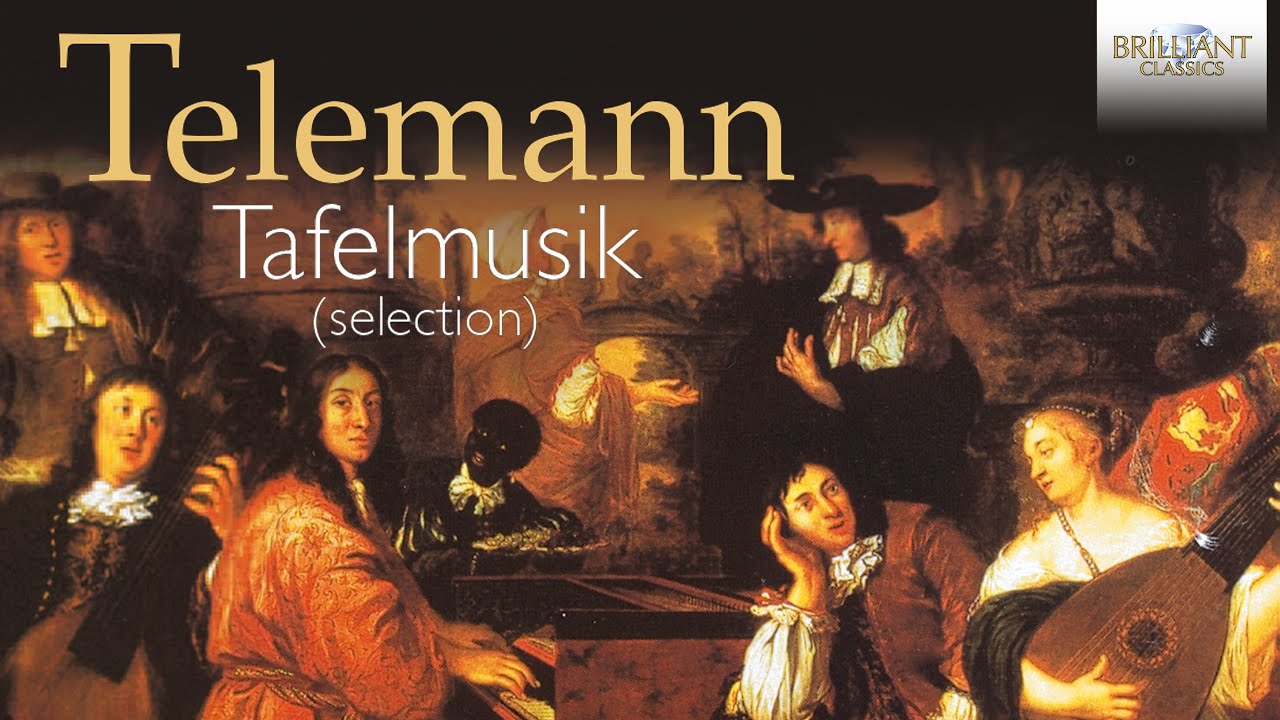
Georg Philipp Telemann was a contemporary of J.S. Bach. In Telemann’s music, however, one can detect a sense of humour far more often than in Bach’s work. At the time Tafelmusik immediately was a great success, and today it is still really appreciated. On release a selection played by Musica Amphion under Pieter-Jan Belder.
00:00:00 Ouverture and Suite in D Major for oboe, trumpet, strings and basso continuo (from Musique de Table 2nd production): Ouverture (Lentement, Vite, Lentement, Vite, Lentement)
00:10:31 Ouverture and Suite in D Major for oboe, trumpet, strings and basso continuo (from Musique de Table 2nd production): Air Tempo Giusto
00:17:00 Ouverture and Suite in D Major for oboe, trumpet, strings and basso continuo (from Musique de Table 2nd production): Air Vivace
00:19:57 Ouverture and Suite in D Major for oboe, trumpet, strings and basso continuo (from Musique de Table 2nd production): Air Presto
00:25:12 Ouverture and Suite in D Major for oboe, trumpet, strings and basso continuo (from Musique de Table 2nd production): Air Allegro
00:28:55 Quatuor in D Minor for two flutes, recorder & basso continuo (2nd production): Andante
00:31:54 Quatuor in D Minor for two flutes, recorder & basso continuo (2nd production): Vivace
00:35:38 Quatuor in D Minor for two flutes, recorder & basso continuo (2nd production): Largo
00:38:48 Quatuor in D Minor for two flutes, recorder & basso continuo (2nd production): Allegro
00:43:11 Concerto in F Major for three violins, violino grosso & basso continuo (2nd production): Allegro
00:48:22 Concerto in F Major for three violins, violino grosso & basso continuo (2nd production): Largo
00:52:54 Concerto in F Major for three violins, violino grosso & basso continuo (2nd production): Vivace
00:56:12 Conclusion in E Minor for two flutes, strings & basso continuo (1st production): Allegro
Tracklist below.
Download via iTunes : https://itunes.apple.com/album..../bruch-complete-stri
Listen via Spotify : https://open.spotify.com/album..../3xWaYf2ULWRblj3qHKt
Buy CD: http://brilliantclassics.com/a....rticles/b/bruch-comp
The two opus-numbered quartets of Max Bruch were first recorded only in 1993 by an Italian ensemble, and the recognised expertise of the Diogenes Quartet in music of this style and era makes their new recording the obvious first choice, but their album is further enhanced by the inclusion of a C minor quartet which was rediscovered as recently as 2013, in a box in the archives of the Mozart-Stiftung in Frankfurt. Further research revealed that this was an unpublished work by Bruch, composed in 1852 at the age of 14, in application for a scholarship from the foundation. Louis Spohr, in approving the application, was fulsome in his praise: ‘I am very interested to learn more about him, as I prophesy a brilliant career for him.’
This youthful effort is clearly influenced by the estimable models of Beethoven and Schubert, but its composer’s melodic gift is already revealed by the slow movement, an enchanting Notturno of great expressive strength. This is a subtle, finely balanced movement, woven with precocious sophistication by the teenage Bruch into an intricate fabric of voices, which cushions the sensitive melody, as it were, on a bed of roses. Four years later – and still only 18 – he referred back to elements of the quartet in his first acknowledged work in the genre, designated Op.9
This CD contains a World Premiere! The C minor Quartet by Max Bruch.
In 2013 an unknown quartet was discovered in the archives of the Mozart-Stiftung in Frankfurt, further research made it clear it was by the 14-year old Max Bruch! This fresh and spontaneous youth work clearly has its roots in the romantic tradition going back to Beethoven, Mendelssohn, Schubert and Schumann.
The well known String Quartets Op.9 and Op.10 are vintage Bruch: although not revolutionary in any sense, they abound in catchy romantic melodies, the warm sonorities and harmonies adding to the feel-good atmosphere.
Excellent performances by the German Diogenes Quartet, who already recorded successfully for Brilliant Classics works by Gernsheim and a complete Schubert cycle.
Scholarly liner notes in both English and German are included in the booklet.
00:00:00 String Quartet in C Minor, Op. Posth.: I. Adagio ma non troppo – Allegro molto
00:08:19 String Quartet in C Minor, Op. Posth.: II. Adagio
00:17:26 Quartet in C Minor, Op. Posth.: III. Scherzo. Allegro molto
00:21:08 String Quartet in C Minor, Op. Posth.: IV. Finale. Presto agitato
00:26:49 String Quartet No. 1 in C Minor, Op. 9: I. Andante – Allegro ma non troppo
00:36:12 String Quartet No. 1 in C Minor, Op. 9: II. Adagio
00:42:52 String Quartet No. 1 in C Minor, Op. 9: III. Allegro molto energico
00:47:00 String Quartet No. 1 in C Minor, Op. 9: IV. Molto vivace
00:52:14 String Quartet No. 2 in E Major, Op. 10: I. Allegro maestoso
01:01:41 String Quartet No. 2 in E Major, Op. 10: II. Andante quasi adagio
01:07:57 String Quartet No. 2 in E Major, Op. 10: III. Vivace non troppo - Un poco meno vivo
01:13:25 String Quartet No. 2 in E Major, Op. 10: IV. Finale. Vivace
Artist:
Diogenes (Quartett)
Stefan Kirpal (violin)
Gundula Kirpal (violin)
Alba González i Becerra (viola)
Stephen Ristau (violincello)

Download via iTunes: https://itunes.apple.com/album..../p%C3%A4rt-spiegel-i
Physical sale: http://brilliantclassics.com/a....rticles/a/arvo-paert
Listen via Spotify: https://play.spotify.com/album/15itsRmjl6H6iN4VastMh6?play=true&utm_source=open.spotify.com&utm_medium=open
Artist:
Benjamin Hudson viola
Sebastian Klinger cello
Jürgen Kruse piano
These days Estonian composer Arvo Pärt is mainly associated with his later works. Born in 1935 he wrote ‘avant-garde’ works at first. In the nineteen seventies he increasingly found his inspiration in medieval religious music, both western and eastern European. This first transpired in his Für Alina for piano. It already has the telling low tempo and (two) layers. Pärt further extended his so-called tintinnabuli (i.e. bells) style in small-scale pieces like the different versions of Spiegel im Spiegel and Variationen zur Gesundung von Arinuschka. Although this last piece has ‘classical’ features as well.
This release shows an aspect of Arvo Pärt which is seldomly heard: his small-scale chamber music works. As such this recording is a valuable addition to the material already available on the market.

Tracklist below.
Spotify: https://open.spotify.com/album..../0JytBS3hgbDts4CpMno
Physical sales: http://brilliantclassics.com/a....rticles/b/beethoven-
iTunes: https://itunes.apple.com/album..../beethoven-complete-
Beethoven’s oeuvre only comprises a small collection of works for cello and piano, but that the composer was an accomplished writer for this combination of instruments is evident from the fact that Jean-Louis Duport, one of Frederick II’s court cellists and one of the most revered musicians of his day, incorporated many of the techniques found in the Op.5 sonatas into his instruction manual for cello.
Other information:
The two musicians Timora Rosler and Klára Würtz have been playing together for more than 15 years, having won several chamber music prizes. They performed the Beethoven cycle several times in concert over the years, and their interpretation has ripened to such an extent that the time came to record it. And here it is: every note alive and vibrant, played with gusto and feeling, alternating melancholy and joy, sadness and sheer fun.
00:00:00 Cello Sonata in F Major, Op. 5 No. 1: I. Adagio sostenuto – Allegro
00:17:01 Cello Sonata in F Major, Op. 5 No. 1: II. Rondo. Allegro vivace
00:23:22 Cello Sonata in G Minor, Op. 5 No. 2: I. Adagio sostenuto ed espressivo
00:28:58 Cello Sonata in G Minor, Op. 5 No. 2: I. Allegro molto più tosto presto
00:38:51 Cello Sonata in G Minor, Op. 5 No. 2: 5 II. Rondo. Allegro
00:47:20 Cello Sonata in A Major, Op. 69: I. Allegro ma non tanto
00:59:51 Cello Sonata in A Major, Op. 69: II. Scherzo. Allegro molto
01:04:54 Cello Sonata in A Major, Op. 69: III. Adagio cantabile – Allegro vivace
01:13:06 Cello Sonata in C Major, Op. 102 No. 1: I. Adagio – Allegro vivace
01:20:19 Cello Sonata in C Major, Op. 102 No. 1: II. Adagio – Tempo d’andante – Allegro vivace
01:27:18 Cello Sonata in D Major, Op. 102 No. 2: I. Allegro con brio
01:33:42 Cello Sonata in D Major, Op. 102 No. 2: II. Adagio con molto sentimento d’affetto
01:41:31 Cello Sonata in D Major, Op. 102 No. 2: III. Allegro – Allegro fugato
01:46:00 12 Variations on “See the Conqu’ring Hero comes”, WoO 45: Thema. Allegretto
01:46:42 12 Variations on “See the Conqu’ring Hero comes”, WoO 45: Variation 1
01:47:20 12 Variations on “See the Conqu’ring Hero comes”, WoO 45: Variation 2
01:47:58 12 Variations on “See the Conqu’ring Hero comes”, WoO 45: Variation 3
01:48:36 12 Variations on “See the Conqu’ring Hero comes”, WoO 45: Variation 4
01:49:20 12 Variations on “See the Conqu’ring Hero comes”, WoO 45: Variation 5
01:50:04 12 Variations on “See the Conqu’ring Hero comes”, WoO 45: Variation 6
01:50:42 12 Variations on “See the Conqu’ring Hero comes”, WoO 45: Variation 7
01:51:22 12 Variations on “See the Conqu’ring Hero comes”, WoO 45: Variation 8
01:51:59 12 Variations on “See the Conqu’ring Hero comes”, WoO 45: Variation 9
01:52:42 12 Variations on “See the Conqu’ring Hero comes”, WoO 45: Variation 10
01:53:25 12 Variations on “See the Conqu’ring Hero comes”, WoO 45: Variation 11. Adagio
01:56:24 12 Variations on “See the Conqu’ring Hero comes”, WoO 45: Variation 12. Allegro
01:57:27 12 Variations on “Ein Mädchen oder Weibchen”, Op. 66: Thema. Allegretto
01:57:57 12 Variations on “Ein Mädchen oder Weibchen”, Op. 66: Variation 1
01:58:29 12 Variations on “Ein Mädchen oder Weibchen”, Op. 66: Variation 2
01:59:02 12 Variations on “Ein Mädchen oder Weibchen”, Op. 66: Variation 3
01:59:32 12 Variations on “Ein Mädchen oder Weibchen”, Op. 66: Variation 4
02:00:05 12 Variations on “Ein Mädchen oder Weibchen”, Op. 66: Variation 5
02:00:38 12 Variations on “Ein Mädchen oder Weibchen”, Op. 66: Variation 6
02:01:06 12 Variations on “Ein Mädchen oder Weibchen”, Op. 66: Variation 7
02:01:45 12 Variations on “Ein Mädchen oder Weibchen”, Op. 66: Variation 8
02:02:22 12 Variations on “Ein Mädchen oder Weibchen”, Op. 66: Variation 9
02:02:54 12 Variations on “Ein Mädchen oder Weibchen”, Op. 66: Variation 10. Adagio
02:04:03 12 Variations on “Ein Mädchen oder Weibchen”, Op. 66: Variation 11. Poco adagio, quasi andante
02:04:58 12 Variations on “Ein Mädchen oder Weibchen”, Op. 66: Variation 12. Allegro
02:06:56 7 Variations on “Bei Männern, welche Liebe fühlen”, WoO 46: Thema. Andante
02:07:41 7 Variations on “Bei Männern, welche Liebe fühlen”, WoO 46: Variation 1
02:08:19 7 Variations on “Bei Männern, welche Liebe fühlen”, WoO 46: Variation 2
02:09:02 7 Variations on “Bei Männern, welche Liebe fühlen”, WoO 46: Variation 3
02:10:06 7 Variations on “Bei Männern, welche Liebe fühlen”, WoO 46: Variation 4
02:11:22 7 Variations on “Bei Männern, welche Liebe fühlen”, WoO 46: Variation 5. Si prenda il tempo un poco
02:11:58 7 Variations on “Bei Männern, welche Liebe fühlen”, WoO 46: Variation 6. Adagio
02:14:05 7 Variations on “Bei Männern, welche Liebe fühlen”, WoO 46: Variation 7. Allegro ma non troppo
Artist:
Timora Rosler (cello)
Klara Wurtz (piano)

Online purchase or streaming (Spotify, iTunes, Amazon Music, Deezer, Tidal, Google Play): https://brilliant-classics.lnk.to/MendelssohnPiano
Physical Purchase: https://www.brilliantclassics.....com/articles/m/mende
Spotify Playlists:
Brilliant Classics Spotify: https://brilliant-classics.lnk.to/Spotify
The best of Liszt: https://brilliant-classics.lnk.to/Playliszt
The best of Bach: https://brilliant-classics.lnk.....to/BestOfBachPlayli
Most popular piano music: https://brilliant-classics.lnk.to/MostPopularPiano
Beautiful classical Music: https://brilliant-classics.lnk.....to/BeautifulClassic
Classical music for dinnertime: https://brilliant-classics.lnk.....to/ClassicalMusicfo
Composer: Felix Mendelssohn
Artists: Derek Han (piano), Israel Chamber Orchestra, Stephen Gunzenhauser (conductor)
About this Album:
Compared to his symphonies, Mendelssohn’s solo concertos are not performed that often. On this release are two brilliant piano concertos (Op. 25 and Op. 40), pleasant performances by Derek Han.
Tracklist:
00:00:00 Piano Concerto No. 1 in G Minor, Op. 25: Molto allegro con fuoco
00:07:03 Piano Concerto No. 1 in G Minor, Op. 25: Andante
00:12:44 Piano Concerto No. 1 in G Minor, Op. 25: Presto-molto allegro e vivace
00:18:55 Piano Concerto No. 2 in D Minor, Op. 40: Allegro appassionato
00:27:43 Piano Concerto No. 2 in D Minor, Op. 40: Adagio
00:33:57 Piano Concerto No. 2 in D Minor, Op. 40: Finale, presto scherzando
00:40:32 Capricco Brillante in B Minor for piano & orchestra, Op. 22
Thanks for watching! Feel free to subscribe and visit our channel for the best classical music from the greatest composers like: Bach, Satie, Mozart, Tchaikovsky, Beethoven, Chopin, Haydn, Ravel, Debussy, Verdi, Vivaldi, Handel, Brahms, Liszt, Schubert, Mendelssohn, Rachmaninoff, Wagner, Strauss, Handel, Dvorak, Schubert and many more! We upload complete albums, music for relaxing, working, studying, meditating, concentrating, instrumental music, opera, violin, classical piano music, sonatas and more!
#Classical #Mendelssohn #BrilliantClassics #Music #Composer #ClassicalMusic #Piano #Pianoconcerto

Tracklist below.
Online purchase or streaming (Spotify, iTunes, Amazon Music, Deezer, Google Play): https://brilliant-classics.lnk.....to/WagnerCompletePi
More Information: https://www.brilliantclassics.....com/articles/w/wagne
Brilliant Classics Spotify: https://open.spotify.com/user/....brilliantclassics?si
Brilliant Classics Facebook: https://www.facebook.com/brilliantclassics
Today Richard Wagner is best known for his extraordinary operas; any success in other domains was dwarfed by these compositional feats in the world of musical theatre. But Wagner’s piano works can be seen to be just as important in understanding the evolution of his style and musical thought, and thus the development of this dominating figure of the 19th century.
The collection brings together Wagner’s entire output for solo piano. The earliest sonata on the recording is the Piano Sonata in B flat, which shows evidence of Wagner’s music education, with much indebted to the Beethovian model as well as to the great pianist-composers Weber and Pleyel. These influences are heard again in the more mature and complex Große Sonate – a work that Wagner intended to turn into a symphony, though this attempt was later abandoned. A regular dedicatee of Wagner’s works was Mathilde Wesendock – the relationship between the two is still much debated today – and among the works in this collection, three are dedicated to Mathilde: the ‘masterpiece’ Eine Sonate für das Album von Frau Mathilde Wesendock, Notenbrief für Mathilde Wesendonck and the ‘Schluß zum Vorspiel’ from Tristan und Isolde. The ‘Tristan chord’ at the beginning of the latter has become considered a clear attestation of Wagner’s infatuation with Mathilde, for whom he stopped work on the Ring cycle to begin that great testament of love, Tristan und Isolde.
The works are performed by the Italian pianist Pier Paolo Vincenzi, whose busy concert schedule takes him all over his native country. He is joined for the Polonaise for 4 hands in D by Federica Ferrati.
00:00:00 Eine Sonate für das Album von Frau M.W., WWV 85
00:13:37 Piano Sonata in A Major, WWV 26 Op.4 ‘Große Sonate’: I. Allegro con moto
00:22:21 Piano Sonata in A Major, WWV 26 Op.4 ‘Große Sonate’: II. Adagio molto, e assai espressivo
00:36:01 Piano Sonata in A Major, WWV 26 Op.4 ‘Große Sonate’: III. Maestoso – Allegro molto
00:45:36 Piano Sonata in B-Flat Major, WWV 21 Op. 1: I. Allegro con brio
00:54:25 Piano Sonata in B-Flat Major, WWV 21 Op. 1: II. Larghetto
01:03:05 Piano Sonata in B-Flat Major, WWV 21 Op. 1: III. Menuetto: Allegro
01:06:52 Piano Sonata in B-Flat Major, WWV 21 Op. 1: IV. Allegro vivace
01:13:02 Schluß zum Vorspiel, from Tristan und Isolde
01:17:33 Fantasia in F-Sharp Minor, WWV 22 Op. 3
01:46:04 Albumblatt für Ernst Benedikt Kietz, WWV 64 ‘Lied ohne Worte’
01:48:13 Polonaise in D Major, WWV 23a
01:51:10 In das Album der Fürstin M., WWV 94
01:54:14 Züricher Vielliebchen-Walzer, WWV 88
01:55:31 Ankunft bei den schwarzen Schwänen, WWV 95
02:00:42 Polka in G Major, WWV 84
02:01:17 Notenbrief für Mathilde Wesendonck
02:02:40 Polonaise for Piano Four Hands in D Major, WWV 23b Op.2
02:07:59 Elegy in A-Flat Major
02:09:37 Albumblatt für Frau Betty Schott, WWV 108
02:15:12 Piano Sonata in A Major, WWV 26 Op. 4 ‘Große Sonate’: III. Maestoso: Tempo moderato e maestoso – Allegro molto (alternative version)

Tracklist below.
iTunes: https://itunes.apple.com/album..../mozart-great-piano-
Physical Sale: http://brilliantclassics.com/a....rticles/m/mozart-the
Spotify: https://open.spotify.com/album..../3Tfozl3YUXqrJaIvpQJ
This an issue of series consisting of 14 3CD-sets with selected highlights taken from our Mozart complete edition, intented for those who prefer to buy more selectively.
This release contains the following works: K. 41, K. 271 “Jeunehomme”, K. 449, K. 456, K. 491, K. 537 “Coronation Concerto“ and K. 595.
00:00:00 Piano Concerto No. 18 in B-Flat Major, KV 456: Allegro vivace
00:12:36 Piano Concerto No. 18 in B-Flat Major, KV 456: Andante un poco sostenuto
00:22:12 Piano Concerto No. 18 in B-Flat Major, KV 456: Allegro vivace
00:30:21 Piano Concerto No. 26 in D Major, KV 537, “Coronation Concerto”: Allegro
00:44:51 Piano Concerto No. 26 in D Major, KV 537, “Coronation Concerto”: Larghetto
00:50:58 Piano Concerto No. 26 in D Major, KV 537, “Coronation Concerto”: Allegretto
01:01:52 Piano Concerto No. 14 in E-Flat Major, KV 449: Allegro vivace
01:10:45 Piano Concerto No. 14 in E-Flat Major, KV 449: Andantino
01:17:06 Piano Concerto No. 14 in E-Flat Major, KV 449: Allegro ma non troppo
01:23:24 Piano Concerto No. 4 in G Major, KV 41: Allegro
01:28:29 Piano Concerto No. 4 in G Major, KV 41: Andante
01:32:20 Piano Concerto No. 4 in G Major, KV 41: Molto allegro
01:36:10 Piano Concerto No. 27 in B-Flat Major, KV 595: Allegro
01:50:21 Piano Concerto No. 27 in B-Flat Major, KV 595: Larghetto
01:57:15 Piano Concerto No. 27 in B-Flat Major, KV 595: Rondo, alelgro
02:06:35 Piano Concerto E-Flat Major, KV 271, “Jeunehomme”: Allegro
02:16:49 Piano Concerto E-Flat Major, KV 271, “Jeunehomme”: Andantino
02:27:00 Piano Concerto E-Flat Major, KV 271, “Jeunehomme”: Rondeau. Presto
02:37:19 Piano Concerto in C Minor, KV 491: Allegro
02:50:50 Piano Concerto in C Minor, KV 491: Larghetto
02:58:30 Piano Concerto in C Minor, KV 491: Allegretto
Artist:
Derek Han (piano)
Philharmonia Orchestra
Paul Freeman (conductor)
Download & Streams (Spotify, iTunes, Amazon Music, Deezer, Google Play and more): https://brilliant-classics.lnk.....to/MozartCompleteSo
More information: https://www.brilliantclassics.....com/articles/m/mozar
Facebook: https://facebook.com/Brilliantclassics
Mozart’s piano sonatas date from 1773 until 1788 – a period in which his style matured at a truly remarkable rate. The earliest sonatas are very much in the galant style of W.F and CPE Bach, and in places Scarlatti’s influence can be detected. However, the late sonatas, such as K457 are full of surprises, and here the influence of Haydn is to the fore – even predicting Beethoven in passages. The years from 1773 to the late 80s saw the rapid development of the piano from a novelty and experimental instrument, to the stage where it’s power and range provided composers with a hitherto undreamed palate of colours and expression. Mozart exploited the new instruments to maximum effect in his concertos and his sonatas.
Composer: Wolfgang Amadeus Mozart
Artist: Klara Würtz (piano)
00:00:00 Piano Sonata No.1 in C, K279: I. Allegro
00:04:56 Piano Sonata No.1 in C, K279: II. Andante
00:10:09 Piano Sonata No.1 in C, K279: III. Allegro
00:13:31 Piano Sonata No.2 in F, K280: I. Allegro assai
00:18:02 Piano Sonata No.2 in F, K280: II. Adagio
00:24:04 Piano Sonata No.2 in F, K280: III. Presto
00:26:59 Piano Sonata No.3 in B flat, K281: I. Allegro
00:33:47 Piano Sonata No.3 in B flat, K281: II. Andante amoroso
00:39:19 Piano Sonata No.3 in B flat, K281: III. Rondeau: Allegro
00:43:56 Piano Sonata No.4 in E flat, K282: I. Adagio
00:50:57 Piano Sonata No.4 in E flat, K282: II. Menuetto
00:55:02 Piano Sonata No.4 in E flat, K282: III. Allegro
00:58:06 Piano Sonata No.5 in G, K283: I. Allegro
01:03:32 Piano Sonata No.5 in G, K283: II. Andante
01:09:14 Piano Sonata No.5 in G, K283: III. Presto
01:13:02 Piano Sonata No.6 in D, K284: I. Allegro
01:18:32 Piano Sonata No.6 in D, K284: II. Rondeau en polonaise: Andante
01:22:38 Piano Sonata No.6 in D, K284: III. Andante (Tema con variazioni)
01:38:15 Piano Sonata No.7 in C, K309: I. Allegro con spirito
01:44:13 Piano Sonata No.7 in C, K309: II. Andante un poco adagio
01:49:21 Piano Sonata No.7 in C, K309: III. Rondeau: Allegretto grazioso
01:55:23 Piano Sonata No.8 in A Minor, K310: I. Allegro maestoso
02:01:24 Piano Sonata No.8 in A Minor, K310: II. Andante cantabile con espressione
02:08:31 Piano Sonata No.8 in A Minor, K310: III. Presto
02:11:14 Piano Sonata No.9 In D, K311: I. Allegro con spirito
02:15:41 Piano Sonata No.9 In D, K311: II. Andante con espressione
02:20:33 Piano Sonata No.9 In D, K311: III. Rondeau: Allegro
02:26:39 Piano Sonata No.10 In C, KV330: I. Allegro moderato
02:33:20 Piano Sonata No.10 In C, KV330: II. Andante cantabile
02:39:53 Piano Sonata No.10 In C, KV330: III. Allegretto
02:45:36 Piano Sonata No.11 In A, K331: I. Andante grazioso
02:58:30 Piano Sonata No.11 In A, K331: II. Menuetto
03:04:25 Piano Sonata No.11 In A, K331: III. Alla Turca: Allegretto
03:07:50 Piano Sonata No.12 in F, K332: I. Allegro
03:14:24 Piano Sonata No.12 in F, K332: II. Adagio
03:19:07 Piano Sonata No.12 in F, K332:III. Allegro assai
03:25:58 Piano Sonata No.13 in B flat, K333: I. Allegro
03:33:20 Piano Sonata No.13 in B flat, K333: II. Andante cantabile
03:38:53 Piano Sonata No.13 in B flat, K333: III. Allegretto grazioso
03:45:30 Piano Sonata No.14 in C Minor, K457: I. Allegro molto
03:50:59 Piano Sonata No.14 in C Minor, K457: II. Adagio
03:58:42 Piano Sonata No.14 in C Minor, K457: III. Allegro assai
04:03:02 Piano Sonata No.15 in F, K533: Allegro
04:10:39 Piano Sonata No.15 in F, K533: Andante
04:17:14 Piano Sonata No.15 in F, K533: Rondeau: Allegretto
04:23:42 Piano Sonata No.16 in C, K545: I. Allegro
04:27:02 Piano Sonata No.16 in C, K545: II. Andante
04:31:12 Piano Sonata No.16 in C, K545: III. Rondo
04:32:58 Piano Sonata No.17 in B flat, K570: I. Allegro
04:38:32 Piano Sonata No.17 in B flat, K570: II. Adagio
04:46:07 Piano Sonata No.17 in B flat, K570: III. Allegretto
04:49:38 Piano Sonata No.18 in D, K576: I. Allegro
04:54:50 Piano Sonata No.18 in D, K576: II. Adagio
05:00:23 Piano Sonata No.18 in D, K576: III. Allegretto

Tracklist below.
Online purchase or streaming (Spotify, iTunes, Amazon Music, Deezer, Google Play): https://brilliant-classics.lnk.....to/KhachaturianBall
More Information: https://www.brilliantclassics.....com/articles/k/khach
Brilliant Classics Spotify: https://open.spotify.com/user/....brilliantclassics?si
Brilliant Classics Facebook: https://www.facebook.com/brilliantclassics
Composers: Aram Ilyich Khachaturian
Artists: Bolshoi Theatre Orchestra, Evgeny Svetlanov (conductor)
Along with Shostakovich and Prokofiev, Khachaturian was one of the most famous and celebrated composers of the Soviet Union. Born in Tbilisi, Georgia, his earliest musical influences were the folk music of Georgia and of his ancestral homeland, Armenia. His ballet Gayaneh, composed in 1942, tapped into this passion for his Armenian heritage; set on a collective farm, its story is concerned with the triumph of love and loyalty to the Motherland over treason – themes that would keep Stalin happy. Khachaturian’s later ballet Spartacus, written in 1956, took the famous story of the Greek slave turned gladiator and his defeat of the Roman general Crassus as its basis. Composed in the dying years of Stalin’s rule, Khachaturian and his audiences were drawn to the story’s theme of resistance against tyranny.
Several movements from these ballets have taken on a life outside the original ballet suites – for example, the Sabre Dance from Gayaneh and the famous Adagio from Spartacus – ensuring that these wonderful and colourfully scored ballet suites have become firm favourites in the concert hall.
‘The Bolshoi orchestra are obviously completely at home in this repertoire, and Svetlanov’s ear for orchestral detail is as sure as ever. How beautifully he handles the tapering down at the end of the ‘Dance of the Nymphs’ (from Spartacas), while the opening of the ‘Dance of the Young Girls of Gadès’ brings a slow, subtle crescendo… The famous ‘Adagio of Spartacus and Phrygia’ has never sounded more touchingly refined on record and the climax does not disappoint. In Gayaneh there is a beguilingly sinuous sophistication in ‘Ayesha’s dance’, and the ‘Lullaby’ and ‘Gayeneh’s Adagio’ are beautifully played, creating much delicacy of texture.’ Gramophone.
00:00:00 Gayaneh, Ballet Suite: Dance of the Rose Maidens
00:02:41 Gayaneh, Ballet Suite: Aysha’s Dance
00:07:04 Gayaneh, Ballet Suite: Dance of the Highlanders
00:09:01 Gayaneh, Ballet Suite: Lullaby
00:14:54 Gayaneh, Ballet Suite: Noune’s Dance
00:16:39 Gayaneh, Ballet Suite: Armen’s Var
00:18:37 Gayaneh, Ballet Suite: Gayaneh’s Adagio
00:22:37 Gayaneh, Ballet Suite: Lezghinka
00:25:35 Gayaneh, Ballet Suite: Dance with Tambourines
00:28:35 Gayaneh, Ballet Suite: Sabre Dance
00:30:58 Spartacus, Ballet Suite: Introduction – Dance of the Nymphs
00:37:02 Spartacus, Ballet Suite: Aegina’s Dance
00:41:02 Spartacus, Ballet Suite: Scene and Dance with Crotalums
00:44:55 Spartacus, Ballet Suite: Adagio of Spartacus and Phrygia
00:54:38 Spartacus, Ballet Suite: Dance of the Gaditan Maidens – Victory of Spartacus

To be released in september 2018!
Playing: Autre chacone in C Major
OUT NOW: https://brilliant-classics.lnk.to/Corbetta
Brilliant classics Spotify: https://brilliant-classics.lnk.to/Spotify
Brilliant classics Facebook: https://www.facebook.com/brilliantclassics
Francesco Corbetta: the JS Bach of the guitar? A bold claim, but one made with passion by the guitarist Izhar Elias in his own booklet essay for this ground-breaking new album.
Born in the Italian city of Pavia around 1615, Corbetta worked as a musician in the court of Madrid but he made his career and lasting reputation in France. According to contemporary accounts, Corbetta’s playing epitomized the ornate Baroque guitar solo. The high range, frequent resolution of dissonance, virtuosic techniques, and coloristic effects, such as overlapping tones of campanelas or flashy repicco strumming, converged in his guitar music to make it the most brilliant if challenging of the era.
On this album Elias has made his own selection from two of Corbetta’s published volumes which were written for King Charles II (1671) and King Louis XIV (1674) respectively. According to him, Corbetta’s music is rooted in the popular songs and dances of his day, making him more like a modern pop songwriter. Using the genres of chaconne and passacaglia, several of which are included here, he transformed the guitar into a polyphonic instrument and a genuinely soloistic one compared to its previous, humble role as an accompaniment to song and strings. There are also two substantial dance suites, in A minor and G minor.
The Dutch-born guitarist Izhar Elias has made several significant contributions to the extensive library of guitar music on Brilliant Classics, including a Spanish Baroque album, ‘La Monarcha’ (BC94352), an exploration of Beethoven’s little-known writing for the instrument (BC94631); and perhaps most noteworthy, a first complete recording for substantial excerpts from Rossini’s late masterpiece Semiramide, arranged for solo guitar by Giuliani (BC93902). ‘You’ll rarely hear anyone work so hard,’ remarked the Classics Today reviewer. ‘The playing is magnificent – fluent, tonally as varied as possible, rhythmically true to Rossini.’
Francesco Corbetta (1615-1681) was an Italian guitar player, teacher and composer. First attached to the Mantua court of the Gonzaga family, he later traveled Europe as one of the first guitar virtuosos, finding an admiring welcome at the courts of Madrid and Hannover, finally settling at the court of Louis XIV. In later years he was also active as court musician to Charles II of England, dividing his last 20 years between Paris and London.
His early works were mostly strummed dance music, later he developed his style with complex harmonies and polyphony in the French taste.
Corbetta’s magnum opus is titled La Guitarre Royalle, consisting of two books written for his two patrons (Louis XIV and Charles II). The rhythmic pattern of the court dances are embellished with French style ornamentations, the result being a highly sophisticated, folk music based instrumentation.
Dutch guitarist Izhar Elias is one of today’s most sought-after specialists in Early Music, chamber music and contemporary music. He recorded several remarkable CD’s for Brilliant Classics, to great international acclaim. He wrote the informative liner himself, in English and German.

Online purchase or streaming (Spotify, iTunes, Amazon Music, Deezer, Tidal, Google Play):
https://brilliant-classics.lnk.....to/BrahmsViolinDoub
Spotify Playlists:
Brilliant Classics Spotify: https://brilliant-classics.lnk.to/Spotify
The best of Liszt: https://brilliant-classics.lnk.to/Playliszt
The best of Bach: https://brilliant-classics.lnk.....to/BestOfBachPlayli
Most popular piano music: https://brilliant-classics.lnk.to/MostPopularPiano
Beautiful classical Music: https://brilliant-classics.lnk.....to/BeautifulClassic
Classical music for dinnertime: https://brilliant-classics.lnk.....to/ClassicalMusicfo
Composer: Johannes Brahms
Artists: Borika van den Booren (violin), Emmy Verhey (violin), Janos Starker (cello)
Now together on a single album two beautiful concertos by Brahms. Borika van Booren plays the violin concerto. Emmy Verhey (violin) and Janos Starker (cello) play the unusual double concerto.
00:00:00 Violin Concerto in D Major, Op. 77: Allegro ma non troppo
00:23:53 Violin Concerto in D Major, Op. 77: Adagio
00:33:37 Violin Concerto in D Major, Op. 77: Allegro giocoso
00:42:31 Concerto for Violin, Cello & Orchestra in A Minor, Op. 102: Allegro
00:59:51 Concerto for Violin, Cello & Orchestra in A Minor, Op. 102: Andante
01:08:16 Concerto for Violin, Cello & Orchestra in A Minor, Op. 102: Vivace non troppo
Spotify: https://open.spotify.com/album..../2b3Sia98rloJFFNlf3I
Physical CD: http://brilliantclassics.com/a....rticles/j/js-bach-ch
iTunes: https://itunes.apple.com/album/id944183966?ls=1&app=itunes
Here perhaps is the very heart of Bach; a very palpable demonstration of his heritage and impact. Bach revered his forebears, while at the same time wishing to renew their legacy – both that of his own, already notable Bach family and of their musical contemporaries – and leave a mark on posterity. His endless inventiveness in taking the old hymn tunes devised in the generations before him, and clothing them in rich and strange harmonies, each one tailored to the specific text and mood of its content, creates a box of small wonders.
Composer:
Johann Sebastian Bach
Artist:
Chamber Choir of Europe
Nicol Matt (conductor)

Physical purchase: http://www.brilliantclassics.c....om/articles/b/beetho
Facebook page: https://www.facebook.com/brilliantclassics/
Composer: Ludwig van Beethoven
Violin concerto:Emmy Verhey (violin), Utrecht Symphony Orchestra, Hans Vonk (conductor)
Romances No. 2: Royal Philharmonic Orchestra, Hans Vonk (conductor)
Romances No. 1: Brabant Orchestra, Eduardo Marturet (conductor)
Thé violin concerto by Beethoven together with the two Romances for violin and orchestra. The soloist is Emmy Verhey.
00:00:00 Violin Concerto in D Major, Op. 61: Allegro ma non troppo
00:25:53 Violin Concerto in D Major, Op. 61: Larghetto
00:35:43 Violin Concerto in D Major, Op. 61: Rondo
00:46:32 Romance for Violin & Orchestra No. 2 in F Major, Op. 50
00:55:44 Romance for Violin & Orchestra No. 1 in G Major, Op. 40

Tracklist below.
Download on iTunes: https://itunes.apple.com/album..../monteverdi-madrigal
For physical sales: http://brilliantclassics.com/a....rticles/m/monteverdi
Listen via Spotify: https://open.spotify.com/album..../1IhsqHJvQjPpHWLCDuh
Le Nuove Musiche, a vibrant young ensemble from the Netherlands, specialises in music from the first half of the 17thcentury. While seeking to maintain authentic performance standards, the ensemble brings the music very much into the present, arguing that artistic questions of the past still permeate the musical landscape today. Featuring a captivating group of solo singers, who between them have performed with the Amsterdam Baroque Choir and The Bach Choir & Orchestra of The Netherlands, the ensemble is headed by Krijn Koetsveld, leader and harpsichordist, who has previously collaborated with the Groot Omroepkoor and the prestigious Netherlands Chamber Choir.
This is the second of a planned release of Claudio Monteverdi’s complete madrigals.The fifth and sixth book – already released on Brilliant Classics as 93799 – were the first to break with tradition and herald ‘la seconda pratica’, the era of the basso continuo. From then on, the publication of Monteverdi’s innovative settings were eagerly awaited, as they set the stage for more instrumental ritornellos, a newly important basso continuo and the addition of ornamentation around the bass and vocal parts. The book finishes with a ballo, Tirsi e Clori, a love duet with a five‐part accompaniment, highly elaborate, with a chatty Tirsi contrasting with a sweet and melodic Clori. When the two singers come together with the rest of the ensemble, the listener is treated to the pinnacle of the madrigal era. 00:00:00 Sinfonia – Tempro la cetra, SV 117
00:08:11 A quest’olmo, a quest’ombre, SV 119
00:14:02 Non è di gentil core, SV 118
00:17:49 O come sei gentile, SV 120
00:21:49 Io son pur vezzosetta pastorella, SV 121
00:25:05 O viva fiamma, o miei sospiri ardenti, SV 122
00:28:13 Vorrei baciarti, SV 123
00:32:33 Dice la mia bellissima Licori, SV 124
00:35:02 Non vedrò mai le stelle, SV 126
00:38:58 Ah, che non si conviene, SV 125
00:42:12 Ecco vicine, o bella tigre, l’ore, SV 127
00:46:15 Perché fuggi tra’ salci, SV 128
00:49:31 Tornate, o cari baci, SV 129
00:52:11 Soave libertate, SV 130
00:55:38 Se ’l vostro cor, Madonna, SV 131
00:58:41 Interrotte speranze, eterna fede, SV 132
01:01:14 Augellin, che la voce al canto spieghi, SV 133
01:04:42 Vaga su spina ascosa, SV 134
01:07:34 Eccomi pronta ai baci, SV 135
01:10:07 Parlo, miser, o taccio?, SV 136
01:14:36 Tu dormi, ah crudo core!, SV 137
01:17:47 Al lume de le stelle, SV 138
01:21:50 Con che soavità, labbra adorate, SV 139
01:26:21 Ohimé, dove il mio ben, SV 140
01:31:02 Se i languidi miei sguardi, SV 141
01:38:49 Se pur destina e vole, SV 142
01:47:42 Chiome d’oro, SV 143
01:50:49 Amor, che deggio far?, SV 144
01:55:33 Ballo. Tirsi e Clori, SV 145
Artist:
Le Nuove Musiche
Krijn Koetsveld (artistic leader)
Spotify: https://open.spotify.com/album..../33GNaGclyF3UrDE6A4g
Physical sale: http://brilliantclassics.com/a....rticles/r/rameau-com
iTunes: https://itunes.apple.com/album..../rameau-complete-wor
00:00:00 Pièces de Clavecin en concerts, Concert No. 1: I. La coulicam
00:03:26 Pièces de Clavecin en concerts, Concert No. 1: II. La livri
00:06:00 Pièces de Clavecin en concerts, Concert No. 1: III. Le vézinet
00:09:26 Pièces de Clavecin en concerts, Concert No. 2: I. La laborde
00:14:47 Pièces de Clavecin en concerts, Concert No. 2: II. La bboucon
00:19:31 Pièces de Clavecin en concerts, Concert No. 2: III. L’Agaçante
00:22:06 Pièces de Clavecin en concerts, Concert No. 2: IV. Menuet No. 1 - Menuet No. 2
00:26:37 Pièces de Clavecin en concerts, Concert No. 3: I. La la poplinière
00:29:34 Pièces de Clavecin en concerts, Concert No. 3: II. La timide
00:34:41 Pièces de Clavecin en concerts, Concert No. 3: III. Tambourin
00:36:53 Pièces de Clavecin en concerts, Concert No. 4: I. La pantomime
00:41:40 Pièces de Clavecin en concerts, Concert No. 4: II. L’Indiscrète
00:43:02 Pièces de Clavecin en concerts, Concert No. 4: III. La Rameau
00:47:09 Pièces de Clavecin en concerts, Concert No. 5: La Forqueray
00:51:43 Pièces de Clavecin en concerts, Concert No. 5: La Cupis
00:57:31 Pièces de Clavecin en concerts, Concert No. 5: La Marais
00:59:59 Premier livre de pièces de clavecin: I. Prélude
01:02:37 Premier livre de pièces de clavecin: II. Allemande No. 1
01:08:00 Premier livre de pièces de clavecin: III. Allemande No. 2
01:09:48 Premier livre de pièces de clavecin: IV. Courante
01:11:32 Premier livre de pièces de clavecin: V. Gigue
01:13:52 Premier livre de pièces de clavecin: VI. Sarabande No. 1 - Sarabande No. 2
01:16:20 Premier livre de pièces de clavecin: VII. Vénitienne
01:17:36 Premier livre de pièces de clavecin: VIII. Gavotte
01:19:40 Premier livre de pièces de clavecin: IX. Menuet
01:20:36 Pièces de clavecin, Suite No. 2 in E Minor: I. Allemande
01:25:00 Pièces de clavecin, Suite No. 2 in E Minor: II. Courante
01:26:36 Pièces de clavecin, Suite No. 2 in E Minor: III. Gigue en rondeau
01:27:54 Pièces de clavecin, Suite No. 2 in E Minor: IV. Gigue en rondeau No. 2
01:29:56 Pièces de clavecin, Suite No. 2 in E Minor: V. Le rappel des oiseaux
01:32:28 Pièces de clavecin, Suite No. 2 in E Minor: VI. Rigaudon
01:33:40 Pièces de clavecin, Suite No. 2 in E Minor: VII. Musette en rondeau
01:36:03 Pièces de clavecin, Suite No. 2 in E Minor: VIII. Tambourin
01:37:17 Pièces de clavecin, Suite No. 2 in E Minor: XI. Rondeau. La villageoise
01:39:56 Pièces de clavecin, Suite No. 3 in D Major: I. Rondeau. Les tendres plaintes
01:43:20 Pièces de clavecin, Suite No. 3 in D Major: II. Les niais de sologne et deux doubles
01:49:11 Pièces de clavecin, Suite No. 3 in D Major: III. Tendrement. Les Soupirs
01:54:21 Pièces de clavecin, Suite No. 3 in D Major: IV. Rondeau. La joyeuse
01:55:29 Pièces de clavecin, Suite No. 3 in D Major: V. Rondeau. La follette
01:56:42 Pièces de clavecin, Suite No. 3 in D Major: VI. L’Entretien des muses
02:02:55 Pièces de clavecin, Suite No. 3 in D Major: VII. Rondeau. Les tourbillons
02:05:16 Pièces de clavecin, Suite No. 3 in D Major: VIII. Rondeau. Les cyclopes
02:08:58 Pièces de clavecin, Suite No. 3 in D Major: IX. Menuet. Le lardon
02:09:33 Pièces de clavecin, Suite No. 3 in D Major: X. La boiteuse
02:10:19 La Dauphine
02:14:08 Les Petits Marteaux
02:15:52 Nouvelles suites de pièces de Clavecin: I. Allemande
02:22:52 Nouvelles suites de pièces de Clavecin: II. Courante
02:26:40 Nouvelles suites de pièces de Clavecin: III. Sarabande
02:29:04 Nouvelles suites de pièces de Clavecin: IV. Les trois mains
02:34:09 Nouvelles suites de pièces de Clavecin: V. Fanfarinette
02:36:03 Nouvelles suites de pièces de Clavecin: VI. La triomphante
02:37:42 Nouvelles suites de pièces de Clavecin: VII. Gavotte et six doubles
02:45:55 Nouvelles suites de pièces de Clavecin: VIII. Rondeau. Les tricotets
02:48:13 Nouvelles suites de pièces de Clavecin: IX. L’Indifférente
02:49:35 Nouvelles suites de pièces de Clavecin: X. Menuet No. 1 - Menuet No. 2
02:51:46 Nouvelles suites de pièces de Clavecin: XI. La poule
02:56:54 Nouvelles suites de pièces de Clavecin: XII. Les triolets
02:59:57 Nouvelles suites de pièces de Clavecin: XIII. Les sauvages
03:02:17 Nouvelles suites de pièces de Clavecin: XIV. L’Enharmonique
03:08:58 Nouvelles suites de pièces de Clavecin: XV. L’Égyptienne
Artist:
Pieter-Jan Belder (harpsichord)
Musica Amphion

Streaming & Downloads: https://VA.lnk.to/Top30FavouriteClassicalChillout
Physical purchase: https://www.brilliantclassics.....com/articles/t/top-3
Brillant Classics Spotify: https://brilliant-classics.lnk.to/Spotify
A classical TOP 30 with the intention of relaxation and chillin'. Sit back, relax, and enjoy these Chillout Tunes.
00:00:00 Piano Concerto No. 21 in C Major, K. 467: II. Andante 'Elvira Madigan'
00:06:07 Carnival of the Animals: XIII. The Swan
00:09:12 Liebestraum, S. 541: No. 3, Oh Lieb, so lang du lieben kannst in A-Flat Major
00:13:16 Serenade No. 13 in G Major, K. 525 ‘Eine kleine Nachtmusik’: II. Romanze
00:18:19 Pictures at an Exhibition: Promenade No. 2 - No. 2, The Old Castle
00:23:35 Nocturnes, Op. 9: No. 2, Nocturne in E-Flat Major
00:27:56 Orfeo ed Euridice, Act 2: Dance of the Blessed Spirits
00:35:01 Concerto in F Minor, Op. 8 No. 4, RV 297 "Winter": II. Largo
00:37:05 Symphony No. 3 in F Major, Op. 90: III. Poco allegretto
00:43:05 Thaïs, Act 2: Méditation
00:47:47 Preludes, Op. 28: No. 15, Prelude in D-Flat Major 'Raindrop'
00:52:37 Violin Concerto in D Major, Op. 77: II. Adagio
01:02:24 Piano Sonata No. 8 in C Minor, Op. 13 ‘Pathétique’: II. Adagio cantabile
01:07:11 Piano Sonata No. 14 in C-Sharp Minor, Op. 27 No. 2 ‘Moonlight’: I. Adagio sostenuto
01:12:54 Piano Concerto No. 27 in B-Flat Major, K. 595: II. Larghetto
01:19:47 Bagatelle No. 25 in A Minor WoO 59 ‘Für Elise’
01:22:41 Symphony No. 5: IV. Adagietto
01:31:04 Piano Concerto No. 1 in E Minor, Op. 11: II. Romanze. Larghetto
01:41:52 Suite Bergamasque, L. 75: III. Clair de Lune
01:46:50 3 Gymnopédies: No. 1, Lent et douloureux in D Major
01:50:32 Mass in A Major, Op. 12: No. 5, Panis angelicus
01:54:04 Jesu, meine Freude, BWV 227
01:57:06 Vesperae solennes de confessore in C Major, K. 339: No. 5, Laudate Dominum
02:02:15 Sicilienne for Flute and Orchestra, Op. 78
02:05:39 Piano Concerto No. 23 in A Major, K. 488: II. Adagio
02:11:59 Ave verum corpus in D Major, K. 618
02:15:36 Berceuse, Op. 16
02:19:06 Élégie for Cello and Orchestra, Op. 24
02:25:35 Piano Trio No. 1 in D Minor, Op. 49: II. Andante con molto tranquillo
02:32:00 Dido and Aeneas, Act 3, Z. 626: When I Am Laid in Earth

Composer: J.S Bach
Artist:
Pieter-Jan Belder harpsichord
Christine Schornsheim harpsichord
Musica Amphion
Neues Bachisches Collegium Musicum
Netherlands Bach Ensemble
Online purchase or streaming (Spotify, iTunes, Amazon Music, Deezer, Google Play): https://brilliant-classics.lnk.....to/BachCompleteConc
More Information: https://www.brilliantclassics.....com/articles/j/js-ba
Brilliant Classics Spotify: https://open.spotify.com/user/....brilliantclassics?si
Brilliant Classics Facebook: https://www.facebook.com/brilliantclassics
00:00:00 Brandenburg Concerto No. 1 in F Major, BWV 1046: I. —
00:03:54 Brandenburg Concerto No. 1 in F Major, BWV 1046: II. Adagio
00:07:28 Brandenburg Concerto No. 1 in F Major, BWV 1046: III. Allegro
00:11:34 Brandenburg Concerto No. 1 in F Major, BWV 1046: IV. Menuet - Trio I - Polonaise - Trio II 00:19:39 Brandenburg Concerto No. 2 in F Major, BWV 1047: I. —
00:24:37 Brandenburg Concerto No. 2 in F Major, BWV 1047: II. Andante
00:27:42 Brandenburg Concerto No. 2 in F Major, BWV 1047: III. Allegro assai
00:30:26 Brandenburg Concerto No. 3 in G Major, BWV 1048: I. —
00:35:45 Brandenburg Concerto No. 3 in G Major, BWV 1048: II. Adagio
00:36:06 Brandenburg Concerto No. 3 in G Major, BWV 1048: III. Allegro
00:40:51 Brandenburg Concerto No. 4 in G Major, BWV 1049: I. Allegro
00:47:33 Brandenburg Concerto No. 4 in G Major, BWV 1049: II. Andante
00:51:04 Brandenburg Concerto No. 4 in G Major, BWV 1049: III. Presto
00:55:39 Brandenburg Concerto No. 5 in D Major, BWV 1050: I. Allegro
01:05:26 Brandenburg Concerto No. 5 in D Major, BWV 1050: II. Affettuoso
01:11:08 Brandenburg Concerto No. 5 in D Major, BWV 1050: III. Allegro
01:16:20 Brandenburg Concerto No. 6 in B-Flat Major, BWV 1051: —
01:22:17 Brandenburg Concerto No. 6 in B-Flat Major, BWV 1051: II. Adagio ma non tanto
01:27:00 Brandenburg Concerto No. 6 in B-Flat Major, BWV 1051: III. Allegro
01:32:41 Violin Concerto in E Major, BWV 1042: I. Allegro
01:39:51 Violin Concerto in E Major, BWV 1042: II. Adagio
01:46:38 Violin Concerto in E Major, BWV 1042: III. Allegro assai
01:49:35 Violin Concerto in A Minor, BWV 1041: I. —
01:53:23 Violin Concerto in A Minor, BWV 1041: II. Andante
01:59:41 Violin Concerto in A Minor, BWV 1041: III. Allegro assai
02:03:12 Violin Concerto in D Minor, BWV 1052: I. —
02:10:38 Violin Concerto in D Minor, BWV 1052: II. Adagio
02:17:22 Violin Concerto in D Minor, BWV 1052: III. Allegro
02:25:04 Violin Concerto in G Minor, BWV 1056: I. —
02:28:30 Violin Concerto in G Minor, BWV 1056: II. Largo
02:31:06 Violin Concerto in G Minor, BWV 1056: III. Presto
02:34:48 Concerto for Two Violins and Orchestra in E Major, BWV 1043: I. Vivace
02:38:58 Concerto for Two Violins and Orchestra in E Major, BWV 1043: II. Largo ma non tanto
02:46:09 Concerto for Two Violins and Orchestra in E Major, BWV 1043: III. Allegro
02:51:19 Harpsichord Concerto No. 1 in D Minor, BWV 1052: I. Allegro
02:59:17 Harpsichord Concerto No. 1 in D Minor, BWV 1052: II. Adagio
03:04:48 Harpsichord Concerto No. 1 in D Minor, BWV 1052: III. Allegro
03:12:52 Harpsichord Concerto No. 2 in E Major, BWV 1053: I. —
03:21:00 Harpsichord Concerto No. 2 in E Major, BWV 1053: II. Siciliano
03:25:30 Harpsichord Concerto No. 2 in E Major, BWV 1053: III. Allegro
03:32:01 Harpsichord Concerto No. 3 in D Major, BWV 1054: I. —
03:39:50 Harpsichord Concerto No. 3 in D Major, BWV 1054: II. Adagio e piano sempre
03:45:03 Harpsichord Concerto No. 3 in D Major, BWV 1054: III. Allegro
03:47:55 Harpsichord Concerto No. 4 in A Major, BWV 1055: I. Allegro
03:52:22 Harpsichord Concerto No. 4 in A Major, BWV 1055: II. Larghetto
03:57:52 Harpsichord Concerto No. 4 in A Major, BWV 1055: III. Allegro ma non tanto
04:02:03 Harpsichord Concerto No. 5 in F Minor, BWV 1056: I. —
04:06:31 Harpsichord Concerto No. 5 in F Minor, BWV 1056: II. Largo
04:08:53 Harpsichord Concerto No. 5 in F Minor, BWV 1056: III. Presto
04:12:31 Harpsichord Concerto No. 6. in F Major, BWV 1057: I. —
04:19:46 Harpsichord Concerto No. 6. in F Major, BWV 1057: II. Andante
04:23:28 Harpsichord Concerto No. 6. in F Major, BWV 1057: III. Allegro assai
04:28:39 Harpsichord Concerto No. 7 in G Minor, BWV 1058: I. —
04:32:49 Harpsichord Concerto No. 7 in G Minor, BWV 1058: II. Andante
04:38:59 Harpsichord Concerto No. 7 in G Minor, BWV 1058: III. Allegro assai
04:43:00 Concerto for 2 Harpsichords in C Minor, BWV 1060: I. Allegro
04:48:31 Concerto for 2 Harpsichords in C Minor, BWV 1060: II. Largo ovvero adagio
04:54:15 Concerto for 2 Harpsichords in C Minor, BWV 1060: III. Allegro
04:58:00 Concerto for 4 Harpsichords in A Minor, BWV 1065: I. —
05:01:59 Concerto for 4 Harpsichords in A Minor, BWV 1065: II. Largo
05:04:31 Concerto for 4 Harpsichords in A Minor, BWV 1065: III. Allegro

Tracklist below.
Download via iTunes: https://itunes.apple.com/album/id1062564192
Buy CD: http://brilliantclassics.com/a....rticles/s/stradella-
Spotify: https://open.spotify.com/album..../6K0Uu06VwfV9mUNIGr4
This new CD presents the complete String Sinfonias by Alessandro Stradella, a First Recording!
The music by Alessandro Stradella (1639‐1682) is gaining rapidly in recognition and popularity. The composer’s extremely adventurous life (he was an aristocratic lady-killer, who himself was murdered in the end by a revengeful rival) and his equally adventurous music presents a forceful image of a fascinating and important figure of the Italian Baroque.
Stradella’s String Sinfonias are dramatic works, frequently used by the composer as an overture for his operas and cantatas. The sudden and extreme mood shifts and the expression of deep human emotions show a composer of dramatic genius.
Francesco Cera is one of Italy’s foremost Early Music musicians. As a cembalist and conductor he built an impressive discography, for Brilliant Classics he recorded works by Trabaci, d’Anglebert, Scarlatti and Bach.
00:00:00 Sinfonia No. 1 in C Major: I. Grave-Allegro
00:02:06 Sinfonia No. 1 in C Major: II. Allegro
00:03:42 Sinfonia No. 1 in C Major: III. Largo
00:05:23 Sinfonia No. 1 in C Major: IV. Presto
00:06:59 Sinfonia No. 8 in A Minor: I. Allegro
00:07:52 Sinfonia No. 8 in A Minor: II. Andante
00:10:24 Sinfonia No. 8 in A Minor: III. Allegro
00:12:27 Sinfonia No. 8 in A Minor: IV. Allegro
00:14:55 Sinfonia No. 2 in D Major: I. Adagio-Allegro
00:16:45 Sinfonia No. 2 in D Major: II. Vivace
00:17:28 Sinfonia No. 2 in D Major: III. Grave-Presto
00:18:47 Sinfonia No. 2 in D Major: IV. Presto
00:20:30 Sinfonia No. 5 in F Major: I. Allegro
00:21:21 Sinfonia No. 5 in F Major: II. Adagio
00:23:38 Sinfonia No. 5 in F Major: III. Largo-Allegro
00:25:51 Sinfonia No. 5 in F Major: IV. Presto
00:28:15 Sinfonia No. 1 in D Minor
00:36:17 Sinfonia No. 3 in D Major: I. Allegro
00:37:36 Sinfonia No. 3 in D Major: II. Allegro
00:39:06 Sinfonia No. 3 in D Major: III. Adagio
00:42:06 Sinfonia No. 3 in D Major: IV. Allegro
00:44:36 Sinfonia No. 3 in D Major: V. Presto
00:45:35 Sinfonia No. 7 in G Major: I. Largo
00:47:29 Sinfonia No. 7 in G Major: II. Vivace
00:48:52 Sinfonia No. 7 in G Major: III. Allegro
00:50:05 Sinfonia No. 7 in G Major: IV. Allegro
00:50:56 Sinfonia No. 9 in A Minor: I. Largo-Allegro
00:52:26 Sinfonia No. 9 in A Minor: II. Presto-Adagio
00:53:09 Sinfonia No. 9 in A Minor: III. Allegro
00:54:02 Sinfonia No. 9 in A Minor: IV. Presto
00:55:34 Sinfonia No. 2 in B-Flat Major
01:02:01 Sinfonia No. 4 in D Major: I. Grave-Allegro
01:03:15 Sinfonia No. 4 in D Major: II. Allegro
01:04:21 Sinfonia No. 4 in D Major: III. Largo
01:05:28 Sinfonia No. 4 in D Major: IV. Presto
01:06:12 Sinfonia No. 6 in F Major: I. Grave-Allegro
01:07:56 Sinfonia No. 6 in F Major: II. Largo
01:09:28 Sinfonia No. 6 in F Major: III. Allegro
01:10:43 Sinfonia No. 6 in F Major: IV. Presto
Artist:
Ensemble Arte Musica
Francesco Cera (conductor)
Marco Piantoni (violin)
Nunzia Sorrentino (violin)
Rebeca Ferri (cello)

Tracklist Below:
Physical Sale : http://www.brilliantclassics.c....om/articles/j/js-bac
Listen via Spotify : https://open.spotify.com/album..../7tZKasM5TeI5QXbJJZq
Composer:
J.S. Bach
Artist:
István Várdai
In May 2014 the Hungarian cellist István Várdai performed three Bach Suites at an unusual venue in New York: not the storied glamour of Carnegie Hall or the hip 92st St Y, but the Board of Officers Room in the recently renovated Armory on Park Avenue, a room no less redolent of distinguished history: to which he made his own distinguished contribution according to the New York Times, with a recital which concluded with a ‘superb’ performance of the Sixth Suite.
Bach’s iconic solo suites form the pinnacle of the entire cello repertoire, the ultimate challenge and a Mount Everest every young and aspiring cellist has to climb, no matter how often that has already been done.
Young Hungarian cellist István Várdai is winner of the Geneva Competition, 3rd prize Tchaikovsky Competition 2007 and first prize winner of the prestigious ARD competition in 2014. He embarked on a successful international career, having played with Mikhael Pletnev, Adám Fischer, Zoltán Kocsis, and chamber music partner of Gidon Kremer, Mischa Maisky, Elisabeth Leonskaja, Andras Schiff, Klára Würtz and many others.
00:00:00 Cello Suite No. 1 in G Major, BWV 1007: I. Prélude
00:02:52 Cello Suite No. 1 in G Major, BWV 1007: II. Allemande
00:07:08 Cello Suite No. 1 in G Major, BWV 1007: III. Courante
00:10:01 Cello Suite No. 1 in G Major, BWV 1007: IV. Sarabande
00:12:39 Cello Suite No. 1 in G Major, BWV 1007: V. Menuet I & II
00:15:56 Cello Suite No. 1 in G Major, BWV 1007: VI. Gigue 1