Top Vídeos

Footage courtesy of VideoBlocks
Music: Ray Lynch - The Oh Of Pleasure

My music (my new triple album): https://josemanuelguerra.bandcamp.com
Twitter: https://twitter.com/josemanuelgc_
Instagram: https://instagram.com/josemanuelguerra
Facebook: https://facebook.com/josemanuelguerra.music
Web: https://josemanuelguerra.com

Enya MTV

Provided to YouTube by WEA International Affiliate
Athair Ar Neamh · Enya
The Memory Of Trees
℗ 1995 Warner Music UK Ltd
Mastering Engineer: Arun Chakraverty
Cello, Keyboards, Percussion, Piano, Synthesizer, Violin, Vocals: Enya
Arranger, Producer: Nicky Ryan
Mixing Engineer: Nicky Ryan
Engineer: Nicky Ryan
Executive Producer: Rob Dickins
Writer: Enya
Writer: Roma Ryan
Auto-generated by YouTube.

Even without the translation, this sounds and feels nothing like earth. Peaceful. Serene. Deeply spiritual. No copyright infringement intended.

letra de athair ar neamh de enya
la poesia detras de su melodia

My wife plays harp on this, one daughter plays cello, and my three daughters sing.

An introduction to alpha, beta, and gamma radiation
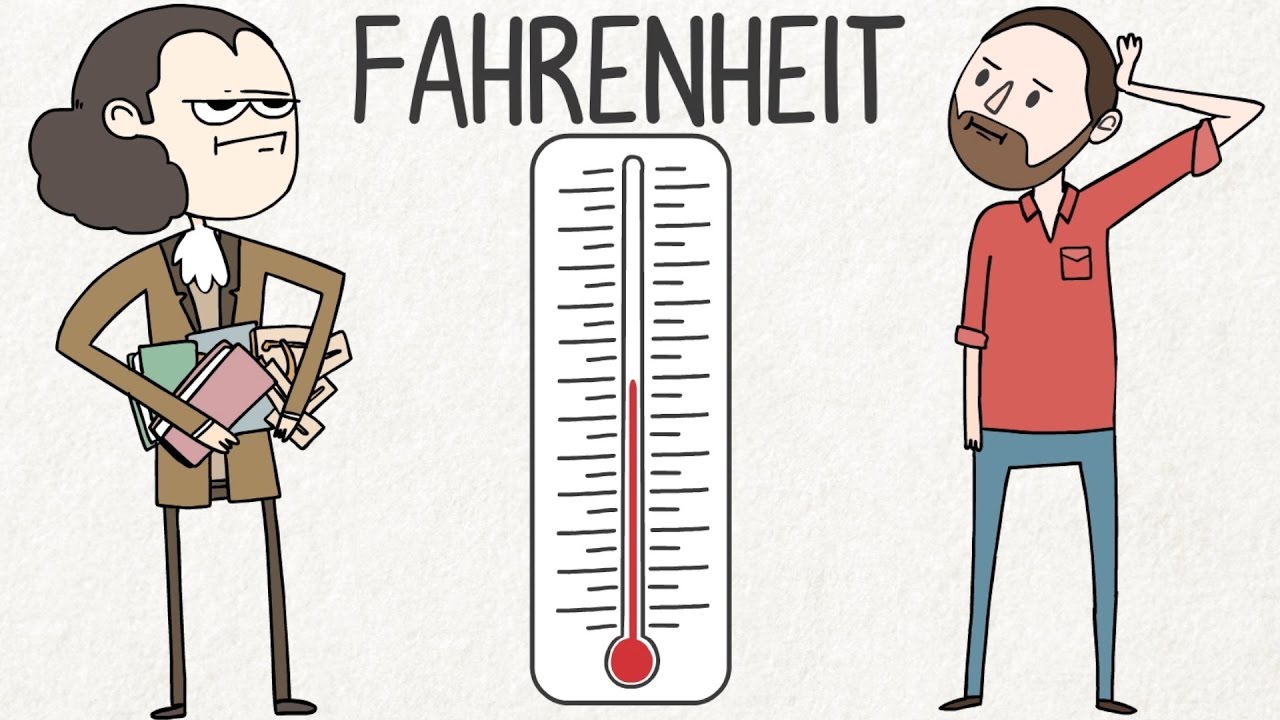
The crazy story of the arbitrary temperature scale used in a tiny minority of countries.
Check out Audible: http://bit.ly/AudibleVe
Snatoms are available again! http://www.snatoms.com
Support Veritasium on Patreon: http://bit.ly/VePatreon
Celsius didn't invent Celsius: http://bit.ly/VeCelsius
Video animated by Marcello Ascani: http://bit.ly/VeMarcello
Thanks to Patreon supporters:
Nathan Hansen, Bryan Baker, Donal Botkin, Tony Fadell, Saeed Alghamdi
Music by Kevin MacLeod: http://incompetech.com "Modern Piano Zeta - Improbable" "Ice Demon" "Divertimento K131" "Sneaky Adventure" "Sheep May Safely Graze" "Professor and the Plant"
References:
A History of the Thermometer and its uses in Meteorology by W. E. Knowles Middleton
Absolute Zero and the Conquest of Cold by Tom Shachtman
The Science of Measurement, A Historical Survey by Herbert Arthur Klein
Lehrbuch der Chemie by Jöns Jakob Berzelius
Script:
As an Australian-Canadian the Fahrenheit temperature scale always seemsed a bit arbitrary. I mean why does water freeze at 32 degrees? And what exactly does zero represent?
According to many sources the Fahrenheit scale was defined by setting zero degrees equal to the temperature of an ice, salt, and water mixture and 100 degrees being roughly equal to human body temperature. But that isn’t true.
The real story is much more interesting, and scientific...
August 14th 1701 was almost certainly the worst day in the life of fifteen year-old Daniel Gabriel Fahrenheit. On that day both of his parents died suddenly from mushroom poisoning. He was sent from Poland, where he lived, to Amsterdam to become an apprentice bookkeeper.
But Fahrenheit couldn’t stand his apprenticeship and ran away so many times his employers put out a warrant for his arrest. Traveling from city to city around Europe, he became fascinated with scientific instruments and in particular thermometers.
In 1708, possibly seeking help with the warrant, Fahrenheit met with the mayor of Copenhagen, who happened to be the famous astronomer Ole Romer.
Romer is known for observing the eclipses of Jupiter’s moons and realizing that variations in the timing of those eclipses was caused by the time it took light to reach Earth. In other words, he found a way to accurately measure the finite speed of light.
But more pertinent to this story, in 1702 Romer was housebound after breaking his leg. To pass the time he devised a new temperature scale with the freezing point of water at 7.5 degrees and body temperature at 22.5 degrees.
This might seem odd until you consider that Romer wanted the boiling point of water to be 60 degrees (as an astronomer, he had experience dividing things by 60). If you take this scale, divide it in half, in half again, and in half once more, you find the freezing point of water 1/8th up the scale, and human body temperature 3/8th up the scale.
So at their meeting in 1708, Fahrenheit learned of Romer’s temperature scale and adopted it as his own, adjusting it slightly because he found it “inconvenient and inelegant on account of the fractional numbers”. So he scaled them up to 8 and 24.
That is the original Fahrenheit scale. He produced thermometers for some time using this scale.
But then, at some later time Fahrenheit multiplied all numbers on his scale by four, setting freezing point to the now familiar 32 and body temperature to 96. It’s unclear exactly why he did this. He may just have wanted finer precision in his measurements but I think there was a better reason.
You see, Fahrenheit was an excellent instrument maker. His thermometers agreed with each other precisely, at a time when that was unheard of. He pioneered the use of mercury as a measuring liquid, which has the benefit of a much higher boiling point than the alcohol used in most other thermometers at the time. For these accomplishments, he was inducted into the British Royal Society.
And we know he read the works of Newton, Boyle, and Hooke, in which he would have come across the idea that a one degree increase in temperature should correspond to a specific fractional increase in the volume of the measuring liquid.
And today a one degree Fahrenheit increase in temperature increases the volume of mercury by exactly one part in 10,000. Is this just a coincidence? We’ll probably never know for sure because as an instrument maker Fahrenheit was secretive about his methods. But I think the data strongly suggests this was the case.
So what exactly did zero represent on the scales of Fahrenheit and Romer? By many accounts it’s the temperature of a salt, ice and water mixture. But there are different descriptions of these mixtures and none of them actually produces the temperature they’re supposed to. More likely I think they picked the coldest temperature in winter, set that as zero and later used ice and brine to calibrate new thermometers. Now his scale is only used regularly in the Cayman Islands, Bahamas, Belize, oh and the United States of America.

UV at ground level is non-ionizing but it damages DNA and causes photoaging - how?
Also, it turns out glass doesn't block all UV (specifically UVA passes through). This is something I learned filming with the UV camera inside.
Special thanks to Dr. Hayley Golbach, @hayleysgold on twitter
https://twitter.com/hayleysgold
Ultraviolet light causes damage to DNA, leads to cancer and photoaging: age spots and wrinkles. I was curious about this because UV is technically non-ionizing. A photon of UV doesn't have enough energy to strip an electron off atoms or molecules. However it does have enough energy to trigger photo-chemical reactions. For example, it causes pyrimidine dimers - the unauthorized covalent bonding of adjacent thymine or cytosine bases in our DNA. If these spots are not properly repaired, they may lead to mutations and cancer. Photoaging is typically the result of degradation of collagen and elastin fibers - scaffolding that supports the skin. This leads to wrinkles and saggy-looking skin.
Huge thanks to Patreon supporters:
Donal Botkin, Michael Krugman, Jeff Straathof, Zach Mueller, Ron Neal, Nathan Hansen, Yildiz Kabaran, Terrance Snow, Stan Presolski, James M Nicholson, KIMoFy
Support Veritasium on Patreon: http://ve42.co/patreon
Music from Epidemic Sound http://epidemicsound.com "Serene Story 2"

The kilogram, mole, kelvin, and ampere will be redefined by physical constants. For a limited time, get 3 months of Audible for just $6.95 a month: http://audible.com/VERITASIUM or text VERITASIUM to 500500
Will this be the last video I make about SI units? Quite possibly. There's something about being so precise and defining the systems within which science works. When we can more accurately and routinely measure a kilogram, a mole, a kelvin and an ampere, then we can make better observations, we can better detect anomalies and improve our theories. That is why this is so important to me.
Special thanks to Patreon supporters:
Donal Botkin, Michael Krugman, Ron Neal, Nathan Hansen, James M Nicholson, Terrance Shepherd, Stan Presolski
Special thanks to NIST: http://nist.gov
Additional graphics by Ignat Berbeci
Music from http://epidemicsound.com "Experimental1"
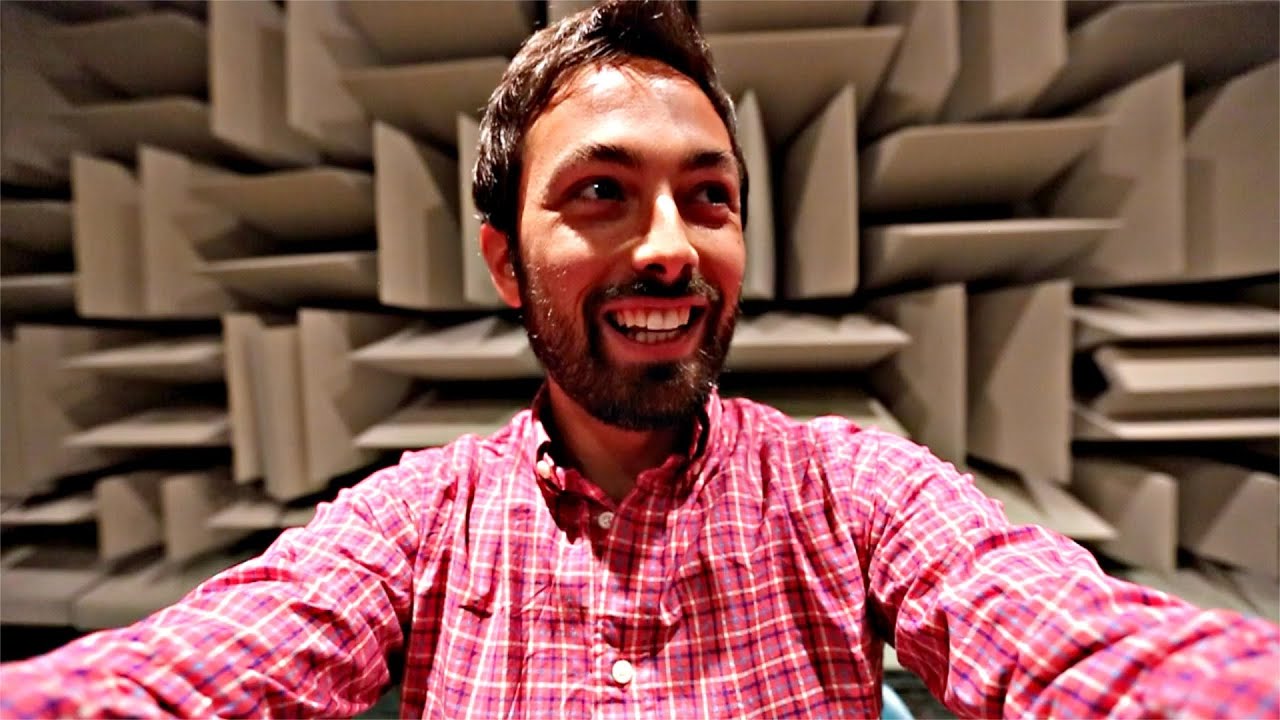
*Watch with headphones on!
Is 45 minutes really the longest anyone can stay in a perfectly silent, pitch-black room?
Support Veritasium on Patreon http://bit.ly/VePatreon
Check out Audible: http://bit.ly/AudibleVe
Want to watch the whole hour of silence? http://youtu.be/jr1UMFC9DV0
Many stories have circulated claiming the longest anyone has stayed in an ultra-quiet anechoic chamber is 45 minutes, the reason being any longer would drive you insane. To me this sounded like unsubstantiated rubbish, like the claim the Great Wall is the only manmade structure visible from space. So I put my own psyche on the line, subjecting myself to over an hour of the most intense quiet on Earth. No, this was not THE quietest room on Earth (-9dB) but it is one of the quietest, and the truth is once you put a person inside, they are by far the loudest thing in there so the sound rating of the room is irrelevant.
I was not surprised to find that I could stay in there for as long as I liked and feel perfectly fine. What was surprising is that my heartbeat was audible. You can hear it on the sound recording. Now I wasn't consciously aware of the sound of my heart while in the room, but I was more aware of the feeling of it beating.
Huge thank you to everyone at BYU: Duane Merrell, Spencer Perry, Cameron Vongsawad, Jazz Myers, Ann Clawson, and Robert Willes.

Want to help plant 20M trees by 2020? Go to https://teamtrees.org #teamtrees
Huge thanks to all the YouTubers who organized this. My apologies for the repost.
These videos are from 2012 so my interest in trees goes back a long ways. I think these videos discuss two of the most interesting and amazing facts about our leafy friends: they are made mostly of CO2 (which comes from us breathing out amongst other sources) and they can transport water up a tube higher than any we can currently manufacture. So trees are out to get you. But we do much worse to them so we owe it to them to plant some more. 20 mil is a good start.

JJ Thomson proposed the first model of the atom with subatomic structure. He had performed a series of experiments and was credited with the discovery of the first sub-atomic particle, the electron. He therefore proposed a new model of the atom called the plum pudding model. In this model, the plums represent negatively charged electrons which can be plucked out of the atom, leaving behind some positively charged pudding. In this film, cherry tart is used as a delicious substitute for plum pudding.

Countries are powered by a diverse range of energy sources, but in Australia electricity generation mainly has one source: fossil fuels. Coal, natural gas, and oil account for over 90% of the country's electricity. Hydro provides 7% with only 0.3% provided by wind and solar. Should Australia consider nuclear power? It is a complicated issue leaving many uncertain about its place in Australia's energy future.

A bisected grape in the microwave makes plasma. But how does it work? A grape is the right size and refractive index to trap microwaves inside it. When you place two (or two halves) close together the fields interact with each other creating a maximum of electromagnetic energy where they touch. This creates heating, sparks, and plasma, which is further fed with energy directly by the microwaves.
Huge thanks to Hamza Khattak, Prof. Pablo Bianucci and Prof. Aaron Slepkov (unavailable for the call) for chatting to me and helping me understand the physics of this cool phenomenon.
Linking plasma formation in grapes to microwave resonances of aqueous dimers
https://www.pnas.org/cgi/doi/1....0.1073/pnas.18183501
Special thanks to Patreon supporters:
Donal Botkin, James M Nicholson, Michael Krugman, Nathan Hansen, Ron Neal, Stan Presolski, Terrance Shepherd
Thanks also to Steve Bosi, my original plasma collaborator.
Animations by Alan Chamberlain
Music from http://epidemicsound.com "Seaweed"

Or almost any garage - it's particularly good with fixed code gates and garages. Samy proposes other weaknesses with rolling codes.
This video was sponsored by LastPass: http://bit.ly/2oscAe9
I don't condone malicious hacking of gates, garages or other property. The point of this video was to discuss how it could be done using fairly basic technology like this toy that was originally intended as an instant messaging device. I learned a lot in making this video about how codes are sent and received, how they are encrypted or not encrypted. I found out how hard it is to execute in practice something which in principle doesn't seem that difficult.
Special thanks to Samy! His original videos on using the IM ME to open radio frequency garages and gates can be found here: https://www.youtube.com/user/s4myk
He's got a really cool channel so be sure to subscribe if you're interested in this stuff.
Music from http://epidemicsound.com "Critical thinking 2" "I think I was there" "Magnified X 3"
And music by Kevin MacLeod http://incompetech.com "Marty Gots a Plan"
In April 2012, I was part of a team of scientists, teachers and students who travelled to Alaska to observe the Northern Lights or Aurora Borealis. Our mission was a unique one - to launch weather balloons up to 100,000 feet loaded with experiments, tracking devices and HD cameras. This is the result of our trip, produced for Catalyst on ABC1 http://www.abc.net.au/catalyst/
Subscribe to Veritasium - it's FREE! http://bit.ly/YSWpWm
Check out other unanswered science questions: http://youtu.be/UFydagCS9fg
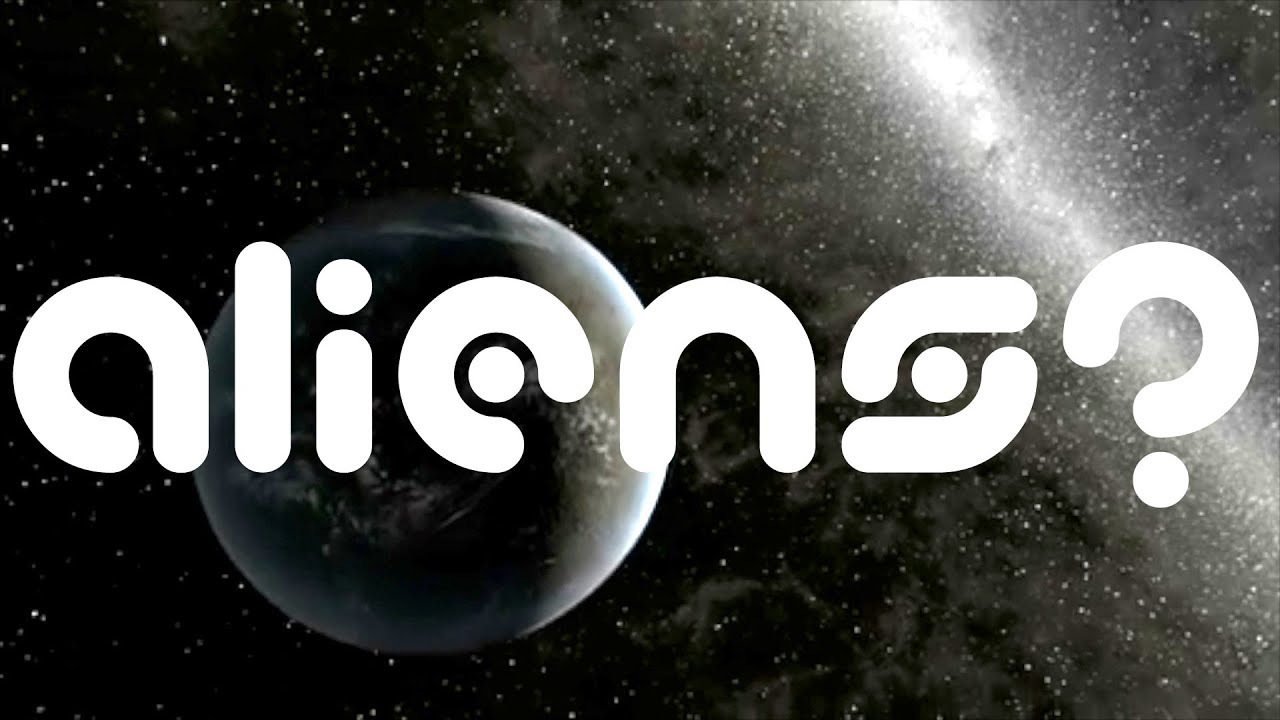
The universe is huge. That means two things: 1. there is probably life elsewhere, 2. It is likely too far away to have reached us.
Fast, Furious & Funny - http://www.youtube.com/fastfuriousand... (http://www.youtube.com/watch?v=YWxub2...)
The Brain Scoop - http://www.youtube.com/thebrainscoop (http://youtu.be/mNuu0y6ZmAs)
ASAPScience - http://www.youtube.com/AsapSCIENCE (http://www.youtube.com/watch?v=wgxJhp...)
The Royal Institute of Great Britain - http://www.youtube.com/TheRoyalInstit... (http://www.youtube.com/watch?v=gm02Oi...)
PBS Idea Channel - http://www.youtube.com/pbsideachannel (http://www.youtube.com/watch?v=TbNymw...)
The Spangler Effect - http://www.youtube.com/TheSpanglerEffect (http://www.youtube.com/watch?v=4fQ4uB...)
Minute Physics - http://www.youtube.com/minutephysics (http://www.youtube.com/watch?v=2yHDeK...)
Head Squeeze - http://www.youtube.com/HeadsqueezeTV (http://www.youtube.com/watch?v=UPBJX1...)
Vsauce - http://www.youtube.com/Vsauce (http://www.youtube.com/watch?v=L45Q1_...)
Space is big. You just won't believe how vastly, hugely, mind- bogglingly big it is. I mean, you may think it's a long way down the road to the chemist's, but that's just peanuts to space. ~Douglas Adams
Thanks to Dr. Simon O'Toole for talking exoplanets with me! We also discussed the Drake equation but there wasn't really room for it.
Camera by Charles Clement
Music by Kevin McLeod (incompetech.com) Mirage, Scissors
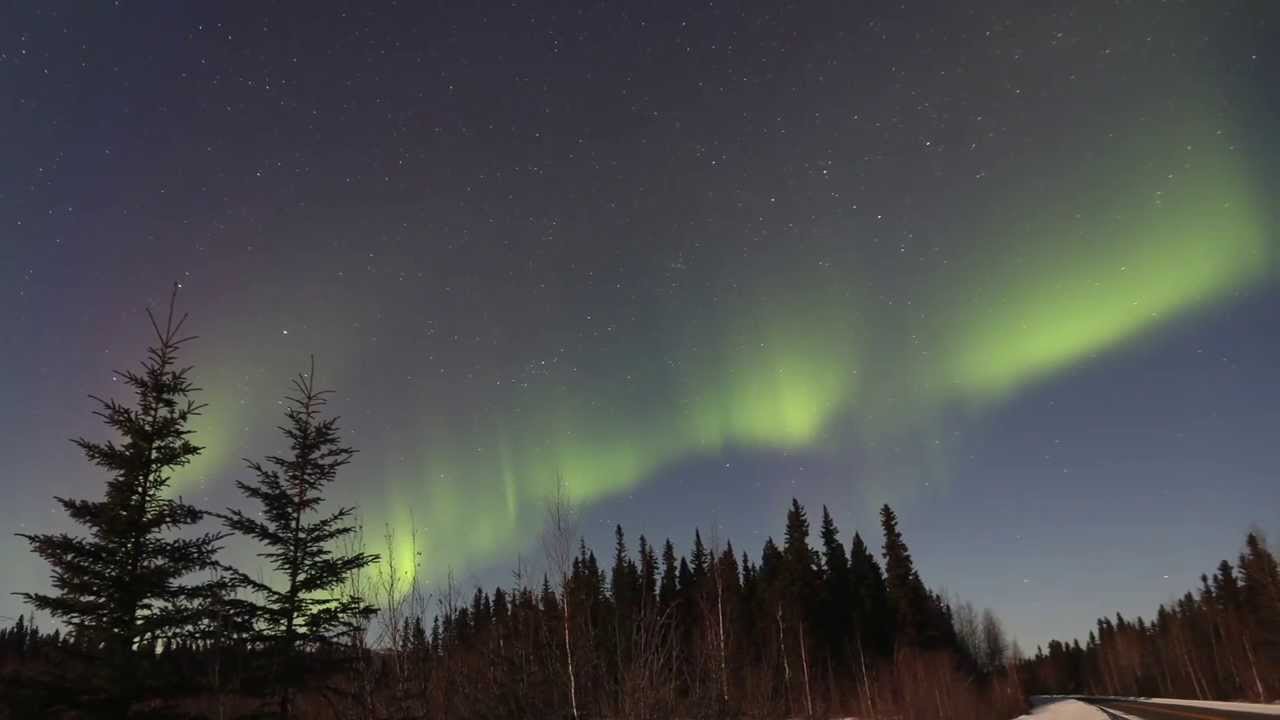
The aurora borealis or northern lights is one of the most spectacular natural displays on the planet. Theories about its origins have been debated for centuries and common misconceptions persist that the aurora is the sun's rays scattered off ice crystals in the high atmosphere. In truth, the light is created more than 100km above Earth's surface as high speed electrons and protons ejected from the sun in a solar flare or coronal mass ejection collide with air molecules in the upper atmosphere. The charged particles from the sun excite air molecules which then de-excite by emitting light. The display is most common around the north and south poles because the Earth's magnetic field deflects the solar wind from the equator to the poles. Here the magnetic field dips towards the Earth's surface, channeling the charged particles into the atmosphere.
Music is by Kevin MacLeod http://incompetech.com, the song is called Mirage