Top Vídeos

In which John Green teaches you about the Progressive Presidents, who are not a super-group of former presidents who create complicated, symphonic, rock soundscapes that transport you into a fantasy fugue state. Although that would be awesome. The presidents most associated with the Progressive Era are Theodore Roosevelt, William Taft, and Woodrow Wilson. During the times these guys held office, trusts were busted, national parks were founded, social programs were enacted, and tariffs were lowered. It wasn't all positive though, as their collective tenure also saw Latin America invaded A LOT, a split in the Republican party that resulted in a Bull Moose, all kinds of other international intervention, and the end of the Progressive Era saw the United States involved in World War. If all this isn't enough to entice, I will point out that two people get shot in this video. Violence sells, they say.
Subbable message courtesy of Tom Hopkins: I paid 50 bucks, and all I got was this.
You can directly support Crash Course at https://www.patreon.com/crashcourse Subscribe for as little as $0 to keep up with everything we're doing. Free is nice, but if you can afford to pay a little every month, it really helps us to continue producing this content.
Hey teachers and students - Check out CommonLit's free collection of reading passages and curriculum resources to learn more about the events of this episode. The era of progressive presidents began with Teddy Roosevelt, who felt that conservation was a national duty: https://www.commonlit.org/text....s/conservation-as-a-
Teddy Roosevelt is remembered for fighting hard for his causes, as exemplified in his famous “Man in the Arena” Speech: https://www.commonlit.org/text....s/the-man-in-the-are
Follow us!
@thecrashcourse
@realjohngreen
@crashcoursestan
@raoulmeyer
@thoughtbubbler
Metabolism is a complex process that has a lot more going on than personal trainers and commercials might have you believe. Today we are exploring some of its key parts, including vital nutrients -- such as water, vitamins, minerals, carbs, fats, and proteins -- as well as how anabolic reactions build structures and require energy, while catabolic reactions tear things apart and release energy.
Anatomy of Hank Poster: http://store.dftba.com/product....s/crashcourse-anatom
--
Table of Contents
Water, Vitamins, Minerals, Carbs, Fats and Proteins 3:47
Anabolic Reactions Build Structures and Require Energy 2:59
Catabolic Reactions Tear Things Apart and Release Energy 3:17
Metabolism 2:30
***
Crash Course is on Patreon! You can support us directly by signing up at http://www.patreon.com/crashcourse
Thanks to the following Patrons for their generous monthly contributions that help keep Crash Course free for everyone forever:
Mark , Elliot Beter, Moritz Schmidt, Jeffrey Thompson, Ian Dundore, Jacob Ash, Jessica Wode, Today I Found Out, Christy Huddleston, James Craver, Chris Peters, SR Foxley, Steve Marshall, Simun Niclasen, Eric Kitchen, Robert Kunz, Avi Yashchin, Jason A Saslow, Jan Schmid, Daniel Baulig, Christian , Anna-Ester Volozh
--
Want to find Crash Course elsewhere on the internet?
Facebook - http://www.facebook.com/YouTubeCrashCourse
Twitter - http://www.twitter.com/TheCrashCourse
Tumblr - http://thecrashcourse.tumblr.com
Support Crash Course on Patreon: http://patreon.com/crashcourse
CC Kids: http://www.youtube.com/crashcoursekids

In this episode of Crash Course Chemistry, Hank discusses what Molecules actually look like and why, some quantum-mechanical three dimensional wave functions are explored, he touches on hybridization, and delves into sigma and pi bonds.
--
Table of Contents
Molecules: Clumpy Globs... 0:18
Quantum-Mechanical Three-Dimensional Wave Functions 3:06
S & P Orbital Hybridization 5:27
Sigma & Pi Bonds 7:32
Hybridized Orbitals 5:52
--
Want to find Crash Course elsewhere on the internet?
Facebook - http://www.facebook.com/YouTubeCrashCourse
Twitter - http://www.twitter.com/TheCrashCourse
Tumblr - http://thecrashcourse.tumblr.com
Support CrashCourse on Subbable: http://subbable.com/crashcourse
Want more videos about psychology every Monday and Thursday? Check out our sister channel SciShow Psych at https://www.youtube.com/scishowpsych!
So, it turns out we have an easy time reading emotions in facial expressions, but emotions can straight up kill us! In this episode of Crash Course Psychology, Hank discusses stress, emotions, and their overall impact on our health.
--
Table of Contents:
How Emotions Work 00:00
Two-Dimensional Model of Emotional Experience 03:29
How Anger, Happiness, and Depression Affect Health 4:52
Stress, the Nervous System, and Chronic Stress 6:36
--
Want to find Crash Course elsewhere on the internet?
Facebook - http://www.facebook.com/YouTubeCrashCourse
Twitter - http://www.twitter.com/TheCrashCourse
Tumblr - http://thecrashcourse.tumblr.com
Support CrashCourse on Subbable: http://subbable.com/crashcourse

In which John Green teaches you where American politicians come from. In the beginning, soon after the US constitution was adopted, politics were pretty non-existent. George Washington was elected president with no opposition, everything was new and exciting, and everyone just got along. For several months. Then the contentious debate about the nature of the United States began, and it continues to this day. Washington and his lackey/handler Alexander Hamilton pursued an elitist program of federalism. They attempted to strengthen the central government, create a strong nation-state, and leave less of the governance to the states, They wanted to create debt, encourage manufacturing, and really modernize the new nation/ The opposition, creatively known as the anti-federalists, wanted to build some kind of agrarian pseudo-paradise where every (white) man could have his own farm, and live a free, self-reliant life. The founding father who epitomized this view was Thomas Jefferson. By the time Adams became president, the anti-federalists had gotten the memo about how alienating a name like anti-federalist can be. It's so much more appealing to voters if your party is for something rather than being defined by what you're against, you know? In any case, Jefferson and his acolytes changed their name to the Democratic-Republican Party, which covered a lot of bases, and proceeded to protest nearly everything Adams did. Lest you think this week is all boring politics,you'll be thrilled to hear this episode has a Whiskey Rebellion, a Quasi-War, anti-French sentiment, some controversial treaties, and something called the XYZ Affair, which sounds very exciting. Learn all about it this week with John Green.
Hey teachers and students - Check out CommonLit's free collection of reading passages and curriculum resources to learn more about the events of this episode. Much of America's politics came from debates between democratic republican Thomas Jefferson and federalist Alexander Hamilton: https://www.commonlit.org/texts/alexander-hamilton
While Jefferson would go on to become president, Hamilton heavily influenced President George Washington who set many American political ideals in his farewell address that Hamilton helped craft: https://www.commonlit.org/text....s/washington-s-farew
Follow us!
http://www.twitter.com/thecrashcourse
http://www.twitter.com/realjohngreen
http://www.twitter.com/crashcoursestan
http://www.twitter.com/raoulmeyer
http://www.twitter.com/saysdanica
http://www.twitter.com/thoughtbubbler
Turn on the captions. You'll like them. Support CrashCourse on Patreon: https://www.patreon.com/crashcourse

Today Phil explains how telescopes work and offers up some astronomical shopping advice.
--
How Telescopes Work 1:07
Refractors vs Reflectors 2:50
Technology and the Light Spectrum 7:45
--
PBS Digital Studios: http://youtube.com/pbsdigitalstudios
Follow Phil on Twitter: https://twitter.com/badastronomer
Want to find Crash Course elsewhere on the internet?
Facebook - http://www.facebook.com/YouTubeCrashCourse
Twitter - http://www.twitter.com/TheCrashCourse
Tumblr - http://thecrashcourse.tumblr.com
Support CrashCourse on Subbable: http://subbable.com/crashcourse
--
PHOTOS/VIDEOS
http://en.wikipedia.org/wiki/G....alileo_Galilei#media
http://en.wikipedia.org/wiki/H....uman_eye#mediaviewer
http://en.wikipedia.org/wiki/R....efracting_telescope#
http://commons.wikimedia.org/w....iki/File:Positive_le
http://www.eso.org/public/imag....es/yb_vlt_moon_cnn_c
http://en.wikipedia.org/wiki/J....upiter#mediaviewer/F
http://en.wikipedia.org/wiki/W....ide_Field_and_Planet
http://commons.wikimedia.org/w....iki/File:Prime_focus
http://commons.wikimedia.org/w....iki/File:Inspection_
https://www.youtube.com/watch?....v=ui6ernRFxOg#t=2m22
http://en.wikipedia.org/wiki/W....illiam_Herschel#medi
http://commons.wikimedia.org/w....iki/File:Grand_Canyo
http://commons.wikimedia.org/w....iki/File_talk:EM_spe
https://www.youtube.com/watch?....v=RqX9vLj3_7w#t=4m52
http://pprc.qmul.ac.uk/~still/....wordpress/?page_id=1
http://en.wikipedia.org/wiki/V....ERITAS#mediaviewer/F
http://en.wikipedia.org/wiki/A....strophotography#medi
http://en.wikipedia.org/wiki/A....strophotography#medi
http://en.wikipedia.org/wiki/F....ile:PIA18593-Mars-Co
http://en.wikipedia.org/wiki/F....ile:NASA-HS201427a-H
http://upload.wikimedia.org/wi....kipedia/commons/2/2b
http://upload.wikimedia.org/wi....kipedia/commons/thum
http://upload.wikimedia.org/wi....kipedia/commons/5/56
http://hubblesite.org/newscent....er/archive/releases/
We’ve covered a lot of incredible stuff, but this week we’re talking about the weirdest objects in space: BLACK HOLES. Stellar mass black holes form when a very massive star dies, and its core collapses. The core has to be more than about 2.8 times the Sun’s mass to form a black hole. Black holes come in different sizes, but for all of them, the escape velocity is greater than the speed of light, so nothing can escape, not matter or light. They don’t wander the Universe gobbling everything down around them; their gravity is only really intense very close to them. Tides near a stellar mass black hole will spaghettify you, and time slows down when you get near a black hole — not that this helps much if you’re falling in.
Crash Course Astronomy Poster: http://store.dftba.com/product....s/crashcourse-astron
--
Table of Contents
How Stellar Mass Black Holes Are Formed 1:03
The Core 1:43
Nothing Can Escape Once It’s Inside 2:29
Gravity Intensifies The Closer You Get 3:33
Spaghettification 6:01
Time Will Slow Down Near A Black Hole 8:01
--
PBS Digital Studios: http://youtube.com/pbsdigitalstudios
Follow Phil on Twitter: https://twitter.com/badastronomer
Want to find Crash Course elsewhere on the internet?
Facebook - http://www.facebook.com/YouTubeCrashCourse
Twitter - http://www.twitter.com/TheCrashCourse
Tumblr - http://thecrashcourse.tumblr.com
Support CrashCourse on Patreon: http://www.patreon.com/crashcourse
--
PHOTOS/VIDEOS
White Dwarf Pulses Like a Pulsar http://www.nasa.gov/centers/go....ddard/news/topstory/ [credit: NASA, Casey Reed]
Swift Reveals New Phenomenon in a Neutron Star http://www.nasa.gov/mission_pa....ges/swift/bursts/new [credit: NASA's Goddard Space Flight Center]
Black Holes - Monsters in Space https://en.wikipedia.org/wiki/....File:Black_Holes_-_M [credit: NASA/JPL-Caltech, Wikimedia Commons]
What if the Sun became a black hole? (artist's impression) http://www.spacetelescope.org/....videos/hubblecast43g [credit: ESA/Hubble (M. Kornmesser)]
Black Hole Animation http://chandra.harvard.edu/pho....to/2003/0203long/ani [credit: NASA/SAO/CXC/D.Berry]
Star Destroyer http://svs.gsfc.nasa.gov/cgi-b....in/details.cgi?aid=1 [credit: Space Telescope Science Institute (STScI) and NASA's Goddard Space Flight Center]
Black hole deforms space http://www.spacetelescope.org/....videos/hst15_blackho [credit: ESA/Hubble (M. Kornmesser & L. L. Christensen)]
Black hole close-up (artist's impression) http://www.spacetelescope.org/videos/heic0211c/ [credit: European Space Agency, NASA and Felix Mirabel (the French Atomic Energy Commission & the Institute for Astronomy and Space Physics/Conicet of Argentina)]

•••SUBBABLE MESSAGE•••
TO: Jordan Schoonover
FROM: Mom, Dad & Madison
Happy Birthday Jordan! We love you sweetheart!!
***
You can directly support Crash Course at http://www.subbable.com/crashcourse Subscribe for as little as $0 to keep up with everything we're doing. Also, if you can afford to pay a little every month, it really helps us to continue producing great content.
***
In this episode of Crash Course Anatomy & Physiology, Hank gives you a brief history of histology and introduces you to the different types and functions of your body's tissues.
--
Table of Contents:
Nervous, Muscle, Epithelial & Connective Tissues 1:23
History of Histology 2:07
Nervous Tissue Forms the Nervous System 5:17
Muscle Tissue Facilitates All Your Movements 7:00
Identifying Samples 9:03
--
Want to find Crash Course elsewhere on the internet?
Facebook - http://www.facebook.com/YouTubeCrashCourse
Twitter - http://www.twitter.com/TheCrashCourse
Tumblr - http://thecrashcourse.tumblr.com
Support CrashCourse on Subbable: http://subbable.com/crashcourse

Hank resists the urge to devour a slice of pizza so that he can walk you through the way we experience our major special senses. It all boils down to one thing: sensory cells translating chemical, electromagnetic, and mechanical stimuli into action potentials that our nervous system can make sense of. Today we're focusing on smell (olfaction) and taste (gustation), which are chemical senses that call on chemoreceptors. As usual, we'll begin with a quick look at how these things can go wrong.
Table of Contents
Anatomy and Physiology of Smell 2:26
The Olfactory Sensory Neurons 3:01
Receptors → Glomerulus → Mitral Cells → Brain 3:47
Taste Receptor Epithelial Cells 7:30
Receptors Trigger Action Potentials to Four Different Cranial Nerves 8:26
***
Crash Course is now on Patreon! You can support us directly (and have your contributions matched by Patreon through April 30th!) by signing up at http://www.patreon.com/crashcourse
Thanks to the following Patrons for their generous monthly contributions that help keep Crash Course free for everyone forever:
Mark Brouwer, Simun Niclasen, Brad Wardell, Roger C. Rocha, Jan Schmid, Elliot Beter, Nevin Spoljaric, Sandra Aft, SR Foxley, Jessica Simmons, Stefan R. Finnerup, Jason A Saslow, Robert Kunz, Jessica Wode, Mike Drew, Steve Marshall, Anna-Ester Volozh, Christian Ludvigsen, Jeffrey Thompson, James Craver
***SUBBABLE MESSAGES***
TO: Rachel
FROM: Alex
I Love You!
--
TO: Crash Course
FROM: James Earle
I loved Subbable. I'll see you on Patreon.
***SUPPORTER THANK YOU!***
Thank you so much to all of our awesome supporters for their contributions to help make Crash Course possible and freely available for everyone forever:
Suzanne, Dustin & Owen Mets
Amy Fuller
Simon Francis Max Bild-Enkin
Ines Krueger
King of Conquerors Gareth Mok
Chris Ronderos, Dallas, TX
Gabriella Mayer
jeicorsair
Tokyo Coquette Boutique
Konradical the nonradical
--
Want to find Crash Course elsewhere on the internet?
Facebook - http://www.facebook.com/YouTubeCrashCourse
Twitter - http://www.twitter.com/TheCrashCourse
Tumblr - http://thecrashcourse.tumblr.com
Support Crash Course on Patreon: http://patreon.com/crashcourse
CC Kids: http://www.youtube.com/crashcoursekids

Today Phil explains that YES, there are other planets out there and astonomers have a lot of methods for detecting them. Nearly 2000 have been found so far. The most successful method is using transits, where a planet physically passes in front of its parent star, producing a measurable dip in the star’s light. Another is to measuring the Doppler shift in a star’s light due to reflexive motion as the planet orbits. Exoplanets appear to orbit nearly every kind of star, and we’ve even found planets that are the same size as Earth. We think there may be many billions of Earth-like planets in our galaxy.
This is a reupload of last week's episode to correct an error in the way we covered reflexive motion.
For more information on the change and reflexive motion, you can check out Phil's blog: http://www.slate.com/blogs/bad...._astronomy/2015/08/0
--
Table of Contents
Other Planets Orbit Other Stars 2:10
Nearly 2000 Have Been Found 9:29
Transits 5:44
Doppler Shift 3:30
Exoplanets Orbit Nearly Every Kind of Star 8:44
Billions of Earth-Like Planets 9:33
--
PBS Digital Studios: http://youtube.com/pbsdigitalstudios
Follow Phil on Twitter: https://twitter.com/badastronomer
Want to find Crash Course elsewhere on the internet?
Facebook - http://www.facebook.com/YouTubeCrashCourse
Twitter - http://www.twitter.com/TheCrashCourse
Tumblr - http://thecrashcourse.tumblr.com
Support CrashCourse on Patreon: http://www.patreon.com/crashcourse
--
PHOTOS/VIDEOS
Stars as viewed from ISS https://www.youtube.com/watch?v=TOQrx-7qgak [credit: Alex Rivest & NASA]
Jupiter http://www.nasa.gov/centers/go....ddard/multimedia/lar [credit: NASA]
Mars http://mars.jpl.nasa.gov/multi....media/images/?ImageI [credit: NASA/JPL-Caltech/MSSS]
Mercury http://solarsystem.nasa.gov/multimedia/display.cfm?Category=Planets&IM_ID=7543 [credit: NASA/Johns Hopkins University Applied Physics Laboratory/Carnegie Institution of Washington]
Earth https://www.nasa.gov/topics/ea....rth/overview/index.h [credit: NASA]
Uranus http://photojournal.jpl.nasa.gov/catalog/PIA18182 [credit: NASA/JPL-Caltech]
Lost in the Glare http://planetquest.jpl.nasa.gov/video/23 [credit: NASA Kepler Mission/Dana Berry]
Reflexive Motion gifs http://spaceplace.nasa.gov/barycenter/en/ [credit: NASA]
Artist's conception of PSR B1257+12's system of planets https://en.wikipedia.org/wiki/....Pulsar_planet#/media [credit: NASA/JPL-Caltech/R. Hurt (SSC)]
Artist’s impression of the exoplanet 51 Pegasi b (image) http://www.eso.org/public/usa/images/eso1517a/ [credit: ESO/M. Kornmesser/Nick Risinger (skysurvey.org)]
Artist’s impression of the exoplanet 51 Pegasi b (video) http://www.eso.org/public/usa/videos/eso1517b/ [credit: ESO/M. Kornmesser/Nick Risinger (skysurvey.org)]
Kepler Transit Graph http://planetquest.jpl.nasa.gov/video/22 [credit NASA Kepler Mission/Dana Berry]
Kepler “Beauty Shot” http://planetquest.jpl.nasa.gov/video/2 [credit: NASA/Kepler mission/Dana Berry]
The Brown Dwarf 2M1207 and its Planetary Companion https://www.eso.org/public/usa/images/eso0515a/ [credit: ESO]
Beta Pictoris b http://www.eso.org/public/arch....ives/images/screen/e [credit: ESO]
A size comparison of the planets in the Kepler-37 system and objects in the Solar System http://photojournal.jpl.nasa.gov/catalog/PIA16694 [credit: NASA/Ames/JPL-Caltech]
Water World http://planetquest.jpl.nasa.gov/video/39 [credit: NASA Kepler Mission/Dana Berry]
Earth-like World http://planetquest.jpl.nasa.gov/video/42 [credit: NASA Kepler Mission/Dana Berry]

In which John Green teaches you about Imperialism. In the late 19th century, the great powers of Europe were running around the world obtaining colonial possessions, especially in Africa and Asia. The United States, which as a young country was especially suceptible to peer pressure, followed along and snapped up some colonies of its own. The US saw that Spain's hold on its empire was weak, and like some kind of expansionist predator, it jumped into the Cuban War for Independence and turned it into the Spanish-Cuban-Phillipino-American War, which usually just gets called the Spanish-American War. John will tell you how America turned this war into colonial possessions like Puerto Rico, The Philippines, and almost even got to keep Cuba. The US was busy in the Pacific as well, wresting control of Hawaii from the Hawaiians. All this and more in a globe-trotting, oppressing episode of Crash Course US History.
Our Subbable Dooblydoo message today is from James Williams. He writes, "Gracie Mckenna, luck is, indeed, for suckers."
You can support Crash Course directly by subscribing and pledging a monthly gift at https://www.patreon.com/crashcourse. You could even have your own message in the Dooblydoo. If you subscribed via Subbable when the service first launched, you may need to go back and resubscribe. Thanks for your support.
Hey teachers and students - Check out CommonLit's free collection of reading passages and curriculum resources to learn more about the events of this episode. As America transitioned from the 19th to the 20th century, she experimented with imperialism through war and annexation; one of the most lasting effects of this time was the annexation of Hawaii, America's 50th state: https://www.commonlit.org/text....s/the-1897-petition-
America’s imperial aims continued for decades, particularly with the Monroe Doctrine: https://www.commonlit.org/text....s/the-monroe-doctrin
Follow us!
@thecrashcourse
@realjohngreen
@crashcoursestan
@raoulmeyer
@thoughtbubbler
In which Jacob Clifford and Adriene Hill launch a brand new Crash Course on Economics! So, what is economics? Good question. It's not necessarily about money, or stock markets, or trade. It's about people and choices. What, you may ask, does that mean. We'll show you. Let's get started!
Crash Course is now on Patreon! You can support us directly by signing up at http://www.patreon.com/crashcourse
Thanks to the following Patrons for their generous monthly contributions that help keep Crash Course free for everyone forever:
Mark Brouwer, Jan Schmid, Anna-Ester Volozh, Robert Kunz, Jason A Saslow, Christian Ludvigsen, Chris Peters, Brad Wardell, Beatrice Jin, Roger C. Rocha, Eric Knight, Jessica Simmons, Jeffrey Thompson, Elliot Beter, Today I Found Out, James Craver, Ian Dundore, Jessica Wode, SR Foxley, Sandra Aft, Jacob Ash, Steve Marshall
TO: My Students
FROM: Mrs. Culp
Culpzilla's students are amazing! You guys rock!
TO: Everyone
FROM: Pankaj
DFTBA and keep being the exception like the Mongols.
Thank you so much to all of our awesome supporters for their contributions to help make Crash Course possible and freely available for everyone forever:
Summer Naugle, Minnow, Ilkka Hemmilä, Kaitlyn Celeste, Lee Toran,
Sarty, Damian Shaw, Nathaniel "The Skipper" Cruz Chavez, Maura Doyle, Chris, Sander Mutsaers
Want to find Crash Course elsewhere on the internet?
Facebook - http://www.facebook.com/YouTubeCrashCourse
Twitter - http://www.twitter.com/TheCrashCourse
Tumblr - http://thecrashcourse.tumblr.com
Support Crash Course on Patreon: http://patreon.com/crashcourse
CC Kids: http://www.youtube.com/crashcoursekids
In which John Green teaches about filthy, filthy lucre. Money. And Debt. So, what is money? And what is it for? And why do we use money? And why does it all disappear so quickly after payday? John will look into 75% of these questions, and if he doesn't come up with answers, we'll get into some interesting ideas along the way, at least. This week we'll investigate whether money displaces barter, then leads to war, slavery, and what we think of as civilized social orders. We'll also see what old Adam Smith thinks of big money, no whammies, this week on Crash Course.
We'll also talk quite a bit about Debt: The First 5000 Years by David Graeber. You can buy that book here: http://dft.ba/-debt5000
You can directly support Crash Course at https://www.patreon.com/crashcourse Subscribe for as little as $0 to keep up with everything we're doing. Also, if you can afford to pay a little every month, it really helps us to continue producing great content.

Venus is a gorgeous naked-eye planet, hanging like a diamond in the twilight -- but it’s beauty is best looked at from afar. Even though Mercury is closer to the sun, Venus is the hottest planet in the solar system, due to a runaway greenhouse effect, and has the most volcanic activity in the solar system. Its north and south poles were flipped, causing it to rotate backwards and making for very strange days on this beautiful but inhospitable world.
This episode is brought to you by Squarespace http://www.squarespace.com/crashcourse
--
Table of Contents
Venus’s Size and Atmosphere 3:09
Hottest Planet in the Solar System 4:04
Slow Clockwise Rotation 6:02
Tremendous Volcanic Activity 8:31
--
PBS Digital Studios: http://youtube.com/pbsdigitalstudios
Follow Phil on Twitter: https://twitter.com/badastronomer
Want to find Crash Course elsewhere on the internet?
Facebook - http://www.facebook.com/YouTubeCrashCourse
Twitter - http://www.twitter.com/TheCrashCourse
Tumblr - http://thecrashcourse.tumblr.com
Support CrashCourse on Patreon: http://www.patreon.com/crashcourse
--
PHOTOS/VIDEOS
Naked-eye Venus photo taken by Phil Plait
Phases of Venus http://commons.wikimedia.org/w....iki/File:Phases-of-V [credit: Wikimedia Commons]
2012 Venus Transit https://www.youtube.com/watch?v=34mXua1n_FQ [credit: NASA]
Black drop effect in 2004 http://en.wikipedia.org/wiki/B....lack_drop_effect#med [credit: Vesta]
Venus Transit http://www.nasa.gov/images/con....tent/657111main_1-SO [credit: JAXA/NASA/Lockheed Martin]
Venus in real colors http://en.wikipedia.org/wiki/V....enus#mediaviewer/Fil [credit: NASA]
Earth http://visibleearth.nasa.gov/view.php?id=57723 [credit: NASA Goddard Space Flight Center, Image by Reto Stöckli]
Venus http://www.msss.com/images/sci....ence/venus180hem_mag [credit: NASA/JPL-Caltech/Magellan Project]
Atmospheric Drag on Venus https://www.youtube.com/watch?v=aRAonBSIBck [credit: NASA]
Lakshmi Planum and Maxwell Montes http://en.wikipedia.org/wiki/V....enus_snow#mediaviewe [credit: NASA/JPL]
Artist's impression of the surface of Venus http://sci.esa.int/science-e-m....edia/img/59/VenusSur [credit: ESA]
Venera Images http://planetimages.blogspot.com/ [credit: Ted Stryk]
Venus Globe http://en.wikipedia.org/wiki/V....enus#mediaviewer/Fil [credit: NASA]
Impact craters on the surface of Venus http://en.wikipedia.org/wiki/V....enus#mediaviewer/Fil [credit: Wikimedia Commons]
Idunn Mons http://photojournal.jpl.nasa.g....ov/figures/PIA13001_ [credit: NASA/JPL-Caltech/ESA]
Pancake Volcanoes http://en.wikipedia.org/wiki/P....ancake_dome#mediavie [credit: NASA/Jet Propulsion Laboratory]

You can directly support Crash Course at https://www.patreon.com/crashcourse Subscribe for as little as $0 to keep up with everything we're doing. Free is nice, but if you can afford to pay a little every month, it really helps us to continue producing this content.
In which John Green teaches you about the New Deal, which was president Franklin D. Roosevelt's plan to pull the united States out of the Great Depression of the 1930's. Did it work? Maybe. John will teach you about some of the most effective and some of the best known programs of the New Deal. They weren't always the same thing. John will tell you who supported the New Deal, and who opposed it. He'll also get into how the New Deal changed the relationship between the government and citizens, and will even reveal just how the Depression ended. (hint: it was war spending)
Hey teachers and students - Check out CommonLit's free collection of reading passages and curriculum resources to learn more about the events of this episode. President Roosevelt developed his New Deal policies to ease the economic burdens of the Great Depression, a grim reality he began to tackle with his first fireside chat: https://www.commonlit.org/text....s/president-roosevel
In his Economic Bill of Rights, FDR tried to get the country to trust its banks again: https://www.commonlit.org/text....s/the-economic-bill-
Follow us!
@thecrashcourse
@realjohngreen
@crashcoursestan
@raoulmeyer
@br8dybrunch
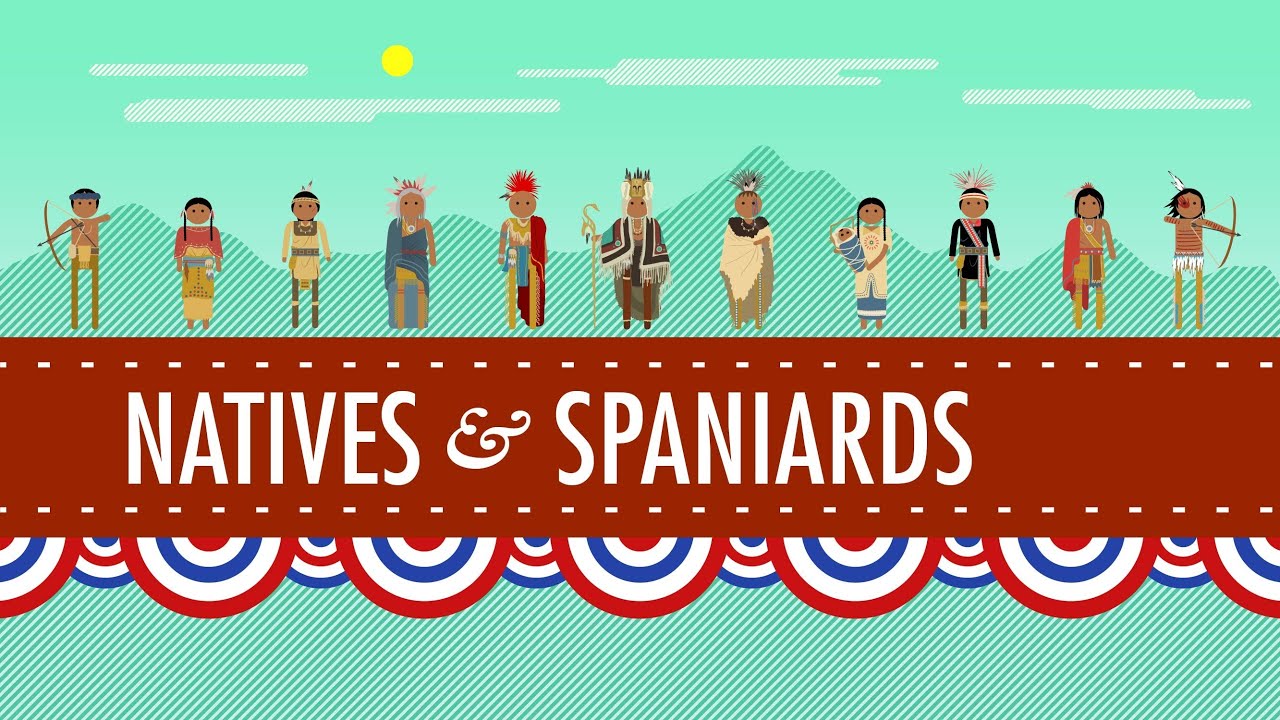
In which John Green kicks off Crash Course US History! Why, you may ask, are we covering US History, and not more World History, or the history of some other country, or the very specific history of your home region? Well, the reasons are many. But, like it or not, the United States has probably meddled in your country to some degree in the last 236 years or so, and that means US History is relevant all over the world. In episode 1, John talks about the Native Americans who lived in what is now the US prior to European contact. This is a history class, not archaeology, so we're mainly going to cover written history. That means we start with the first sustained European settlement in North America, and that means the Spanish. The Spanish have a long history with the natives of the Americas, and not all of it was positive. The Spanish were definitely not peaceful colonizers, but what colonizers are peaceful? Colonization pretty much always results in an antagonistic relationship with the locals. John teaches you about early Spanish explorers, settlements, and what happened when they didn't get along with the indigenous people. The story of their rocky relations has been called the Black Legend. Which is not a positive legend.
Turn on the captions. You'll like it!
Follow us!
@thecrashcourse
@realjohngreen
@crashcoursestan
@raoulmeyer
@saysdanica
@thoughtbubbler Support CrashCourse on Patreon: https://www.patreon.com/crashcourse

What is light? That is something that has plagued scientists for centuries. It behaves light a wave... and a particle... what? Is it both? In this episode of Crash Course Physics, Shini introduces to the idea of Quantum Mechanics and how it helps us understand light. Also, there's this thing called the ULTRAVIOLET CATASTROPHE!
Want more Crash Course in person? We'll be at NerdCon: Nerdfighteria in Boston on February 25th and 26th! For more information, go to http://www.nerdconnerdfighteria.com/
***
Get your own Crash Course Physics mug from DFTBA: http://store.dftba.com/products/crash...
The Latest from PBS Digital Studios: https://www.youtube.com/playlist?list...
--
Produced in collaboration with PBS Digital Studios: http://youtube.com/pbsdigitalstudios
--
Want to find Crash Course elsewhere on the internet?
Facebook - http://www.facebook.com/YouTubeCrashC...
Twitter - http://www.twitter.com/TheCrashCourse
Tumblr - http://thecrashcourse.tumblr.com
Support CrashCourse on Patreon: http://www.patreon.com/crashcourse
CC Kids: http://www.youtube.com/crashcoursekids
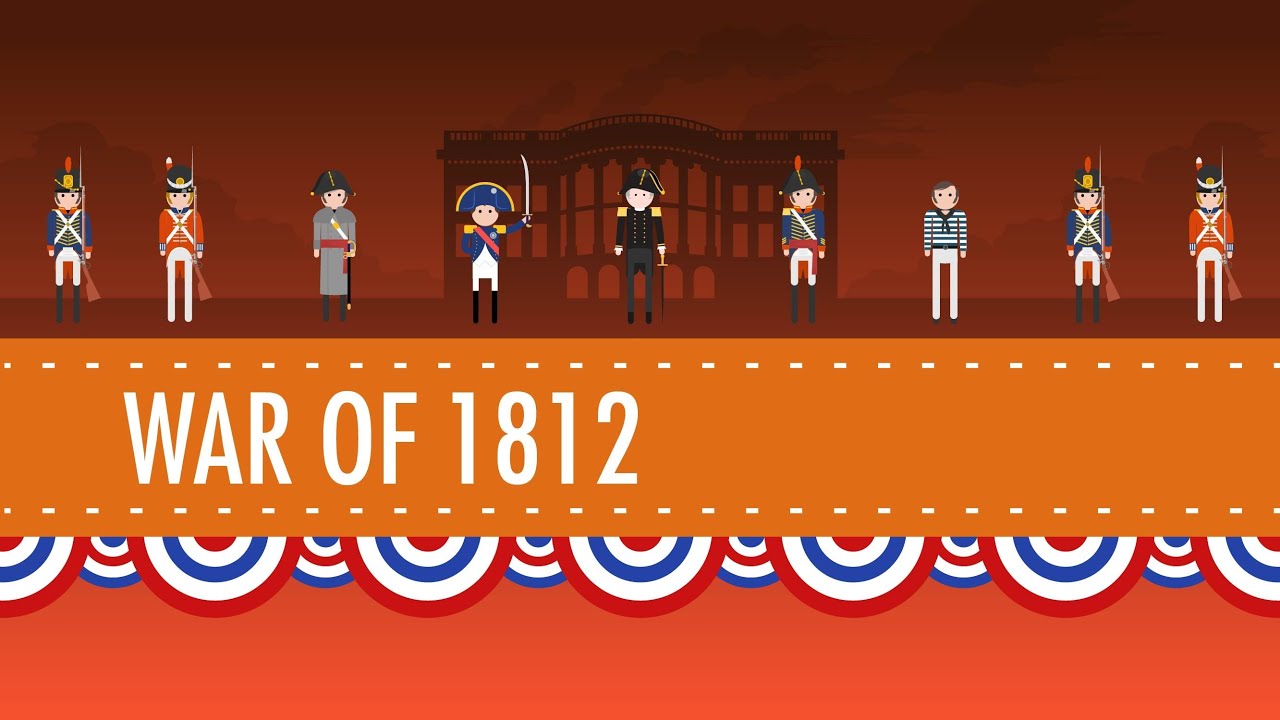
In which John Green teaches you about the War of 1812. The War of 1812 was fought between the United States and its former colonial overlord England. It started in, you guessed it 1812. The war lasted until 1815, and it resolved very little. John will take you through the causes of the war, tell you a little bit about the fighting itself, and get into just why the US Army couldn't manage to make any progress invading Canada. And yes, Canadians, we're going to talk about the White House getting burned down. The upshot: no territory changed hands, and most of the other bones of contention were solved prior to the actual war. Although nothing much changed for the US and England, the Native Americans were the big losers. Tecumseh was killed, and the Indian tribes lost a lot of territory. Watch as John lays it all out for you. Also, check out #1812problems on Twitter. It's awesome.
Follow Us!
@thecrashcourse
@1812problems
@realjohngreen
@crashcoursestan
@raoulmeyer
@saysdanica
@thoughtbubbler Support CrashCourse on Patreon: https://www.patreon.com/crashcourse
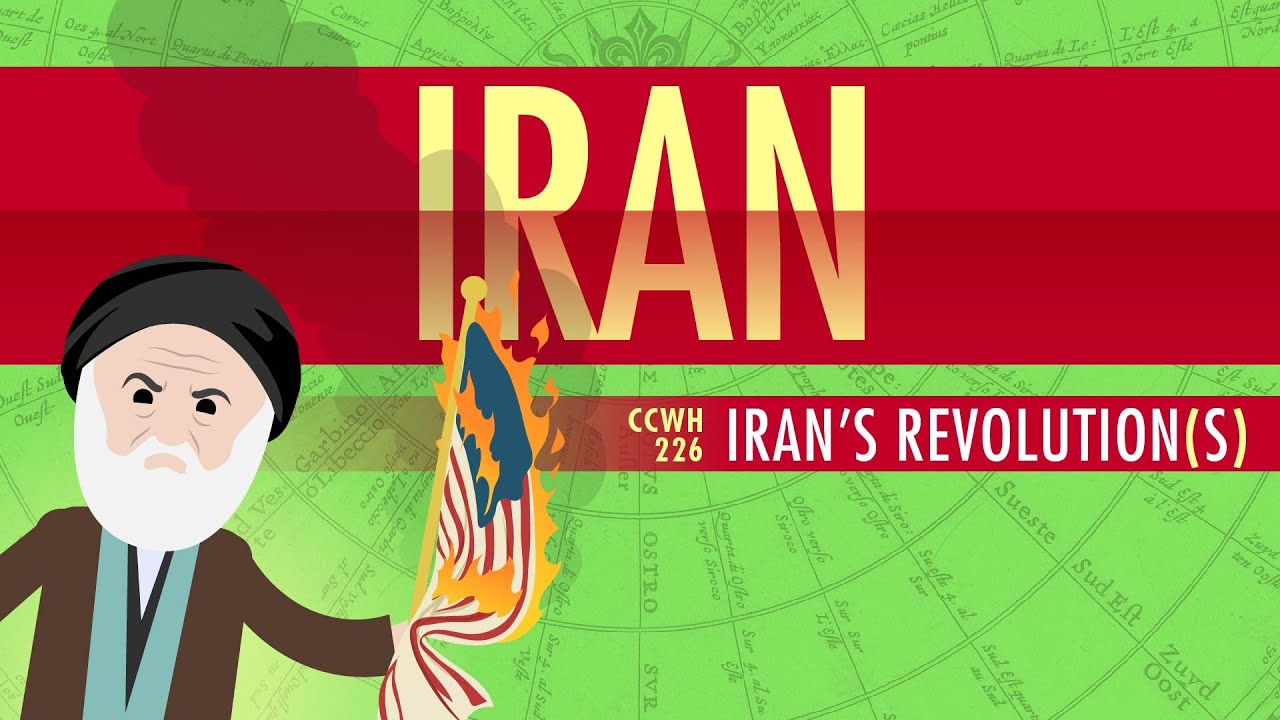
In which John Green teaches you about Iran's Revolutions. Yes, revolutions plural. What was the1979 Iranian Revolution about? It turns out, Iran has a pretty long history of unrest in order to put power in the hands of the people, and the most recent revolution in 1979 was, at least at first, not necessarily about creating an Islamic state. It certainly turned out to be about that, but it was initially just about people who wanted to get rid of an oppressive regime. Listen up as John teaches you about Iran's long history of revolution.
Citation 1: Caryl, Christian. Strange Rebels: 1979 and the Birth of the 21st Century. New York, Basic Books. 2014, p. 11
Citation 2: Axworthy, Michael, Revolutionary Iran: A History of the Islamic Republic. Oxford U. Press. 2014, p. 62
Citation 3: Quoted in Axworthy, p. 81
Citation 4: Axworthy, p. 114
Citation 5: Axworthy, p. 163
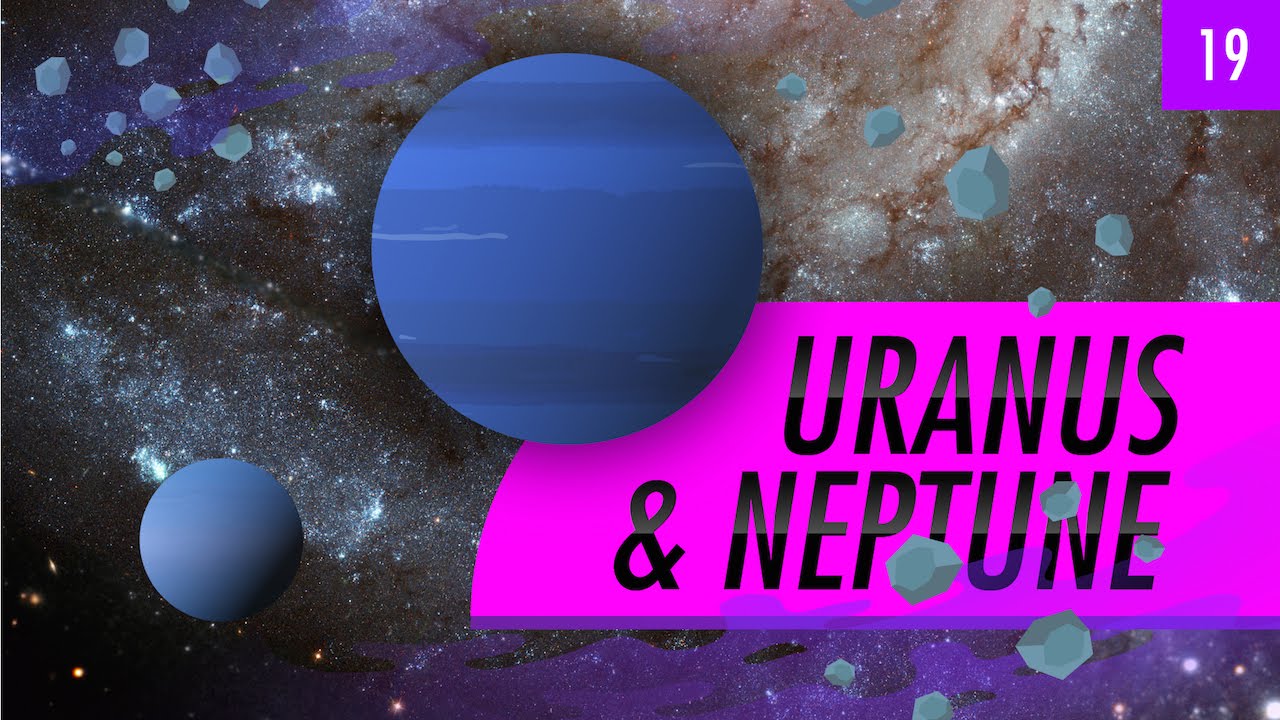
Today we’re rounding out our planetary tour with ice giants Uranus and Neptune. Both have small rocky cores, thick mantles of ammonia, water, and methane, and atmospheres that make them look greenish and blue. Uranus has a truly weird rotation and relatively dull weather, while Neptune has clouds and storms whipped by tremendous winds. Both have rings and moons, with Neptune’s Triton probably being a captured iceball that has active geology.
This episode was brought to you by Squarespace http://www.squarespace.com/crashcourse
--
Table of Contents
Ice Giants With Small Rocky Cores 2:18
Thick Mantles of Ammonia, Water, and Methane 1:53
Atmospheres Makes Them Look Green And Blue 2:53
Uranus Has Dull Weather 3:35
Neptune Has Active Weather 7:19
Both Have Rings And Moons 5:12
--
PBS Digital Studios: http://youtube.com/pbsdigitalstudios
Follow Phil on Twitter: https://twitter.com/badastronomer
Want to find Crash Course elsewhere on the internet?
Facebook - http://www.facebook.com/YouTubeCrashCourse
Twitter - http://www.twitter.com/TheCrashCourse
Tumblr - http://thecrashcourse.tumblr.com
Support CrashCourse on Patreon: http://www.patreon.com/crashcourse
--
PHOTOS/VIDEOS
Uranus http://en.wikipedia.org/wiki/V....oyager_2#/media/File [credit: NASA/JPL/Voyager mission]
Neptune https://www.nasa.gov/content/2....5-years-ago-voyager- [credit: NASA]
King George III http://en.wikipedia.org/wiki/G....eorge_III_of_the_Uni
Uranus from Earth picture by Phil Plait
Uranus, Earth size comparison http://en.wikipedia.org/wiki/F....ile:Uranus,_Earth_si [credit: NASA]
Uranus core, reconstructed from http://en.wikipedia.org/wiki/F....ile:Uranus-intern-en [credit: Wikimedia Commons]
Uranus http://www.spacetelescope.org/....static/archives/imag [credit: NASA, ESA, L. Sromovsky and P. Fry (University of Wisconsin), H. Hammel (Space Science Institute), and K. Rages (SETI Institute)]
Uranus storms http://www.keckobservatory.org..../images/made/images/ [credit: Imke de Pater (UC–Berkeley)/Keck Observatory]
Uranus and rings (tilt demonstration) http://en.wikipedia.org/wiki/U....ranus#/media/File:Ur [credit: Hubble Space Telescope - NASA Marshall Space Flight Center]
Uranus with rings and moons http://www.eso.org/public/images/eso0237a/ [credit: ESO]
Miranda http://en.wikipedia.org/wiki/M....oons_of_Uranus#/medi [credit: NASA]
Verona Rupes http://apod.nasa.gov/apod/ap110404.html [credit: NASA]
Neptune’s Interior https://solarsystem.nasa.gov/m....ultimedia/display.cf [credit: Lunar and Planetary Institute]
Neptune clouds http://en.wikipedia.org/wiki/F....ile:Neptune_clouds.j [credit: NASA]
Neptune’s Great Dark Spot http://en.wikipedia.org/wiki/N....eptune#/media/File:N [credit: NASA / Jet Propulsion Lab]
Neptune’s Rings http://www.rolfolsenastrophoto....graphy.com/Astrophot [credit: Rolf Wahl Olsen / NASA/JPL (Voyager 2, NASA Planetary Data System)]
Triton http://en.wikipedia.org/wiki/T....riton_(moon)#/media/ [credit: NASA / Jet Propulsion Lab / U.S. Geological Survey]
Triton flipped http://en.wikipedia.org/wiki/F....ile:PIA01538_Triton_ [credit: NASA/JPL]
Triton Nitrogen Geysers http://en.wikipedia.org/wiki/T....riton_(moon)#/media/ NASA]
