Top Vídeos

Hank resists the urge to devour a slice of pizza so that he can walk you through the way we experience our major special senses. It all boils down to one thing: sensory cells translating chemical, electromagnetic, and mechanical stimuli into action potentials that our nervous system can make sense of. Today we're focusing on smell (olfaction) and taste (gustation), which are chemical senses that call on chemoreceptors. As usual, we'll begin with a quick look at how these things can go wrong.
Table of Contents
Anatomy and Physiology of Smell 2:26
The Olfactory Sensory Neurons 3:01
Receptors → Glomerulus → Mitral Cells → Brain 3:47
Taste Receptor Epithelial Cells 7:30
Receptors Trigger Action Potentials to Four Different Cranial Nerves 8:26
***
Crash Course is now on Patreon! You can support us directly (and have your contributions matched by Patreon through April 30th!) by signing up at http://www.patreon.com/crashcourse
Thanks to the following Patrons for their generous monthly contributions that help keep Crash Course free for everyone forever:
Mark Brouwer, Simun Niclasen, Brad Wardell, Roger C. Rocha, Jan Schmid, Elliot Beter, Nevin Spoljaric, Sandra Aft, SR Foxley, Jessica Simmons, Stefan R. Finnerup, Jason A Saslow, Robert Kunz, Jessica Wode, Mike Drew, Steve Marshall, Anna-Ester Volozh, Christian Ludvigsen, Jeffrey Thompson, James Craver
***SUBBABLE MESSAGES***
TO: Rachel
FROM: Alex
I Love You!
--
TO: Crash Course
FROM: James Earle
I loved Subbable. I'll see you on Patreon.
***SUPPORTER THANK YOU!***
Thank you so much to all of our awesome supporters for their contributions to help make Crash Course possible and freely available for everyone forever:
Suzanne, Dustin & Owen Mets
Amy Fuller
Simon Francis Max Bild-Enkin
Ines Krueger
King of Conquerors Gareth Mok
Chris Ronderos, Dallas, TX
Gabriella Mayer
jeicorsair
Tokyo Coquette Boutique
Konradical the nonradical
--
Want to find Crash Course elsewhere on the internet?
Facebook - http://www.facebook.com/YouTubeCrashCourse
Twitter - http://www.twitter.com/TheCrashCourse
Tumblr - http://thecrashcourse.tumblr.com
Support Crash Course on Patreon: http://patreon.com/crashcourse
CC Kids: http://www.youtube.com/crashcoursekids

Today Phil explains that YES, there are other planets out there and astonomers have a lot of methods for detecting them. Nearly 2000 have been found so far. The most successful method is using transits, where a planet physically passes in front of its parent star, producing a measurable dip in the star’s light. Another is to measuring the Doppler shift in a star’s light due to reflexive motion as the planet orbits. Exoplanets appear to orbit nearly every kind of star, and we’ve even found planets that are the same size as Earth. We think there may be many billions of Earth-like planets in our galaxy.
This is a reupload of last week's episode to correct an error in the way we covered reflexive motion.
For more information on the change and reflexive motion, you can check out Phil's blog: http://www.slate.com/blogs/bad...._astronomy/2015/08/0
--
Table of Contents
Other Planets Orbit Other Stars 2:10
Nearly 2000 Have Been Found 9:29
Transits 5:44
Doppler Shift 3:30
Exoplanets Orbit Nearly Every Kind of Star 8:44
Billions of Earth-Like Planets 9:33
--
PBS Digital Studios: http://youtube.com/pbsdigitalstudios
Follow Phil on Twitter: https://twitter.com/badastronomer
Want to find Crash Course elsewhere on the internet?
Facebook - http://www.facebook.com/YouTubeCrashCourse
Twitter - http://www.twitter.com/TheCrashCourse
Tumblr - http://thecrashcourse.tumblr.com
Support CrashCourse on Patreon: http://www.patreon.com/crashcourse
--
PHOTOS/VIDEOS
Stars as viewed from ISS https://www.youtube.com/watch?v=TOQrx-7qgak [credit: Alex Rivest & NASA]
Jupiter http://www.nasa.gov/centers/go....ddard/multimedia/lar [credit: NASA]
Mars http://mars.jpl.nasa.gov/multi....media/images/?ImageI [credit: NASA/JPL-Caltech/MSSS]
Mercury http://solarsystem.nasa.gov/multimedia/display.cfm?Category=Planets&IM_ID=7543 [credit: NASA/Johns Hopkins University Applied Physics Laboratory/Carnegie Institution of Washington]
Earth https://www.nasa.gov/topics/ea....rth/overview/index.h [credit: NASA]
Uranus http://photojournal.jpl.nasa.gov/catalog/PIA18182 [credit: NASA/JPL-Caltech]
Lost in the Glare http://planetquest.jpl.nasa.gov/video/23 [credit: NASA Kepler Mission/Dana Berry]
Reflexive Motion gifs http://spaceplace.nasa.gov/barycenter/en/ [credit: NASA]
Artist's conception of PSR B1257+12's system of planets https://en.wikipedia.org/wiki/....Pulsar_planet#/media [credit: NASA/JPL-Caltech/R. Hurt (SSC)]
Artist’s impression of the exoplanet 51 Pegasi b (image) http://www.eso.org/public/usa/images/eso1517a/ [credit: ESO/M. Kornmesser/Nick Risinger (skysurvey.org)]
Artist’s impression of the exoplanet 51 Pegasi b (video) http://www.eso.org/public/usa/videos/eso1517b/ [credit: ESO/M. Kornmesser/Nick Risinger (skysurvey.org)]
Kepler Transit Graph http://planetquest.jpl.nasa.gov/video/22 [credit NASA Kepler Mission/Dana Berry]
Kepler “Beauty Shot” http://planetquest.jpl.nasa.gov/video/2 [credit: NASA/Kepler mission/Dana Berry]
The Brown Dwarf 2M1207 and its Planetary Companion https://www.eso.org/public/usa/images/eso0515a/ [credit: ESO]
Beta Pictoris b http://www.eso.org/public/arch....ives/images/screen/e [credit: ESO]
A size comparison of the planets in the Kepler-37 system and objects in the Solar System http://photojournal.jpl.nasa.gov/catalog/PIA16694 [credit: NASA/Ames/JPL-Caltech]
Water World http://planetquest.jpl.nasa.gov/video/39 [credit: NASA Kepler Mission/Dana Berry]
Earth-like World http://planetquest.jpl.nasa.gov/video/42 [credit: NASA Kepler Mission/Dana Berry]

In which John Green teaches you about Imperialism. In the late 19th century, the great powers of Europe were running around the world obtaining colonial possessions, especially in Africa and Asia. The United States, which as a young country was especially suceptible to peer pressure, followed along and snapped up some colonies of its own. The US saw that Spain's hold on its empire was weak, and like some kind of expansionist predator, it jumped into the Cuban War for Independence and turned it into the Spanish-Cuban-Phillipino-American War, which usually just gets called the Spanish-American War. John will tell you how America turned this war into colonial possessions like Puerto Rico, The Philippines, and almost even got to keep Cuba. The US was busy in the Pacific as well, wresting control of Hawaii from the Hawaiians. All this and more in a globe-trotting, oppressing episode of Crash Course US History.
Our Subbable Dooblydoo message today is from James Williams. He writes, "Gracie Mckenna, luck is, indeed, for suckers."
You can support Crash Course directly by subscribing and pledging a monthly gift at https://www.patreon.com/crashcourse. You could even have your own message in the Dooblydoo. If you subscribed via Subbable when the service first launched, you may need to go back and resubscribe. Thanks for your support.
Hey teachers and students - Check out CommonLit's free collection of reading passages and curriculum resources to learn more about the events of this episode. As America transitioned from the 19th to the 20th century, she experimented with imperialism through war and annexation; one of the most lasting effects of this time was the annexation of Hawaii, America's 50th state: https://www.commonlit.org/text....s/the-1897-petition-
America’s imperial aims continued for decades, particularly with the Monroe Doctrine: https://www.commonlit.org/text....s/the-monroe-doctrin
Follow us!
@thecrashcourse
@realjohngreen
@crashcoursestan
@raoulmeyer
@thoughtbubbler

In which Jacob Clifford and Adriene Hill launch a brand new Crash Course on Economics! So, what is economics? Good question. It's not necessarily about money, or stock markets, or trade. It's about people and choices. What, you may ask, does that mean. We'll show you. Let's get started!
Crash Course is now on Patreon! You can support us directly by signing up at http://www.patreon.com/crashcourse
Thanks to the following Patrons for their generous monthly contributions that help keep Crash Course free for everyone forever:
Mark Brouwer, Jan Schmid, Anna-Ester Volozh, Robert Kunz, Jason A Saslow, Christian Ludvigsen, Chris Peters, Brad Wardell, Beatrice Jin, Roger C. Rocha, Eric Knight, Jessica Simmons, Jeffrey Thompson, Elliot Beter, Today I Found Out, James Craver, Ian Dundore, Jessica Wode, SR Foxley, Sandra Aft, Jacob Ash, Steve Marshall
TO: My Students
FROM: Mrs. Culp
Culpzilla's students are amazing! You guys rock!
TO: Everyone
FROM: Pankaj
DFTBA and keep being the exception like the Mongols.
Thank you so much to all of our awesome supporters for their contributions to help make Crash Course possible and freely available for everyone forever:
Summer Naugle, Minnow, Ilkka Hemmilä, Kaitlyn Celeste, Lee Toran,
Sarty, Damian Shaw, Nathaniel "The Skipper" Cruz Chavez, Maura Doyle, Chris, Sander Mutsaers
Want to find Crash Course elsewhere on the internet?
Facebook - http://www.facebook.com/YouTubeCrashCourse
Twitter - http://www.twitter.com/TheCrashCourse
Tumblr - http://thecrashcourse.tumblr.com
Support Crash Course on Patreon: http://patreon.com/crashcourse
CC Kids: http://www.youtube.com/crashcoursekids
In which John Green teaches about filthy, filthy lucre. Money. And Debt. So, what is money? And what is it for? And why do we use money? And why does it all disappear so quickly after payday? John will look into 75% of these questions, and if he doesn't come up with answers, we'll get into some interesting ideas along the way, at least. This week we'll investigate whether money displaces barter, then leads to war, slavery, and what we think of as civilized social orders. We'll also see what old Adam Smith thinks of big money, no whammies, this week on Crash Course.
We'll also talk quite a bit about Debt: The First 5000 Years by David Graeber. You can buy that book here: http://dft.ba/-debt5000
You can directly support Crash Course at https://www.patreon.com/crashcourse Subscribe for as little as $0 to keep up with everything we're doing. Also, if you can afford to pay a little every month, it really helps us to continue producing great content.

Venus is a gorgeous naked-eye planet, hanging like a diamond in the twilight -- but it’s beauty is best looked at from afar. Even though Mercury is closer to the sun, Venus is the hottest planet in the solar system, due to a runaway greenhouse effect, and has the most volcanic activity in the solar system. Its north and south poles were flipped, causing it to rotate backwards and making for very strange days on this beautiful but inhospitable world.
This episode is brought to you by Squarespace http://www.squarespace.com/crashcourse
--
Table of Contents
Venus’s Size and Atmosphere 3:09
Hottest Planet in the Solar System 4:04
Slow Clockwise Rotation 6:02
Tremendous Volcanic Activity 8:31
--
PBS Digital Studios: http://youtube.com/pbsdigitalstudios
Follow Phil on Twitter: https://twitter.com/badastronomer
Want to find Crash Course elsewhere on the internet?
Facebook - http://www.facebook.com/YouTubeCrashCourse
Twitter - http://www.twitter.com/TheCrashCourse
Tumblr - http://thecrashcourse.tumblr.com
Support CrashCourse on Patreon: http://www.patreon.com/crashcourse
--
PHOTOS/VIDEOS
Naked-eye Venus photo taken by Phil Plait
Phases of Venus http://commons.wikimedia.org/w....iki/File:Phases-of-V [credit: Wikimedia Commons]
2012 Venus Transit https://www.youtube.com/watch?v=34mXua1n_FQ [credit: NASA]
Black drop effect in 2004 http://en.wikipedia.org/wiki/B....lack_drop_effect#med [credit: Vesta]
Venus Transit http://www.nasa.gov/images/con....tent/657111main_1-SO [credit: JAXA/NASA/Lockheed Martin]
Venus in real colors http://en.wikipedia.org/wiki/V....enus#mediaviewer/Fil [credit: NASA]
Earth http://visibleearth.nasa.gov/view.php?id=57723 [credit: NASA Goddard Space Flight Center, Image by Reto Stöckli]
Venus http://www.msss.com/images/sci....ence/venus180hem_mag [credit: NASA/JPL-Caltech/Magellan Project]
Atmospheric Drag on Venus https://www.youtube.com/watch?v=aRAonBSIBck [credit: NASA]
Lakshmi Planum and Maxwell Montes http://en.wikipedia.org/wiki/V....enus_snow#mediaviewe [credit: NASA/JPL]
Artist's impression of the surface of Venus http://sci.esa.int/science-e-m....edia/img/59/VenusSur [credit: ESA]
Venera Images http://planetimages.blogspot.com/ [credit: Ted Stryk]
Venus Globe http://en.wikipedia.org/wiki/V....enus#mediaviewer/Fil [credit: NASA]
Impact craters on the surface of Venus http://en.wikipedia.org/wiki/V....enus#mediaviewer/Fil [credit: Wikimedia Commons]
Idunn Mons http://photojournal.jpl.nasa.g....ov/figures/PIA13001_ [credit: NASA/JPL-Caltech/ESA]
Pancake Volcanoes http://en.wikipedia.org/wiki/P....ancake_dome#mediavie [credit: NASA/Jet Propulsion Laboratory]

You can directly support Crash Course at https://www.patreon.com/crashcourse Subscribe for as little as $0 to keep up with everything we're doing. Free is nice, but if you can afford to pay a little every month, it really helps us to continue producing this content.
In which John Green teaches you about the New Deal, which was president Franklin D. Roosevelt's plan to pull the united States out of the Great Depression of the 1930's. Did it work? Maybe. John will teach you about some of the most effective and some of the best known programs of the New Deal. They weren't always the same thing. John will tell you who supported the New Deal, and who opposed it. He'll also get into how the New Deal changed the relationship between the government and citizens, and will even reveal just how the Depression ended. (hint: it was war spending)
Hey teachers and students - Check out CommonLit's free collection of reading passages and curriculum resources to learn more about the events of this episode. President Roosevelt developed his New Deal policies to ease the economic burdens of the Great Depression, a grim reality he began to tackle with his first fireside chat: https://www.commonlit.org/text....s/president-roosevel
In his Economic Bill of Rights, FDR tried to get the country to trust its banks again: https://www.commonlit.org/text....s/the-economic-bill-
Follow us!
@thecrashcourse
@realjohngreen
@crashcoursestan
@raoulmeyer
@br8dybrunch
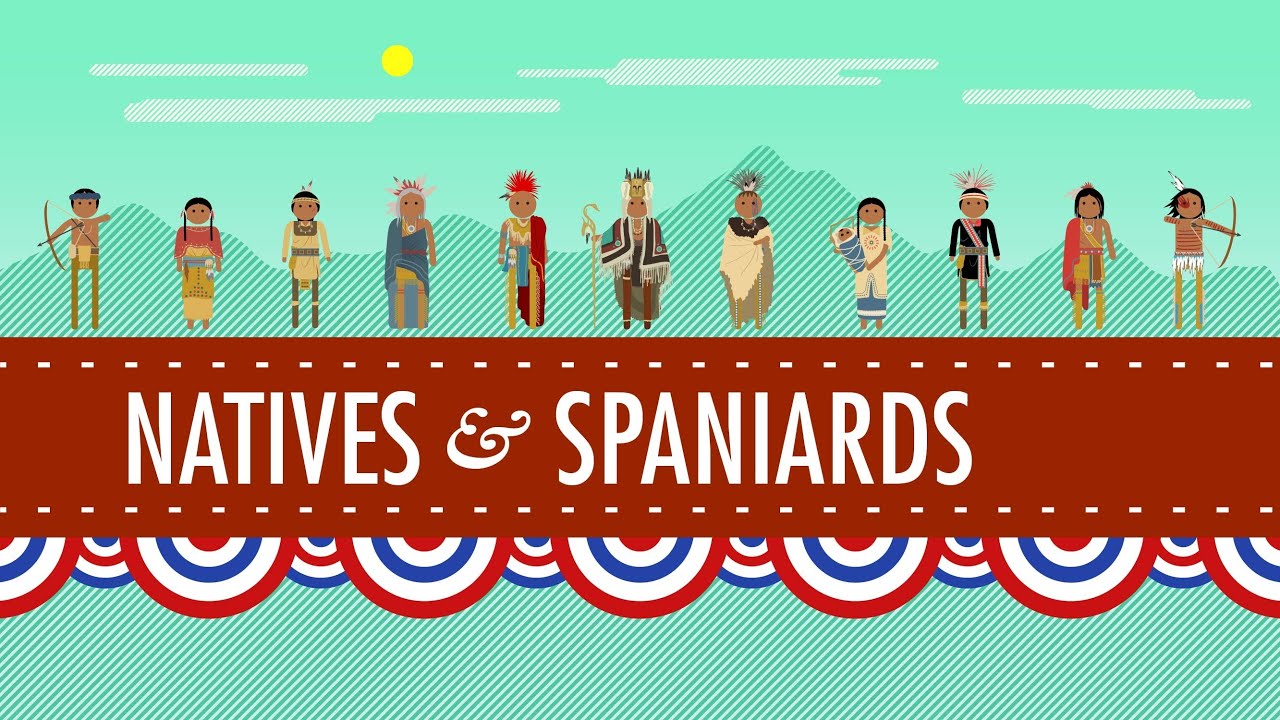
In which John Green kicks off Crash Course US History! Why, you may ask, are we covering US History, and not more World History, or the history of some other country, or the very specific history of your home region? Well, the reasons are many. But, like it or not, the United States has probably meddled in your country to some degree in the last 236 years or so, and that means US History is relevant all over the world. In episode 1, John talks about the Native Americans who lived in what is now the US prior to European contact. This is a history class, not archaeology, so we're mainly going to cover written history. That means we start with the first sustained European settlement in North America, and that means the Spanish. The Spanish have a long history with the natives of the Americas, and not all of it was positive. The Spanish were definitely not peaceful colonizers, but what colonizers are peaceful? Colonization pretty much always results in an antagonistic relationship with the locals. John teaches you about early Spanish explorers, settlements, and what happened when they didn't get along with the indigenous people. The story of their rocky relations has been called the Black Legend. Which is not a positive legend.
Turn on the captions. You'll like it!
Follow us!
@thecrashcourse
@realjohngreen
@crashcoursestan
@raoulmeyer
@saysdanica
@thoughtbubbler Support CrashCourse on Patreon: https://www.patreon.com/crashcourse

What is light? That is something that has plagued scientists for centuries. It behaves light a wave... and a particle... what? Is it both? In this episode of Crash Course Physics, Shini introduces to the idea of Quantum Mechanics and how it helps us understand light. Also, there's this thing called the ULTRAVIOLET CATASTROPHE!
Want more Crash Course in person? We'll be at NerdCon: Nerdfighteria in Boston on February 25th and 26th! For more information, go to http://www.nerdconnerdfighteria.com/
***
Get your own Crash Course Physics mug from DFTBA: http://store.dftba.com/products/crash...
The Latest from PBS Digital Studios: https://www.youtube.com/playlist?list...
--
Produced in collaboration with PBS Digital Studios: http://youtube.com/pbsdigitalstudios
--
Want to find Crash Course elsewhere on the internet?
Facebook - http://www.facebook.com/YouTubeCrashC...
Twitter - http://www.twitter.com/TheCrashCourse
Tumblr - http://thecrashcourse.tumblr.com
Support CrashCourse on Patreon: http://www.patreon.com/crashcourse
CC Kids: http://www.youtube.com/crashcoursekids
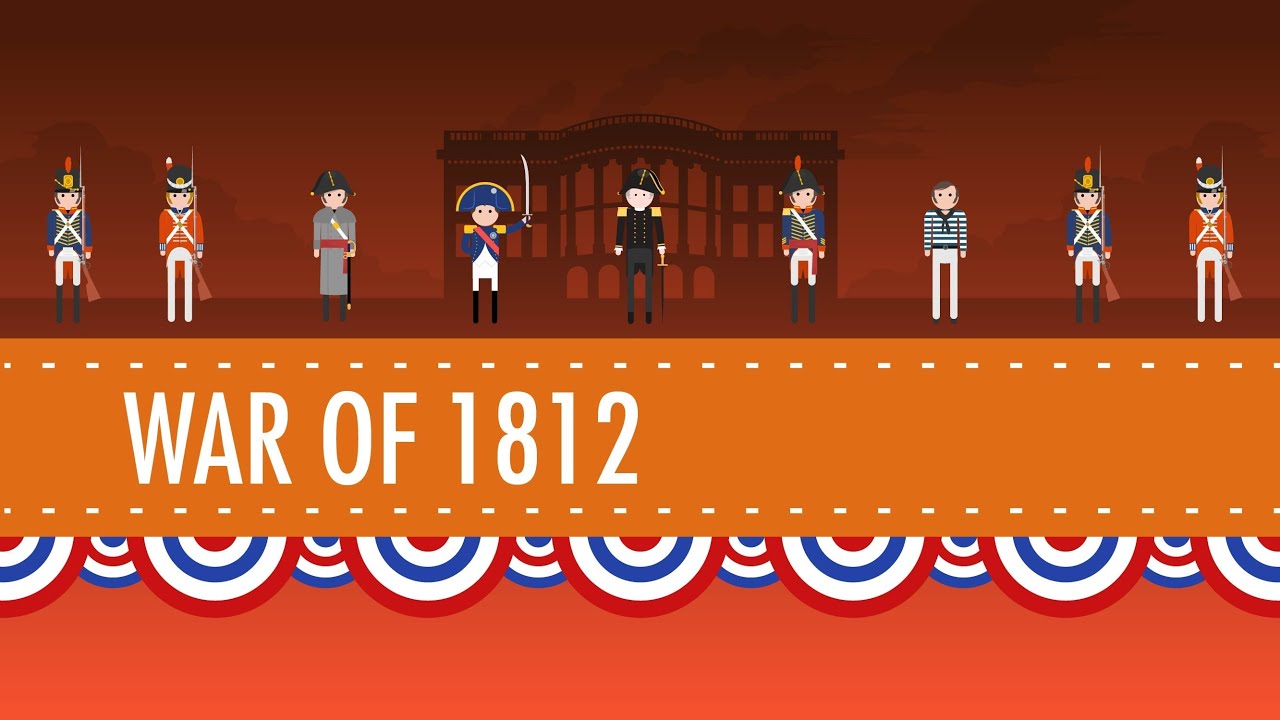
In which John Green teaches you about the War of 1812. The War of 1812 was fought between the United States and its former colonial overlord England. It started in, you guessed it 1812. The war lasted until 1815, and it resolved very little. John will take you through the causes of the war, tell you a little bit about the fighting itself, and get into just why the US Army couldn't manage to make any progress invading Canada. And yes, Canadians, we're going to talk about the White House getting burned down. The upshot: no territory changed hands, and most of the other bones of contention were solved prior to the actual war. Although nothing much changed for the US and England, the Native Americans were the big losers. Tecumseh was killed, and the Indian tribes lost a lot of territory. Watch as John lays it all out for you. Also, check out #1812problems on Twitter. It's awesome.
Follow Us!
@thecrashcourse
@1812problems
@realjohngreen
@crashcoursestan
@raoulmeyer
@saysdanica
@thoughtbubbler Support CrashCourse on Patreon: https://www.patreon.com/crashcourse
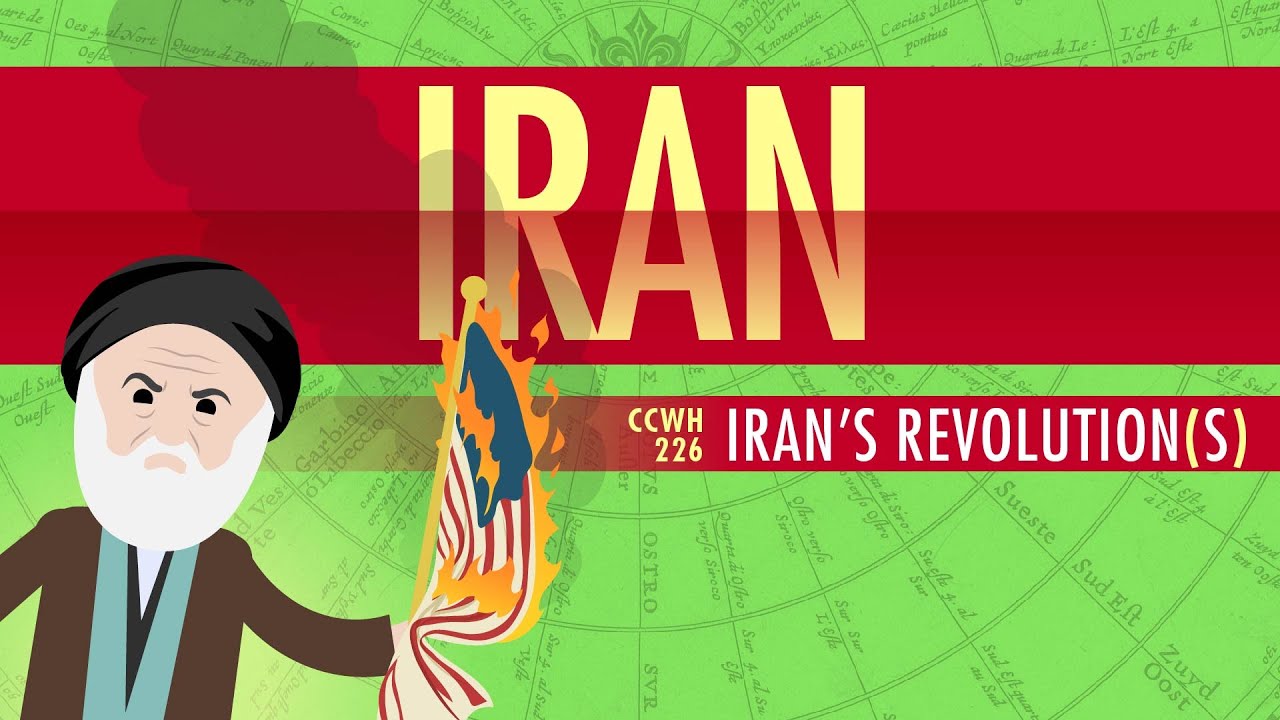
In which John Green teaches you about Iran's Revolutions. Yes, revolutions plural. What was the1979 Iranian Revolution about? It turns out, Iran has a pretty long history of unrest in order to put power in the hands of the people, and the most recent revolution in 1979 was, at least at first, not necessarily about creating an Islamic state. It certainly turned out to be about that, but it was initially just about people who wanted to get rid of an oppressive regime. Listen up as John teaches you about Iran's long history of revolution.
Citation 1: Caryl, Christian. Strange Rebels: 1979 and the Birth of the 21st Century. New York, Basic Books. 2014, p. 11
Citation 2: Axworthy, Michael, Revolutionary Iran: A History of the Islamic Republic. Oxford U. Press. 2014, p. 62
Citation 3: Quoted in Axworthy, p. 81
Citation 4: Axworthy, p. 114
Citation 5: Axworthy, p. 163
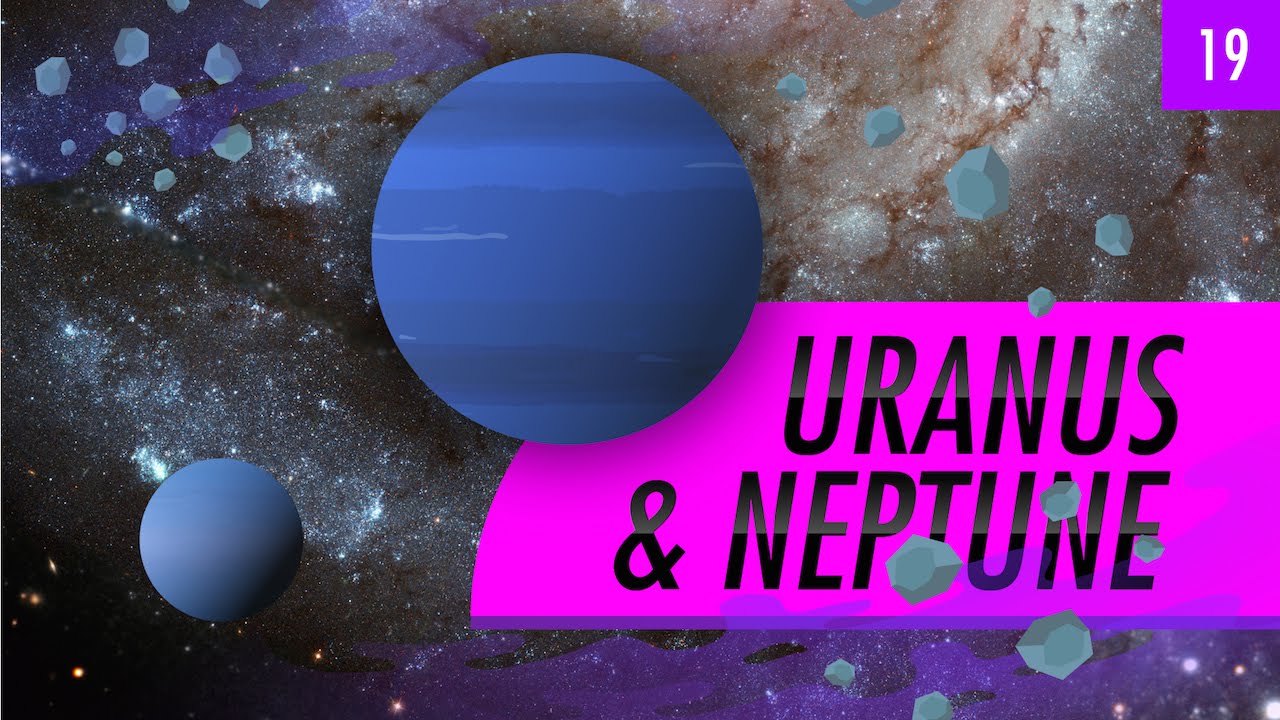
Today we’re rounding out our planetary tour with ice giants Uranus and Neptune. Both have small rocky cores, thick mantles of ammonia, water, and methane, and atmospheres that make them look greenish and blue. Uranus has a truly weird rotation and relatively dull weather, while Neptune has clouds and storms whipped by tremendous winds. Both have rings and moons, with Neptune’s Triton probably being a captured iceball that has active geology.
This episode was brought to you by Squarespace http://www.squarespace.com/crashcourse
--
Table of Contents
Ice Giants With Small Rocky Cores 2:18
Thick Mantles of Ammonia, Water, and Methane 1:53
Atmospheres Makes Them Look Green And Blue 2:53
Uranus Has Dull Weather 3:35
Neptune Has Active Weather 7:19
Both Have Rings And Moons 5:12
--
PBS Digital Studios: http://youtube.com/pbsdigitalstudios
Follow Phil on Twitter: https://twitter.com/badastronomer
Want to find Crash Course elsewhere on the internet?
Facebook - http://www.facebook.com/YouTubeCrashCourse
Twitter - http://www.twitter.com/TheCrashCourse
Tumblr - http://thecrashcourse.tumblr.com
Support CrashCourse on Patreon: http://www.patreon.com/crashcourse
--
PHOTOS/VIDEOS
Uranus http://en.wikipedia.org/wiki/V....oyager_2#/media/File [credit: NASA/JPL/Voyager mission]
Neptune https://www.nasa.gov/content/2....5-years-ago-voyager- [credit: NASA]
King George III http://en.wikipedia.org/wiki/G....eorge_III_of_the_Uni
Uranus from Earth picture by Phil Plait
Uranus, Earth size comparison http://en.wikipedia.org/wiki/F....ile:Uranus,_Earth_si [credit: NASA]
Uranus core, reconstructed from http://en.wikipedia.org/wiki/F....ile:Uranus-intern-en [credit: Wikimedia Commons]
Uranus http://www.spacetelescope.org/....static/archives/imag [credit: NASA, ESA, L. Sromovsky and P. Fry (University of Wisconsin), H. Hammel (Space Science Institute), and K. Rages (SETI Institute)]
Uranus storms http://www.keckobservatory.org..../images/made/images/ [credit: Imke de Pater (UC–Berkeley)/Keck Observatory]
Uranus and rings (tilt demonstration) http://en.wikipedia.org/wiki/U....ranus#/media/File:Ur [credit: Hubble Space Telescope - NASA Marshall Space Flight Center]
Uranus with rings and moons http://www.eso.org/public/images/eso0237a/ [credit: ESO]
Miranda http://en.wikipedia.org/wiki/M....oons_of_Uranus#/medi [credit: NASA]
Verona Rupes http://apod.nasa.gov/apod/ap110404.html [credit: NASA]
Neptune’s Interior https://solarsystem.nasa.gov/m....ultimedia/display.cf [credit: Lunar and Planetary Institute]
Neptune clouds http://en.wikipedia.org/wiki/F....ile:Neptune_clouds.j [credit: NASA]
Neptune’s Great Dark Spot http://en.wikipedia.org/wiki/N....eptune#/media/File:N [credit: NASA / Jet Propulsion Lab]
Neptune’s Rings http://www.rolfolsenastrophoto....graphy.com/Astrophot [credit: Rolf Wahl Olsen / NASA/JPL (Voyager 2, NASA Planetary Data System)]
Triton http://en.wikipedia.org/wiki/T....riton_(moon)#/media/ [credit: NASA / Jet Propulsion Lab / U.S. Geological Survey]
Triton flipped http://en.wikipedia.org/wiki/F....ile:PIA01538_Triton_ [credit: NASA/JPL]
Triton Nitrogen Geysers http://en.wikipedia.org/wiki/T....riton_(moon)#/media/ NASA]

Hank introduces us to biogeochemical cycles by describing his two favorites: carbon and water. The hydrologic cycle describes how water moves on, above, and below the surface of the Earth, driven by energy supplied by the sun and wind. The carbon cycle does the same... for carbon!
Like Crash Course: http://www.facebook.com/YouTubeCrashCourse
Follow Crash Course: http://www.twitter.com/TheCrashCourse
Table of Contents
1) Hydrologic Cycle - 1:15
A) Clouds - 2:13
B) Runoff - 3:06
C) Oceans - 3:41
D) Evapotranspiration - 4:25
2) Carbon Cycle - 5:12
A) Plants - 5:48
B) Fossil Fuels - 6:40
C) Oceans - 7:12
D) Global Warming - 7:35
References and image licenses for this episode can be found in the Google document here: http://dft.ba/-3flG Support CrashCourse on Subbable: http://subbable.com/crashcourse

What is a trade deficit? Well, it all has to do with imports and exports and, well, trade. This week Jacob and Adriene walk you through the basics of imports, exports, and exchange. So, you remember the specialization and trade thing, right? So, that leads to imports and exports. Economically, in the aggregate, this is usually a good thing. Globalization and free trade do tend to increase overall wealth. But not everybody wins.
Crash Course is on Patreon! You can support us directly by signing up at http://www.patreon.com/crashcourse
Thanks to the following Patrons for their generous monthly contributions that help keep Crash Course free for everyone forever:
Mark, Eric Kitchen, Jessica Wode, Jeffrey Thompson, Steve Marshall, Moritz Schmidt, Robert Kunz, Tim Curwick, Jason A Saslow, SR Foxley, Elliot Beter, Jacob Ash, Christian, Jan Schmid, Jirat, Christy Huddleston, Daniel Baulig, Chris Peters, Anna-Ester Volozh, Ian Dundore, Caleb Weeks
--
Want to find Crash Course elsewhere on the internet?
Facebook - http://www.facebook.com/YouTubeCrashCourse
Twitter - http://www.twitter.com/TheCrashCourse
Tumblr - http://thecrashcourse.tumblr.com
Support Crash Course on Patreon: http://patreon.com/crashcourse
CC Kids: http://www.youtube.com/crashcoursekids
Why are some countries rich? Why are some countries poor? In the end it comes down to Productivity. This week on Crash Course Econ, Adriene and Jacob investigate just why some economies are more productive than others, and what happens when an economy is mor productive. We'll look at how things like per capita GDP translate to the lifestyle of normal people. And, there's a mystery.
Crash Course is on Patreon! You can support us directly by signing up at http://www.patreon.com/crashcourse
Thanks to the following Patrons for their generous monthly contributions that help keep Crash Course free for everyone forever:
Mark, Jan Schmid, Simun Niclasen, Robert Kunz, Daniel Baulig, Jason A Saslow, Eric Kitchen, Christian, Beatrice Jin, Anna-Ester Volozh, Eric Knight, Elliot Beter, Jeffrey Thompson, Ian Dundore, Stephen Lawless, Today I Found Out, James Craver, Jessica Wode, Sandra Aft, Jacob Ash, SR Foxley, Christy Huddleston, Steve Marshall, Chris Peters
Want to find Crash Course elsewhere on the internet?
Facebook - http://www.facebook.com/YouTubeCrashCourse
Twitter - http://www.twitter.com/TheCrashCourse
Tumblr - http://thecrashcourse.tumblr.com
Support Crash Course on Patreon: http://patreon.com/crashcourse
CC Kids: http://www.youtube.com/crashcoursekids
In today’s episode, Hank asks you to consider all the ways people talk about justice and what we really mean when we use that word. We’ll explain various theories of justice, just distribution, and different approaches to punishment.
Want more Crash Course in person? We'll be at NerdCon: Nerdfighteria in Boston on February 25th and 26th! For more information, go to http://www.nerdconnerdfighteria.com/
Get your own Crash Course Philosophy mug or Chom Chom shirt from DFTBA: https://store.dftba.com/collections/crashcourse
The Latest from PBS Digital Studios: https://www.youtube.com/playli....st?list=PL1mtdjDVOoO
--
All other images and video either public domain or via VideoBlocks, or Wikimedia Commons, licensed under Creative Commons BY 4.0: https://creativecommons.org/licenses/by/4.0/
Produced in collaboration with PBS Digital Studios: http://youtube.com/pbsdigitalstudios
--
Want to find Crash Course elsewhere on the internet?
Facebook - http://www.facebook.com/YouTubeCrashC...
Twitter - http://www.twitter.com/TheCrashCourse
Tumblr - http://thecrashcourse.tumblr.com
Support CrashCourse on Patreon: http://www.patreon.com/crashcourse
CC Kids: http://www.youtube.com/crashcoursekids

In which John Green teaches you about war! Specifically, John talks about whether humanity is naturally warlike, hard-wired to kill, or if perhaps war is a cultural construct. John will talk about the Hobbes versus Rousseau debate, the effects that war has on human social orders, and the effects that war has on individuals. So is war human nature? Watch and find out what we have to say about it.
You can directly support Crash Course at https://www.patreon.com/crashcourse Subscribe for as little as $0 to keep up with everything we're doing. Free is nice, but if you can afford to pay a little every month, it really helps us to continue producing this content.
Today, Craig is going to dive into the controversy of monetary and fiscal policy. Monetary and fiscal policy are ways the government, and most notably the Federal Reserve, influences the economy - for better or for worse. So we’re going to start by looking at monetary policy, and specifically how the Federal Reserve uses interests rates as a means of controlling (or at least attempting to control) inflation. We’ll then move onto fiscal policy - that is the government’s use of taxation to raise and spend money. It’s all, well, pretty controversial, but as it seems Americans hate taxes the most, monetary policy is most often used - meaning that the Federal Reserve plays a hugely significant role in steering the U.S. economy.
Produced in collaboration with PBS Digital Studios: http://youtube.com/pbsdigitalstudios
Support is provided by Voqal: http://www.voqal.org
All attributed images are licensed under Creative Commons by Attribution 4.0
https://creativecommons.org/licenses/...
Want to find Crash Course elsewhere on the internet?
Facebook - http://www.facebook.com/YouTubeCrashC...
Twitter - http://www.twitter.com/TheCrashCourse
Tumblr - http://thecrashcourse.tumblr.com
Support Crash Course on Patreon: http://patreon.com/crashcourse
CC Kids: http://www.youtube.com/crashcoursekids
Today, Craig Benzine is going to dive into the factors that influence judicial decisions. As you may have noticed, the Supreme Court recently handed down some pretty big decisions on same-sex marriage (in Obergefell v Hodges) and the Affordable Care Act (in King v. Burwell). Now, it's important to remember that these decisions are not made in a vacuum, but influenced by the other branches of government, political affiliations, and past court decisions. We’re also talk about a judge’s judicial philosophy - that is their relative restraint or activism in making decisions on laws. Judicial restraint is often equated with conservatism, but as we’ll show you, this is not always the case.
Produced in collaboration with PBS Digital Studios: http://youtube.com/pbsdigitalstudios
Support is provided by Voqal: http://www.voqal.org
All attributed images are licensed under Creative Commons by Attribution 2.0
https://creativecommons.org/li....censes/by/2.0/legalc
Want to find Crash Course elsewhere on the internet?
Facebook - http://www.facebook.com/YouTubeCrashCourse
Twitter - http://www.twitter.com/TheCrashCourse
Tumblr - http://thecrashcourse.tumblr.com
Support Crash Course on Patreon: http://patreon.com/crashcourse
CC Kids: http://www.youtube.com/crashcoursekids

Pitching your movie to people can be hard. A studio, a friend, your mom... each of these entities will have different stressed and give you different results. But, what's important in a pitch? And what happens after the pitch? How do you get your movie ready to film? In this episode of Crash Course Film Production, Lily gives us some advice on both.
Produced in collaboration with PBS Digital Studios: http://youtube.com/pbsdigitalstudios
The Latest from PBS Digital Studios: https://www.youtube.com/playli....st?list=PL1mtdjDVOoO
***
Want to find Crash Course elsewhere on the internet?
Facebook - http://www.facebook.com/YouTubeCrashCourse
Twitter - http://www.twitter.com/TheCrashCourse
Tumblr - http://thecrashcourse.tumblr.com
Support Crash Course on Patreon: http://patreon.com/crashcourse
CC Kids: http://www.youtube.com/crashcoursekids