Top Vídeos
UPDATE 25 March 2013. Rob says "If u need someone to give u all the European Sizes (Meters, Cm and Mm) just email me! Rob_de_clercq@hotmail.com". NICE!! :)
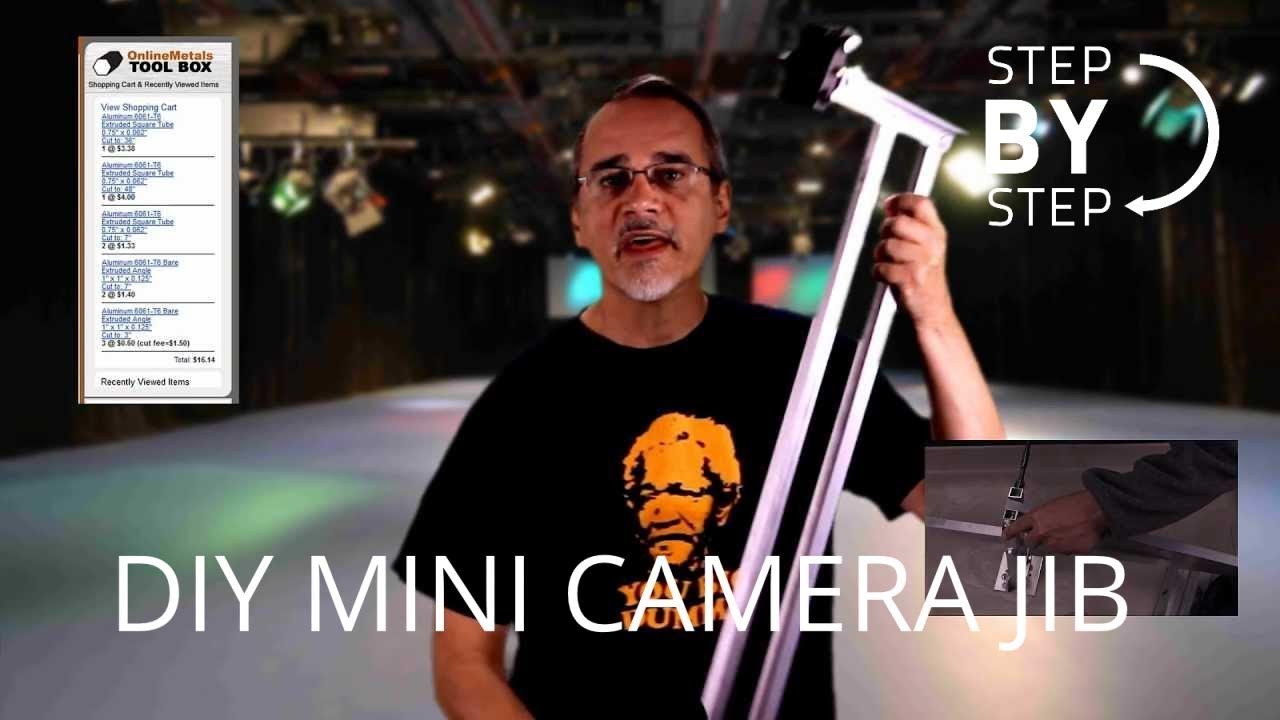
Build this OliviaTech DIY jib for about $40! I give all the details, dimensions, hardware, test shots and comments. And yeah, it's awesome! Read the description...there's a lot of info here!
UPDATE: 4 JUNE 2013:
Someone in Australia said you can get the nylon bushings by going to ebay.com.au and typing "NYLON Plastic Shoulder Washers Packs 10. Thanks!
UPDATE 6 MAY 2013:
Thanks to a heads up from codythegreat428, the nylon flange bushings are back in stock here: http://tinyurl.com/bmqc8c4
UPDATE 01/30/2013
The ones below are out of stock on Amazon. The only thing I can find is this:
1/4 x 1/2 Nylon Flange Bearing (25 pieces). They're TOO long, but i THINK(!) you could cut them shorter. Haven't tried it at all, so you're on your own if you try this. But for $6, not a real bad deal. Here's the link: http://www.amazon.com/Nylon-Flange-Bearing-25-pieces/dp/B003QZJ78W/ref=sr_1_cc_1?s=aps&ie=UTF8&qid=1359604137&sr=1-1-catcorr&keywords=1%2F4+x+1%2F2+Nylon+Flange+Bearing+%2825+pieces%29
About this video:
I ran across this jib from OliviaTech.com and decided to build and test it. After figuring out all the exact dimensions and hardware, I decided to share it for all and make a DIY video. OMG!!! You guys who do DIY videos...Master Kudos! these take a LONG time to put together!
I include a full explanation of everything, all hardware needed, all aluminum parts needed, how to build it, the links to OliviaTech, and even some awesome test shots!
Check out OliviaTech for this jib and other cool stuff:
OliviaTech jib: http://oliviatech.com/how-to-make-a-diy-camera-jib
OliviaTech video: http://youtu.be/dyPvfpouPzk
Aluminum parts can be obtained from: http://www.onlinemetals.com.
You'll need:
1" x 1" x 1/8" thick channel (angle)
----------------------------------------------------
(3) 3" long
(2) 7" long
3/4" x 1/16" think square aluminum (tube)
-------------------------------------------------------------
(2) 7" long
(1) 3 foot long
(1) 4 foot long
Hardware can be obtained from Home Depot, Lowe's, an auto parts or local hardware store.
You'll need:
1/4-20 Hex Head Bolts
----------------------------------
(3) 3" long
(4) 1-1/2" long
(2) 1" long
(1) 3/4" long (specific to my mounting
Lock Nuts
------------------
(9) 1/4"-20 as shown
Nylon Flanged Bushings
-------------------------------------
(8) 1/4" (inside diameter) x 5/16" long
Flat Washers
----------------------
(16) 1/4" (inside diameter)
Fender Washer
--------------------------
(1) 3/8" (insider diameter) specific to my weights
PVC Plugs
-----------------
(3) 3/4" specific to my weights
Furniture Tips
--------------------
(6) 3/4"
Your weight and mounting system may be different. Here's the weights from OliviaTech.com and my Manfrotto mount and plate:
Weights: http://tinyurl.com/84g55rd
Manfrotto Mount: http://tinyurl.com/82kujdz
Davis&Sanford tripod: http://tinyurl.com/95wm3zg
Please like, comment and subscribe: http://tinyurl.com/78tf9qk
Reach The Basic Filmmaker...
Facebook: http://www.facebook.com/TheBasicFilmmaker
Twitter: http://www.twitter.com/basicfilmmaker
Email: thebasicfilmmaker@gmail.com
Home: http://www.thebasicfilmmaker.com
Vimeo: http://www.vimeo.com/thebasicfilmmaker
A FEW cool YouTube Channels you should subscribe to:
http://www.youtube.com/knoptop
http://www.youtube.com/thefrugalfilmmaker
http://www.youtube.com/FilmIn5d
http://www.youtube.com/LJtutorials
http://www.youtube.com/filmriot
http://www.youtube.com/indymogul
http://www.youtube.com/oliviatechvideos
http://www.youtube.com/freddiew
About The Basic Filmmaker...
I will be posting videos, short films, DIY build projects you've never seen before, After Effects tutorials, and covering cameras, gear, sliders, makeup, DSLRs, cranes, jibs, dolly's, stabilizers, shoulder rigs, rail systems, green screen tutorials, and answering any question you ask about film making.
About the gear used...
DIY Jib, White Balance Filter, Green screen with 2 lights, 3-point lighting, Canon DSLR, 35mm lens, off and on camera mics, edited in After Effects and Sony Vegas Pro.
Where to get some not so expensive (relatively) gear for filmmaking...
Canon 550D: http://tinyurl.com/breu6bj
Canon 600D: http://tinyurl.com/c4uzyoh
50mm Lens (low end): http://tinyurl.com/7c7wsaa
50mm Lens (high end): http://tinyurl.com/88mez6u
Zoom H1: http://tinyurl.com/7mu5tb2
Rode Videomic: http://tinyurl.com/7w5bx6d
The music "Chemistry" and "Playing Hooky" are licensed by me and can be obtained from: http://www.footagefirm.com #basicfilmmaker #filmmaking #videos

Tracklist below.
Online purchase or streaming (Spotify, iTunes, Amazon Music, Deezer, Google Play): https://brilliant-classics.lnk.....to/BachViolinTransc
More Information: https://www.brilliantclassics.....com/articles/j/js-ba
Brilliant Classics Spotify: https://open.spotify.com/user/....brilliantclassics?si
Brilliant Classics Facebook: https://www.facebook.com/brilliantclassics
A deeply personal project, this transcription for organ of three of Bach’s works for violin and orchestra represents the fulfilment of a dream more than 20 years in the making. Organist Daniele Boccaccio admits that, originally, he thought it impossible to create an effective and faithful transcription of these pieces with which he fell in love at the age of 21. After years of fermentation, however, the idea grew irresistible. The result is compelling, and Boccaccio treads a well-chosen path that prioritises fidelity – his approach to the transcribing process informed by Bach’s own transcriptions of Vivaldi Concertos – but leaves room for personalisation, and makes sure that the ensuing pieces are never lacking in fullness. More than two decades after his initial discovery of the Bach works, Boccaccio has succeeded in bringing them well and truly into the realm of his instrument.
Boccacio remains the youngest ever winner of the Noale National Organ Competition (1985). He has gone on to enjoy a varied career as an organist, participating in a wide array of performances, recordings, teaching and masterclasses in Italy, Austria and beyond.
00:00:00 Concerto in D Major, BWV 1042: I. Allegro
00:07:44 Concerto in D Major, BWV 1042: II. Adagio
00:13:40 Concerto in D Major, BWV 1042: III. Allegro assai
00:16:31 Concerto in G Minor, BWV 1041: I. Allegro
00:20:23 Concerto in G Minor, BWV 1041: II. Andante
00:26:38 Concerto in G Minor, BWV 1041: III. Allegro assai
00:30:34 Concerto in C Minor, BWV 1043: I. Vivace
00:34:26 Concerto in C Minor, BWV 1043: II. Largo, ma non tanto
00:40:57 Concerto in C Minor, BWV 1043: III. Allegro

Tracklist pinned.
Online purchase or streaming (Spotify, iTunes, Amazon Music, Deezer, Google Play): https://brilliant-classics.lnk.to/DvorakPianoWorks
More Information: https://www.brilliantclassics.....com/articles/d/dvora
Brilliant Classics Spotify: https://open.spotify.com/user/....brilliantclassics?si
Brilliant Classics Facebook: https://www.facebook.com/brilliantclassics
Composer: Antonín Dvorák
Artist: Inna Poroshina (piano)
Dvorák considered himself only a modest pianist (he was a string player), and his music for piano has for long been neglected and considered of secondary importance to his symphonies, concertos and chamber works. Whilst undoubtedly true, the output for solo piano does contain some of his more mundane efforts, closer study of the music reveals some gems well worth getting to know, and that all contain his innate gift for melody.
His largest work featuring piano, the G major piano concerto has finally made some headway in the concert repertoire, and has always been championed by leading pianists – Richter and Aimard to name just two. The piano trios, quartets and the quintet all have effective piano parts, and are well laid out for the pianist. So why has the solo piano music been so neglected?
These works span his entire creative life, from the simple little Polka in E of 1860, to the Theme and Variations, Suite in A, and the Humoresques of 1894. These last three works are his masterpieces for piano, and indeed the Seventh Humoresque in G became very famous due its use in a Joan Crawford film in 1946, and through arrangements by Fritz Kreisler and Art Tatum. The Suite in A, dating from his time in America (where he composed his Ninth Symphony ‘From the New World’) is better known today in its orchestral version.
These CDs contain some wonderful little known music by one the best-loved composers – music that deserves a wider audience.

Online purchase or streaming (Spotify, iTunes, Amazon Music, Deezer, Google Play): https://brilliant-classics.lnk.....to/BachRecorderConc
Physical Sale: https://www.brilliantclassics.....com/articles/j/js-ba
Facebook: https://www.facebook.com/brilliantclassics/
Brilliant Classics Spotify: https://brilliant-classics.lnk.to/Spotify
Composer: Johann Sebastian Bach
Artist: Erik Bosgraaf (recorder), Ensemble Cordevento
Although Bach clearly felt at home composing for the recorder, featuring it in major works including the Brandenburg Concertos and several cantatas, he never composed a concerto for solo recorder – in fact, he only wrote original solo concertos for harpsichord and violin. However, an examination of Bach’s compositional practices reveals that it was customary during his era to adapt or reuse musical material in new compositions. Taking this into consideration, the creators of this recording have drawn on a range of sources to answer the question of how a solo recorder concerto by Bach might have sounded.
The disc includes four full recorder concertos, based on material taken from existing harpsichord concertos and cantata movements, which Bach himself often reused or transcribed for different instrumentation. It closes with an organ prelude adapted for recorder and strings.The recordings are accompanied by extensive booklet notes, which outline the sources used in the construction of this repertoire and reveal an interesting dimension of Bach’s compositional practice – his approach to reusing and adapting musical material.
These recordings are brought to life by compelling performances from Erik Bosgraaf and Ensemble Cordevento, performed on a range of recorders and period instruments. Displaying an imaginative yet thorough approach to the repertoire, this disc is a fascinating examination of how Bach might have approached writing largescale works for the recorder and is recommended to any listeners interested in his concertos.
00:00:00 Concerto in G Major, Arias from Cantatas BWV 215 and 32, transcribed by Thiemo Wind: I. [Allegro]
00:06:27 Concerto in G Major, Arias from Cantatas BWV 215 and 32, transcribed by Thiemo Wind: II. Adagio
00:11:49 Concerto in G Major, Arias from Cantatas BWV 215 and 32, transcribed by Thiemo Wind: III. Presto
00:15:08 Concerto in B-Flat Major, BWV 1055: I. Allegro
00:19:07 Concerto in B-Flat Major, BWV 1055: II. Larghetto
00:24:04 Concerto in B-Flat Major, BWV 1055: III. Allegro ma non tanto
00:28:06 Concerto in D Major, BWV 1053: I. [Allegro]
00:35:33 Concerto in D Major, BWV 1053: II. Siciliano
00:39:30 Concerto in D Major, BWV 1053: III. Allegro
00:45:31 Concerto in D Minor, ‘BWV 1059’: I. [Allegro]
00:50:41 Concerto in D Minor, ‘BWV 1059’: II. Adagio
00:53:32 Concerto in D Minor, ‘BWV 1059’: III. Presto
00:56:25 Liebster Jesu, wir sind hier, BWV 731

Tracklist below.
Online purchase or streaming (Spotify, iTunes, Amazon Music, Deezer, Google Play): https://brilliant-classics.lnk.....to/BoccheriniString
More Information: https://www.brilliantclassics.....com/articles/b/bocch
Brilliant Classics Spotify: https://open.spotify.com/user/....brilliantclassics?si
Brilliant Classics Facebook: https://www.facebook.com/brilliantclassics
Composer: Luigi Boccherini
Artist: Virtuosi della Rotonda
Federico Guglielmo violin
Luigi Puxeddu cello
Luigi Boccherini spent his early life in the service of the authorities of his hometown of Lucca, in Tuscany, though his talent as a cellist and composer often saw him travel abroad with his family at this young age. Settling in Spain in 1770, he spent the next 15 years of his life in the service of the Infante Luis Antonio Jaime of Bourbon. The String Quintets Op.29 for two violins, viola and two cellos were composed for the Infante in 1779 and represent a peak in Boccherini’s output, both for the magic of their texture and their great formal freedom. They remained unpublished for several years, only printed posthumously by the Parisian publisher Pleyel in 1813. The presence of dance is a common feature of the Quintets, with examples of every kind bursting out unexpectedly, even in movements where it is not openly called for. Particularly striking in this regard is Boccherini’s way of disrupting a slow movement in order to leave space for the dance to follow to the point that, in the sixth and last quintet, the slow movement is reduced to a sad Prelude before the Goyescan finale. Performing these works are I Virtuosi della Rotonda, a chamber group founded by Luigi Puxeddu in 2002, made up of soloists and leaders of major Italian orchestras. Puxeddu has already released Boccherini’s String Quintets Op.18, with La Magnifica Comunità (BC93346), and his Complete Cello Sonatas (BC93784) on Brilliant Classics. The latter, the only complete recording in existence, was named Disc of the Month by Angelo Foletto in the Italian classical music magazine Suonare News and received five Diapasons in France, as well as being critically praised in American Record Guide and Classical Voice.
After a lapse of several years this set presents the continuation of a highly successful and popular series on Brilliant Classics: the string quintets by Boccherini! The String Quintet series, of which 15 CD’s have already been issued, brought to light many hidden treasures, masterworks of chamber music in pure Classical Style, brimming with vitality, wit and winning charm. The ensemble I Virtuosi delle Rotonda are basically the same as the previous ensemble La Magnifica Comunita, only the primarius is changed: early music specialist and pioneer Federico Guglielmo, a better and stronger advocate of this delicious music is hardly imaginable…
00:00:00 String Quintet No. 1 in D Major, G. 313: I. Andante moderato
00:08:04 String Quintet No. 1 in D Major, G. 313: II. Minuetto
00:11:54 String Quintet No. 1 in D Major, G. 313: III. Cantabile
00:18:19 String Quintet No. 1 in D Major, G. 313: IV. Finale. Allegro
00:23:42 String Quintet No. 2 in C Minor, G. 314: I. Allegro vivo
00:31:11 String Quintet No. 2 in C Minor, G. 314: II. Largo assai
00:33:19 String Quintet No. 2 in C Minor, G. 314: III. Minuetto
00:37:05 String Quintet No. 2 in C Minor, G. 314: IV. Fuga. Allegro giusto
00:42:11 String Quintet No. 3 in F Major, G. 315: I. Adagio
00:48:04 String Quintet No. 3 in F Major, G. 315: II. Allegro vivo
00:56:18 String Quintet No. 3 in F Major, G. 315: III. Andante lentarello
01:03:10 String Quintet No. 4 in A Major, G. 316: I. Allegro moderato
01:09:59 String Quintet No. 4 in A Major, G. 316: II. Minuetto
01:13:46 String Quintet No. 4 in A Major, G. 316: III. Largo cantabile
01:20:54 String Quintet No. 4 in A Major, G. 316: IV. Il ballo Tedesco. Presto
01:24:34 String Quintet No. 5 in E-Flat Major, G. 317: I. Allegro moderato
01:31:39 String Quintet No. 5 in E-Flat Major, G. 317: II. Minuetto
01:34:53 String Quintet No. 5 in E-Flat Major, G. 317: III. Andante lento
01:40:59 String Quintet No. 5 in E-Flat Major, G. 317: IV. Finale. Allegro assai
01:46:13 String Quintet No. 6 in G Minor, G. 318: I. Allegro moderato assai
01:53:53 String Quintet No. 6 in G Minor, G. 318: II. Minuetto
01:56:41 String Quintet No. 6 in G Minor, G. 318: III. Preludio. Adagio
01:59:09 String Quintet No. 6 in G Minor, G. 318: IV. Rondò. Allegro giusto

Streaming & Downloads: https://brilliant-classics.lnk.....to/MendelssohnPiano
Physical Sale: https://www.brilliantclassics.....com/articles/m/mende
Facebook Brilliant Classics: https://www.facebook.com/brilliantclassics/
Composer: Felix Mendelssohn
Artists: Wolfram Schmitt-Leonardy (piano), Frank van der Laar (piano), Pieter-Jelle de Boer (piano)
Felix Mendelssohn was a virtuoso pianist, and it worth remembering that he was born in 1809, with his friend Schumann being born a year later in 1810, as was Chopin, and Liszt following in 1811. These composers were among the greatest pianists of the 19th century, and they were born at a time when the piano was a relatively modern instrument, and composers such as Hummel, Moscheles (Mendelssohn’s friend), Kalkbrenner and Ries were accorded adulation similar to pop stars today. Beethoven commenced his career in the 1790s as a virtuoso pianist.
No surprise then that the young Mendelssohn composed extensively for his chosen instrument from the outset. From early concertos and sonatas he quickly established his ‘mature’ style in works such as the Rondo capriccioso, and the Andante cantabile e Presto agitato. The masterpieces that followed include the remarkably imposing Variations serieuses and the famous Songs without Words.
Mendelssohn’s style did not change throughout his short creative life – he very quickly composed in what we know as his mature style from his early teens, something even Mozart didn’t achieve.
This album contains the Songs without Words, Variations serieuse, Kinderstucke, Rondo capriccioso, Capriccio, and Trois Fantasies ou Caprices plus several shorter works.
Tracklist can be found in the comment section!

Tracklist below.
For physical sales: http://brilliantclassics.com/a....rticles/v/valentini-
Listen via Spotify: https://play.spotify.com/album..../1t3wGbULgDcmdAjIoEs
The east Midlands city of Leicester has recently come to worldwide attention thanks to a winning partnership between its football club and an Italian coach. This latest addition to the ever-expanding catalogue of Baroque Italiana on Brilliant Classics demonstrates that the connection between Leicester and Rome goes back at least three centuries: to one Robert Valentine, who left his home city at the end of the 17th century and made a career across Europe as an itinerant musician, before settling in the Eternal City as ‘Roberto Valentini Inglese’. There he established himself as a flautist, oboist and composer. He evidently gained renown in the competitive musical culture of Rome, played in the first performance of Handel’s La Risurrezione under Corelli, andapparently never returned to Leicester.
This new recording presents the first printed edition of sonatas for the mandolin and basso continuo published in the first half of the 18th century, featuring Italian composers Roberto Valentini and Pietro Boni.
Robert Valentini (1674-1747) left his home and birthplace in the English Midlands in his early twenties for a “Grand Tour”, never to return. He finally settled in Rome as Roberto Valentini, where he became a successful composer and musician, playing the flute and oboe. His enormous output mainly consists of chamber music for the flute and b.c. In the score he left the choice of the solo instrument open for either violin, flute or…mandolin.
The mandolin used in this recording is a 6 double course “Mandolino Lombardo”, inspired by an instrument by Antonio Monzino (Milan 1792).
The ensemble Pizzicar Galante has already established itself as one of the most dynamic period ensembles specializing in galant music for mandolin and basso continuo and is regularly invited to festivals all over Europe and abroad.
00:00:00 Sonata No. 6 in D Major, Op. 12: I. Adagio
00:02:53 Sonata No. 6 in D Major, Op. 12: II. Allegro
00:04:34 Sonata No. 6 in D Major, Op. 12: III. Adagio
00:07:50 Sonata No. 6 in D Major, Op. 12: IV. Vivace
00:09:30 Sonata No. 6 in D Major, Op. 12: V. Andante
00:10:16 Sonata No.6 in D Major, Op. 12: VI. Allegro
00:11:27 Sonata No. 2 in D Minor, Op. 2: I. Largo
00:16:31 Sonata No. 2 in D Minor, Op. 2: II. Allegro giga
00:18:30 Sonata No. 2 in D Minor, Op. 2: III. Allegro
00:19:27 Sonata No. 3 in G Major, Op. 12: I. Adagio
00:21:31 Sonata No. 3 in G Major, Op. 12: II. Allegro
00:22:54 Sonata No. 3 in G Major, Op. 12: III. Andante
00:24:42 Sonata No. 3 in G Major, Op. 12: IV. Allegro
00:26:32 Sonata No. 4 in G Minor, Op. 12: I. Adagio
00:29:24 Sonata No. 4 in G Minor, Op. 12: II. Allegro
00:30:51 Sonata No. 4 in G Minor, Op. 12: III. Andante
00:32:11 Sonata No. 4 in G Minor, Op. 12: IV. Allegro
00:33:48 Sonata No. 9 in D Major, Op. 2: I. Allegro
00:35:50 Sonata No. 9 in D Major, Op. 2: II. Adagio
00:38:43 Sonata No. 9 in D Major, Op. 2: III. Allegro
00:39:23 Sonata No. 1 in A Major, Op. 12: I. Adagio
00:41:22 Sonata No. 1 in A Major, Op. 12: II. Allegro
00:42:42 Sonata No. 1 in A Major, Op. 12: III. Andante
00:45:07 Sonata No. 1 in A Major, Op. 12: IV. Allegro
00:46:14 Sonata No. 2 in D Minor, Op. 12: I. Adagio
00:49:07 Sonata No. 2 in D Minor, Op. 12: II. Allegro
00:50:20 Sonata No. 2 in D Minor, Op. 12: III. Adagio amorosa
00:52:05 Sonata No. 2 in D Minor, Op. 12: IV. Allegro
00:53:29 Sonata No. 1 in A Major, Op. 2: I. I. Preludio largo
00:57:04 Sonata No. 1 in A Major, Op. 2: II. Corrente allegro
00:58:42 Sonata No. 1 in A Major, Op. 2: III. Sarabanda
01:01:14 Sonata No. 1 in A Major, Op. 2: IV. Allegro
01:02:17 Sonata No. 5 in E Minor, Op. 12: I. Adagio
01:05:30 Sonata No. 5 in E Minor, Op. 12: II. Allegro
01:07:05 Sonata No. 5 in E Minor, Op. 12: III. Largo
01:11:04 Sonata No. 5 in E Minor, Op. 12: IV. Allegro
Artist:
Pizzicar Galante
Anna Schivazappa (baroque mandolin)
Fabio Antonio Falcone (harpsichord)

Tracklist below.
Online purchase or streaming (Spotify, iTunes, Amazon Music, Deezer, Google Play): https://brilliant-classics.lnk.....to/PaganiniViolinCo
More Information: https://www.brilliantclassics.....com/articles/p/pagan
Brilliant Classics Spotify: https://open.spotify.com/user/....brilliantclassics?si
Brilliant Classics Facebook: https://www.facebook.com/brilliantclassics
Among the most revered virtuosos of all time, Nicolò Paganini was a true musical legend of his era, inspiring musicians such as Robert Schumann to forge his own career as a pianist. Franz Schubert was also a regular audience member at Paganini’s concerts, despite the outlandish ticket prices.
Paganini often remarked that, despite his legendary status as a violinist, he found it rather difficult to compose for the instrument. This release presents Paganini's complete violin concertos, performed by violinist Alexandre Dubach accompanied by the Orchestre Philharmonique de Monte-Carlo.
Composer:
Nicolò Paganini
Artist:
Alexandre Dubach (violin)
Orchestre Philharmonique de Monte-Carlo
Michel Sasson (conductor)
Lawrence Foster (conductor)
00:00:00 Violin Concerto No. 4 in D Minor: I. Allegro maestoso
00:16:44 Violin Concerto No. 4 in D Minor: II. Adagio flebile con sentimento
00:23:25 Violin Concerto No. 4 in D Minor: III. Rondo galante. Andantino gaio
00:34:10 Violin Concerto No. 1 in D Major, Op. 6: I. Allegro maestoso
00:54:15 Violin Concerto No. 1 in D Major, Op. 6: II. Adagio espressivo
00:59:28 Violin Concerto No. 1 in D Major, Op. 6: III. Rondo: allegro spirituoso
01:09:08 Violin Concerto No. 3 in E Major: I. Introduzione. Andantino - Allegro marziale
01:26:57 Violin Concerto No. 3 in E Major: II. Adagio. Cantabile spianato
01:34:13 Violin Concerto No. 3 in E Major: III. Polacca. Andantino vivace
01:46:22 Violin Concerto No. 6 in E Minor: I. Risoluto
02:07:04 Violin Concerto No. 6 in E Minor: II. Adagio
02:13:59 Violin Concerto No. 6 in E Minor: III. Rondo ossia polonese
02:25:27 Violin Concerto No. 5 in A Minor: I. Allegro maestoso
02:44:27 Violin Concerto No. 5 in A Minor: II. Andante un poco sostenuto
02:53:03 Violin Concerto No. 5 in A Minor: III. Rondo
03:03:37 Violin Concerto No. 2 in B Minor, Op. 7: I. Allegro maestoso
03:19:05 Violin Concerto No. 2 in B Minor, Op. 7: II. Adagio
03:26:05 Violin Concerto No. 2 in B Minor, Op. 7: III. Ronde à la clochette

Tracklist below.
Online purchase or streaming (Spotify, iTunes, Amazon Music, Deezer, Google Play): https://brilliant-classics.lnk.to/Bachsonatas
More Information: https://www.brilliantclassics.....com/articles/j/js-ba
Brilliant Classics Spotify: https://open.spotify.com/user/....brilliantclassics?si
Brilliant Classics Facebook: https://www.facebook.com/brilliantclassics
Composer: Johann Sebastian Bach
Artist: Kristóf Baráti (violin)
Bach may well be one of the most widely acknowledged master composers of all time, but that only serves to make each performer’s interpretation of his work all the more challenging and distinctive: each musician must both do justice to the composer’s intention, making a decision as to the best way of conveying that within the music which is not fixed, and at the same time leave their own mark on the performance. This is especially true for these Sonatas and Partitas given the variety of styles in which such Baroque masterworks have been performed, ranging from the freely romantic to the strictly precise, and the technical challenge posed by these complex pieces for a single instrument.
The works in this collection are something of an enigma, not only because of the uncertainty surrounding the circumstances and date of their composition, but, more crucially, because of the way in which they stretch the capacity for polyphony of a single violin beyond its physical limit. It is as though Bach had written for a full ensemble of instruments – but on a single staff. Modern musicians have even speculated as to the possible existence of a special bow with which an exact performance of the music might have been achieved in Bach’s day. The music is no less rich for all of this, however: on the contrary, the harmonic complexity of these pieces is at once captivating and beautiful; the implied but absent notes are thrillingly suggestive; and the multiplicity of voices leaves the listener marvelling at Bach’s compositional vision and the performer’s ability.
This accomplished musical feat is performed by Kristóf Baráti, a Hungarian violinist who has worked with an astonishing number of world-famous orchestras and conductors. Baráti plays a 1703 Stradivarius violin, and one can sense this echo of the era of the pieces as much as one can his intense emotional involvement with the music.
00:00:00 Sonata No. 1 in G Minor, BWV 1001: I. Adagio
00:03:53 Sonata No. 1 in G Minor, BWV 1001: II. Fuga: Allegro
00:09:21 Sonata No. 1 in G Minor, BWV 1001: III. Siciliana
00:12:25 Sonata No. 1 in G Minor, BWV 1001: IV. Presto
00:15:04 Partita No. 1 in B Minor, BWV 1002: I. Allemanda
00:19:29 Partita No. 1 in B Minor, BWV 1002: II. Double
00:21:40 Partita No. 1 in B Minor, BWV 1002: III. Corrente
00:23:55 Partita No. 1 in B Minor, BWV 1002: IV. Double: Presto
00:26:39 Partita No. 1 in B Minor, BWV 1002: V. Sarabande
00:28:31 Partita No. 1 in B Minor, BWV 1002: VI. Double
00:29:53 Partita No. 1 in B Minor, BWV 1002: VII. Tempo di borea
00:32:09 Partita No. 1 in B Minor, BWV 1002: VIII. Double
00:34:33 Sonata No. 2 in A Minor, BWV 1003: I. Grave
00:38:24 Sonata No. 2 in A Minor, BWV 1003: II. Fuga
00:46:06 Sonata No. 2 in A Minor, BWV 1003: III. Andante
00:51:24 Sonata No. 2 in A Minor, BWV 1003: IV. Allegro
00:55:30 Partita No. 2 in D Minor, BWV 1004: I. Allemanda
00:58:34 Partita No. 2 in D Minor, BWV 1004: II. Corrente
01:00:34 Partita No. 2 in D Minor, BWV 1004: III. Sarabanda
01:03:00 Partita No. 2 in D Minor, BWV 1004: IV. Giga
01:06:09 Partita No. 2 in D Minor, BWV 1004: V. Ciaccona
01:19:13 Sonata No. 3 in C Major, BWV 1005: I. Adagio
01:23:12 Sonata No. 3 in C Major, BWV 1005: II. Fuga
01:32:50 Sonata No. 3 in C Major, BWV 1005: III. Largo
01:35:53 Sonata No. 3 in C Major, BWV 1005: IV. Allegro assai
01:39:29 Partita No. 3 in E Major, BWV 1006: I. Preludio
01:43:20 Partita No. 3 in E Major, BWV 1006: II. Loure
01:46:07 Partita No. 3 in E Major, BWV 1006: III. Gavotte en Rondeau
01:48:54 Partita No. 3 in E Major, BWV 1006: IV. Menuet I, II
01:50:53 Partita No. 3 in E Major, BWV 1006: V. Bourée
01:52:00 Partita No. 3 in E Major, BWV 1006: VI. Gigue

Download & Streaming: https://brilliant-classics.lnk.....to/CorelliCompleteE
Physical Sale: https://www.brilliantclassics.....com/articles/c/corel
Facebook: https://www.facebook.com/brilliantclassics
Brilliant Classics Spotify : https://brilliant-classics.lnk.to/Spotify
It may seem surprising: can 10 discs really contain all of Arcangelo Corelli’s output? They can, and do, but the surprise is merited, for the influence and reputation of these works far outstrips their quantity (and how often can one say that of a Barock composer!). On display here is the apogee of Barock form as displayed in the genres of Solo Sonatas, Trio Sonatas and Concerti Grossi, full of sparkling virtuosity and an intimate knowledge and love of the violin and its potential as a solo instrument.
The influence was felt most immediately in Rome, where he was based for his adult life, but publication of these collections soon earned him a name across Europe, as much as his prowess as a solo violinist did; for this was the golden age of the composer as creator, when composition went hand in hand with performance. Of course there is plenty more music Corelli composed which hasn’t survived, or at least not on manuscripts with his name on them, for Corelli as an impresario frequently staged oratorios to which he would have contributed sinfonias and instrumental numbers.
What survives is never less than highly polished; often bold, and continually inventive, as is more than evident in these performances from a welcome and uniform perspective by a leading Dutch period-instrument ensemble. And it’s unique; there is no other Corelli box on the market, nor has such a project ever been attempted before or since.
00:00:00 Trio Sonatas OP.3 1-12
01:20:28 Trio Sonatas OP.4 NOS 1-12
02:40:36 Trio Sonatas WoO 9-10
Full Tracklist in the comment section

Six days. Three frontiers. One amazing lab. From 2010 to 2012, a film crew followed a group of scientists at the Department of Energy's Fermilab and filmed them at work and at home. This 40-minute documentary shows the diversity of the people, research and work at Fermilab. Viewers catch a true behind-the-scenes look of the United States' premier particle physics laboratory while scientists explain why their research is important to them and the world.
Scientists included: Brendan Casey, Herman White, Craig Hogan, Denton Morris, Mary Convery, Bonnie Fleming, Deborah Harris, Dave Schmitz, Brenna Flaugher and Aron Soha.

Fermilab and Department of Energy officials broke ground on a new building that will house the Muon g-2 experiment. The new experiment will study the magnetic wobble of muons, and the core of the experiment—a 50-foot-wide electromagnet—will be transported this summer in one piece by barge and truck from Brookhaven National Laboratory in New York. The Muon g-2 experiment will be the first to use a new beam of muons from Fermilab's upgraded accelerator complex. A second experiment called Mu2e is also planned. Further information can be found at: http://muon-g-2.fnal.gov/

The experiments based at the Large Hadron Collider in Switzerland are undergoing a constant series of upgrades. Fermilab scientists Steve Nahn and Vivian O’Dell lead these upgrade efforts in the United States.

Particle physics research is both international and collaborative, with large national laboratories working together to most efficiently advance science. Joel Butler, Distinguished Scientist at Fermi National Accelerator Laboratory is the leader of the Compact Muon Solenoid experiment at the CERN laboratory in Europe. In this video, Joel tells us a bit about what it’s like.

Accelerator operators found themselves stuck at Fermilab when a fierce snowstorm hit in February 2011. Cindy Joe tells the story of how Fermilab staff rallied through the night while they waited out the blizzard.

Fermilab’s VetTech internship program seeks out military veterans for technical and computing positions across the lab. It puts their skills to work in a high-tech environment at America’s premier particle physics laboratory with an eye toward making them part of the team. The program, now in its third year, is a win-win for everyone. Learn more here: http://internships.fnal.gov/vettech.

Here's a tip for helping inexperienced actors do better dialogue.
SOCIAL:
Email: thebasicfilmmaker@gmail.com
Website: http://www.thebasicfilmmaker.com
Facebook: http://www.facebook.com/TheBasicFilmmaker
Twitter: http://www.twitter.com/basicfilmmaker
Instagram: http://www.instagram.com/basicfilmmaker
YouTube: http://www.youtube.com/thebasicfilmmaker
Vimeo: https://vimeo.com/channels/thebasicfilmmaker
ETHICS: I am not paid for product reviews.
GEAR: Using Canon, Rode, and Adobe products.
LEGAL: All music, footage and graphics are created or licensed. Basic Filmmaker University: www.basicfilmmakeruniversity.com #basicfilmmaker #filmmaking #videos

I imagine this video is going to piss off some folks, and frankly, I don't care. For the rest of us, let's do something completely different and talk about money. The full MONEY course is here: http://bit.ly/BFURB10DISCMONEYCOURSE
THE BASICS OF MONEY COURSE, PAPERBACK,
E-BOOK, AND AUDIOBOOKS!
▶ http://bit.ly/BasicsOfMoneyCourse
▶ http://bit.ly/BasicsOfMoneyPaperbackAmazon
▶ http://bit.ly/BasicsOfMoneyEBookAmazon
▶ http://bit.ly/BasicsOfMoneyAudioBookAudble
▶ http://bit.ly/BasicsOfMoneyAudioBookiTunes
▶ http://bit.ly/BasicsOfMoneyAudioBookAmazon
SUBSCRIBE:
▶ https://goo.gl/IqDJyZ
AWESOME FREE AND PAID COURSES:
▶ http://www.basicfilmmakeruniversity.com
SOCIAL:
Email: thebasicfilmmaker@gmail.com
Email: bfm@basicfilmmakeruniversity.com
http://bit.ly/BFUniversityEnrollment
http://bit.ly/BasicFilmmakerFacebook
http://bit.ly/BasicFilmmakerTwitter
http://bit.ly/BasicFilmmakerInstagram
http://bit.ly/BasicFilmmakerPinterest
http://bit.ly/BasicFilmmakerYouTube
http://bit.ly/BasicFilmmakerVimeo
http://bit.ly/BasicFilmmakerWebsite
http://bit.ly/BasicFilmmakerSwag
Music from PremiumBeat.com licensed here: http://bit.ly/PremiumBeatMusic #basicfilmmaker #filmmaking #videos

Tracklist below.
Spotify: https://open.spotify.com/album..../0fZenqZ92lyulZ1S5rB
Physical sale: http://brilliantclassics.com/a....rticles/v/vivaldi-ma
iTunes: https://itunes.apple.com/album..../vivaldi-mandolin-lu
The mandolin was essentially the instrument of amateur musicians in the early to mid 18th century. Vivaldi composed many concertos and trios for the young ladies of the Ospiedale della Pieta – including the famous G major RV532, which must rank as one of his most popular works after the Four Seasons.
The concertos and trios on this CD make a delightful programme, written for the pleasure of gifted students and patrons, full of the hallmarks of Vivaldian style that will not disappoint those who love the famous Four Seasons violin concertos from his Op.8 set. Simple, catchy melodies abound, in both still and often poignant slow movements as well as sparky fast movements.
Other information:
- Recording made in 2009.
- Frederico Gugliemo studied with Salvatore Accardo, Isaac Stern and The Amadeus, LaSalle and Quartetto Italiano string quartets before turning to period instrument performance under the guidance of Christopher Hogwood.
00:00:00 Concerto for 2 mandolins, strings and continuo in G Major RV 532
00:03:54 Concerto for 2 mandolins, strings and continuo in G Major RV 532
00:08:15 Concerto for 2 mandolins, strings and continuo in G Major RV 532
00:11:48 Concerto for mandolin, strings and continuo in C Major RV 425
00:14:26 Concerto for mandolin, strings and continuo in C Major RV 425
00:17:44 Concerto for mandolin, strings and continuo in C Major RV 425
00:19:57 Trio for Violin, lute and basso in g Minor RV 85
00:24:00 Trio for Violin, lute and basso in g Minor RV 85
00:27:01 Trio for Violin, lute and basso in g Minor RV 85
00:28:53 Concerto for 2 Violin, lute and basso in D Major RV 93
00:32:22 Concerto for 2 Violin, lute and basso in D Major RV 93
00:36:33 Concerto for 2 Violin, lute and basso in D Major RV 93
00:38:44 Trio for Violin, lute and basso in C Major RV 82
00:42:51 Trio for Violin, lute and basso in C Major RV 82
00:45:54 Trio for Violin, lute and basso in C Major RV 82
00:47:52 Concerto for Viola d’amore, lute, strings and basso in d Minor RV 540
00:53:13 Concerto for Viola d’amore, lute, strings and basso in d Minor RV 540
00:56:15 Concerto for Viola d’amore, lute, strings and basso in d Minor RV 540
00:59:47 Concerto for harpsichord, strings and continuo in A Major RV 780
01:03:30 Concerto for harpsichord, strings and continuo in A Major RV 780
01:05:40 Concerto for harpsichord, strings and continuo in A Major RV 780
Artist:
L'Arte dell'Arco
Federico Guglielmo (conductor)

Online purchase or streaming (Spotify, iTunes, Amazon Music, Deezer, Tidal, Google Play): https://brilliant-classics.lnk.to/BachMagnificat
Spotify Playlists:
Brilliant Classics Spotify: https://brilliant-classics.lnk.to/Spotify
The best of Liszt: https://brilliant-classics.lnk.to/Playliszt
The best of Bach: https://brilliant-classics.lnk.....to/BestOfBachPlayli
Most popular piano music: https://brilliant-classics.lnk.to/MostPopularPiano
Beautiful classical Music: https://brilliant-classics.lnk.....to/BeautifulClassic
Classical music for dinnertime: https://brilliant-classics.lnk.....to/ClassicalMusicfo
Composer: Carl Philipp Emanuel Bach
Artists: Venceslava Hruba-Freiberger (soprano), Barbara Bornemann (contralto), Peter Schreier (tenor), Olaf Bär (baritone), Rundfunkchor Berlin Kammerorchester, Hartmut Haenchen (conductor)
About this Album:
C.P.E. Bach is particularly renowned for his unrivalled piano sonatas in the sensitive style and contributed to almost every important form of classical music, but he began to recognise the symphony as a medium of great expressive potential in the mid-18th century, and eventually wrote an impressive total of 19 works within this genre. Two splendid examples are presented here.
The Symphony Wq173 owes its charm to small surprises such as a sudden shift to the minor key in the recapitulation of the first movement, but also to the calmly flowing melodic line of the second movement, and the minuet-like passages of the final movement. Meanwhile, the Symphony Wq180 is intriguing in form throughout, though the fanfare-like opening subject and the restless semiquaver figures of the violins, redolent of the baroque concertante style, above all lend it an exuberant quality. The Magnificat, which rounds off the CD, provides a more clearly baroque, and of course vocal, counterweight to the symphonies, and moves through dramatically contrasting emotions, alternately triumphant, severe and subdued. The piece was recorded live to mark the 200th anniversary of the composer’s death.
The Kammerorchester ‘Carl Philipp Emanuel Bach’ is, of course, the natural choice of orchestra for these pieces, specialising as they do in the works of the composer and his contemporaries (they have also recorded an album of Wilhelm Friedemann Bach’s Sinfonias for Brilliant Classics, 94690). Veteran conductor Hartmut
Haenchen has been at the helm of the orchestra for over 25 years.
Tracklist:
00:00:00 Symphony in G Major, Wq 173: I. Allegro assai
00:02:59 Symphony in G Major, Wq 173: II. Andante
00:05:34 Symphony in G Major, Wq 173: III. Allegretto
00:08:38 Symphony in G Major, Wq 180: I. Allegro di molto
00:12:50 Symphony in G Major, Wq 180: II. Largo
00:17:12 Symphony in G Major, Wq 180: III. Allegro assai
00:20:26 Magnificat in D Major, Wq 215: I. Magnificat (Chorus)
00:23:18 Magnificat in D Major, Wq 215: II. Aria. Quia respexit (Soprano)
00:29:35 Magnificat in D Major, Wq 215: III. Aria. Quia fecit (Tenor)
00:33:40 Magnificat in D Major, Wq 215: IV. Et misericordia eius (Chorus)
00:41:28 Magnificat in D Major, Wq 215: V. Aria. Fecit potentiam (Bass)
00:45:14 Magnificat in D Major, Wq 215: VI. Duet. Deposuit potentes (Contralto, Tenor)
00:51:00 Magnificat in D Major, Wq 215: VII. Aria. Suscepit Israel (Contralto)
00:56:31 Magnificat in D Major, Wq 215: VIII. Gloria (Chorus)
00:58:17 Magnificat in D Major, Wq 215: IX. Sicut erat (Chorus)
