Top Vídeos

Check out The Great Courses Plus! http://ow.ly/iBxG30egcx9
With its lizard-like appearance and that distinctive sail on it back, Dimetrodon is practically the mascot of the Palaeozoic Era, a time before flowers, birds, mammals, and even crocodiles. But if you take a close look at this sail-backed animal, you might see a little bit of yourself.
The Great Courses Plus is currently available to watch through a web browser to almost anyone in the world and optimized for the US market. The Great Courses Plus is currently working to both optimize the product globally and accept credit card payments globally.
Thanks to Franz Anthony and Studio 252mya for the Dimetrodon illustration. You can find more of Franz's work here: https://252mya.com/gallery/franz-anthony
Produced in collaboration with PBS Digital Studios: http://youtube.com/pbsdigitalstudios
Want to follow Eons elsewhere on the internet?
Facebook - https://www.facebook.com/eonsshow
Twitter - https://twitter.com/eonsshow
Instagram - https://www.instagram.com/eonsshow/
References:
https://evolution-outreach.spr....ingeropen.com/articl
http://www.app.pan.pl/article/....item/app20100039.htm
http://www.tandfonline.com/doi..../abs/10.1080/1042094
http://www.journals.uchicago.e....du/doi/10.1086/65300
http://onlinelibrary.wiley.com..../doi/10.1002/jmor.10
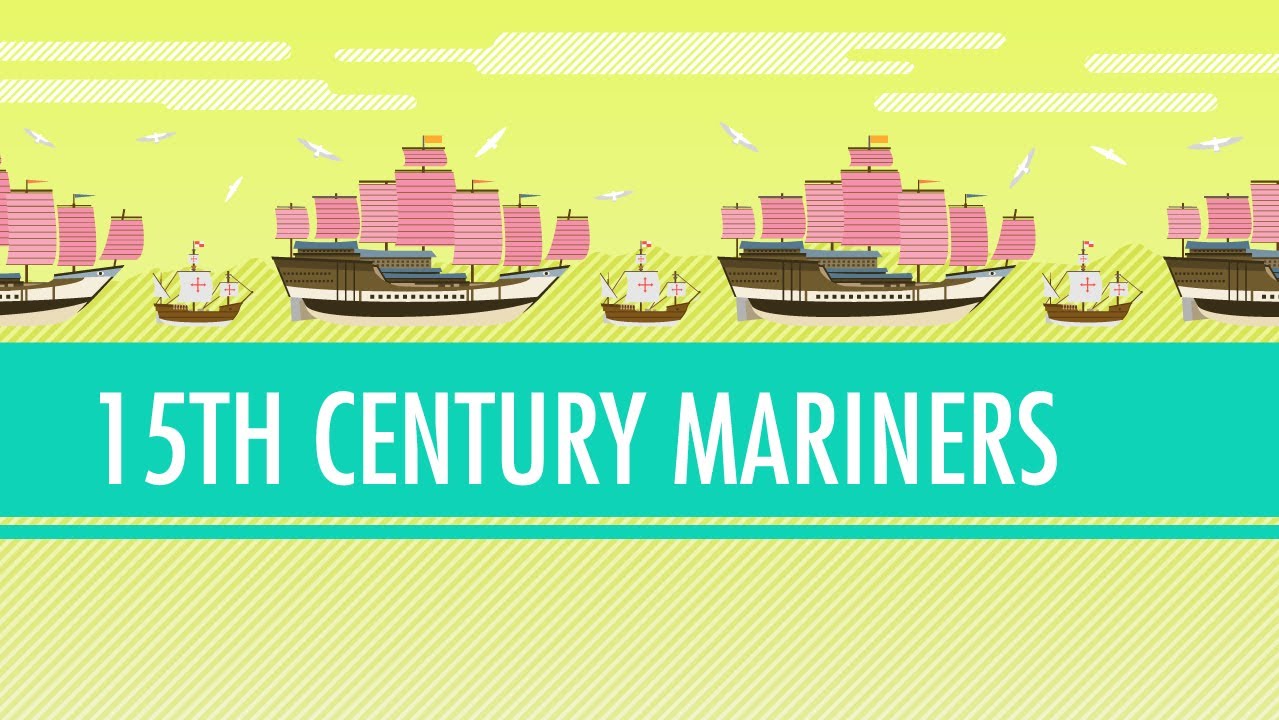
In which John Green teaches you about the beginning of the so-called Age of Discovery. You've probably heard of Christopher Columbus, who "discovered" America in 1492, but what about Vasco da Gama? How about Zheng He? Columbus gets a bad rap from many modern historians, but it turns out he was pretty important as far as the history of the world goes. That said, he wasn't the only pioneer plying the seas in the 1400s. In Portugal, Vasco da Gama was busy integrating Europe into the Indian Ocean Trade by sailing around Africa. Chinese admiral Zheng He was also traveling far and wide in the largest wooden ships ever built. Columbus, whether portrayed as hero or villain, is usually credited as the great sailor of the 15th century, but he definitely wasn't the only contender. What better way to settle this question than with a knock-down, drag-out, no holds barred, old-fashioned battle royal? We were going to make it a cage match, but welding is EXPENSIVE.
Resources:
The Age of Reconnaissance by JH Parry - An explanation of the technologies that made these voyages possible, and a nice detailed record of many of the important voyages. http://dft.ba/-discovery
When China Ruled the Sea by Louise Levathes: A history of the Ming dynasty's ventures into maritime exploration. http://dft.ba/-zhenghedragon
Unknown Seas by Ronald Watkins: A highly readable account of Vasco da Gama's introduction of europe into the Indian Ocean trade. http://dft.ba/-vasco
Crash Course World History is now available on DVD! http://store.dftba.com/product....s/crashcourse-world-
Follow us!
@thecrashcourse
@realjohngreen
@raoulmeyer
@crashcoursestan
@saysdanica
@thoughtbubbler
Like us! http://www.facebook.com/youtubecrashcourse
Follow us again! http://thecrashcourse.tumblr.com Support CrashCourse on Patreon: http://patreon.com/crashcourse
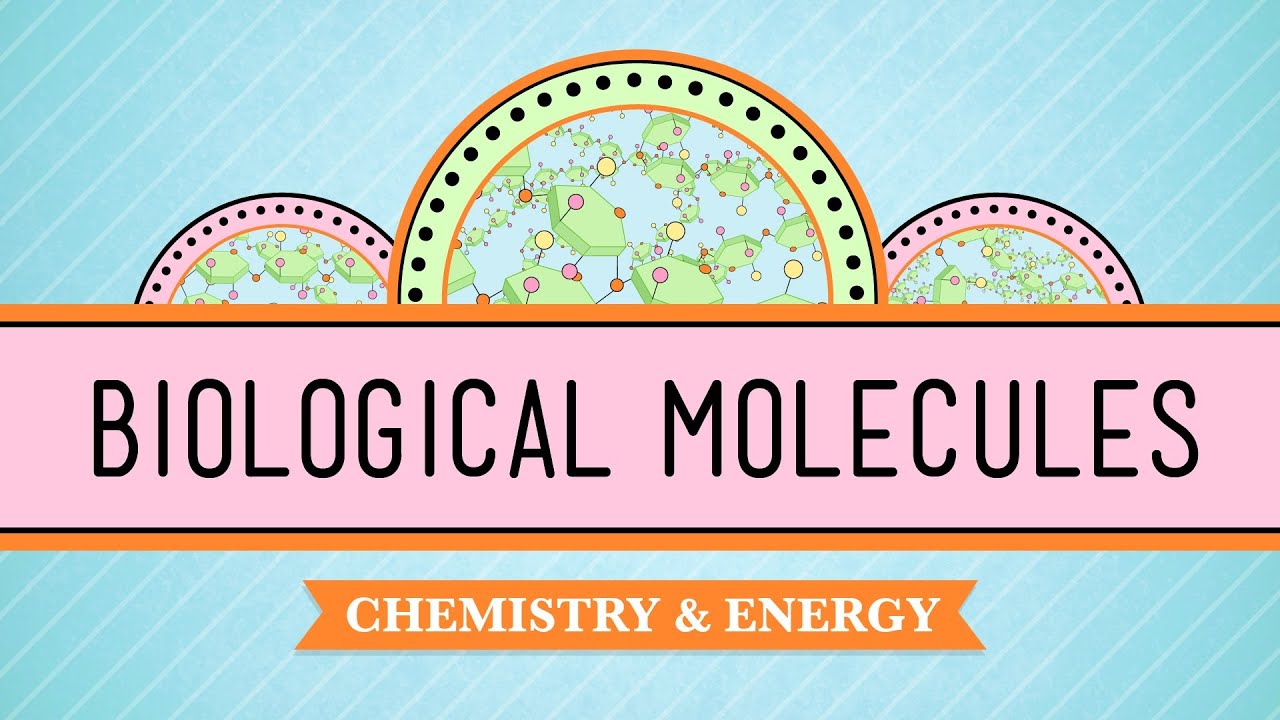
Hank talks about the molecules that make up every living thing - carbohydrates, lipids, and proteins - and how we find them in our environment and in the food that we eat.
Crash Course Biology is now available on DVD!
http://dftba.com/product/1av/C....rashCourse-Biology-T
Follow CrashCourse on Twitter: http://www.twitter.com/thecrashcourse
Like CrashCourse on Facebook: http://www.facebook.com/youtubecrashcourse
Resources for this episode in the Google Document here: http://dft.ba/-citations2
TAGS: biological molecules, carbohydrates, lipids, proteins, nucleic acids, food, biolography, william prout, urea, energy, monosaccharides, glucose, fructose, disaccharides, sucrose, polysaccharides, simple sugars, cellulose, starch, glycogen, glycerol, fatty acid, triglyceride, phospholipid, steroid, cholesterol, enzymes, antibodies, hormones, amino acids, nitrogen, polypeptides, protein synthesis, biology, molecule, crashcourse, hank green Support CrashCourse on Subbable: http://subbable.com/crashcourse

In which John compares and contrasts Greek civilization and the Persian Empire. Of course we're glad that Greek civilization spawned modern western civilization, right? Maybe not. From Socrates and Plato to Darius and Xerxes, John explains two of the great powers of the ancient world, all WITHOUT the use of footage from 300.
Resources:
The Histories of Herodotus: http://goo.gl/I1TM9u
Plato: http://goo.gl/GEcfWX
Plays of Aristophanes: http://goo.gl/xzb9Ff
Crash Course World History is now available on DVD! http://store.dftba.com/product....s/crashcourse-world-
Follow us!
@thecrashcourse
@realjohngreen
@raoulmeyer
@crashcoursestan
@saysdanica
@thoughtbubbler
Like us! http://www.facebook.com/youtubecrashcourse
Follow us again! http://thecrashcourse.tumblr.com
Support CrashCourse on Patreon: https://www.patreon.com/crashcourse
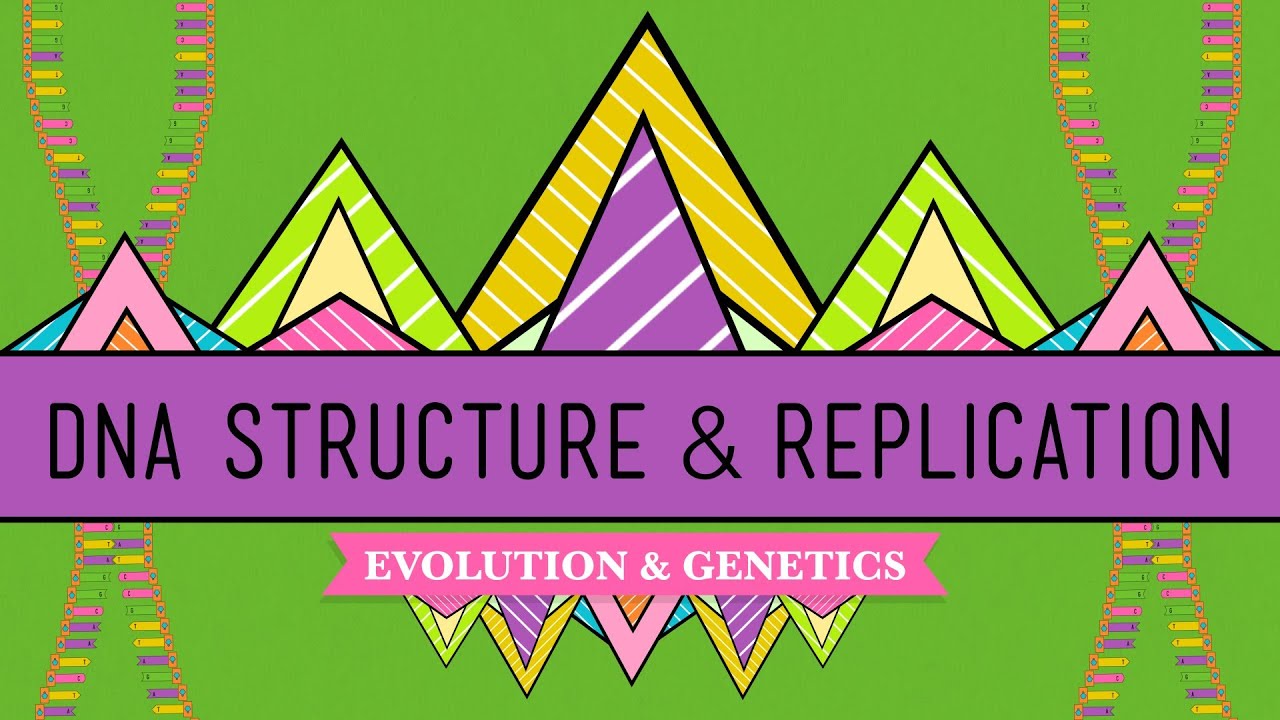
Hank introduces us to that wondrous molecule deoxyribonucleic acid - also known as DNA - and explains how it replicates itself in our cells.
Crash Course Biology is now available on DVD! http://dftba.com/product/1av/C....rashCourse-Biology-T
Like CrashCourse on Facebook: http://www.facebook.com/YouTubeCrashCourse
Follow CrashCourse on Twitter: http://www.twitter.com/TheCrashCourse
References for this episode can be found in the Google document here: http://dft.ba/-2hCl
1:41 link to Biological Molecules http://www.youtube.com/watch?v=H8WJ2KENlK0
Table of Contents:
1) Nucleic Acids 1:30
2) DNA
-A) Polymers 1:53
-B) Three Ingredients 2:12
-C) Base Pairs 3:45
-D) Base Sequences 4:13
3) Pop Quiz 5:07
4) RNA 5:36
-A) Three Differences from DNA 5:43
5) Biolography 6:16
6) Replication 8:49
-A) Helicase and Unzipping 9:22
-B) Leading Strand 9:38
-C) DNA Polymerase 10:08
-D) RNA Primase 10:24
-E) Lagging Strand 10:46
-F) Okazaki Fragments 11:07
-F) DNA Ligase 11:47
DNA, deoxyribonucleic acid, chromosome, nucleic acid, ribonucleic acid, RNA, polymer, nucleotide, double helix, nucleotide base, base pair, base sequence, friedrich miescher, rosalind franklin, replication, helicase, leading strand, lagging strand, rna primase, dna polymerase, okazaki fragment Support CrashCourse on Subbable: http://subbable.com/crashcourse
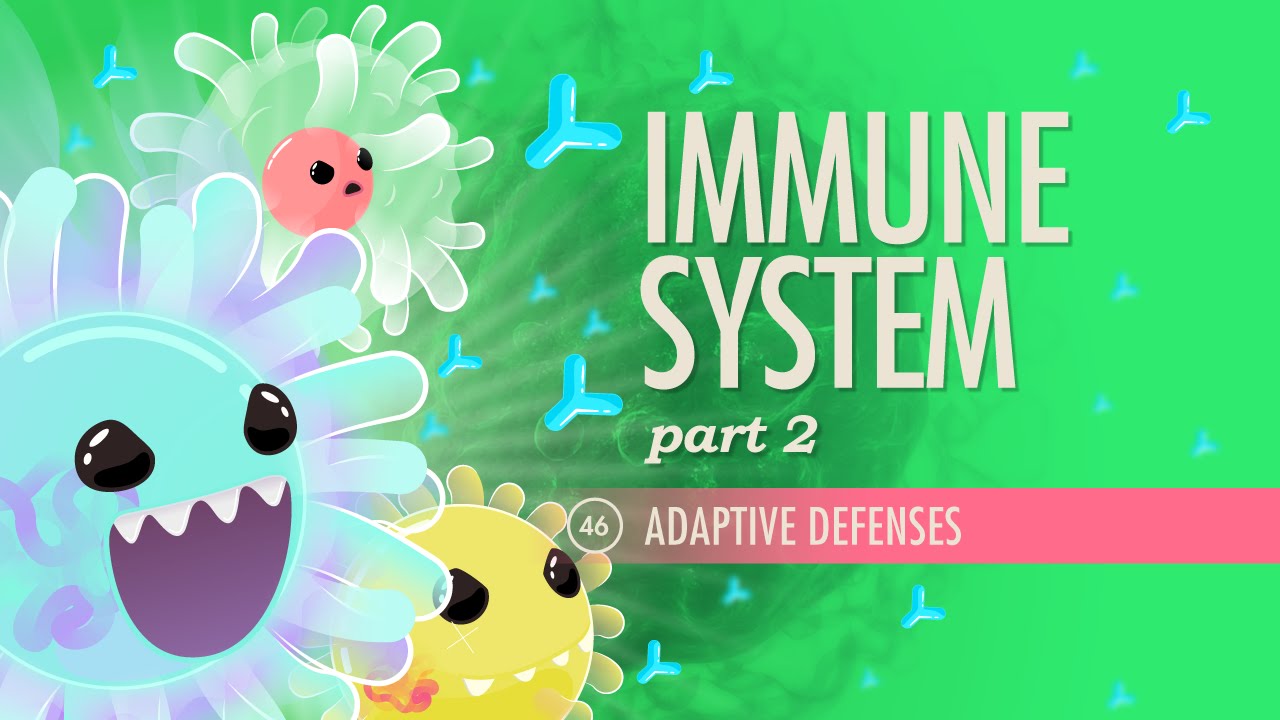
In the penultimate episode of Crash Course Anatomy & Physiology, Hank explains your adaptive immune system. The adaptive immune system's humoral response guards extracellular terrain against pathogens. Hank also explains B cells, antibodies, and how vaccines work.
Crash Course A&P Poster: http://store.dftba.com/product....s/crashcourse-anatom
Table of Contents
Adaptive Immune System's Humoral Response 1:19
How B Cells Mature, Identify Antigens, and Make Antibodies 2:42
How Antibodies Warm Pathogens and Mark Them for Death 5:22
Active and Passive Humoral Immunity 6:03
How Vaccines Work 6:27
***
Crash Course is on Patreon! You can support us directly by signing up at http://www.patreon.com/crashcourse
Thanks to the following Patrons for their generous monthly contributions that help keep Crash Course free for everyone forever:
Mark, Eric Kitchen, Jessica Wode, Jeffrey Thompson, Steve Marshall, Moritz Schmidt, Robert Kunz, Tim Curwick, Jason A Saslow, SR Foxley, Elliot Beter, Jacob Ash, Christian, Jan Schmid, Jirat, Christy Huddleston, Daniel Baulig, Chris Peters, Anna-Ester Volozh, Ian Dundore, Caleb Weeks
--
Want to find Crash Course elsewhere on the internet?
Facebook - http://www.facebook.com/YouTubeCrashCourse
Twitter - http://www.twitter.com/TheCrashCourse
Tumblr - http://thecrashcourse.tumblr.com
Support Crash Course on Patreon: http://patreon.com/crashcourse
CC Kids: http://www.youtube.com/crashcoursekids
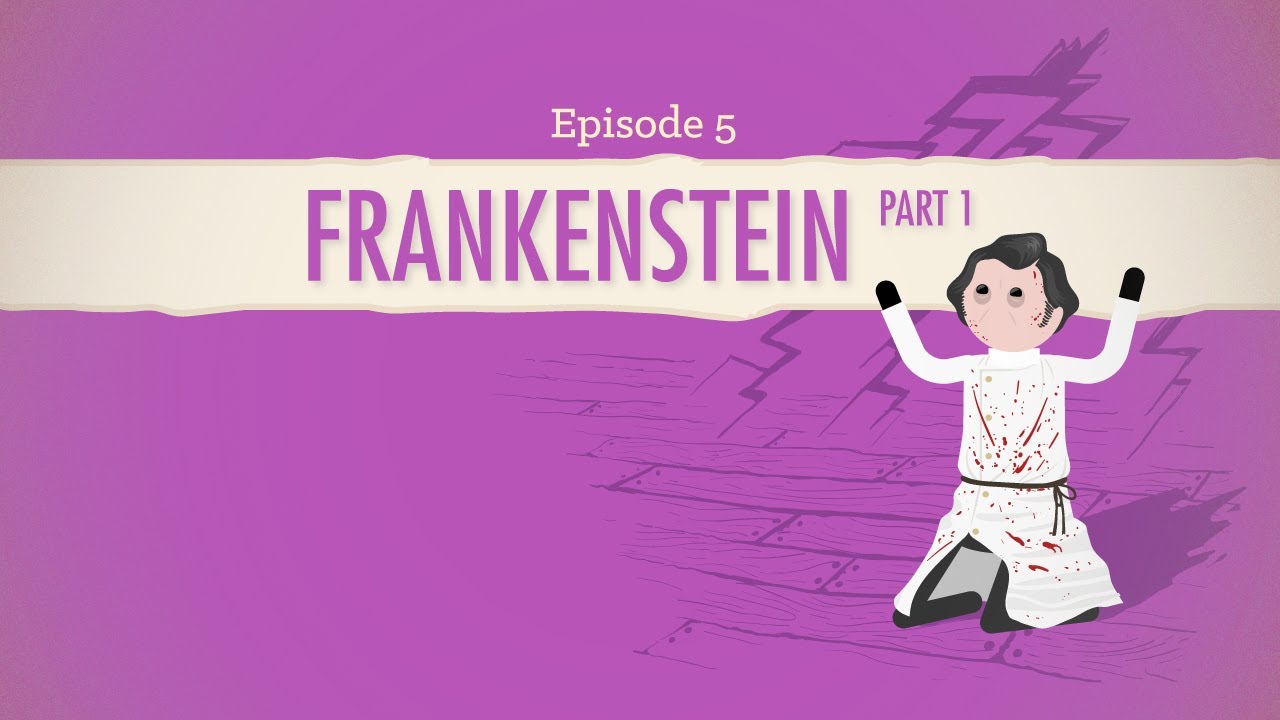
In which John Green teaches you about Mary Shelley's novel, Frankenstein. Sure, you know Frankenstein the cultural phenomenon, but how much do you know about the novel that started it all? You'll learn about the Romantic movement in English lit, of which Frankenstein is a GREAT example, and you'll learn that Frankenstein might just be the first SciFi novel. Once again, literature comes down to just what it means to be human. John will review the plot, and take you through a couple of different critical readings of the novel, and will discuss the final disposition of Percy Shelley's heart.

Hank explains speciation - the evolutionary process by which new biological species arise - in terms of finches, ligers, mules, and dogs.
Crash Course Biology is now available on DVD! http://dft.ba/-8css
Like CrashCourse on Facebook: http://www.facebook.com/youtubecrashcourse
Follow CrashCourse on Twitter: http://www.twitter.com/thecrashcourse
References for this episode can be found in the Google document here: http://dft.ba/-2DnD
Table of Contents
1) Species 0:30
2) Hybrids 1:52
3) Reproductive Isolation 2:48
a) Post-Zygotic 3:31
b) Pre-Zygotic 3:51
4) Allopatric Speciation 4:23
5) Sympatric Speciation 6:03
6) Biolography 6:32
7) Dogs 8:37
This video contains the following sounds from Freesound.org:
"bird tweet.aif" by tigersound
"ForestBirds.wav" by HerbertBoland
"morning_in_the_forest_2007_04_15.wav" by reinsamba
"AMBIENT LOOP - Perfectly Clear - Wilderness Hillside - FILTERED.mp3" by Arctura
"oceanwavescrushing.wav" by Luftrum
biology, speciation, science, species, evolution, homo sapiens, organism, liger, napoleon dynamite, fertile, sterile, hybrid, hybridization, reproductive isolation, genetic isolation, pre-zygotic isolation, behavior, geographic, allopatric speciation, natural selection, galapagos, finch, artificial selection, corgi, greyhound, puppy, dog Support CrashCourse on Subbable: http://subbable.com/crashcourse

In which John Green kicks off the Crash Course Literature mini series with a reasonable set of questions. Why do we read? What's the point of reading critically. John will argue that reading is about effectively communicating with other people. Unlike a direct communication though, the writer has to communicate with a stranger, through time and space, with only "dry dead words on a page." So how's that going to work? Find out with Crash Course Literature! Also, readers are empowered during the open letter, so that's pretty cool.
The Reading List!
Romeo and Juliet by William Shakespeare: http://dft.ba/-shakespearerj
The Great Gatsby by F. Scott Fitzgerald: http://dft.ba/-fitzgeraldgg
Catcher in the Rye: http://dft.ba/-catcher
Complete Poems of Emily Dickinson: http://dft.ba/-dickinson
Some of these are available from gutenberg.org as free ebooks. You should check that out.
Follow us!
@thecrashcourse
@realjohngreen
@raoulmeyer
@crashcoursestan
@thoughtbubbler
@saysdanica
Support CrashCourse on Patreon: https://www.patreon.com/crashcourse

The Silk Road and Ancient Trade: In which John Green teaches you about the so-called Silk Road, a network of trade routes where goods such as ivory, silver, iron, wine, and yes, silk were exchanged across the ancient world, from China to the West. Along with all these consumer goods, things like disease and ideas made the trip as well. As is his custom, John ties the Silk Road to modern life, and the ways that we get our stuff today.
Crash Course World History is now available on DVD! http://store.dftba.com/product....s/crashcourse-world-
Follow us!
@thecrashcourse
@realjohngreen
@raoulmeyer
@crashcoursestan
@saysdanica
@thoughtbubbler
Like us! http://www.facebook.com/youtubecrashcourse
Follow us again! http://thecrashcourse.tumblr.com
Resources:
Life Along the Silk Road by Susan Whitfield: http://dft.ba/-lifesilk
The Silk Road: 2000 Years in the Heart of Asia: http://dft.ba/-2000years
Support CrashCourse on Patreon: http://patreon.com/crashcourse

Phil takes us for a closer (eye safe!) look at the two-octillion ton star that rules our solar system. We look at the sun's core, plasma, magnetic fields, sunspots, solar flares, coronal mass ejections, and what all of that means for our planet.
This episode is sponsored by Squarespace: http://www.squarespace.com/crashcourse
--
The Sun is a Star 1:28
Plasma's Magnetic Fields 6:11
Sunspots, Solar Flares, and Coronal Mass Ejections 7:09
How the Earth Reacts 9:18
--
PBS Digital Studios: http://youtube.com/pbsdigitalstudios
Follow Phil on Twitter: https://twitter.com/badastronomer
Want to find Crash Course elsewhere on the internet?
Facebook - http://www.facebook.com/YouTubeCrashCourse
Twitter - http://www.twitter.com/TheCrashCourse
Tumblr - http://thecrashcourse.tumblr.com
Support CrashCourse on Patreon: http://www.patreon.com/crashcourse
--
PHOTO/VIDEO CREDITS
Hubble extrasolar planet search field in Sagittarius: http://www.spacetelescope.org/images/heic0612d/ [credit: NASA, ESA, K. Sahu (STScI) and the SWEEPS science team]
The Sun: http://www.nasa.gov/sites/defa....ult/files/images/499 [credit: SDO/HMI]
The Sun: http://d1jqu7g1y74ds1.cloudfro....nt.net/wp-content/up [credit: NASA/SDO/AIA]
Earth: http://www.nasa.gov/content/go....ddard/earth-from-spa [credit: NASA's Earth Observatory]
Fusion in the Sun: http://commons.wikimedia.org/w....iki/File:Fusioninthe [credit: Borb]
Empire State Building: http://de.wikipedia.org/wiki/E....mpire_State_Building
Sun Structure: https://www.flickr.com/photos/....11304375@N07/2819311
Photospheric granulation: http://solarscience.msfc.nasa.....gov/images/granules.
Corona: http://philhart.smugmug.com/Su....n/Queensland-Solar-E [credit: Phil Hart]
"Magnet0873" by Newton Henry Black - Newton Henry Black, Harvey N. Davis (1913) Practical Physics, The MacMillan Co., USA, p. 242, fig. 200. Licensed under Public Domain via Wikimedia Commons - http://commons.wikimedia.org/w....iki/File:Magnet0873.
Strange Days On The Sun: http://svs.gsfc.nasa.gov/cgi-b....in/details.cgi?aid=1 [credit: NASA's Goddard Space Flight Center Images courtesy of NASA/SDO]
Under the Sunspots: http://svs.gsfc.nasa.gov/cgi-b....in/details.cgi?aid=2 [credit: NASA/Goddard Space Flight Center Conceptual Image Lab]
Raining Loops: http://svs.gsfc.nasa.gov/vis/a....010000/a011100/a0111 [credit: NASA's Goddard Space Flight Center/SDO]
Coronal Mass Ejection: https://www.youtube.com/watch?v=p_xYcMQe5KA [credit: NASA]
Aurora: https://www.youtube.com/watch?v=X-BicSV9RAw
Soloar Close-ups: http://svs.gsfc.nasa.gov/cgi-b....in/details.cgi?aid=4 [credit: NASA]
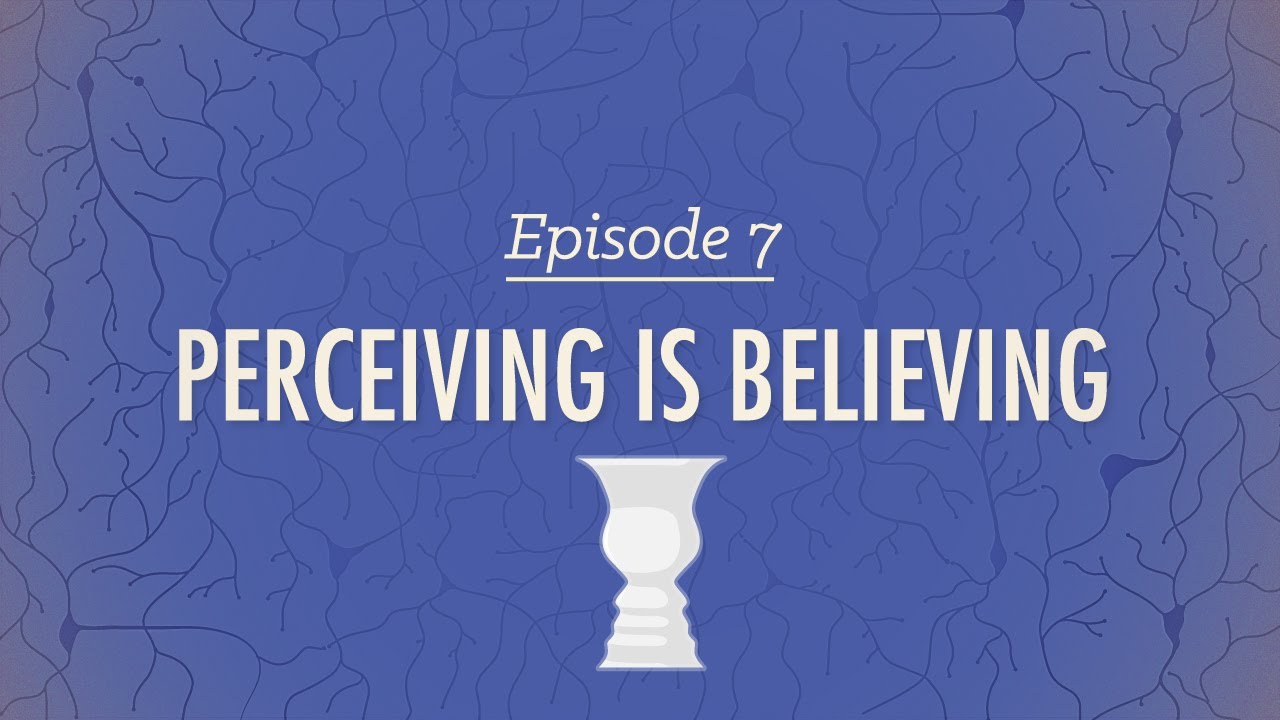
Want more videos about psychology every Monday and Thursday? Check out our sister channel SciShow Psych at https://www.youtube.com/scishowpsych!
So what does perception even mean? What's the difference between seeing something and making sense of it? In today's episode of Crash Course Psychology, Hank gives us some insight into the differences between sensing and perceiving.
--
Table of Contents
Perceptual Set 01:53:15
Form Perception 03:44:17
Visual Cues 06:08:08
Depth Perception 05:39:12
--
Want to find Crash Course elsewhere on the internet?
Facebook - http://www.facebook.com/YouTubeCrashCourse
Twitter - http://www.twitter.com/TheCrashCourse
Tumblr - http://thecrashcourse.tumblr.com
Support CrashCourse on Subbable: http://subbable.com/crashcourse

In which John Green teaches you about World War I and how it got started. Crash Course doesn't usually talk much about dates, but the way that things unfolded in July and August of 1914 are kind of important to understanding the Great War. You'll learn about Franz Ferdinand, Gavrilo Pincep, the Black Hand, and why the Serbian nationalists wanted to kill the poor Archduke. You'll also learn who mobilized first and who exactly started the war. Sort of. Actually there's no good answer to who started the war, but we give it a shot anyway.
You can directly support Crash Course at https://www.patreon.com/crashcourse Subscribe for as little as $0 to keep up with everything we're doing. Free is nice, but if you can afford to pay a little every month, it really helps us to continue producing this content.

As we approach the end of Crash Course Astronomy, it’s time now to acknowledge that our Universe’s days are numbered. Stars will die out after a few trillion years, protons will decay and matter will dissolve after a thousand trillion trillion trillion years, black holes will evaporate after 10^92 years, and then all will be dark. But there is still hope that a new Universe will be born from it.
Crash Course Astronomy Poster: http://store.dftba.com/product....s/crashcourse-astron
--
Hawking Radiation Mechanism resources:
https://en.wikipedia.org/wiki/Hawking_radiation
http://math.ucr.edu/home/baez/....physics/Relativity/B
http://casa.colorado.edu/~ajsh/hawk.html
http://physics.stackexchange.c....om/questions/154647/
--
Table of Contents
The Universe’s Days Are Numbered 0:32
Stars Eventually Die Out 3:02
Protons Eventually Decay 5:04
Bye-Bye Black Holes After 10^92 Years 7:49
With Death Comes Life 12:04
--
PBS Digital Studios: http://youtube.com/pbsdigitalstudios
Follow Phil on Twitter: https://twitter.com/badastronomer
Want to find Crash Course elsewhere on the internet?
Facebook - http://www.facebook.com/YouTubeCrashCourse
Twitter - http://www.twitter.com/TheCrashCourse
Tumblr - http://thecrashcourse.tumblr.com
Support CrashCourse on Patreon: http://www.patreon.com/crashcourse
--
PHOTOS/VIDEOS
Hubble ACS SWEEPS Field http://hubblesite.org/gallery/....album/star/star_fiel [credit: NASA, ESA, W. Clarkson (Indiana University and UCLA), and K. Sahu (STScI)]
Flare http://www.nasa.gov/sites/defa....ult/files/thumbnails [credit: NASA's Goddard Space Flight Center/S. Wiessinger]
Hubble Views Stellar Genesis in the Southern Pinwheel http://hubblesite.org/newscent....er/archive/releases/ [credit: NASA, ESA, and the Hubble Heritage Team (STScI/AURA)]
White Dwarf http://www.nasa.gov/multimedia..../imagegallery/image_ [credit: NASA, ESA, H. Bond (STScI) and M. Barstow (University of Leicester)]
Neutron Star Illustrated https://commons.wikimedia.org/....wiki/File:Neutron_st [credit: NASA, Casey Reed - Penn State University]
Black Holes: Monsters in Space http://www.nasa.gov/mission_pa....ges/nustar/multimedi [credit: NASA/JPL-Caltech]
Binary Neutron Star Video https://nasaviz.gsfc.nasa.gov/....vis/a030000/a030500/ [credit: NASA]
Giant Elliptical Galaxy NGC 1316 in Fornax Cluster https://www.eso.org/public/images/eso0024a/ [credit: ESO]
Proton Aurora http://svs.gsfc.nasa.gov/cgi-b....in/details.cgi?aid=2 [credit: NASA/Goddard Space Flight Center Conceptual Image Lab]
A Race Round a Black Hole http://www.nasa.gov/centers/go....ddard/universe/black [credit: NASA/Dana Berry, SkyWorks Digital]
The Big Bang http://svs.gsfc.nasa.gov/cgi-b....in/details.cgi?aid=1 [credit: NASA]
Hubble Ultra Deep Field 2014 http://hubblesite.org/newscent....er/archive/releases/ [credit: NASA, ESA, H. Teplitz and M. Rafelski (IPAC/Caltech), A. Koekemoer (STScI), R. Windhorst (Arizona State University), and Z. Levay (STScI)]
Galaxy http://apod.nasa.gov/apod/ap150614.html [credit: Subaru Telescope (NAOJ), Hubble Space Telescope, Robert Gendler]
One star, many stars (M13) http://www.deepskycolors.com/a....rchive/2011/05/04/on [credit: Rogelio Bernal Andreo]
Earth https://www.nasa.gov/content/g....oddard/earth-from-sp [credit: NASA's Earth Observatory]
Explosion video [credit: Shutterstock / Richard Finch]

In which John Green talks about the many revolutions of Latin America in the 19th century. At the beginning of the 1800s, Latin America was firmly under the control of Spain and Portugal. The revolutionary zeal that had recently created the United States and had taken off Louis XVI's head in France arrived in South America, and a racially diverse group of people who felt more South American than European took over. John covers the soft revolution of Brazil, in which Prince Pedro boldly seized power from his father, but promised to give it back if King João ever returned to Brazil. He also covers the decidedly more violent revolutions in Mexico, Venezuela, and Argentina. Watch the video to see Simón Bolívar's dream of a United South America crushed, even as he manages to liberate a bunch of countries and get two currencies and about a thousand schools and parks named after him.
Crash Course World History is now available on DVD! http://store.dftba.com/product....s/crashcourse-world-
Follow us!
@thecrashcourse
@realjohngreen
@raoulmeyer
@crashcoursestan
@saysdanica
@thoughtbubbler
Like us! http://www.facebook.com/youtubecrashcourse
Follow us again! http://thecrashcourse.tumblr.com
Support Crash Course on Patreon: http://patreon.com/crashcourse
Want more videos about psychology every Monday and Thursday? Check out our sister channel SciShow Psych at https://www.youtube.com/scishowpsych!
***SUBBABLE MESSAGES***
To: Lola
From: Daddy
You are the best, I love you.
***
To: Future Lia
From: Mom and Dad
Remember that learning isn't just useful, but also really fun!
***
In this episode of Crash Course Psychology, Hank takes a look at how the treatment for Psychological Disorders has changed over the last hundred years and who is responsible for getting us on the path to getting us here.
--
Table of Contents:
Defining Psychological Disorders 00:10:09
Perspectives on Mental Illness 03:16:10
Diagnosing Disorders with the DSM 07:09:09
DSM is Constantly Evolving 07:42:12
--
Want to find Crash Course elsewhere on the internet?
Facebook - http://www.facebook.com/YouTubeCrashCourse
Twitter - http://www.twitter.com/TheCrashCourse
Tumblr - http://thecrashcourse.tumblr.com
Support CrashCourse on Subbable: http://subbable.com/crashcourse
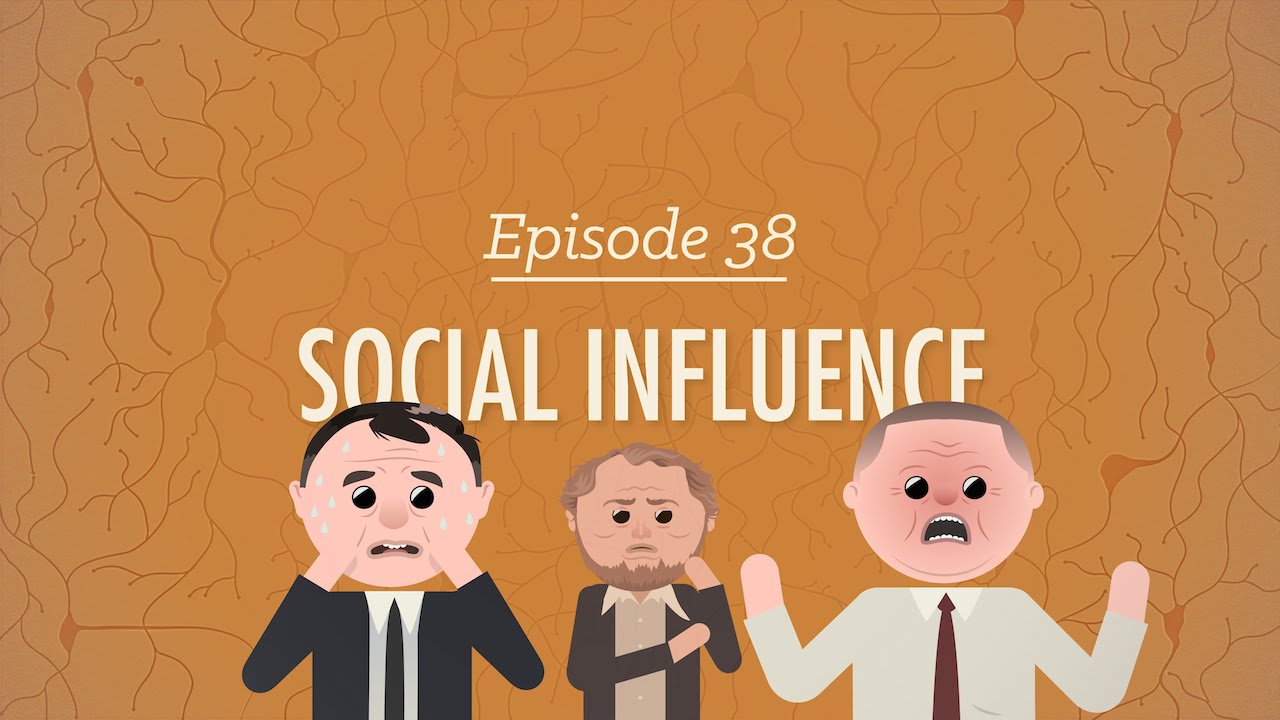
Want more videos about psychology every Monday and Thursday? Check out our sister channel SciShow Psych at https://www.youtube.com/scishowpsych!
***
Why do people sometimes do bad things just because someone else told them to? And what does the term Groupthink mean? In today's episode of Crash Course Psychology, Hank talks about the ideas of Social Influence and how it can affect our decisions to act or to not act.
If you are currently in need of help: http://www.mentalhealth.gov/get-help/
--
Table of Contents:
Milgram Experiment 0:31
Automatic Mimicry 3:29
Solomon Asch 4:08
Normative Social Influence 5:31
Social Facilitation 5:59
Social Loafing 6:19
Deindividuation, Group Polarization, & Groupthink 6:50
--
Want to find Crash Course elsewhere on the internet?
Facebook - http://www.facebook.com/YouTubeCrashCourse
Twitter - http://www.twitter.com/TheCrashCourse
Tumblr - http://thecrashcourse.tumblr.com
Support CrashCourse on Subbable: http://subbable.com/crashcourse
Want more videos about psychology every Monday and Thursday? Check out our sister channel SciShow Psych at https://www.youtube.com/scishowpsych!
***
Ever call someone OCD because they like to have a clean apartment? Ever tell someone you have a phobia of spiders when, in fact, they just creep you out a little? In this episode of Crash Course psychology, Hank talks about OCD and Anxiety Disorders in the hope we'll understand what people with actual OCD have to deal with as well as how torturous Anxiety Disorders and Panic Attacks can actually be.
--
Table of Contents:
What Defines an Anxiety Disorder 01:55:20
Symptoms of Obsessive Compulsive Disorder 02:35:07
Generalized Anxiety Disorder 04:05:18
Panic Disorder and Phobias 04:47:20
The Learning Perspective 07:38:20
The Biological Perspective 09:13:14
Don't Use OCD as a Punch Line 00:00:00
--
Want to find Crash Course elsewhere on the internet?
Facebook - http://www.facebook.com/YouTubeCrashCourse
Twitter - http://www.twitter.com/TheCrashCourse
Tumblr - http://thecrashcourse.tumblr.com
Support CrashCourse on Subbable: http://subbable.com/crashcourse
You can directly support Crash Course at https://www.patreon.com/crashcourse Subscribe for as little as $0 to keep up with everything we're doing. Free is nice, but if you can afford to pay a little every month, it really helps us to continue producing this content.
Crash Course World History is now available on DVD! Visit http://dft.ba/-CCWHDVD to buy a set for your home or classroom.
In which John Green teaches you about the economic malaise that beset the United States in the 1970s. A sort of perfect storm of events, it combined the continuing decline of America's manufacturing base and the oil shocks of 1973 and 1979, and brought about an stagnant economy, paired with high inflation. Economists with a flair for neologisms and portamenteau words called this "stagflation," and it made people miserable. Two presidential administrations were scuttled at least in part by these economic woes; both Gerald Ford and Jimmy Carter are considered failed presidents for many reasons, but largely because of an inability to improve the economy. (hint: In reality, no one person can materially change something as big as the world economy, even if they are president, but one person sure can make a handy scapegoat!) So, by and large, the 70s were a pretty terrible time in America economically, but at least the decade gave us Mr. Green.
Crash Course World History is now available on DVD! Visit http://dft.ba/-CCWHDVD to buy a set for your home or classroom.
Follow us!
http://www.twitter.com/thecrashcourse
http://www.twitter.com/realjohngreen
http://www.twitter.com/crashcoursestan
http://www.twitter.com/raoulmeyer
http://www.twitter.com/thoughtbubbler
http://www.subbable.com

In which Adriene Hill and Jacob Clifford teach you about specialization and trade, and how countries decide whether they're going to make stuff or trade for stuff. You'll learn about things like comparative advantage, the production possibilities frontier and how to make pizza!
Crash Course is now on Patreon! You can support us directly by signing up at http://www.patreon.com/crashcourse
Thanks to the following Patrons for their generous monthly contributions that help keep Crash Course free for everyone forever:
Mark Brouwer, Jan Schmid, Anna-Ester Volozh, Robert Kunz, Jason A Saslow, Christian Ludvigsen, Chris Peters, Brad Wardell, Beatrice Jin, Roger C. Rocha, Eric Knight, Jessica Simmons, Jeffrey Thompson, Elliot Beter, Today I Found Out, James Craver, Ian Dundore, Jessica Wode, SR Foxley, Sandra Aft, Jacob Ash, Steve Marshall
TO: Sarah M.
FROM: Anthony M.
"Making our own history awesome! Happy 3 year Anniversary!"
TO: Everyone
FROM: Someone
"The earth is but one country, and mankind its citizens."
Thank you so much to all of our awesome supporters for their contributions to help make Crash Course possible and freely available for everyone forever:
Nathanial R. Castronovo, Eefje Savelkoul, Nupur Maheshwari, Jacob J., Dominik Steenken, Shai Belfer, Stefan Bjerring Henriksen
James Kribs, Hugo Jobly, Tim Eramo
Want to find Crash Course elsewhere on the internet?
Facebook - http://www.facebook.com/YouTubeCrashCourse
Twitter - http://www.twitter.com/TheCrashCourse
Tumblr - http://thecrashcourse.tumblr.com
Support Crash Course on Patreon: http://patreon.com/crashcourse
CC Kids: http://www.youtube.com/crashcoursekids