Top Vídeos
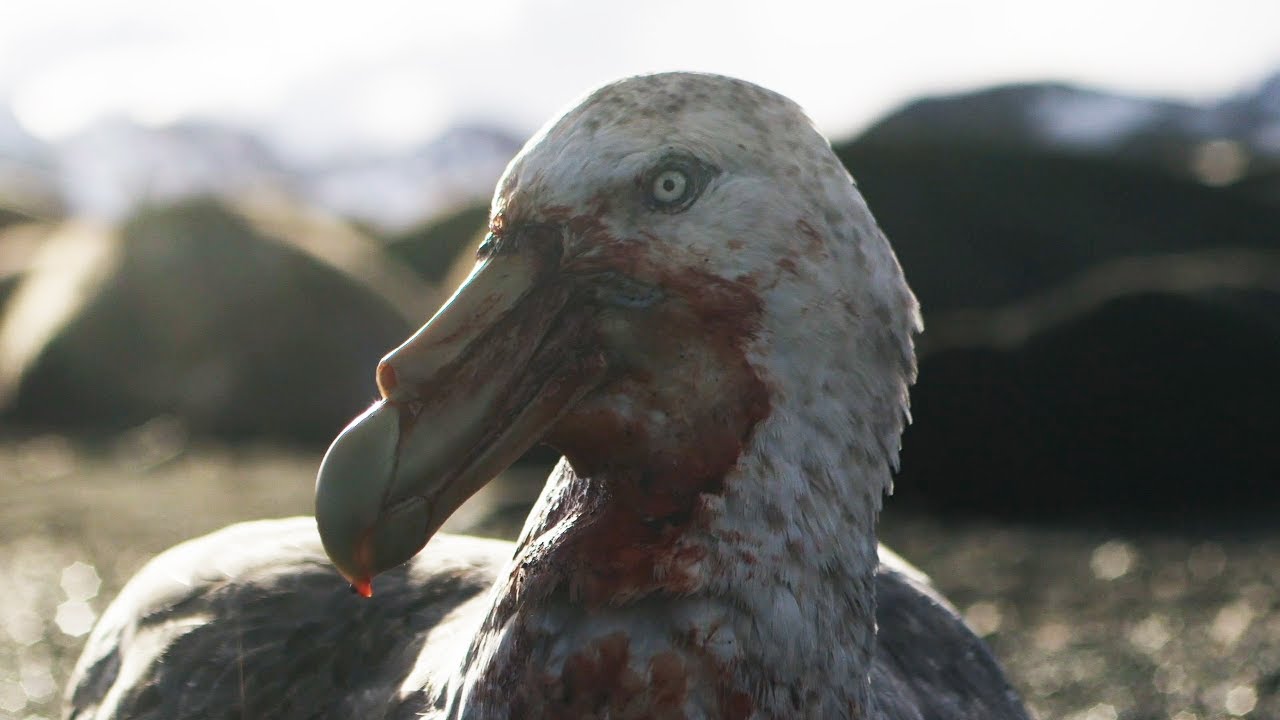
Giant petrels are aggressive, fearless and aren't afraid of some gore. But they're also coined 'the vultures of Antarctica' thanks to their clean-up characteristic of feeding on carrion. So are giant petrels heroes or villains? Subscribe: http://bit.ly/BBCEarthSub
Watch more:
Planet Earth http://bit.ly/PlanetEarthPlaylist
Blue Planet http://bit.ly/BluePlanetPlaylist
Planet Earth II http://bit.ly/PlanetEarthIIPlaylist
Planet Dinosaur http://bit.ly/PlanetDinoPlaylist
Seven Worlds, One Planet Episode 1 'Antarctica'
Millions of years ago incredible forces ripped apart the Earth’s crust creating seven extraordinary continents. Seven Worlds, One Planet, narrated by Sir David Attenborough, will reveal how each distinct continent has shaped the unique animal life found there.
Welcome to BBC EARTH! The world is an amazing place full of stories, beauty and natural wonder. Here you'll find 50 years worth of entertaining and thought-provoking natural history content. Dramatic, rare, and exclusive, nature doesn't get more exciting than this.
Want to share your views with the team? Join our BBC Studios Voice: https://www.bbcstudiosvoice.com/register
This is a page from BBC Studios who help fund new BBC programmes. Service information and feedback: http://bbcworldwide.com/vod-fe....edback--contact-deta

In this amazing footage from the BBC wildlife series Cousins, Dr Charlotte Uhlenbroek has her first encounter with a family of gorillas, including an impressive Silverback, having a siesta in the jungle. Visit http://www.bbcearth.com for all the latest animal news and wildlife videos and watch more high quality videos on the new BBC Earth YouTube channel here: http://www.youtube.com/bbcearth

Watch as monkeys, guanacos and kangaroos all go head-to-head in our greatest animal fights! For family or territory, these determined animals won't go down without a fight.
Subscribe: http://bit.ly/BBCEarthSub
#GreatestAnimalFights #AnimalFightsCompilation #BBCEarth
Watch more:
Planet Earth http://bit.ly/PlanetEarthPlaylist
Blue Planet http://bit.ly/BluePlanetPlaylist
Planet Earth II http://bit.ly/PlanetEarthIIPlaylist
Planet Dinosaur http://bit.ly/PlanetDinoPlaylist
Welcome to BBC EARTH! The world is an amazing place full of stories, beauty and natural wonder. Here you'll find 50 years worth of entertaining and thought-provoking natural history content. Dramatic, rare, and exclusive, nature doesn't get more exciting than this.
Want to share your views with the team? Join our BBC Studios Voice: https://www.bbcstudiosvoice.com/register
This is a page from BBC Studios who help fund new BBC programmes. Service information and feedback: http://bbcworldwide.com/vod-fe....edback--contact-deta

Label: Welt-Rekord – 1A 006-46585
LP: Rheingold
Land: Netherlands
Veröffentlicht: 1980
Stil: Synth-pop
![Kung Fu Panda 2 Walkthrough - Part 1 of 9 [HD][XBOX 360][Gameplay]](https://i.ytimg.com/vi/pfjbFvXVip4/maxresdefault.jpg)
Kung Fu Panda 2 Walkthrough
Part 1 of 9 http://www.youtube.com/watch?v=pfjbFvXVip4
Part 2 of 9 http://www.youtube.com/watch?v=_ba9_XrfRLY
Part 3 of 9 http://www.youtube.com/watch?v=WsyWrC_zBBs
Part 4 of 9 http://www.youtube.com/watch?v=RvtN2aM1I5U
Part 5 of 9 http://www.youtube.com/watch?v=5RT9Np8xaIc
Part 6 of 9 http://www.youtube.com/watch?v=u29nVn_H6jk
Part 7 of 9 http://www.youtube.com/watch?v=Bn11TC5Wbzc
Part 8 of 9 http://www.youtube.com/watch?v=ZBv22_xgHfA
Part 9 of 9 http://www.youtube.com/watch?v=YH7GL3rsxmc
Kung Fu Panda 2 Challenges
Combat - Hard Gold (Part 1 of 2) http://www.youtube.com/watch?v=UjqJKHLtJNA
Combat - Hard Gold (Part 2 of 2) http://www.youtube.com/watch?v=y7CPzbT5Uf8
Practise Session - Hard Gold http://www.youtube.com/watch?v=thQuEptj4Y4
Rickshaw Dodge - Hard Gold http://www.youtube.com/watch?v=oQycvmrjrk4
Target Practise - Hard Gold http://www.youtube.com/watch?v=ULNf6iK8rCQ
Rickshaw Battle & Rickshaw Chase - Hard Gold http://www.youtube.com/watch?v=M2Vto7Trnjo
Shen has been defeated, but a Kung Fu Master's job is never finished. A mysterious new enemy begins terrorising Gongmen City and it's up to Po and the Furious Five to defeat this threat and restore peace.
KUNG FU IS AT RISK OF BEING GONE FOREVER!
- Become Po as you punch adn kick enemies alongside the Furious Five!
- Your body is the controller as Po trains you in the art of Kung Fu!
- Play Kinect for Xbox 360 exclusive mini-games with Po!
- Use your voice to summon the Furious Five for assistance.
Official Site: http://www.kungfupanda2videogame.com/
RATED PEGI 7 [violence]
Kung Fu Panda 2 ™ & © 2011 DreamWorks Animation L.L.C. Kung Fu Panda ®
* DreamWorks Animation L.L.C. All rights reserved.
* Game and Software © 2011 THQ Inc. All rights reserved.
* FMOD Ex Sound System Copyright © 2001-2011 Firelight Technologies Pty, Ltd. All rights reserved.
* THQ and the THQ logo are trademarks and/or registered trademarks of THQ Inc. All rights reserved.
* All other trademarks, logos and copyrights are property of their respective owners.


Vienna is the fourth studio album by the synthpop band Ultravox, first released on 11 July 1980. The album peaked at #3 in the UK charts and was the first Ultravox release to enter the UK top ten. It was certified Platinum in the United Kingdom in July 1981 for 300,000 copies sold. The album reached #22 in Germany, and #164 in the United States.
Singles: 'Sleepwalk' 'Passing Strangers' 'Vienna' 'All Stood Still'
Tracklist:
00:00 "Astradyne"
07:08 "New Europeans"
11:11 "Private Lives"
15:19 "Passing Strangers"
19:10 "Sleepwalk"
22:21 "Mr. X"
28:55 "Western Promise"
34:14 "Vienna"
39:08 "All Stood Still"
Bonus:
43:31 "Waiting"
47:22 "Passionate Reply"
***PLEASE BUY THIS ALBUM***
This is a NON PROFIT video:
Copyright Disclaimer Under Section 107 of the Copyright Act 1976, allowance is made for "fair use" for purposes such as criticism, comment, news reporting, teaching, scholarship, and research. Fair use is a use permitted by copyright statute that might otherwise be infringing. Non-profit, educational or personal use tips the balance in favor of fair use.

Porcupines may be adorable, but their quills are razor-sharp, designed to impale and next to impossible to remove. But it's not all bad news. Researchers are designing new surgical staples that mimic the quill's shape to better close wounds and promote healing.
Check our PBS Sound Field!
https://www.youtube.com/channe....l/UCvMLMyKPomE6kTTL9
Meet Seth Samuel, Deep Look Composer!
https://www.patreon.com/posts/25828498
SUBSCRIBE to Deep Look! http://goo.gl/8NwXqt
DEEP LOOK is a ultra-HD (4K) short video series created by KQED San Francisco and presented by PBS Digital Studios. Explore big scientific mysteries by going incredibly small.
The quills of North American porcupines have microscopic backward-facing barbs on the tips. Those barbs make the quills slide in easy but very difficult to remove.
Researchers at Harvard are looking to porcupine quills for inspiration in designing a new type of surgical staple that would also use tiny barbs to keep itself lodged into the patient’s skin. This helps because traditional staples curve in under the skin to keep the staple in place. This creates more damage and can provide a place for bacteria to infect the wound.
--- How do porcupines defend themselves?
If threatened, a porcupine will bristle, raising its quills. The quills are densest in an area on the porcupine's back called the rosette. The quills are coated in a grease secreted by the porcupine’s skin. When the porcupine exposes its quills it releases a musky odor unique to porcupines that serves as a warning.
The porcupine turns so that it’s head faces away from the attacker and chatters its teeth to make an audible warning. If that’s not enough, he porcupine will use its muscular tail, covered in quills, to slap their attacker if they get too close.
--- Do porcupines shoot their quills?
Porcupines do not shoot their quills out. That’s a myth. Porcupine quills are held by their skin in a way that makes them difficult to fall out unless pushed in first, usually by contact with an attacker. The tail moves so quickly that it can appear that it is shooting the quills out.
---+ Read the entire article on KQED Science:
https://ww2.kqed.org/science/2....019/04/09/porcupines
---+ For more information:
Professor Uldis Roze studies North American porcupines at Queens College at the City University of New York:
http://biology.qc.cuny.edu/peo....ple/faculty/dr-uldis
Dr. Jeff Karp is developing a new type of surgical staple inspired by the barbs on North American porcupine quills.
http://www.karplab.net/portfol....io-item/porcupine-in
---+ More Great Deep Look episodes:
How Lice Turn Your Hair Into Their Jungle Gym | Deep Look
https://www.youtube.com/watch?v=Yb26BBvAAWU&list=PLdKlciEDdCQBpNSC7BIONruffF_ab4cqK&index=47
Take Two Leeches and Call Me in the Morning | Deep Look
https://www.youtube.com/watch?v=O-0SFWPLaII&list=PLdKlciEDdCQBpNSC7BIONruffF_ab4cqK&index=19
---+ Shoutout!
Congratulations to ?Snowcube94, Marley Kang, Mr Spooks, David Bouslov, and NonEuclideanDreams?, who were the first to correctly ID the muscle (arrector pili) and a scientific name for the phenomenon known as goose bumps (piloerection, horripilation, or cutis anserina), over at the Deep Look Community Tab:
https://www.youtube.com/channe....l/UC-3SbfTPJsL8fJAPK
---+ Thank you to our Top Patreon Supporters ($10+ per month)!
Bill Cass, Justin Bull, Daniel Weinstein, Chris B Emrick, Karen Reynolds, Jeremy Lambert, David Deshpande, Daisuke Goto, Bugeyed.fr, WhatzGames, Elizabeth Ann Ditz, Robert Warner, Shirley Washburn, Tatianna Bartlett, KW, Tanya Finch, Elizabeth Wolden, Sayantan Dasgupta, Monica Albe, Willy Nursalim, Jenn's Bowtique, Jane Orbuch, Laurel Przybylski, Johnnyonnyful, Levi Cai, Jason Buberel, Mark Joshua Bernardo, Michael Mieczkowski, Jeanine Womble, Aurora Mitchell, Edwin Rivas, Marjorie D Miller, Companion Cube, Chris Murphy, Joao Ascensao, Two Box Fish, PM Daeley, TierZoo, Robert Amling, Shelley Pearson Cranshaw, Mario Rahmani
---+ Follow KQED Science and Deep Look:
Patreon: https://www.patreon.com/deeplook
Instagram: https://www.instagram.com/kqedscience/
Twitter: https://www.twitter.com/kqedscience
KQED Science on kqed.org: http://www.kqed.org/science
Facebook Watch: https://www.facebook.com/DeepLookPBS/
---+ About KQED
KQED, an NPR and PBS affiliate in San Francisco, CA, serves Northern California and beyond with a public-supported alternative to commercial TV, Radio and web media.
Funding for Deep Look is provided in part by PBS Digital Studios. Deep Look is a project of KQED Science, which is also supported by the National Science Foundation, the Templeton Religion Trust, the Templeton World Charity Foundation, the S. D. Bechtel, Jr. Foundation, the Dirk and Charlene Kabcenell Foundation, the Vadasz Family Foundation, the Gordon and Betty Moore Foundation, the Fuhs Family Foundation and the members of KQED.
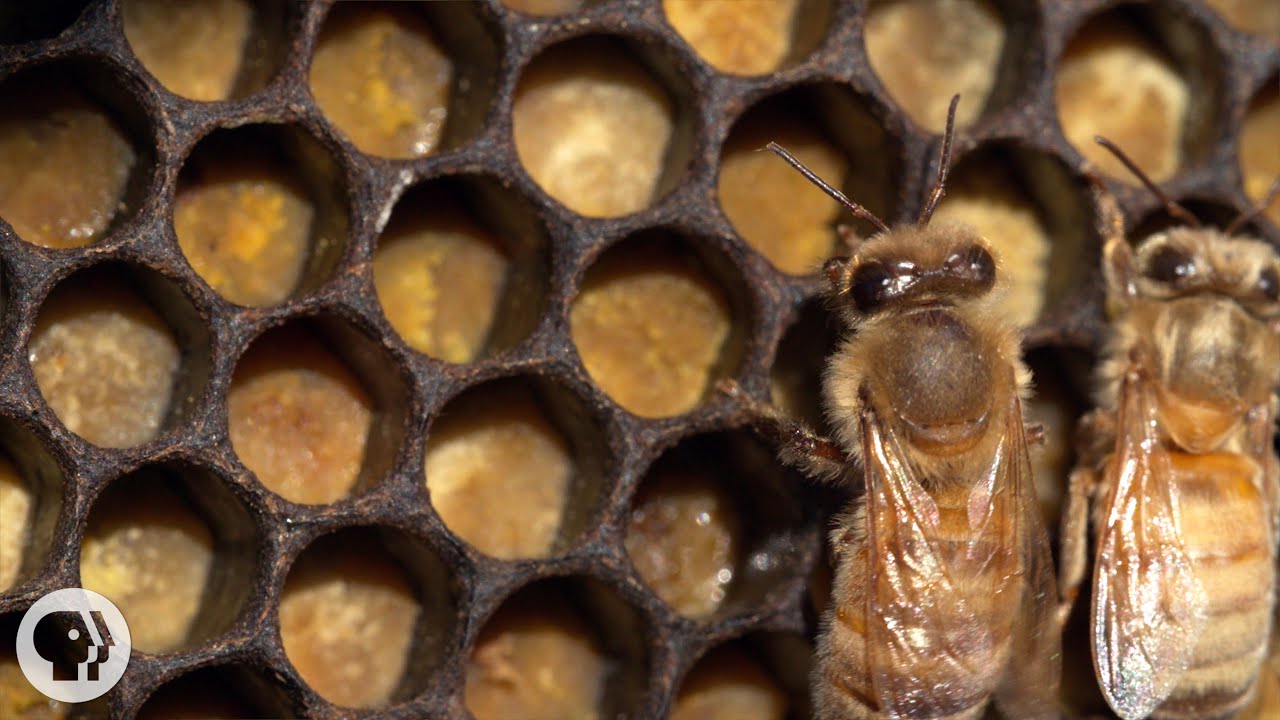
Honey bees make honey from nectar to fuel their flight – and our sweet tooth. But they also need pollen for protein. So they trap, brush and pack it into baskets on their legs to make a special food called bee bread.
JOIN our Deep Look community on Patreon! https://www.patreon.com/deeplook
SUBSCRIBE to Deep Look! http://goo.gl/8NwXqt
DEEP LOOK is a ultra-HD (4K) short video series created by KQED San Francisco and presented by PBS Digital Studios. See the unseen at the very edge of our visible world. Explore big scientific mysteries by going incredibly small.
Spring means honey bees flitting from flower to flower. This frantic insect activity is essential to growing foods like almonds, raspberries and apples. Bees move pollen, making it possible for plants to grow the fruit and seeds they need to reproduce.
But honey bees don’t just move pollen from plant to plant. They also keep a lot for themselves. They carry it around in neat little balls, one on each of their hind legs. Collecting, packing and making pollen into something they can eat is a tough, intricate job that’s essential to the colony’s well-being.
Older female adult bees collect pollen and mix it with nectar or honey as they go along, then carry it back to the hive and deposit it in cells next to the developing baby bees, called larvae. This stored pollen, known as bee bread, is the colony’s main source of protein.
“You don’t have bees flying along snacking on pollen as they’re collecting it,” said Mark Carroll, an entomologist at the US Department of Agriculture’s Carl Hayden Bee Research Center in Tucson. “This is the form of pollen that bees are eating.”
--- What is bee bread?
It’s the pollen that worker honey bees have collected, mixed with a little nectar or honey and stored within cells in the hive.
--- What is bee bread used for?
Bee bread is the main source of protein for adult bees and larvae. Young adult bees eat bee bread to make a liquid food similar to mammal’s milk that they feed to growing larvae; they also feed little bits of bee bread to older larvae.
--- How do honey bees use their pollen basket?
When a bee lands on a flower, it nibbles and licks off the pollen, which sticks to its head. It wipes the pollen off its eyes and antennae with a brush on each of its front legs, using them in tandem like windshield wipers. It also cleans the pollen off its mouth part, and as it does this, it mixes it with some saliva and a little nectar or honey that it carries around in a kind of stomach called a crop.
Then the bee uses brushes on its front, middle and hind legs to move the pollen, conveyor-belt style, front to middle to back. As it flies from bloom to bloom, the bee combs the pollen very quickly and moves it into baskets on its hind legs. Each pollen basket, called a corbicula, is a concave section of the hind leg covered by longish hairs that bend over and around the pollen.
---+ Read the entire article on KQED Science:
https://www.kqed.org/science/1....940898/honey-bees-ma
---+ Shoutout!
?Congratulations ?to spqr0a, A D2, James Peirce, Armageddonchampion, and Даниил Мерзликин for identifying what our worker bee was putting in a honeycomb cell (and why) - Bee Bread! See more on our Community Tab: https://www.youtube.com/channe....l/UC-3SbfTPJsL8fJAPK
---+ Thank you to our Top Patreon Supporters ($10+ per month)!
Ahegao Comics, Allen, Aurora Mitchell, Beckie, Ben Espey, Bill Cass, Breanna Tarnawsky, Carlos Zepeda, Chris B Emrick, Chris Murphy, Companion Cube, Cooper Caraway, Daisuke Goto, Daniel Weinstein, David Deshpande, Edwin Rivas, Elizabeth Ann Ditz, Elizabeth Wolden, Ivan Alexander, Iver Soto, Jane Orbuch, JanetFromAnotherPlanet, Jason Buberel, Jeanine Womble, Jenn's Bowtique, Jeremy Lambert, Jiayang Li, Joao Ascensao, johanna reis, Johnnyonnyful, Joshua Murallon Robertson, Justin Bull, Karen Reynolds, Kristell Esquivel , KW, Kyle Fisher, Laurel Przybylski, Levi Cai, Lyall Talarico, Mario Rahmani, Marjorie D Miller, Mark Joshua Bernardo, Michael Mieczkowski, Monica Albe, Nathan Padilla, Nathan Wright, Pamela Parker, PM Daeley, Ricardo Martinez, Robert Amling, Robert Warner, Sayantan Dasgupta, Sean Tucker, Shelley Pearson Cranshaw, Shirley Washburn, SueEllen McCann, Tatianna Bartlett, Tea Torvinen, TierZoo, Tommy Tran, Two Box Fish, WhatzGames, Willy Nursalim
---+ About KQED
KQED, an NPR and PBS affiliate in San Francisco, CA, serves Northern California and beyond with a public-supported alternative to commercial TV, radio and web media.
Funding for Deep Look is provided in part by PBS Digital Studios. Deep Look is a project of KQED Science, which is also supported by the National Science Foundation, the S. D. Bechtel, Jr. Foundation, the Dirk and Charlene Kabcenell Foundation, the Vadasz Family Foundation, the Fuhs Family Foundation, Campaign 21 and the members of KQED. #honeybees #bee bread #deeplook
Support Deep Look on Patreon!!
https://www.patreon.com/deeplook
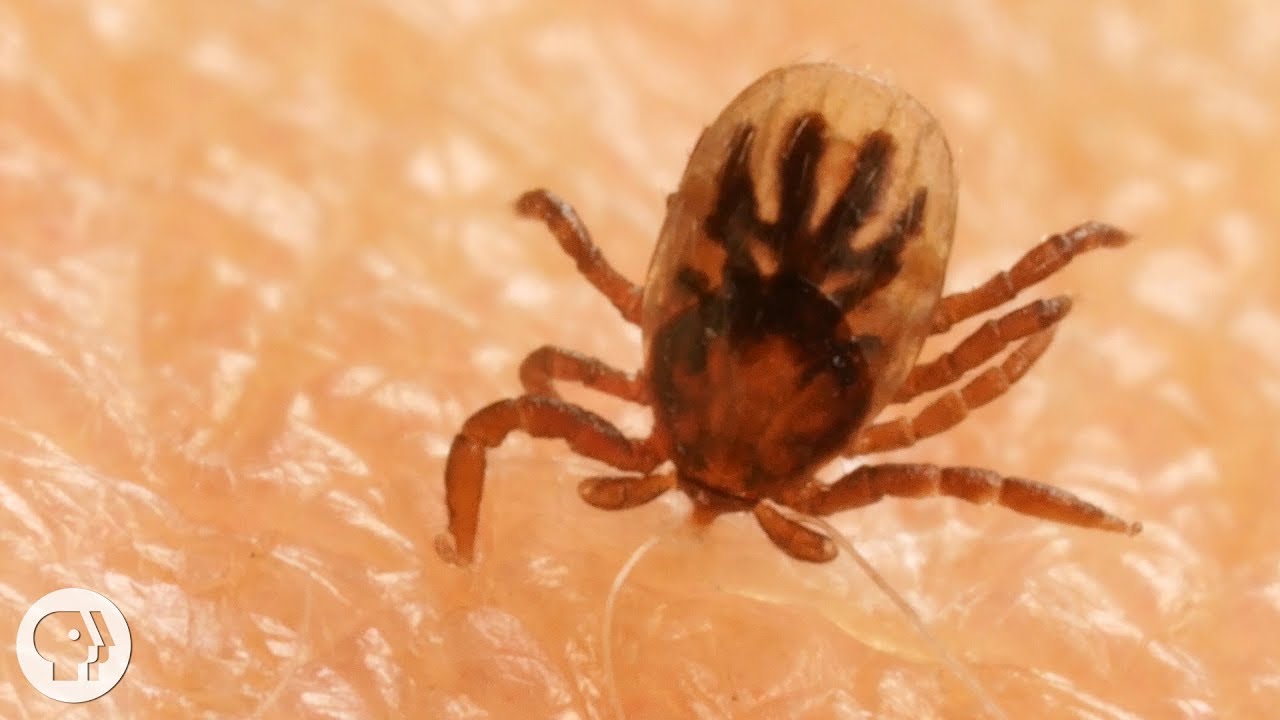
Why can't you just flick a tick? Because it attaches to you with a mouth covered in hooks, while it fattens up on your blood. For days. But don't worry – there *is* a way to pull it out.
SUBSCRIBE to Deep Look! http://goo.gl/8NwXqt
DEEP LOOK: a new ultra-HD (4K) short video series created by KQED San Francisco and presented by PBS Digital Studios. See the unseen at the very edge of our visible world. Explore big scientific mysteries by going incredibly small.
Spring is here. Unfortunately for hikers and picnickers out enjoying the weather, the new season is prime time for ticks, which can transmit bacteria that cause Lyme disease.
How they latch on – and stay on – is a feat of engineering that scientists have been piecing together. Once you know how a tick’s mouth works, you understand why it’s impossible to simply flick a tick.
The key to their success is a menacing mouth covered in hooks that they use to get under the surface of our skin and attach themselves for several days while they fatten up on our blood.
“Ticks have a lovely, evolved mouth part for doing exactly what they need to do, which is extended feeding,” said Kerry Padgett, supervising public health biologist at the California Department of Public Health in Richmond. “They're not like a mosquito that can just put their mouth parts in and out nicely, like a hypodermic needle.”
Instead, a tick digs in using two sets of hooks. Each set looks like a hand with three hooked fingers. The hooks dig in and wriggle into the skin. Then these “hands” bend in unison to perform approximately half-a-dozen breaststrokes that pull skin out of the way so the tick can push in a long stubby part called the hypostome.
“It’s almost like swimming into the skin,” said Dania Richter, a biologist at the Technische Universität Braunschweig in Germany, who has studied the mechanism closely. “By bending the hooks it’s engaging the skin. It’s pulling the skin when it retracts.”
The bottom of their long hypostome is also covered in rows of hooks that give it the look of a chainsaw. Those hooks act like mini-harpoons, anchoring the tick to us for the long haul.
“They’re teeth that are backwards facing, similar to one of those gates you would drive over but you're not allowed to back up or else you'd puncture your tires,” said Padgett.
--- How to remove a tick.
Kerry Padgett, at the California Department of Public Health, recommends grabbing the tick close to the skin using a pair of fine tweezers and simply pulling straight up.
“No twisting or jerking,” she said. “Use a smooth motion pulling up.”
Padgett warned against using other strategies.
“Don't use Vaseline or try to burn the tick or use a cotton swab soaked in soft soap or any of these other techniques that might take a little longer or might not work at all,” she said. “You really want to remove the tick as soon as possible.”
--- What happens if the mouth of a tick breaks off in your skin?
Don’t worry if the tick’s mouth parts stay behind when you pull.
“The mouth parts are not going to transmit disease to people,” said Padgett.
If the mouth stayed behind in your skin, it will eventually work its way out, sort of like a splinter does, she said. Clean the bite area with soap and water and apply antibiotic ointment.
---+ Read the entire article on KQED Science: https://www.kqed.org/science/1....920972/how-ticks-dig
---+ For more information:
Centers for Disease Control information on Lyme disease:
https://www.cdc.gov/lyme/
Mosquito & Vector Control District for San Mateo County, California:
https://www.smcmvcd.org/ticks
---+ More Great Deep Look episodes:
How Mosquitoes Use Six Needles to Suck Your Blood
https://www.youtube.com/watch?v=rD8SmacBUcU
So … Sometimes Fireflies Eat Other Fireflies
https://www.youtube.com/watch?v=oWdCMFvgFbo
---+ See some great videos and documentaries from the PBS Digital Studios!
Above the Noise: Are Energy Drinks Really that Bad?
https://www.youtube.com/watch?v=5l0cjsZS-eM
It’s Okay To Be Smart: Inside an ICE CAVE! - Nature's Most Beautiful Blue
https://www.youtube.com/watch?v=P7LKm9jtm8I
---+ Follow KQED Science:
KQED Science: http://www.kqed.org/science
Tumblr: http://kqedscience.tumblr.com
Twitter: https://www.twitter.com/kqedscience
---+ About KQED
KQED, an NPR and PBS affiliate in San Francisco, CA, serves Northern California and beyond with a public-supported alternative to commercial TV, Radio and web media.
Funding for Deep Look is provided in part by PBS Digital Studios. Deep Look is a project of KQED Science, which is supported by the S. D. Bechtel, Jr. Foundation, the Dirk and Charlene Kabcenell Foundation, the Vadasz Family Foundation, the Gordon and Betty Moore Foundation, the Fuhs Family Foundation Fund and the members of KQED.
#deeplook #ticks #tickbite
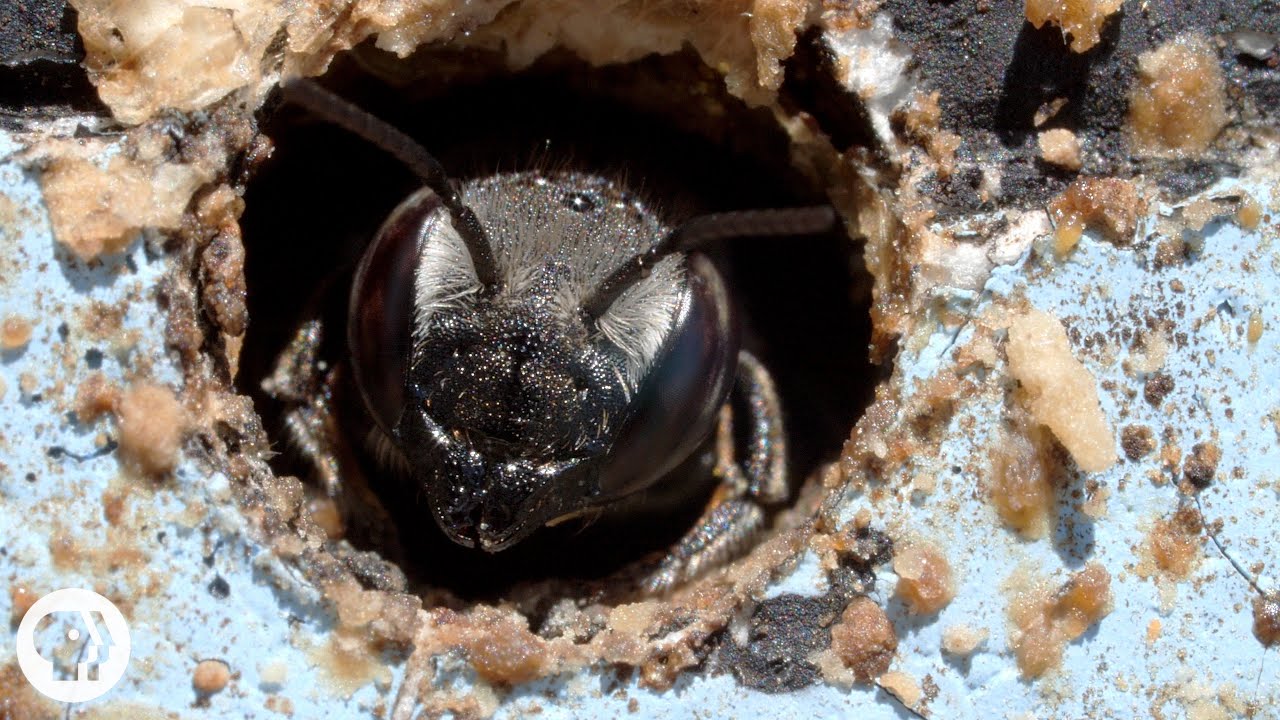
Alfalfa leafcutting bees are way better at pollinating alfalfa flowers than honeybees. They don’t mind getting thwacked in the face by the spring-loaded blooms. And that's good, because hungry cows depend on their hard work to make milk.
Join our community on Patreon! https://www.patreon.com/deeplook
Please take our annual PBSDS Survey, for a chance to win a T-shirt! https://www.pbsresearch.org/c/r/DL_YTvideo
DEEP LOOK is a ultra-HD (4K) short video series created by KQED San Francisco and presented by PBS Digital Studios. See the unseen at the very edge of our visible world. Explore big scientific mysteries by going incredibly small.
---
Sure, cows are important. But next time you eat ice cream, thank a bee.
Every summer, alfalfa leafcutting bees pollinate alfalfa in an intricate process that gets them thwacked by the flowers when they release the pollen that allows the plants to make seeds. The bees’ hard work came to fruition last week when growers in California finished harvesting the alfalfa seeds that will be grown to make nutritious hay for dairy cows.
This is how it works.
To produce alfalfa seeds, farmers let their plants grow until they bloom. They need help pollinating the tiny purple flowers, so that the female and male parts of the flower can come together and produce fertile seeds. That’s where the grayish, easygoing alfalfa leafcutting bees come in. Seed growers in California release the bees – known simply as cutters – in June and they work hard for a month.
Alfalfa’s flowers keep their reproductive organs hidden away inside a boat-shaped bottom petal called the keel petal, which is held closed by a thin membrane that creates a spring mechanism.
Cutter bees come up to the flower looking for nectar and pollen to feed on. When they land on the flower, the membrane holding the keel petal breaks and the long reproductive structure pops right up and smacks the upper petal or the bee, releasing its yellow pollen. This process is called “tripping the flower.”
When the flower is tripped, pollen falls on its female reproductive organ and fertilizes it; bees also carry pollen away on their hairy bodies and help fertilize other flowers. In a few weeks, each flower turns into a curly pod with seven to 10 seeds growing inside.
Cutters trip 80 percent of flowers they visit, compared to honeybees, which only trip about 10 percent.
---
--- What kind of a plant is alfalfa?
Alfalfa is a legume, like beans and chickpeas. Other legumes also hold their reproductive organs within a keel petal.
--- What do bees use leaves for?
Alfalfa leafcutting bees and other leafcutter bees cut leaf and petal pieces to build their nest inside a hole, such as a nook and cranny in a log. Alfalfa farmers provide bees with holes in styrofoam boards.
---+ Read the entire article on KQED Science:
https://www.kqed.org/science/1....946996/this-bee-gets
---+ Shoutout!
?Congratulations ?to the following fans for correctly identifying the bee body part coated in pollen, on our Leafcutting Bee - the scopa or scopae!
Punkonthego
GamingCuzWhyNot
Galatians 4:16
Gil AGA
Edison Lewis
---+ Thank you to our Top Patreon Supporters ($10+ per month)!
Leonhardt Wille
Justin Bull
Bill Cass
Sarah Khalida Mohamad
Daniel Weinstein
Chris B Emrick
Karen Reynolds
Tea Torvinen
David Deshpande
Daisuke Goto
Companion Cube
WhatzGames
Richard Shalumov
Elizabeth Ann Ditz
Gerardo Alfaro
Robert Amling
Shirley Washburn
Robert Warner
Supernovabetty
johanna reis
Kendall Rasmussen
Pamela Parker
Sayantan Dasgupta
Joshua Murallon Robertson
Cindy McGill
Kenia Villegas
Shelley Pearson Cranshaw
Aurora
Dean Skoglund
Silvan Wendland
Ivan Alexander
monoirre
Sonia Tanlimco
Two Box Fish
Jane Orbuch
Allen
Laurel Przybylski
Johnnyonnyful
Rick Wong
Levi Cai
Titania Juang
Nathan Wright
Carl
Michael Mieczkowski
Kyle Fisher
JanetFromAnotherPlanet
Kallie Moore
SueEllen McCann
Geidi Rodriguez
Louis O'Neill
Edwin Rivas
Jeanne Sommer
Katherine Schick
Aurora Mitchell
Cory
Ricardo Martinez
riceeater
Daisy Trevino
KW
PM Daeley
Joao Ascensao
Chris Murphy
Nicolette Ray
TierZoo
---+ Follow KQED Science and Deep Look:
Patreon: https://www.patreon.com/deeplook
Instagram: https://www.instagram.com/kqedscience/
Twitter: https://www.twitter.com/kqedscience
KQED Science on kqed.org: http://www.kqed.org/science
Facebook Watch: https://www.facebook.com/DeepLookPBS/
---+ About KQED
KQED, an NPR and PBS affiliate in San Francisco, CA, serves Northern California and beyond with a public-supported alternative to commercial TV, radio and web media.
Funding for Deep Look is provided in part by PBS Digital Studios. Deep Look is a project of KQED Science, which is also supported by the National Science Foundation, the S. D. Bechtel, Jr. Foundation, the Dirk and Charlene Kabcenell Foundation, the Vadasz Family Foundation, the Fuhs Family Foundation, Campaign 21 and the members of KQED.
#leafcutter #bees #deeplook
Support Deep Look on Patreon!! https://www.patreon.com/deeplook
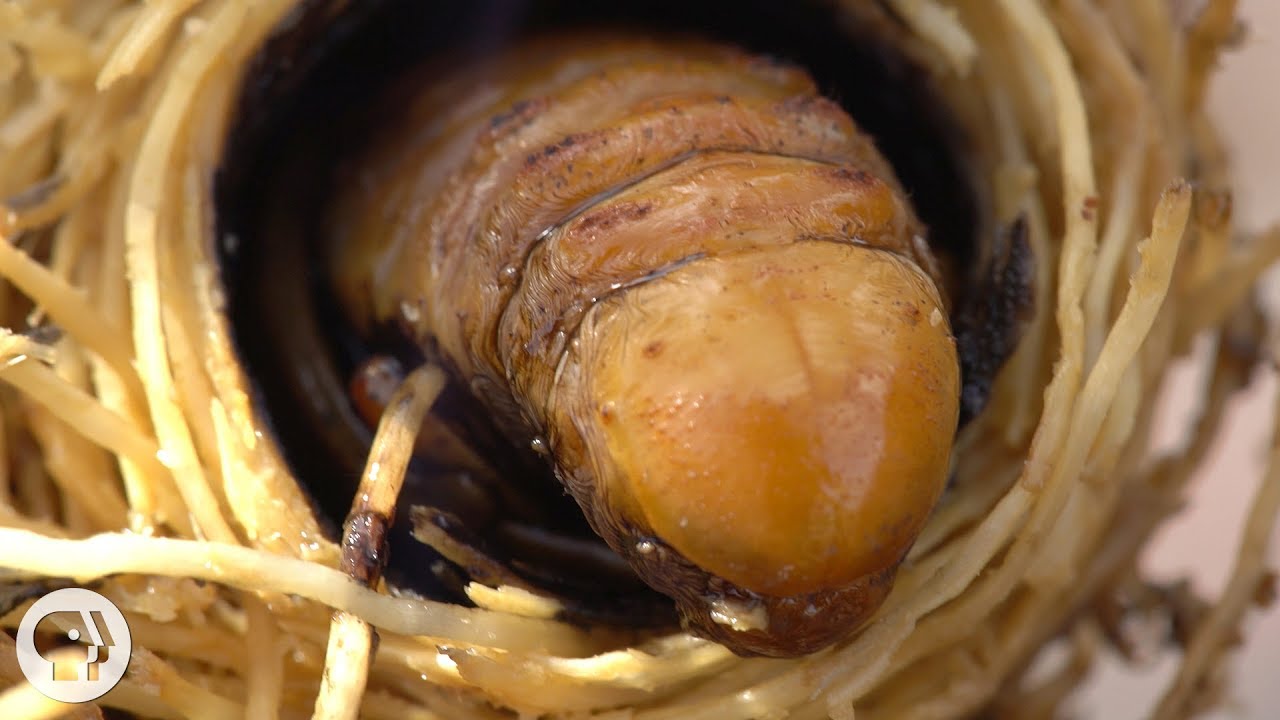
The South American palm weevil is bursting onto the scene in California. Its arrival could put one of the state’s most cherished botanical icons at risk of oblivion.
DEEP LOOK is a ultra-HD (4K) short video series created by KQED San Francisco and presented by PBS Digital Studios. See the unseen at the very edge of our visible world. Get a new perspective on our place in the universe and meet extraordinary new friends. Explore big scientific mysteries by going incredibly small.
* NEW VIDEOS EVERY OTHER TUESDAY! *
Summer means vacation time, and nothing says, “Welcome to paradise!” quite like a palm tree. Though it’s home to only one native species, California has nonetheless adopted the palm as a quintessential icon.
But a new snake in California’s palm tree-lined garden may soon put all that to the test. Dozens of palms in San Diego’s Sweetwater Summit Regional Park, about 10 miles from the Mexican border, are looking more like sad, upside-down umbrellas than the usual bursts of botanical joy.
The offender is the South American palm weevil, a recent arrival to the U.S. that’s long been widespread in the tropics. Large, black, shiny, and possessed of an impressive proboscis (nose), the weevil prefers the king of palms, the Canary Island date palm, also known as the “pineapple palm” for the distinctive way it’s typically pruned.
A palm tree is basically a gigantic cake-pop, an enormous ball of veggie goodness on a stick. The adult female palm weevil uses her long snout to drill tunnels into that goodness—known to science as the “apical meristem” and to your grocer as the “heart” of the palm—where she lays her eggs.
When her larvae hatch, their food is all around them. And they start to eat.
If the South American palm weevil consolidates its foothold in California, then the worst might still be to come. While these weevils generally stick to the Canary Island palms, they can harbor a parasitic worm that causes red-ring disease—a fatal infection that can strike almost any palm, including the state’s precious native, the California fan.
--- Where do South American Palm Weevils come from?
Originally, Brazil and Argentina. They’ve become common wherever there are Canary Island Palm trees, however, which includes Europe, the Mediterranean, the Middle East.
--- How do they kill palm trees?
Their larvae eat the apical meristem, which is the sweet part of the plant sometimes harvested and sold commercially as the “heart of palm.”
--- How do you get rid of them?
If the palm weevils infest a tree, it’s very hard to save it, since they live on the inside, where they escape both detection and pesticides. Neighboring palm trees can be sprayed for protection.
---+ Read the entire article on KQED Science:
https://ww2.kqed.org/science/2....017/06/20/a-real-ali
---+ For more information:
Visit the UC Riverside Center for invasive Species Research:
http://cisr.ucr.edu/invasive_species.html
---+ More Great Deep Look episodes:
Decorator Crabs Make High Fashion at Low Tide
https://www.youtube.com/watch?v=OwQcv7TyX04
Everything You Never Wanted to Know About Snail Sex
https://www.youtube.com/watch?v=UOcLaI44TXA
---+ See some great videos and documentaries from the PBS Digital Studios!
Gross Science: Meet The Frog That Barfs Up Its Babies
https://www.youtube.com/watch?v=9xfX_NTrFRM
Brain Craft: Mutant Menu: If you could, would you design your DNA? And should you be able to?
https://www.youtube.com/watch?v=NrDM6Ic2xMM
---+ Follow KQED Science:
KQED Science: http://www.kqed.org/science
Tumblr: http://kqedscience.tumblr.com
Twitter: https://www.twitter.com/kqedscience
---+ About KQED
KQED, an NPR and PBS affiliate in San Francisco, CA, serves Northern California and beyond with a public-supported alternative to commercial TV, Radio and web media.
Funding for Deep Look is provided in part by PBS Digital Studios and the John S. and James L. Knight Foundation. Deep Look is a project of KQED Science, which is also supported by HopeLab, the S. D. Bechtel, Jr. Foundation, the Dirk and Charlene Kabcenell Foundation, the Vadasz Family Foundation, the Gordon and Betty Moore Foundation, the Smart Family Foundation and the members of KQED.
#deeplook #palmweevil

DEEP LOOK - Watch science and nature videos up close (really, really close). Twice a month, get a new perspective on our place in the universe and meet extraordinary new friends. Explore big scientific mysteries by going incredibly small. DEEP LOOK is a ultra-HD (4K) short video series created by KQED San Francisco and presented by PBS Digital Studios.
SUBSCRIBE: http://goo.gl/8NwXqt
All-NEW EPISODES EVERY OTHER TUESDAY!
More about our new host, Lauren Sommer: http://blogs.kqed.org/pressroo....m/deeplooknewhostvid
#deeplook

Cómo actúa Dios y el Demonio en nosotros según San Ignacio de Loyola
TEKTON NECESITA TU APOYO PARA CONTINUAR CON SU LABOR APOSTÓLICA Y CARITATIVA, SI PUEDES HACERNOS UN DONATIVO TIENES DOS FORMAS:
HAZTE PATROCINADOR: https://www.patreon.com/CTtekton
DONATIVO A TRAVÉS DE LA WEB: https://www.tekton.info/hacer-caridad/
OTRAS REDES SOCIALES
Web: https://www.tekton.info/
San José de tekton: https://www.youtube.com/channe....l/UCEy0tevPx3RayM5PA
Instagram Tekton: https://www.instagram.com/prod....uctoratekton/?hl=es-
Instagram Marcos: https://www.instagram.com/marcosveraperez/?hl=es
Twitter: https://twitter.com/productoratekto
Twitter Marcos: https://twitter.com/marcosveraprez1?lang=es
Tekton es un canal de youtube católico nacido en Barcelona (España), puedes encontrar noticias relacionadas con la Iglesia Católica, y recursos de otro tipo como formación católica, oraciones, música católica, vídeos del Papa Francisco, curiosidades, vidas de Santos, el Evangelio del día, y otras muchas cosas más. No dudes en entrar y ver el contenido que sin duda te gustará
Instagram de Marcos Vera: https://www.instagram.com/marcosveraperez/
Twitter de Marcos Vera: https://twitter.com/MarcosVeraPrez1
Twitter de Jesus Sellas: https://twitter.com/JesusSellas
Hacer un donativo: https://www.tekton.info/hacer-caridad/
Tienda de merchandising de Tekton: https://teespring.com/stores/t....ekton-centro-televis
Web: http://www.tekton.info
Facebook: https://www.facebook.com/productoratekton/
Twitter: https://twitter.com/productoratekto?s=09
Instagram: https://www.instagram.com/productoratekton/
Google+: https://plus.google.com/u/1/+T....ektonTekton?hl=es-41
#Tekton
#TektonCentroTelevisivo
#TektonYouTube
#CanalCatolicoYouTube

Father's Heart: San José, corazón de padre. Marzo, mes de san José
Father’s Heart (Corazón de Padre) es una iniciativa, que se realiza desde Jóvenes de San José y el Centro Televisivo Tekton, con la intención de dar a conocer la devoción a San José, es un granito de arena a esta devoción que nos parece de gran importancia para los tiempos actuales. http://www.corazondepadre.com/
Capitulo 2: https://www.youtube.com/watch?v=_qxp4EVbe1I
Tekton es un canal de noticias católicas nacido en Barcelona (España), puedes encontrar noticias relacionadas con la Iglesia Católica, y recursos de otro tipo como vidas de Santos, el Evangelio del día, y otras muchas cosas más. No dudes en entrar y ver el contenido que sin duda te gustará, nuestra web es http://www.tekton.info

Lo que debes saber sobre Martín Lutero y los falsos reformadores
TEKTON NECESITA TU APOYO PARA CONTINUAR CON SU LABOR APOSTÓLICA Y CARITATIVA, SI PUEDES HACERNOS UN DONATIVO TIENES DOS FORMAS:
HAZTE PATROCINADOR: https://www.patreon.com/CTtekton
DONATIVO A TRAVÉS DE LA WEB: https://www.tekton.info/hacer-caridad/
OTRAS REDES SOCIALES
Web: https://www.tekton.info/
San José de tekton: https://www.youtube.com/channe....l/UCEy0tevPx3RayM5PA
Instagram Tekton: https://www.instagram.com/prod....uctoratekton/?hl=es-
Instagram Marcos: https://www.instagram.com/marcosveraperez/?hl=es
Twitter: https://twitter.com/productoratekto
Twitter Marcos: https://twitter.com/marcosveraprez1?lang=es
Tekton es un canal de youtube católico nacido en Barcelona (España), puedes encontrar noticias relacionadas con la Iglesia Católica, y recursos de otro tipo como formación católica, oraciones, música católica, vídeos del Papa Francisco, curiosidades, vidas de Santos, el Evangelio del día, y otras muchas cosas más. No dudes en entrar y ver el contenido que sin duda te gustará
Instagram de Marcos Vera: https://www.instagram.com/marcosveraperez/
Twitter de Marcos Vera: https://twitter.com/MarcosVeraPrez1
Twitter de Jesus Sellas: https://twitter.com/JesusSellas
Hacer un donativo: https://www.tekton.info/hacer-caridad/
Tienda de merchandising de Tekton: https://teespring.com/stores/t....ekton-centro-televis
Web: http://www.tekton.info
Facebook: https://www.facebook.com/productoratekton/
Twitter: https://twitter.com/productoratekto?s=09
Instagram: https://www.instagram.com/productoratekton/
Google+: https://plus.google.com/u/1/+T....ektonTekton?hl=es-41
#Tekton
#TektonCentroTelevisivo
#TektonYouTube
#CanalCatolicoYouTube

Visita nuestra web: http://surtido.pe
Facebook: https://www.facebook.com/surtidope
Instagram: https://www.instagram.com/surtidope/
Twitter: https://twitter.com/surtidope
#SurtidoPe

iTunes: https://itunes.apple.com/artist/yes/id154011/
Amazon: http://amzn.to/1bnX3yB
INTO THE LENS
Memories, how they fade so fast
Look back, that is no escape
Tied down, now you see too late.
Lovers, they will never wait.
I am a camera
Take heart, I could never let you go
And you, always let the feeling show
Love us all, how you never broke your heart
You lose them
If you feel the feeling start.
I am a camera, camera, camera
And you, may find time will blind you
This to just remind you
All is meant to be.
Here, by the waterside
There, where the lens is wide
You and me
By the sea
Taken in tranquility.
Taken, taken so easily
To pass into glass reality
Transform, to transfer, to energy.
Taken, taken, so easily
To pass into glass reality
Transformer, transferring energy.
----------------------------
Drama
CD/VINYL SIDE ONE/TWO
1. "Machine Messiah" (Geoff Downes, Trevor Horn, Steve Howe, Chris Squire and Alan White) 10:27
2. "White Car" (Geoff Downes, Trevor Horn, Steve Howe, Chris Squire and Alan White) 1:21
3. "Does It Really Happen?" (Geoff Downes, Trevor Horn, Steve Howe, Chris Squire and Alan White) 6:35
4. "Into the Lens" (Geoff Downes, Trevor Horn, Steve Howe, Chris Squire and Alan White) 8:33
5. "Run Through the Light" (Geoff Downes, Trevor Horn, Steve Howe, Chris Squire and Alan White) 4:43
6. "Tempus Fugit" (Geoff Downes, Trevor Horn, Steve Howe, Chris Squire and Alan White) 5:15
CD REMASTER BONUS TRACKS
7. "Into the Lens" Single release 3:47
8. "Run Through the Light" Single release 4:31
9. "Have We Really Got to Go Through This" 3:43
10. "Song No. 4 (Satellite)" 7:31
11. "Tempus Fugit" Tracking session 5:39
12. "White Car" Tracking session 1:11
13. "Dancing Through the Light" (Jon Anderson, Howe, Squire, Rick Wakeman and White) "Paris Sessions" 3:16
14. "Golden Age" (Anderson, Howe, Squire, Wakeman and White) "Paris Sessions" 5:57
15. "In the Tower" (Anderson, Howe, Squire, Wakeman and White) "Paris Sessions" 2:54
16. "Friend of a Friend" (Anderson, Howe, Squire, Wakeman and White) "Paris Sessions" 3:38
----------------------------
PERFORMED BY
Trevor Horn - lead vocals, fretless bass on "Run Through the Light"
Steve Howe - guitars, backing vocals
Chris Squire - bass, backing vocals, piano on "Run Through the Light"
Geoff Downes - keyboards, vocoder, backing vocals
Alan White - drums, percussion, backing vocals
PRODUCED BY
Trevor Horn, Yes
Backing tracks: Eddie Offord
----------------------------
Released 22 August 1980
Recorded April--June 1980
Length 36:55
Label Atlantic
----------------------------
Drama is the tenth studio album by British rock band Yes. It is the first Yes album without vocalist Jon Anderson. In early 1980, after rehearsing music for the follow-up to the tepidly-received Tormato, both Anderson and keyboardist Rick Wakeman departed the band over creative and financial differences.
It was the only album without Anderson and with keyboardist Geoff Downes before Fly From Here in 2011, and is the only Yes album with Trevor Horn as lead vocalist; however he was later involved as producer in 90125 and Fly From Here. It is also Yes last album before the band disbanded in 1981, before reforming in 1982.
----------------------------
See YES on Tour in 2013/14 performing 3 full-length albums:
The Yes Album, Close To The Edge & Going For The One.
Website: http://yesworld.com/
Facebook: http://facebook.com/yestheband
Twitter: http://twitter.com/yesofficial
Instagram: http://instagram.com/yesofficial
Soundcloud: http://soundcloud.com/yesofficial

PLEASE CHECK OUT MY MUSIC! HEAVILY INFLUENCED BY 80S NEW WAVE AND POP:
http://garyflanagan.bandcamp.com/
A great, pleasant little pop tune. Excellent lyrics too. From the "Business As Usual" album. This is the first album I ever owned (received it as a Christmas present way back in 1983). The music you hear in this video is from that actual record. :)
"Twist in my sobriety" by Tanita Tikaram reworked to Major key. Please support the project: http://olegberg.com/donate.php. More: http://www.facebook.com/majorversusminor