Top Vídeos

In perhaps the cutest study published in the Proceedings of the National Academy of Sciences, psychologist Marcel Zentner and Tuomas Eerola found that babies will spontaneously boogie when they hear music and other rhythmic sounds. The findings suggest babies are not great dancers, but they smile more when they do hit the beat.
Originally published on ScienceFriday.com on March 19, 2010.

http://www.patreon.com/scifri - Please Help Support Our Video Productions!
Produced by Luke Groskin
By shrinking an entire museum into a 6 foot tall modular design, MICRO hopes that these tiny exhibits can go in all sorts of public areas, like shopping malls, waiting rooms, airports, and parks where they can integrate science and learning into people's day-to-day lives.
Edited by Sarah Galloway
Music by Audio Network
Additional Footage Provided by People’s Television and Science Sandbox, an initiative of the Simons Foundation
Special Thanks to Charles Philipp, Ruby Murray, and Amanda Schochet
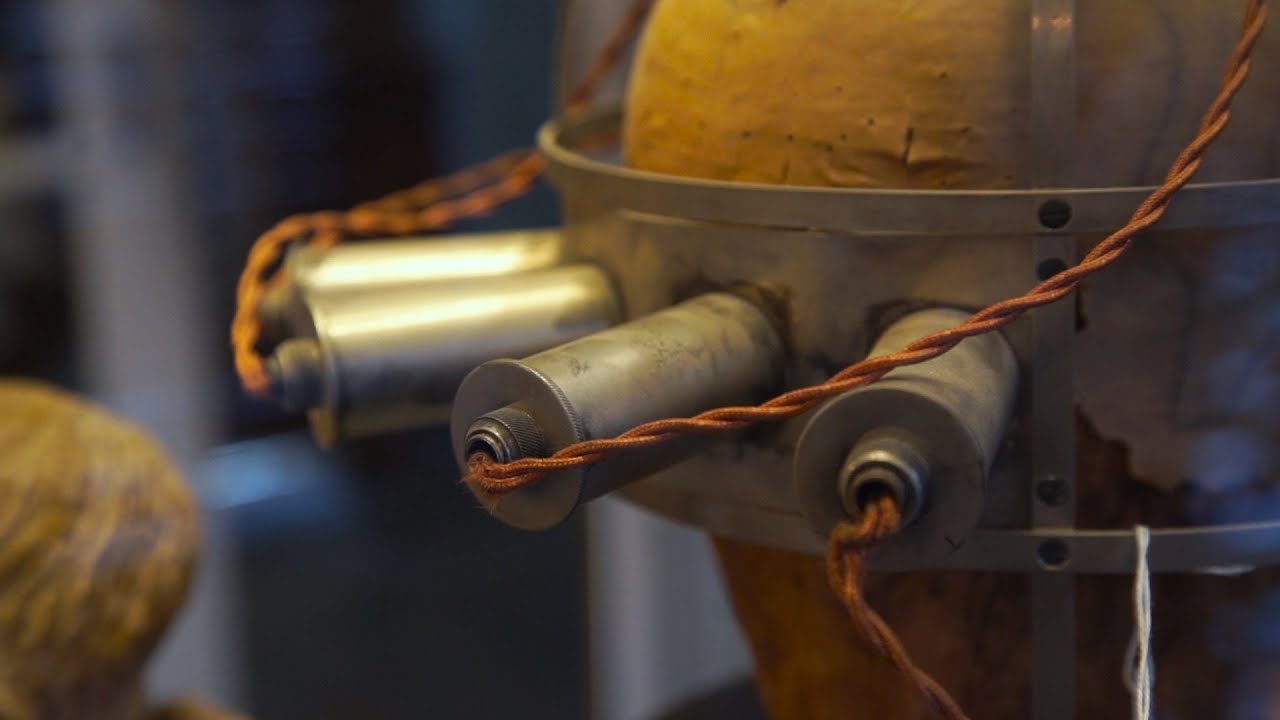
For more than 30 years, Steve Erenberg has collected early scientific and medical objects and instruments. Packed with shelves and displays brimming with Victorian medical masks, surreal anatomical models, and futuristic test prostheses, Erenberg's store/museum in Peekskill, New York offers a whirlwind tour of long-forgotten devices. While some items were shams devised by quacks, others represent the best possible treatment for their time. Regardless of its actual function, each item in Erenberg's collection has a unique aesthetic value.
*** We're now on Patreon! http://www.patreon.com/scifri - Please Help Support Our Video Productions! ***
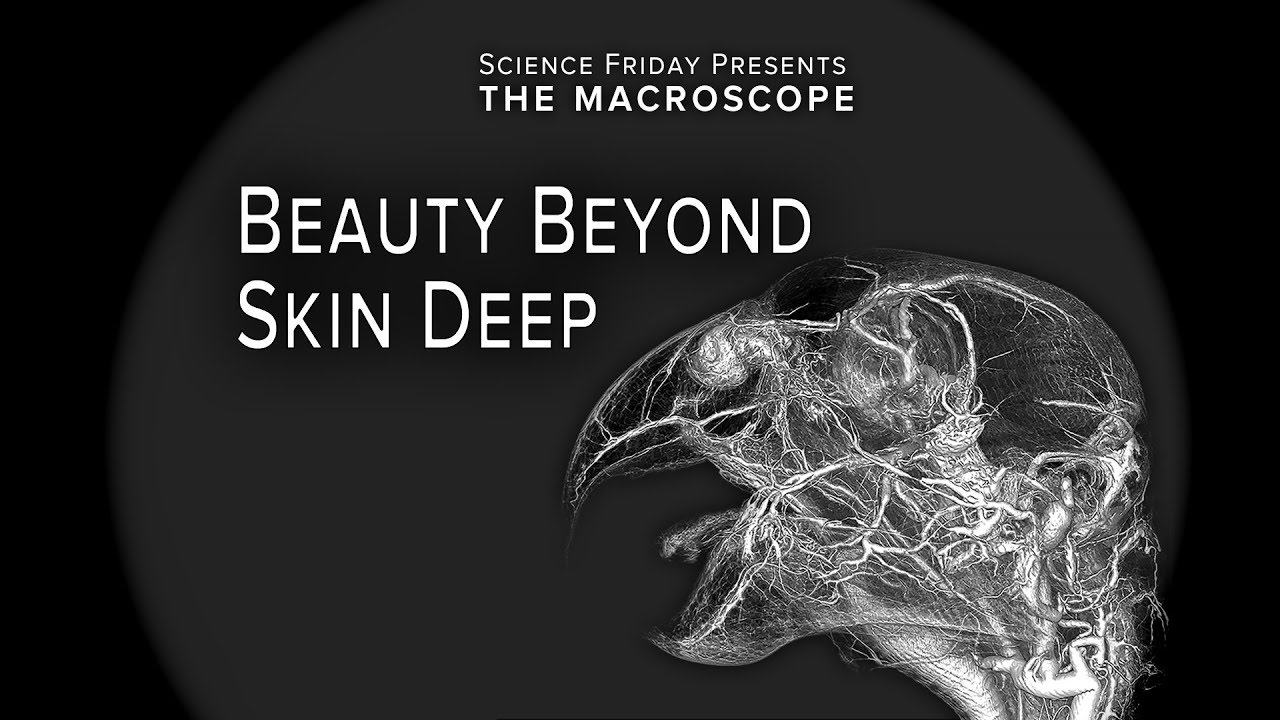
Some say that beauty's only skin-deep. But one veterinary surgeon and his team look beneath the surface...literally. Scott Echols says that we don't actually know very much about the anatomy of animals because haven't had a way to properly visualize it. But now, with the help of a new imaging technology called BriteVu, researchers have access to a trove of data on animal anatomy.
After an animal has been euthanized, researchers inject a compound into its blood vessels that allows them to take a CT scan and create multiple 3-D images, which allow researchers to analyze the intricate anatomy that lies below the skin. They can see every blood vessel in the body, from capillaries to the arteries, and everything in between.
Produced by Luke Groskin
Filmed by Dusty Hulet
Music by Audio Network.com
CT Scans and Video provided by Scarlet Imaging, Anatomage, University of Utah,
and the staff & owners of Parrish Creek Veterinary Clinic, Centerville, Utah
Sketches by Ludwig Bojanus, Johannes Sobotta, Herbert Spencer Jennings,
V. Ghetie, Frank E Beddard
Special Thanks to Shane Richins and Robert Groskin.
http://www.sciencefriday.com
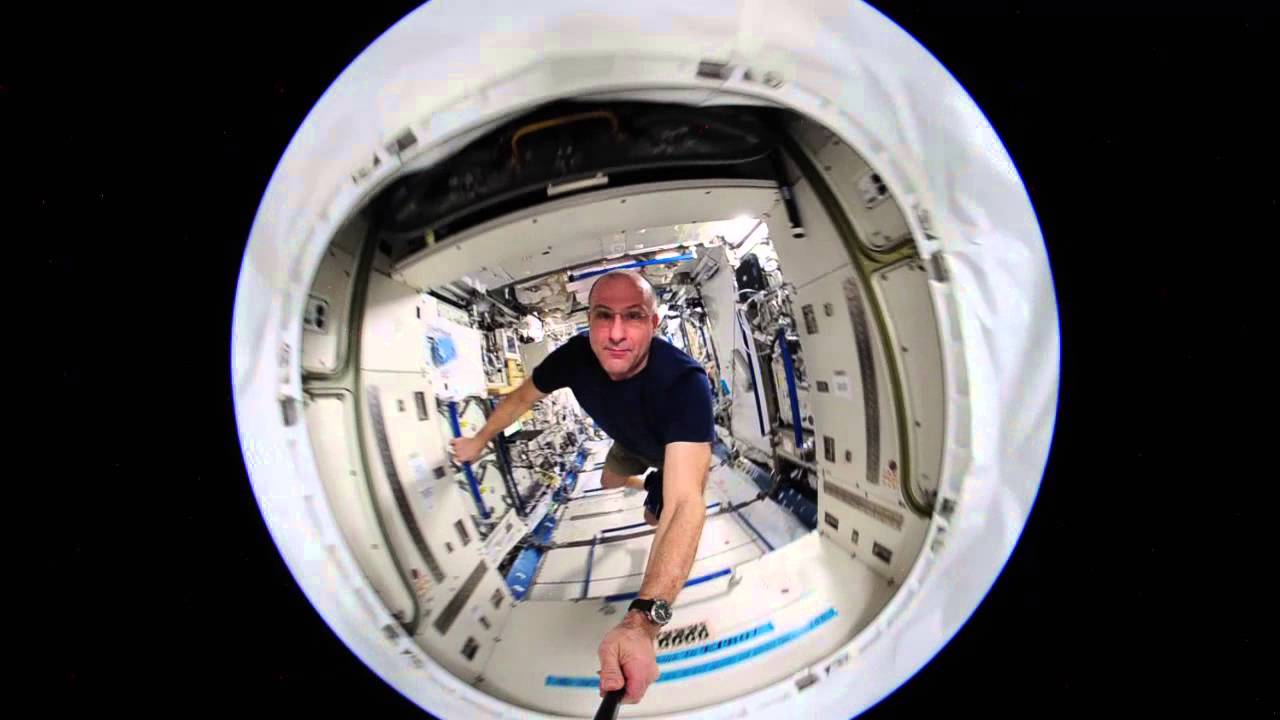
Shots of Sandra Bullock floating through the Internation Space Station in "Gravity," inspired astronaut Don Pettit to share some of his own ISS footage.

Ira Flatow reads fan mail from Larkspur, Ca. He's in for a sweet surprise.

Reporting in Science, Gabriel Villar and colleagues say that tiny water droplets can be engineered to work together sort of like cells -- moving in concert, passing electrical signals. Villar built a machine that fabricates these pseudo-cellular networks while he was getting his Ph.D. in the departments of chemistry and physics at Oxford. He says that water droplet networks (with some major advancements) could be made into artificial tissues.
Study: http://www.sciencemag.org/content/340/6128/48
More videos
Dive into the Physics of Splashing: http://www.sciencefriday.com/v....ideo/02/06/2009/dive
Lab-Raised Heart: http://www.sciencefriday.com/v....ideo/06/10/2011/lab-
March of the Immune Cells: http://www.sciencefriday.com/v....ideo/10/15/2010/marc

Bridging the Rift: Oculus' Answer to Virtual Reality-- With their clunky designs and nauseating displays, truly immersive virtual reality devices used to be the stuff of science fiction—think The Matrix or Tron. However, recent technological and design advances by Oculus VR allow for dynamic and enjoyable virtual reality experiences (in the real world). Oculus VR’s founder, Palmer Luckey, details some of the key innovations inside the company’s headset, the Rift, and explains why virtual reality is finally ready for a mass-market debut.
Produced by Christian Baker and Luke Groskin.
Music by Audio Network.
Game Footage by Elite: Dangerous provided by Frontier Developments
World of Diving provided by Vertigo Games
Lucky's Tale provided by Playful Corp
Additional footage by MIT's Lincoln Laboratory

Ask a child with an imaginary companion if their pretend friend is real, and often they'll tell you, "I just made them up!" Of course, moments later they'll regale you with stories of the latest adventures with their companion with the utmost conviction. In the second episode of The Real Guide to Imaginary Companions, a trip into the lab of developmental psychologist Jaqueline Woolley reveals how children can become so enamored of their pretend friends that they blur the lines between reality and fantasy. Woolley also investigates whether a child's orientation toward fantasy play has ties to real-world creativity.
Produced by Science Friday with generous support from the John Templeton Foundation
Produced, directed, and narrated by Luke Groskin
Filmed by Katie Graham, Luke Groskin and Patrick Pelham
Editor by Erika Sutter
Animations by Gabe Darling and Candice Aquino
Music by Audio Network
"Fairy Godmother" voiced by Annie Nero
Additional footage provided by
Pond5.com, A Lost World (1925), Rudolph the Red-Nosed Reindeer,
Special Thanks to Danielle Dana, Jennifer Fenwick, Becky Geer, Tracy Gleason, Elizabeth Delucia Landon, Alex Riviello, Jenny Shalant, Christian Skotte, Marjorie Taylor, and Jacqueline Woolley.

*** http://www.patreon.com/scifri - Please Help Support Our Video Productions ***
For more about this work head to Dr. Lydia Bourouiba's Webstie : http://lbourouiba.mit.edu
Although we all know that sneezes and coughs transmit infections, little research had been done to model how they work. To address this knowledge gap, Dr. Lydia Bourouiba and Dr. John Bush of MIT's Applied Mathematics Lab used high speed cameras and fluid mechanics to reveal why we've grossly underestimated the role of gas clouds in these violent expirations.
Produced by Luke Groskin
Music by Audio Network
Additional Video and Stills by
Lydia Bourouiba
John Bush
Shutterstock
Prelinger Archives

*** We're now on Patreon! http://www.patreon.com/scifri - Please Help Support Our Video Productions! ***
It's a grim job, but someone has to do it. Every day, the Smithsonian Institution's Feather Identification Lab receives dozens of envelopes filled with the remains of birds scraped off the sides of airplanes. Using this scant evidence and the Smithsonian's enormous collection of preserved specimens, scientists at the lab must identify the victims in the hopes of preventing future aviation accidents.
Produced by Luke Groskin
Music by Audio Network
Additional Stills and Video by Smithsonian Institution, Feather Identification Lab, Element Materials Technology, Bryan Heitman, Leonard Brown(http://www.youtube.com/LeonardBrownArtbyLeonard ) , YouTube User CaptainFULLHD (C.C. BY 2.0), Robert South, Micah Maziar (C.C. BY 3.0), Amsterdam Airport Schiphol (C.C. BY 3.0)

Why do your fingers get pruney after a swim? Only a handful of researchers, including Einar Wilder-Smith, Mark Changizi, and Tom Smulders, have looked into the phenomenon. Publishing in Biology Letters, Smulders lends a hand to the hypothesis, set forth by Changizi and colleagues, that finger wrinkles improve our grip of wet objects.

http://www.sciencefriday.com
Join the Museum of Modern Art's Senior Curator of Architecture and Design, Paola Antonelli on an exclusive tour of the video games in their collection.

Scientists are experimenting with pumping CO2 deep beneath the sea floor. See the borehole where they practice.

*** http://www.patreon.com/scifri - Please Help Support Our Video Productions ***
As a choreographer who often collaborates with dancers with disabilities, Merry Lynn Morris has long thought that traditional manual and power wheelchair designs were constraining. Her work in integrative dance, along with her experience growing up with a father who relied on a wheelchair, inspired her to invent a power wheelchair designed for artistic expression. Equipped with omnidirectional movement, a rotating seat, and a hands-free control, the chair enables dancers to explore new movement techniques, and may one day provide greater mobility in everyday life, too.

How beasts of burden do the locomotion.

In her new book, Bones Books and Bell Jars, physician and photographer Andrea Baldeck documents the collection of medical texts, instruments, and specimens at Philadelphia's Mütter Museum.

Please support our videos http://www.patreon.com/scifri
Although the praire outside of Choteau, Montana is best known as the fossil quarry that provided definitive paleontological insights into the parenting habits of dinosaurs, it’s also the perfect place to hunt less famous fossilized treasures, namely dino poo (known as coprolites). The same flood event that occurred some 70 million years that buried huge numbers of hadrosaurs and their nests also preserved their feces for posterity. Using the coprolites found in the region, paleontologist Karen Chin has discovered unique insights into the climate, ecology, and behavior of the species who created it. In her lab at the University of Colorado in Boulder, Chin and collaborators examine the poop in microscopic detail using state of the art chemical analyses. Their findings have revealed the unusual dietary habits of hadrosaurs in the area as well thriving populations of invertebrates.
Produced by Luke Groskin
Article by Lauren J. Young
Music by Audio Network
Additional Footage and Stills Provided by Pond5, Karen Chin, James Super
Huge Thanks to the Two Medicine Dinosaur Center, Karen Chin, Frank Garrett Boudinot (Julio Sepulveda laboratory), the University of Colorado Museum of Natural History, the Museum of the Rockies, and the Denver Museum of Nature and Science.

Chris Tack made seven trips to Goodwill to get rid of his stuff, before moving into the 140-square-foot home he and his wife Malissa Tack designed and built. Constructed on a trailer bed and parked in Snohomish, Washington, the house is more than enough space for them, the couple says. And one advantage of a home on wheels, the 29-year-olds say, is that you can always move.

Bacteria and viruses hitch a ride inside droplets of all kinds—sneezes, raindrops, toilet splatter. By reviewing footage of different types of drops, applied mathematician Lydia Bourouiba records and measures where they disperse in order to better understand how diseases spread. Watch how Bourouiba designs tests—some inescapably humorous and awkward—to study infectious disease transmission.
Publications References:
Bourouiba, L. (2016) A Sneeze. New England Journal of Medicine. 357(8):e15.
Wang, Y. and Bourouiba, L. (2016) Drop impact on small surfaces: thickness and velocity profiles of the expanding sheet in the air. Journal of Fluid Mechanics. 814:510-534.
Gilet, T. and Bourouiba, L. (2015) Fluid fragmentation shapes rain-induced foliar disease transmission. Journal of the Royal Society Interface. 12:20141092.
Gilet, T. and Bourouiba, L. (2014) Rain-induced ejection of pathogens from leaves: revisiting the mechanism of splash-on-film using high-speed visualization. Integrative and Comparative Biology. 54:974–984.
Bourouiba, L., Dehandschoewercker, E., and Bush, J. W. M. (2014) Violent respiratory events: on coughing and sneezing. Journal of Fluid Mechanics. 745: 537-563.
Scharfman, B. E., Techet, A. H., Bush, J. W. M. and Bourouiba, L. (2016) Visualization of sneeze ejecta: steps of fluid fragmentation leading to respiratory droplets. Experiments in Fluids. 57:24--1-9
A film by Science Friday
Produced in collaboration with the Howard Hughes Medical Institute
Produced and Directed by Emily V. Driscoll and Luke Groskin
Filmed by Luke Groskin
Editing and Animations by Jason Drakeford
Music by Audio Network
Additional Photos and Video by
Lydia Bourouiba, Yongji Wang, Tristan Gilet, Sophie Lejeune, Claire Lu, and Eline Dehandschoewercker
Alamy, Pond5, Shutterstock
Project Advisors:
Laura A. Helft, Laura Bonetta, Dennis W.C. Liu and Sean B. Carroll - Howard Hughes Medical Institute
Special Thanks to:
Lydia Bourouiba, Christian Skotte, Danielle Dana, Ariel Zych, Jennfier Fenwick, Timothee Jamin, Stephane Poulain, and Maxime Inizan
To learn more about her research you can visit https://lbourouiba.mit.edu/
