Top Vídeos

New Season 5 of Om Nom Stories is here! Join Om Nom in the amazing journey around the world & try to guess the country in this episode!
Get the latest Cut the Rope: Magic game for iOS, Android & Amazon: http://zep.tl/ctrmagicfb
Visit Cut the Rope official site: http://www.cuttherope.net
Like us on Facebook: https://www.facebook.com/cuttherope
Follow us on Twitter: https://twitter.com/Cut_The_Rope
And on Instagram: instagram.com/cuttheropeofficial

CONSIGUE CUT THE ROPE
* iPhone or iPod touch http://bit.ly/ssCaX4
* iPad http://bit.ly/tbRV2A
* Android http://bit.ly/vRmRM8
SIGUE A OM NOM
* Facebook: http://facebook.com/cuttherope
* Twitter: http://twitter.com/cut_the_rope
* Website: http://cuttherope.net
* Pinterest: http://pinterest.com/cuttherope
* Instagram: http://instagram.com/cuttheropeofficial
Disfruta con los dibujos animados y caricaturas de Om Nom, el protagonista de la serie Cut The Rope, ¡que ya tiene su propia serie de dibujos! Suscríbete a Las Historias de Om Nom, y no te pierdas ningún capítulo de esta caricatura infantil tan adorable.
Aunque Om Nom es muy bueno comiendo dulces, también puede hacer trucos de magia . Descubri que hay dentro del sombrero mágico de Om Nom.
Las Historias de Om Nom: Trabajo Soñado - Mago | Episodio 60 | Cut The Rope

This video is aimed more at our youngest audience. Learning colors has never been more fun!
Get the brand new Cut the Rope: Magic game for iOS, Android & Amazon: http://zep.tl/ctrmagicfb
Visit Cut the Rope official site: http://www.cuttherope.net
Like us on Facebook: https://www.facebook.com/cuttherope
Follow us on Twitter: https://twitter.com/Cut_The_Rope
And on Instagram: https://www.instagram.com/cuttheropeofficial
#LearningColors #OmNom #CutTheRope

Steve faces off with a known maneating lion.
Subscribe to BBC Earth: http://bit.ly/BBCEarthSubBBC Earth YouTube Channel: http://www.youtube.com/BBCEarth
BBC Earth Facebook http://www.facebook.com/bbcearth (ex-UK only)
BBC Earth Twitter http://www.twitter.com/bbcearth
Visit http://www.bbc.com/earth/world for all the latest animal news and wildlife videos
This is a channel from BBC Studios who help fund new BBC programmes.
Subscribe: http://bit.ly/BBCEarthSub
WATCH MORE:
New on Earth: https://bit.ly/2M3La96
Oceanscapes: https://bit.ly/2Hmd2kZ
Wild Thailand: https://bit.ly/2kR7lmh
Welcome to BBC EARTH! The world is an amazing place full of stories, beauty and natural wonder. Here you'll find 50 years worth of astounding, entertaining, thought-provoking and educational natural history content.
Want to share your views with the team behind BBC Earth and win prizes? Join our BBC Studios Voice: https://www.bbcstudiosvoice.com/register
This is a channel from BBC Worldwide who help fund new BBC programmes. Service information and feedback: http://bbcworldwide.com/vod-fe....edback--contact-deta

Watch this cartoon movie and solve funny puzzles at the same time!
Perfect for children who like Cut the Rope universe and toons!
Spot the difference between two shots during the cartoon and share your findings in comments!
Get Cut the Rope: Magic game for iOS, Android & Amazon: http://zep.tl/ctrmagicfb
Visit Cut the Rope official site: http://www.cuttherope.net
Like us on Facebook: https://www.facebook.com/cuttherope
Follow us on Twitter: https://twitter.com/Cut_The_Rope
And on Instagram: https://www.instagram.com/cuttheropeofficial
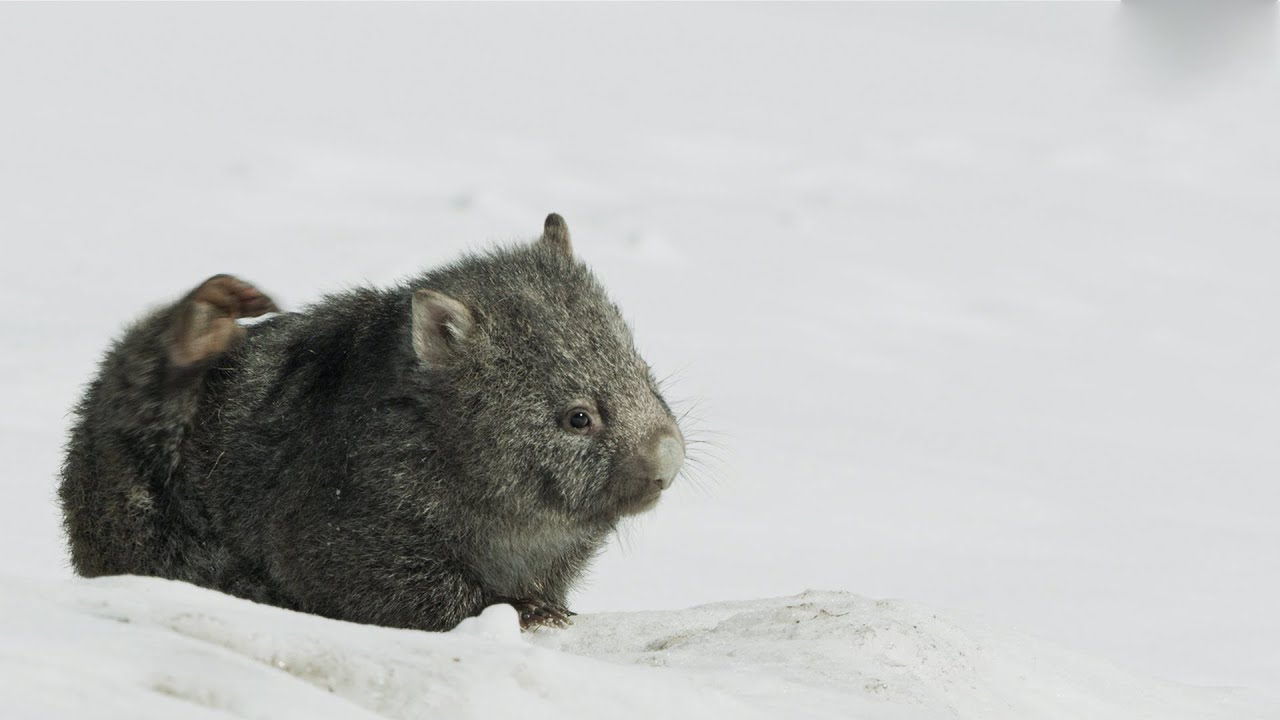
These brave wombats scour the snowy slopes in search of something tasty to nibble on.
Subscribe: http://bit.ly/BBCEarthSub
Watch more:
Planet Earth http://bit.ly/PlanetEarthPlaylist
Blue Planet http://bit.ly/BluePlanetPlaylist
Planet Earth II http://bit.ly/PlanetEarthIIPlaylist
Planet Dinosaur http://bit.ly/PlanetDinoPlaylist
Seven Worlds, One Planet Episode 4 'Australia'
Millions of years ago incredible forces ripped apart the Earth’s crust creating seven extraordinary continents. Seven Worlds, One Planet, narrated by Sir David Attenborough, will reveal how each distinct continent has shaped the unique animal life found there.
Welcome to BBC EARTH! The world is an amazing place full of stories, beauty and natural wonder. Here you'll find 50 years worth of entertaining and thought-provoking natural history content. Dramatic, rare, and exclusive, nature doesn't get more exciting than this.
Want to share your views with the team? Join our BBC Studios Voice: https://www.bbcstudiosvoice.com/register
This is a page from BBC Studios who help fund new BBC programmes. Service information and feedback: http://bbcworldwide.com/vod-fe....edback--contact-deta
A blanket of aquatic plants covering a river surface yields a watery surprise for a playful lion cub. Poetic scenes from CBBC series Little Big Cat.
The intimate and endearing stories of lion, leopard and cheetah cubs living in the Masai Mara in Kenya. Adapted from the Big Cat series, Little Big Cat brings all the drama and charm to a younger audience.
Little Big Cat tells the stories through the eyes of the lion, leopard and cheetah cubs living in the Masai Mara in Kenya. The show uses a friendly story teller to set the scene and introduce the subject of each particular show while the cubs are voiced by young African children.
Visit http://www.bbcearth.com for all the latest animal news and wildlife videos
BBC Earth Facebook http://www.facebook.com/bbcearth (ex-UK only)
BBC Earth Twitter http://www.twitter.com/bbcearth
Subscribe to BBC Earth: http://bit.ly/ydxvrP
BBC Earth Channel: http://www.youtube.com/BBCEarth
Latest BBC Earth videos: http://bit.ly/y1wtbi
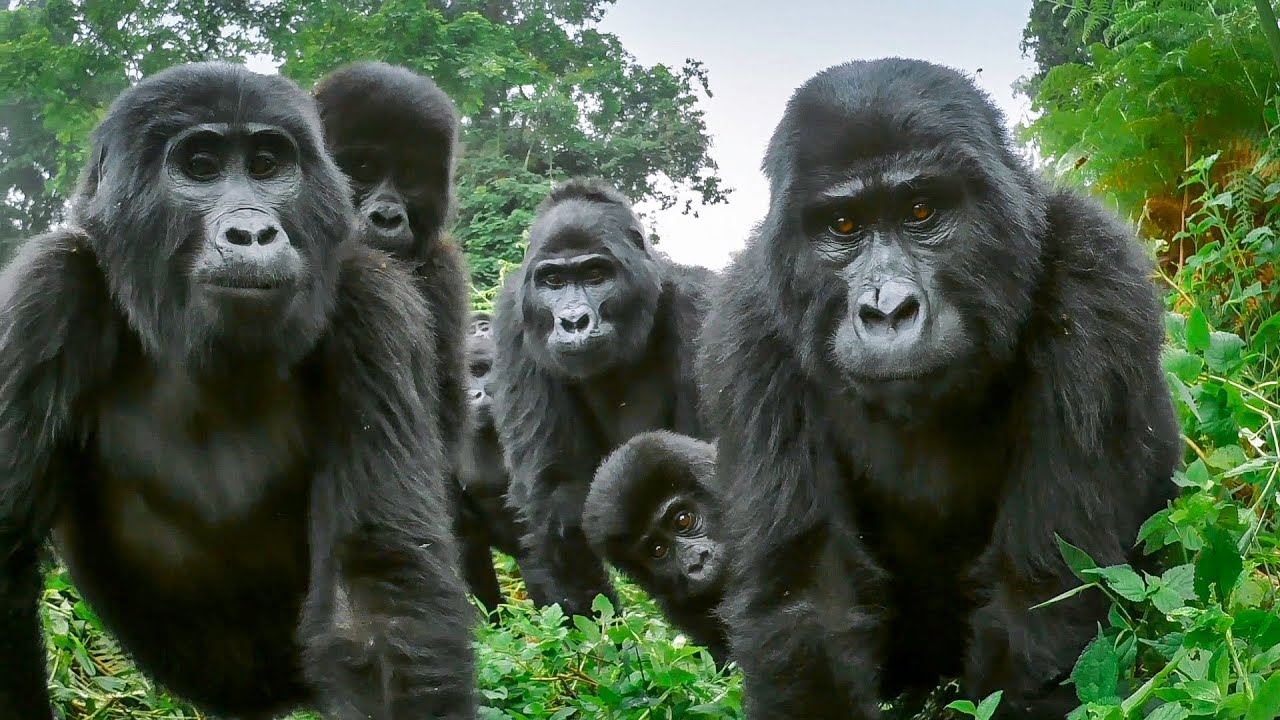
A robotic baby gorilla tries to become part of the family, but will he be accepted by the alpha silverback?
Subscribe: http://bit.ly/BBCEarthSub
#Gorilla #SpyInTheWild #Wildlife
Watch more:
Planet Earth http://bit.ly/PlanetEarthPlaylist
Blue Planet http://bit.ly/BluePlanetPlaylist
Planet Earth II http://bit.ly/PlanetEarthIIPlaylist
Planet Dinosaur http://bit.ly/PlanetDinoPlaylist
Taken from episode 1 of Spy In The Wild Series 2
Spy in the Wild returns to explore mass gatherings among the animal kingdom as its even more lifelike spy creatures infiltrate communities and take you into the heart of the action. Why do animals gather for one-off events? What does it feel like to be part of the herd? And how do they cope with the changing seasons and climate?
Welcome to BBC EARTH! The world is an amazing place full of stories, beauty and natural wonder. Here you'll find 50 years worth of entertaining and thought-provoking natural history content. Dramatic, rare, and exclusive, nature doesn't get more exciting than this.
Want to share your views with the team? Join our BBC Studios Voice: https://www.bbcstudiosvoice.com/register
This is a page from BBC Studios who help fund new BBC programmes. Service information and feedback: http://bbcworldwide.com/vod-fe....edback--contact-deta

Most firefly flashes are pure romance, a sexy form of skywriting. But one variety copies the mating signals of others to lure them to their demise.
SUBSCRIBE to Deep Look! http://goo.gl/8NwXqt
DEEP LOOK: a new ultra-HD (4K) short video series created by KQED San Francisco and presented by PBS Digital Studios. See the unseen at the very edge of our visible world. Get a new perspective on our place in the universe and meet extraordinary new friends. Explore big scientific mysteries by going incredibly small.
Most of the blinking signals that fireflies send out are intended to attract mates. But researchers are finding out that in some cases, these romantic overtures are not all wine and roses.
Females of one firefly group, the genus Photuris, have learned to copy other fireflies’ flashes to attract the males of those species. When one arrives, she pounces, first sucking his blood, then devouring his insides.
These “femme fatale” fireflies live throughout the Eastern U.S alongside the fireflies they target. They can develop widely varying light shows to target whatever species are in the area.
The predatory habits of Photuris are just one example of how much individual firefly signals can differ from one another.
The male Common Eastern Firefly, for example, is known for his fish hook-shaped aerial maneuver, which he repeats at six-second intervals. That characteristic move has earned the species the nickname “Big Dipper.”
The male Big Dipper hopes this bit of skywriting will get him noticed by females hiding in the grass. If the female likes what she sees, her reply comes as a single pulse from her smaller, heart-shaped lantern. That’s his invitation to land and mate.
Most firefly interactions follow the same pattern, with roving males advertising themselves to concealed females. Within a species, the back-and-forth signals are so reliable that it’s easy to attract the male fireflies with even a simple decoy.
Firefly light is biochemical. But fireflies like the Big Dippers do much more with chemistry than just make light. They can mix together an array of other compounds, including invisible pheromones for mating, and others called lucibufagins (“loosa-BOOF-ajins”) that ward off predators like spiders and birds.
At some point, the Photuris “femme fatale” fireflies lost the ability to make their own lucibufagins. So instead of chemistry, these bigger, stronger fireflies became adept at imitation, and evolved to turn into insect vampires to take these valuable compounds from other fireflies to boost their own defenses.
And it works. In experiments, predators avoided Photuris fireflies that had recently preyed on other fireflies.
--- Where do fireflies live?
There are fireflies worldwide, but in the U.S., you’ll find them in the Midwest and Eastern U.S. There are a few species in the West, including the California Pink Glow-worm.
--- Why do fireflies flash?
Mostly, it’s to attract mates. One sex, usually the male, uses a more elaborate flash pattern to get the attention of the opposite sex. Then the female signals her interest with a simpler flash.
--- Why do fireflies glow after they die?
The chemicals in the firefly that make light, luciferin and luciferase, remain viable after it dies, and the reaction that creates the light thrives on oxygen, which is of course plentiful in the air.
---+ Read the entire article on KQED Science:
https://ww2.kqed.org/2018/02/2....7/so-sometimes-firef
---+ For more information:
Join Fireflyers International: https://fireflyersinternational.net/
---+ More Great Deep Look episodes:
Everything You Never Wanted to Know About Snail Sex
https://youtu.be/UOcLaI44TXA
Why the Male Black Widow is a Real Home Wrecker
https://youtu.be/NpJNeGqExrc
---+ See some great videos and documentaries from the PBS Digital Studios!
PBS Eons: When Giant Fungi Ruled
https://www.youtube.com/watch?v=-G64DagHuOg
Origin Of Everything: Why Do We Eat Artificial Flavors?
https://www.youtube.com/watch?v=iNaJ31EV13U
---+ Follow KQED Science:
KQED Science: http://www.kqed.org/science
Tumblr: http://kqedscience.tumblr.com
Twitter: https://www.twitter.com/kqedscience
---+ About KQED
KQED, an NPR and PBS affiliate in San Francisco, CA, serves Northern California and beyond with a public-supported alternative to commercial TV, Radio and web media.
Funding for Deep Look is provided in part by PBS Digital Studios. Deep Look is a project of KQED Science, which is supported by the S. D. Bechtel, Jr. Foundation, the Dirk and Charlene Kabcenell Foundation, the Vadasz Family Foundation, the Gordon and Betty Moore Foundation, the Fuhs Family Foundation Fund and the members of KQED.
#deeplook

Peregrine falcons catch other birds mid-flight by diving at more than 200 mph. To do it, they need some high-precision gear: special eyesight, talons and aerodynamics that can't be beat.
SUBSCRIBE to Deep Look! http://goo.gl/8NwXqt
Please support us on Patreon! https://www.patreon.com/deeplook
DEEP LOOK is a ultra-HD (4K) short video series created by KQED San Francisco and presented by PBS Digital Studios. See the unseen at the very edge of our visible world. Explore big scientific mysteries by going incredibly small.
---
While known for being the world’s fastest bird–peregrines have been clocked at diving more than 200 miles per hour–these majestic birds were at risk for going extinct 50 years ago. Widespread use of pesticides such as DDT decimated native populations of peregrine falcons.
By 1970, California’s peregrine population had dwindled to only two known nesting pairs statewide. The federal government banned DDT in 1972. And successful restoration efforts spearheaded by organizations like The Peregrine Fund helped revive their numbers. By 1999, they were removed from the federal Endangered Species List. Recent surveys estimate that there are now 300 to 350 nesting pairs in California and more than 2400 pairs nationwide.
---+ Read the entire article on KQED Science:
https://www.kqed.org/science/1....944037/peregrine-fal
--- What’s the origin of the Peregrine Falcon's name?
Peregrine is Latin for "Peregrinus," which means “traveler” or “pilgrim.”
--- How many eyelids do raptors, or birds or prey, like peregrine falcons have?
They have three! Two eyelids are used for closing their eyes, while the third is used for blinking. It’s also called the nictitating membrane and helps to protect their eyes and keep them moist and clean. It’s semi-transparent, so they can actually still see through it when it’s closed.
--- Did you know they have a special bone to protect their eyes?
It’s called a sclerotic ring and helps support and secure their eyeballs within their skulls.
---+ For more information:
Visit The Peregrine Fund
https://www.peregrinefund.org/
---+ More Great Deep Look episodes:
Things With Wings: https://youtu.be/a68fIQzaDBY
---+ Shoutout!
---+ ?Congratulations ?to the following fans for coming up with the best emoji or ASCII tributes to this fine feathered bird in our community tab challenge:
Sandcastle •
ɐɯɹɐʞ ɐıuɐɯ
lieutenant giwaffe
Sectumsempra, b****!
Sweetle pie.3.
Go look at all the entries here!
https://www.youtube.com/channe....l/UC-3SbfTPJsL8fJAPK
---+ Thank you to our Top Patreon Supporters ($10+ per month)!
Allen, Aurora Mitchell, Beckie, Ben Espey, Bill Cass, Breanna Tarnawsky, Carl, Chris B Emrick, Chris Murphy, Cindy McGill, Companion Cube, Cory, Daisuke Goto, Daisy Trevino , Daniel Voisine, Daniel Weinstein, David Deshpande, Dean Skoglund, Edwin Rivas, Elizabeth Ann Ditz, Geidi Rodriguez, Gerardo Alfaro, Ivan Alexander, Jane Orbuch, JanetFromAnotherPlanet, Jason Buberel, Jeanne Sommer, Joao Ascensao, johanna reis, Johnnyonnyful, Joshua Murallon Robertson, Justin Bull, Kallie Moore, Karen Reynolds, Katherine Schick, Kendall Rasmussen, Kenia Villegas, Kristell Esquivel, KW, Kyle Fisher, Laurel Przybylski, Leonhardt Wille, Levi Cai, Louis O'Neill, Michael Mieczkowski, Michele Wong, monoirre, Nathan Padilla, Nathan Wright, Nicolette Ray, NoahCXXIII, Pamela Parker, PM Daeley, Ricardo Martinez, riceeater, Richard Shalumov, Rick Wong, Robert Amling, Robert Warner, Sayantan Dasgupta, Shelley Pearson Cranshaw, Shirley Washburn, Sonia Tanlimco, SueEllen McCann, Supernovabetty, Tea Torvinen, TierZoo, Titania Juang, Two Box Fish, WhatzGames, Willy Nursalim
---+ Follow KQED Science and Deep Look:
Patreon: https://www.patreon.com/deeplook
Instagram: https://www.instagram.com/kqedscience/
Twitter: https://www.twitter.com/kqedscience
KQED Science on kqed.org: http://www.kqed.org/science
Facebook Watch: https://www.facebook.com/DeepLookPBS/
---+ About KQED
KQED, an NPR and PBS affiliate in San Francisco, CA, serves Northern California and beyond with a public-supported alternative to commercial TV, Radio and web media.
Funding for Deep Look is provided in part by PBS Digital Studios. Deep Look is a project of KQED Science, which is also supported by the National Science Foundation, the S. D. Bechtel, Jr. Foundation, the Dirk and Charlene Kabcenell Foundation, the Vadasz Family Foundation, the Fuhs Family Foundation, Campaign 21 and the members of KQED.
#peregrinefalcon #bird #deeplook
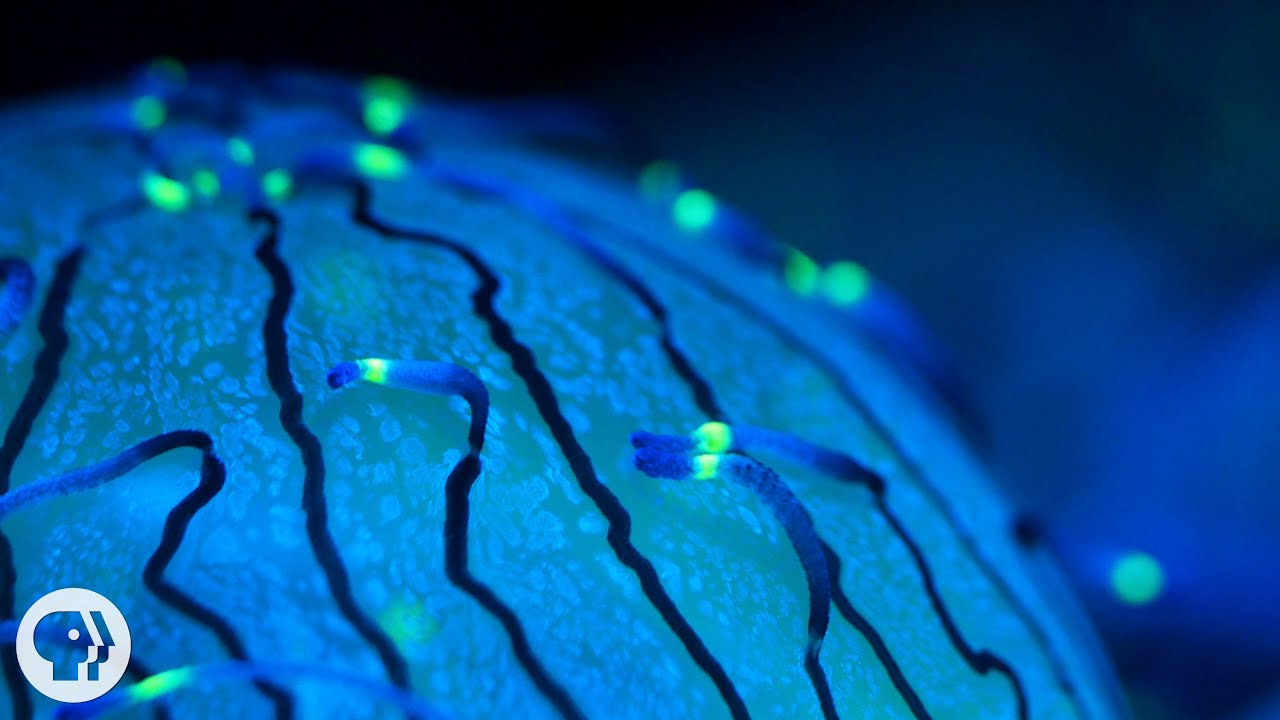
Jellyfish don’t have a heart, or blood, or even a brain. They’ve survived five mass extinctions. And you can find them in every ocean, from pole to pole. What’s their secret? Keeping it simple, but with a few dangerous tricks.
DEEP LOOK: a new ultra-HD (4K) short video series created by KQED San Francisco and presented by PBS Digital Studios. See the unseen at the very edge of our visible world. Get a new perspective on our place in the universe and meet extraordinary new friends. Explore big scientific mysteries by going incredibly small.
--- Why do Jellyfish Sting?
Jellyfish sting to paralyze their prey. They use special cells called nematocysts. Jellyfish don’t have a brain or a central nervous system to control these stinging cells, so each one has it’s own trip wire, called a cnidocil.
When triggered, the nematocyst cells act like a combination of fishing hook and hypodermic needle. They fire a barb into the flesh of the jellyfish’s prey at 10,000 times the force of gravity – making it one of the fastest mechanisms in the animal kingdom. As the barb latches on, a thread-like filament bathed in toxin erupts from the barb and delivers the poison.
The nematocyst only works if the barb can penetrate the skin, which is why some jellies are more dangerous to humans than others. The smooth-looking tentacles of a sea anemone (a close relative of jellies that also has nematocyst cells) feel like sandpaper to the touch. Their nematocysts are firing, but the barbs aren’t powerful enough to puncture your skin.
--- Read the article for this video on KQED Science:
https://ww2.kqed.org/science/2....015/09/29/why-jellyf
--- More great DEEP LOOK episodes:
Pygmy Seahorses: Masters of Camouflage
https://www.youtube.com/watch?v=Q3CtGoqz3ww
You're Not Hallucinating. That's Just Squid Skin.
https://www.youtube.com/watch?v=0wtLrlIKvJE
The Fantastic Fur of Sea Otters
https://www.youtube.com/watch?v=Zxqg_um1TXI
--- Related videos from the PBS Digital Studios Network!
I Don't Think You're Ready for These Jellies - It’s Okay to Be Smart
https://www.youtube.com/watch?v=a4DQQe5p5gc
Why Neuroscientists Love Kinky Sea Slugs - Gross Science
https://www.youtube.com/watch?v=QGHiyWjjhHY
What Physics Teachers Get Wrong About Tides! | Space Time
https://www.youtube.com/watch?v=pwChk4S99i4
--- More KQED SCIENCE:
Tumblr: http://kqedscience.tumblr.com
Twitter: https://www.twitter.com/kqedscience
KQED Science: http://ww2.kqed.org/science
Funding for Deep Look is provided in part by PBS Digital Studios and the John S. and James L. Knight Foundation. Deep Look is a project of KQED Science, which is supported by HopeLab, The David B. Gold Foundation; S. D. Bechtel, Jr. Foundation; The Dirk and Charlene Kabcenell Foundation; The Vadasz Family Foundation; Smart Family Foundation and the members of KQED.
#deeplook

Porcupines may be adorable, but their quills are razor-sharp, designed to impale and next to impossible to remove. But it's not all bad news. Researchers are designing new surgical staples that mimic the quill's shape to better close wounds and promote healing.
Check our PBS Sound Field!
https://www.youtube.com/channe....l/UCvMLMyKPomE6kTTL9
Meet Seth Samuel, Deep Look Composer!
https://www.patreon.com/posts/25828498
SUBSCRIBE to Deep Look! http://goo.gl/8NwXqt
DEEP LOOK is a ultra-HD (4K) short video series created by KQED San Francisco and presented by PBS Digital Studios. Explore big scientific mysteries by going incredibly small.
The quills of North American porcupines have microscopic backward-facing barbs on the tips. Those barbs make the quills slide in easy but very difficult to remove.
Researchers at Harvard are looking to porcupine quills for inspiration in designing a new type of surgical staple that would also use tiny barbs to keep itself lodged into the patient’s skin. This helps because traditional staples curve in under the skin to keep the staple in place. This creates more damage and can provide a place for bacteria to infect the wound.
--- How do porcupines defend themselves?
If threatened, a porcupine will bristle, raising its quills. The quills are densest in an area on the porcupine's back called the rosette. The quills are coated in a grease secreted by the porcupine’s skin. When the porcupine exposes its quills it releases a musky odor unique to porcupines that serves as a warning.
The porcupine turns so that it’s head faces away from the attacker and chatters its teeth to make an audible warning. If that’s not enough, he porcupine will use its muscular tail, covered in quills, to slap their attacker if they get too close.
--- Do porcupines shoot their quills?
Porcupines do not shoot their quills out. That’s a myth. Porcupine quills are held by their skin in a way that makes them difficult to fall out unless pushed in first, usually by contact with an attacker. The tail moves so quickly that it can appear that it is shooting the quills out.
---+ Read the entire article on KQED Science:
https://ww2.kqed.org/science/2....019/04/09/porcupines
---+ For more information:
Professor Uldis Roze studies North American porcupines at Queens College at the City University of New York:
http://biology.qc.cuny.edu/peo....ple/faculty/dr-uldis
Dr. Jeff Karp is developing a new type of surgical staple inspired by the barbs on North American porcupine quills.
http://www.karplab.net/portfol....io-item/porcupine-in
---+ More Great Deep Look episodes:
How Lice Turn Your Hair Into Their Jungle Gym | Deep Look
https://www.youtube.com/watch?v=Yb26BBvAAWU&list=PLdKlciEDdCQBpNSC7BIONruffF_ab4cqK&index=47
Take Two Leeches and Call Me in the Morning | Deep Look
https://www.youtube.com/watch?v=O-0SFWPLaII&list=PLdKlciEDdCQBpNSC7BIONruffF_ab4cqK&index=19
---+ Shoutout!
Congratulations to ?Snowcube94, Marley Kang, Mr Spooks, David Bouslov, and NonEuclideanDreams?, who were the first to correctly ID the muscle (arrector pili) and a scientific name for the phenomenon known as goose bumps (piloerection, horripilation, or cutis anserina), over at the Deep Look Community Tab:
https://www.youtube.com/channe....l/UC-3SbfTPJsL8fJAPK
---+ Thank you to our Top Patreon Supporters ($10+ per month)!
Bill Cass, Justin Bull, Daniel Weinstein, Chris B Emrick, Karen Reynolds, Jeremy Lambert, David Deshpande, Daisuke Goto, Bugeyed.fr, WhatzGames, Elizabeth Ann Ditz, Robert Warner, Shirley Washburn, Tatianna Bartlett, KW, Tanya Finch, Elizabeth Wolden, Sayantan Dasgupta, Monica Albe, Willy Nursalim, Jenn's Bowtique, Jane Orbuch, Laurel Przybylski, Johnnyonnyful, Levi Cai, Jason Buberel, Mark Joshua Bernardo, Michael Mieczkowski, Jeanine Womble, Aurora Mitchell, Edwin Rivas, Marjorie D Miller, Companion Cube, Chris Murphy, Joao Ascensao, Two Box Fish, PM Daeley, TierZoo, Robert Amling, Shelley Pearson Cranshaw, Mario Rahmani
---+ Follow KQED Science and Deep Look:
Patreon: https://www.patreon.com/deeplook
Instagram: https://www.instagram.com/kqedscience/
Twitter: https://www.twitter.com/kqedscience
KQED Science on kqed.org: http://www.kqed.org/science
Facebook Watch: https://www.facebook.com/DeepLookPBS/
---+ About KQED
KQED, an NPR and PBS affiliate in San Francisco, CA, serves Northern California and beyond with a public-supported alternative to commercial TV, Radio and web media.
Funding for Deep Look is provided in part by PBS Digital Studios. Deep Look is a project of KQED Science, which is also supported by the National Science Foundation, the Templeton Religion Trust, the Templeton World Charity Foundation, the S. D. Bechtel, Jr. Foundation, the Dirk and Charlene Kabcenell Foundation, the Vadasz Family Foundation, the Gordon and Betty Moore Foundation, the Fuhs Family Foundation and the members of KQED.

Using amazing close-up footage, Sir David Attenborough explores the world of the red back spider.
Subscribe: http://bit.ly/BBCEarthSub
WATCH MORE:
New on Earth: https://bit.ly/2M3La96
Oceanscapes: https://bit.ly/2Hmd2kZ
Wild Thailand: https://bit.ly/2kR7lmh
Welcome to BBC EARTH! The world is an amazing place full of stories, beauty and natural wonder. Here you'll find 50 years worth of astounding, entertaining, thought-provoking and educational natural history content. Dramatic, rare, and exclusive, nature doesn't get more exciting than this.
Want to share your views? Join our BBC Studios Voice: https://www.bbcstudiosvoice.com/register
This is a channel from BBC Studios who help fund new BBC programmes. Service information and feedback: http://bbcworldwide.com/vod-fe....edback--contact-deta
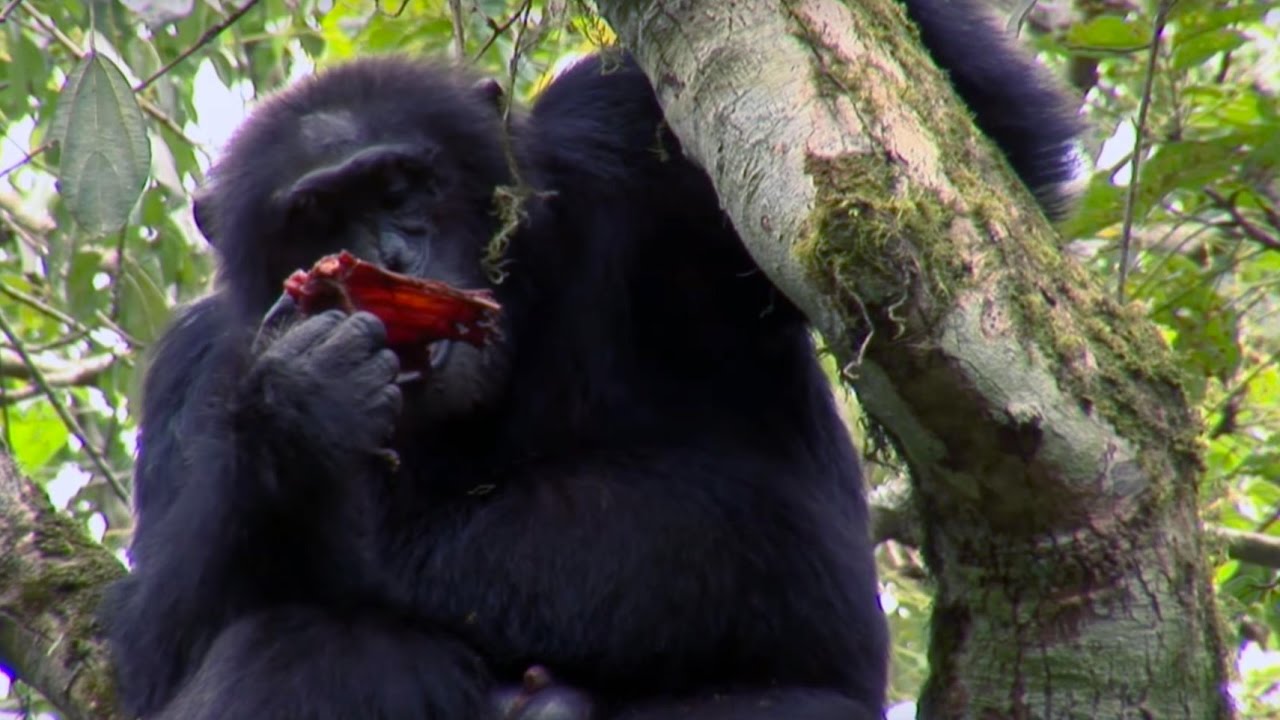
At 150 strong this community of Chimps is the biggest yet found in Africa. Their numbers are so large they need a big territory with plenty of Fig trees, and they are willing to fight for it. Along with David Attenborough we get to witness the incredible stealth and brutality of a Chimp raid. Subscribe: http://bit.ly/BBCEarthSub
Taken From Planet Earth.
WATCH MORE:
New on Earth: https://bit.ly/2M3La96
Oceanscapes: https://bit.ly/2Hmd2kZ
Wild Thailand: https://bit.ly/2kR7lmh
Welcome to BBC EARTH! The world is an amazing place full of stories, beauty and natural wonder. Here you'll find 50 years worth of astounding, entertaining, thought-provoking and educational natural history content. Dramatic, rare, and exclusive, nature doesn't get more exciting than this.
Want to share your views? Join our BBC Studios Voice: https://www.bbcstudiosvoice.com/register
This is a channel from BBC Studios who help fund new BBC programmes. Service information and feedback: http://bbcworldwide.com/vod-fe....edback--contact-deta

This red-billed tropic bird comes under attack from a man-of-war frigate bird. Who will win the battle?
Subscribe: http://bit.ly/BBCEarthSub
Watch more:
Planet Earth http://bit.ly/PlanetEarthPlaylist
Blue Planet http://bit.ly/BluePlanetPlaylist
Planet Earth II http://bit.ly/PlanetEarthIIPlaylist
Planet Dinosaur http://bit.ly/PlanetDinoPlaylist
Life
David Attenborough narrates a breathtaking ten-part blockbuster that brings you 130 incredible stories from the frontiers of the natural world. Discover the glorious variety of life on Earth and the spectacular and extraordinary tactics animals and plants have developed to stay alive. Cutting edge cinematic techniques capture unprecedented, astonishing sequences, including birds running and dancing on the water's surface in intricate displays of courtship and fidelity, fish outwitting predators by using their fins to take flight, flies competing in a mesmerising eyeball inflation contest.
Welcome to BBC EARTH! The world is an amazing place full of stories, beauty and natural wonder. Here you'll find 50 years worth of entertaining and thought-provoking natural history content. Dramatic, rare, and exclusive, nature doesn't get more exciting than this.
Want to share your views with the team? Join our BBC Studios Voice: https://www.bbcstudiosvoice.com/register
This is a page from BBC Studios who help fund new BBC programmes. Service information and feedback: http://bbcworldwide.com/vod-fe....edback--contact-deta
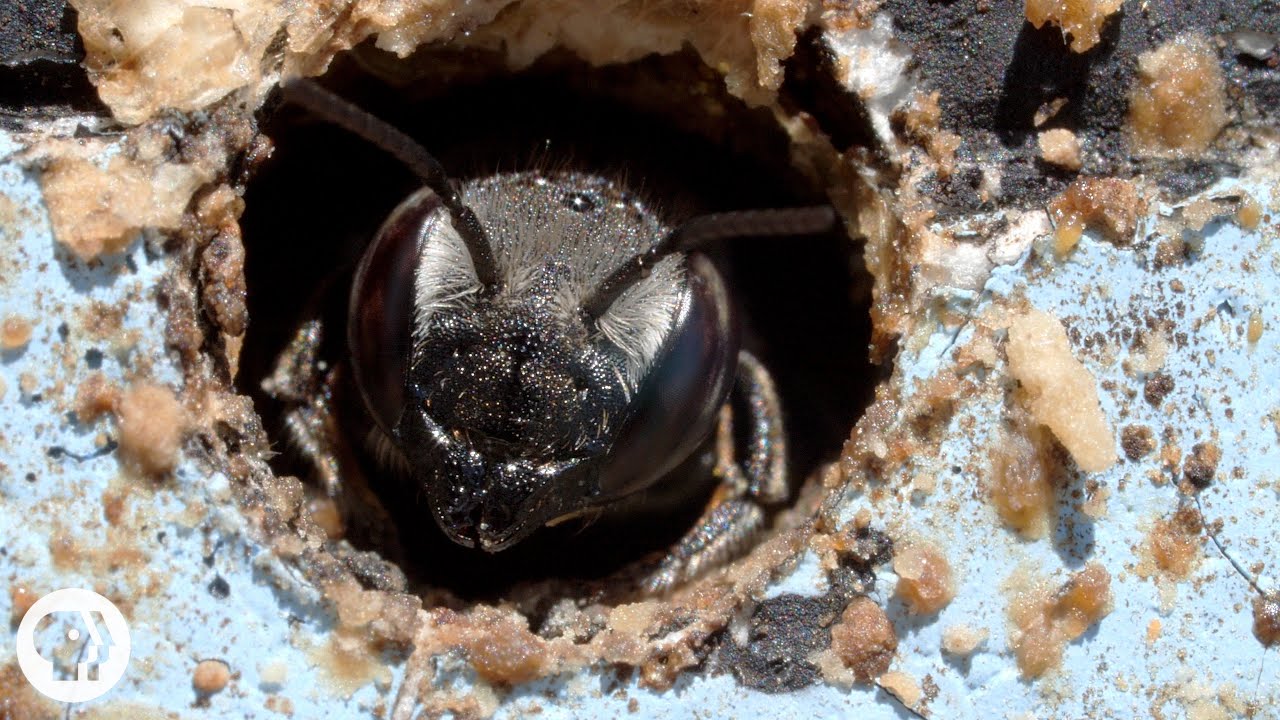
Alfalfa leafcutting bees are way better at pollinating alfalfa flowers than honeybees. They don’t mind getting thwacked in the face by the spring-loaded blooms. And that's good, because hungry cows depend on their hard work to make milk.
Join our community on Patreon! https://www.patreon.com/deeplook
Please take our annual PBSDS Survey, for a chance to win a T-shirt! https://www.pbsresearch.org/c/r/DL_YTvideo
DEEP LOOK is a ultra-HD (4K) short video series created by KQED San Francisco and presented by PBS Digital Studios. See the unseen at the very edge of our visible world. Explore big scientific mysteries by going incredibly small.
---
Sure, cows are important. But next time you eat ice cream, thank a bee.
Every summer, alfalfa leafcutting bees pollinate alfalfa in an intricate process that gets them thwacked by the flowers when they release the pollen that allows the plants to make seeds. The bees’ hard work came to fruition last week when growers in California finished harvesting the alfalfa seeds that will be grown to make nutritious hay for dairy cows.
This is how it works.
To produce alfalfa seeds, farmers let their plants grow until they bloom. They need help pollinating the tiny purple flowers, so that the female and male parts of the flower can come together and produce fertile seeds. That’s where the grayish, easygoing alfalfa leafcutting bees come in. Seed growers in California release the bees – known simply as cutters – in June and they work hard for a month.
Alfalfa’s flowers keep their reproductive organs hidden away inside a boat-shaped bottom petal called the keel petal, which is held closed by a thin membrane that creates a spring mechanism.
Cutter bees come up to the flower looking for nectar and pollen to feed on. When they land on the flower, the membrane holding the keel petal breaks and the long reproductive structure pops right up and smacks the upper petal or the bee, releasing its yellow pollen. This process is called “tripping the flower.”
When the flower is tripped, pollen falls on its female reproductive organ and fertilizes it; bees also carry pollen away on their hairy bodies and help fertilize other flowers. In a few weeks, each flower turns into a curly pod with seven to 10 seeds growing inside.
Cutters trip 80 percent of flowers they visit, compared to honeybees, which only trip about 10 percent.
---
--- What kind of a plant is alfalfa?
Alfalfa is a legume, like beans and chickpeas. Other legumes also hold their reproductive organs within a keel petal.
--- What do bees use leaves for?
Alfalfa leafcutting bees and other leafcutter bees cut leaf and petal pieces to build their nest inside a hole, such as a nook and cranny in a log. Alfalfa farmers provide bees with holes in styrofoam boards.
---+ Read the entire article on KQED Science:
https://www.kqed.org/science/1....946996/this-bee-gets
---+ Shoutout!
?Congratulations ?to the following fans for correctly identifying the bee body part coated in pollen, on our Leafcutting Bee - the scopa or scopae!
Punkonthego
GamingCuzWhyNot
Galatians 4:16
Gil AGA
Edison Lewis
---+ Thank you to our Top Patreon Supporters ($10+ per month)!
Leonhardt Wille
Justin Bull
Bill Cass
Sarah Khalida Mohamad
Daniel Weinstein
Chris B Emrick
Karen Reynolds
Tea Torvinen
David Deshpande
Daisuke Goto
Companion Cube
WhatzGames
Richard Shalumov
Elizabeth Ann Ditz
Gerardo Alfaro
Robert Amling
Shirley Washburn
Robert Warner
Supernovabetty
johanna reis
Kendall Rasmussen
Pamela Parker
Sayantan Dasgupta
Joshua Murallon Robertson
Cindy McGill
Kenia Villegas
Shelley Pearson Cranshaw
Aurora
Dean Skoglund
Silvan Wendland
Ivan Alexander
monoirre
Sonia Tanlimco
Two Box Fish
Jane Orbuch
Allen
Laurel Przybylski
Johnnyonnyful
Rick Wong
Levi Cai
Titania Juang
Nathan Wright
Carl
Michael Mieczkowski
Kyle Fisher
JanetFromAnotherPlanet
Kallie Moore
SueEllen McCann
Geidi Rodriguez
Louis O'Neill
Edwin Rivas
Jeanne Sommer
Katherine Schick
Aurora Mitchell
Cory
Ricardo Martinez
riceeater
Daisy Trevino
KW
PM Daeley
Joao Ascensao
Chris Murphy
Nicolette Ray
TierZoo
---+ Follow KQED Science and Deep Look:
Patreon: https://www.patreon.com/deeplook
Instagram: https://www.instagram.com/kqedscience/
Twitter: https://www.twitter.com/kqedscience
KQED Science on kqed.org: http://www.kqed.org/science
Facebook Watch: https://www.facebook.com/DeepLookPBS/
---+ About KQED
KQED, an NPR and PBS affiliate in San Francisco, CA, serves Northern California and beyond with a public-supported alternative to commercial TV, radio and web media.
Funding for Deep Look is provided in part by PBS Digital Studios. Deep Look is a project of KQED Science, which is also supported by the National Science Foundation, the S. D. Bechtel, Jr. Foundation, the Dirk and Charlene Kabcenell Foundation, the Vadasz Family Foundation, the Fuhs Family Foundation, Campaign 21 and the members of KQED.
#leafcutter #bees #deeplook

Jesus Dapena studies how humans reach great heights, biomechanically. The world record for the high jump -- the event in which a person propels him- or herself over a horizontal bar -- is just over eight feet. To understand how this is possible, Dapena, a professor in the department of kinesiology at Indiana University, has filmed athletes and analyzed their movements to better understand the biomechanics of the leap. Dapena explains the basic ingredients of the high jump.
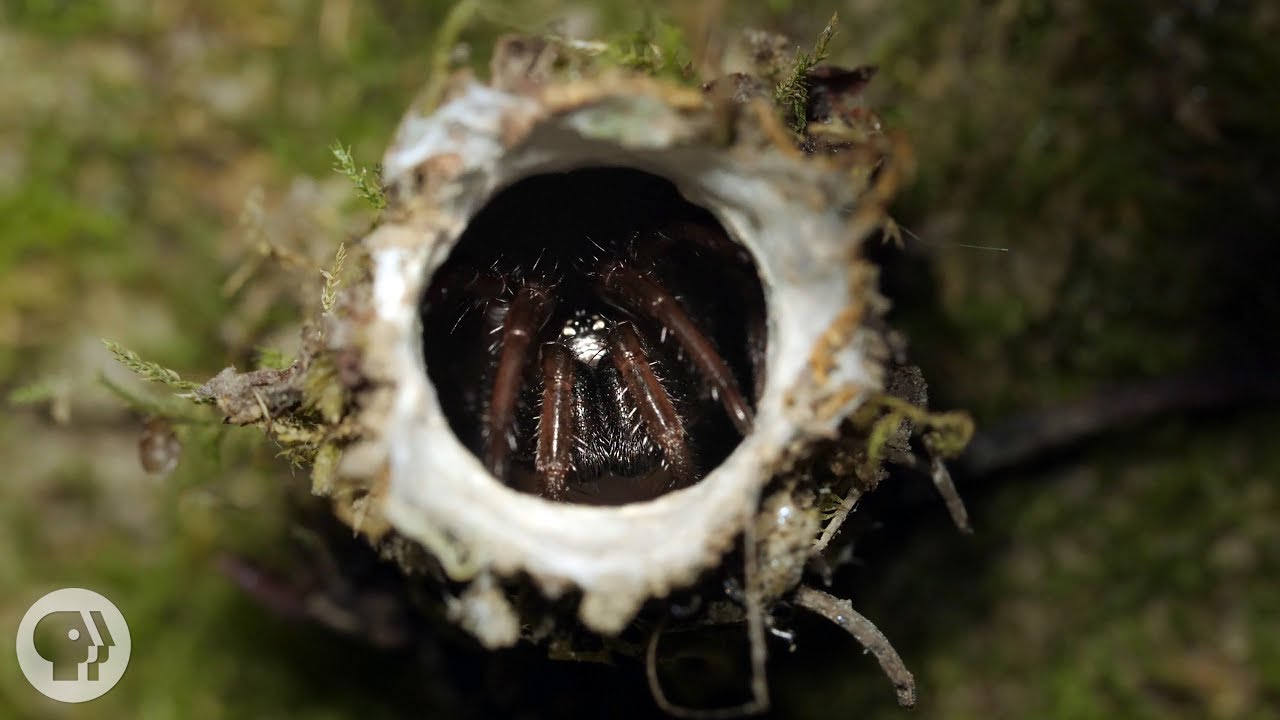
There are strange little towers on the forest floor. Neat, right? Nope. Inside hides a spider that's cunning, patient and ruthless.
SUBSCRIBE to Deep Look! http://goo.gl/8NwXqt
Please follow us on Patreon! https://www.patreon.com/deeplook
DEEP LOOK is a ultra-HD (4K) short video series created by KQED San Francisco and presented by PBS Digital Studios. See the unseen at the very edge of our visible world. Explore big scientific mysteries by going incredibly small.
Most Bay Area hikers pass right by without ever noticing, but a careful eye can spot tiny towers rising up from the forest floor. These mysterious little tubes, barely an inch high, are the homes of a particularly sneaky predator -- the California turret spider.
“To me, the turrets look just like the rook in a chess set,” said Trent Pearce, a naturalist for the East Bay Regional Park District, as he scanned the terrain at Briones Regional Park. “The spiders themselves are super burly – like a tiny tarantula the size of your pinky nail.”
Turret spiders build their towers along creek beds and under fallen trees in forested areas throughout Central and Northern California. They use whatever mud, moss, bark and leaves they can find nearby, making their turrets extremely well camouflaged.
They line the inside of their tiny castles with pearly white silk, which makes the structure supple and resilient
Each turret leads down to a burrow that can extend six inches underground. The spiders spend their days down there in the dark, protected from the sun and predators.
As night falls, they climb up to the entrance of the turrets to wait for unsuspecting prey like beetles to happen by.
Turret spiders are ambush hunters. While remaining hidden inside their turret, they’re able to sense the vibrations created by their prey’s footsteps.
That’s when the turret spider strikes, busting out of the hollow tower like an eight legged jack-in-the-box. With lightning speed the spider swings its fangs down like daggers, injecting venom into its prey before dragging it down into the burrow.
“It’s like the scene in a horror movie where the monster appears out of nowhere – you can’t not jump,” Pearce said.
--- What do turret spiders eat?
Turret spiders mostly ground-dwelling arthropods like beetles but they will also attack flying insects like moths that happen to land near their turrets.
--- Are turret spiders dangerous to people?
Turret spiders are nocturnal so it’s rare for them to interact with humans by accident. They tend to retreat into their underground burrow if they feel the vibrations of human footsteps. They do have fangs and venom but are not generally considered to be dangerous compared to other spiders. If you leave them alone, you shouldn’t have anything to fear from turret spiders.
---+ Read the entire article on KQED Science:
https://ww2.kqed.org/science/2....019/01/15/turret-spi
---+ For more information:
Learn to Look for Them, and California’s Unique “Turret Spiders” are Everywhere
https://baynature.org/article/....and-this-little-spid
---+ More Great Deep Look episodes:
For These Tiny Spiders, It's Sing or Get Served | Deep Look
https://youtu.be/y7qMqAgCqME
Praying Mantis Love is Waaay Weirder Than You Think | Deep Look
https://youtu.be/EHo_9wnnUTE
Why the Male Black Widow is a Real Home Wrecker | Deep Look
https://youtu.be/NpJNeGqExrc
---+ Follow KQED Science and Deep Look:
Instagram: https://www.instagram.com/kqedscience/
Twitter: https://www.twitter.com/kqedscience
KQED Science on kqed.org: http://www.kqed.org/science
Facebook Watch: https://www.facebook.com/DeepLookPBS/
Patreon: https://www.patreon.com/deeplook
---+ Shoutout!
Congratulations to ?Iset4, MidKnight Fall7,
jon pomeroy, Justin Felder3, and DrowsyTaurus26?, who were the first to correctly ID the species of spider in our episode - Antrodiaetus riversi (also known as Atypoides riversi) over at the Deep Look Community Tab:
https://www.youtube.com/channe....l/UC-3SbfTPJsL8fJAPK
(hat tip to Edison Lewis10 for posting the entire family tree!)
---+ About KQED
KQED, an NPR and PBS affiliate in San Francisco, CA, serves Northern California and beyond with a public-supported alternative to commercial TV, Radio and web media.
Funding for Deep Look is provided in part by PBS Digital Studios. Deep Look is a project of KQED Science, which is also supported by the National Science Foundation, the Templeton Religion Trust, the Templeton World Charity Foundation, the S. D. Bechtel, Jr. Foundation, the Dirk and Charlene Kabcenell Foundation, the Vadasz Family Foundation, the Gordon and Betty Moore Foundation, the Fuhs Family Foundation and the members of KQED. #deeplook #spiders #wildlife

A mystery of the animal kingdom: How do owls turn their heads 270 degrees without damaging their blood vessels? At last an answer, published this week in Science, as the winning poster in the 2012 International Science & Engineering Visualization Challenge. Fabian de Kok-Mercado, of Howard Hughes Medical Institute, and Philippe Gailloud, of the Johns Hopkins University School of Medicine, dissected and X-rayed owls to discover how the birds do the twist.
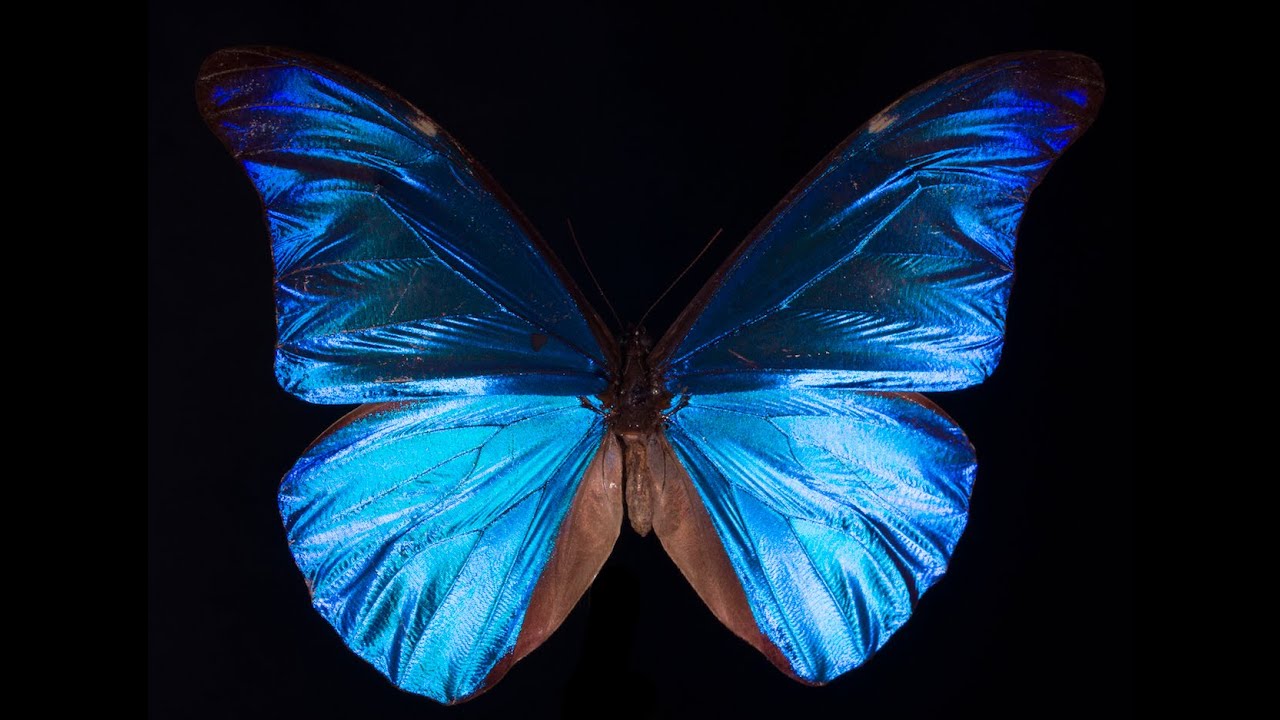
What does it mean to be blue? The wings of a Morpho butterfly are some of the most brilliant structures in nature, and yet they contain no blue pigment -- they harness the physics of light at the nanoscale. Learn more about these butterflies: http://goo.gl/dGo5XE
SUBSCRIBE: http://goo.gl/8NwXqt
Funding for Deep Look is provided in part by PBS Digital Studios and the John S. and James L. Knight Foundation. Deep Look is a project of KQED Science, which is supported by HopeLab, The David B. Gold Foundation; S. D. Bechtel, Jr. Foundation; The Dirk and Charlene Kabcenell Foundation; The Vadasz Family Foundation; Smart Family Foundation and the members of KQED.
#deeplook