Top Vídeos
In July of 2012, physicists found a particle that might be the long-sought Higgs boson. In the intervening months, scientists have worked hard to pin down the identity of this newly-found discovery. In this video, Fermilab's Dr. Don Lincoln describes researcher's current understanding of the particle that might be the Higgs. The evidence is quite strong but the final chapter of this story might well require the return of the Large Hadron Collider to full operations in 2015.

Big discoveries need big detectors, and Fermilab’s Deep Underground Neutrino Experiment is one of the biggest. Fermilab plans to shoot beams of neutrinos and antimatter neutrinos through the Earth from Chicago to western South Dakota. The DUNE experiment will study neutrino interactions in great detail, with special attention on (a) comparing the behaviors of neutrinos vs. antineutrinos, (b) looking for proton decay, and (c) searching for the neutrinos emitted by supernovae. The experiment is being built and should start operations in the mid-to-late 2020s. In this video, Fermilab’s Dr. Don Lincoln gives us the lowdown on this fascinating project.

Particle accelerators can fire beams of subatomic particles at near the speed of light. The accelerating force is generated using radio frequency technology and a whole lot of interesting features. In this video, Fermilab’s Dr. Don Lincoln explains how it all works.

While the LHC is currently the highest energy particle accelerator ever built, nothing is forever. In this video, Fermilab’s Dr. Don Lincoln discusses a new particle accelerator currently under discussion. This accelerator will dwarf the LHC, fully 60 miles around and will accelerate protons to seven times higher energy. The project is merely in the discussion stages and it is a staggering endeavor, but it is the next natural step in our millennium long journey to understand the universe.

Particle accelerator are scientific instruments that allow scientists to collide particles together at incredible energies to study the secrets of the universe. However, there are many manners in which particle accelerators can be constructed. In this video, Fermilab’s Dr. Don Lincoln explains the pros and cons of circular and linear accelerators.
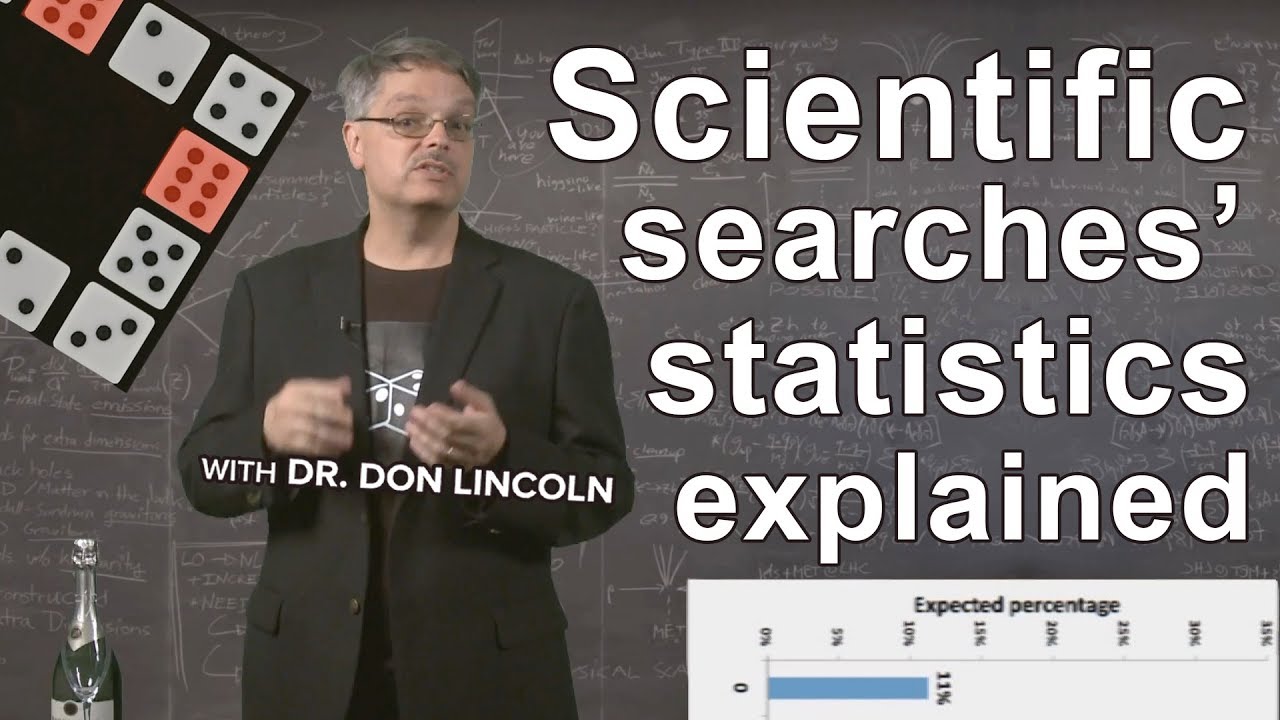
Searching for the Higgs boson and other particles requires scientists to take into account statistics and probability in their analyses. Fermilab physicist Don Lincoln explains these concepts using simple dice.

A cancer diagnosis can be a devastating thing to hear, but new treatments are greatly improving a person’s chance of being cured. In this video, Fermilab’s Dr. Don Lincoln explains the physics of an exciting treatment option, called proton radiation therapy, which is far superior to traditional therapy, at least in some cases.

America’s leading particle physics laboratory is turning 50 years old this year. Fermilab’s Dr. Don Lincoln remembers the laboratory’s first half century and looks forward to the fascinating research topics that Fermilab’s scientific staff are looking at as they leap forward into the future.

Radiation is all around us, ranging from the non-dangerous to the lethal. In this video, Fermilab’s Dr. Don Lincoln talks about the radiation and gives you the real deal on whether it is dangerous or not. (Spoiler alert: Sometimes!)

The Twin Paradox is the most famous of all of the seeming-inconsistencies of special relativity. In this video, Fermilab’s Dr. Don Lincoln explains it without using mathematics. This is a companion video for his earlier one in which the same question was handled mathematically.
Related videos:
https://www.youtube.com/watch?v=GgvajuvSpF4
https://www.youtube.com/watch?v=svwWKi9sSAA

There are more than 30,000 particle accelerators in operation around the world. At Fermilab, scientists are collaborating with other laboratories and industry to optimize the manufacturing processes for a new type of powerful accelerator that uses superconducting niobium cavities. Experimenting with unique polishing materials, a Fermilab team has now developed an efficient and environmentally friendly way of creating cavities that can propel particles with more than 30 million volts per meter.

Updated: http://youtu.be/ktEpSvzPROc Fermilab scientist Don Lincoln describes the concept of how the search for the Higgs boson is accomplished. Several large experimental groups are hot on the trail of this elusive subatomic particle which is thought to explain the origins of particle mass. You can try the interactive graphic (using IE 9+, Firefox 3.4+, Safari 4+) at: http://vmsstreamer1.fnal.gov/V....MS/111208_HowHiggs/H

The Department of Energy’s Fermi National Accelerator Laboratory and Northwestern University have established a new collaboration that enhances both institutions’ scientific research portfolios.
The Center for Applied Physics and Superconducting Technologies (CAPST) focuses on the science and applications of superconductivity, with expected advances in the fields of particle
physics, solid-state physics, materials science, medicine, energy and environmental sciences.
CAPST formally recognizes a broad intersection of scientific pursuits and complementary state-of-the-art facilities.
The center lays the groundwork for the cross-utilization of technical expertise, facilities, and equipment and establishes a partnership that will foster joint scientific research, mentorship, and new opportunities for researchers, graduate students, and postdoctoral
fellows.

Why I Love Neutrinos is a series spotlighting those mysterious, abundant, ghostly particles that are all around us. This installment features Dr. Steve Brice, deputy director of the Fermilab Neutrino Division. For more information on neutrinos, visit the Fermilab website at http://www.fnal.gov.

On Monday, June 23, 2014 the MicroBooNE detector -- a 30-ton vessel that will be used to study ghostly particles called neutrinos -- was transported three miles across the Fermilab site and gently lowered into the laboratory's Liquid-Argon Test Facility. This video documents that move, some taken with time-lapse cameras, and shows the process of getting the MicroBooNE detector to its new home.
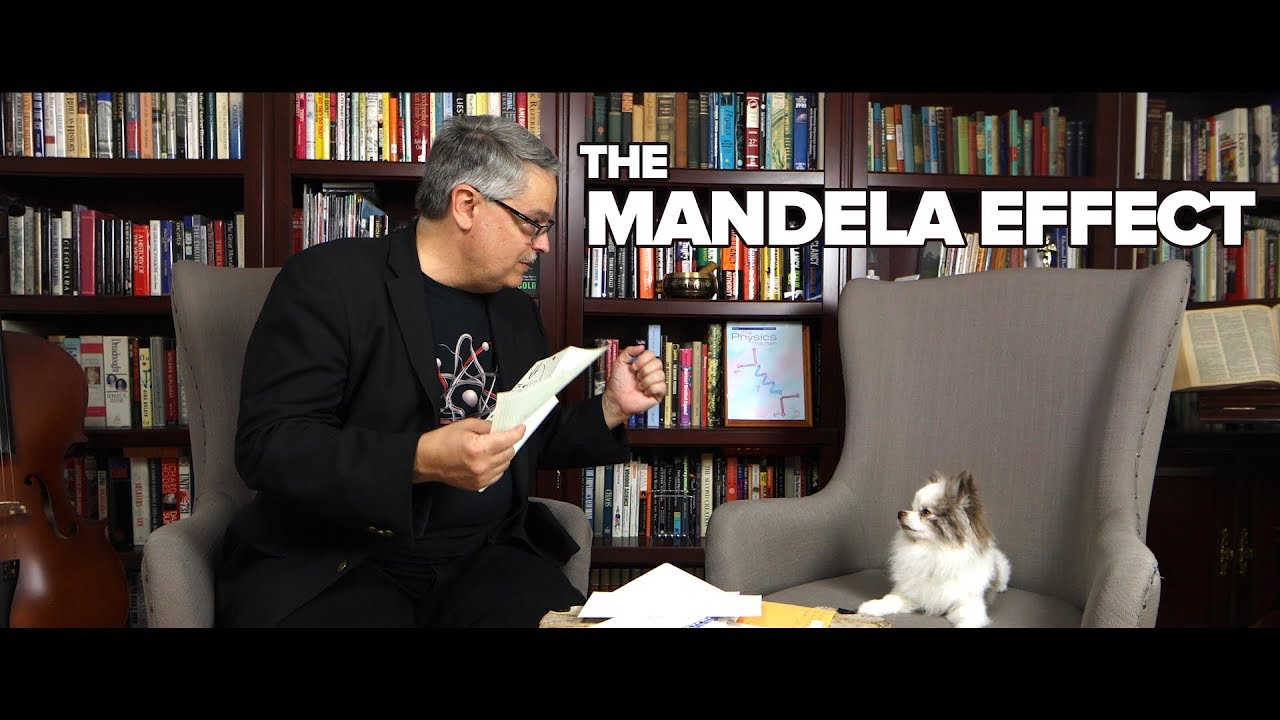
The Mandela effect is an idea that people move between parallel universes. Its name arises because some people have firm memories of Nelson Mandela dying in prison, when in fact he was released and went on to be President of South Africa. In this video, Fermilab’s Dr. Don Lincoln explains to his pet Albert why this is such a silly idea.

ProtoDUNE is a test bed for the Deep Underground Neutrino Experiment, an international physics project hosted at the Department of Energy's Fermilab. One of the ProtoDUNE detectors, which are being constructed at CERN, is a single-phase neutrino detector that uses liquid argon. It will require a number of anode plane arrays, special panels made of wire, to detect the signature of a neutrino interaction in the argon bath. This is a glimpse into the process of fabricating these planes, some of which are being created at the University of Wisconsin-Madison.
Learn more about the ProtoDUNE detectors here: https://www.symmetrymagazine.o....rg/article/the-bigge

Building the international Deep Underground Neutrino Experiment requires people with many different skills. The DUNE collaboration now comprises about 1,000 people from more than 160 institutions in 30 countries. This video highlights some of these people and explains the discoveries that they hope to make: understanding the role that neutrinos play in the evolution of the universe; looking for neutrinos from a supernova; and searching for rare subatomic phenomena that could provide clues for realizing Einstein’s dream of a unified theory of the fundamental forces of nature. As of January 2017, the DUNE collaboration includes scientists from Armenia, Brazil, Bulgaria, Canada, Chile, China, Colombia, Czech Republic, Finland, France, Greece, India, Iran, Italy, Japan, Madagascar, Mexico, Netherlands, Peru, Poland, Romania, Russia, South Korea, Spain, Sweden, Switzerland, Turkey, Ukraine, United Kingdom, and the United States. Visit dunescience.org for more information. You can watch an animation of DUNE at: https://youtu.be/AYtKcZMJ_4c

Bruce Chrisman, Fermilab scientist emeritus and former chief operating officer for the laboratory, tells the story of how Fermilab came to be the first Department of Energy laboratory with a daycare center on site.

In 1967, Fermi National Accelerator Laboratory began to grow on the Illinois prairie, forty miles west of Chicago. Through the intelligence, ingenuity and commitment of many people, it grew into one of the world’s great research institutions—a truly international resource for physicists from around the world. In this hour-long presentation, Dr. Chris Quigg, who’s worked at Fermilab since 1974, traces the lab’s evolution from start-up to world-leading research center, highlighting landmark discoveries while recalling iconic moments and extraordinary characters. The presentation was given in Fermilab’s Ramsey Auditorium on Jan. 27, 2017, as part of Fermilab’s 50-year anniversary activities.