Top Vídeos

This red-billed tropic bird comes under attack from a man-of-war frigate bird. Who will win the battle?
Subscribe: http://bit.ly/BBCEarthSub
Watch more:
Planet Earth http://bit.ly/PlanetEarthPlaylist
Blue Planet http://bit.ly/BluePlanetPlaylist
Planet Earth II http://bit.ly/PlanetEarthIIPlaylist
Planet Dinosaur http://bit.ly/PlanetDinoPlaylist
Life
David Attenborough narrates a breathtaking ten-part blockbuster that brings you 130 incredible stories from the frontiers of the natural world. Discover the glorious variety of life on Earth and the spectacular and extraordinary tactics animals and plants have developed to stay alive. Cutting edge cinematic techniques capture unprecedented, astonishing sequences, including birds running and dancing on the water's surface in intricate displays of courtship and fidelity, fish outwitting predators by using their fins to take flight, flies competing in a mesmerising eyeball inflation contest.
Welcome to BBC EARTH! The world is an amazing place full of stories, beauty and natural wonder. Here you'll find 50 years worth of entertaining and thought-provoking natural history content. Dramatic, rare, and exclusive, nature doesn't get more exciting than this.
Want to share your views with the team? Join our BBC Studios Voice: https://www.bbcstudiosvoice.com/register
This is a page from BBC Studios who help fund new BBC programmes. Service information and feedback: http://bbcworldwide.com/vod-fe....edback--contact-deta
A chance to watch monkey troup behavious when a rival monkey troupe attempts to invade their territory. A battle of the monkey troupes ensues. Great video from BBC animal show 'Cheeky Monkey' narrated by comedian Martin Clunes. Subscribe: http://bit.ly/BBCEarthSub
WATCH MORE:
New on Earth: https://bit.ly/2M3La96
Oceanscapes: https://bit.ly/2Hmd2kZ
Wild Thailand: https://bit.ly/2kR7lmh
Welcome to BBC EARTH! The world is an amazing place full of stories, beauty and natural wonder. Here you'll find 50 years worth of astounding, entertaining, thought-provoking and educational natural history content. Dramatic, rare, and exclusive, nature doesn't get more exciting than this.
Want to share your views? Join our BBC Studios Voice: https://www.bbcstudiosvoice.com/register
This is a channel from BBC Studios who help fund new BBC programmes. Service information and feedback: http://bbcworldwide.com/vod-fe....edback--contact-deta

Using amazing close-up footage, Sir David Attenborough explores the world of the red back spider.
Subscribe: http://bit.ly/BBCEarthSub
WATCH MORE:
New on Earth: https://bit.ly/2M3La96
Oceanscapes: https://bit.ly/2Hmd2kZ
Wild Thailand: https://bit.ly/2kR7lmh
Welcome to BBC EARTH! The world is an amazing place full of stories, beauty and natural wonder. Here you'll find 50 years worth of astounding, entertaining, thought-provoking and educational natural history content. Dramatic, rare, and exclusive, nature doesn't get more exciting than this.
Want to share your views? Join our BBC Studios Voice: https://www.bbcstudiosvoice.com/register
This is a channel from BBC Studios who help fund new BBC programmes. Service information and feedback: http://bbcworldwide.com/vod-fe....edback--contact-deta
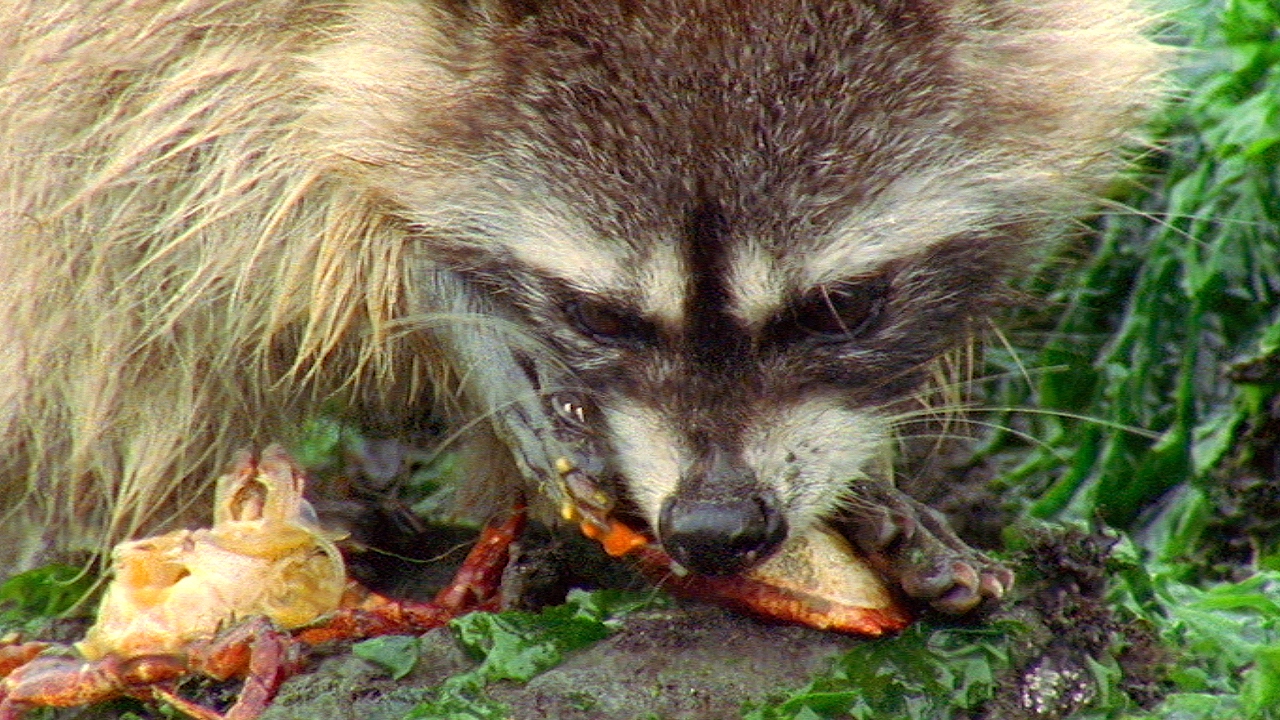
On the coast of Vancouver Island, the changing tides have a fascinating impact on shallow sea life. Raccoons take full advantage of the low tide to enjoy a sea feast in the spring tides. Subscribe: http://bit.ly/BBCEarthSub
Taken From Blue Planet Series 1
WATCH MORE:
New on Earth: https://bit.ly/2M3La96
Oceanscapes: https://bit.ly/2Hmd2kZ
Wild Thailand: https://bit.ly/2kR7lmh
Welcome to BBC EARTH! The world is an amazing place full of stories, beauty and natural wonder. Here you'll find 50 years worth of astounding, entertaining, thought-provoking and educational natural history content. Dramatic, rare, and exclusive, nature doesn't get more exciting than this.
Want to share your views? Join our BBC Studios Voice: https://www.bbcstudiosvoice.com/register
This is a channel from BBC Studios who help fund new BBC programmes. Service information and feedback: http://bbcworldwide.com/vod-fe....edback--contact-deta
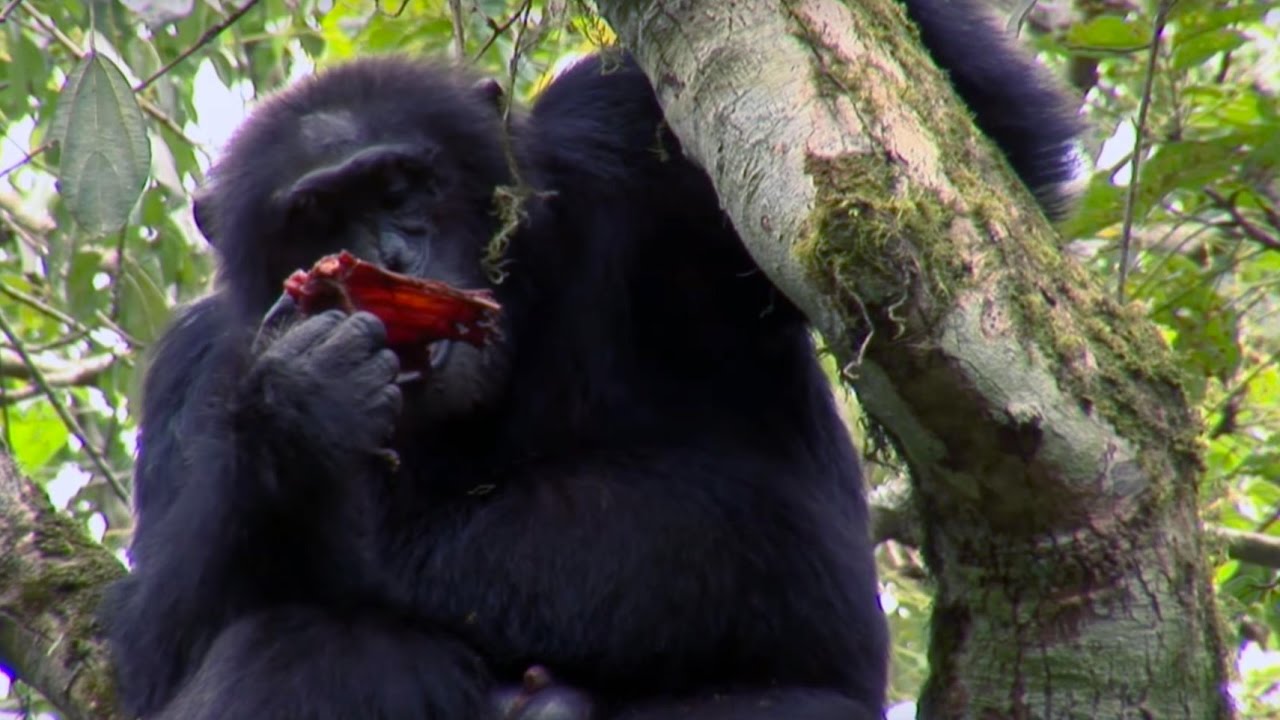
At 150 strong this community of Chimps is the biggest yet found in Africa. Their numbers are so large they need a big territory with plenty of Fig trees, and they are willing to fight for it. Along with David Attenborough we get to witness the incredible stealth and brutality of a Chimp raid. Subscribe: http://bit.ly/BBCEarthSub
Taken From Planet Earth.
WATCH MORE:
New on Earth: https://bit.ly/2M3La96
Oceanscapes: https://bit.ly/2Hmd2kZ
Wild Thailand: https://bit.ly/2kR7lmh
Welcome to BBC EARTH! The world is an amazing place full of stories, beauty and natural wonder. Here you'll find 50 years worth of astounding, entertaining, thought-provoking and educational natural history content. Dramatic, rare, and exclusive, nature doesn't get more exciting than this.
Want to share your views? Join our BBC Studios Voice: https://www.bbcstudiosvoice.com/register
This is a channel from BBC Studios who help fund new BBC programmes. Service information and feedback: http://bbcworldwide.com/vod-fe....edback--contact-deta
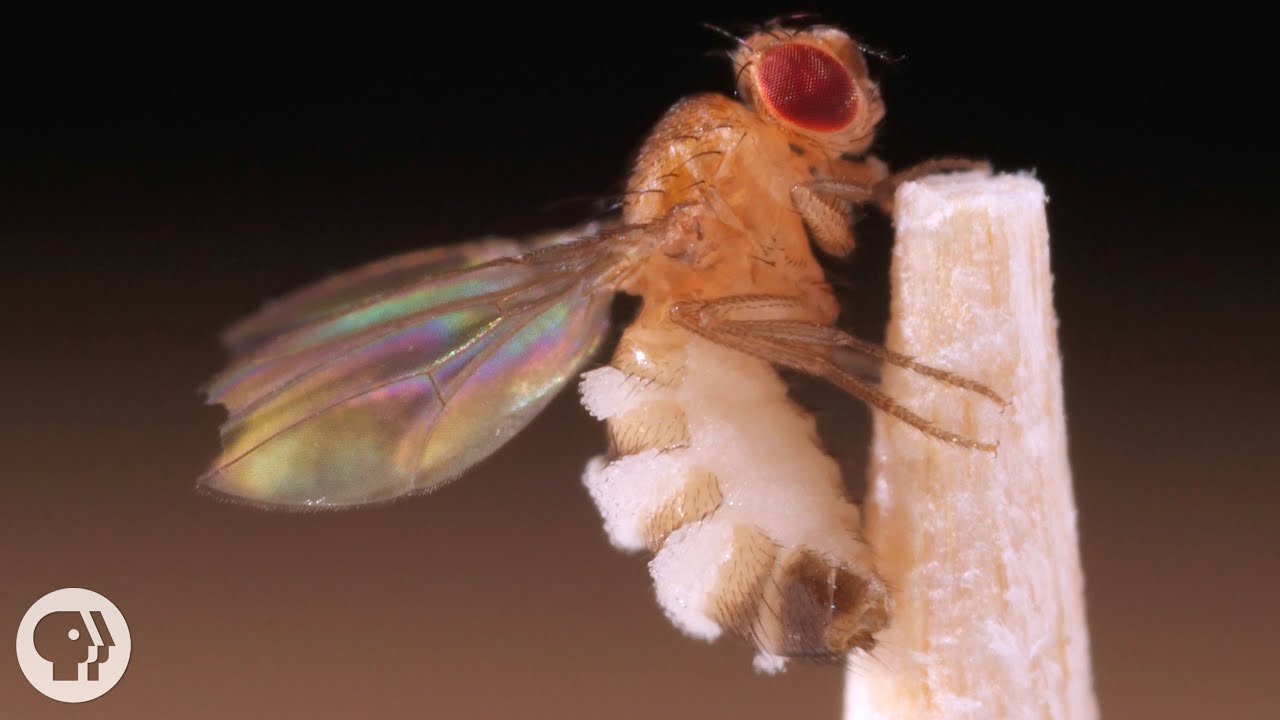
Something is growing inside that fruit fly in your kitchen. At dusk, the fly points its wings straight up and dies in a gruesome pose so that a fungus can ooze out and fire hundreds of reproductive spores.
Join our community on Patreon! https://www.patreon.com/deeplook
DEEP LOOK is a ultra-HD (4K) short video series created by KQED San Francisco and presented by PBS Digital Studios. See the unseen at the very edge of our visible world. Explore big scientific mysteries by going incredibly small.
Some of the scariest monsters are the ones that grow inside another being and take over its body. Think of the movie Alien, where the reptile-like space creature explodes out of its victim’s chest.
That monster might be fictional, but scientists are studying a fungus that’s horrifyingly real — at least for the flies it invades, turns into a zombie-like state and kills in order to reproduce.
“Oh, it’s a nightmare for the flies,” said entomologist Brad Mullens, who studied the fungus at the University of California, Riverside.
The fungus is known by its scientific name, Entomophthora muscae, which means “fly destroyer.” It lives off houseflies and fruit flies, among others.
“It’s a crazy system,” said Carolyn Elya, a biologist at Harvard. “The fungus only kills at dusk.”
Like a killer puppeteer, the fungus follows a precise clock.
At dusk on the fourth or fifth day after it picks up a fungal spore, an infected fruit fly stops flying. It starts behaving erratically, for example climbing up and down toothpicks that Elya puts into the vials where she keeps the infected insects.
Then the fly climbs to the top of the toothpick, a behavior Elya and other scientists refer to as “summiting.”
In an unusual twist, the fly then extends its mouthpart down, and some liquid drips out and glues the fly to the surface it’s standing on. Over the next 10 minutes, the fly’s wings ascend until they’re pointing upwards and it dies frozen in this lifelike pose.
Soon after, white spongy fungus oozes out of its abdomen. This white goo is made up of hundreds of lollipop-shaped protrusions which each launch a microscopic bell-shaped spore at high speed. Now the spores just need to get into another fly to grow.
--- Could this or a similar fungus “zombify” humans?
“No, it's very unlikely,” Elya said. “We can control our bodily temperature to kill invaders.”
-- Can we use the fungus as biological control?
Researchers have tried, but the spores are too fragile to grow in the lab.
---+ Read the entire article on KQED Science:
https://www.kqed.org/science/1....949314/this-killer-f
---+ Shoutout!
?Congratulations? to the following fans on our Deep Look Community Tab for coming up with the top titles - as decided by fellow Deep Peeps - for a horror movie starring this fungus:
Joginiz - "Flyday the 13th'
KingXDragoon - "Pretty Fly for a dead guy"
Laura Garrard - The Fungus Among Us!!
Lysiasolo - "Parafungal activity"
De paus van de Lilith Kerk - The whitecorpse horror (as an ode to HP Lovecraft "the Dunwich horror")
---+ Thank you to our Top Patreon Supporters ($10+ per month)!
Trae Wright
Justin Bull
Bill Cass
Alice Kwok
Sarah Khalida Mohamad
Stefficael Uebelhart
Daniel Weinstein
Chris B Emrick
Seghan Seer
Karen Reynolds
Tea Torvinen
David Deshpande
Daisuke Goto
Amber Miller
Companion Cube
WhatzGames
Richard Shalumov
Elizabeth Ann Ditz
Robert Amling
Gerardo Alfaro
Mary Truland
Shirley Washburn
Robert Warner
johanna reis
Supernovabetty
Kendall Rasmussen
Sayantan Dasgupta
Cindy McGill
Leonhardt Wille
Joshua Murallon Robertson
Pamela Parker
Roberta K Wright
Shelley Pearson Cranshaw
KW
Silvan Wendland
Two Box Fish
Johnnyonnyful
Aurora
George Koutros
monoirre
Dean Skoglund
Sonia Tanlimco
Guillaume Morin
Ivan Alexander
Laurel Przybylski
Allen
Jane Orbuch
Rick Wong
Levi Cai
Titania Juang
Nathan Wright
Syniurge
Carl
Kallie Moore
Michael Mieczkowski
Kyle Fisher
Geidi Rodriguez
JanetFromAnotherPlanet
SueEllen McCann
Daisy Trevino
Jeanne Sommer
Louis O'Neill
riceeater
Katherine Schick
Aurora Mitchell
Cory
Nousernamepls
Chris Murphy
PM Daeley
Joao Ascensao
Nicolette Ray
TierZoo
---+ Follow KQED Science and Deep Look:
Patreon: https://www.patreon.com/deeplook
Instagram: https://www.instagram.com/kqedscience/
Twitter: https://www.twitter.com/kqedscience
KQED Science on kqed.org: http://www.kqed.org/science
Facebook Watch: https://www.facebook.com/DeepLookPBS/
---+ About KQED
KQED, an NPR and PBS affiliate in San Francisco, CA, serves Northern California and beyond with a public-supported alternative to commercial TV, radio and web media.
Funding for Deep Look is provided in part by PBS Digital Studios. Deep Look is a project of KQED Science, which is also supported by the National Science Foundation, the S. D. Bechtel, Jr. Foundation, the Dirk and Charlene Kabcenell Foundation, the Vadasz Family Foundation, the Fuhs Family Foundation, Campaign 21 and the members of KQED.
#fruitflies #deeplook

Take the PBSDS survey: https://to.pbs.org/2018YTSurvey
Explore our VR slug and support us on Patreon! https://www.patreon.com/deeplook
Nudibranchs may look cute, squishy and defenseless ... but watch out. These brightly-colored sea slugs aren't above stealing weapons from their prey.
SUBSCRIBE to Deep Look! http://goo.gl/8NwXqt
DEEP LOOK is a ultra-HD (4K) short video series created by KQED San Francisco and presented by PBS Digital Studios. See the unseen at the very edge of our visible world. Explore big scientific mysteries by going incredibly small.
The summer months bring low morning tides along the California coast, providing an opportunity to see one of the state’s most unusual inhabitants, sea slugs.
Also called nudibranchs, many of these relatives of snails are brightly colored and stand out among the seaweed and anemones living next to them in tidepools.
“Some of them are bright red, blue, yellow -- you name it,” said Terry Gosliner, senior curator of invertebrate zoology and geology at the California Academy of Sciences in San Francisco. “They're kind of designer slugs.”
But without a protective shell, big jaws or sharp claws, how do these squishy little creatures get away with such flamboyant colors in a habitat full of predators?
As it turns out, the nudibranchs’ colors serve as a warning to predators: These sea slugs are packing some very sophisticated defenses. And some aren’t above stealing weapons from their prey.
Gosliner and Brenna Green and Emily Otstott, graduate students at San Francisco State University, were out at dawn earlier this summer searching tidepools and floating docks around the Bay Area. They want to learn more about how these delicate little sea slugs survive and how changing ocean temperatures might threaten their futures.
Nudibranchs come in a staggering variety of shapes and sizes. Many accumulate toxic or bad-tasting chemicals from their prey, causing predators like fish and crabs to learn that the flashy colors mean the nudibranch wouldn’t make a good meal.
--- What are nudibranchs?
Nudibranchs are snails that lost their shell over evolutionary time. Since they don’t have a shell for protection, they have to use other ways to defend themselves like accumulating toxic chemicals in their flesh to make them taste bad to predators. Some species of nudibranchs eat relatives of jellyfish and accumulate the stingers within their bodies for defense.
--- Why do nudibranchs have such bright colors?
The bright colors serve as a signal to the nudibranch’s predators that they are not good to eat. If a fish or crab bites a nudibranch, it learns to associate the bad taste with the bright colors which tends to make them reluctant to bite a nudibranch with those colors in the future.
--- What does nudibranch mean?
The word nudibranch comes from Latin. It means naked gills. They got that name because some species of nudibranchs have an exposed ring of gills on their back that they use to breath.
---+ Read the entire article on KQED Science:
https://www.kqed.org/science/1....929993/this-adorable
---+ For more information:
Learn more about Terry Gosliner’s work with nudibranchs
https://www.calacademy.org/sta....ff/ibss/invertebrate
Learn more about Chris Lowe’s work with plankton
http://lowe.stanford.edu/
Learn more about Jessica Goodheart’s study of nematocyst sequestration
https://onlinelibrary.wiley.co....m/doi/full/10.1111/i
---+ More Great Deep Look episodes:
From Drifter to Dynamo: The Story of Plankton | Deep Look
https://youtu.be/jUvJ5ANH86I
For Pacific Mole Crabs It's Dig or Die | Deep Look
https://youtu.be/tfoYD8pAsMw
The Amazing Life of Sand | Deep Look
https://youtu.be/VkrQ9QuKprE
---+ See some great videos and documentaries from PBS Digital Studios!
Why Are Hurricanes Getting Stronger? | Hot Mess
https://youtu.be/2E1Nt7JQRzc
When Fish Wore Armor | Eons
https://youtu.be/5pVTZH1LyTw
Why Do We Wash Our Hands After Going to the Bathroom? | Origin of Everything
https://youtu.be/fKlpGs34-_g
---+ Follow KQED Science and Deep Look:
Instagram: https://www.instagram.com/kqedscience/
Twitter: https://www.twitter.com/kqedscience
KQED Science on kqed.org: http://www.kqed.org/science
Facebook Watch: https://www.facebook.com/DeepLookPBS/
Patreon: https://www.patreon.com/deeplook
---+ About KQED
KQED, an NPR and PBS affiliate in San Francisco, CA, serves Northern California and beyond with a public-supported alternative to commercial TV, Radio and web media.
Funding for Deep Look is provided in part by PBS Digital Studios. Deep Look is a project of KQED Science, which is supported by the Templeton Religion Trust and the Templeton World Charity Foundation, the S. D. Bechtel, Jr. Foundation, the Dirk and Charlene Kabcenell Foundation, the Vadasz Family Foundation, the Gordon and Betty Moore Foundation, the Fuhs Family Foundation Fund and the members of KQED.
#deeplook #nudibranch #seaslug
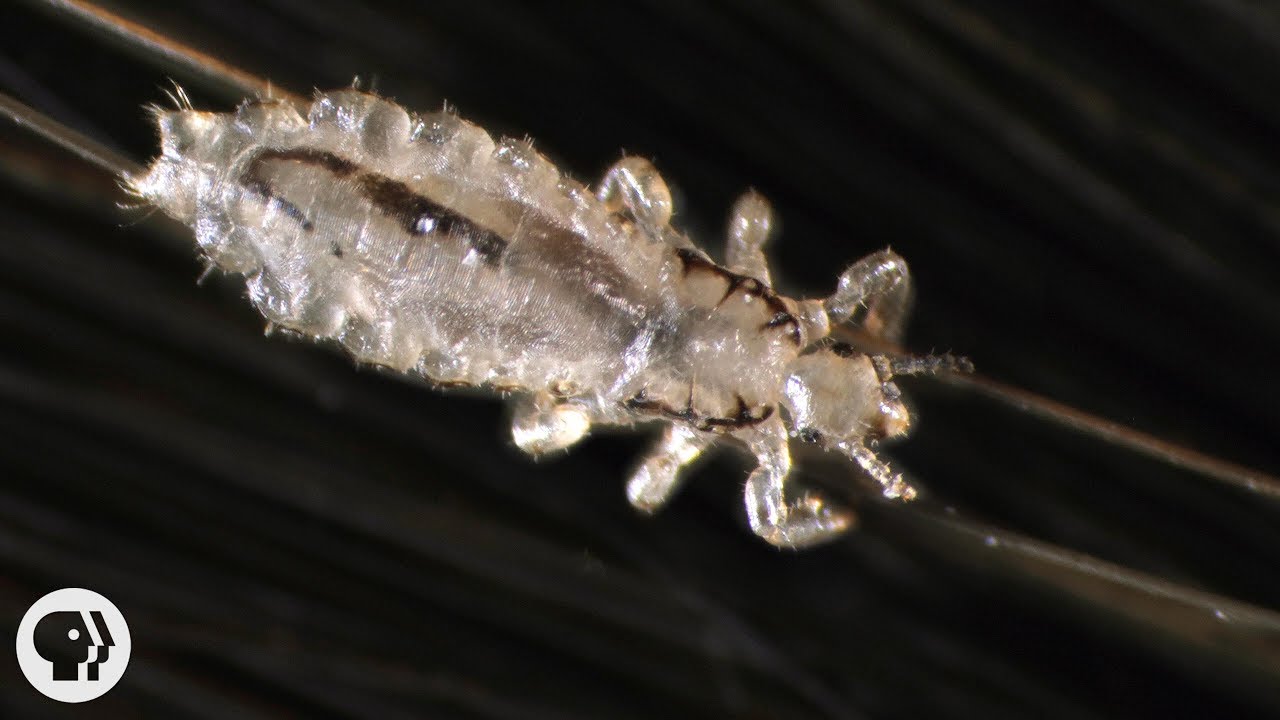
Why are itchy lice so tough to get rid of and how do they spread like wildfire? They have huge claws that hook on hair perfectly, as they crawl quickly from head to head.
JOIN our Deep Look community on Patreon! https://www.patreon.com/deeplook
SUBSCRIBE to Deep Look! http://goo.gl/8NwXqt
DEEP LOOK is an ultra-HD (4K) short video series created by KQED San Francisco and presented by PBS Digital Studios. See the unseen at the very edge of our visible world. Explore big scientific mysteries by going incredibly small.
Head lice can only move by crawling on hair. They glue their eggs to individual strands, nice and close to the scalp, where the heat helps them hatch. They feed on blood several times a day. And even though head lice can spread by laying their eggs in sports helmets and baseball caps, the main way they get around is by simply crawling from one head to another using scythe-shaped claws.
These claws, which are big relative to a louse’s body, work in unison with a small spiky thumb-like part called a spine. With the claw and spine at the end of each of its six legs, a louse grasps a hair strand to hold on, or quickly crawl from hair to hair like a speedy acrobat.
Their drive to stay on a human head is strong because once they’re off and lose access to their blood meals, they starve and die within 15 to 24 hours.
--- How do you kill lice?
Researchers found in 2016 that lice in the U.S. have become resistant to over-the-counter insecticide shampoos, which contain natural insecticides called pyrethrins, and their synthetic version, known as pyrethroids.
Other products do still work against lice, though. Prescription treatments that contain the insecticides ivermectin and spinosad are effective, said entomologist John Clark, of the University of Massachusetts, Amherst. They’re prescribed to kill both lice and their eggs. Clark said treatments such as suffocants, which block the lice’s breathing holes, and hot-air devices that dry them up, also work. He added that tea tree oil works both as a repellent and a “pretty good” insecticide. Combing lice and eggs out with a special metal comb is also a recommended treatment.
--- How long do lice survive?
It takes six to nine days for their eggs to hatch and about as long for the young lice to grow up and start laying their own eggs. Adult lice can live on a person’s head for up to 30 days, according to the Centers for Disease Control and Prevention (CDC).
--- Can your pet give you lice?
No. Human head lice only live on our heads. They can’t really move to other parts of our body or onto pets.
---+ Read the entire article on KQED Science:
https://www.kqed.org/science/1....939435/how-lice-turn
---+ For more information:
Visit the CDC’s page on head lice: https://www.cdc.gov/parasites/lice/head/index.html
---+ More Great Deep Look episodes:
How Mosquitoes Use Six Needles to Suck Your Blood:
https://www.youtube.com/watch?v=rD8SmacBUcU
How Ticks Dig In With a Mouth Full of Hooks:
https://www.youtube.com/watch?v=_IoOJu2_FKE
---+ Shoutout!
Congratulations to ?HaileyBubs, Tiffany Haner, cjovani78z, יואבי אייל, and Bellybutton King?, who were the first to correctly ID the species and subspecies of insect in this episode over at the Deep Look Community Tab:
https://www.youtube.com/channe....l/UC-3SbfTPJsL8fJAPK
---+ Thank you to our Top Patreon Supporters ($10+ per month)!
Bill Cass, Justin Bull, Daniel Weinstein, David Deshpande, Daisuke Goto, Karen Reynolds, Yidan Sun, Elizabeth Ann Ditz, KW, Shirley Washburn, Tanya Finch, johanna reis, Shelley Pearson Cranshaw, Johnnyonnyful, Levi Cai, Jeanine Womble, Michael Mieczkowski, TierZoo, James Tarraga, Willy Nursalim, Aurora Mitchell, Marjorie D Miller, Joao Ascensao, PM Daeley, Two Box Fish, Tatianna Bartlett, Monica Albe, Jason Buberel
---+ Follow KQED Science and Deep Look:
Patreon: https://www.patreon.com/deeplook
Instagram: https://www.instagram.com/kqedscience/
Twitter: https://www.twitter.com/kqedscience
KQED Science on kqed.org: http://www.kqed.org/science
Facebook Watch: https://www.facebook.com/DeepLookPBS/
---+ About KQED
KQED, an NPR and PBS affiliate in San Francisco, CA, serves Northern California and beyond with a public-supported alternative to commercial TV, Radio and web media.
Funding for Deep Look is provided in part by PBS Digital Studios. Deep Look is a project of KQED Science, which is also supported by the National Science Foundation, the Templeton Religion Trust, the Templeton World Charity Foundation, the S. D. Bechtel, Jr. Foundation, the Dirk and Charlene Kabcenell Foundation, the Vadasz Family Foundation, the Gordon and Betty Moore Foundation, the Fuhs Family Foundation and the members of KQED.
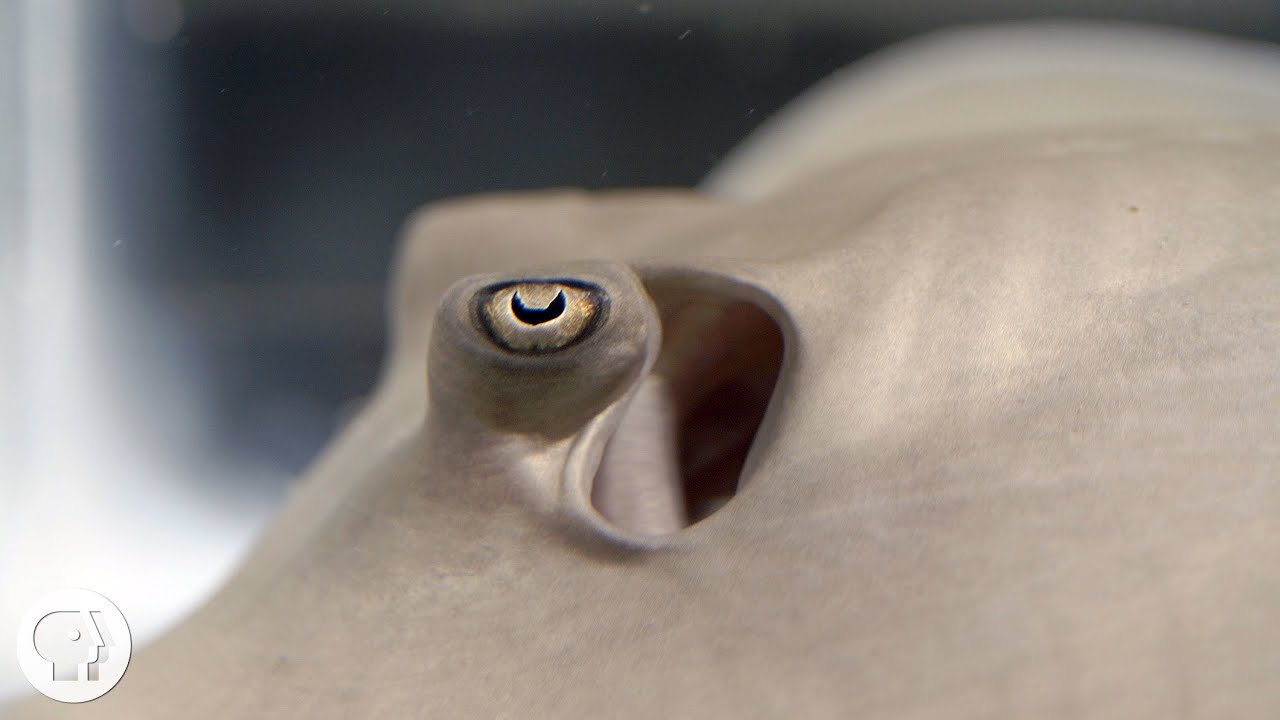
When it comes to spotting prey, sharks and rays have a secret sense beyond sight and smell. Tiny goo-filled organs called Ampullae of Lorenzini detect the invisible electric fields produced by all living creatures.
DEEP LOOK: a new ultra-HD (4K) short video series created by KQED San Francisco and presented by PBS Digital Studios. See the unseen at the very edge of our visible world. Get a new perspective on our place in the universe and meet extraordinary new friends. Explore big scientific mysteries by going incredibly small.
How do Sharks and Rays Sense Electric Fields?
Most animals don’t have the ability to detect electric fields. But sharks, rays, skates and sawfish — members of a group called Elasmobranchii — are masters of detecting electric signals. It’s one of their defining features. Elasmobranchs have specialized organs called Ampullae of Lorenzini. These tiny structures allow them to home in on weak bioelectric fields generated by nearby prey.
Elasmobranch’s electrosensory organs are named after a 17th century Italian physician, Stefano Lorenzini, who first identified them while dissecting an electric ray. Lorenzini noticed dozens of tiny pores around the animal’s mouth. Each of the pores led to jelly-filled canals that ended in pocket-like structures that he called ampullae, the Latin word for a type of round-bottomed flask.
Animals emit low frequency electric fields due to a process known as osmoregulation. This process allows the concentration of ions (charged atoms or molecules) to flow between the inside of our bodies and the outside. In order for our cells to stay intact, the flow of ions needs to be balanced.
But balanced doesn’t necessarily mean equal. The concentration of ions within a shrimp’s body is much lower than that of the sea water it swims in. Their voltage, or potential difference generated between the two concentrations across “leaky” surfaces, can then be detected by the ampullae.
More KQED SCIENCE:
Tumblr: http://kqedscience.tumblr.com
Twitter: https://www.twitter.com/kqedscience
KQED Science: http://ww2.kqed.org/science
---
Read the article for this video on KQED Science:
http://ww2.kqed.org/science/2015/08/11/sharks-and-rays-sense-electricity-fish-cant-hide/
#deeplook
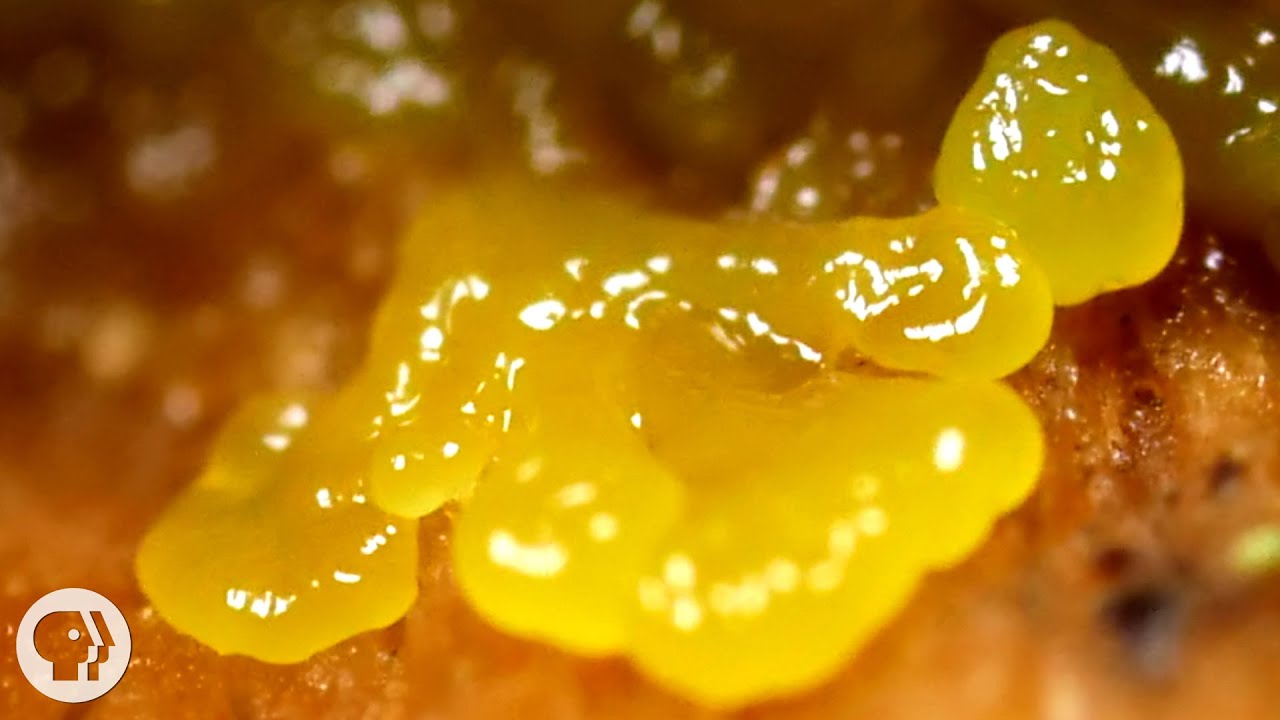
Are You Smarter Than A Slime Mold? Let’s go ask Joe Hanson: https://youtu.be/K8HEDqoTPgk
SUBSCRIBE to Deep Look! http://goo.gl/8NwXqt
DEEP LOOK: a new ultra-HD (4K) short video series created by KQED San Francisco and presented by PBS Digital Studios. See the unseen at the very edge of our visible world. Get a new perspective on our place in the universe and meet extraordinary new friends. Explore big scientific mysteries by going incredibly small.
---+ About Slime Molds
Flip over a rotting log and chances are you’ll see a goopy streak stuck to the wood. If you were to film this goop and play the video back in high speed, you’d see something that might remind you of the 1950s sci-fi classic “The Blob:” a jelly-like creature pulsating in a strange way, a little bit forward, a little bit back, spreading and searching for something to devour.
But this creature isn’t intent on world domination. It’s a slime mold, a very simple organism that is neither plant, nor animal, nor fungus. Unlike the cells of other living beings, which have only one nucleus that carries their genetic information, slime molds can organize into something like a cell with thousands of nuclei. Slime molds may move slowly, but they excite scientists by their ability to get a lot done with very little.
Researchers at the University of California San Diego and UC Davis have been focusing their attention on how slime molds get around, in the hope of inspiring a new generation of soft-bodied robots with medical applications.
Slime molds don’t have legs or any appendages. They eat bacteria and tiny fungi. And they move just by changing their shape.
“It’s intriguing to understand how they can move when they’re softer than the environment,” said UC San Diego engineer Juan Carlos Del Alamo. “The absence of limbs makes it a difficult problem.”
Slime mold’s locomotion is triggered by a chemical reaction. In the lab, Del Alamo and his colleagues cut off small pieces of a bright yellow slime mold called Physarum polycephalum and put them under a microscope. They watched each piece squeeze itself. This contraction is triggered by tiny calcium ions flowing inside it. The slime mold contracts its wall, then sloshes to move the calcium ions back so that they can trigger another contraction – at least that’s the researchers’ hypothesis.
---+ What are slime molds?
Let’s start with what they’re not. They can stand upright and produce spores. But they’re not fungi or plants. When they’re hungry, they spread across the forest chasing food such as tiny fungi or bacteria. But they’re not animals.
---+ Where are slime molds often found?
Slime molds are often found under rotting logs. You can also order the bright yellow slime mold in our video, Physarum polycephalum, from biological supplies companies. They’re fun to grow at home.
---+ What do slime molds eat?
In nature, slime molds eat tiny fungi and bacteria. When they’re grown in the lab, researchers feed them oats.
Read the entire article on KQED Science:
https://ww2.kqed.org/science/2....016/04/19/this-pulsa
---+ More great DEEP LOOK episodes:
Can A Thousand Tiny Swarming Robots Outsmart Nature?
https://www.youtube.com/watch?v=dDsmbwOrHJs
This Mushroom Starts Killing You Before You Even Realize It
https://www.youtube.com/watch?v=bl9aCH2QaQY
Banana Slugs: Secret of the Slime
https://www.youtube.com/watch?v=mHvCQSGanJg&nohtml5=False
---+ More videos and documentaries from the PBS Digital Studios!
Gross Science: Why Am I Obsessed With Gross Stuff?
https://www.youtube.com/watch?v=8dfVN5w3_Y4
BrainCraft: The Prisoner's Dilemma
https://www.youtube.com/watch?v=p1KU7i5hpM8
---+ Follow KQED Science:
KQED Science: http://www.kqed.org/science
Tumblr: http://kqedscience.tumblr.com
Twitter: https://www.twitter.com/kqedscience
---+ About KQED
KQED, an NPR and PBS affiliate based in San Francisco, serves the people of Northern California and beyond with a public-supported alternative to commercial media. KQED is also a leader and innovator in interactive media and technology, taking people of all ages on journeys of exploration — exposing them to new people, places and ideas.
Funding for Deep Look is provided in part by PBS Digital Studios and the John S. and James L. Knight Foundation. Deep Look is a project of KQED Science, which is also supported by HopeLab, the David B. Gold Foundation, the S. D. Bechtel, Jr. Foundation, the Dirk and Charlene Kabcenell Foundation, the Vadasz Family Foundation, the Gordon and Betty Moore Foundation, the Smart Family Foundation and the members of KQED.
#deeplook
Support Deep Look on Patreon!!
https://www.patreon.com/deeplook
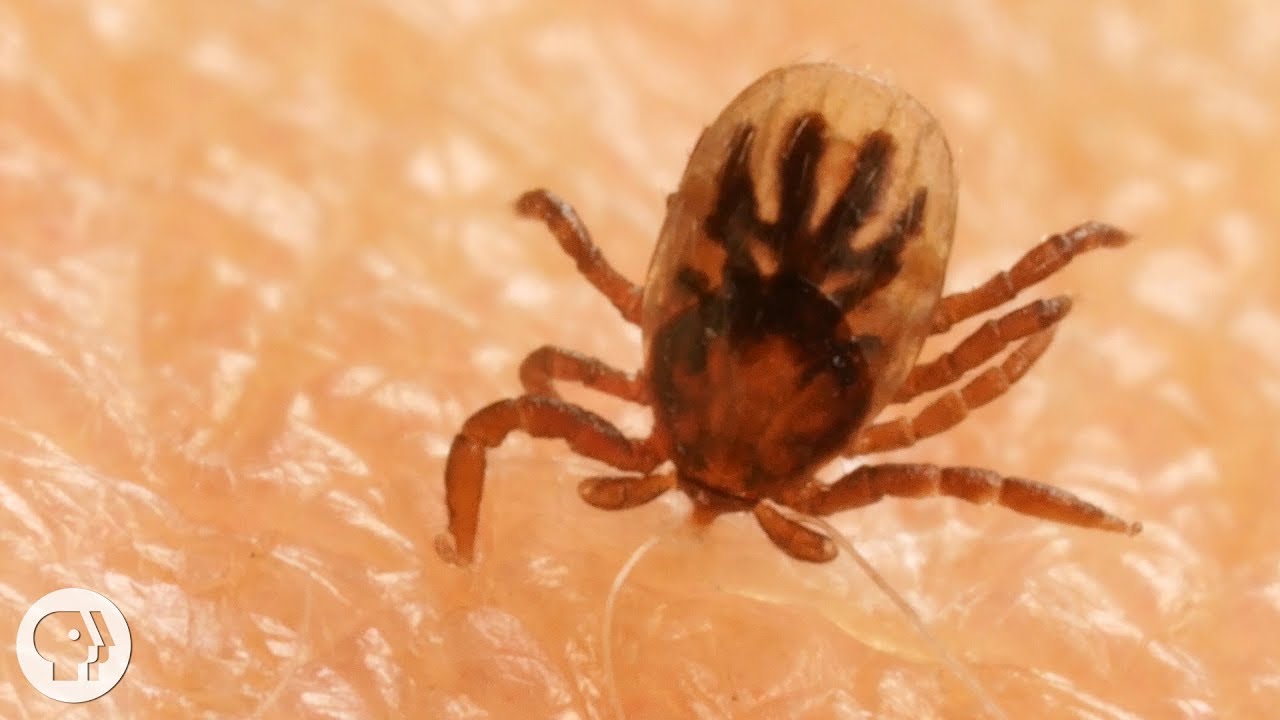
Why can't you just flick a tick? Because it attaches to you with a mouth covered in hooks, while it fattens up on your blood. For days. But don't worry – there *is* a way to pull it out.
SUBSCRIBE to Deep Look! http://goo.gl/8NwXqt
DEEP LOOK: a new ultra-HD (4K) short video series created by KQED San Francisco and presented by PBS Digital Studios. See the unseen at the very edge of our visible world. Explore big scientific mysteries by going incredibly small.
Spring is here. Unfortunately for hikers and picnickers out enjoying the weather, the new season is prime time for ticks, which can transmit bacteria that cause Lyme disease.
How they latch on – and stay on – is a feat of engineering that scientists have been piecing together. Once you know how a tick’s mouth works, you understand why it’s impossible to simply flick a tick.
The key to their success is a menacing mouth covered in hooks that they use to get under the surface of our skin and attach themselves for several days while they fatten up on our blood.
“Ticks have a lovely, evolved mouth part for doing exactly what they need to do, which is extended feeding,” said Kerry Padgett, supervising public health biologist at the California Department of Public Health in Richmond. “They're not like a mosquito that can just put their mouth parts in and out nicely, like a hypodermic needle.”
Instead, a tick digs in using two sets of hooks. Each set looks like a hand with three hooked fingers. The hooks dig in and wriggle into the skin. Then these “hands” bend in unison to perform approximately half-a-dozen breaststrokes that pull skin out of the way so the tick can push in a long stubby part called the hypostome.
“It’s almost like swimming into the skin,” said Dania Richter, a biologist at the Technische Universität Braunschweig in Germany, who has studied the mechanism closely. “By bending the hooks it’s engaging the skin. It’s pulling the skin when it retracts.”
The bottom of their long hypostome is also covered in rows of hooks that give it the look of a chainsaw. Those hooks act like mini-harpoons, anchoring the tick to us for the long haul.
“They’re teeth that are backwards facing, similar to one of those gates you would drive over but you're not allowed to back up or else you'd puncture your tires,” said Padgett.
--- How to remove a tick.
Kerry Padgett, at the California Department of Public Health, recommends grabbing the tick close to the skin using a pair of fine tweezers and simply pulling straight up.
“No twisting or jerking,” she said. “Use a smooth motion pulling up.”
Padgett warned against using other strategies.
“Don't use Vaseline or try to burn the tick or use a cotton swab soaked in soft soap or any of these other techniques that might take a little longer or might not work at all,” she said. “You really want to remove the tick as soon as possible.”
--- What happens if the mouth of a tick breaks off in your skin?
Don’t worry if the tick’s mouth parts stay behind when you pull.
“The mouth parts are not going to transmit disease to people,” said Padgett.
If the mouth stayed behind in your skin, it will eventually work its way out, sort of like a splinter does, she said. Clean the bite area with soap and water and apply antibiotic ointment.
---+ Read the entire article on KQED Science: https://www.kqed.org/science/1....920972/how-ticks-dig
---+ For more information:
Centers for Disease Control information on Lyme disease:
https://www.cdc.gov/lyme/
Mosquito & Vector Control District for San Mateo County, California:
https://www.smcmvcd.org/ticks
---+ More Great Deep Look episodes:
How Mosquitoes Use Six Needles to Suck Your Blood
https://www.youtube.com/watch?v=rD8SmacBUcU
So … Sometimes Fireflies Eat Other Fireflies
https://www.youtube.com/watch?v=oWdCMFvgFbo
---+ See some great videos and documentaries from the PBS Digital Studios!
Above the Noise: Are Energy Drinks Really that Bad?
https://www.youtube.com/watch?v=5l0cjsZS-eM
It’s Okay To Be Smart: Inside an ICE CAVE! - Nature's Most Beautiful Blue
https://www.youtube.com/watch?v=P7LKm9jtm8I
---+ Follow KQED Science:
KQED Science: http://www.kqed.org/science
Tumblr: http://kqedscience.tumblr.com
Twitter: https://www.twitter.com/kqedscience
---+ About KQED
KQED, an NPR and PBS affiliate in San Francisco, CA, serves Northern California and beyond with a public-supported alternative to commercial TV, Radio and web media.
Funding for Deep Look is provided in part by PBS Digital Studios. Deep Look is a project of KQED Science, which is supported by the S. D. Bechtel, Jr. Foundation, the Dirk and Charlene Kabcenell Foundation, the Vadasz Family Foundation, the Gordon and Betty Moore Foundation, the Fuhs Family Foundation Fund and the members of KQED.
#deeplook #ticks #tickbite
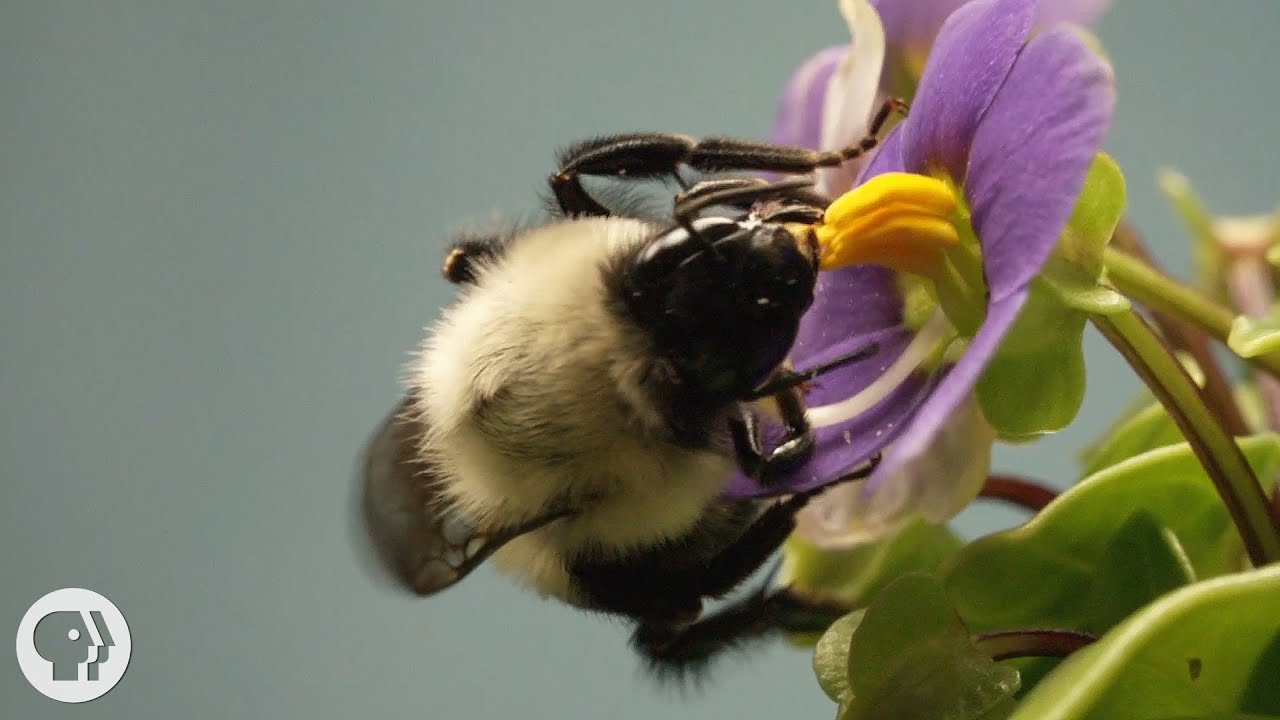
Most flowering plants are more than willing to spread their pollen around. But some flowers hold out for just the right partner. Bumblebees and other buzz pollinators know just how to handle these stubborn flowers. They vibrate the blooms, shaking them until they give up the nutritious pollen.
SUBSCRIBE to Deep Look! http://goo.gl/8NwXqt
DEEP LOOK is a ultra-HD (4K) short video series created by KQED San Francisco and presented by PBS Digital Studios. See the unseen at the very edge of our visible world. Get a new perspective on our place in the universe and meet extraordinary new friends. Explore big scientific mysteries by going incredibly small.
* NEW VIDEOS EVERY OTHER TUESDAY! *
In the summertime, the air is thick with the low humming of bees delivering pollen from one flower to the next. If you listen closely, a louder buzz may catch your ear.
This sound is the key to a secret stash of pollen that some flowers hide deep within their anthers, the male parts of the plant. Only pollinators that buzz in just the right way can vibrate tiny grains out of minuscule holes at the top of the anthers for a protein-rich snack.
The strategy, called buzz-pollination, is risky. But it’s also critical to human agriculture. Tomatoes, potatoes and eggplants need wild populations of buzz pollinators, such as bumblebees, to produce fruit. Honeybees can’t do it.
Plants need a way to get the pollen — basically sperm — to the female parts of another flower. Most plants lure animal pollinators to spread these male gametes by producing sugary nectar. The bee laps up the sweet reward, is dusted with pollen and passively delivers it to the next bloom.
In contrast, buzz-pollinated flowers encourage bees to eat the pollen directly and hope some grains will make it to another flower. The evolutionary strategy is baffling to scientists.
“The flower is almost like playing hard to get,” says Anne Leonard, a biologist at the University of Nevada, Reno who studies buzz pollination. “It’s intriguing because these buzz-pollinated plants ask for a huge energy investment from the bees, but don’t give much back.”
--- What is buzz pollination?
Most flowering plants use sugary nectar as bait to attract bees and other pollinators, which get coated in pollen along the way. And since bees are messy, they inadvertently scatter some of that pollen onto the female part of the next flower they visit.
But some flowers lock their pollen up in their anthers, the male parts of the flower, instead of giving it away freely. The only way for the pollen to escape is through small holes called pores. Some pollinators like bumblebees (but not honeybees) are able to vibrate the flower’s anthers which shakes up the pollen and causes it to spew out of the pores.
The bumblebee collects the pollen and uses it as a reliable and protected source of protein.
--- What important crops use buzz pollination to make food?
The most important crops that use buzz pollination are potatoes, tomatoes, pumpkins, eggplants, cranberries and blueberries
--- What animals are capable of buzz pollination?
Many types of bees engage in buzz pollination, also called sonication. The most common is probably the bumblebee. Honeybees generally don’t use buzz pollination.
---+ Read the entire article on KQED Science:
https://ww2.kqed.org/science/2....016/07/19/this-vibra
---+ For more information:
Anne Leonard Lab, University of Nevada, Reno | Department of Biology
http://www.anneleonard.com/buzz-pollination/
---+ More Great Deep Look episodes:
These Lizards Have Been Playing Rock-Paper-Scissors for 15 Million Years | Deep Look
https://www.youtube.com/watch?v=rafdHxBwIbQ
Winter is Coming For These Argentine Ant Invaders | Deep Look
https://www.youtube.com/watch?v=boyzWeHdtiI
---+ See some great videos and documentaries from the PBS Digital Studios!
It's Okay to Be Smart: Why Don't Other Animals Wear Glasses?
https://www.youtube.com/watch?v=LhubEq6W9GE
Gross Science: The World's Most Expensive Fungus
https://www.youtube.com/watch?v=iV4WHFU2Id8
---+ Follow KQED Science:
KQED Science: http://www.kqed.org/science
Tumblr: http://kqedscience.tumblr.com
Twitter: https://www.twitter.com/kqedscience
---+ About KQED
KQED, an NPR and PBS affiliate in San Francisco, CA, serves Northern California and beyond with a public-supported alternative to commercial TV, Radio and web media.
Funding for Deep Look is provided in part by PBS Digital Studios and the John S. and James L. Knight Foundation. Deep Look is a project of KQED Science, which is also supported by HopeLab, the David B. Gold Foundation, the S. D. Bechtel, Jr. Foundation, the Dirk and Charlene Kabcenell Foundation, the Vadasz Family Foundation, the Gordon and Betty Moore Foundation, the Smart Family Foundation and the members of KQED.
#deeplook
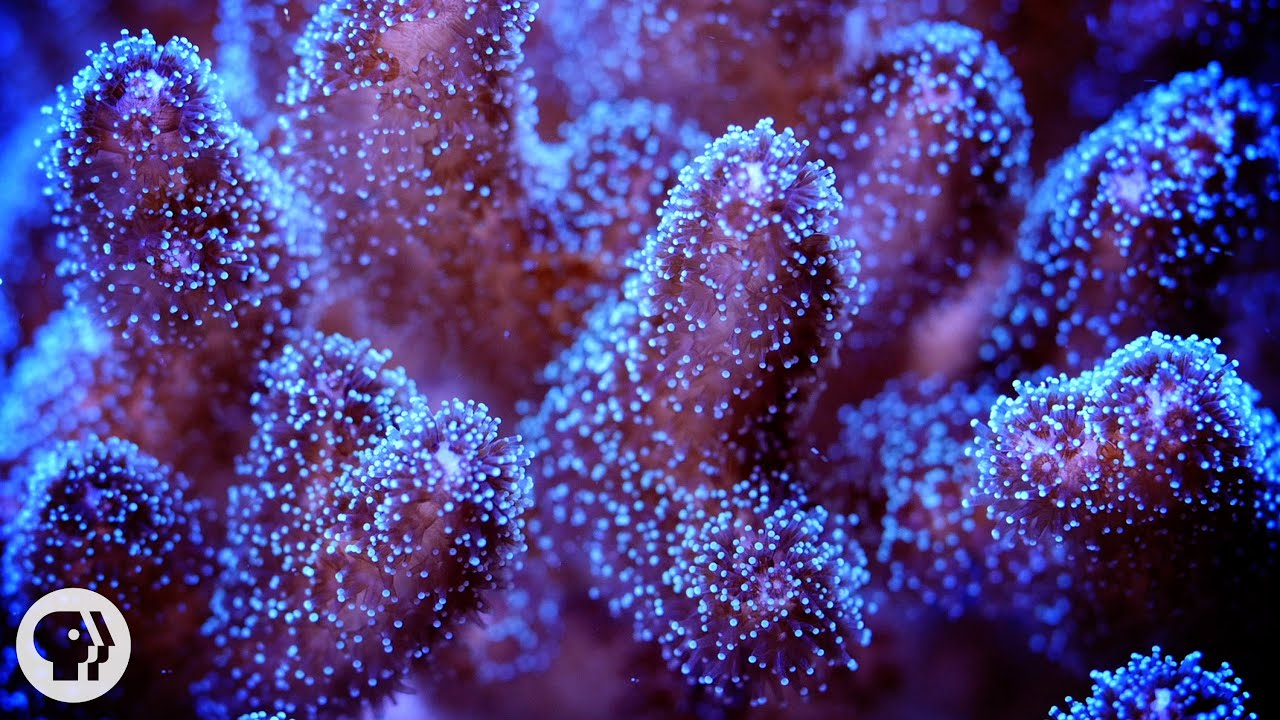
Some corals look like undersea gardens, gently blowing in the breeze. Others look like alien brains. But in their skeletons are clues that promise to give scientists a detailed picture of the weather from 500 years ago. Reading these bones? Easy. As long as you have the world's most powerful X-ray laser.
DEEP LOOK: a new ultra-HD (4K) short video series created by KQED San Francisco and presented by PBS Digital Studios. See the unseen at the very edge of our visible world. Get a new perspective on our place in the universe and meet extraordinary new friends. Explore big scientific mysteries by going incredibly small.
Is coral a plant or animal?
Corals are unusual creatures. They are actually a partnership- or symbiosis- between an animal (a polyp) and a plant (algae) in which they work together to survive and thrive.
How does coral grow?
Tiny animals called polyps form an exoskeleton to live in. When one polyp dies, another builds a new home right on top of the old one. Beneath lies the abandoned exoskeletons, like an ancient city made of layer upon layer of old dwellings.
What is coral made of?
Coral exoskeletons are mostly made of calcium carbonate. But sometimes the polyps incorporate tiny amounts of other elements from the surrounding water, including the element strontium. Biologists don’t fully understand why polyps absorb strontium, but it’s a phenomenon that happens consistently across the world’s oceans.
When sea surface temperatures are warmer, corals absorb less strontium into their exoskeletons. When they are colder, they absorb more. By comparing the strontium-to-calcium ratio over time, scientists are able to reconstruct sea surface temperatures from the past. They also can chart long-term climate cycles that occurred over the lifespan of the coral. Since these corals can live for over 500 years, this gives us insights into the weather hundreds of years before written scientific records.
Read the article for this video on KQED Science:
http://ww2.kqed.org/science/20....15/07/07/what-happen
--
More great Deep Look episodes:
Where Are the Ants Carrying All Those Leaves?
https://www.youtube.com/watch?v=-6oKJ5FGk24
What Happens When You Put a Hummingbird in a Wind Tunnel?
https://www.youtube.com/watch?v=JyqY64ovjfY
Pygmy Seahorses: Masters of Camouflage
https://www.youtube.com/watch?v=Q3CtGoqz3ww
See also another great video from the PBS Digital Studios!
It’s Okay to Be Smart: The Oldest Living Things In The World
https://www.youtube.com/watch?v=jgspUYDwnzQ
More KQED Science:
Tumblr: http://kqedscience.tumblr.com
Twitter: https://www.twitter.com/kqedscience
KQED Science: http://ww2.kqed.org/science
Funding for Deep Look is provided in part by PBS Digital Studios and the John S. and James L. Knight Foundation. Deep Look is a project of KQED Science, which is supported by HopeLab, The David B. Gold Foundation; S. D. Bechtel, Jr. Foundation; The Dirk and Charlene Kabcenell Foundation; The Vadasz Family Foundation; Smart Family Foundation and the members of KQED.
#deeplook

Episode 3 of ‘The Making of.. Take On Me’ explores the legacy of the song, and will be available to watch on Friday 15th November on YouTube. Did you enjoy Episodes 1 and 2? Revisit the episodes here: http://bit.ly/TheMakingOfTakeOnMe
Produced and Directed by Sorcha Macdonald and Warner Music Entertainment
Project Managed by Katie Graham
Photography by Fritz Johannessen, Henning Kramer Dahl, Just Loomis, Per Arne Skjeggestad, Viggo Bondi
With thanks to… Alan Tarney, Andrew Wickham, Bethany Dawson, Candace Reckinger, Ed Miliband, Ed Sheeran, Harald Wiik, James Blunt, Jamie Carter, Jeff Ayeroff, John Beug, John Hughes, Just Loomis, Magne Furuholmen, Michael Patterson, Morten Harket, Nile Rodgers, Paul Waaktaar-Savoy, Pete Vuckovic, Richard Hughes, Tim Rice-Oxley, Tom McPhee, Tyler Shoemaker, The Savoy Café and Harriet Davis
? Listen to more a-ha here https://lnk.to/ahastrm
? Watch all the official a-ha videos here http://bit.ly/ahaOfficialVideos
? Subscribe to the a-ha channel and “ring the bell” to turn on notifications http://bit.ly/Subscribetoaha
Stay In Touch with a-ha…
? Website https://a-ha.com/
? Tour Dates https://a-ha.com/tickets
? Facebook https://www.facebook.com/officialaha/
? Instagram https://www.instagram.com/officialaha/
? Twitter https://twitter.com/aha_com
? Soundcloud https://soundcloud.com/a-ha
Stay In Touch with Morten Harket…
? Website https://mortenharket.com/
? Facebook https://www.facebook.com/mortenharket.official/
? Instagram https://www.instagram.com/mortenharket/
? Twitter https://twitter.com/mortenharket
*******************
The a-ha channel is the official YouTube home of the Norwegian Pop trio a-ha, who achieved global stardom in 1985 when their debut single, “Take On Me” from the album ‘Hunting High And Low’ topped the charts in 36 different countries on its way to becoming one of the best-selling singles of all time, and the 5th most streamed song of the 20th century. a-ha struck chart gold again with “The Sun Always Shines On T.V.” and “Cry Wolf,” and recorded the theme to the 1987 James Bond film “The Living Daylights”. The a-ha YouTube channel is proud to host the music videos from these hits alongside live performance videos, lyric videos, and the solo work of band members Morten Harket (lead vocals), Paul Waaktaar-Savoy (Guitar), and Magne Furuholmen (Keyboards).

From the Australian tour for Hunting High And Low

♥ ♪ ❤ ♪ ♥ ♪ ❤ ♪ ♥ ♪ ❤ ♪ ♥ ♪ ❤ ♪ ♥ ♪ ❤ ♪ ♥ ♪ ❤ ♪
Versão demonstrativa de Hunting High and Low, gravada em 1982.
Composição: Pål Waaktaar / Randy Newman
Álbum: Hunting High And Low (30th Anniversary Super Deluxe Edition) - 2015.

Just as the title says.
*A cover of one of A-Ha's ace songs*

#A-HA#FESTIVALDEVIÑA #VIÑA
No olvides suscribirte y activar la campanita para ser el primero en ver los nuevos videos de los mejores artistas del Festival de Viña del Mar #VIÑA #ViveViña
? Sólo los más grandes artistas qué han estado en #VIÑA reviven en el Canal Histórico del Festival Internacional de la Canción de Viña del Mar...Suscríbete! y síguenos en:
http://www.youtube.com/festivaldevinachile
TWITTER: http://www.twitter.com/CanalHistorico
WEB: http://www.festivaldevinachile.com
FACEBOOK: http://www.facebook.com/festivaldevinachile
http://www.instagram.com/MARIAISABELYOUTUBER
"Las cintas originales del Festival Internacional de la Canción de Viña del Mar se encuentran resguardados en el Archivo Histórico Patrimonial de la I. Municipalidad de Viña del Mar, Chile."
Viña del Mar tiene Festival todo el año !!
http://www.vinadelmarchile.cl
http://www.ciudaddeldeporte.com

Original BBC Broadcast VHS-Rip.

One love!!!