Top Vídeos
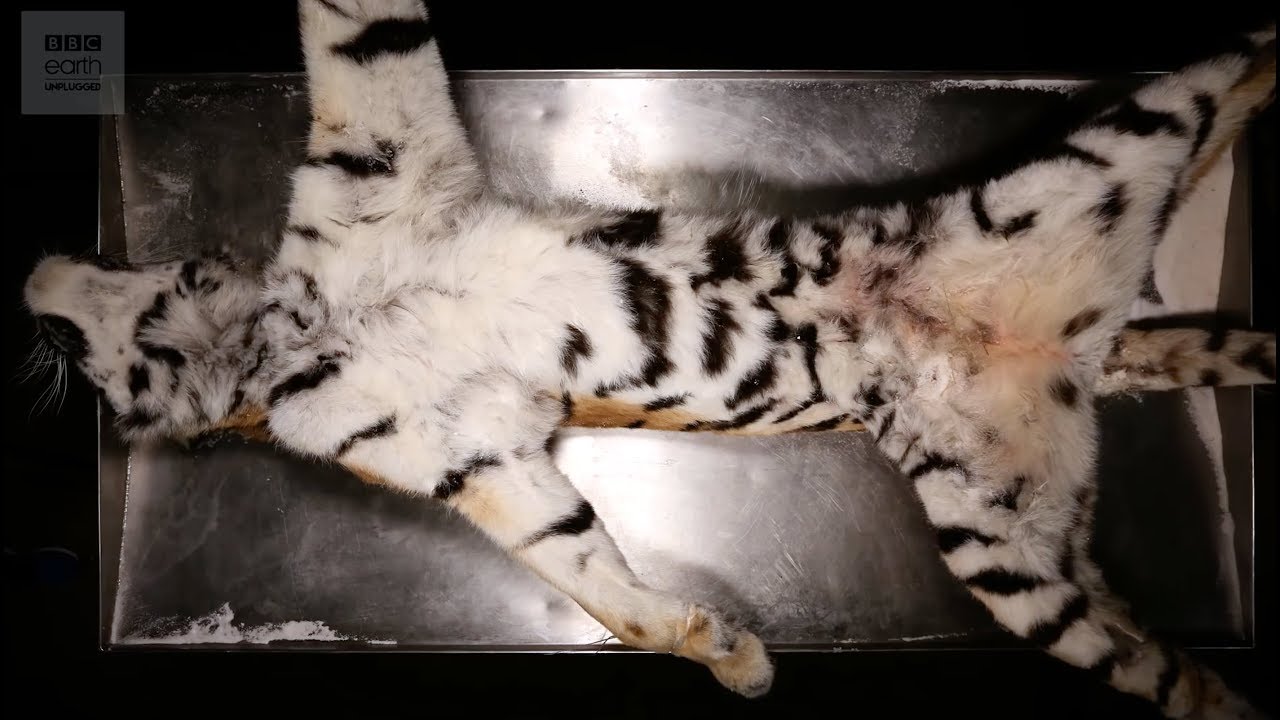
Warning: This video contains graphic imagery of a tiger dissection which some viewers may find distressing.
Subscribe: http://bit.ly/BBCEarthSub
WATCH MORE:
New on Earth: https://bit.ly/2M3La96
Oceanscapes: https://bit.ly/2Hmd2kZ
Wild Thailand: https://bit.ly/2kR7lmh"
Welcome to BBC EARTH! The world is an amazing place full of stories, beauty and natural wonder. Here you'll find 50 years worth of astounding, entertaining, thought-provoking and educational natural history content. Dramatic, rare, and exclusive, nature doesn't get more exciting than this.
Want to share your views with the team behind BBC Earth and win prizes? Join our BBC Studios Voice: https://www.bbcstudiosvoice.com/register
This is a channel from BBC Worldwide who help fund new BBC programmes.Service information and feedback: http://bbcworldwide.com/vod-fe....edback--contact-deta

A baby monkey is born in the Vervet Monkey troupe and young monkeys play in an open urban space - the golf course. Martin Clunes narrates in this clip taken from BBC widllife show Cheeky Monkey. Visit http://www.bbcearth.com for all the latest animal news and wildlife videos and watch more high quality videos on the new BBC Earth YouTube channel here: http://www.youtube.com/bbcearth
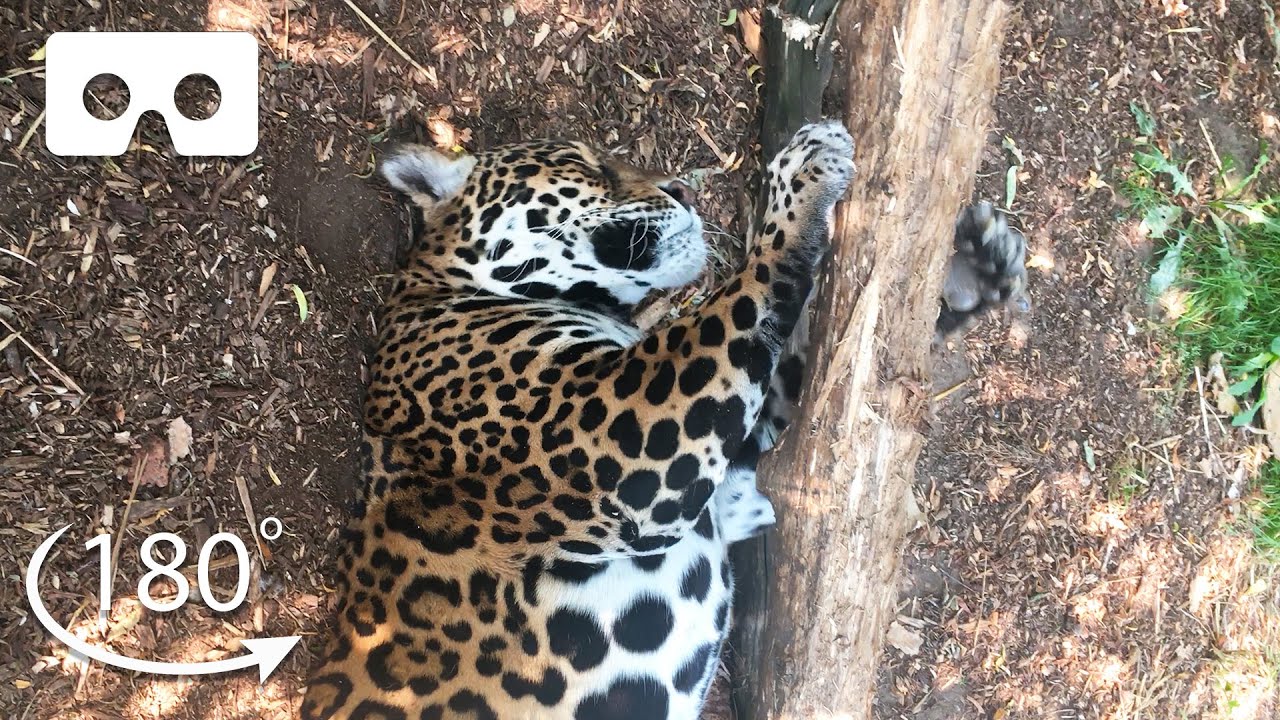
Get up close to the incredible rescue animals at the Cat Survival Trust, UK. The Trust saves animals from across Europe and educates students and the public on the importance of wildlife.
Subscribe: http://bit.ly/BBCEarthSub
Watch more:
Planet Earth http://bit.ly/PlanetEarthPlaylist
Blue Planet http://bit.ly/BluePlanetPlaylist
Planet Earth II http://bit.ly/PlanetEarthIIPlaylist
Planet Dinosaur http://bit.ly/PlanetDinoPlaylist
VR 180
Welcome to BBC EARTH! The world is an amazing place full of stories, beauty and natural wonder. Here you'll find 50 years worth of entertaining and thought-provoking natural history content. Dramatic, rare, and exclusive, nature doesn't get more exciting than this.
Want to share your views with the team? Join our BBC Studios Voice: https://www.bbcstudiosvoice.com/register
This is a page from BBC Studios who help fund new BBC programmes. Service information and feedback: http://bbcworldwide.com/vod-fe....edback--contact-deta

Journey through a place where two worlds collide, our beautiful coastlines. Relax and experience stunning shores with this 10 hour loop.
Subscribe: http://bit.ly/BBCEarthSub
#OurBluePlanet is a digital collaboration between BBC Earth and OceanX Media with featured media from both companies. Join the conversation over on Twitter @OurBluePlanet.
OceanX Media are a team of scientists, explorers and filmmakers driven to discover what lies beneath the waves and to document untold ocean stories. You can find out more here: http://www.oceanx.org
Watch more videos from BBC Earth:
Planet Earth http://bit.ly/PlanetEarthPlaylist
Blue Planet http://bit.ly/BluePlanetPlaylist
Planet Earth II http://bit.ly/PlanetEarthIIPlaylist
Planet Dinosaur http://bit.ly/PlanetDinoPlaylist
Check out the other two channels in our BBC Earth network:
BBC Earth Unplugged: http://bit.ly/BBCEarthUnplugged
BBC Earth Lab: http://bit.ly/BBCEarthLabYouTubeChannel
Welcome to BBC EARTH! The world is an amazing place full of stories, beauty and natural wonder. Here you'll find 50 years worth of astounding, entertaining, thought-provoking and educational natural history content. Dramatic, rare, and exclusive, nature doesn't get more exciting than this.
Want to share your views with the team behind BBC Earth and win prizes? Join our fan panel here: http://tinyurl.com/YouTube-BBCEarth-FanPanel
This is a channel from BBC Worldwide who help fund new BBC programmes
Service information and feedback: http://bbcworldwide.com/vod-fe....edback--contact-deta

Is levitation possible? YouTube Originals and BBC Studios bring you The Edge of Science, a scientific dive into the outer reaches of our understanding. Follow host and science enthusiast, Rick Edwards as he taps into the scientific community of YouTube to help him fulfill a lifetime's ambition - to levitate himself. Physics girl (Dianna Cowern) and science inventor, Colin Furze, join Rick and together, they will experiment their way into getting Rick off the ground, by physics alone. Can they do it?
Love learning on YouTube? Check out YouTube's new and improved learning hub (youtube.com/learning) for everything from well-being to history to how tos and all of the things in between. You'll also find more great YouTube Originals content full of your favourite YouTube Creators.

After precautionary checks the new born panda is reunited with mum.
Taken From Panda Babies. Subscribe: http://bit.ly/BBCEarthSub
WATCH MORE:
New on Earth: https://bit.ly/2M3La96
Oceanscapes: https://bit.ly/2Hmd2kZ
Wild Thailand: https://bit.ly/2kR7lmh
Welcome to BBC EARTH! The world is an amazing place full of stories, beauty and natural wonder. Here you'll find 50 years worth of astounding, entertaining, thought-provoking and educational natural history content. Dramatic, rare, and exclusive, nature doesn't get more exciting than this.
Want to share your views? Join our BBC Studios Voice: https://www.bbcstudiosvoice.com/register
This is a channel from BBC Studios who help fund new BBC programmes. Service information and feedback: http://bbcworldwide.com/vod-fe....edback--contact-deta

Music video by Ultravox performing Dancing With Tears In My Eyes (2009 Digital Remaster).
http://vevo.ly/hHTefK

Ultravox performing at Live Aid in front of 72,000 people in Wembley Stadium, London on the 13th July, 1985. The event was organised by Sir Bob Geldof and Midge Ure to raise funds for the Ethiopian famine disaster. Broadcast across the world via one of the largest satellite link-ups of all time, the concerts were seen by around 40% of the global population.
Remember to subscribe to stay up to date with all new releases in the channel.

Vienna is the fourth studio album by the synthpop band Ultravox, first released on 11 July 1980. The album peaked at #3 in the UK charts and was the first Ultravox release to enter the UK top ten. It was certified Platinum in the United Kingdom in July 1981 for 300,000 copies sold. The album reached #22 in Germany, and #164 in the United States.
Singles: 'Sleepwalk' 'Passing Strangers' 'Vienna' 'All Stood Still'
Tracklist:
00:00 "Astradyne"
07:08 "New Europeans"
11:11 "Private Lives"
15:19 "Passing Strangers"
19:10 "Sleepwalk"
22:21 "Mr. X"
28:55 "Western Promise"
34:14 "Vienna"
39:08 "All Stood Still"
Bonus:
43:31 "Waiting"
47:22 "Passionate Reply"
***PLEASE BUY THIS ALBUM***
This is a NON PROFIT video:
Copyright Disclaimer Under Section 107 of the Copyright Act 1976, allowance is made for "fair use" for purposes such as criticism, comment, news reporting, teaching, scholarship, and research. Fair use is a use permitted by copyright statute that might otherwise be infringing. Non-profit, educational or personal use tips the balance in favor of fair use.

(0:00) 1.White China________________________(17:53) 5.Man of Two Worlds
(3:51) 2.One Small Day______________________(22:22) 6.Heart of the Country
(8:25) 3.Dancing with Tears in My Eyes_______(27:31) 7.When the Time Comes
(13:09) 4.Lament____________________________(32:32) 8.A Friend I Call Desire
Ⓟ&Ⓒ 1984 Chrysalis.

What do you do if you are a tiny caddisfly larva growing up in a torrent of water and debris? Simple. You build a shelter out of carefully selected pebbles and some homespun waterproof tape.
SUBSCRIBE to Deep Look! http://goo.gl/8NwXqt
DEEP LOOK is a ultra-HD (4K) short video series created by KQED San Francisco and presented by PBS Digital Studios. See the unseen at the very edge of our visible world. Get a new perspective on our place in the universe and meet extraordinary new friends. Explore big scientific mysteries by going incredibly small.
* NEW VIDEOS EVERY OTHER TUESDAY! *
We already mimic them to make fly-fishing lures. But now scientists believe copycatting one tiny insect could hold promise for repairing human tissues and setting bones.
Instead of stitches and screws, doctors may soon call on the next generation of medical adhesives — glues and tape — to patch us up internally.
The inspiration? Caddisflies, a type of stream-dwelling, fish-baiting insects that live in creeks all across the United States.
As a larva, the caddisfly constructs a tiny tube-like house for itself, called a case, entirely underwater, using pebbles and its incredible homespun tape as the mortar.
Thanks to the qualities of this amazing silk, the case not only holds up when submerged, it is strong enough to protect the caddisfly’s soft lower body amid forces many times its body weight.
Any tape, including this one, has two basic components: the flat ribbon, or backing, and the layer of sticky stuff, or the glue. From the materials science standpoint, caddisfly tape is extraordinary in both departments.
Caddisfly silk biomimicry is only in its infancy, but one day, a similar compound might be used inside the body, which is another watery environment, to mend soft tissues and even repair hard ones, such as teeth and bone.
In the streambed, or brook, the caddisfly’s case eventually becomes a cocoon. Like its land-based cousins, the butterflies and moths, from whom it diverged 250 millions years ago, the caddisfly larva undergoes a metamorphosis. It seals up its case with a so-called “hat stone” and emerges months later as a winged adult.
--- Where do caddisflies live?
Caddisflies are most common in shallow, cold, turbulent streams, where the water is highly oxygenated.
--- What do caddisflies eat?
Caddisflies are herbivores, they eat decaying plant matter and algae on the rocks in the streams where they live.
--- What is so special about caddisfly silk?
Engineers are interested in two attributes of caddisfly silk. First of all, it can bond to something, such as a pebble, underwater, which no glue people have made can replicate. Second its “viscoelastic” properties allow to it harmlessly absorb physical forces. When stretched, it doesn’t snap back like a rubber band. It returns to its original shape slowly and safely. It's an engineering marvel.
---+ Read the entire article on KQED Science:
https://ww2.kqed.org/science/2....016/08/09/sticky-str
---+ For more information:
Troutnut.com
http://www.troutnut.com/hatch/....12/Insect-Trichopter
---+ More Great Deep Look episodes:
This Vibrating Bumblebee Unlocks a Flower's Hidden Treasure
https://www.youtube.com/watch?v=SZrTndD1H10
These Carnivorous Worms Catch Bugs by Mimicking the Night Sky
https://www.youtube.com/watch?v=vLb0iuTVzW0
---+ See some great videos and documentaries from the PBS Digital Studios!
It's Okay to Be Smart: Venom: Nature’s Killer Cocktails
https://www.youtube.com/watch?v=Qd92MuVZXik
Gross Science: Sea Turtles Get Herpes, Too
https://www.youtube.com/watch?v=bpqP9bUUInI
---+ Follow KQED Science:
KQED Science: http://www.kqed.org/science
Tumblr: http://kqedscience.tumblr.com
Twitter: https://www.twitter.com/kqedscience
---+ About KQED
KQED, an NPR and PBS affiliate in San Francisco, CA, serves Northern California and beyond with a public-supported alternative to commercial TV, Radio and web media.
Funding for Deep Look is provided in part by PBS Digital Studios and the John S. and James L. Knight Foundation. Deep Look is a project of KQED Science, which is also supported by HopeLab, the S. D. Bechtel, Jr. Foundation, the Dirk and Charlene Kabcenell Foundation, the Vadasz Family Foundation, the Gordon and Betty Moore Foundation, the Smart Family Foundation and the members of KQED.
#deeplook

Turtles grow up without parents, which might sound lonely. But for threatened baby turtles raised in a zoo it’s an advantage: they can learn to catch crickets all by themselves. There’s a paradox, though. When they are ready to leave the nursery, there is little wilderness where they can make a home.
SUBSCRIBE to Deep Look! http://goo.gl/8NwXqt
DEEP LOOK: a new ultra-HD (4K) short video series created by KQED San Francisco and presented by PBS Digital Studios. See the unseen at the very edge of our visible world. Get a new perspective on our place in the universe and meet extraordinary new friends. Explore big scientific mysteries by going incredibly small.
Read more on baby turtles:
https://ww2.kqed.org/science/2....016/01/26/these-craz
Where do turtles live?
Western pond turtles live most of their lives in the water, in freshwater lakes.
What do turtles eat?
The meat-eaters feed on crustaceans like crayfish, dragonfly nymphs and fish.
Are turtles reptiles?
Turtles are reptiles not amphibians. They are considered reptiles since they live in water.
Are turtles endangered?
"There are only 300 species, and most of them are doing quite poorly." The turtles haven’t been doing well in their native habitat in the western United States. In California, they’re a species of “special concern.”
Why can turtles be raised in zoos?
Most turtle species grow up without parents, which makes them easy to raise in zoos and help conservation. Once a female western pond turtle lays her eggs near a lake or pond, she never returns to the nest. Because they lack parental care, turtles don’t imprint on zoo keepers.
More great Deep Look episodes:
Nature's Scuba Divers: How Beetles Breathe Underwater:
https://youtu.be/T-RtG5Z-9jQ
Nature's Mood Rings: How Chameleons Really Change Color:
https://youtu.be/Kp9W-_W8rCM
Newt Sex: Buff Males! Writhing Females! Cannibalism!
https://youtu.be/5m37QR_4XNY
See also another great video from the PBS Digital Studios!
It's Okay to Be Smart:
https://youtu.be/fWc46NCnldo
If you’re in the San Francisco Bay Area, The San Francisco Zoo is currently head-starting nine western pond turtle hatchlings and the Oakland Zoo, 16. The baby turtles at the San Francisco Zoo are on display in the Children’s Zoo, while the Oakland Zoo is raising theirs in a back room where six small tubs create the impression of a maternity ward.
http://www.sfzoo.org/
http://oaklandzoo.org/
KQED Science: http://www.kqed.org/science
Tumblr: http://kqedscience.tumblr.com
Twitter: https://www.twitter.com/kqedscience
Funding for Deep Look is provided in part by PBS Digital Studios and the John S. and James L. Knight Foundation. Deep Look is a project of KQED Science, which is also supported by HopeLab, the David B. Gold Foundation, the S. D. Bechtel, Jr. Foundation, the Dirk and Charlene Kabcenell Foundation, the Vadasz Family Foundation, the Gordon and Betty Moore Foundation, the Smart Family Foundation and the members of KQED.
#deeplook

Pacific mole crabs, also known as sand crabs, make their living just under the surface of the sand, where they're safe from breaking waves and hungry birds. Some very special physics help them dig with astonishing speed.
SUBSCRIBE to Deep Look! http://goo.gl/8NwXqt
DEEP LOOK is a ultra-HD (4K) short video series created by KQED San Francisco and presented by PBS Digital Studios. See the unseen at the very edge of our visible world. Get a new perspective on our place in the universe. Explore big scientific mysteries by going incredibly small.
* NEW VIDEOS EVERY OTHER TUESDAY! *
Among the surfers and beach-casting anglers, there’s a new visitor to San Francisco’s Ocean Beach shoreline.
Benjamin McInroe is there for only one reason -- to find Pacific mole crabs, a creature commonly known as “sand crabs” -- and the tiny animals whose burrowing causes millions of small bubbles to appear on the beach as the tide comes in and out.
McInroe is a graduate student from UC Berkeley studying biophysics. He wants to know what makes these little creatures so proficient at digging their way through the wet sand.
McInroe hopes that he can one day copy their techniques to build a new generation of digging robots.
-- What are Pacific Mole Crabs?
Pacific mole crabs, also known as sand crabs, are crustaceans, related to shrimp and lobsters. They have four pairs of legs and one pair of specialized legs in the front called uropods that look like paddles for digging in sand. Pacific mole crabs burrow through wet sand and stick their antennae out to catch bits of kelp and other debris kicked up by the breaking waves.
-- What makes those holes in the sand at the beach?
When the waves recede, mole crabs burrow down into the sand to keep from being exposed. They dig tail-first very quickly leaving holes in the wet sand. The holes bubble as water seeps into the holes and the air escapes.
-- What do birds eat in the wet beach sand?
Shore birds like seagulls rush down the beach as the waves recede to catch mole crabs that haven’t burrowed down quickly enough to escape. The birds typically run or fly away as the next wave breaks and rolls in.
---+ Read the entire article on KQED Science:
https://ww2.kqed.org/science/2....018/02/13/for-pacifi
---+ For more information:
Benjamin McInroe, a Ph.D. student at UC Berkeley, studies how Pacific mole crabs burrow
https://www.ocf.berkeley.edu/~bmcinroe/
Professor Robert Full directs the Poly-PEDAL Lab at UC Berkeley, where researchers study the physics of how animals and use that knowledge to build mechanical systems like robots based on their findings.
http://polypedal.berkeley.edu/
---+ More Great Deep Look episodes:
Decorator Crabs Make High Fashion at Low Tide | Deep Look
https://youtu.be/OwQcv7TyX04
These Fish Are All About Sex on the Beach | Deep Look
https://youtu.be/j5F3z1iP0Ic
Sea Urchins Pull Themselves Inside Out to be Reborn | Deep Look
https://youtu.be/ak2xqH5h0YY
There's Something Very Fishy About These Trees ... | Deep Look
https://www.youtube.com/watch?v=rZWiWh5acbE&t=1s
---+ See some great videos and documentaries from the PBS Digital Studios!
Why Do We Eat Artificial Flavors? | Origin of Everything
https://www.youtube.com/watch?v=iNaJ31EV13U
The Facts About Dinosaurs & Feathers
https://www.youtube.com/watch?v=aOeFRg_1_Yg
Why Is Blue So Rare In Nature?
https://www.youtube.com/watch?v=3g246c6Bv58
---+ Follow KQED Science
KQED Science: http://www.kqed.org/science
Tumblr: http://kqedscience.tumblr.com
Twitter: https://www.twitter.com/kqedscience
---+ About KQED
KQED, an NPR and PBS affiliate in San Francisco, CA, serves Northern California and beyond with a public-supported alternative to commercial TV, Radio and web media.
Funding for Deep Look is provided in part by PBS Digital Studios. Deep Look is a project of KQED Science, which is supported by the S. D. Bechtel, Jr. Foundation, the Dirk and Charlene Kabcenell Foundation, the Vadasz Family Foundation, the Gordon and Betty Moore Foundation, the Fuhs Family Foundation Fund and the members of KQED.
#deeplook

The Peruvian Amazon is a dangerous place when you're small. So the young Inga tree hires ants as bodyguards to protect its vulnerable leaves. Their pay: delicious nectar served up in tiny ant-sized dishes. But will the ants keep up their end of the bargain?
SUBSCRIBE to Deep Look! http://goo.gl/8NwXqt
DEEP LOOK is a ultra-HD (4K) short video series created by KQED San Francisco and presented by PBS Digital Studios. See the unseen at the very edge of our visible world. Get a new perspective on our place in the universe. Explore big scientific mysteries by going incredibly small.
* NEW VIDEOS EVERY OTHER TUESDAY! *
For some, ants are welcome guests. In the Amazon rainforest of Peru, a type of tree called the Inga actively encourages ants to stick around.
The tree, which is related to plants that produce beans and other legumes, grows tiny structures near the base of its leaves, called nectaries, that secrete a sugary fluid to feed to the ants. In turn, the ants serve as bodyguards, protecting the Inga and its nectaries from invading herbivores.
“Plants have all kinds of defenses, but because Inga leaves are not as toxic as many other plants,” says Suzanne Koptur, a professor of biology at Florida International University, “they’re good food for herbivores of all sizes and shapes, from big mammals like sloths and monkeys to little invertebrates like caterpillars.“
The rainforest is especially dangerous for young trees. The branches and leaves of mature trees merge together high in the air forming a canopy. Young trees on the forest floor struggle to get enough light. Young trees also have fewer leaves, and losing even a few to herbivores can threaten their survival.
They may be small, but few species want to tangle with the aggressive and territorial big-headed ants.
"Ants have powers in numbers, especially if they bite and sting," says Koptur.
The ants keep most herbivores, especially hungry caterpillars, away from the young trees. Simply put, the trees provide nectar to the ants in exchange for protection.
--- What is mutualism?
In biology, mutualism refers to a relationship between two organisms that benefits both of parties. Mutualism is one type of symbiotic relationship.
--- What are caterpillars?
Caterpillars are the larvae of butterflies and caterpillars. Young caterpillars hatch out of eggs, eat, grow and molt. They eventually pupate inside their cocoons and then emerge as winged adults.
--- What is plant nectar?
Nectar is a sugary liquid secreted by plants through structures called nectaries. Nectaries are commonly found in flowers to attract pollinators. Some plants also have extra-floral nectaries located outside of the flowers. To attract animals including ants and predatory wasps that protect the plant from herbivores.
---+ Read the entire article on KQED Science:
https://ww2.kqed.org/science/2....016/11/01/the-double
---+ For more information:
Interactions Among Inga, Herbivores, Ants, and Insect Visitors to Foliar Nectaries
http://faculty.fiu.edu/~koptur....s/pubs/MVbookIngaAnt
---+ More Great Deep Look episodes:
Winter is Coming For These Argentine Ant Invaders
https://www.youtube.com/watch?v=boyzWeHdtiI
Where Are the Ants Carrying All Those Leaves?
https://www.youtube.com/watch?v=-6oKJ5FGk24
This Vibrating Bumblebee Unlocks a Flower's Hidden Treasure
https://www.youtube.com/watch?v=-6oKJ5FGk24
---+ See some great videos and documentaries from the PBS Digital Studios!
It's Okay to Be Smart: Why Don't Ants Get Stuck In Traffic?
https://www.youtube.com/watch?v=kkiuw0HbRq4
Gross Science: The World's Most Expensive Fungus
https://www.youtube.com/watch?v=iV4WHFU2Id8
---+ Follow KQED Science:
KQED Science: http://www.kqed.org/science
Tumblr: http://kqedscience.tumblr.com
Twitter: https://www.twitter.com/kqedscience
---+ About KQED
KQED, an NPR and PBS affiliate based in San Francisco, serves the people of Northern California and beyond with a public-supported alternative to commercial media. Home to one of the most listened-to public radio station in the nation, one of the highest-rated public television services and an award-winning education program, KQED is also a leader and innovator in interactive media and technology, taking people of all ages on journeys of exploration — exposing them to new people, places and ideas.
Funding for Deep Look is provided in part by PBS Digital Studios and the John S. and James L. Knight Foundation. Deep Look is a project of KQED Science, which is also supported by HopeLab, the David B. Gold Foundation, the S. D. Bechtel, Jr. Foundation, the Dirk and Charlene Kabcenell Foundation, the Vadasz Family Foundation, the Gordon and Betty Moore Foundation, the Smart Family Foundation and the members of KQED. macro documentary
#deeplook

Peregrine falcons catch other birds mid-flight by diving at more than 200 mph. To do it, they need some high-precision gear: special eyesight, talons and aerodynamics that can't be beat.
SUBSCRIBE to Deep Look! http://goo.gl/8NwXqt
Please support us on Patreon! https://www.patreon.com/deeplook
DEEP LOOK is a ultra-HD (4K) short video series created by KQED San Francisco and presented by PBS Digital Studios. See the unseen at the very edge of our visible world. Explore big scientific mysteries by going incredibly small.
---
While known for being the world’s fastest bird–peregrines have been clocked at diving more than 200 miles per hour–these majestic birds were at risk for going extinct 50 years ago. Widespread use of pesticides such as DDT decimated native populations of peregrine falcons.
By 1970, California’s peregrine population had dwindled to only two known nesting pairs statewide. The federal government banned DDT in 1972. And successful restoration efforts spearheaded by organizations like The Peregrine Fund helped revive their numbers. By 1999, they were removed from the federal Endangered Species List. Recent surveys estimate that there are now 300 to 350 nesting pairs in California and more than 2400 pairs nationwide.
---+ Read the entire article on KQED Science:
https://www.kqed.org/science/1....944037/peregrine-fal
--- What’s the origin of the Peregrine Falcon's name?
Peregrine is Latin for "Peregrinus," which means “traveler” or “pilgrim.”
--- How many eyelids do raptors, or birds or prey, like peregrine falcons have?
They have three! Two eyelids are used for closing their eyes, while the third is used for blinking. It’s also called the nictitating membrane and helps to protect their eyes and keep them moist and clean. It’s semi-transparent, so they can actually still see through it when it’s closed.
--- Did you know they have a special bone to protect their eyes?
It’s called a sclerotic ring and helps support and secure their eyeballs within their skulls.
---+ For more information:
Visit The Peregrine Fund
https://www.peregrinefund.org/
---+ More Great Deep Look episodes:
Things With Wings: https://youtu.be/a68fIQzaDBY
---+ Shoutout!
---+ ?Congratulations ?to the following fans for coming up with the best emoji or ASCII tributes to this fine feathered bird in our community tab challenge:
Sandcastle •
ɐɯɹɐʞ ɐıuɐɯ
lieutenant giwaffe
Sectumsempra, b****!
Sweetle pie.3.
Go look at all the entries here!
https://www.youtube.com/channe....l/UC-3SbfTPJsL8fJAPK
---+ Thank you to our Top Patreon Supporters ($10+ per month)!
Allen, Aurora Mitchell, Beckie, Ben Espey, Bill Cass, Breanna Tarnawsky, Carl, Chris B Emrick, Chris Murphy, Cindy McGill, Companion Cube, Cory, Daisuke Goto, Daisy Trevino , Daniel Voisine, Daniel Weinstein, David Deshpande, Dean Skoglund, Edwin Rivas, Elizabeth Ann Ditz, Geidi Rodriguez, Gerardo Alfaro, Ivan Alexander, Jane Orbuch, JanetFromAnotherPlanet, Jason Buberel, Jeanne Sommer, Joao Ascensao, johanna reis, Johnnyonnyful, Joshua Murallon Robertson, Justin Bull, Kallie Moore, Karen Reynolds, Katherine Schick, Kendall Rasmussen, Kenia Villegas, Kristell Esquivel, KW, Kyle Fisher, Laurel Przybylski, Leonhardt Wille, Levi Cai, Louis O'Neill, Michael Mieczkowski, Michele Wong, monoirre, Nathan Padilla, Nathan Wright, Nicolette Ray, NoahCXXIII, Pamela Parker, PM Daeley, Ricardo Martinez, riceeater, Richard Shalumov, Rick Wong, Robert Amling, Robert Warner, Sayantan Dasgupta, Shelley Pearson Cranshaw, Shirley Washburn, Sonia Tanlimco, SueEllen McCann, Supernovabetty, Tea Torvinen, TierZoo, Titania Juang, Two Box Fish, WhatzGames, Willy Nursalim
---+ Follow KQED Science and Deep Look:
Patreon: https://www.patreon.com/deeplook
Instagram: https://www.instagram.com/kqedscience/
Twitter: https://www.twitter.com/kqedscience
KQED Science on kqed.org: http://www.kqed.org/science
Facebook Watch: https://www.facebook.com/DeepLookPBS/
---+ About KQED
KQED, an NPR and PBS affiliate in San Francisco, CA, serves Northern California and beyond with a public-supported alternative to commercial TV, Radio and web media.
Funding for Deep Look is provided in part by PBS Digital Studios. Deep Look is a project of KQED Science, which is also supported by the National Science Foundation, the S. D. Bechtel, Jr. Foundation, the Dirk and Charlene Kabcenell Foundation, the Vadasz Family Foundation, the Fuhs Family Foundation, Campaign 21 and the members of KQED.
#peregrinefalcon #bird #deeplook

Please follow us on Patreon! https://www.patreon.com/deeplook
Take the PBSDS survey: https://to.pbs.org/2018YTSurvey
CORRECTION, 9/26/2018: This episode of Deep Look contains an error in the scientific name of the house centipede. It is Scutigera coleoptrata, not coleoptera. We regret the error. The viewers who caught the mistake will receive a free Deep Look T-shirt, and our gratitude. Thanks for keeping tabs on us!
Voracious, venomous and hella leggy, house centipedes are masterful predators with a knack for fancy footwork. But not all their legs are made for walking, they put some to work in other surprising ways.
SUBSCRIBE to Deep Look! http://goo.gl/8NwXqt
Recognizable for their striking (some might say, repulsive) starburst-like shape, house centipedes have far fewer than the 100 legs their name suggests. They’re born with a modest eight, a count that grows to 30 as they reach adulthood.
If 30 legs sound like more than one critter really needs – perhaps it is. Over the last 450 million years or so, when centipedes split off from other arthropods, evolution has turned some of those walking limbs into other useful and versatile tools.
When it hunts, for example, the house centipede uses its legs as a rope to restrain prey in a tactic called “lassoing.” The tip of each leg is so finely segmented and flexible that it can coil around its victim to prevent escape.
The centipede’s venom-injecting fangs, called forciples, are also modified legs. Though shorter and thicker than the walking limbs, they are multi-jointed , which makes them far more dexterous than the fangs of insects and spiders, which hinge in only one plane.
Because of this dexterity, the centipede’s forciples not only inject venom, but also hold prey in place while the centipede feeds. Then they take a turn as a grooming tool. The centipede passes its legs through the forciples to clean and lubricate their sensory hairs.
Scientists have long noticed that because of their length and the fact that the centipede holds them aloft when it walks, these back legs give the appearance of a second pair antennae. The house centipede looks like it has two heads.
In evolution, when an animal imitates itself, it’s called automimicry. Automimicry occurs in some fish, birds and butterflies, and usually serves to divert predators.
New research suggests that’s not the whole story with the house centipede. Electron microscopy conducted on the centipede’s legs has revealed as many sensory hairs, or sensilla, on them as on the antennae.
The presence of so many sensory hairs suggest the centipede’s long back legs are not merely dummies used in a defensive ploy, but serve a special function, possibly in mate selection. During courtship, both the male and female house centipede slowly raise and lower their antennae and back legs, followed by mutual tapping and probing.
--- Are house centipedes dangerous?
Though they do have venom, house centipedes don’t typically bite humans.
--- Where do house centipedes live?
House centipedes live anywhere where the humidity hovers around 90 percent. That means the moist places in the house: garages, bathrooms, basements. Sometimes their presence can indicate of a leaky roof or pipe.
--- Do house centipedes have 100 legs?
No. An adult house centipede has 30. Only one group of centipedes, called the soil centipedes, actually have a hundred legs or more.
---+ Read the entire article on KQED Science:
https://ww2.kqed.org/science/2....018/09/25/the-house-
---+ For more information:
Visit the centipede page of the Natural History Museum, London:
http://www.nhm.ac.uk/our-scien....ce/our-work/origins-
---+ More Great Deep Look episodes:
How Kittens Go From Clueless to Cute
https://www.youtube.com/watch?v=o1xRlkNwQy8
This Adorable Sea Slug is a Sneaky Little Thief
https://www.youtube.com/watch?v=KLVfWKxtfow
---+ See some great videos and documentaries from the PBS Digital Studios!
Origin of Everything: Why Do People Have Pets?
https://www.youtube.com/watch?v=k2nW7_2VUMc
Hot Mess: What if Carbon Emissions Stopped Tomorrow?
https://www.youtube.com/watch?v=A4kX9xKGeEw
---+ Follow KQED Science:
KQED Science: http://www.kqed.org/science
Tumblr: http://kqedscience.tumblr.com
Twitter: https://www.twitter.com/kqedscience
---+ About KQED
KQED, an NPR and PBS affiliate in San Francisco, CA, serves Northern California and beyond with a public-supported alternative to commercial TV, Radio and web media.
Funding for Deep Look is provided in part by PBS Digital Studios. Deep Look is a project of KQED Science, which is supported by the Templeton Religion Trust and the Templeton World Charity Foundation, the S. D. Bechtel, Jr. Foundation, the Dirk and Charlene Kabcenell Foundation, the Vadasz Family Foundation, the Gordon and Betty Moore Foundation, the Fuhs Family Foundation Fund and the members of KQED.
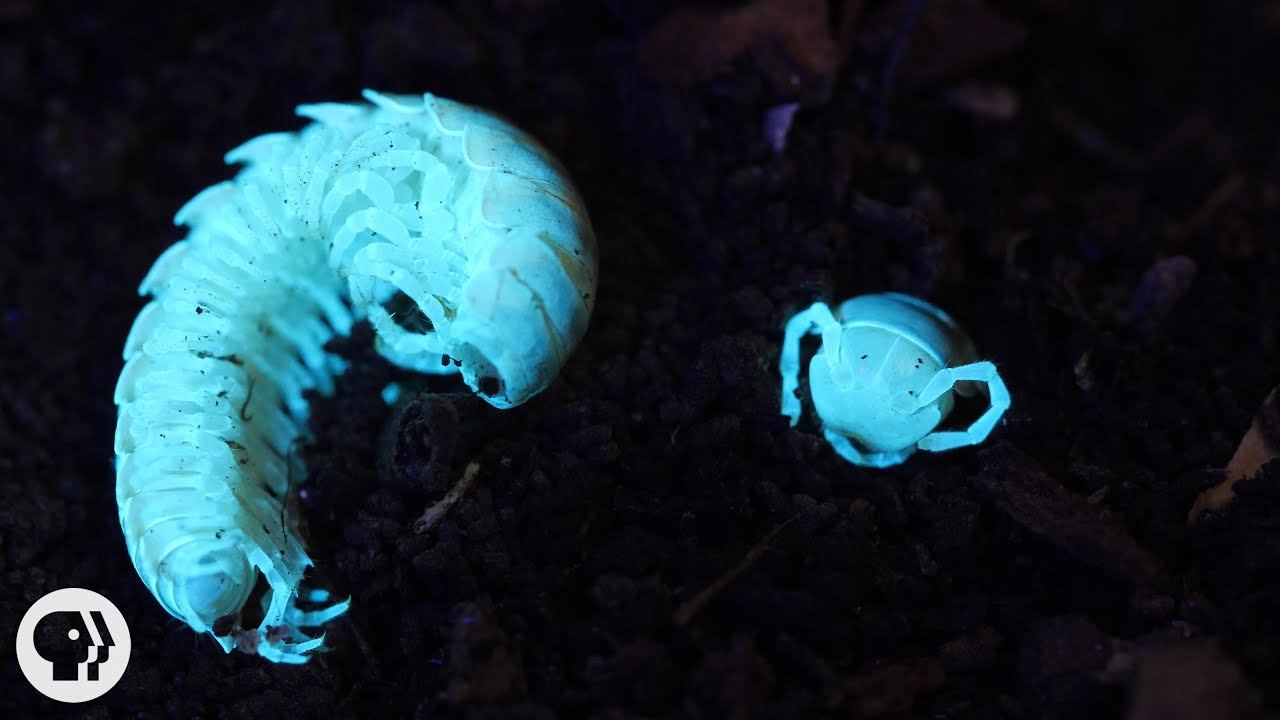
This millipede uses deadly cyanide gas to keep predators at bay. But one beetle can tolerate the toxic defense and rides the millipede like a bucking bronco. Who will win this showdown in the forest?
SUBSCRIBE to Deep Look! http://goo.gl/8NwXqt
Please support us on Patreon! https://www.patreon.com/deeplook
DEEP LOOK is a ultra-HD (4K) short video series created by KQED San Francisco and presented by PBS Digital Studios. See the unseen at the very edge of our visible world. Explore big scientific mysteries by going incredibly small.
---
Across Northern California, as the rainy season is ending and spring is taking hold, bees are buzzing, flowers are growing and hikers are hitting the trails.
But down at ground level, the pastoral scenery is concealing a surprising battle: relentless chemical warfare between bugs.
More than 200 species of millipedes emerge from their underground lairs every year during the winter and early spring months to forage for food and seek mates.
They have to fend off insects, mammals, reptiles and amphibians looking for a tasty meal. But they have a secret weapon – toxic chemicals they shoot from special glands. One Bay Area species, Xystocheir dissecta, carries deadly cyanide and benzaldehyde.
If they’re feeling threatened, these millipedes produce an invisible, odorless hydrogen cyanide gas that they spray at predators, and which is virtually toxic to all organisms. One byproduct is benzaldehyde, which gives off the scent of bitter almonds, as an additional signal that they’re secreting poison.
The millipedes don’t poison themselves, however. They’ve developed an immunity.
The cyanide can kill nearly any other animal trying to dine on the millipedes. Except one.
New research has found that one tough beetle is the only known predator in the world that can survive a direct blast of cyanide gas and keep going.
Brandt Weary, an entomologist, studied these hardy beetles last year for his senior thesis at the University of California Berkeley.
The beetles, known as Promecognathus crassus, love to eat millipedes, even though they are only one-fifth the millipedes’ size.
Weary wanted to know more about how the beetles withstood the millipedes’ tough chemical defense. He found that while many other beetles will avoid the cyanide-spraying millipedes, Promecognathus seeks them out.
--- How many legs do millipedes have?
Most millipedes have between 34-400 legs, and the record is 750!
--- Why do these millipedes “glow” or fluoresce?
One theory behind millipede fluorescence is that it's a warning sign. Moonlight has some UV light, so maybe an animal with better night vision can see the fluorescence even if we can't.
--- Which millipedes produce cyanide?
Only millipedes in the order Polydesmida produce cyanide. It's the largest order of millipedes with about 3500 species.
---+ Read the entire article on KQED Science:
https://www.kqed.org/science/1....939811/this-milliped
---+ For more information:
Kip Will at UC Berkeley: https://ourenvironment.berkele....y.edu/people/kipling
Science on the SPOT: Glowing Millipedes of Alcatraz: https://ww2.kqed.org/quest/201....3/03/19/science-on-t
---+ Shoutout!
?Congratulations ?to these fans for suggesting our *5 favorite common names* for Xystocheir dissecta, on our Community Tab: https://www.youtube.com/channe....l/UC-3SbfTPJsL8fJAPK
#5 Unom Auhasard: Walking rave stick
#4 F E: "Lumilipede"
#3 Mr.salty: " hell no"
#2 Mystery Bomb Noel: "blue galaxy"
#1 Tinkili: "Glowy Feets McGee"
---+ Thank you to our Top Patreon Supporters ($10+ per month)!
Bill Cass, Justin Bull, Daniel Weinstein, Chris B Emrick, Karen Reynolds, Jeremy Lambert, David Deshpande, Daisuke Goto, Bugeyed.fr, WhatzGames, Elizabeth Ann Ditz, Robert Warner, Shirley Washburn, Tatianna Bartlett, KW, Tanya Finch, Elizabeth Wolden, Sayantan Dasgupta, Monica Albe, Willy Nursalim, Jenn's Bowtique, Jane Orbuch, Laurel Przybylski, Johnnyonnyful, Levi Cai, Jason Buberel, Mark Joshua Bernardo, Michael Mieczkowski, Jeanine Womble, Aurora Mitchell, Edwin Rivas, Marjorie D Miller, Companion Cube, Chris Murphy, Joao Ascensao, Two Box Fish, PM Daeley, TierZoo, Robert Amling, Shelley Pearson Cranshaw, Mario Rahmani
---+ About KQED
KQED, an NPR and PBS affiliate in San Francisco, CA, serves Northern California and beyond with a public-supported alternative to commercial TV, Radio and web media.
Funding for Deep Look is provided in part by PBS Digital Studios. Deep Look is a project of KQED Science, which is also supported by the National Science Foundation, the Templeton Religion Trust, the Templeton World Charity Foundation, the S. D. Bechtel, Jr. Foundation, the Dirk and Charlene Kabcenell Foundation, the Vadasz Family Foundation, the Gordon and Betty Moore Foundation, the Fuhs Family Foundation and the members of KQED.
#millipede #beetle #deeplook
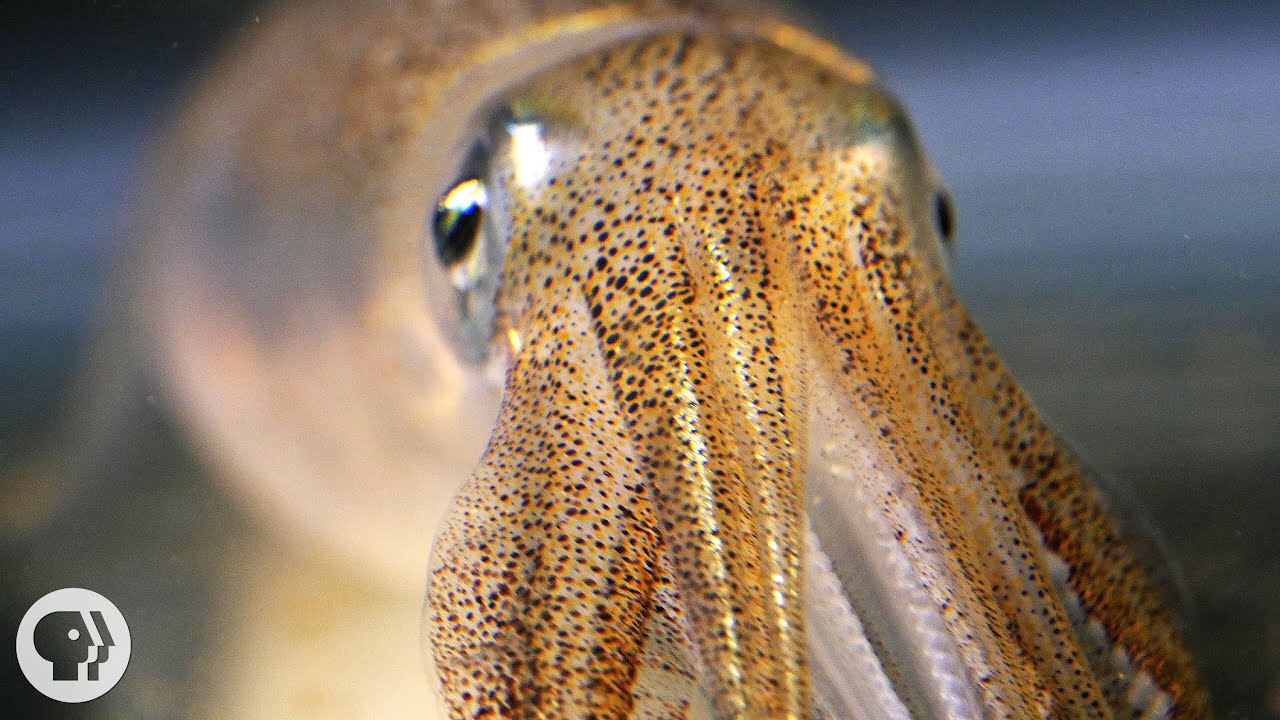
Octopuses and cuttlefish are masters of underwater camouflage, blending in seamlessly against a rock or coral. But squid have to hide in the open ocean, mimicking the subtle interplay of light, water, and waves. How do they do it? (And it is NOT OCTOPI)
SUBSCRIBE to Deep Look! http://goo.gl/8NwXqt
DEEP LOOK is a ultra-HD (4K) short video series created by KQED San Francisco and presented by PBS Digital Studios. Explore big scientific mysteries by going incredibly small.
* NEW VIDEOS EVERY OTHER TUESDAY! *
--- How do squid change color?
For an animal with such a humble name, market squid have a spectacularly hypnotic appearance. Streaks and waves of color flicker and radiate across their skin. Other creatures may posses the ability to change color, but squid and their relatives are without equal when it comes to controlling their appearance and new research may illuminate how they do it.
To control the color of their skin, cephalopods use tiny organs in their skin called chromatophores. Each tiny chromatophore is basically a sac filled with pigment. Minute muscles tug on the sac, spreading it wide and exposing the colored pigment to any light hitting the skin. When the muscles relax, the colored areas shrink back into tiny spots.
--- Why do squid change color?
Octopuses, cuttlefish and squid belong to a class of animals referred to as cephalopods. These animals, widely regarded as the most intelligent of the invertebrates, use their color change abilities for both camouflage and communication. Their ability to hide is critical to their survival since, with the exception of the nautiluses, these squishy and often delicious animals live without the protection of protective external shells.
But squid often live in the open ocean. How do you blend in when there's nothing -- except water -- to blend into? They do it by changing the way light bounces off their their skin -- actually adjust how iridescent their skin is using light reflecting cells called iridophores. They can mimic the way sunlight filters down from the surface. Hide in plain sight.
Iridophores make structural color, which means they reflect certain wavelengths of light because of their shape. Most familiar instances of structural color in nature (peacock feathers, mother of pearl) are constant–they may shimmer when you change your viewing angle, but they don't shift from pink to blue.
--- Read the article for this video on KQED Science:
http://ww2.kqed.org/science/20....15/09/08/youre-not-h
--- More great DEEP LOOK episodes:
What Gives the Morpho Butterfly Its Magnificent Blue?
https://www.youtube.com/watch?v=29Ts7CsJDpg
Nature's Mood Rings: How Chameleons Really Change Color
https://www.youtube.com/watch?v=Kp9W-_W8rCM
Pygmy Seahorses: Masters of Camouflage
https://www.youtube.com/watch?v=Q3CtGoqz3ww
--- Related videos from the PBS Digital Studios Network!
Cuttlefish: Tentacles In Disguise - It’s Okay to Be Smart
https://www.youtube.com/watch?v=lcwfTOg5rnc
Why Neuroscientists Love Kinky Sea Slugs - Gross Science
https://www.youtube.com/watch?v=QGHiyWjjhHY
The Psychology of Colour, Emotion and Online Shopping - YouTube
https://www.youtube.com/watch?v=THTKv6dT8rU
--- More KQED SCIENCE:
Tumblr: http://kqedscience.tumblr.com
Twitter: https://www.twitter.com/kqedscience
KQED Science: http://ww2.kqed.org/science
Funding for Deep Look is provided in part by PBS Digital Studios and the John S. and James L. Knight Foundation. Deep Look is a project of KQED Science, which is supported by HopeLab, The David B. Gold Foundation; S. D. Bechtel, Jr. Foundation; The Dirk and Charlene Kabcenell Foundation; The Vadasz Family Foundation; Smart Family Foundation and the members of KQED.
#deeplook #squid #octopus
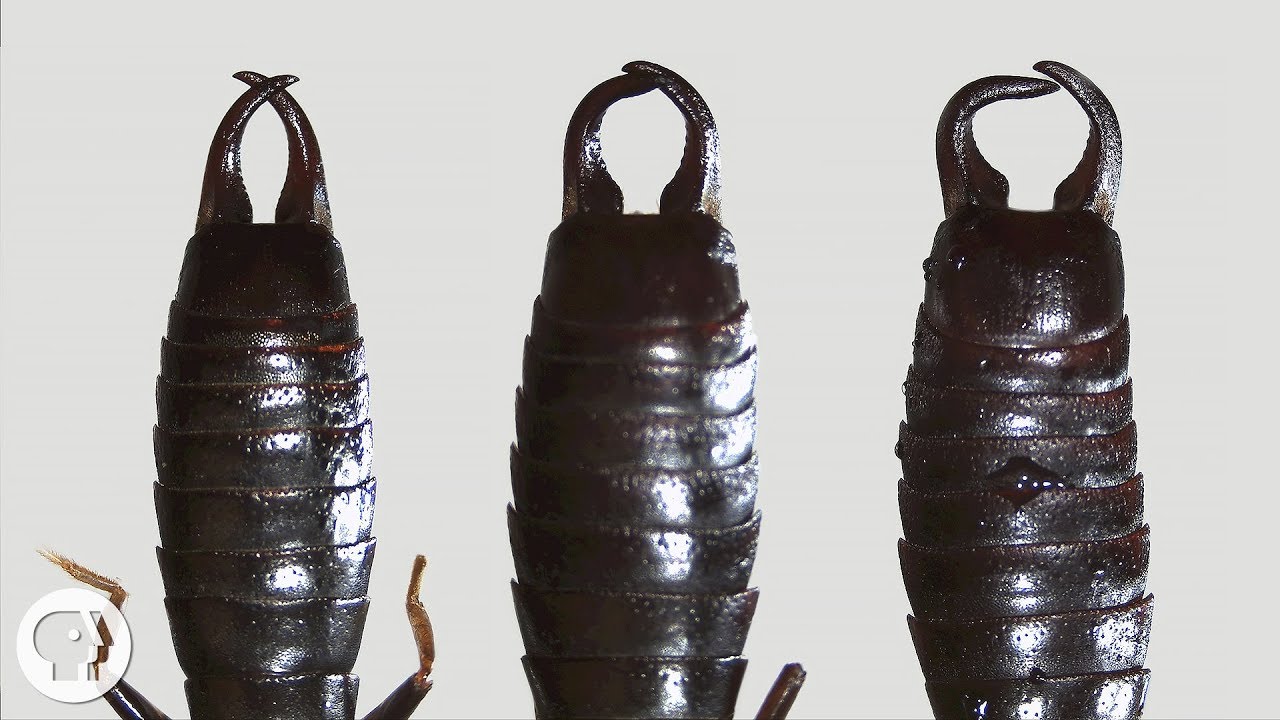
Earwigs are equipped with some pretty imposing pincers on their rear, and they're not afraid to use them. But when it comes to these appendages, size isn't everything.
You can learn more about CuriosityStream at https://curiositystream.com/deeplook.
SUBSCRIBE to Deep Look! http://goo.gl/8NwXqt
DEEP LOOK is a ultra-HD (4K) short video series created by KQED San Francisco and presented by PBS Digital Studios. See the unseen at the very edge of our visible world. Explore big scientific mysteries by going incredibly small.
Many animals seem to show a preference for symmetry in a potential mate. It can be a clue that the mate has the genes necessary to develop properly and thrive in an environment full of stresses and dangers.
But in some critters buck the trend. Like the earwig, a diminutive insect found on every continent except Antarctica.
Andrew ZInk, an associate professor of biology at San Francisco State University, has been looking at how symmetry affects earwigs success when it comes to social interactions.
He’s studying maritime earwigs, a larger and more powerful cousin to the common European earwig you might find in your backyard. Both creatures bear fearsome looking pincers on their backsides. And they aren’t afraid to use them to defend themselves. Zink knows all about that.
--- Do earwigs climb into your ear?
The quick answer is no. Earwigs are not interested in climbing into your ear to lay their eggs or otherwise. They’re no more likely than any other bug to accidentally find its way into you ear. The name earwig come from the old english words for ear and insect. It may have been named after the shape of the common European earwig’s wings, which when extended resemble a human ear.
--- Do earwigs pinch people?
Earwigs will use their pincers to defend themselves, but the pinch is typically not strong enough to be considered dangerous.
--- Do earwigs fly?
Male common European earwigs have wings and can fly to disperse and find mates. Females do not have wings or fly. Neither male nor female maritime earwigs have wings or fly.
--- What do earwigs eat?
Most earwigs are scavengers and omnivores. In addition to scavenging and eating plants, the common European earwigs also hunts small prey like aphids. Maritime earwigs are carnivorous hunting smaller arthropods like sand hoppers.
---+ Read the entire article on KQED Science:
https://ww2.kqed.org/science/2....018/06/26/what-do-ea
---+ For more information:
Biologists probe asymmetric warfare between earwigs
https://news.sfsu.edu/biologis....ts-probe-asymmetric-
Asymmetric Forceps Increase Fighting Success among Males of Similar size in the Maritime Earwig
https://onlinelibrary.wiley.co....m/doi/abs/10.1111/j.
Sexual selection by the seashore: the roles of body size and weaponry in mate choice and competition in the maritime earwig (Anisolabis maritima)
http://viyengar.clasit.org/wp-....content/uploads/2017
---+ More Great Deep Look episodes:
Watch These Cunning Snails Stab and Swallow Fish Whole | Deep Look
https://www.youtube.com/watch?v=jYMjLgPFSso
This Is Why Water Striders Make Terrible Lifeguards | Deep Look
https://www.youtube.com/watch?v=E2unnSK7WTE&t=19s
Take Two Leeches and Call Me in the Morning | Deep Look
https://www.youtube.com/watch?v=O-0SFWPLaII
---+ See some great videos and documentaries from PBS Digital Studios!
What the World’s Cutest Animal Can Teach Us About Saving Ourselves | Hot Mess
https://www.youtube.com/watch?v=IF8ym4g2SCU
The Deadpool Salamander | It's Okay To Be Smart
https://www.youtube.com/watch?v=uGutfyDOmu0
Why Do We Eat Artificial Flavors? | Origin Of Everything
https://www.youtube.com/watch?v=iNaJ31EV13U
---+ Follow KQED Science:
KQED Science: http://www.kqed.org/science
Tumblr: http://kqedscience.tumblr.com
Twitter: https://www.twitter.com/kqedscience
---+ About KQED
KQED, an NPR and PBS affiliate in San Francisco, CA, serves Northern California and beyond with a public-supported alternative to commercial TV, Radio and web media.
Funding for Deep Look is provided in part by PBS Digital Studios. Deep Look is a project of KQED Science, which is supported by the Templeton Religion Trust and the Templeton World Charity Foundation, the S. D. Bechtel, Jr. Foundation, the Dirk and Charlene Kabcenell Foundation, the Vadasz Family Foundation, the Gordon and Betty Moore Foundation, the Fuhs Family Foundation Fund and the members of KQED.
#deeplook #earwig #pincers
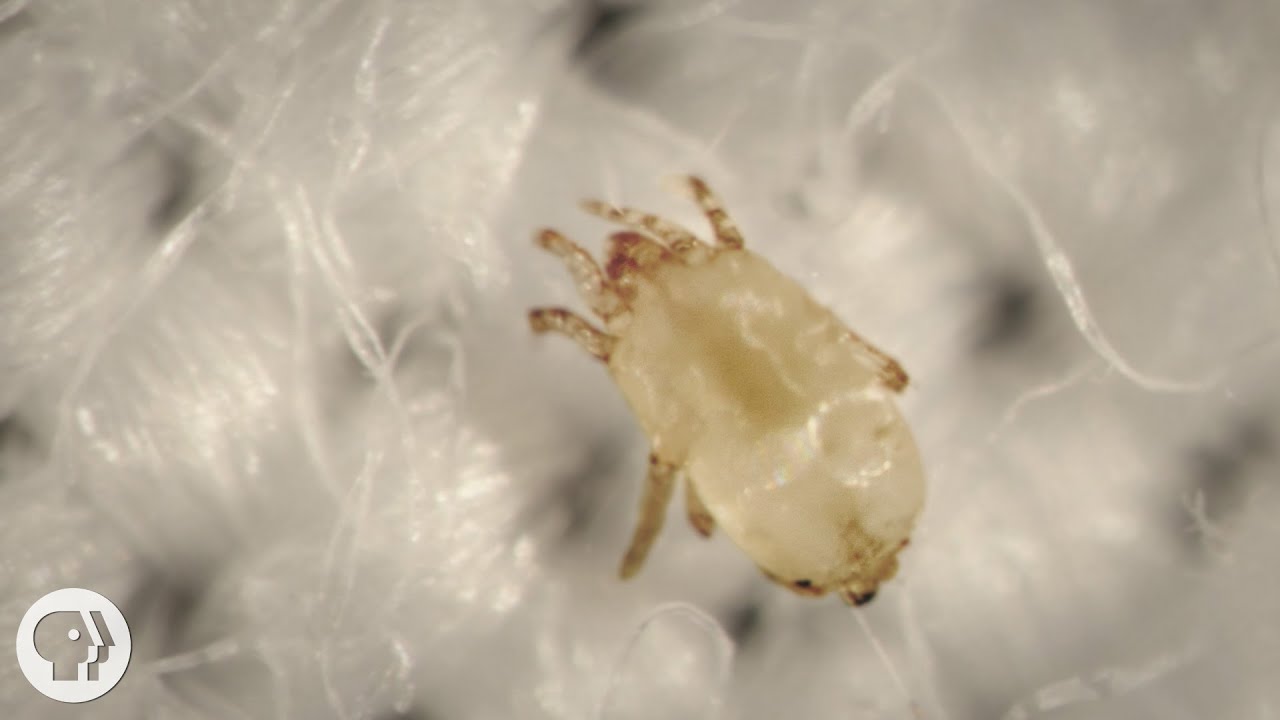
You may think that you've got the house to yourself, but chances are you have about 100 different types of animals living with you. Many of them are harmless, but a few can be dangerous in ways you wouldn't expect. New research explores exactly whom you share your home with and how they got there.
SUBSCRIBE to Deep Look! http://goo.gl/8NwXqt
DEEP LOOK: a new ultra-HD (4K) short video series created by KQED San Francisco and presented by PBS Digital Studios. See the unseen at the very edge of our visible world. Get a new perspective on our place in the universe and meet extraordinary new friends. Explore big scientific mysteries by going incredibly small.
---+ About Dust Mites
With the warming weather it’s the season for spring cleaning. But before you reach for the broom and mop, take a moment to look at who else is sharing your home with you. The number of uninvited guests you find in your dustpan may surprise you.
A recent study published in the journal PeerJ took up the challenge of cataloging the large numbers of tiny animals that live in human dwellings. The researchers found that the average home contains roughly 100 different species of arthropods, including familiar types like flies, spiders and ants, but also some kinds that are less well known like gall wasps and book lice. And no matter how much human residents may clean, there will always be a considerable number of mini-roommates.
“Even as entomologists we were really surprised. We live in our houses all the time, so we thought we’d be more familiar with the kind of things we’d come across. There was a surprising level of biodiversity,” said Michelle Trautwein, assistant curator of entomology at the California Academy of Sciences in San Francisco.
---+ What are dust mites?
Dust mites are tiny animals, related to spiders, that are usually too small to be seen with the naked eye. They feed on dead skin that humans shed every day and their droppings may cause allergic reactions and may aggravate asthma, especially in children.
---+ How do you minimize dust mites?
It’s practically impossible to completely rid a home of dust mites, but frequent cleaning and removing carpeting can help. Wet cleaning like mopping helps keep from stirring up dust while cleaning. The most effective way to keep dust mite populations down is to keep the indoor humidity level low. Dust mites can only survive in humid environments.
---+ How do you see dust mites?
Dust mites are about .2mm long. You can see dust mites with a powerful magnifying glass, but you can get a better view by using a microscope.
Read the entire article on KQED Science:
http://ww2.kqed.org/science/20....16/04/05/meet-the-du
---+ More great DEEP LOOK episodes:
The Bombardier Beetle And Its Crazy Chemical Cannon
http://ww2.kqed.org/science/20....16/04/05/meet-the-du
Where Are the Ants Carrying All Those Leaves?
https://www.youtube.com/watch?v=-6oKJ5FGk24
Banana Slugs: Secret of the Slime
https://www.youtube.com/watch?v=mHvCQSGanJg
--- Super videos from the PBS Digital Studios Network!
It's Okay To Be Smart: How Do Bees Make Honey?
https://youtu.be/nZlEjDLJCmg
Gross Science: What's Living On Your Contact Lenses?
https://www.youtube.com/watch?v=wRMKzsU9zec
Gross Science: You Have Mites Living On Your Face
https://www.youtube.com/watch?v=oMmCWx8vySs
--- More content from KQED Science, Northern California's PBS and NPR affiliate:
KQED Science: http://www.kqed.org/science
Tumblr: http://kqedscience.tumblr.com
Twitter: https://www.twitter.com/kqedscience
Funding for Deep Look is provided in part by PBS Digital Studios and the John S. and James L. Knight Foundation. Deep Look is a project of KQED Science, which is also supported by HopeLab, the David B. Gold Foundation, the S. D. Bechtel, Jr. Foundation, the Dirk and Charlene Kabcenell Foundation, the Vadasz Family Foundation, the Gordon and Betty Moore Foundation, the Smart Family Foundation and the members of KQED.
#deeplook