Top Vídeos

Tracklist below.
Download on iTunes: https://itunes.apple.com/nl/al....bum/vivaldi-cello-so
Listen via Spotify: https://open.spotify.com/album..../3iXinMZwmSUC1uzkL5W
For physical sales: http://www.brilliantclassics.c....om/articles/v/vivald
A recording of the complete Cello Sonatas by Vivaldi on period instruments! Antonio Vivaldi was one of the first composers to feature the cello, then a relatively “new” instrument (after the viola da gamba), as a mature solo instrument. This full recording contains the complete 6 sonatas for cello and basso continuo.
Vivaldi displays an astonishing variety and inventiveness in these sonatas, using the instrument’s possibilities to the utmost; these sonatas still offer a serious challenge, both technical and musical, for any professional cellist nowadays. Apart from that they are vintage Vivaldi, featuring an enormous range of emotional extremes, from deep heartfelt sadness to infectious joy.
00:00:00 Cello Sonata in B-Fflat Major, RV 47: I. Largo
00:03:28 Cello Sonata in B-Fflat Major, RV 47: II. Allegro
00:06:43 Cello Sonata in B-Fflat Major, RV 47: III. Largo
00:10:52 Cello Sonata in B-Fflat Major, RV 47: IV. Allegro
00:12:48 Cello Sonata in F Major, RV 41: I. Largo
00:16:19 Cello Sonata in F Major, RV 41: II. Allegro
00:18:51 Cello Sonata in F Major, RV 41: III. Largo
00:22:27 Cello Sonata in F Major, RV 41: IV. Allegro
00:24:56 Cello Sonata in A Minor, RV 43: I. Largo
00:29:21 Cello Sonata in A Minor, RV 43: II. Allegro
00:32:53 Cello Sonata in A Minor, RV 43: III. Largo
00:37:11 Cello Sonata in A Minor, RV 43: IV. Allegro
00:40:13 Cello Sonata in B-Flat Major, RV 45: I. Largo
00:43:32 Cello Sonata in B-Flat Major, RV 45: II. Allegro
00:46:12 Cello Sonata in B-Flat Major, RV 45: III. Largo
00:51:00 Cello Sonata in B-Flat Major, RV 45: IV. Allegro
00:53:42 Cello Sonata in E Minor, RV 40: I. Largo
00:56:24 Cello Sonata in E Minor, RV 40: II. Allegro
00:58:51 Cello Sonata in E Minor, RV 40: III. Largo
01:01:10 Cello Sonata in E Minor, RV 40: IV. Allegro
01:03:38 Cello Sonata in B-Flat Major, RV 46: I. Preludio. Largo
01:05:37 Cello Sonata in B-Flat Major, RV 46: II. Allemande. Allegro
01:08:26 Cello Sonata in B-Flat Major, RV 46: III. Largo
01:11:22 Cello Sonata in B-Flat Major, RV 46: IV. Corrente. Allegro

Tracklist below.
Online purchase or streaming (Spotify, iTunes, Amazon Music, Deezer, Google Play): https://brilliant-classics.lnk.to/CosteGuitarMusic
More Information: https://www.brilliantclassics.....com/articles/c/coste
Brilliant Classics Spotify: https://open.spotify.com/user/....brilliantclassics?si
Spotify playlist: Brain Training – Classical Music
https://brilliant-classics.lnk.....to/BrainTrainingCla
Brilliant Classics Facebook: https://www.facebook.com/brilliantclassics
Composer: Napoléon Coste
Artist: Flávio Apro classical guitar
Napoleon Coste (1805-1883) was one of the most important and influential protagonists of the guitar in the 19th century. He was a prodigy, touring Europe in his early years giving highly successful concerts, publishing his own music, inventing new types of guitars and hybrid instruments such as the Heptacode and Decacorde, a musicologist and a highly respected teacher.
His most important oeuvre for the guitar are the “25 Etudes de Genre”, concert pieces composed over the whole period of his life, miniatures of great attraction, charm, melodic inventiveness and virtuosity. Also included is the Grande Sérénade Op. 30, a multi-movement concert piece to show off the player’s skills and sentiment.
Played with great conviction, technical command and apparent joy by the wonderful Flávio Apro, one of Brazil’s foremost guitarists, who already successfully recorded for Brilliant Classics: “Nocturne” and “The Brazilian Guitar”.
Tracklist:
00:00:00 25 Etudes for Guitar, Op. 38: Etude No. 1 in A Minor
00:01:20 25 Etudes for Guitar, Op. 38: Etude No. 2 in C Major
00:02:33 25 Etudes for Guitar, Op. 38: Etude No. 3 in D Minor
00:03:53 25 Etudes for Guitar, Op. 38: Etude No. 4 in D Major
00:05:16 25 Etudes for Guitar, Op. 38: Etude No. 5 in E Major
00:06:32 25 Etudes for Guitar, Op. 38: Etude No. 6 in A Major
00:08:17 25 Etudes for Guitar, Op. 38: Etude No. 7 in A Minor
00:10:00 25 Etudes for Guitar, Op. 38: Etude No. 8 in E Minor
00:14:26 25 Etudes for Guitar, Op. 38: Etude No. 9 in G Major
00:16:22 25 Etudes for Guitar, Op. 38: Etude No. 10 in D Major
00:18:06 25 Etudes for Guitar, Op. 38: Etude No. 11 in G Major
00:19:24 25 Etudes for Guitar, Op. 38: Etude No. 12 in C Major
00:20:37 25 Etudes for Guitar, Op. 38: Etude No. 13 in C Major
00:22:19 25 Etudes for Guitar, Op. 38: Etude No. 14 in A Major
00:26:19 25 Etudes for Guitar, Op. 38: Etude No. 15 in D Major
00:27:53 25 Etudes for Guitar, Op. 38: Etude No. 16 in G Major
00:30:24 25 Etudes for Guitar, Op. 38: Etude No. 17 in C Major
00:32:46 25 Etudes for Guitar, Op. 38: Etude No. 18 in A Minor
00:34:46 25 Etudes for Guitar, Op. 38: Etude No. 19 in A Major
00:38:06 25 Etudes for Guitar, Op. 38: Etude No. 20 in D Major
00:41:22 25 Etudes for Guitar, Op. 38: Etude No. 21 in G Major
00:44:29 25 Etudes for Guitar, Op. 38: Etude No. 22 in A Minor
00:45:36 25 Etudes for Guitar, Op. 38: Etude No. 23 in A Major
00:47:50 25 Etudes for Guitar, Op. 38: Etude No. 24 in D Minor
00:52:37 25 Etudes for Guitar, Op. 38: Etude No. 25 in B-Flat Major
00:57:39 Grande Sérénade for Guitar, Op. 30: I. Largo
01:00:05 Grande Sérénade for Guitar, Op. 30: II. Allegro
01:00:22 Grande Sérénade for Guitar, Op. 30: III. Vivace
01:01:36 Grande Sérénade for Guitar, Op. 30: IV. Andantino. Marche et Choir de Pélerins
01:06:24 Grande Sérénade for Guitar, Op. 30: V. Bolero
01:09:01 Grande Sérénade for Guitar, Op. 30: VI. Andante
01:09:54 Grande Sérénade for Guitar, Op. 30: VII. Final. Allegro
01:11:57 Grande Sérénade for Guitar, Op. 30: VIII. Allegretto

Tracklist Below:
Spotify: https://open.spotify.com/album..../3Ls7Ntc0D7KuWQQZCJi
Physical CD: http://brilliantclassics.com/a....rticles/v/vivaldi-la
iTunes: https://itunes.apple.com/album..../vivaldi-la-cetra-12
Federico Guglielmo and his superb ensemble L’Arte dell’Arco return with more Vivaldi delights, this time treating us to La cetra, a collection of 12 concertos. Most are for violin solo but one includes a second solo violin. Additionally, there is the fascinating inclusion of two concertos ‘con violin scordato’ – literally, a violin wrongly tuned; not an uncommon practice at the time.
The collection, dedicated to Charles VI, Holy Roman Emperor, is called ‘la cetra’ after a cittern, or lyre. Not only does this indicate something of the sparkling string playing in the solo parts but it was also associated with the Hapsburg coat of arms, a nod to the dedicatee of the collection.
Composer:
Antonio Vivaldi
Artist:
L'Arte dell'Arco
Federico Guglielmo (violin & concertmaster)
00:00:00 Violin Concerto No. 1 in C Major, RV 181a: I. Allegro
00:03:20 Violin Concerto No. 1 in C Major, RV 181a: II. Largo
00:06:17 Violin Concerto No. 1 in C Major, RV 181a: III. Allegro
00:08:40 Violin Concerto No. 5 in A Minor, RV 358: I. Adagio – Presto
00:11:22 Violin Concerto No. 5 in A Minor, RV 358: II. Largo
00:13:19 Violin Concerto No. 5 in A Minor, RV 358: III. Allegro
00:16:11 Violin Concerto No. 4 in E Major, RV 263a: I. Allegro non molto
00:20:25 Violin Concerto No. 4 in E Major, RV 263a: II. Largo
00:23:05 Violin Concerto No. 4 in E Major, RV 263a: III. Allegro non molto
00:26:09 Violin Concerto No. 12 in B Minor, RV 391: I. Allegro non molto
00:31:00 Violin Concerto No. 12 in B Minor, RV 391: II. Largo
00:33:40 Violin Concerto No. 12 in B Minor, RV 391: III. Allegro
00:37:24 Violin Concerto No. 3 in G Minor, RV 334: I. Allegro non molto
00:40:37 Violin Concerto No. 3 in G Minor, RV 334: II. Largo
00:43:36 Violin Concerto No. 3 in G Minor, RV 334: III. Allegro non molto
00:46:38 Violin Concerto No. 7 in B-Flat Major, RV 359: I. Allegro
00:49:19 Violin Concerto No. 7 in B-Flat Major, RV 359: II. Largo
00:50:39 Violin Concerto No. 7 in B-Flat Major, RV 359: III. Allegro
00:53:24 Concerto for
00:56:43 Violins in B-Flat Major, RV 530: I. Allegro 2Concerto for 2 Violins in B-Flat Major, RV 530: II. Largo e spiccato
00:59:21 Concerto for 2 Violins in B-Flat Major, RV 530: III. Allegro
01:01:57 Violin Concerto No. 10 in G Major, RV 300: I. Allegro molto
01:05:11 Violin Concerto No. 10 in G Major, RV 300: II. Largo cantabile
01:06:40 Violin Concerto No. 10 in G Major, RV 300: III. Allegro
01:09:18 Violin Concerto No. 8 in D Minor, RV 238: I. Allegro
01:12:42 Violin Concerto No. 8 in D Minor, RV 238: II. Largo
01:15:31 Violin Concerto No. 8 in D Minor, RV 238: III. Allegro
01:18:17 Violin Concerto No. 2 in A Major, RV 345: I. Allegro
01:21:56 Violin Concerto No. 2 in A Major, RV 345: II. Largo
01:23:54 Violin Concerto No. 2 in A Major, RV 345: III. Allegro
01:26:24 Violin Concerto No. 11 in C Minor, RV 198a: I. Allegro
01:30:16 Violin Concerto No. 11 in C Minor, RV 198a: II. Adagio
01:32:23 Violin Concerto No. 11 in C Minor, RV 198a: III. Allegro
01:35:15 Violin Concerto No. 6 in A Major, RV 348: I. Allegro
01:39:09 Violin Concerto No. 6 in A Major, RV 348: II. Largo
01:41:36 Violin Concerto No. 6 in A Major, RV 348: III. Allegro non molto

Online purchase or streaming (Spotify, iTunes, Amazon Music, Deezer, Google Play): https://brilliant-classics.lnk.....to/TelemannTafelmus
More Information: https://www.brilliantclassics.....com/articles/t/telem
Brilliant Classics Facebook: https://www.facebook.com/brilliantclassics
Brilliant Classics Spotify: https://open.spotify.com/user/....brilliantclassics?si
Spotify Playlists:
Brilliant Classics Spotify: https://brilliant-classics.lnk.to/Spotify
The best of Liszt: https://brilliant-classics.lnk.to/Playliszt
The best of Bach: https://brilliant-classics.lnk.....to/BestOfBachPlayli
Most popular piano music: https://brilliant-classics.lnk.to/MostPopularPiano
Beautiful classical Music: https://brilliant-classics.lnk.....to/BeautifulClassic
Classical music for dinnertime: https://brilliant-classics.lnk.....to/ClassicalMusicfo
Composer: Georg Philipp Telemann
Artists: Wilbert Hazelzet transverse (flute), Rémy Baudet (violin), Jaaap ter Linden (cello), Musica Amphion, Pieter-Jan Belder (harpsichord and concert master)
About this Album: It isn’t often that one finds a complete recording of Telemann’s Tafelmusik, and what a performance this is! The best “early music” musicians of The Netherlands came together and had obviously a good time: Flautists Wilbert Hazelzet and Kate Clark, violinist Rémy Baudet (concertmaster Orchestra of the 18th Century, lead by Frans Brüggen), cellists Richte van der Meer and Jaap ter Linden, under the inspiring direction of harpsichordist Pieter-Jan Belder.
Tafelmusik consists of three “Productions” in various ensembles, from solo to orchestral. It was written for performance during ceremonious dinners, explaining the “diverting” character of the music, which is by no means shallow or lightweight, but full of catching melodies and brilliant instrumental virtuosity, a proof of Telemann’s genius. Enjoy your meal, with this appetizing piece of music!
Tracklist:
00:00:00 Musique de Table, Production I, I. Ouverture - Suite in E Minor for two flutes, strings & b.c.
00:29:16 Musique de Table, Production I, II. Quatuor in G Major for flute, oboe, violin & b.c.
00:43:27 Musique de Table, Production I, III. Concerto in A Major for flute, violin, violoncello, strings & b.c.
01:09:46 Musique de Table, Production I, IV. Trio in E-Flat Major for two violins & b.c.
01:23:19 Musique de Table, Production I, V. Solo in B Minor for flute & b.c.
01:34:27 Musique de Table, Production I, VI. Conclusion in E Minor for two flutes, strings & b.c.
01:39:26 Musique de Table, Production II, I. Ouverture-Suite in D Major for oboe, trumpet, strings & b.c.
02:18:08 Musique de Table, Production II, I. Quatuor in D Minor for recorder, two flutes & b.c.
02:35:32 Musique de Table, Production II, III. Trio in E Minor for flute, oboe & b.c.
02:50:22 Musique de Table, Production II, IV. Solo in A Major for violin & b.c.
03:03:20 Musique de Table, Production II, V. Conclusion in D Major for oboe, trumpet, strings & b.c.
03:09:55 Musique de Table, Production III, I. Ouverture-Suite in B-Flat Major for 2 oboes, bassoon, strings & b.c.
03:33:43 Musique de Table, Production III, II. Quatuor in E Minor for flute, violin, violoncello & b.c.
03:42:29 Musique de Table, Production III, III. Concerto in E-Flat Major for two horns, strings & b.c.
03:57:04 Musique de Table, Production III, III. Trio in D Major for 2 fluets & b.c.
04:05:50 Musique de Table, Production III, VI. Solo in G Minor for oboe & b.c.
04:16:57 Musique de Table, Production III, IX. Conclusions in B-Flat Major for two oboes, bassoon, strings & b.c.
FULL TRACKLIST IN THE COMMENT SECTION!
#Classical #BrilliantClassics #Music #Composer #ClassicalMusic #Telemann #Violin #ViolinMusic

Tracklist Below:
Spotify:https://open.spotify.com/album..../6wWT1ly3WDO6RXC9B5n
Physical Sale: http://brilliantclassics.com/a....rticles/t/ten-holt-c
iTunes: https://itunes.apple.com/album..../ten-holt-canto-osti
Following on from Canto Ostinato XL earlier this year, Brilliant Classics is proud to present Canto Ostinato XXL, a recording that brings a new perspective to Simeon ten Holt’s minimalist composition by adding a Romantic organ to the work’s original scoring for four pianos – a combination never before attempted. The result is the most beautiful and harmonious of sounds, one that captures Canto Ostinato’s emotional variety and depth through building on the sweetness and simplicity that inhabit this acclaimed composition, first performed in 1979.
Canto Ostinato is all to do with time: ‘taking your time, passing time, making time,’ as Jeroen van Veen, and one of the performers on the four-disc set, explains; and this is partly effected through the artists’ decision to repeat certain of the composition’s sections (106 in total) ad lib, thus inducing a sort of alienation of the part of the listener (because of the repetition’s posterior relationship to the harmony) and creating a hypnotic effect, a regular feature of minimalist music. Recorded over the course of just one day, this four-hour arrangement slows the tempo down a little, in order to accommodate the magnificent acoustics of the Muziekgebouw Eindhoven. Joining organist Aaart Bergwerff and Brilliant Classics regulars Sandra and Jeroen van Veen, all of whom feature on XL, are the acclaimed piano duo Elizabeth and Marcel Bergmann, both experts in the minimalist genre and who also enjoy separate international careers. Jeroen van Veen chairs the Simeon ten Holt Foundation, dedicated to keeping the wonderful music of this late Dutch composer alive.
Other information:
- Recorded 19 May 2014.
00:00:00 Canto Ostinato: Section 1
00:05:00 Canto Ostinato: Section 5
00:12:10 Canto Ostinato: Section 10
00:32:10 Canto Ostinato: Section 17
00:38:42 Canto Ostinato: Section 20
00:46:46 Canto Ostinato: Section 23
00:58:28 Canto Ostinato: Section 34
01:02:11 Canto Ostinato: Section 37
01:03:23 Canto Ostinato: Section 37
01:08:05 Canto Ostinato: Section 41
01:18:51 Canto Ostinato: Section 56
01:22:35 Canto Ostinato: Section 60
01:31:04 Canto Ostinato: Section 69
01:39:33 Canto Ostinato: Section 74. Cumulation No. 1
01:53:02 Canto Ostinato: Section 83
02:03:33 Canto Ostinato: Section 88
02:07:14 Canto Ostinato: Section 88 A
02:10:54 Canto Ostinato: Section 88 B
02:13:35 Canto Ostinato: Section 88 C
02:33:02 Canto Ostinato: Section 88 A
02:42:15 Canto Ostinato: Section 88 F
02:56:05 Canto Ostinato: Section 88 H
03:02:04 Canto Ostinato: Section 89
03:05:50 Canto Ostinato: Section 91 A
03:07:49 Canto Ostinato: Section 91 A
03:16:25 Canto Ostinato: Section 91 C
03:22:38 Canto Ostinato: Section 91 E
03:38:30 Canto Ostinato: Section 91 I
03:46:18 Canto Ostinato: Section 92
03:51:12 Canto Ostinato: Theme No. 2. Cumulation No. 2
04:02:20 Canto Ostinato: Section 105
04:04:21 Canto Ostinato: Section 106
Artist:
Jeroen van Veen (piano)
Sandra van Veen (piano)
Marcel Bergmann (piano)
Elizabeth Bergmann (piano)
Aart Bergwerff (organ)

Composers: Leone Sinigaglia
Artists: Alessandra Génot (violin), Massimiliano Génot (piano)
Online purchase or streaming (Spotify, iTunes, Amazon Music, Deezer, Google Play): https://brilliant-classics.lnk.to/sinigaglia
More Information: https://www.brilliantclassics.....com/articles/s/sinig
Brilliant Classics Spotify: https://open.spotify.com/user/....brilliantclassics?si
Brilliant Classics Facebook: https://www.facebook.com/brilliantclassics
There's an aura of mystery that surrounds the music of Leone Sinigaglia, and yet in his time he was esteemed and supported by the finest musicians of the period, from Dvořák (with whom he studied in Bohemia, and who was responsible for nurturing his interest in folk music) to Nikisch, from Mahler to Furtwängler, from Toscanini to Kreisler. As pianist Massimiliano Génot explains in his liner notes, Sinigaglia was very much a victim of historical circumstance, his Viennese base causing him to suffer after Italy's withdrawal from the Triple Alliance, following the outbreak of the First World War, and the subsequent demise of German culture; he also had to contend with rising anti-Semitism, not to mention the fact that Italian taste of the time was oriented towards opera and singing rather than instrumental and chamber music, his two preferred genres.
And yet Sinigaglia's inspiration was profoundly lyrical, with a propensity for melodic writing – one of the best examples is his 'swansong', the second movement of the Violin Sonata Op.44, which features on this album. And Sinigaglia was not without his triumphs: his Piedmontese Dances Op.31 for orchestra, performed in 250 cities before 1922, rivalled in popularity the dances by Brahms and Dvořák; and he scored a great success with the Overture Le Baruffe Chiozzotte, whose brio, strength and comic vitality characterise the brilliant four-hand reduction found on this recording. Convinced of what he describes as 'the manifest injustice of an historical judgement that has condemned Sinigaglia for too long to oblivion', Massimiliano Génot has, together with his sister, violinist Alessandra, aimed to bring the composer's cause to the attention of modern listeners, uniting Sinigaglia's entire piano works and presenting them alongside other musical gems and transcriptions as detailed above. Both natives of Turin, the composer's home town, the Génot duo's affinity for the composer is naturally a special one, and they deliver confident, robust performances which aim to cast light on the composer's 'strong will to match expressive authenticity and formal perfection'. These will hopefully go some way towards furthering public appreciation for a composer who undoubtedly deserves to be better known.
00:00:00 Ouverture, le baruffe chiozzotte, Op. 32
00:07:25 Zwei Klavierstücke, Op. 24: I. Capriccio
00:14:30 Zwei Klavierstücke, Op. 24: II. Humoreske
00:19:37 Fogli d’album Op. 7: I. A un fiore di campo
00:21:17 Fogli d’album Op. 7: II. Madrigale rustic
00:22:51 Fogli d’album Op. 7: III. Nostalgia
00:24:13 Fogli d’album Op. 7: IV. Così va il mondo, bimba mia
00:25:11 Fogli d’album Op. 7: V. Scherzino
00:26:41 Staccato-étude, Op. 11
00:29:32 Sonata for Violin and Piano, Op. 44: I. Allegro moderato
00:39:32 Sonata for Violin and Piano, Op. 44: II. Adagio
00:48:44 Sonata for Violin and Piano, Op. 44: III. Allegro con spirit
00:57:24 31: I. Andantino mosso
Download & Streams:
https://brilliant-classics.lnk.....to/Mozart-Complete-
Physical Sale:
https://www.brilliantclassics.....com/articles/m/mozar
Facebook:
https://www.facebook.com/brilliantclassics
Spotify Brilliant Classics:
https://brilliant-classics.lnk.to/Spotify
Tracklist:
00:00:00 Symphony in D, K. 111A: I. Allegro assai
00:03:30 Symphony in D, K. 111A: II. Andante grazioso
00:04:49 Symphony in D, K. 111A: III. Presto
00:06:13 Symphony No. 18 in F, K. 130: I. Allegro
00:13:50 Symphony No. 18 in F, K. 131: II. Andantino grazioso
00:20:44 Symphony No. 18 in F, K. 132: III. Menuetto
00:23:11 Symphony No. 18 in F, K. 133: IV. Molto allegro
00:30:51 Symphony No. 19 in E-Flat, K. 132: I. Allegro
00:35:07 Symphony No. 19 in E-Flat, K. 133: II. Andante
00:41:59 Symphony No. 19 in E-Flat, K. 134: III. Menuetto
00:46:04 Symphony No. 19 in E-Flat, K. 135: IV. Allegro
00:50:11 Symphony No. 25 in G Minor, K. 183: I. Allegro con brio
01:01:15 Symphony No. 25 in G Minor, K. 184: II. Andante
01:07:23 Symphony No. 25 in G, Minor, K. 185: III. Menuetto
01:10:45 Symphony No. 25 in G, Minor, K. 186: IV. Allegro
01:18:04 Symphony No. 24 in B-Flat, K. 182: I. Allegro spiritoso
01:22:21 Symphony No. 24 in B-Flat, K. 182: II. Andantino grazioso
01:25:01 Symphony No. 24 in B-Flat, K. 182: III. Allegro
01:28:13 Symphony No. 26 in E-Flat, K. 184: I. Molto presto
01:31:30 Symphony No. 26 in E-Flat, K. 184: II. Andante
01:34:36 Symphony No. 26 in E-Flat, K. 184: III. Allegro
01:37:15 Symphony in D K196: I. Allegro molto
01:39:52 Symphony in D K196: II. Andantino grazioso
01:42:33 Symphony in D K196: III. Allegro
01:45:14 Symphony No. 29 in A, K. 201: I. Allegro moderato
01:55:32 Symphony No. 29 in A, K. 201: II. Andante
02:05:51 Symphony No. 29 in A, K. 201: III. Menuetto
02:09:00 Symphony No. 29 in A, K. 201: IV. Allegro con spirito
02:16:22 Symphony No. 32 in G, K. 318: I. Allegro spiritoso
02:19:32 Symphony No. 32 in G, K. 318: II. Andante
02:22:14 Symphony No. 32 in G, K. 318: III. Primo tempo
02:24:14 Symphony No. 33 in B-Flat, K. 319: I. Allegro assai
02:31:36 Symphony No. 33 in B-Flat, K. 319: II. Andante moderato
02:36:13 Symphony No. 33 in B-Flat, K. 319: III. Menuetto
02:38:53 Symphony No. 33 in B-Flat, K. 319: IV. Allegro assai
02:48:19 Symphony No. 34 in C, K. 338: I. Allegro vivace
02:55:51 Symphony No. 34 in C, K. 338: II Andante di molto più tosto allegretto
03:02:39 Symphony No. 34 in C, K. 338: III. Allegro vivace
03:08:46 Symphony No. 35 in D, K. 385 ‘Haffner’: I. Allegro con spirito
03:14:57 Symphony No. 35 in D, K. 385 ‘Haffner’: II. Andante
03:20:53 Symphony No. 35 in D, K. 385 ‘Haffner’: III. Menuetto
03:23:57 Symphony No. 35 in D, K. 385 ‘Haffner’: IV. Presto
03:28:13 Symphony No. 31 in D, K. 297 ‘Paris’: I. Allegro assai
03:36:43 Symphony No. 31 in D, K. 297 ‘Paris’: II. Andante
03:42:25 Symphony No. 31 in D, K. 297 ‘Paris’: III. Allegro
03:46:34 Symphony No. 36 in C, K. 425 ‘Linz’: I. Adagio – Allegro con spirito
03:57:16 Symphony No. 36 in C, K. 425 ‘Linz’: II. Andante
04:06:38 Symphony No. 36 in C, K. 425 ‘Linz’: III. Menuetto
04:09:49 Symphony No. 36 in C, K. 425 ‘Linz’: IV. Presto
04:17:46 Symphony No. 40 in G Minor, K. 550 (Second version with clarinets): I. Molto allegro
04:25:18 Symphony No. 40 in G Minor, K. 550 (Second version with clarinets): II. Andante
04:35:19 Symphony No. 40 in G Minor, K. 550 (Second version with clarinets): III. Menuetto
04:39:0 Symphony No. 40 in G Minor, K. 550 (Second version with clarinets): IV. Allegro assai
04:45:45 Symphony No. 39 in E-Flat, K. 543: I. Adagio – Allegro
04:59:42 Symphony No. 39 in E-Flat, K. 543: II. Andante
05:11:18 Symphony No. 39 in E-Flat, K. 543: III. Presto
05:19:27 Symphony No. 38 in D, K. 504 ‘Prague’: I. Adagio – Allegro
05:30:43 Symphony No. 38 in D, K. 504 ‘Prague’: II. Andante con moto
05:38:45 Symphony No. 38 in D, K. 504 ‘Prague’: III. Menuetto
05:42:39 Symphony No. 38 in D, K. 504 ‘Prague’: IV. Allegro
05:51:08 Symphony No. 40 in G Minor, K. 550 (Second version with clarinets): I. Molto allegro
05:58:36 Symphony No. 40 in G Minor, K. 550 (Second version with clarinets): II. Andante
06:08:30 Symphony No. 40 in G Minor, K. 550 (Second version with clarinets): III. Menuetto
06:12:20 Symphony No. 40 in G Minor, K. 550 (Second version with clarinets): IV. Allegro assai
06:19:23 Symphony No. 41 in C, K. 551 ‘Jupiter’: I. Allegro vivace
06:31:05 Symphony No. 41 in C, K. 551 ‘Jupiter’: II. Andante cantabile
06:41:20 Symphony No. 41 in C, K. 551 ‘Jupiter’: III. Menuetto
06:45:44 Symphony No. 41 in C, K. 551 ‘Jupiter’: IV. Molto allegro

This album comes from the French Harpsichord Music box-set, containing the first 7 CD's out of 29.
Download & Streams:https://brilliant-classics.lnk.....to/FrenchHarpsichor
Physical sale:https://www.brilliantclassics.....com/articles/f/frenc
Follow our newest Classical Piano Playlist on Spotify: https://brilliant-classics.lnk.....to/ClassicalPianoPl
Follow Brilliant classics on Facebook: https://www.facebook.com/brilliantclassics
Composer: Jacques Champion de Chambonnières, Jean-Henry d’Anglebert, Gaspard Le Roux
Artists: Pieter-Jan Belder (harpsichord), Michael Borgstede (harpsichord), Yago Mahúgo (harpsichord), Francesco Cera (harpsichord), Franz Silvestri (harpsichord)
Brilliant Classics is proud to have released a number of harpsichord music of the highest quality over the past few years. This collection brings these works together, as well as never before published recordings, allowing the listener to soak up the sounds of 17th- and 18th-century France in its most intimate, domestic setting.
The release starts with Jean Henri d’Anglebert, featuring four of his extensive suites. Each begins with a precisely notated prelude, followed by various dance movements of lively gigues and slow sarabandes. Anglebert’s complex ornamentation system was so admired that it would later be copied by J.S. Bach. Francesco Cera, described as ‘one of the most promising talents in Italy’, performs the works. Jacques Champion de Chambonnières comes next; known as the ‘founding father’ of the French harpsichord tradition, he worked in the courts of both Louis XIII and XIV as a dancer and musician. Franz Silvestri plays on a modern-day harpsichord after Vaudry, Chambonnières’ suites reflect the regal French court at its peak. Pieter-Jan Belder, whose recordings span keyboard music from across Europe during this period, chooses to put the spotlight on Le Roux, a shadowy figure about whom not much is known. He has left us with a beguiling set of harpsichord suites, unusually printed twice: once for one harpsichord and one as an alternative setting for two harpsichords.
Tracklist can be found in the comment section!

Tracklist below.
Online purchase or streaming (Spotify, iTunes, Amazon Music, Deezer, Google Play): https://brilliant-classics.lnk.....to/GentiliTrioSonat
More Information: https://www.brilliantclassics.....com/articles/g/genti
Brilliant Classics Spotify: https://open.spotify.com/user/....brilliantclassics?si
Spotify playlist: Brain Training – Classical Music
https://brilliant-classics.lnk.....to/BrainTrainingCla
Brilliant Classics Facebook: https://www.facebook.com/brilliantclassics
Composer: Giorgio Gentili
Artist: Soavi Affetti Baroque Music Ensemble
Patrizio Focardi (violin)
Paolo Cantamessa (violin)
Rebeca Ferri (cello)
Anna Clemente (cembalo & organ)
Giovanni Bellini theorbo
Here’s another name from the Italian Baroque to conjure with, rescued from dusty obscurity by stylish Italian musicians and Brilliant Classics, who have an unrivalled back-catalogue of such discoveries. Giorgio Gentili (1669-1737) was a Venetian musician who made his name as a violinist, playing in the ducal chapel of St Mark’s. Appointed at the age of 20, he remained
in post as a principal soloist in the ensemble for over 40 years, as well as taking on a music-director post at the Ospedale dei Mendicanti. Though now almost forgotten, he was clearly well-respected within the competitive musical scene of early 18th-century Venice, being among the highest-paid musicians in the city.
00:00:00 12 Sonatas, Op. 1, sonata VIII in G Major: I. Adagio - Presto – Grave
00:02:14 12 Sonatas, Op. 1, sonata VIII in G Major: II. Allegro
00:03:47 12 Sonatas, Op. 1, sonata VIII in G Major: III. Adagio
00:05:29 12 Sonatas, Op. 1, sonata VIII in G Major: IV. Allegro
00:06:38 12 Sonatas, Op. 1, sonata IV in E Minor: I. Grave
00:09:07 12 Sonatas, Op. 1, sonata IV in E Minor: II. Allegro
00:10:58 12 Sonatas, Op. 1, sonata IV in E Minor: III. Largo e staccato
00:12:25 12 Sonatas, Op. 1, sonata IV in E Minor: IV. Allegro
00:13:48 12 Sonatas, Op. 1, sonata I in A Major: I. Adagio
00:16:00 12 Sonatas, Op. 1, sonata I in A Major: II. Allegro
00:18:29 12 Sonatas, Op. 1, sonata I in A Major: III. Grave
00:19:54 12 Sonatas, Op. 1, sonata I in A Major: IV. Allegro
00:20:36 12 Sonatas, Op. 1, sonata I in A Major: V. Allegro
00:21:32 12 Sonatas, Op. 1, sonata IX in C Minor: I. Grave
00:24:12 12 Sonatas, Op. 1, sonata IX in C Minor: II. Allegro
00:25:38 12 Sonatas, Op. 1, sonata IX in C Minor: III. Largo
00:27:09 12 Sonatas, Op. 1, sonata IX in C Minor: IV. Allegro
00:28:26 12 Sonatas, Op. 1, sonata II in F Major: I. Grave
00:30:45 12 Sonatas, Op. 1, sonata II in F Major: II. Presto
00:32:30 12 Sonatas, Op. 1, sonata II in F Major: III. Largo
00:34:22 12 Sonatas, Op. 1, sonata II in F Major: IV. Allegro
00:35:44 12 Sonatas, Op. 1, sonata III in D Minor: I. Adagio
00:37:41 12 Sonatas, Op. 1, sonata III in D Minor: II. Allegro
00:39:29 12 Sonatas, Op. 1, sonata III in D Minor: III. Grave
00:41:26 12 Sonatas, Op. 1, sonata III in D Minor: IV. Presto
00:42:19 12 Sonatas, Op. 1, sonata XI in G Minor: I. Adagio
00:44:05 12 Sonatas, Op. 1, sonata XI in G Minor: II. Presto
00:45:33 12 Sonatas, Op. 1, sonata XI in G Minor: III. Grave
00:47:34 12 Sonatas, Op. 1, sonata XI in G Minor: IV. Presto
00:48:37 12 Sonatas, Op. 1, sonata VII in B-Flat Major: I. Grave
00:50:44 12 Sonatas, Op. 1, sonata VII in B-Flat Major: II. Allegro
00:52:39 12 Sonatas, Op. 1, sonata VII in B-Flat Major: III. Grave
00:54:21 12 Sonatas, Op. 1, sonata VII in B-Flat Major: IV. Presto
00:55:33 12 Sonatas, Op. 1, sonata X in B Minor: I. Grave
00:57:33 12 Sonatas, Op. 1, sonata X in B Minor: II. Allegro
00:59:38 12 Sonatas, Op. 1, sonata X in B Minor: III. Grave
01:01:14 12 Sonatas, Op. 1, sonata X in B Minor: IV. Allegro
01:02:44 12 Sonatas, Op. 1, sonata XII in D Major: I. Adagio - Presto – Adagio
01:04:55 12 Sonatas, Op. 1, sonata XII in D Major: II. Allegro
01:06:26 12 Sonatas, Op. 1, sonata XII in D Major: III. Grave
01:08:07 12 Sonatas, Op. 1, sonata XII in D Major: IV. Allegro
01:09:45 12 Sonatas, Op. 1, sonata V in A Minor: I. Grave
01:11:59 12 Sonatas, Op. 1, sonata V in A Minor: II. Allegro
01:13:59 12 Sonatas, Op. 1, sonata V in A Minor: III. Largo e piano
01:15:39 12 Sonatas, Op. 1, sonata V in A Minor: IV. Presto
01:16:54 12 Sonatas, Op. 1, sonata VI in C Major: I. Adagio - Allegro – Adagio
01:18:47 12 Sonatas, Op. 1, sonata VI in C Major: II. Allegro
01:20:40 12 Sonatas, Op. 1, sonata VI in C Major: III. Adagio – Vivace – Adagio
01:21:46 12 Sonatas, Op. 1, sonata VI in C Major: IV. Allegro
Online purchase or streaming (Spotify, iTunes, Amazon Music, Deezer, Google Play): https://brilliant-classics.lnk.....to/BachJohannesPass
More information: http://www.brilliantclassics.c....om/articles/j/js-bac
Facebook: https://www.facebook.com/brilliantclassics/
Subscribe here: https://www.youtube.com/user/B....rilliantClassics?sub
Composer: Johann Sebastian Bach
Artists: John Mark Ainsley (tenor), Stephen Richardson (bass), Catherine Bott (soprano), Choir of King’s College Cambridge, Stephen Cleobury (conductor)
Bach produced his St John Passion in 1724, and it was his first setting of the Passion story. The premiere of the first version of the Johannes-Passion took place on Good Friday in Leipzig at the Nicolaikirche. Johann Kuhnau had introduced the tradition of Passion oratorios to Leipzig a few years earlier. Bach’s work underwent several revisions right up to the late 1740s, and was performed regularly in all versions.
Part 1
00:00:00 Chorus: Herr, unser Herrscher
00:08:34 Recitative: Jesus ging mit seinen Jüngern
00:11:02 Chorale: O große Lieb
00:11:49 Recitative: Auf daß das Wort erfüllet wurde
00:12:56 Chorale: Dein Will gescheh, Herr Gott, zugleich
00:13:50 Recitative: Die Schar aber und der Oberhauptmann
00:14:43 Aria (Alto): Von den Stricken meiner Sünden
00:19:28 Recitative: Simon Petrus aber folgete Jesu nach
00:19:43 Aria (Soprano): Ich folge dir gleichfalls mit freudigen Schritten
00:23:36 Recitative: Derselbige Jünger war dem Hohenpriester bekannt
00:26:51 Chorale: Wer hat dich so geschlagen
00:28:29 Recitative: Und Hannas sandte ihn gebunden
00:31:00 Aria (Tenor): Ach, mein Sinn
00:33:29 Chorale: Petrus, der nicht denkt zurück
00:34:38 Chorale: Christus, der uns selig macht
Part 2
00:35:40 Recitative: Da führeten sie Jesum von Kaipha vor das Richthaus
00:39:55 Chorale: Ach großer König
00:41:24 Recitative: Da sprach Pilatus zu ihm
00:43:26Arioso (Bass): Betrachte, meine Seele
00:45:58 Aria (Tenor): Erwäge, wie sein blutgefärbter Rücken
00:54:40 Recitative: Und die Kriegsknechte flochten eine Krone
01:00:26 Chorus: Durch dein Gefängnis, Gottes Sohn
01:01:20 Recitative: Die Juden aber schrieen und sprachen
01:05:34 Aria (Bass): Eilt, ihr angefochtnen Seelen
01:09:39 Recitative: Allda kreuzigten sie ihn
01:11:52 Chorale: In meines Herzens Grunde
01:12:57 Recitative: Die Kriegsknechte aber
01:16:52 Chorale: Er nahm alles wohl in acht
01:17:53 Recitative: Und von Stund an nahm sie die Jünger
01:19:24 Aria (Alto): Es ist vollbracht!
01:24:56 Recitative: Und neiget das Haupt und verschied
01:25:24 Aria (Bass): Mein teurer Heiland, laß dich fragen
01:30:07 Recitative: Und siehe da, der Vorhang im Tempel zerriß
01:30:40 Arioso (Tenor): Mein Herz, indem die ganze Welt
01:31:39 Aria (Soprano): Zerfließe, mein Herze
01:38:49 Recitative: Die Juden aber, dieweil es der Rüsttag war
01:41:06 Chorale: O hilf, Christe, Gottes Sohn
01:42:04 Recitative: Darnach bat Pilatum Joseph von Arimathia
01:44:23 Chorus: Ruht wohl, ihr heiligen Gebeine
01:50:48 Chorale: Ach Herr, laß dein lieb Engelein
01:52:39 Johannes Passion: Appendix: Chorale: O Mensch, bewein dein Sünde groß
01:58:26 Johannes Passion: Appendix: Aria (Bass): Himmel reiße, Welt erbebe
02:02:24 Johannes Passion: Appendix: Aria (Tenor): Zerschmettert mich
02:07:55 Johannes Passion: Appendix: Aria (Tenor): Ach windet euch nicht so
02:14:09 Johannes Passion: Appendix: Chorale: Christe, du Lamm Gottes

Tracklist below.
Online purchase or streaming (Spotify, iTunes, Amazon Music, Deezer, Google Play): https://brilliant-classics.lnk.....to/RomanticPianoMus
More Information: https://www.brilliantclassics.....com/articles/l/liebe
Brilliant Classics Spotify: https://open.spotify.com/user/....brilliantclassics?si
Brilliant Classics Facebook: https://www.facebook.com/brilliantclassics
The piano is a beautiful instrument, and this special release brings together some of the most moving and romantic classics in the piano repertoire. With over two hours of this enchanting music to enjoy, sit back, relax and lose yourself in the timeless melodies of masters including Beethoven, Brahms, Chopin, Debussy, Liszt, Mendelssohn, Scarlatti, Schubert and Schumann. Savour the tender lyricism of Liszt’s famous ‘Liebestraum’, Debussy’s elegant Arabesques and evocative ‘Clair de lune’, the emotional drama of some of Beethoven’s best‐loved Adagios for the piano, and the beguiling melodies of Schubert’s Impromptus and Chopin’s ‘Raindrop’ Prelude – to name but a few of the many wonderful moments in this collection. These captivating piano works are performed by Misha Goldstein, who has made many acclaimed recordings for Brilliant Classics.
A fine selection of romantic piano pieces, for relaxing, chilling, dreaming. Enjoy!
The most famous and popular piano pieces ever written: Liebestraum (Liszt), Für Elise (Beethoven), Mondschein Adagio (Beethoven), Träumerei (Schumann), Consolation (Liszt), Lied ohne Worte (Mendelssohn), Rosamunde Impromptu (Schubert) and many more. Over two hours of classical favourites, played with a fine feeling for atmosphere and intimacy by the acclaimed pianist Misha Goldstein.
Artist: Misha Goldstein
Franz Liszt
00:00:00 Liebestraum, S. 541 No. 3
00:48:12 Consolation in E Major, S. 172
01:54:09 Consolation in D-Flat Major, S. 172
Felix Mendelssohn
00:04:36 Song without Words Op. 19b: No. 1, Andante con moto in E Major
00:34:55 Song without Words Op. 19b: No. 6, Venetian Gondola Song
00:57:14 Frühlingslied, Op. 62 No. 6
Frédéric Chopin
00:08:29 Nocturne in B-Flat Minor Op. 9 No. 1
02:05:25 Preludes, Op. 28: No. 15, Prelude in D-Flat Major "Raindrop"
02:10:13 Nocturne in E-Flat Major, Op. 9 No. 2
Franz Schubert
00:13:54 Impromptu in B-Flat Major Op. 142 No. 3 “Rosamunde”
00:28:22 Impromptu in A-Flat Major Op. 142 No. 2
01:03:43 Moment Musical in F Minor, Op. 90 No. 4
01:12:59 Klavierstück in E-Flat Major D. 946 No. 2
01:37:00 Impromptu in G-Flat Major Op. 90 No. 3
Johannes Brahms
00:25:49 Intermezzo in B-Flat Major Op. 76 No. 4
00:37:59 Intermezzo in E-Flat Major Op. 117 No. 1
00:43:20 Intermezzo in B-Flat Minor Op. 117 No. 2
01:24:07 Intermezzo in A Major Op. 118 No. 2
Ludwig van Beethoven
00:51:33 Piano Sonata in C-Sharp Major, Op. 27 No. 2 "Moonlight": I. Adagio sostenuto
01:05:23 Sonate Pathetique, Op. 13: II. Adagio
01:10:07 Bagatelle in A Minor, WoO 59 "Für Elise"
Claude debussy
00:59:33 Arabesque No. 1, L. 66
01:30:30 Arabesque No. 2, L. 66
01:42:15 Rêverie, L. 68
01:57:15 Suite Bergamasque, L. 75: III. Clair de Lune
Robert Schumann
01:33:35 Fantasiestücke Op. 12: No. 1, Des Abends
01:45:49 Romanze in F-Sharp Major Op. 28 No. 2
02:02:14 Kinderszenen, Op. 15: No. 7, Träumerei in F Major
Domenico Scarlatti
01:49:21 Sonate in B Minor, Kk. 27

Online purchase or streaming (Spotify, iTunes, Amazon Music, Deezer, Google Play): https://brilliant-classics.lnk.....to/NielsenCompleteS
More Information: https://www.brilliantclassics.....com/articles/n/niels
Brilliant Classics Spotify: https://open.spotify.com/user/....brilliantclassics?si
Brilliant Classics Facebook: https://www.facebook.com/brilliantclassics
Half a bar of Carl Nielsen and you know it’s him; a characteristic of great composers down the ages, to be sure, but one peculiarly concentrated around nationalist composers of the late 19th and early 20th centuries. Nationalist, not necessarily through any political affiliation but because they sought to renew both the standard musical forms and genres, and their own country’s culture, with bold and fresh attempts to marry the two. So successful was Nielsen at this (like Sibelius in Finland), indeed, that for decades afterwards he seemed to cast a shadow over those who came after.
The symphonies lie at the centre of Nielsen’s achievement. They develop as he did, from exuberant Romanticism (No.1), through rangy melodies and ‘visionary’ slow movements (Nos. 2 and 3), to an unquenchable embrace of the heroic struggle that places Man at the centre of his world (Nos. 4 and 5), finally to rest in a quizzical re-examination of all that we hold worthwhile in mind and music (No.6, the ‘Sinfonia semplice’: never was a symphony more ironically named.)
Each symphony sets off on its own exciting journey, and the demands Nielsen makes on his participants are extreme; he was a fine violinist himself, and he used his extensive knowledge to turn string players inside out with ferocious fugues and precipitous runs. Many great orchestras have tackled this music, and some have ended up making it into little more than concertos for orchestra in all but name. Not however, this apparently less glittering ensemble. David Hurwitz, famously hard to please, is unequivocal in his Classics Today review: ‘Theodore Kuchar leads what is without question the most exciting complete Nielsen symphony cycle available, making this the set to get for Nielsen newcomers.
Composer: Carl Nielsen
Artist:
Janacek Philharmonic Orchestra
Theodore Kuchar (conductor)
00:00:00 Symphony No. 1 in G Minor, Op. 7: Allegro orgoglioso
00:09:09 Symphony No. 1 in G Minor, Op. 7: Andante
00:17:16 Symphony No. 1 in G Minor, Op. 7: Allegro comodo
00:24:59 Symphony No. 1 in G Minor, Op. 7: Finale, allegro con fuoco
00:33:10 Symphony No. 2, Op. 16 “The Four Temperaments”: Allegro collerico
00:41:58 Symphony No. 2, Op. 16 “The Four Temperaments”: Allegro comodo e flemmatico
00:46:00 Symphony No. 2, Op. 16 “The Four Temperaments”: Andante malincolico
00:58:33 Symphony No. 2, Op. 16 “The Four Temperaments”: Allegro sanguinoso
01:05:15 Symphony No. 3, Op. 27 “Sinfonia espansiva”: Allegro espansivo
01:16:36 Symphony No. 3, Op. 27 “Sinfonia espansiva”: Andante pastorale
01:26:16 Symphony No. 3, Op. 27 “Sinfonia espansiva”: Allegretto un poco
01:32:50 Symphony No. 3, Op. 27 “Sinfonia espansiva”: Finale, allegro
01:42:07 Symphony No. 4, Op. 29 “The Inextinguishable”: Allegro
01:53:17 Symphony No. 4, Op. 29 “The Inextinguishable”: Poco allegretto
01:57:48 Symphony No. 4, Op. 29 “The Inextinguishable”: Poco adagio quasi andante
02:07:23 Symphony No. 4, Op. 29 “The Inextinguishable”: Allegro
02:16:11 Symphony No. 5, Op. 50: Tempo giusto
02:34:32 Symphony No. 5, Op. 50: Allegro
02:50:52 Symphony No. 6 “Sinfonia semplice”: Tempo giusto
03:04:33 Symphony No. 6 “Sinfonia semplice”: Humoreske, allegretto
03:08:41 Symphony No. 6 “Sinfonia semplice”: Proposta seria, adagio
03:14:47 Symphony No. 6 “Sinfonia semplice”: Theme & variations
Online purchase or streaming (Spotify, iTunes, Amazon Music, Deezer, Google Play): https://brilliant-classics.lnk.to/CelloSuitesBach
More Information: https://www.brilliantclassics.....com/articles/j/js-ba
Brilliant Classics’ Spotify: https://brilliant-classics.lnk.to/Spotify
Spotify playlist: Most Popular Piano Music: https://brilliant-classics.lnk.to/MostPopularPiano
Brilliant Classics Facebook: https://www.facebook.com/brilliantclassics
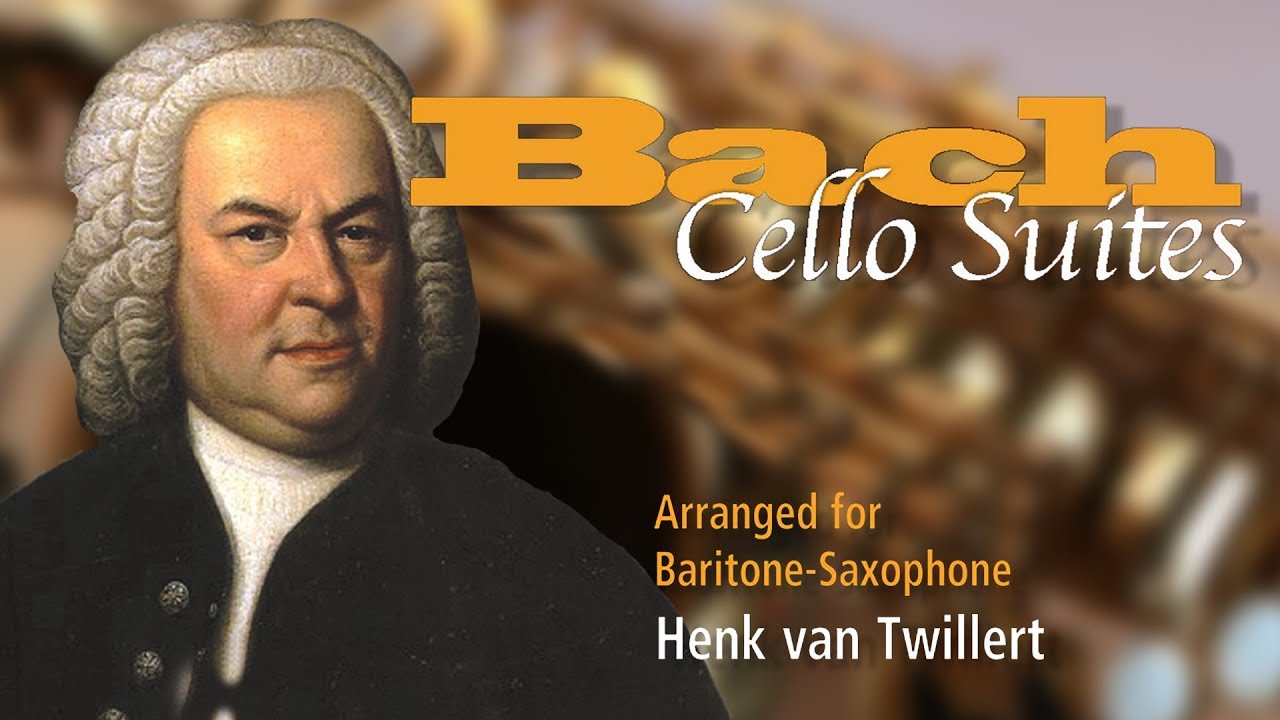
Bach on a saxophone? What next? Of course J.S. Bach’s music is indestructible. But some arrangements turn out far better than others and manage to do justice to the original. The transition of music for a string instrument to wind does not seem obvious, especially when a saxophone is part of the equation, but Henk van Twillert pulls it off. The baritone saxophone proves itself to be an ideal replacement of the cello. It is not only a similarity in timbre but when played by this most skilful and imaginative Dutch saxophonist the instrument becomes totally adaptable to baroque music.
So should Bach be played on a saxophone? Listen to this release and you will know the answer. It may vary from ‘why not’ to ‘definitely’!
Composer: Johann Sebastian Bach
Artist: Henk van Twillert (Baritone-Saxophone)
00:00:00 Suite No. 1 in G Major, BWV 1007: Prélude
00:02:34 Suite No. 1 in G Major, BWV 1007: Allemande
00:07:11 Suite No. 1 in G Major, BWV 1007: Courante
00:09:59 Suite No. 1 in G Major, BWV 1007: Sarabande
00:12:32 Suite No. 1 in G Major, BWV 1007: Minuet I & II
00:15:49 Suite No. 1 in G Major, BWV 1007: Gigue
00:17:19 Suite No. 2 in D Minor, BWV 1008: Prelude
00:20:02 Suite No. 2 in D Minor, BWV 1008: Allemande
00:23:30 Suite No. 2 in D Minor, BWV 1008: Courante
00:25:49 Suite No. 2 in D Minor, BWV 1008: Sarabande
00:29:57 Suite No. 2 in D Minor, BWV 1008: Minuet I & II
00:33:10 Suite No. 2 in D Minor, BWV 1008: Gigue
00:35:42 Suite No. 3 in C Major, BWV 1009: Prelude
00:39:11 Suite No. 3 in C Major, BWV 1009: Allemande
00:43:17 Suite No. 3 in C Major, BWV 1009: Courante
00:46:43 Suite No. 3 in C Major, BWV 1009: Sarabande
00:51:12 Suite No. 3 in C Major, BWV 1009: Bourrée I & II
00:55:00 Suite No. 3 in C Major, BWV 1009: Gigue
00:56:33 Suite No. 4 in E-Flat Major, BWV 1010: Prelude
01:00:05 Suite No. 4 in E-Flat Major, BWV 1010: Allemande
01:04:07 Suite No. 4 in E-Flat Major, BWV 1010: Courante
01:08:02 Suite No. 4 in E-Flat Major, BWV 1010: Sarabande
01:12:51 Suite No. 4 in E-Flat Major, BWV 1010: Bourrée I & II
01:17:45 Suite No. 4 in E-Flat Major, BWV 1010: Gigue
01:20:42 Suite No. 5 in C Minor, BWV 1011: Prelude
01:26:34 Suite No. 5 in C Minor, BWV 1011: Allemande
01:32:39 Suite No. 5 in C Minor, BWV 1011: Courante
01:35:05 Suite No. 5 in C Minor, BWV 1011: Sarabande
01:38:34 Suite No. 5 in C Minor, BWV 1011: Gavotte I & II
01:43:12 Suite No. 5 in C Minor, BWV 1011: Gigue
01:45:34 Suite No. 6 in D Major, BWV 1012: Prelude
01:50:26 Suite No. 6 in D Major, BWV 1012: Allemande
01:59:10 Suite No. 6 in D Major, BWV 1012: Courante
02:01:55 Suite No. 6 in D Major, BWV 1012: Sarabande
02:05:28 Suite No. 6 in D Major, BWV 1012: Gavotte I & II
02:09:48 Suite No. 6 in D Major, BWV 1012: Gigue
#Classical #BrilliantClassics #Music #Composer #ClassicalMusic #Bach #bachmusic

Tracklist below.
Online purchase or streaming (Spotify, iTunes, Amazon Music, Deezer, Google Play): https://brilliant-classics.lnk.to/MozartMagicFlute
More Information: https://www.brilliantclassics.....com/articles/m/mozar
Brilliant Classics Spotify: https://open.spotify.com/user/....brilliantclassics?si
Brilliant Classics Facebook: https://www.facebook.com/brilliantclassics
One of the giants of the historically informed performance world needs little introduction; nor indeed his sympathy to Mozart’s oeuvre as already demonstrated in recordings of the three da Ponte operas that have met with wide acclaim and many awards for their closely observed intimacy, their sense of fun and drama and their well-chosen casts, at one with Kuijken’s vision of these jewels of human and music drama.
His recording of Mozart’s magical last opera, however, has not received wide availability until now, in its appearance as part of Brilliant Classics’s comprehensive Opera Collection. The recording was made live at the Notre-Dame Church in Beaune, in France, in 2004. The cast is highly recognisable from many other fine productions of Baroque and early music, including Suzie LeBlanc (Pamina); Cornelius Hauptmann (Tamino); Stephan Genz (Papageno) and Isolde Siebert (Queen of Night).
Of course the orchestral contribution to this recording is no less distinguished: La Petite Bande features the cream of Continental period-instrument musicians, and is led by Kuijken himself, a violinist as much at home in Mozart’s world as he is in Bach’s.
00:00:00 Die Zauberflöte: Act 2: No. 9. March of the Priests (Orchestra)
00:02:40 Die Zauberflöte: Act 2: Dialogue: Ihr, in dem Weisheitstempel eingeweihten Diener (Sarastro/Priests/Speaker)
00:06:53 Die Zauberflöte: Act 2: No. 10. Aria and Chorus: O Isis und Osiris (Sarastro/Chorus)
00:09:26 Die Zauberflöte: Act 2: Dialogue: Eine schreckliche Nacht! (Tamino/Papageno/Speaker/Second Priest)
00:13:28 Die Zauberflöte: Act 2: No. 11. Duet: Bewahret euch vor Weibertücken (Priests)
00:14:22 Die Zauberflöte: Act 2: Dialogue: He, Lichter her! Lichter her! (Papageno/Tamino)
00:14:43 Die Zauberflöte: Act 2: No. 12. Quintet: Wie, wie, wie? Ihr an diesem Schreckensort? (Three Ladies/Papageno/Tamino)
00:17:41 Die Zauberflöte: Act 2: Dialogue: Heil dir, Jüngling! (Speaker/Second Priest/Papageno/Monostatos)
00:19:39 Die Zauberflöte: Act 2: No. 13. Aria: Alles fühlt der Liebe Freuden (Monostatos)
00:20:58 Die Zauberflöte: Act 2: Dialogue: Zurücke! (Queen of the Night/Pamina/Monostatos)
00:24:35 Die Zauberflöte: Act 2: No. 14. Aria: Der Hölle Rache kocht in meinem Herzen (Queen of the Night)
00:27:45 Die Zauberflöte: Act 2: Dialogue: Götter, das kann ich nicht! (Pamina/Monostatos/Sarastro)
00:30:02 Die Zauberflöte: Act 2: No. 15. Aria: In diesen heil’gen Hallen (Sarastro)
00:33:01 Die Zauberflöte: Act 2: Dialogue: Hier seid ihr euch beide allein überlassen (Speaker/SecondPriest/Papageno/Tamino/Old Woman)
00:35:47 Die Zauberflöte: Act 2: No. 16. Trio: Seid uns zum zweiten Mal willkommen (Three Boys)
00:37:35 Die Zauberflöte: Act 2: Dialogue: Tamino, wollen wir nicht speisen? (Papageno/Pamina/Tamino)
00:39:41 Die Zauberflöte: Act 2: No. 17. Aria: Ach, ich fühl’s, es ist verschwunden (Pamina)
00:43:23 Die Zauberflöte: Act 2: Dialogue: Nicht wahr, Tamino, ich kann auch schweigen (Papageno)

Tracklist below.
Spotify: https://open.spotify.com/album..../420zWJjwQXRmsDpUWrO
Physical sale: http://www.brilliantclassics.c....om/articles/t/the-ro
iTunes: https://itunes.apple.com/album/id944267812
Antonin Dvoräk
00:00:00 Cello Concerto in B Minor, Op. 104: I. Allegro
00:14:13 Cello Concerto in B Minor, Op. 104: II. Adagio ma non troppo
00:24:49 Cello Concerto in B Minor, Op. 104: III. Finale, allegro moderato
00:37:04 From the Bohemian Forest, Op. 68: V. Silent Woods
00:42:05 Rondo in G Minor for Cello & Orchestra Op.94
Robert Schumann
00:48:25 Cello Concerto in A Minor, Op. 129: I. Nicht zu schnell
00:58:51 Cello Concerto in A Minor, Op. 129: II. Langsam
01:02:59 Cello Concerto in A Minor, Op. 129: III. Sehr lebhaft
04:26:32 Fantasiestücke, Op. 73: I. Zart und mit Ausdruck
04:29:31 Fantasiestücke, Op. 73: II. Lebhaft, leicht
04:32:55 Fantasiestücke, Op. 73: III. Rasch und mit Feuer
Camille Saint-Saëns
01:10:28 Cello Concerto in A minor Op. 33: I. Allegro non troppo - II. Attaca. Allegretto con moto - III. Tempo I
04:19:21 The Carnival of the Animals: XIII. The Swan
Gabriel Fauré
01:28:28 Élégie Op.24
Max Bruch
01:34:53 Kol Nidrei, Adagio for Cello and Orchestra, Op. 47
Tchaitochvsky
01:43:23 Variations on a Rococo Theme, Op. 33
04:42:35 Pezzo capriccioso in B Minor, Op. 62 (Andante con moto)
04:53:41 6 Pieces, Op. 51: VI. Valse sentimentale in F Minor (Tempo di Valse)
Beethoven
02:00:13 Cello Sonata in A Major Op. 69: I. Allegro ma non tanto
02:12:44 Cello Sonata in A Major Op. 69:: II. Scherzo. Allegro molto
02:17:48 Cello Sonata in A Major Op. 69:: III. Adagio cantabile – Allegro vivace
Felix mendelssohn
02:26:12 Cello Sonata No. 1 in B-Flat Major, Op. 45: I. Allegro vivace
02:38:46 Cello Sonata No. 1 in B-Flat Major, Op. 45: II. Andante
02:45:06 Cello Sonata No. 1 in B-Flat Major, Op. 45: III. Allegro assai
Johannes Brahms
02:51:57 Cello Sonata No. 1 in E Minor, Op. 38: I. Allegro non troppo
03:02:41 Cello Sonata No. 1 in E Minor, Op. 38: II. Allegretto quasi menuetto
03:08:07 Cello Sonata No. 1 in E Minor, Op. 38: III. Allegro
Frédériq Chopin
03:14:28 Cello Sonata in G Minor, Op. 65: I. Allegro moderato
03:28:45 Cello Sonata in G Minor, Op. 65: II. Scherzo. Allegro con brio
03:33:32 Cello Sonata in G Minor, Op. 65: III. Largo
03:36:52 Cello Sonata in G Minor, Op. 65: IV. Finale. Allegro
04:55:41 Introduction and Polonaise Brillante in C Major, Op. 3
Sergei Rchmaninoff
03:43:13 Cello Sonata in G Minor, Op. 19: I. Lento - Allegro moderato
03:55:40 Cello Sonata in G Minor, Op. 19: II. Allegro scherzando
04:02:33 Cello Sonata in G Minor, Op. 19: III. Andante
04:08:19 Cello Sonata in G Minor, Op. 19: IV. Allegro mosso
04:37:32 14 Romances, Op. 34: XIV. Vocalise
Enrique Granados
04:22:19 Goyescas, Act 1: Intermezzo
Nikolai Rimsky
04:49:03 The Golden Cockerel, Act 2: II. Hymn to the Sun
Manuel de Falla
05:04:13 Seven Spanish Folksongs: I. El paño moruno
05:06:21 Seven Spanish Folksongs: II. Nana
05:08:30 Seven Spanish Folksongs: III. Canción
05:10:01 Seven Spanish Folksongs: IV. Polo
05:11:17 Seven Spanish Folksongs: V. Asturiana
05:13:34 Seven Spanish Folksongs: VI. Jota
Claude Debussy
05:16:35 Cello Sonata, L.135: I. Prologue. Lent
05:20:26 Cello Sonata, L.135: II. Sérénade. Modérément animé
05:23:21 Cello Sonata, L.135:: III. Finale. Animé

Tracklist Below:
Summer Classics: A Classical compilation, Great for in the background during the Summer days.
Enjoy!
00:00:00 Violin Concerto No. 2 in G Minor, RV 315: I. Allegro non molto – Allegro
00:05:04 Violin Concerto No. 2 in G Minor, RV 315: II. Adagio – Presto – Adagio – Presto –Adagio – Presto – Adagio – Presto
00:07:44 Violin Concerto No. 2 in G Minor, RV 315: III. Presto
00:10:27 Má Vlast, JB 1:112: IV. From Bohemia’s Meadows and Forests
00:22:55 The Seasons, Op. 37a: No. 6, June. Barcarolle
00:26:38 The Seasons, Op. 37a: No. 7, July. Song of the Reaper
00:28:21 The Seasons, Op. 37a: No. 8, August. Harvest
00:31:30 Piano Concerto No. 21 in C Major, K. 467: II. Andante "Elvira Madigan"
00:37:33 Peer Gynt Suite No. 1, Op. 46: I. Morning Mood
00:41:46 Orchestral Suite No. 3 in D Major, BWV 1068: II. Air
00:46:04 Piano Sonata No. 8 in C minor “Pathétique”: II Agagio cantabile
00:50:51 Piano Concerto No. 3 in C Minor, Op. 37: II. Largo
01:03:35 Violin Concerto in D Major, Op. 77: II. Adagio
01:13:18 Symphony No. 5: IV. Adagietto. sehr langsam
01:21:35 Symphony No. 5 in B-Flat Major, D. 485: II. Andante con moto
01:32:24 Piano Concerto No. 23 in A Major K. 488: II. Andante
01:38:44 Serenade for Strings, Op. 48: III. Élégie. Larghetto elegiac

Online purchase or streaming (Spotify, iTunes, Amazon Music, Deezer, Google Play): https://brilliant-classics.lnk.....to/RutterBernsteinP
More Information: https://www.brilliantclassics.....com/articles/r/rutte
Brilliant Classics Spotify: https://open.spotify.com/user/....brilliantclassics?si
Brilliant Classics Facebook: https://www.facebook.com/brilliantclassics
Rutter: Gloria - Bernstein: Chichester Psalms - Poulenc: Quatre petites prières
Rutter & Bernstein & Poulenc: Choral Works
Here are dynamic modern performances of some of the most popular of all sacred vocal works written in the second half of the last century, expertly done by chamber choirs soaked in the tradition which the works themselves draw upon.
The Gloria is perhaps the best-known of the extended compositions by John Rutter, composer of such choral evergreens as A Gaelic Blessing and Shepherds’ Pipe Carol. Rutter’s setting fully captures the exuberance of the text, with sparkling orchestral colours and fullbodied choral parts.
Like the Gloria, Bernstein’s Chichester Psalms (socalled because of the nature of their original commission, made in 1964 by the Dean of Chichester Cathedral, Walter Hussey) may be musically sophisticated in technical terms, but never at the expense of creating an instant impression or of serving the texts. The poignant treble solo in the second movement is still, along with ‘Maria’, one of Bernstein’s most imperishable melodies.
Poulenc, too, had melodies pouring out of him, though his settings of ancient liturgical texts (and rustic peasant prayers) in Litanies à la Vierge Noire, Quatre Petites Prières de Saint François d’Assise, Exsultate Deo and Salve Regina are in the more austere tradition of French sacred works.
00:00:00 Gloria: Gloria in Excelsis deo (Allegro vivace)
00:05:16 Gloria: Domine deus, Rex Coelestis (Andante)
00:12:31 Gloria: Quoniam Tu Solus Sanctus (vivace e ritmico)Bernstein by Choir of Clare College Cambridge, Timothy Brown & The Wallace Collection:
00:17:59 Chichester Psalms: Psalm 108, v.2; Psalm 100 (Maestoso ma energico)
00:22:04 Chichester Psalms: Psalm 2, vv. 1-4; Psalm 23 vv. 1-6 (Andante Con moto, ma tranquillo)
00:27:05 Chichester Psalms: Psalm 131; Psalm 133, v.1 (Prelude - Peacefully flowingmFrancis Poulenc by Corydon Singers, Matthew Best & Richard Pearce:
00:35:28 Quatre Petites Prières de St François d'Assise: Salut, Dame Sainte
00:37:54 Quatre Petites Prières de St François d'Assise: Tout Puissant, Très Saint
00:39:21 Quatre Petites Prières de St François d'Assise: Seigneur, Je Vous En Prie
00:40:39 Quatre Petites Prières de St François d'Assise: O Mes Très Chers Frères
00:42:44 Litanies à La vierge Noire
00:51:58 Exultate deo
00:55:00 Salve Regina
Download & Streams
https://brilliant-classics.lnk.....to/SchulhoffComplet
Physical Sale:
https://brilliant-classics.lnk.....to/SchulhoffComplet
Brilliant classics Spotify:
https://brilliant-classics.lnk.to/Spotify
Brilliant classics Facebook:
https://www.facebook.com/brilliantclassics
A musical portrait of a master guitar-maker of the 19th century.
The last two decades have seen a richly merited revival of interest in the music of Erwin Schulhoff, one of the German-Jewish composers who fell victim to the Nazis’ rise to power in the 1930s and whose work was soon declared Entartete Musik; he was deported to a concentration camp in Bavaria in the winter of 1941 and died there of tuberculosis nine months later, not yet 50 years old.
By then Schulhoff had earned a considerable reputation in his native Prague and beyond, with a catalogue of large, ambitiously programmatic symphonies, daring jazz-age chamber
music and an opulent, Expressionist opera, Flammen, first staged in Brno in 1932. The Suite and First Sonata violin and piano are much earlier works, less harmonically adventurous and more indebted to the examples of Debussy, Richard Strauss and his teacher Max Reger, effusive and lyrical in expression.
00:00:00 Suite for Violin and Piano, WV 18: I. Präludium. Stürmisch
00:04:05 Suite for Violin and Piano, WV 18: II. Gavotte. Mäßig
00:08:12 Suite for Violin and Piano, WV 18: III. Menuetto
00:12:29 Suite for Violin and Piano, WV 18: IV. Walzer
00:16:35 Suite for Violin and Piano, WV 18: V. Scherzo
00:22:27 Sonata No. 1 for Violin and Piano, WV 24: I. Wuchtig
00:29:08 Sonata No. 1 for Violin and Piano, WV 24: II. Ruhig
00:33:45 Sonata No. 1 for Violin and Piano, WV 24: III. Scherzo. Bewegt
00:36:40 Sonata No. 1 for Violin and Piano, WV 24: IV. Rondo. Nicht zu schnell
00:44:23 Sonata for Solo Violin, WV 83: I. Allegro con fuoco
00:46:42 Sonata for Solo Violin, WV 83: II. Andante sostenuto
00:52:04 Sonata for Solo Violin, WV 83: III. Scherzo. Allegretto grazioso
00:54:52 Sonata for Solo Violin, WV 83: IV. Allegro risoluto
00:58:00 Violin Sonata No. 2, WV 91: I. Allegro impetuoso
01:04:44 Violin Sonata No. 2, WV 91: II. Andante
01:09:58 Violin Sonata No. 2, WV 91: III. Burlesca. Allegretto
01:12:41 Violin Sonata No. 2, WV 91: IV. Allegro risoluto
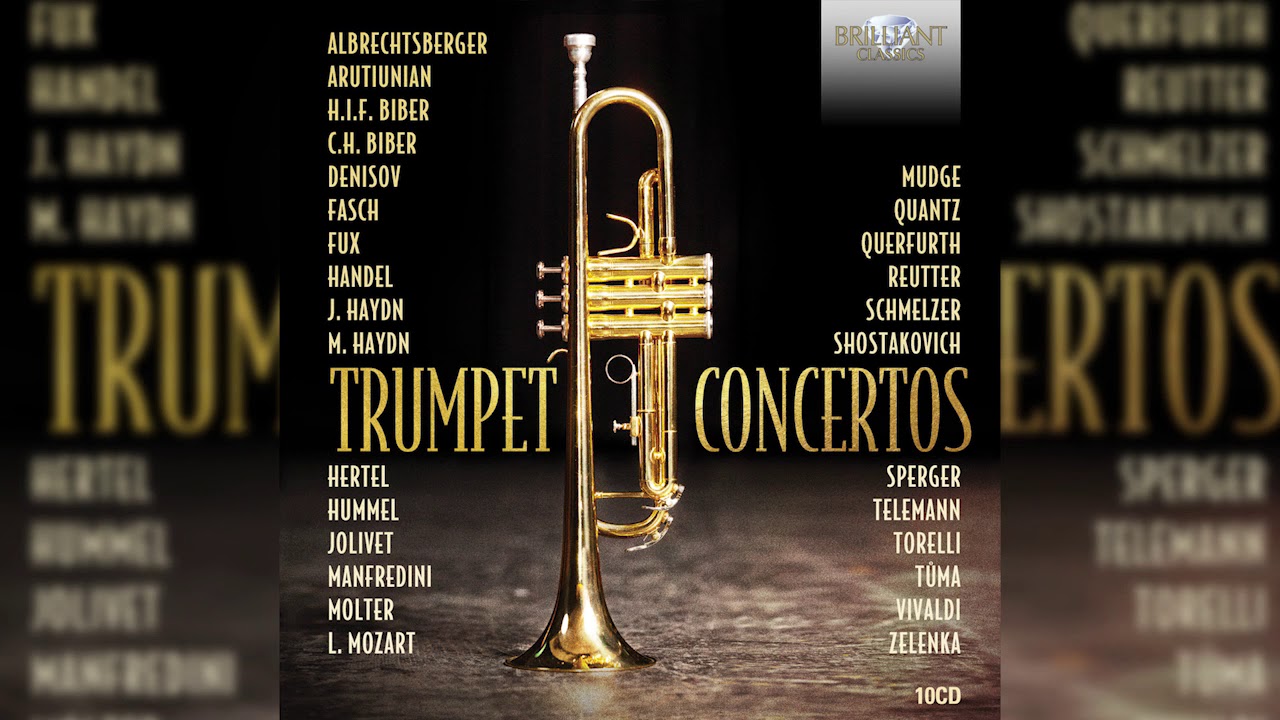
Online Purchase: https://VA.lnk.to/Trumpetconcertos
Physical purchase: http://www.brilliantclassics.c....om/articles/t/trumpe
Facebook page: https://www.facebook.com/brilliantclassics/
This is a sparkling set of concertos for the trumpet along with other pieces that highlight the instrument, providing vivid readings of some of the most renowned masterworks in the trumpet repertoire plus recordings of lesser-known yet equally idiomatic compositions.
Joining the well loved Classical trumpet concertos of Haydn and Hummel are the many Baroque works featuring trumpet by Telemann and an Italian champion of the instrument, Giuseppe Torelli, along with famous pieces by Vivaldi and Handel. We find another prolific trumpet composer in the German baroque violinist Johann Melchior Molter, and fine concertos from Quantz, famed more for his flute music, and Johannes Matthias Sperger, a renowned player of and composer for the double bass.
The music of Quantz’s teacher, Jan Dismas Zelenka, is enjoying a revival, as is that of Johann Friedrich Fasch, admired by both Bach and Telemann, who wrote an extraordinary concerto for three wind choirs with nine trumpets between them. Later in the 18th century, some composers stretched the limits of virtuosity in the natural trumpet, before the advent of valves around 1815. These include Georg Reutter II and the enigmatic Franz Querfurth, who both demanded sustained playing in the highest register. Tuscan composer Francesco Manfredini, like Querfurth, is known today for little else besides his trumpet concerto, while the majority of his works are now lost to history.
Authors who wrote prominently for the trumpet in pieces other than concertos include Johann Schmelzer and Johann Joseph Fux, along with Fux’s student František Tůma, while Beethoven’s composition teacher Johann Georg Albrechtsberger wrote concertos for the jaw harp, whose harmonics are well suited to adaptation for the natural trumpet.
Though somewhat overshadowed by their more illustrious family members, Michael Haydn and Leopold Mozart both wrote fine trumpet concertos, while two generations of Bibers, Carl Heinrich and his more prominent father Heinrich Ignaz Franz, composed sonatas and dances for multiple trumpets.
Rounding out this set are outstanding modern additions to the trumpet repertoire, including trumpet concertos by the Armenian Alexander Arutiunian and French composer André Jolivet, as well as Shostakovich’s Piano Concerto No.1, which casts the solo trumpet in a prominent role.

PC Reddy, fundador de los Hospitales Apollo, le pregunta a Sadhguru qué es lo que se necesita para estar saludable. Sadhguru hace la diferencia entre las causas de las enfermedades infecciosas y las causas de las enfermedades crónicas. Las segundas, dice, son creadas desde dentro del cuerpo y pueden ser fácilmente curadas si tenemos acceso al “fabricante” interior de este organismo.
**************************************************
Suscríbete a nuestro canal aquí: www.youtube.com/channel/UCJoOIj9Yu71wklP3EFzL8-A
Aprende la meditación guiada gratuita de Sadhguru
https://www.ishafoundation.org..../es/Isha-Kriya/home.
Yogui, místico y visionario, Sadhguru es un maestro espiritual con una diferencia. Una notable combinación de profundidad y pragmatismo, su vida y su trabajo sirven como recordatorio de que el yoga es una ciencia contemporánea, de vital relevancia en nuestro tiempo.
Más videos y blogs en la página
http://www.sadhguru.org
Meditación gratuita guiada por Sadhguru
https://www.ishafoundation.org..../es/Isha-Kriya/home.
Página oficial de Facebook de Sadhguru
https://www.facebook.com/sadhguru
Perfil oficial de Twitter de Sadhguru
https://twitter.com/SadhguruJV
Descarga la app de Sadhguru
http://onelink.to/sadhguru__app