Top Vídeos

Paula, Paz y Carla interpretan "Voy A Ser El Rey León" de El Rey León en las segundas batallas de la tercera edición de La Voz Kids.
Si estás en España:
- Puedes ver este vídeo en http://www.telecinco.es/lavozkids/ y el programa completo en http://www.mitele.es/programas....-tv/la-voz-kids/0000
- Descárgate la app de La Voz Kids para no perderte nada del programa http://mdia.st/1i8iNqu
Si estás fuera de España:
- Suscripción/Suscription: http://bit.ly/2mqAtky
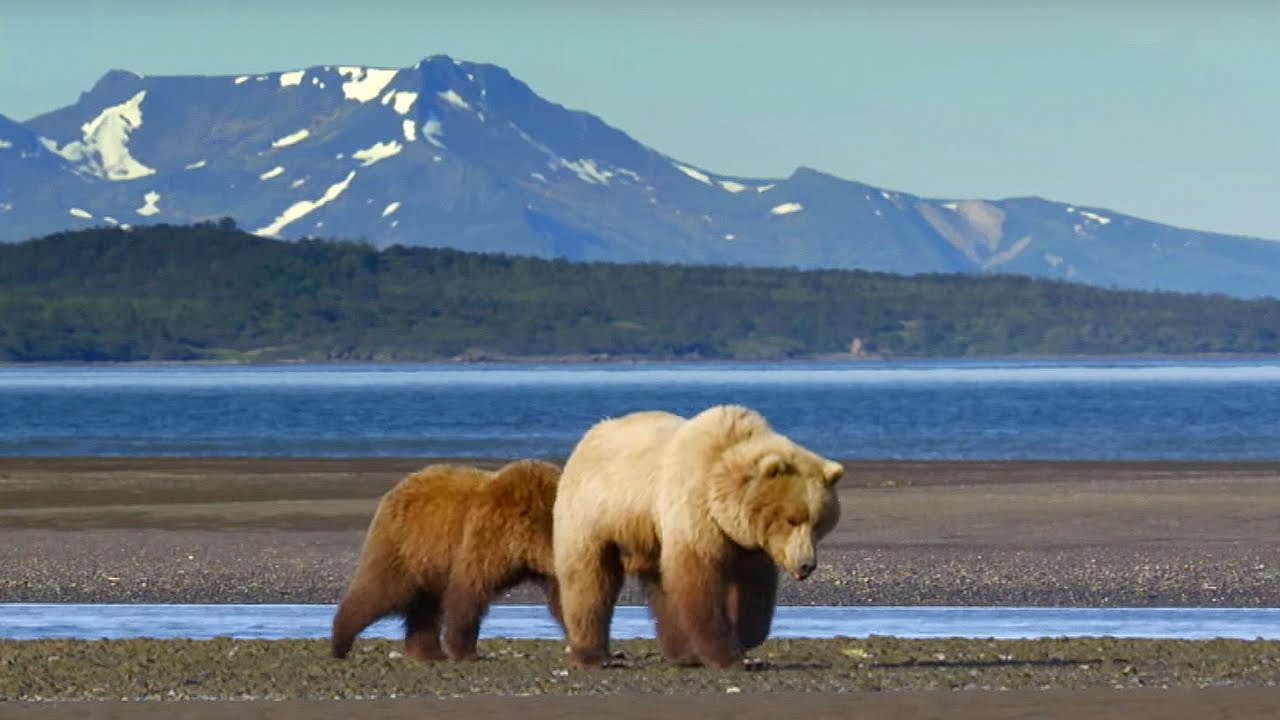
Grizzly bears eat more than salmon. This one is hunting for clams.
Subscribe: http://bit.ly/BBCEarthSub
WATCH MORE:
New on Earth: https://bit.ly/2M3La96
Oceanscapes: https://bit.ly/2Hmd2kZ
Wild Thailand: https://bit.ly/2kR7lmh"
Welcome to BBC EARTH! The world is an amazing place full of stories, beauty and natural wonder. Here you'll find 50 years worth of astounding, entertaining, thought-provoking and educational natural history content. Dramatic, rare, and exclusive, nature doesn't get more exciting than this.
Want to share your views with the team behind BBC Earth and win prizes? Join our BBC Studios Voice: https://www.bbcstudiosvoice.com/register
This is a channel from BBC Worldwide who help fund new BBC programmes.Service information and feedback: http://bbcworldwide.com/vod-fe....edback--contact-deta
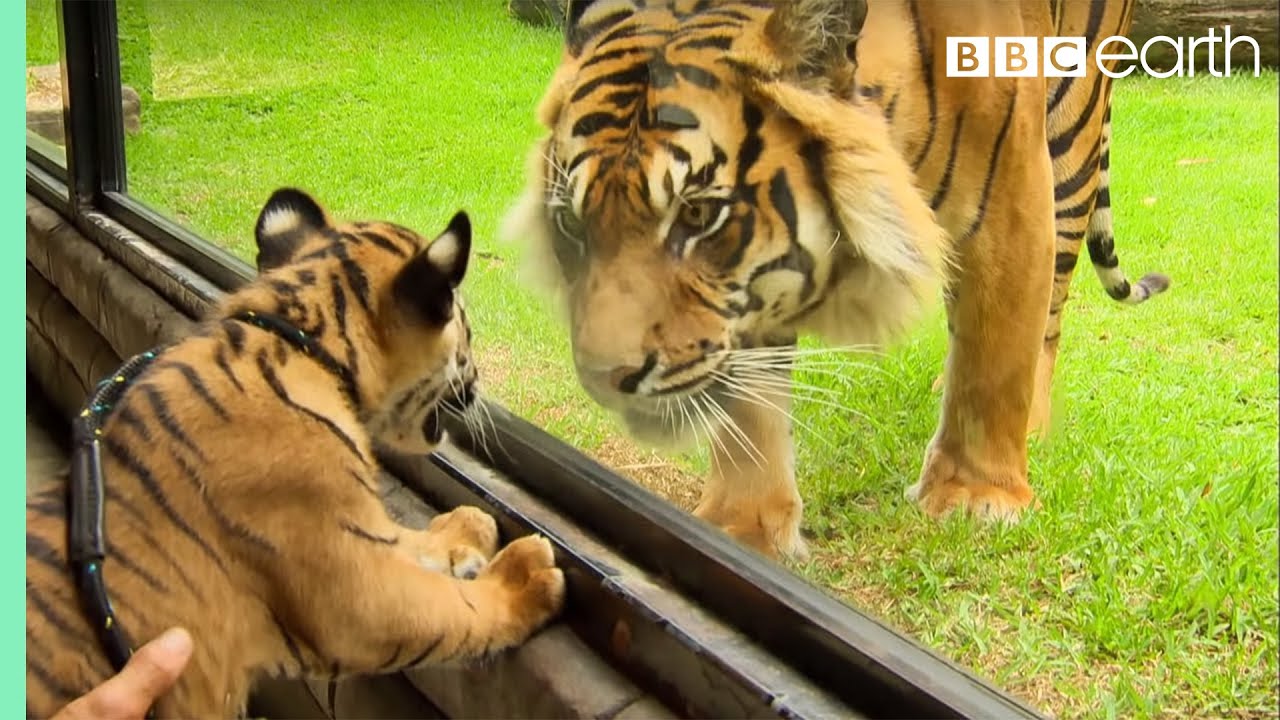
As the cubs grow up Giles Clark thinks it's time for Spot and Stripe to start socialising with the adult tigers. Taken from Tigers About The House. Subscribe: http://bit.ly/BBCEarthSub
Watch David Attenborough Dynasties series trailer here: https://www.youtube.com/watch?v=JWI1eCbksdE --~---
WATCH MORE:
New on Earth: https://bit.ly/2M3La96
Oceanscapes: https://bit.ly/2Hmd2kZ
Wild Thailand: https://bit.ly/2kR7lmh
Welcome to BBC EARTH! The world is an amazing place full of stories, beauty and natural wonder. Here you'll find 50 years worth of astounding, entertaining, thought-provoking and educational natural history content. Dramatic, rare, and exclusive, nature doesn't get more exciting than this.
Want to share your views with the team? Join our BBC Studios Voice: https://www.bbcstudiosvoice.com/register
This is a page from BBC Studios who help fund new BBC programmes. Service information and feedback: http://bbcworldwide.com/vod-fe....edback--contact-deta
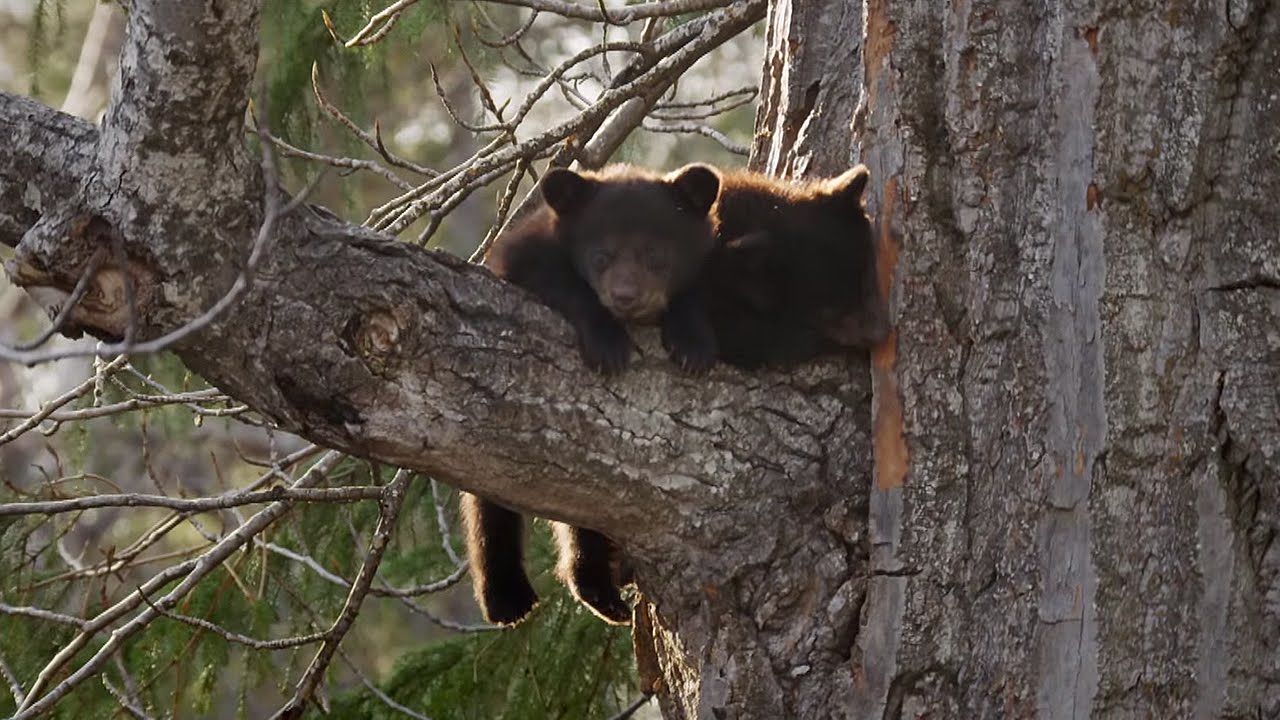
Most black bears usually make their winter dens on the ground but this bear has made hers higher up, and inside the tree is two new-born cubs who have to make their way down... Taken from Wild Alaska. Subscribe: http://bit.ly/BBCEarthSub
WATCH MORE:
New on Earth: https://bit.ly/2M3La96
Oceanscapes: https://bit.ly/2Hmd2kZ
Wild Thailand: https://bit.ly/2kR7lmh
Welcome to BBC EARTH! The world is an amazing place full of stories, beauty and natural wonder. Here you'll find 50 years worth of astounding, entertaining, thought-provoking and educational natural history content. Dramatic, rare, and exclusive, nature doesn't get more exciting than this.
Want to share your views? Join our BBC Studios Voice: https://www.bbcstudiosvoice.com/register
This is a channel from BBC Studios who help fund new BBC programmes. Service information and feedback: http://bbcworldwide.com/vod-fe....edback--contact-deta

A viper's strike is captured in slow motion, showing how awesome it is. Great HD clip from Deadly 60 series 2, hosted by Steve Backshall.
Visit http://www.bbcearth.com for all the latest animal news and wildlife videos
BBC Earth Facebook http://www.facebook.com/bbcearth (ex-UK only)
BBC Earth Twitter http://www.twitter.com/bbcearth
Subscribe to BBC Earth: http://bit.ly/ydxvrP
BBC Earth Channel: http://www.youtube.com/BBCEarth
Latest BBC Earth videos: http://bit.ly/y1wtbi

The mighty polar bear, the tenacious penguin and majestic lion. Some of the most impressive creatures in the natural world - and at times, the most ridiculous. Join us as we recount the endearing capers of these incredible animals!
Subscribe: http://bit.ly/BBCEarthSub
Watch more:
Planet Earth http://bit.ly/PlanetEarthPlaylist
Blue Planet http://bit.ly/BluePlanetPlaylist
Planet Earth II http://bit.ly/PlanetEarthIIPlaylist
Planet Dinosaur http://bit.ly/PlanetDinoPlaylist
Welcome to BBC EARTH! The world is an amazing place full of stories, beauty and natural wonder. Here you'll find 50 years worth of entertaining and thought-provoking natural history content. Dramatic, rare, and exclusive, nature doesn't get more exciting than this.
Want to share your views with the team? Join our BBC Studios Voice: https://www.bbcstudiosvoice.com/register
This is a page from BBC Studios who help fund new BBC programmes. Service information and feedback: http://bbcworldwide.com/vod-fe....edback--contact-deta

The Lion guardians are challenged by younger males looking for lionesses of their own.
Subscribe: http://bit.ly/BBCEarthSub
WATCH MORE:
New on Earth: https://bit.ly/2M3La96
Oceanscapes: https://bit.ly/2Hmd2kZ
Wild Thailand: https://bit.ly/2kR7lmh
Welcome to BBC EARTH! The world is an amazing place full of stories, beauty and natural wonder. Here you'll find 50 years worth of astounding, entertaining, thought-provoking and educational natural history content. Dramatic, rare, and exclusive, nature doesn't get more exciting than this.
Want to share your views? Join our BBC Studios Voice: https://www.bbcstudiosvoice.com/register
This is a channel from BBC Studios who help fund new BBC programmes. Service information and feedback: http://bbcworldwide.com/vod-fe....edback--contact-deta

Male side-blotched lizards have more than one way to get the girl. Orange males are bullies. Yellows are sneaks. Blues team up with a buddy to protect their territories. Who wins? It depends - on a genetic game of roshambo.
SUBSCRIBE to Deep Look! http://goo.gl/8NwXqt
DEEP LOOK is a ultra-HD (4K) short video series created by KQED San Francisco and presented by PBS Digital Studios. See the unseen at the very edge of our visible world. Get a new perspective on our place in the universe. Explore big scientific mysteries by going incredibly small.
* NEW VIDEOS EVERY OTHER TUESDAY! *
Every spring, keen-eyed biologists carrying fishing poles search the rolling hills near Los Banos, about two hours south of San Francisco. But they’re not looking for fish. They’re catching rock-paper-scissors lizards.
The research team collects Western side-blotched lizards, which come in different shades of blue, orange and yellow.
Barry Sinervo, a professor of ecology and evolutionary biology at UC Santa Cruz, leads the team. Their intricate mating strategies reminded the the researchers of the rock-paper-scissors game where rock beats scissors, scissors beats paper and paper beats rock.
It’s all about territories. Orange males tend to be the biggest and most aggressive. They hold large territories with several females each and are able to oust the somewhat smaller and less aggressive blues. Blue males typically hold smaller territories and more monogamous, each focusing his interest on a single female. Yellow males tend not to even form exclusive territories Instead they use stealth to find unaccompanied females with whom to mate.
The yellow males are particularly successful with females that live in territories held by their more aggressive orange competitors. Because the orange males spread their attention among several females, they aren’t able to guard each individual female against intruding yellow males. But the more monogamous blues males are more vigilant and chase sneaky yellow males away.
Their different strategies keep each other in check making the system stable. Sinervo believes this game has likely been in play for at least 15 million years.
--- How do side-blotched lizards choose a mate?
The males compete with each other, sometimes violently, for access to females. The females generally prefer males of their own color but also give preference to whichever color male is more rare that mating season.
--- Why do lizards do push up and down?
Male lizards do little pushups as a territorial display meant to tell competitors to back off. It’s best to use a warning instead of fighting right away because there’s always a danger of getting hurt in a fight. Some lizards like side-blotched lizards also use slow push ups to warn their neighbors of an incoming threat.
--- Why do side-blotched lizards fight?
Sometimes aggressive territorial displays are not enough to dissuade invaders so side-blotched lizards will resort to fighting. They have small sharp teeth and will lunge at each other inflicting bites and headbutts.
---+ Read the entire article on KQED Science: https://ww2.kqed.org/science/2....016/05/17/these-liza
---+ For more information:
The Lab of Dr. Barry Sinervo, LizardLand, University of California, Santa Cruz http://bio.research.ucsc.edu/~....barrylab/lizardland/
---+ More Great Deep Look episodes:
Meet the Dust Mites, Tiny Roommates That Feast On Your Skin
https://www.youtube.com/watch?v=ACrLMtPyRM0
Stinging Scorpion vs. Pain-Defying Mouse
https://www.youtube.com/watch?v=w-K_YtWqMro
These Crazy Cute Baby Turtles Want Their Lake Back
https://www.youtube.com/watch?v=YTYFdpNpkMY
---+ See some great videos and documentaries from the PBS Digital Studios!
It's Okay to Be Smart: The Cosmic Afterglow
https://www.youtube.com/watch?v=ZvrHL7-c1Ys
It's Okay to Be Smart: The Most Important Moment in the History of Life
https://www.youtube.com/watch?v=Jf06MlX8yik
---+ Follow KQED Science:
KQED Science: http://www.kqed.org/science
Tumblr: http://kqedscience.tumblr.com
Twitter: https://www.twitter.com/kqedscience
---+ About KQED
KQED, an NPR and PBS affiliate based in San Francisco, serves the people of Northern California and beyond with a public-supported alternative to commercial media. KQED is also a leader and innovator in interactive media and technology, taking people of all ages on journeys of exploration — exposing them to new people, places and ideas.
Funding for Deep Look is provided in part by PBS Digital Studios and the John S. and James L. Knight Foundation. Deep Look is a project of KQED Science, which is also supported by HopeLab, the David B. Gold Foundation, the S. D. Bechtel, Jr. Foundation, the Dirk and Charlene Kabcenell Foundation, the Vadasz Family Foundation, the Gordon and Betty Moore Foundation, the Smart Family Foundation and the members of KQED.
#deeplook #lizards #rockpaperscissorslizardspock
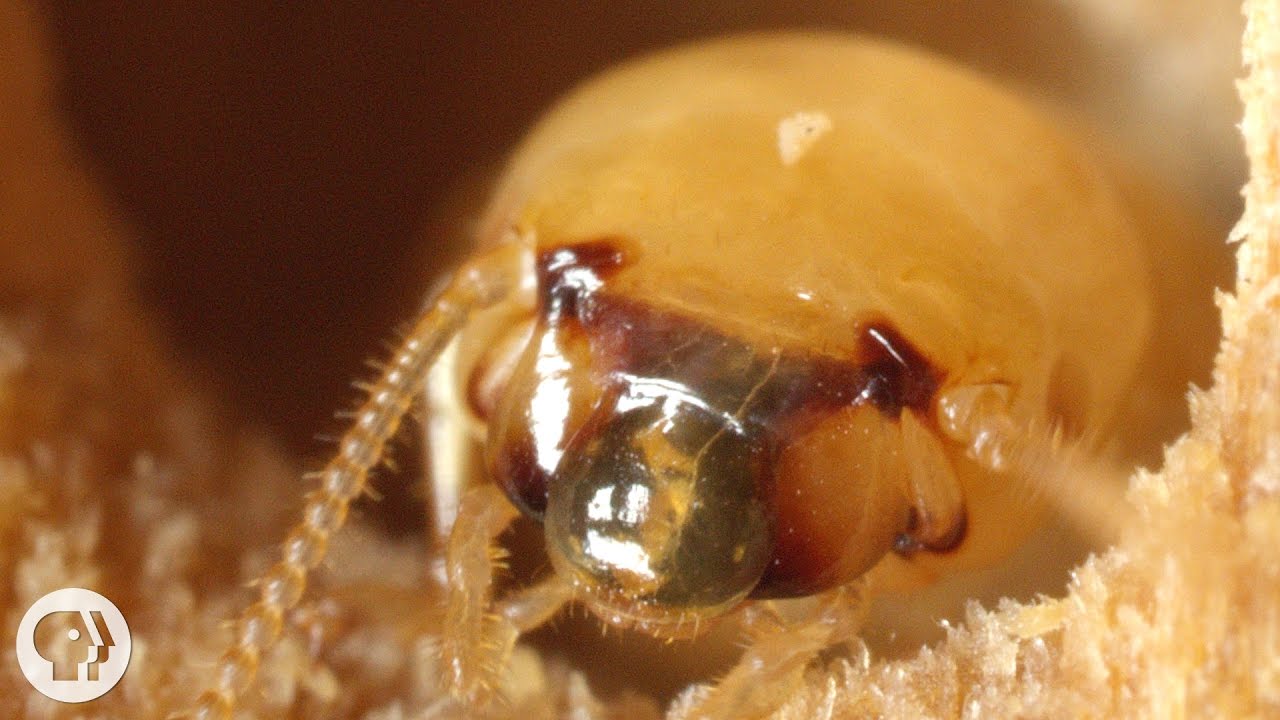
Termites cause billions of dollars in damage annually – but they need help to do it. So they carry tiny organisms around with them in their gut. Together, termites and microorganisms can turn the wood in your house into a palace of poop.
SUBSCRIBE to Deep Look! http://goo.gl/8NwXqt
DEEP LOOK is a ultra-HD (4K) short video series created by KQED San Francisco and presented by PBS Digital Studios. See the unseen at the very edge of our visible world. Get a new perspective on our place in the universe. Explore big scientific mysteries by going incredibly small.
* NEW VIDEOS EVERY OTHER TUESDAY! *
Termites such as dampwood termites use their cardboard-like poop pellets to build up their nests, turning a human house into a termite toilet. “They build their own houses out of their own feces,” said entomologist Michael Scharf, of Purdue University, in Indiana.
And while they’re using their poop as a building material, termites are also feeding on the wood. They’re one of the few animals that can extract nutrients from wood. But it turns out that they need help to do this.
A termite’s gut is host to a couple dozen species of protists, organisms that are neither animals, nor plants, nor fungi. Scientists have found that several of them help termites break down wood.
When some protists are eliminated from the termite’s gut, the insect can’t get any nutrition out of the wood. This is a weakness that biologists hope to exploit as a way to get rid of termites using biology rather than chemicals.
Louisiana State University entomologist Chinmay Tikhe is working to genetically engineer a bacterium found in the Formosan termite’s gut so that the bacterium will destroy the gut protists. The idea would be to sneak these killer bacteria into the termite colony on some sort of bait the termites would eat and carry back with them.
“It’s like a Trojan Horse,” said Tikhe, referring to the strategy used by the Greeks to sneak their troops into the city of Troy using a wooden horse that was the city’s emblem.
The bacteria would then kill the protists that help the termite derive nutrition from wood. The termites would eventually starve.
--- How do termites eat wood?
Termites gnaw on the wood. Then they mix it with enzymes that start to break it down. But they need help turning the cellulose in wood into nutrients. They get help from hundreds, and sometimes thousands, of species of microbes that live inside their guts. One bacterium, for example, combines nitrogen from the air and calories from the wood to make protein for the termites. A termite’s gut is also host to a couple dozen species of protists. In the termite’s hindgut, protists ferment the wood into a substance called acetate, which gives the termite energy.
--- How do termites get into our houses?
Termites can crawl up into a house from the soil through specialized tubes made of dirt and saliva, or winged adults can fly in, or both. This depends on the species and caste member involved.
--- What do termites eat in our houses?
Once they’re established in our houses, termites attack and feed on sources of cellulose, a major component of wood, says entomologist Vernard Lewis, of the University of California, Berkeley. This could include anything from structural wood and paneling, to furniture and cotton clothing. Termites also will eat dead or living trees, depending on the species.
---+ Read the entire article on KQED Science:
https://ww2.kqed.org/science/2....016/10/18/these-term
---+ For more information:
University of California Integrated Pest Management Program’s web page on termites:
http://ipm.ucanr.edu/PMG/PESTNOTES/pn7415.html
---+ More Great Deep Look episodes:
How Mosquitoes Use Six Needles to Suck Your Blood:
https://www.youtube.com/watch?v=rD8SmacBUcU
For These Tiny Spiders, It’s Sing or Get Served:
https://www.youtube.com/watch?v=y7qMqAgCqME
Where are the Ants Carrying All Those Leaves?:
https://www.youtube.com/watch?v=-6oKJ5FGk24
---+ See some great videos and documentaries from PBS Digital Studios!
It’s Okay To Be Smart: The Donald Trump Caterpillar and Nature’s Masters of Disguise
https://www.youtube.com/watch?v=VTUCTT6I1TU
Gross Science: Why Do Dogs Eat Poop?
https://www.youtube.com/watch?v=Z3pB-xZGM1U
---+ Follow KQED Science:
KQED Science: http://www.kqed.org/science
Tumblr: http://kqedscience.tumblr.com
Twitter: https://www.twitter.com/kqedscience
---+ About KQED
KQED, an NPR and PBS affiliate in San Francisco, CA, serves Northern California and beyond with a public-supported alternative to commercial TV, Radio and web media. macro pest control
#deeplook
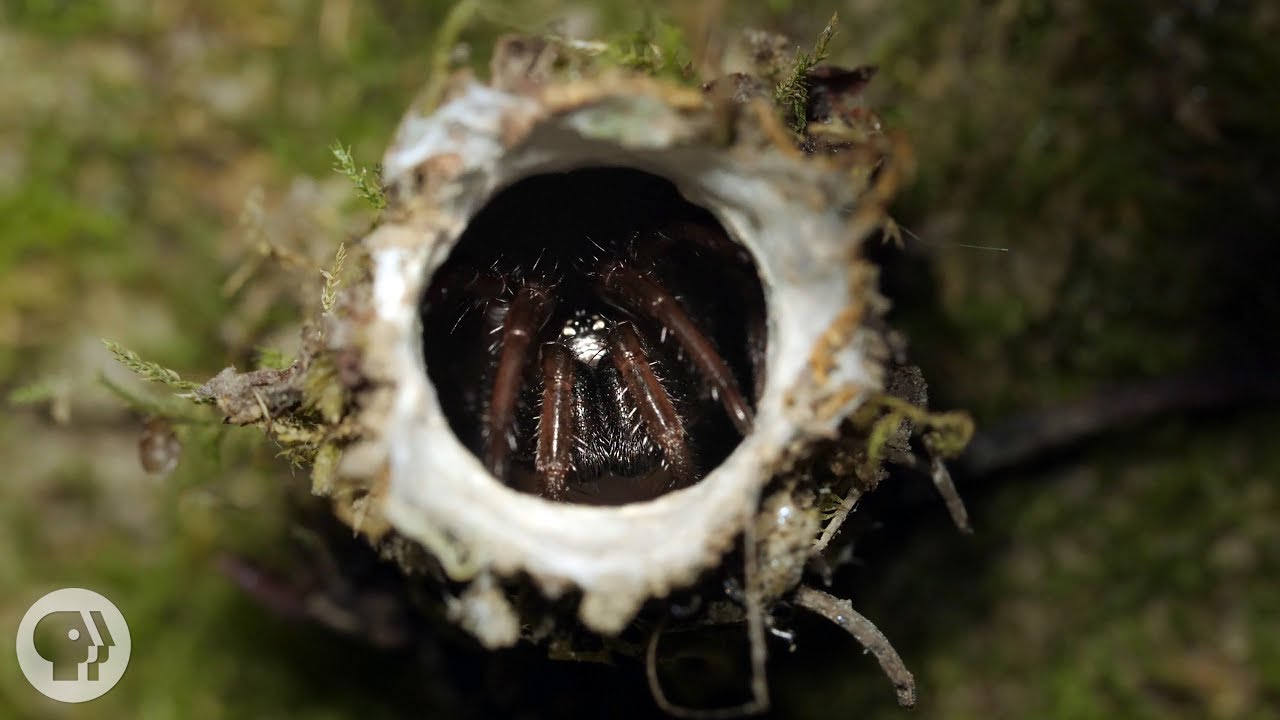
There are strange little towers on the forest floor. Neat, right? Nope. Inside hides a spider that's cunning, patient and ruthless.
SUBSCRIBE to Deep Look! http://goo.gl/8NwXqt
Please follow us on Patreon! https://www.patreon.com/deeplook
DEEP LOOK is a ultra-HD (4K) short video series created by KQED San Francisco and presented by PBS Digital Studios. See the unseen at the very edge of our visible world. Explore big scientific mysteries by going incredibly small.
Most Bay Area hikers pass right by without ever noticing, but a careful eye can spot tiny towers rising up from the forest floor. These mysterious little tubes, barely an inch high, are the homes of a particularly sneaky predator -- the California turret spider.
“To me, the turrets look just like the rook in a chess set,” said Trent Pearce, a naturalist for the East Bay Regional Park District, as he scanned the terrain at Briones Regional Park. “The spiders themselves are super burly – like a tiny tarantula the size of your pinky nail.”
Turret spiders build their towers along creek beds and under fallen trees in forested areas throughout Central and Northern California. They use whatever mud, moss, bark and leaves they can find nearby, making their turrets extremely well camouflaged.
They line the inside of their tiny castles with pearly white silk, which makes the structure supple and resilient
Each turret leads down to a burrow that can extend six inches underground. The spiders spend their days down there in the dark, protected from the sun and predators.
As night falls, they climb up to the entrance of the turrets to wait for unsuspecting prey like beetles to happen by.
Turret spiders are ambush hunters. While remaining hidden inside their turret, they’re able to sense the vibrations created by their prey’s footsteps.
That’s when the turret spider strikes, busting out of the hollow tower like an eight legged jack-in-the-box. With lightning speed the spider swings its fangs down like daggers, injecting venom into its prey before dragging it down into the burrow.
“It’s like the scene in a horror movie where the monster appears out of nowhere – you can’t not jump,” Pearce said.
--- What do turret spiders eat?
Turret spiders mostly ground-dwelling arthropods like beetles but they will also attack flying insects like moths that happen to land near their turrets.
--- Are turret spiders dangerous to people?
Turret spiders are nocturnal so it’s rare for them to interact with humans by accident. They tend to retreat into their underground burrow if they feel the vibrations of human footsteps. They do have fangs and venom but are not generally considered to be dangerous compared to other spiders. If you leave them alone, you shouldn’t have anything to fear from turret spiders.
---+ Read the entire article on KQED Science:
https://ww2.kqed.org/science/2....019/01/15/turret-spi
---+ For more information:
Learn to Look for Them, and California’s Unique “Turret Spiders” are Everywhere
https://baynature.org/article/....and-this-little-spid
---+ More Great Deep Look episodes:
For These Tiny Spiders, It's Sing or Get Served | Deep Look
https://youtu.be/y7qMqAgCqME
Praying Mantis Love is Waaay Weirder Than You Think | Deep Look
https://youtu.be/EHo_9wnnUTE
Why the Male Black Widow is a Real Home Wrecker | Deep Look
https://youtu.be/NpJNeGqExrc
---+ Follow KQED Science and Deep Look:
Instagram: https://www.instagram.com/kqedscience/
Twitter: https://www.twitter.com/kqedscience
KQED Science on kqed.org: http://www.kqed.org/science
Facebook Watch: https://www.facebook.com/DeepLookPBS/
Patreon: https://www.patreon.com/deeplook
---+ Shoutout!
Congratulations to ?Iset4, MidKnight Fall7,
jon pomeroy, Justin Felder3, and DrowsyTaurus26?, who were the first to correctly ID the species of spider in our episode - Antrodiaetus riversi (also known as Atypoides riversi) over at the Deep Look Community Tab:
https://www.youtube.com/channe....l/UC-3SbfTPJsL8fJAPK
(hat tip to Edison Lewis10 for posting the entire family tree!)
---+ About KQED
KQED, an NPR and PBS affiliate in San Francisco, CA, serves Northern California and beyond with a public-supported alternative to commercial TV, Radio and web media.
Funding for Deep Look is provided in part by PBS Digital Studios. Deep Look is a project of KQED Science, which is also supported by the National Science Foundation, the Templeton Religion Trust, the Templeton World Charity Foundation, the S. D. Bechtel, Jr. Foundation, the Dirk and Charlene Kabcenell Foundation, the Vadasz Family Foundation, the Gordon and Betty Moore Foundation, the Fuhs Family Foundation and the members of KQED. #deeplook #spiders #wildlife

"La isla no es mas grande... los países son mas pequeños!"
Visita http://thetruesize.com para comparar los tamaños reales!
Mike Bostock Transiciones de mapas: http://bl.ocks.org/mbostock/3711652
Compare varios diseños de mapas con http://metrocosm.com/compare-map-projections.html
O aquí https://map-projections.net/imglist.php
Visite http://kiskeya.life para mas vídeos y artículos en Ingles y Español sobre Quisqueya!
¡Duda, investiga y aprende!
Patreon: https://www.patreon.com/user?u=877947
Instagram: http://instagram.com/kiskeya.life/
Facebook: http://facebook.com/kiskeyalife
Twitter: http://twitter.com/aleccorday
Las cámaras y equipo nuestro:
http://amzn.to/1VD2vSJ
#mercator #proyecciónmercator #kiskeyalife
------------------------------------------------
Créditos:
Escrito, dirigido y producido por Alec Corday
http://www.aleccorday.com
Productor Ejecutivo Lola Mendez
http://instagram.com/uh.lola
http://instagram.com/lolamendezphotography
http://www.uhlola.com
http://www.lolamendezphotography.com
Tema musical principal por SENNA
https://sennamusic.bandcamp.com/

Here is a quick video I took of the gorgeous sunset over Jamaca de Dios, Jarabacoa, Dominican Republic, taken from the balcony of The Amber Ranch (www.theamberranch.com).
Music by Two Steps From Hell

No olvides suscribirte haciendo clic aquí! http://bit.ly/ph-suscribete
Elías fue un gran profeta de Dios que hizo muchos milagros, mira la historia para niños de una de sus grandes aventuras!
¡Comparte con Pequeños Héroes y aprende!
Más videos de Pequeños Héroes:
Historias de la Biblia para niños: http://bit.ly/2IjLSwk
Pequeños Héroes – La Serie: http://bit.ly/ph-laserie
Canciones infantiles: http://bit.ly/ph-canciones
Conoce más de Pequeños Héroes en:
Sitio WEB: http://pequenosheroes.com
Blog: http://pequenosheroes.com/blog/
Curriculum en: http://bit.ly/ph-curriculum-es
Recibe Info en: http://bit.ly/ph-infonews1
Sigue a Pequeños Héroes en:
Facebook: http://bit.ly/ph-facebook-f
Instagram: http://bit.ly/ph-instagram-f
YouTube: http://bit.ly/ph-youtube-ch
#PequeñosHéroes #HistoriasDeLaBibliaParaNiños #BibliaParaNiños
Disfruta este nuevo episodio centrado en nuestro personaje favorito: Jesús!
Suscríbete y mira todos los episodios! http://bit.ly/ph-suscribete
Esperamos puedas aprender a través de esta primera parte del nuevo episodio de Pequeños Héroes La Serie, no olvides suscribirte!

No olvides suscribirte haciendo clic aquí! http://bit.ly/ph-suscribete
En esta historia de la Biblia podrás saber mucho más acerca de Ester, ¡La nueva Reina que conquistó el corazón del Rey!
¡Comparte con Pequeños Héroes y aprende!
Más videos de Pequeños Héroes:
Historias de la Biblia para niños: http://bit.ly/2IjLSwk
Pequeños Héroes – La Serie: http://bit.ly/ph-laserie
Canciones infantiles: http://bit.ly/ph-canciones
Conoce más de Pequeños Héroes en:
Sitio WEB: http://pequenosheroes.com
Blog: http://pequenosheroes.com/blog/
Curriculum en: http://bit.ly/ph-curriculum-es
Recibe Info en: http://bit.ly/ph-infonews1
Sigue a Pequeños Héroes en:
Facebook: http://bit.ly/ph-facebook-f
Instagram: http://bit.ly/ph-instagram-f
YouTube: http://bit.ly/ph-youtube-ch
#PequeñosHéroes #HistoriasDeLaBibliaParaNiños #BibliaParaNiños
Suscríbete A Nuestro Canal Aquí

Aprende de manera fácil y divertida la tabla de multiplicar del 4.
Explora las tablas de multiplicar del 2 al 9 aquí: http://goo.gl/Q3hS4L
#Cantiplicando
Letra:
Uy pero que es esto
Son culebritas
Tantas que horror, que asco!
Guacatelas
Tienen muchas culebritas
Moviendo la colita moviendo la colita
Muchas, muchas culebritas,
Moviendo la colita moviendo la colita
Cuatro por una son cuatro culebritas
Cuatro por dos ocho culebritas
Cuatro por tres doce culebritas
Moviendo la colita moviendo la colita
Cuatro por cuatro dieciséis culebritas
Cuatro por cinco veinte culebritas
Y singuen llegando culebritas moviendo la colita
Moviendo la colita
Muchas, muchas culebrita moviendo la colita
Moviendo la colita
Cuatro por seis veinticuatro culebritas
Cuatro por siete veintiocho culebritas
Cuatro por ocho treinta y dos culebritas
Moviendo la colita moviendo las patitas
Cuatro por nueve treinta y seis culebritas
Cuatro por diez cuarenta culebritas
Las culebras no tienen patas
Yo vi una que si tenía!

Disfruta del musical "Ronda De Las Vocales".
Encuentra el musical completo aquí: http://goo.gl/l5osdR
Visitanos en las redes sociales:
Facebook: https://www.facebook.com/CanticuentosInfantil
YouTube: https://www.youtube.com/CanticuentosInfantil
Google+: http://goo.gl/rUpVRH
#Musicreando
Autora: Marlore Anwandter
Letra:
Salió la a, salió la a
no sé a dónde va (bis)
a comprarle un regalo a mi mamá
a comprarle un regalo a su mamá
Salió la e, salió la e
no sé a dónde fue (bis)
fui con mi tía Marta a tomar té
fue con su tía Marta a tomar té
Salió la i, salió la i
y yo no la sentí (bis)
fui a pintar un punto para ti
fue a pintar un puntico para mí
Salió la o, salió la o
y casi no volvió (bis)
fui a comer tamales y me engordé
fue a comer tamales y se engordó
Salió la u, salió la u
y que me dices tú (bis)
salí en mi bicicleta y llegué a Perú
salió en su bicicleta y llegó a Perú
A, e, i ,o, u
u, o, i, e, a
a, e, i, o, u
u, o, i, e, a
a, e, i ,o, u
u, o, i, e, a
a, e, i, o, u
u, o, i, e, a
a, e, i, o, u
u, o, i, e, a
Suscríbete A Nuestro Canal Aquí

Sabemos que te encantan los Villancicos, por eso ahora podrás aprender a dibujar y colorear al "Niño Jesús" mientras disfrutas de "Anton".
Imprímelo y coloréalo acá: https://goo.gl/JN5ki5
Coloréalos A Todos Aquí: https://goo.gl/ciuFPE
#Canticuentos
Visítanos en las redes sociales:
Facebook: https://www.facebook.com/CanticuentosInfantil
YouTube: https://www.youtube.com/CanticuentosInfantil
Google+: http://goo.gl/rUpVRH
Letra:
Anton tiruliruliru
Anton tirulirurá
Anton tiruliruliru
Anton tirurilurá
Jesús al pesebre vamos a adorar (bis).
Duérmete niño chiquito
Que la noche viene ya
Cierra pronto tus ojitos
Que el viento te arrullará
Anton tiruliruliru
Anton tirulirurá
Anton tiruliruliru
Anton tirulirulá
Jesús al pesebre vamos a adorar (bis).
Duérmete niño chiquito
Que tu madre velará
Cierra pronto tus ojitos
Porque la entristecerás
Anton tiruliruliru
Anton tirulirurá
Anton tiruliruliru
Anton tirulirulá
Jesús al pesebre vamos a adorar (bis).
Ya dormido en el regazo
De María el Salvador
Va soñando dulcemente, música
Y cantos de amor
Anton tiruliruliru
Anton tirulirurá
Anton tiruliruliru
Anton tirulirulá
Jesús al pesebre vamos a adorar (bis).