Top Vídeos


A great Rocking Show from the Voice of Ultravox , Midge Ure
for me it was the best gig on the Festival this Year.
for more look at: http://www.midgeure.co.uk/

Follow Ultravox:
Ultravox's Music Online: https://Ultravox.lnk.to/Listen
Subscribe: https://Ultravox.lnk.to/Subscribe
Website: https://Ultravox.lnk.to/Web
Facebook: https://Ultravox.lnk.to/FB
Instagram: https://Ultravox.lnk.to/IN
Twitter: https://Ultravox.lnk.to/TW
Lyrics:
We came to dance
Making moves from a passion play
The ties that bind us just slip away.
We came to dance
The piper calls out a different rhyme
He cracks the whip and we step in time.
Standing as the parade goes passing by
I hear a voice around my cry.
Like the sound of a distant drums
Rejected and alone.
A heart without a home
Then someone said:
We came to dance
Making moves from a passion play...
We came to dance.
Waiting as the panic grips my hand
Hearing prose from high command
Like a million times before
No dignity or grace
It's the price and not the race
And someone said:
We came to dance
Making moves from a passion play...
We came to dance.
We came to dance
Making moves from a passion play
The ties that bind us just slip away.
Take what you can
They said take it while you may.
But keep in mind penalty fits the crime
And it deals no softened blow.
We came to dance
Making moves from a passion play...
We came to dance
Making moves from a passion play...
We came to dance
Making moves from a passion play...

What do you do if you are a tiny caddisfly larva growing up in a torrent of water and debris? Simple. You build a shelter out of carefully selected pebbles and some homespun waterproof tape.
SUBSCRIBE to Deep Look! http://goo.gl/8NwXqt
DEEP LOOK is a ultra-HD (4K) short video series created by KQED San Francisco and presented by PBS Digital Studios. See the unseen at the very edge of our visible world. Get a new perspective on our place in the universe and meet extraordinary new friends. Explore big scientific mysteries by going incredibly small.
* NEW VIDEOS EVERY OTHER TUESDAY! *
We already mimic them to make fly-fishing lures. But now scientists believe copycatting one tiny insect could hold promise for repairing human tissues and setting bones.
Instead of stitches and screws, doctors may soon call on the next generation of medical adhesives — glues and tape — to patch us up internally.
The inspiration? Caddisflies, a type of stream-dwelling, fish-baiting insects that live in creeks all across the United States.
As a larva, the caddisfly constructs a tiny tube-like house for itself, called a case, entirely underwater, using pebbles and its incredible homespun tape as the mortar.
Thanks to the qualities of this amazing silk, the case not only holds up when submerged, it is strong enough to protect the caddisfly’s soft lower body amid forces many times its body weight.
Any tape, including this one, has two basic components: the flat ribbon, or backing, and the layer of sticky stuff, or the glue. From the materials science standpoint, caddisfly tape is extraordinary in both departments.
Caddisfly silk biomimicry is only in its infancy, but one day, a similar compound might be used inside the body, which is another watery environment, to mend soft tissues and even repair hard ones, such as teeth and bone.
In the streambed, or brook, the caddisfly’s case eventually becomes a cocoon. Like its land-based cousins, the butterflies and moths, from whom it diverged 250 millions years ago, the caddisfly larva undergoes a metamorphosis. It seals up its case with a so-called “hat stone” and emerges months later as a winged adult.
--- Where do caddisflies live?
Caddisflies are most common in shallow, cold, turbulent streams, where the water is highly oxygenated.
--- What do caddisflies eat?
Caddisflies are herbivores, they eat decaying plant matter and algae on the rocks in the streams where they live.
--- What is so special about caddisfly silk?
Engineers are interested in two attributes of caddisfly silk. First of all, it can bond to something, such as a pebble, underwater, which no glue people have made can replicate. Second its “viscoelastic” properties allow to it harmlessly absorb physical forces. When stretched, it doesn’t snap back like a rubber band. It returns to its original shape slowly and safely. It's an engineering marvel.
---+ Read the entire article on KQED Science:
https://ww2.kqed.org/science/2....016/08/09/sticky-str
---+ For more information:
Troutnut.com
http://www.troutnut.com/hatch/....12/Insect-Trichopter
---+ More Great Deep Look episodes:
This Vibrating Bumblebee Unlocks a Flower's Hidden Treasure
https://www.youtube.com/watch?v=SZrTndD1H10
These Carnivorous Worms Catch Bugs by Mimicking the Night Sky
https://www.youtube.com/watch?v=vLb0iuTVzW0
---+ See some great videos and documentaries from the PBS Digital Studios!
It's Okay to Be Smart: Venom: Nature’s Killer Cocktails
https://www.youtube.com/watch?v=Qd92MuVZXik
Gross Science: Sea Turtles Get Herpes, Too
https://www.youtube.com/watch?v=bpqP9bUUInI
---+ Follow KQED Science:
KQED Science: http://www.kqed.org/science
Tumblr: http://kqedscience.tumblr.com
Twitter: https://www.twitter.com/kqedscience
---+ About KQED
KQED, an NPR and PBS affiliate in San Francisco, CA, serves Northern California and beyond with a public-supported alternative to commercial TV, Radio and web media.
Funding for Deep Look is provided in part by PBS Digital Studios and the John S. and James L. Knight Foundation. Deep Look is a project of KQED Science, which is also supported by HopeLab, the S. D. Bechtel, Jr. Foundation, the Dirk and Charlene Kabcenell Foundation, the Vadasz Family Foundation, the Gordon and Betty Moore Foundation, the Smart Family Foundation and the members of KQED.
#deeplook

Audio castellano. Boing.
Género: Infantil / Preescolar

Porcupines may be adorable, but their quills are razor-sharp, designed to impale and next to impossible to remove. But it's not all bad news. Researchers are designing new surgical staples that mimic the quill's shape to better close wounds and promote healing.
Check our PBS Sound Field!
https://www.youtube.com/channe....l/UCvMLMyKPomE6kTTL9
Meet Seth Samuel, Deep Look Composer!
https://www.patreon.com/posts/25828498
SUBSCRIBE to Deep Look! http://goo.gl/8NwXqt
DEEP LOOK is a ultra-HD (4K) short video series created by KQED San Francisco and presented by PBS Digital Studios. Explore big scientific mysteries by going incredibly small.
The quills of North American porcupines have microscopic backward-facing barbs on the tips. Those barbs make the quills slide in easy but very difficult to remove.
Researchers at Harvard are looking to porcupine quills for inspiration in designing a new type of surgical staple that would also use tiny barbs to keep itself lodged into the patient’s skin. This helps because traditional staples curve in under the skin to keep the staple in place. This creates more damage and can provide a place for bacteria to infect the wound.
--- How do porcupines defend themselves?
If threatened, a porcupine will bristle, raising its quills. The quills are densest in an area on the porcupine's back called the rosette. The quills are coated in a grease secreted by the porcupine’s skin. When the porcupine exposes its quills it releases a musky odor unique to porcupines that serves as a warning.
The porcupine turns so that it’s head faces away from the attacker and chatters its teeth to make an audible warning. If that’s not enough, he porcupine will use its muscular tail, covered in quills, to slap their attacker if they get too close.
--- Do porcupines shoot their quills?
Porcupines do not shoot their quills out. That’s a myth. Porcupine quills are held by their skin in a way that makes them difficult to fall out unless pushed in first, usually by contact with an attacker. The tail moves so quickly that it can appear that it is shooting the quills out.
---+ Read the entire article on KQED Science:
https://ww2.kqed.org/science/2....019/04/09/porcupines
---+ For more information:
Professor Uldis Roze studies North American porcupines at Queens College at the City University of New York:
http://biology.qc.cuny.edu/peo....ple/faculty/dr-uldis
Dr. Jeff Karp is developing a new type of surgical staple inspired by the barbs on North American porcupine quills.
http://www.karplab.net/portfol....io-item/porcupine-in
---+ More Great Deep Look episodes:
How Lice Turn Your Hair Into Their Jungle Gym | Deep Look
https://www.youtube.com/watch?v=Yb26BBvAAWU&list=PLdKlciEDdCQBpNSC7BIONruffF_ab4cqK&index=47
Take Two Leeches and Call Me in the Morning | Deep Look
https://www.youtube.com/watch?v=O-0SFWPLaII&list=PLdKlciEDdCQBpNSC7BIONruffF_ab4cqK&index=19
---+ Shoutout!
Congratulations to ?Snowcube94, Marley Kang, Mr Spooks, David Bouslov, and NonEuclideanDreams?, who were the first to correctly ID the muscle (arrector pili) and a scientific name for the phenomenon known as goose bumps (piloerection, horripilation, or cutis anserina), over at the Deep Look Community Tab:
https://www.youtube.com/channe....l/UC-3SbfTPJsL8fJAPK
---+ Thank you to our Top Patreon Supporters ($10+ per month)!
Bill Cass, Justin Bull, Daniel Weinstein, Chris B Emrick, Karen Reynolds, Jeremy Lambert, David Deshpande, Daisuke Goto, Bugeyed.fr, WhatzGames, Elizabeth Ann Ditz, Robert Warner, Shirley Washburn, Tatianna Bartlett, KW, Tanya Finch, Elizabeth Wolden, Sayantan Dasgupta, Monica Albe, Willy Nursalim, Jenn's Bowtique, Jane Orbuch, Laurel Przybylski, Johnnyonnyful, Levi Cai, Jason Buberel, Mark Joshua Bernardo, Michael Mieczkowski, Jeanine Womble, Aurora Mitchell, Edwin Rivas, Marjorie D Miller, Companion Cube, Chris Murphy, Joao Ascensao, Two Box Fish, PM Daeley, TierZoo, Robert Amling, Shelley Pearson Cranshaw, Mario Rahmani
---+ Follow KQED Science and Deep Look:
Patreon: https://www.patreon.com/deeplook
Instagram: https://www.instagram.com/kqedscience/
Twitter: https://www.twitter.com/kqedscience
KQED Science on kqed.org: http://www.kqed.org/science
Facebook Watch: https://www.facebook.com/DeepLookPBS/
---+ About KQED
KQED, an NPR and PBS affiliate in San Francisco, CA, serves Northern California and beyond with a public-supported alternative to commercial TV, Radio and web media.
Funding for Deep Look is provided in part by PBS Digital Studios. Deep Look is a project of KQED Science, which is also supported by the National Science Foundation, the Templeton Religion Trust, the Templeton World Charity Foundation, the S. D. Bechtel, Jr. Foundation, the Dirk and Charlene Kabcenell Foundation, the Vadasz Family Foundation, the Gordon and Betty Moore Foundation, the Fuhs Family Foundation and the members of KQED.
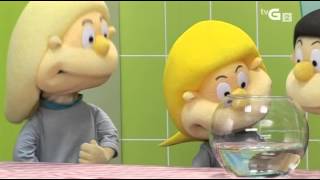
Os Bolechas, galegofalantes, son un referente para os cativos e cativas de Galicia.
O seu éxito, en palabras do seu creador, Pepe Carreiro, débese a que os seus protagonistas, seis irmáns (Carlos, as xemelgas Loli e Pili, Braulio, Sonia, o pequeno Tatá e o seu incondicional can Chispa).

Most firefly flashes are pure romance, a sexy form of skywriting. But one variety copies the mating signals of others to lure them to their demise.
SUBSCRIBE to Deep Look! http://goo.gl/8NwXqt
DEEP LOOK: a new ultra-HD (4K) short video series created by KQED San Francisco and presented by PBS Digital Studios. See the unseen at the very edge of our visible world. Get a new perspective on our place in the universe and meet extraordinary new friends. Explore big scientific mysteries by going incredibly small.
Most of the blinking signals that fireflies send out are intended to attract mates. But researchers are finding out that in some cases, these romantic overtures are not all wine and roses.
Females of one firefly group, the genus Photuris, have learned to copy other fireflies’ flashes to attract the males of those species. When one arrives, she pounces, first sucking his blood, then devouring his insides.
These “femme fatale” fireflies live throughout the Eastern U.S alongside the fireflies they target. They can develop widely varying light shows to target whatever species are in the area.
The predatory habits of Photuris are just one example of how much individual firefly signals can differ from one another.
The male Common Eastern Firefly, for example, is known for his fish hook-shaped aerial maneuver, which he repeats at six-second intervals. That characteristic move has earned the species the nickname “Big Dipper.”
The male Big Dipper hopes this bit of skywriting will get him noticed by females hiding in the grass. If the female likes what she sees, her reply comes as a single pulse from her smaller, heart-shaped lantern. That’s his invitation to land and mate.
Most firefly interactions follow the same pattern, with roving males advertising themselves to concealed females. Within a species, the back-and-forth signals are so reliable that it’s easy to attract the male fireflies with even a simple decoy.
Firefly light is biochemical. But fireflies like the Big Dippers do much more with chemistry than just make light. They can mix together an array of other compounds, including invisible pheromones for mating, and others called lucibufagins (“loosa-BOOF-ajins”) that ward off predators like spiders and birds.
At some point, the Photuris “femme fatale” fireflies lost the ability to make their own lucibufagins. So instead of chemistry, these bigger, stronger fireflies became adept at imitation, and evolved to turn into insect vampires to take these valuable compounds from other fireflies to boost their own defenses.
And it works. In experiments, predators avoided Photuris fireflies that had recently preyed on other fireflies.
--- Where do fireflies live?
There are fireflies worldwide, but in the U.S., you’ll find them in the Midwest and Eastern U.S. There are a few species in the West, including the California Pink Glow-worm.
--- Why do fireflies flash?
Mostly, it’s to attract mates. One sex, usually the male, uses a more elaborate flash pattern to get the attention of the opposite sex. Then the female signals her interest with a simpler flash.
--- Why do fireflies glow after they die?
The chemicals in the firefly that make light, luciferin and luciferase, remain viable after it dies, and the reaction that creates the light thrives on oxygen, which is of course plentiful in the air.
---+ Read the entire article on KQED Science:
https://ww2.kqed.org/2018/02/2....7/so-sometimes-firef
---+ For more information:
Join Fireflyers International: https://fireflyersinternational.net/
---+ More Great Deep Look episodes:
Everything You Never Wanted to Know About Snail Sex
https://youtu.be/UOcLaI44TXA
Why the Male Black Widow is a Real Home Wrecker
https://youtu.be/NpJNeGqExrc
---+ See some great videos and documentaries from the PBS Digital Studios!
PBS Eons: When Giant Fungi Ruled
https://www.youtube.com/watch?v=-G64DagHuOg
Origin Of Everything: Why Do We Eat Artificial Flavors?
https://www.youtube.com/watch?v=iNaJ31EV13U
---+ Follow KQED Science:
KQED Science: http://www.kqed.org/science
Tumblr: http://kqedscience.tumblr.com
Twitter: https://www.twitter.com/kqedscience
---+ About KQED
KQED, an NPR and PBS affiliate in San Francisco, CA, serves Northern California and beyond with a public-supported alternative to commercial TV, Radio and web media.
Funding for Deep Look is provided in part by PBS Digital Studios. Deep Look is a project of KQED Science, which is supported by the S. D. Bechtel, Jr. Foundation, the Dirk and Charlene Kabcenell Foundation, the Vadasz Family Foundation, the Gordon and Betty Moore Foundation, the Fuhs Family Foundation Fund and the members of KQED.
#deeplook

3 formas equivocadas de recibir la Santa Eucaristía
Tekton es un canal de noticias católicas nacido en Barcelona (España), puedes encontrar noticias relacionadas con la Iglesia Católica, y recursos de otro tipo como vidas de Santos, el Evangelio del día, y otras muchas cosas más. No dudes en entrar y ver el contenido que sin duda te gustará, nuestra web es http://www.tekton.info

Pecos Bill es una de las figuras míticas más representativas del vaquero estadounidense. Fue inventado por el escritor Edward J. O'Reilly en 1923.
Se dice que vivió cerca de la frontera con México. Desde la creación de la leyenda, se ha visto idealizado como el mejor vaquero del Oeste de los Estados Unidos. Cuenta la leyenda que yendo en una diligencia a muy corta edad, se cayó de la misma, fue encontrado por una familia de coyotes cerca del llamado río Pecos (suroeste de Texas), creció y montado en su caballo hasta un tornado ahuyentó, así como se le atribuye que durante un periodo de sequía llevó lluvia desde California hasta Texas, formando con esto, el Golfo de México.
En el Año de 1948, en la película Ritmo y Melodía de los Estudios Disney, se le brindó un corto animado, en el que Roy Rogers interpreta la famosa canción que relata la vida de este vaquero. Este tema musical fue también interpretado en español por Luis Aguilé como canción infantil. Más tarde fue popularizada por el payaso mexicano Cepillín.
Pecos Bill fue un super hombre en todo Texas
Y por más que se hable de él no es presumir
Era el vaquero más temible, más terrible y más valiente
Ese era el famoso Pecos Bill.

Villancicos Navideños Feliz Navidad Christmas Carols
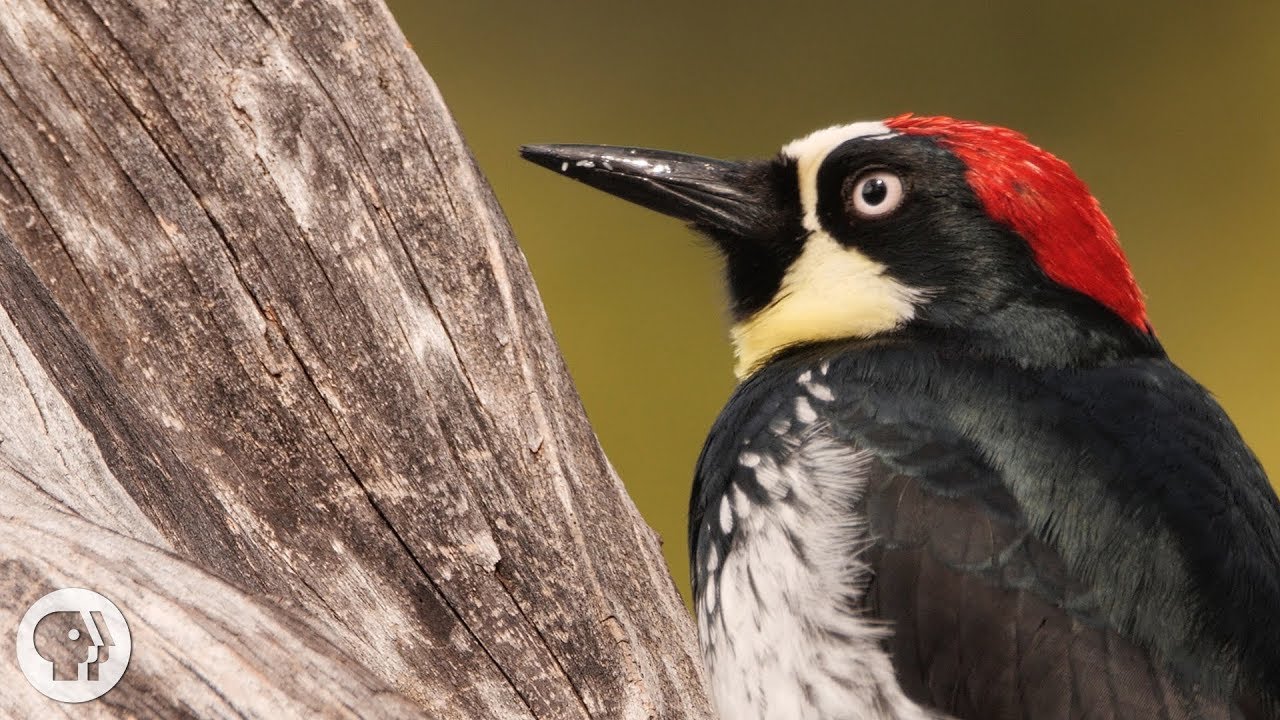
OK. Maybe you would. But the lengths they have to go to to stock up for the winter *will* surprise you. When you see how carefully they arrange each acorn, you might just need to reorganize your pantry.
You can learn more about CuriosityStream at https://curiositystream.com/deeplook.
Join Deep Look on Patreon NOW! https://www.patreon.com/deeplook
You can learn more about CuriosityStream at https://curiositystream.com/deeplook .
SUBSCRIBE to Deep Look! http://goo.gl/8NwXqt
DEEP LOOK is a ultra-HD (4K) short video series created by KQED San Francisco and presented by PBS Digital Studios. See the unseen at the very edge of our visible world. Get a new perspective on our place in the universe and meet extraordinary new friends. Explore big scientific mysteries by going incredibly small.
* NEW VIDEOS EVERY OTHER TUESDAY! *
Have you ever wondered why woodpeckers pound so incessantly?
In the case of acorn woodpeckers – gregarious black and red birds in California’s oak forests – they’re building an intricate pantry, a massive, well-organized stockpile of thousands of acorns to carry them through the winter.
“They’re the only animals that I know of that store their acorns individually in holes in trees,” said biologist Walter Koenig, of the Cornell Lab of Ornithology, who has studied acorn woodpeckers for decades at the University of California’s Hastings Natural History Reservation in Carmel Valley.
Over generations, acorn woodpeckers can drill thousands of small holes into one or several trees close to each other, giving these so-called granaries the appearance of Swiss cheese.
This sets them apart from other birds that drop acorns into already-existing cavities in trees, and animals like squirrels and jays that bury acorns in the ground.
In spring and summer, hikers in California commonly see acorn woodpeckers while the birds feed their chicks and care for their granaries. They don’t mind people staring at them and they’re easy to find. They greet each other with loud cries that sound like “waka-waka-waka.”
They’re also found in Oregon, Arizona, New Mexico and Texas, and all the way south to Colombia.
These avian performers are constantly tapping, drilling and pounding at their granaries.
“They’ll usually have a central granary, maybe two trees that a group is using,” said Koenig. “Those trees are going to be close together.”
Acorn woodpeckers make their granaries in pines, oaks, sycamores, redwoods and even in the palm trees on the Stanford University campus.
Their holes rarely hurt the trees. The birds only bore into the bark, where there’s no sap, or they make their granaries in snags.
“They don’t want sap in the hole because it will cause the acorn to rot,” said Koenig. “The point of storing the acorns is that it protects them from other animals getting them and it allows them to dry out.”
--- What is an acorn?
It’s the fruit of the oak.
--- Do acorn woodpeckers only eat acorns?
In the spring, acorn woodpeckers have their choice of food. They catch insects, eat oak flowers and suck the sap out of shallow holes on trees like coast live oaks.
---+ Read the entire article on KQED Science:
https://www.kqed.org/science/1....925251/youd-never-gu
---+ For more information:
Cornell Lab of Ornithology: https://www.allaboutbirds.org/....guide/Acorn_Woodpeck
---+ More Great Deep Look episodes:
What Gall! The Crazy Cribs of Parasitic Wasps
https://www.youtube.com/watch?v=lOgP5NzcTuA
How Ticks Dig in With a Mouth Full of Hooks
https://www.youtube.com/watch?v=_IoOJu2_FKE
Why is the Hungry Caterpillar So Dang Hungry?
https://www.youtube.com/watch?v=el_lPd2oFV4
---+ See some great videos and documentaries from PBS Digital Studios!
Eons: Why Triassic Animals Were Just the Weirdest
https://www.youtube.com/watch?v=moxu_uTemNg
Physics Girl: Why this skateboarding trick should be IMPOSSIBLE ft. Rodney Mullen
https://www.youtube.com/watch?v=yFRPhi0jhGc
---+ Follow KQED Science and Deep Look:
Instagram: https://www.instagram.com/kqedscience/
Twitter: https://www.twitter.com/kqedscience
KQED Science on kqed.org: http://www.kqed.org/science
Facebook Watch: https://www.facebook.com/DeepLookPBS/
Patreon: https://www.patreon.com/deeplook
---+ About KQED
KQED, an NPR and PBS affiliate in San Francisco, CA, serves Northern California and beyond with a public-supported alternative to commercial TV, radio and web media.
Funding for Deep Look is provided in part by PBS Digital Studios. Deep Look is a project of KQED Science, which is supported by the Templeton Religion Trust and the Templeton World Charity Foundation, the S. D. Bechtel, Jr. Foundation, the Dirk and Charlene Kabcenell Foundation, the Vadasz Family Foundation, the Gordon and Betty Moore Foundation, the Fuhs Family Foundation Fund and the members of KQED.
#deeplook

A deadly fungus is attacking frogs’ skin and wiping out hundreds of species worldwide. Can anyone help California's remaining mountain yellow-legged frogs? In a last-ditch effort, scientists are trying something new: build defenses against the fungus through a kind of frog “vaccine.”
SUBSCRIBE to Deep Look! http://goo.gl/8NwXqt
DEEP LOOK is a ultra-HD (4K) short video series created by KQED San Francisco and presented by PBS Digital Studios. See the unseen at the very edge of our visible world. Get a new perspective on our place in the universe. Explore big scientific mysteries by going incredibly small.
* NEW VIDEOS EVERY OTHER TUESDAY! *
Chytrid fungus has decimated some 200 amphibian species around the world, among them the mountain yellow-legged frogs of California’s Sierra Nevada mountain range.
Frogs need healthy skin to survive. They breathe and drink water through it, and absorb the sodium and potassium their hearts need to work.
In the late 1970s, chytrid fungus started getting into mountain yellow-legged frogs through their skin, moving through the water in their alpine lakes, or passed on by other frogs. The fungus destroys frogs’ skin to the point where they can no longer absorb sodium and potassium. Eventually, they die.
At the University of California, Santa Barbara, biologists Cherie Briggs and Mary Toothman did an experiment to see if they could save mountain yellow-legged frogs by immunizing them against chytrid fungus.
They grew some frogs from eggs. Then they infected them with chytrid fungus. The frogs got sick. Their skin sloughed off, as happens typically to infected frogs. But before the fungus could kill the frogs, the researchers treated them with a liquid antifungal that stopped the disease.
When the frogs were nice and healthy again, researchers re-infected them with chytrid fungus. They found that all 20 frogs they had immunized survived. Now the San Francisco and Oakland zoos are replicating the experiment and returning dozens of mountain-yellow legged frogs to the Sierra Nevada’s alpine lakes.
--- How does chytrid fungus kill frogs?
Spores of chytrid fungus burrow down into frogs’ skin, which gets irritated. They run out of energy. Sick frogs’ legs lock in the straight position when they try to hop. As they get sicker, their skin sloughs off in translucent sheets. The frogs can no longer absorb sodium and potassium their hearts needs to function. “It takes 2-3 weeks for a yellow-legged frog to die from chytridiomycosis,” said mountain yellow-legged frog expert Vance Vredenburg , of San Francisco State University. “Eventually they die from a heart attack.”
--- How does chytrid fungus spread?
Fungus spores, which have a little tail called a flagellum, swim through the water and attack a frog’s skin. The fungus can also get passed on from amphibian to amphibian.
---+ Read the entire article on KQED Science:
https://ww2.kqed.org/science/2....016/09/06/can-a-new-
---+ For more information:
AmphibiaWeb
http://www.amphibiaweb.org/chy....trid/chytridiomycosi
---+ More Great Deep Look episodes:
These Crazy Cute Baby Turtles Want Their Lake Back
https://www.youtube.com/watch?v=YTYFdpNpkMY
Newt Sex: Buff Males! Writhing Females! Cannibalism!
https://www.youtube.com/watch?v=5m37QR_4XNY
Sticky. Stretchy. Waterproof. The Amazing Underwater Tape of the Caddisfly
https://www.youtube.com/watch?v=Z3BHrzDHoYo
---+ See some great videos and documentaries from PBS Digital Studios!
It’s Okay To Be Smart: Do Plants Think?
https://www.youtube.com/watch?v=zm6zfHzvqX4
Gross Science: Why Get Your Tetanus Shot?
https://www.youtube.com/watch?v=O4jrqj5Dr8s
---+ Follow KQED Science:
KQED Science: http://www.kqed.org/science
Tumblr: http://kqedscience.tumblr.com
Twitter: https://www.twitter.com/kqedscience
---+ About KQED
KQED, an NPR and PBS affiliate in San Francisco, CA, serves Northern California and beyond with a public-supported alternative to commercial TV, Radio and web media.
Funding for Deep Look is provided in part by PBS Digital Studios and the John S. and James L. Knight Foundation. Deep Look is a project of KQED Science, which is also supported by HopeLab, the S. D. Bechtel, Jr. Foundation, the Dirk and Charlene Kabcenell Foundation, the Vadasz Family Foundation, the Gordon and Betty Moore Foundation, the Smart Family Foundation and the members of KQED.
#deeplook

A inicios de 1984 una ecografía mostraba que en el vientre de la chilena Rosa Silva se gestaba un bebé con tres brazos y dos cabezas. Los médicos insistieron en que se practique un aborto, pero ella se negó pues estaba dispuesta a recibir "lo que Dios le mandara" y Dios no le envió un bebé con malformaciones sino hijos gemelos, los hoy sacerdotes Felipe y Paulo.
Más información en:http://www.aciprensa.com/notic....ias/fotos-gemelos-ch

San Juan Pablo II mantuvo por décadas una hermosa amistad con la querida MadreTeresa de Calcuta.
Más información en: https://www.aciprensa.com/noti....cias/una-santa-de-mi

Кунг-фу Панда - МАСТЕР ПО ЯЙЦАМ!
Ссылка: https://luckykeys.net/stint
??СТРИМЫ ТУТ: https://www.twitch.tv/stintik
?? ПОДПИСЫВАЙТЕСЬ НА УВЕДОМЛЕНИЯ!! Пишите сюда "+": https://vk.me/stintgameshow
?? Мой Дискорд: https://discord.gg/gPnKD54
?Группа ВК: http://vk.com/stintgameshow
?Роспись от меня в ВК: https://signalerts.ru/buy/1172
♦ Стинт - https://vk.com/thestint
♦ Инстаграм - https://instagram.com/thestintgames
«Кунг-фу панда» (англ. Kung Fu Panda) — полнометражный анимационный фильм 2008 года производства DreamWorks Animation. В своё время наделал много шумихи, но вместе с ней вышла ещё одноименная игра по мультфильму для PlayStation 3, Xbox 360, PlayStation 2, Wii, Nintendo DS, и ещё версия игры на ПК. Думаю вы слышали о ней в детстве. И вот прошло 11 лет! Думаю время вспомнить, что там было и сделать обзор!
?Твиттер: https://twitter.com/TheStintGames
?ЮТУБ КАНАЛ СО СТРИМАМИ: https://www.youtube.com/user/StintLiv...
#КунгфуПанда #KungFuPanda #Обзор

Somos una comunidad especializada en rescatar material del recuerdo.
Puedes disfrutar nuestros contenidos en:
Nuestra Web: https://www.generacionretro.net
Nuestro Twitter: https://twitter.com/gretrocool
Nuestro Facebook: http://www.facebook.com/generacionret...
Copyright Disclaimer Under Section 107 of the Copyright Act 1976, allowance is made for "fair use" for purposes such as criticism, comment, news reporting, teaching, scholarship, and research. Fair use is a use permitted by copyright statute that might otherwise be infringing. Non-profit, educational or personal use tips the balance in favor of fair use
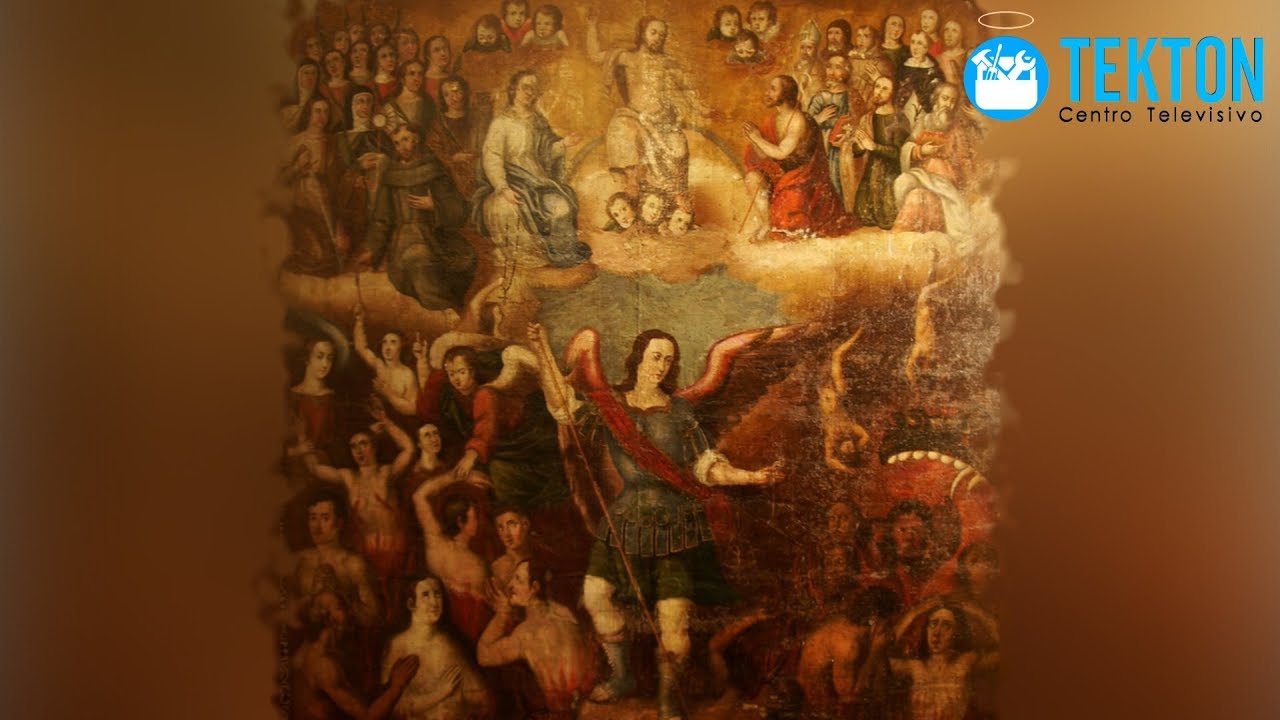
Qué es lo que sucede en el Purgatorio revelado a Sor María de La Cruz
https://twitter.com/JesusSellas
Tekton es un canal de youtube católico nacido en Barcelona (España), puedes encontrar noticias relacionadas con la Iglesia Católica, y recursos de otro tipo como formación católica, oraciones, música católica, vídeos del Papa Francisco, curiosidades, vidas de Santos, el Evangelio del día, y otras muchas cosas más. No dudes en entrar y ver el contenido que sin duda te gustará
Web: http://www.tekton.info
Facebook: https://www.facebook.com/productoratekton/
Twitter: https://twitter.com/productoratekto?s=09
Instagram: https://www.instagram.com/productoratekton/
Google+: https://plus.google.com/u/1/+T....ektonTekton?hl=es-41
Hacer un donativo: https://www.tekton.info/hacer-caridad/
#Tekton
#TektonCentroTelevisivo
#TektonYouTube
#CanalCatolicoYouTube

Novena a San José Obrero para encontrar Trabajo
Tekton es un canal de youtube católico nacido en Barcelona (España), puedes encontrar noticias relacionadas con la Iglesia Católica, y recursos de otro tipo como formación católica, oraciones, musica católica, vídeos del Papa Francisco, curiosidades, vidas de Santos, el Evangelio del día, y otras muchas cosas más. No dudes en entrar y ver el contenido que sin duda te gustará, nuestra web es http://www.tekton.info
https://www.facebook.com/productoratekton/

Somos una comunidad especializada en rescatar material del recuerdo.
Puedes disfrutar nuestros contenidos en:
Nuestra Web: http://www.generacionretro.net
Nuestro Twitter: https://twitter.com/gretrocool
Nuestro Facebook: http://www.facebook.com/generacionretro.latino/
Copyright Disclaimer Under Section 107 of the Copyright Act 1976, allowance is made for "fair use" for purposes such as criticism, comment, news reporting, teaching, scholarship, and research. Fair use is a use permitted by copyright statute that might otherwise be infringing. Non-profit, educational or personal use tips the balance in favor of fair use
