Top Vídeos

On the rebound, the acceleration varies. The jumper is accelerating up but as the bungy recoils, the jumper starts accelerating down again due to the pull of gravity. This does not mean that he's moving down, however, only that his velocity upwards is decreasing.

Jaci velasquez De Creer En Ti Live At Barcelona Spain ( Palau Sant Jordi , Gospel Music Fest 2012)
Jaci Velasquez De Creer En Ti En Vivo desde Barcelona España desde el Palau Sant Jordi en el Festival de Musica Gospel 2012

Sir David Attenborough researches the life of ants in Australian mangroves in this fantastic BBC footage. Visit http://www.bbcearth.com for all the latest animal news and wildlife videos and watch more high quality videos on the new BBC Earth YouTube channel here: http://www.youtube.com/bbcearth

Funniest Boxer Dogs Videos Compilation
★Don't forget subscribe Happiness Kingdom channel : https://www.youtube.com/HappinessKingdom
★Like Us on facebook :-
http://fb.me/HappinessKingdom17
--------------------------------------x-------------------------------------
Watch Other Videos
More Puppy Surprise Reaction: https://goo.gl/4EbiUx
Cute Babies Videos: https://goo.gl/yJoMSM
Funny Dogs Compilation : https://goo.gl/XihRrj
--------------------------------------x-------------------------------------
♫Intro MotionGraphic ♫
https://www.youtube.com/watch?v=L_5pV4PJV4c
♫IntroMusic By♫
★Axol x Alex Skrindo - You [NCS Release]
https://www.youtube.com/watch?v=sA_p0rQtDXE
--------------------------------------x-------------------------------------
Copyright Disclaimer:
If you see a clip that you own that you did not submit or give consent for use, we have likely received false permissions and would be happy to resolve this for you!
Feel free to contact us at contact4acme@gmail.com. We will remove the clip, video. Thank you.
--------------------------------------x-------------------------------------
Feel free to leave a comment! Share this video with your friends!
Have a GREAT Day :)
Thanks For Watching ! Please Like Share & Comment.

Rabito, Danny Berrios, Samuel Hernández, Jacobo Ramos, Roberto Orellana EXITOS Sus Mejores Canciones
Rabito, Danny Berrios, Samuel Hernández, Jacobo Ramos, Roberto Orellana EXITOS Sus Mejores Canciones
https://youtu.be/H4n_uHdID5g
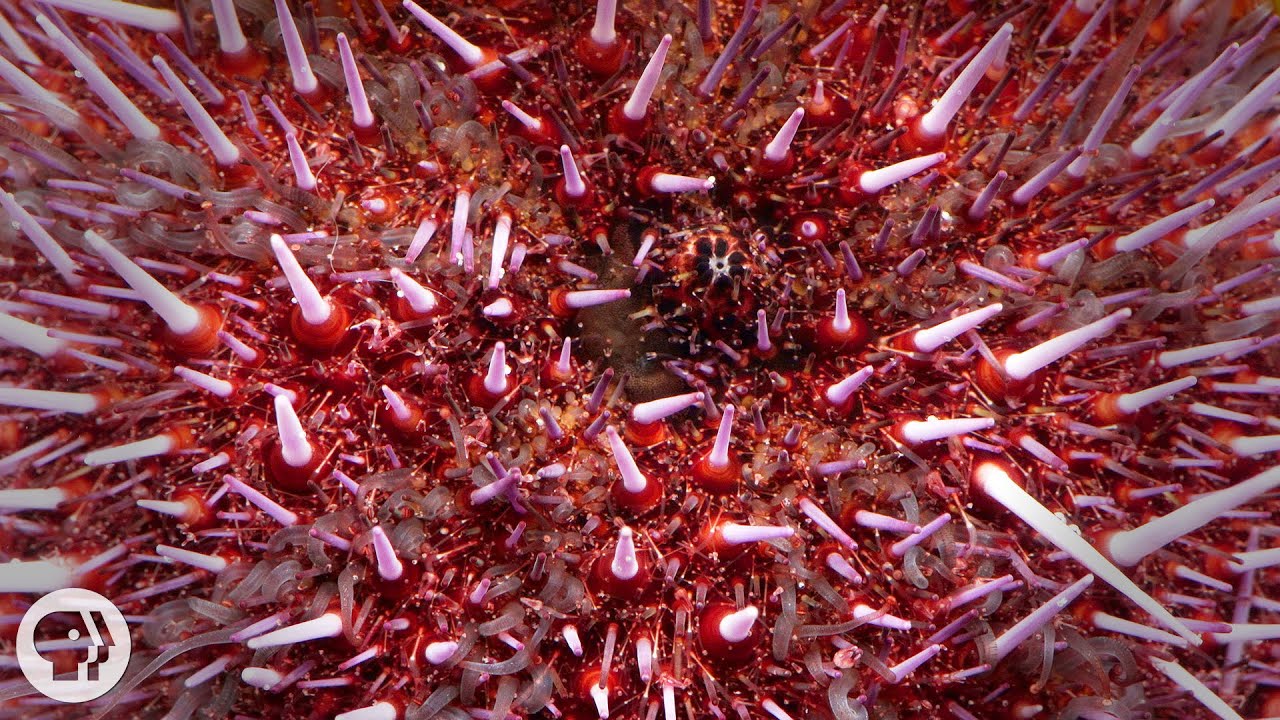
Conceived in the open sea, tiny spaceship-shaped sea urchin larvae search the vast ocean to find a home. After this incredible odyssey, they undergo one of the most remarkable transformations in nature.
SUBSCRIBE to Deep Look! http://goo.gl/8NwXqt
DEEP LOOK is a ultra-HD (4K) short video series created by KQED San Francisco and presented by PBS Digital Studios. See the unseen at the very edge of our visible world. Get a new perspective on our place in the universe. Explore big scientific mysteries by going incredibly small.
* NEW VIDEOS EVERY OTHER TUESDAY! *
Every summer, millions of people head to the coast to soak up the sun and play in the waves. But they aren’t alone. Just beyond the crashing surf, hundreds of millions of tiny sea urchin larvae are also floating around, preparing for one of the most dramatic transformations in the animal kingdom.
Scientists along the Pacific coast are investigating how these microscopic ocean drifters, which look like tiny spaceships, find their way back home to the shoreline, where they attach themselves, grow into spiny creatures and live out a slow-moving life that often exceeds 100 years.“These sorts of studies are absolutely crucial if we want to not only maintain healthy fisheries but indeed a healthy ocean,” says Jason Hodin, a research scientist at the University of Washington’s Friday Harbor Laboratories.
http://staff.washington.edu/hodin/
http://depts.washington.edu/fhl/
Sea urchins reproduce by sending clouds of eggs and sperm into the water. Millions of larvae are formed, but only a handful make it back to the shoreline to grow into adults.
--- What are sea urchins?
Sea urchins are spiny invertebrate animals. Adult sea urchins are globe-shaped and show five-point radial symmetry. They move using a system of tube feet. Sea urchins belong to the phylum Echinodermata along with their relatives the sea stars (starfish), sand dollars and sea slugs.
--- What do sea urchins eat?
Sea urchins eat algae and can reduce kelp forests to barrens if their numbers grow too high. A sea urchin’s mouth, referred to as Aristotle’s lantern, is on the underside and has five sharp teeth. The urchin uses the tube feet to move the food to its mouth.
--- How do sea urchins reproduce?
Male sea urchins release clouds of sperm and females release huge numbers of eggs directly into the ocean water. The gametes meet and the sperm fertilize the eggs. The fertilized eggs grow into free-swimming embryos which themselves develop into larvae called plutei. The plutei swim through the ocean as plankton until they drop to the seafloor and metamorphosize into the globe-shaped adult urchins.
---+ Read the entire article on KQED Science:
https://ww2.kqed.org/science/2....016/08/23/sea-urchin
---+ For more information:
Marine Larvae Video Resource
http://marinedevelopmentresource.stanford.edu/
---+ More Great Deep Look episodes:
From Drifter to Dynamo: The Story of Plankton | Deep Look
https://www.youtube.com/watch?v=jUvJ5ANH86I
Pygmy Seahorses: Masters of Camouflage | Deep Look
https://www.youtube.com/watch?v=Q3CtGoqz3ww
The Fantastic Fur of Sea Otters | Deep Look
https://www.youtube.com/watch?v=Zxqg_um1TXI
---+ See some great videos and documentaries from PBS Digital Studios!
It's Okay To Be Smart: Can Coral Reefs Survive Climate Change?
https://www.youtube.com/watch?v=P7ydNafXxJI
Gross Science: White Sand Beaches Are Made of Fish Poop
https://www.youtube.com/watch?v=1SfxgY1dIM4
---+ Follow KQED Science:
KQED Science: http://www.kqed.org/science
Tumblr: http://kqedscience.tumblr.com
Twitter: https://www.twitter.com/kqedscience
---+ About KQED
KQED, an NPR and PBS affiliate in San Francisco, CA, serves Northern California and beyond with a public-supported alternative to commercial TV, Radio and web media.
Funding for Deep Look is provided in part by PBS Digital Studios and the John S. and James L. Knight Foundation. Deep Look is a project of KQED Science, which is also supported by HopeLab, the S. D. Bechtel, Jr. Foundation, the Dirk and Charlene Kabcenell Foundation, the Vadasz Family Foundation, the Gordon and Betty Moore Foundation, the Smart Family Foundation and the members of KQED.
#deeplook #seaurchin #urchins
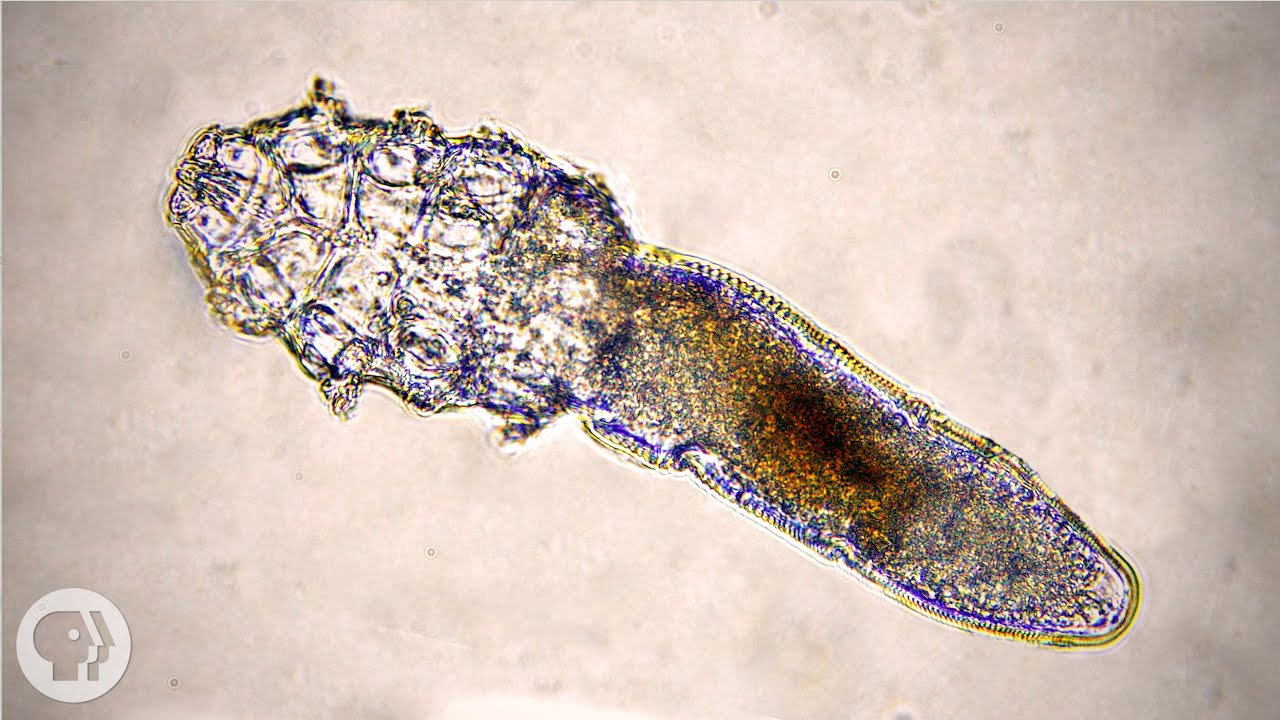
Yep, you probably have Demodex mites living on your face. These tiny arachnids feast on sebum, the greasy oil in your pores. But should you be worried about your eight-legged guests?
SUBSCRIBE to Deep Look! http://goo.gl/8NwXqt
Please support us on Patreon! https://www.patreon.com/deeplook
DEEP LOOK is a ultra-HD (4K) short video series created by KQED San Francisco and presented by PBS Digital Studios. See the unseen at the very edge of our visible world. Explore big scientific mysteries by going incredibly small.
Pretty much every adult human alive has a population of these mites living on them.
Also called eyelash mites, they’re too small to see with the naked eye. They’re mostly transparent, and at about .3 millimeters long, it would take about five face adult mites laid end to end to stretch across the head of a pin.
Face mites spend their days face-down inside your hair follicles nestled up against the hair shaft.
They eat sebum, that greasy oil your skin makes to protect itself and keep it from drying out. That’s why the greasiest parts of your body — like around the eyes, nose and mouth — likely harbor a higher concentration of mites than other areas.
They live about two weeks. They spend most of their time tucked inside our pores. But while we’re sleeping, they crawl out onto the surface of our skin to mate before crawling back into our pores to lay their eggs. Fun!
--- How common are face mites?
Pretty much everyone has some face mites on them. Babies are born without them but quickly receive them from their parents through direct contact. The amount of mites may increase during puberty when the skin starts to produce more oil.
--- How do you get rid of face mites?
There’s usually no need to try to rid yourself of face mites as they typically don’t cause any symptoms and are nearly impossible to fully eradicate. Since female face mites can also reproduce asexually, it only takes one mite to repopulate your skin. Some people experience an overpopulation of face mites resulting in an inflammatory disease called demodicosis which is easy to recognize sue to the many small evenly-sized pimples that appear quickly. Consult a dermatologist if you think you may have symptoms.
--- What do face mites eat?
Face mites consume the greasy oil that you skin produces to protect itself.
---+ Read the entire article on KQED
https://www.kqed.org/science/1....941506/these-face-mi
---+ More Great Deep Look episodes:
How Lice Turn Your Hair Into Their Jungle Gym | Deep Look
https://www.youtube.com/watch?v=Yb26BBvAAWU&t=1s
How Ticks Dig In With a Mouth Full of Hooks | Deep Look
https://www.youtube.com/watch?v=_IoOJu2_FKE
---+ Shoutout!
?Congratulations? to jac lyn, Vanessa C u later, aspireme_95, Émile Julien, and Nono Chan who correctly identified the part of this animal that is, well… missing. Demodex lack an anus! Se the Community Tab post here: https://www.youtube.com/channe....l/UC-3SbfTPJsL8fJAPK
---+ Thank you to our Top Patreon Supporters ($10+ per month)!
Ahegao Comics, Allen, Aurora Mitchell, Beckie, Ben Espey, Bill Cass, Breanna Tarnawsky, Carlos Zepeda, Chris B Emrick, Chris Murphy, Companion Cube, Cooper Caraway, Daisuke Goto, Daniel Weinstein, David Deshpande, Edwin Rivas, Elizabeth Ann Ditz, Elizabeth Wolden, Ivan Alexander, Iver Soto, Jane Orbuch, JanetFromAnotherPlanet, Jason Buberel, Jeanine Womble, Jenn's Bowtique, Jeremy Lambert, Jiayang Li, Joao Ascensao, johanna reis, Johnnyonnyful, Joshua Murallon Robertson, Justin Bull, Karen Reynolds, Kristell Esquivel , KW, Kyle Fisher, Laurel Przybylski, Levi Cai, Lyall Talarico, Mario Rahmani, Marjorie D Miller, Mark Joshua Bernardo, Michael Mieczkowski, Monica Albe, Nathan Padilla, Nathan Wright, Pamela Parker, PM Daeley, Ricardo Martinez, Robert Amling, Robert Warner, Sayantan Dasgupta, Sean Tucker, Shelley Pearson Cranshaw, Shirley Washburn, SueEllen McCann, Tatianna Bartlett, Tea Torvinen, TierZoo, Tommy Tran, Two Box Fish, WhatzGames, Willy Nursalim
---+ Follow KQED Science and Deep Look:
Patreon: https://www.patreon.com/deeplook
Instagram: https://www.instagram.com/kqedscience/
Twitter: https://www.twitter.com/kqedscience
KQED Science on kqed.org: http://www.kqed.org/science
Facebook Watch: https://www.facebook.com/DeepLookPBS/
---+ About KQED
KQED, an NPR and PBS affiliate in San Francisco, CA, serves Northern California and beyond with a public-supported alternative to commercial TV, Radio and web media.
Funding for Deep Look is provided in part by PBS Digital Studios. Deep Look is a project of KQED Science, which is also supported by the National Science Foundation, the Templeton Religion Trust, the Templeton World Charity Foundation, the S. D. Bechtel, Jr. Foundation, the Dirk and Charlene Kabcenell Foundation, the Vadasz Family Foundation, the Gordon and Betty Moore Foundation, the Fuhs Family Foundation and the members of KQED.
#facemites #demodex #deeplook

These baboons love selfies, giving us a great opportunity to study their range of extremely complex facial expressions.
Subscribe: http://bit.ly/BBCEarthSub
Watch more videos from BBC Earth:
Planet Earth http://bit.ly/PlanetEarthPlaylist
Blue Planet http://bit.ly/BluePlanetPlaylist
Planet Earth II http://bit.ly/PlanetEarthIIPlaylist
Planet Dinosaur http://bit.ly/PlanetDinoPlaylist
The Secret Life Of Primates: Baboons
Charlotte Uhlenbroek travels to jungles and mountains to infiltrate some of the greatest wild primate groups, getting closer to them than anyone before. She unravels the complex social dynamics of gorillas, orang-utans, chimpanzees and baboons to bring viewers every detail of these magnificent animals' existence.
Welcome to BBC EARTH! Here you'll find 50 years worth of astounding, entertaining, thought-provoking and educational natural history content.
Want to share your views with the team behind BBC Earth and win prizes? Join our fan panel here: http://tinyurl.com/YouTube-BBCEarth-FanPanel
This is a channel from BBC Worldwide who help fund new BBC programmes
Service information and feedback: http://bbcworldwide.com/vod-fe....edback--contact-deta
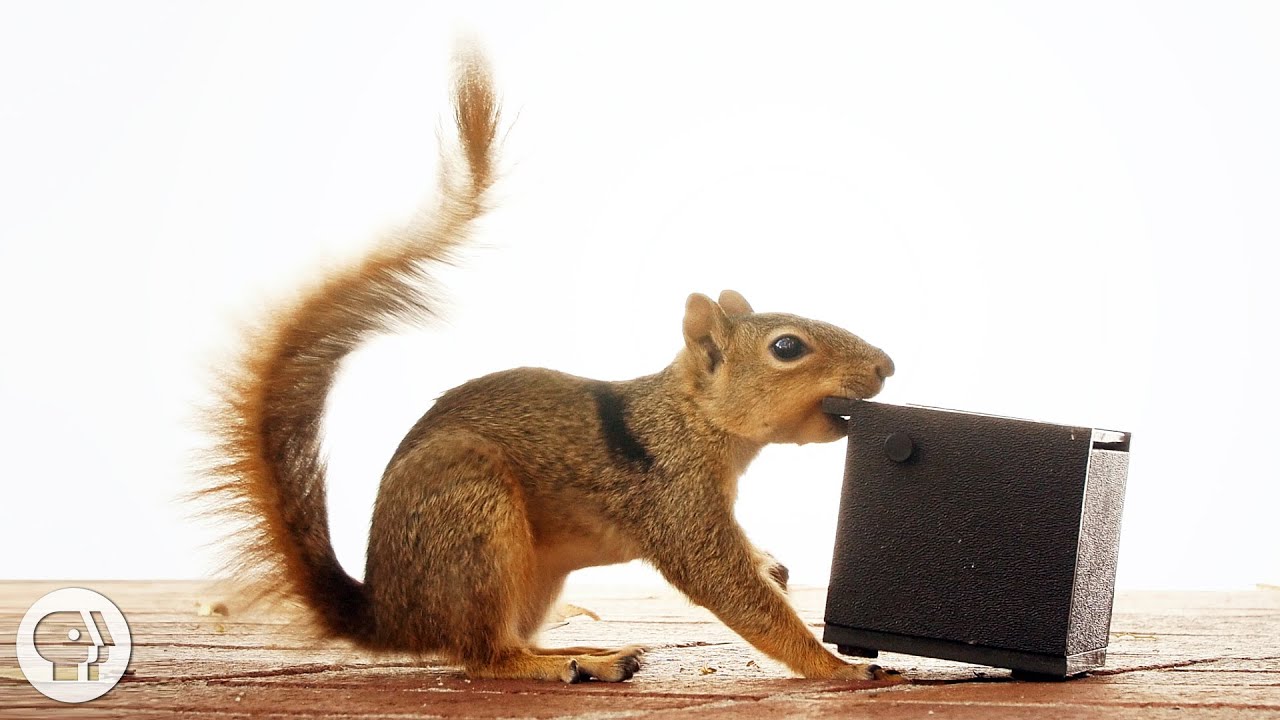
Humans aren’t the only creatures that get frustrated. Squirrels do too. One researcher wants to know, could there be an evolutionary benefit to losing your cool?
SUBSCRIBE to Deep Look! http://goo.gl/8NwXqt
DEEP LOOK is a ultra-HD (4K) short video series created by KQED San Francisco and presented by PBS Digital Studios. See the unseen at the very edge of our visible world. Get a new perspective on our place in the universe and meet extraordinary new friends. Explore big scientific mysteries by going incredibly small.
* NEW VIDEOS EVERY OTHER TUESDAY! *
YouTube viewers are well-acquainted with the squirrel genre: Thousands of videos that show squirrels going to great lengths to extract seeds from bird feeders (https://www.youtube.com/watch?v=FgDa_cpgHWs), or the old favorite, squirrels stuffing their cheeks (https://www.youtube.com/watch?v=_15UrPHkVQo).
Maybe squirrels are so popular because we see some of ourselves in them. This is part of what fueled Mikel Delgado’s interest in the fox squirrels she saw at the University of California, Berkeley. An animal behaviorist and doctoral student there, she likes to quote from Charles Darwin’s book “The Descent of Man, and Selection in Relation to Sex,” in which the English naturalist proposed that the differences between humans and other animals aren’t that clear-cut.
“It was controversial because people thought animals were machines and didn’t feel pain,” she said.
Inspired by Darwin, Delgado was intrigued by squirrels’ emotional worlds. The way to tell what they’re feeling, researchers have found, is to watch their tails. When threatened by a predator like a dog, a fox squirrel whips its tail in an s-shaped pattern that researchers call “flagging.”
Delgado wondered what else she could learn from watching squirrels flag their tails. For instance, do they get frustrated, the way that people do? So she devised an experiment to explore this question.
She taught some of the fox squirrels on campus to lift the lid of a plastic box to find a walnut inside. When the squirrel ate the nut, she dropped another one in. This way, she trained the squirrels to expect a walnut when they looked inside. This training was important because frustration is usually defined as not getting what you expect.
Then she replaced the walnut with corn – which squirrels don’t like as much – or left the box empty. These squirrels flagged their tails. For a third group, she locked the box. They flagged their tails the most. They got aggressive, a hallmark of frustration. And they bit, toppled and dragged the box, trying to open it.
That makes Delgado think that perhaps frustration has an evolutionary purpose, that it isn’t just for blowing off steam, but is instead a way to gather up energy to “brute-force” a solution.
--+ Is frustration an emotion?
“It’s a little bit controversial,” said Delgado. “It depends on who you talk to.”
Researchers don’t consider frustration one of the basic, or universal, emotions. In the 1960s, psychologist Paul Ekman identified six universal emotions: joy, anger, sadness, surprise, fear and disgust:
https://www.youtube.com/watch?v=-PFqzYoKkCc
Frustration is related to anger, but researchers don’t consider frustration a basic emotion. “There’s a question as to what exactly it is,” said Delgado. “Sometimes you see it described very specifically as a task: For example, when you expect a soda and you don’t get it from the vending machine. And sometimes you see it described as the response to the task.”
---+ Read the entire article on KQED Science:
https://ww2.kqed.org/science/2....016/09/20/watch-thes
---+ For more information:
The lab of Lucia Jacobs, where Mikel Delgado does her research: http://jacobs.berkeley.edu/
---+ More Great Deep Look episodes:
Can a New “Vaccine” Stem the Frog Apocalypse?
https://www.youtube.com/watch?v=-IXVcyCZVBg
These Crazy Cute Turtles Want Their Lake Back
https://www.youtube.com/watch?v=YTYFdpNpkMY
---+ See some great videos and documentaries from PBS Digital Studios!
BrainCraft: The Power of Sadness in Inside Out
https://www.youtube.com/watch?v=ST97BGCi3-w
PBS Idea Channel: 3 Fallacies For Election Season!
https://www.youtube.com/watch?v=REp4zCum3XY
---+ About KQED
KQED, an NPR and PBS affiliate in San Francisco, CA, serves Northern California and beyond with a public-supported alternative to commercial TV, Radio and web media.
Funding for Deep Look is provided in part by PBS Digital Studios and the John S. and James L. Knight Foundation. Deep Look is a project of KQED Science, which is also supported by HopeLab, the S. D. Bechtel, Jr. Foundation, the Dirk and Charlene Kabcenell Foundation, the Vadasz Family Foundation, the Gordon and Betty Moore Foundation, the Smart Family Foundation and the members of KQED.
#deeplook #squirrel #squirrelbehavior
Support Deep Look on Patreon! https://www.patreon.com/deeplook
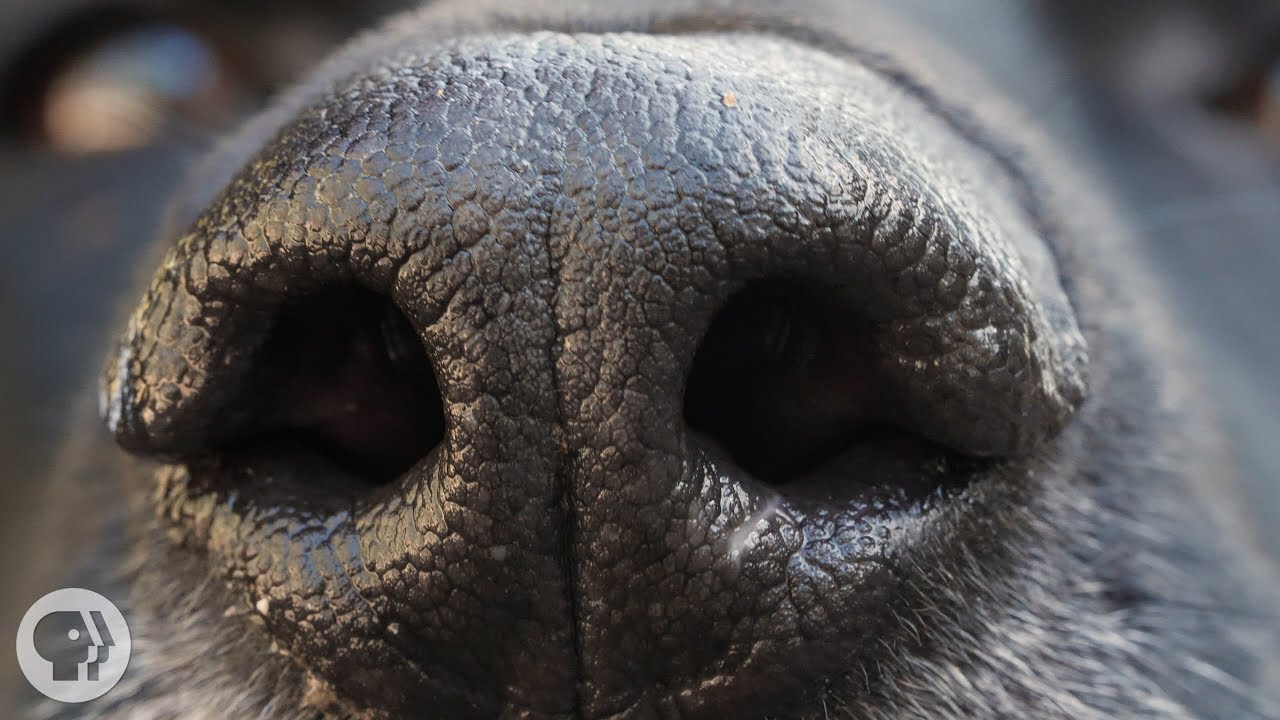
Dogs have a famously great sense of smell, but what makes their noses so much more powerful than ours? They're packing some sophisticated equipment inside that squishy schnozz.
SUBSCRIBE to Deep Look! http://goo.gl/8NwXqt
DEEP LOOK is a ultra-HD (4K) short video series created by KQED San Francisco and presented by PBS Digital Studios. See the unseen at the very edge of our visible world. Explore big scientific mysteries by going incredibly small.
--- How much more powerful is a dog’s sense of smell compared to a human?
According to one estimate, dogs are 10,000-100,000 times more sensitive to smell than humans. They have about 15 times more olfactory neurons that send signals about odors to the brain. The neurons in a dog’s nose are spread out over a much larger and more convoluted area allowing them more easily decipher specific chemicals in the air.
--- Why are dog noses wet?
Dog noses secrete mucus which traps odors in the air and on the ground. When a dog licks its nose, the tongue brings those odors into the mouth allowing it to sample those smells. Dogs mostly cool themselves by panting but the mucus on their noses and sweat from their paws cool through evaporation.
--- Why do dog nostrils have slits on the side?
Dogs sniff about five times per second. The slits on the sides allows exhaled air to vent towards the sides and back. That air moving towards the back of the dog creates a low air pressure region in front of it. Air from in front of the dog rushes in to fill that low pressure region. That allows the nose to actively bring odors in from in front and keeps the exhaled air from contaminating new samples.
---+ Read the entire article on KQED Science:
https://ww2.kqed.org/science/2....019/02/26/how-your-d
---+ For more information:
The Odor Navigation Project funded NSF Brain Initiative
https://odornavigation.org/
Jacobs Lab of Cognitive Biology at UC Berkeley
http://jacobs.berkeley.edu/
Ecological Fluid Dynamics Lab at University of Colorado Boulder
https://www.colorado.edu/lab/ecological-fluids/
The fluid dynamics of canine olfaction: unique nasal airflow patterns as an explanation of macrosmia (Brent A. Craven, Eric G. Paterson, and Gary S. Settles)
https://royalsocietypublishing.....org/doi/full/10.109
---+ More Great Deep Look episodes:
The Fantastic Fur of Sea Otters | Deep Look
https://www.youtube.com/watch?v=Zxqg_um1TXI
You've Heard of a Murder of Crows. How About a Crow Funeral? | Deep Look
https://www.youtube.com/watch?v=ixYVFZnNl6s&t=85s
Newt Sex: Buff Males! Writhing Females! Cannibalism! | Deep Look
https://www.youtube.com/watch?v=5m37QR_4XNY
What Makes Owls So Quiet and So Deadly? | Deep Look
https://www.youtube.com/watch?v=a68fIQzaDBY
---+ See some great videos and documentaries from PBS Digital Studios!
How James Brown Invented Funk | Sound Field
https://www.youtube.com/watch?v=AihgZv1D5-4
How To Suck Carbon Dioxide Out of the Sky | Hot Mess
https://www.youtube.com/watch?v=tKtXojkwlK8
What’s the Real Cost of Owning A Pet? | Two Cents
https://www.youtube.com/watch?v=ma3Mt5BPlTE
---+ Follow KQED Science:
KQED Science: http://www.kqed.org/science
Tumblr: http://kqedscience.tumblr.com
Twitter: https://www.twitter.com/kqedscience
---+ Shoutout!
?Congratulations ? to Branden W., Edison Lewis, Vampire Wolf, Haithem Ghanem and Droidtigger who won our GIF CHALLENGE over at the Deep Look Community Tab, by identifying the special region in the canine skull which houses much of the smell ability: https://www.youtube.com/channe....l/UC-3SbfTPJsL8fJAPK
---+ Thank you to our Top Patreon Supporters ($10+ per month)
Bill Cass
Justin Bull
Daniel Weinstein
David Deshpande
Daisuke Goto
Karen Reynolds
Yidan Sun
Elizabeth Ann Ditz
KW
Shirley Washburn
Tanya Finch
johanna reis
Shelley Pearson Cranshaw
Johnnyonnyful
Levi Cai
Jeanine Womble
Michael Mieczkowski
SueEllen McCann
TierZoo
James Tarraga
Willy Nursalim
Aurora Mitchell
Marjorie D Miller
Joao Ascensao
PM Daeley
Two Box Fish
Tatianna Bartlett
Monica Albe
Jason Buberel
---+ About KQED
KQED, an NPR and PBS affiliate in San Francisco, CA, serves Northern California and beyond with a public-supported alternative to commercial TV, radio and web media.
Funding for Deep Look is provided in part by PBS Digital Studios. Deep Look is a project of KQED Science, which is also supported by the National Science Foundation, the Templeton Religion Trust, the Templeton World Charity Foundation, the S. D. Bechtel, Jr. Foundation, the Dirk and Charlene Kabcenell Foundation, the Vadasz Family Foundation, the Gordon and Betty Moore Foundation, the Fuhs Family Foundation and the members of KQED.
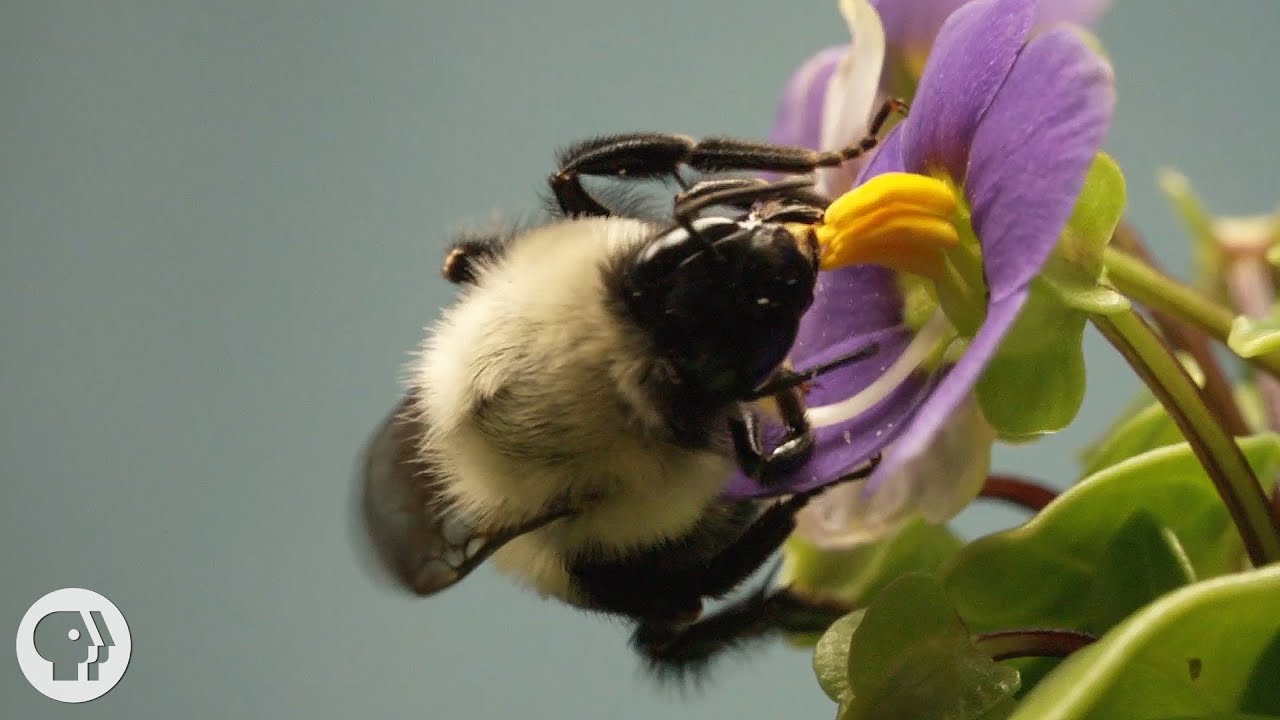
Most flowering plants are more than willing to spread their pollen around. But some flowers hold out for just the right partner. Bumblebees and other buzz pollinators know just how to handle these stubborn flowers. They vibrate the blooms, shaking them until they give up the nutritious pollen.
SUBSCRIBE to Deep Look! http://goo.gl/8NwXqt
DEEP LOOK is a ultra-HD (4K) short video series created by KQED San Francisco and presented by PBS Digital Studios. See the unseen at the very edge of our visible world. Get a new perspective on our place in the universe and meet extraordinary new friends. Explore big scientific mysteries by going incredibly small.
* NEW VIDEOS EVERY OTHER TUESDAY! *
In the summertime, the air is thick with the low humming of bees delivering pollen from one flower to the next. If you listen closely, a louder buzz may catch your ear.
This sound is the key to a secret stash of pollen that some flowers hide deep within their anthers, the male parts of the plant. Only pollinators that buzz in just the right way can vibrate tiny grains out of minuscule holes at the top of the anthers for a protein-rich snack.
The strategy, called buzz-pollination, is risky. But it’s also critical to human agriculture. Tomatoes, potatoes and eggplants need wild populations of buzz pollinators, such as bumblebees, to produce fruit. Honeybees can’t do it.
Plants need a way to get the pollen — basically sperm — to the female parts of another flower. Most plants lure animal pollinators to spread these male gametes by producing sugary nectar. The bee laps up the sweet reward, is dusted with pollen and passively delivers it to the next bloom.
In contrast, buzz-pollinated flowers encourage bees to eat the pollen directly and hope some grains will make it to another flower. The evolutionary strategy is baffling to scientists.
“The flower is almost like playing hard to get,” says Anne Leonard, a biologist at the University of Nevada, Reno who studies buzz pollination. “It’s intriguing because these buzz-pollinated plants ask for a huge energy investment from the bees, but don’t give much back.”
--- What is buzz pollination?
Most flowering plants use sugary nectar as bait to attract bees and other pollinators, which get coated in pollen along the way. And since bees are messy, they inadvertently scatter some of that pollen onto the female part of the next flower they visit.
But some flowers lock their pollen up in their anthers, the male parts of the flower, instead of giving it away freely. The only way for the pollen to escape is through small holes called pores. Some pollinators like bumblebees (but not honeybees) are able to vibrate the flower’s anthers which shakes up the pollen and causes it to spew out of the pores.
The bumblebee collects the pollen and uses it as a reliable and protected source of protein.
--- What important crops use buzz pollination to make food?
The most important crops that use buzz pollination are potatoes, tomatoes, pumpkins, eggplants, cranberries and blueberries
--- What animals are capable of buzz pollination?
Many types of bees engage in buzz pollination, also called sonication. The most common is probably the bumblebee. Honeybees generally don’t use buzz pollination.
---+ Read the entire article on KQED Science:
https://ww2.kqed.org/science/2....016/07/19/this-vibra
---+ For more information:
Anne Leonard Lab, University of Nevada, Reno | Department of Biology
http://www.anneleonard.com/buzz-pollination/
---+ More Great Deep Look episodes:
These Lizards Have Been Playing Rock-Paper-Scissors for 15 Million Years | Deep Look
https://www.youtube.com/watch?v=rafdHxBwIbQ
Winter is Coming For These Argentine Ant Invaders | Deep Look
https://www.youtube.com/watch?v=boyzWeHdtiI
---+ See some great videos and documentaries from the PBS Digital Studios!
It's Okay to Be Smart: Why Don't Other Animals Wear Glasses?
https://www.youtube.com/watch?v=LhubEq6W9GE
Gross Science: The World's Most Expensive Fungus
https://www.youtube.com/watch?v=iV4WHFU2Id8
---+ Follow KQED Science:
KQED Science: http://www.kqed.org/science
Tumblr: http://kqedscience.tumblr.com
Twitter: https://www.twitter.com/kqedscience
---+ About KQED
KQED, an NPR and PBS affiliate in San Francisco, CA, serves Northern California and beyond with a public-supported alternative to commercial TV, Radio and web media.
Funding for Deep Look is provided in part by PBS Digital Studios and the John S. and James L. Knight Foundation. Deep Look is a project of KQED Science, which is also supported by HopeLab, the David B. Gold Foundation, the S. D. Bechtel, Jr. Foundation, the Dirk and Charlene Kabcenell Foundation, the Vadasz Family Foundation, the Gordon and Betty Moore Foundation, the Smart Family Foundation and the members of KQED.
#deeplook
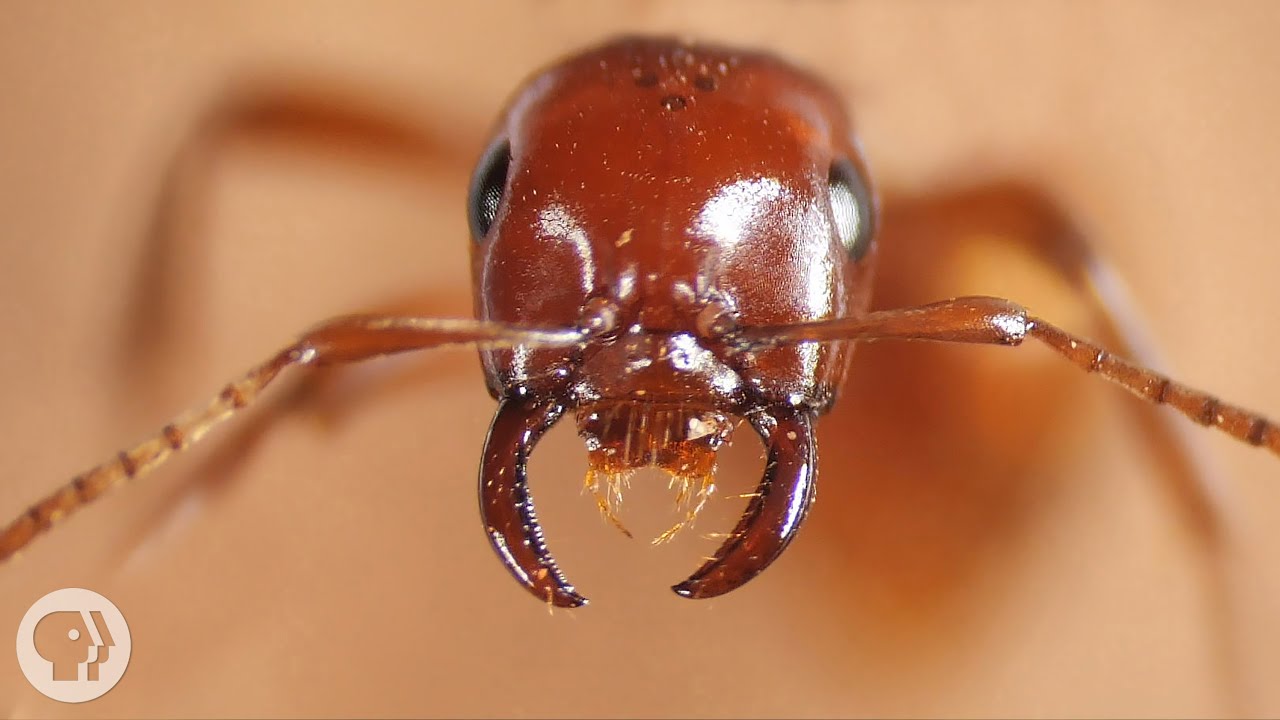
Kidnapper ants raid other ant species' colonies, abduct their young and take them back to their nest. When the enslaved babies grow up, the kidnappers trick them into serving their captors – hunting, cleaning the nest, even chewing up their food for them.
Please join our community on Patreon! https://www.patreon.com/deeplook
SUBSCRIBE to Deep Look! http://goo.gl/8NwXqt
DEEP LOOK is a ultra-HD (4K) short video series created by KQED San Francisco and presented by PBS Digital Studios. See the unseen at the very edge of our visible world. Explore big scientific mysteries by going incredibly small.
A miniature drama is playing out on the forest floor in California’s preeminent mountain range, the Sierra Nevada, at this time of year. As the sun sets, look closely and you might see a stream of red ants frantically climbing over leaves and rocks.
They aren’t looking for food. They’re looking for other ants. They’re kidnappers.
“It’s hard to know who you're rooting for in this situation,” says Kelsey Scheckel, a graduate student at UC Berkeley who studies kidnapper ants. “You're just excited to be a bystander.”
On this late summer afternoon, Scheckel stares intently over the landscape at the Sagehen Creek Field Station, part of the University of California’s Natural Reserve System, near Truckee, California.“The first thing we do is try to find a colony with two very different-looking species cohabitating,” Scheckel says.
“That type of coexistence is pretty rare. As soon as we find that, we can get excited.”
--- How do ants communicate?
Ants mostly use their sense of smell to learn about the world around themselves and to recognize nestmates from intruders. They don’t have noses. Instead, they use their antennae to sense chemicals on surfaces and in the air. Ants’ antennae are porous like a kitchen sponge allowing chemicals to enter and activate receptors inside. You will often see ants tap each other with their antennae. That behavior, called antennation, helps them recognize nestmates who will share the same chemical nest signature.
---Can ants bite or sting?
Many ants will use their mandibles, or jaws, to defend themselves but that typically just feels like a pinch. Some ants have a stinger at the end of their abdomen that can deliver a venomous sting. While the type of venom can vary across species, many ants’ sting contains formic acid which causes a burning sensation. Some have special glands containing acid that can spray at attackers causing burning and alarming odors.
---+ Read the entire article on KQED Science:
https://www.kqed.org/science/1....947369/kidnapper-ant
---+ For more information:
Neil Tsutsui Lab of Evolution, Ecology and Behavior of Social Insects at the University of California, Berkeley
https://nature.berkeley.edu/tsutsuilab/
---+ Shoutout!
?Congratulations ?to the following fans for correctly naming and describing the inter-species, mandible-to-mandible ant behavior we showed on our Deep Look Community Tab… "trophallaxis:"
Senpai
Ravinraven6913
CJ Thibeau
Maksimilian Tašler
Isha
https://www.youtube.com/channe....l/UC-3SbfTPJsL8fJAPK
---+ Thank you to our Top Patreon Supporters ($10+ per month)!
Leonhardt Wille
Justin Bull
Bill Cass
Sarah Khalida Mohamad
Daniel Weinstein
Chris B Emrick
Karen Reynolds
Tea Torvinen
David Deshpande
Daisuke Goto
Companion Cube
WhatzGames
Richard Shalumov
Elizabeth Ann Ditz
Gerardo Alfaro
Robert Amling
Shirley Washburn
Robert Warner
Supernovabetty
johanna reis
Kendall Rasmussen
Pamela Parker
Sayantan Dasgupta
Joshua Murallon Robertson
Cindy McGill
Kenia Villegas
Shelley Pearson Cranshaw
Aurora
Dean Skoglund
Silvan Wendland
Ivan Alexander
monoirre
Sonia Tanlimco
Two Box Fish
Jane Orbuch
Allen
Laurel Przybylski
Johnnyonnyful
Rick Wong
Levi Cai
Titania Juang
Nathan Wright
Carl
Michael Mieczkowski
Kyle Fisher
JanetFromAnotherPlanet
Kallie Moore
SueEllen McCann
Geidi Rodriguez
Louis O'Neill
Edwin Rivas
Jeanne Sommer
Katherine Schick
Aurora Mitchell
Cory
Ricardo Martinez
riceeater
Daisy Trevino
KW
PM Daeley
Joao Ascensao
Chris Murphy
Nicolette Ray
TierZoo
---+ Follow KQED Science and Deep Look:
Patreon: https://www.patreon.com/deeplook
Instagram: https://www.instagram.com/kqedscience/
Twitter: https://www.twitter.com/kqedscience
KQED Science on kqed.org: http://www.kqed.org/science
Facebook Watch: https://www.facebook.com/DeepLookPBS/
---+ About KQED
KQED, an NPR and PBS affiliate in San Francisco, CA, serves Northern California and beyond with a public-supported alternative to commercial TV, Radio and web media.
Funding for Deep Look is provided in part by PBS Digital Studios. Deep Look is a project of KQED Science, which is also supported by the National Science Foundation, the S. D. Bechtel, Jr. Foundation, the Dirk and Charlene Kabcenell Foundation, the Vadasz Family Foundation, the Fuhs Family Foundation, Campaign 21 and the members of KQED.

With a skull twice the size of a tyrannosaurus rex's, and a bite force unmatched by anything in the Jurassic seas, Predator X is the most powerful marine reptile ever discovered.
Subscribe: http://bit.ly/BBCEarthSub
WATCH MORE:
New on Earth: https://bit.ly/2M3La96
Oceanscapes: https://bit.ly/2Hmd2kZ
Wild Thailand: https://bit.ly/2kR7lmh
Planet Dinosaur
Narrated by John Hurt, Planet Dinosaur tells the stories of the biggest, deadliest and weirdest creatures ever to walk the Earth, using the latest fossil evidence and immersive computer graphics.
Welcome to BBC EARTH! The world is an amazing place full of stories, beauty and natural wonder. Here you'll find 50 years worth of astounding, entertaining, thought-provoking and educational natural history content. Dramatic, rare, and exclusive, nature doesn't get more exciting than this.
Want to share your views with the team? Join our BBC Studios Voice: https://www.bbcstudiosvoice.com/register
This is a page from BBC Studios who help fund new BBC programmes. Service information and feedback: http://bbcworldwide.com/vod-fe....edback--contact-deta

I used a nitrogen membrane and Stirling cryocooler to liquefy nitrogen out of the air. For this video I partnered with Starbucks to celebrate their Nitro Cold Brew. Order one here: https://starbucks.app.link/derekmuller
Making liquid nitrogen is hard - in fact up until 150 years ago scientists doubted whether it was even possible to liquefy nitrogen. In 1823, At the royal institution in London, Michael Faraday first produced liquid chlorine, kind of accidentally by putting it under high pressure. He similarly liquefied ammonia.
Borrowing a mixture from Thilorier in France, a combination of dry ice, snow and ether, he reached a temperature of -110C. By 1845 he used this mixture plus a hand pump to pressurize gases to liquefy all the known gases except six, which included oxygen and nitrogen. These became known as the “permanent” gases.
A French Physicist Aimé compressed oxygen and nitrogen in tanks and then lowered them into the ocean over 1.6km deep, where the pressure got up to 200 atmospheres. Still the gases didn’t liquefy.
Only at the end of 1877 were the first droplets of liquid oxygen and liquid nitrogen produced, by Cailletet in France. He first tried oxygen by compressing it up to 300 atmospheres, cooled to -30C, but that wasn't even enough to liquefy oxygen. But when he suddenly released the pressure, the expanding gas cooled, he estimated to -200C and he saw a mist and then droplets slide down the walls of his vessel.
It's amazing how far we've come in that now I can purchase a helium-based cryocooler. It compresses and expands the gas to absorb heat from the tip of the cold finger and eject it into the surroundings at ambient temperature.


How long does it take to film a decorator crab putting on its seaweed hat? Hint: It's days, not hours. The Deep Look team is back with a second behind the scenes video! Get to know host Lauren Sommer and producers Gabriela Quiros, Josh Cassidy and Elliott Kennerson as we put together our episode on decorator crabs and reflect on the joys and challenges of making nature films.
SUBSCRIBE to Deep Look! http://goo.gl/8NwXqt
DEEP LOOK is a ultra-HD (4K) short video series created by KQED San Francisco and presented by PBS Digital Studios. See the unseen at the very edge of our visible world. Get a new perspective on our place in the universe and meet extraordinary new friends. Explore big scientific mysteries by going incredibly small.
* NEW VIDEOS EVERY OTHER TUESDAY! *
---+ Episodes Featured in this video:
The Snail-Smashing, Fish-Spearing, Eye-Popping Mantis Shrimp
https://www.youtube.com/watch?v=Lm1ChtK9QDU
Everything You Never Wanted to Know About Snail Sex
https://www.youtube.com/watch?v=UOcLaI44TXA
These Termites Turn Your House into a Palace of Poop
https://www.youtube.com/watch?v=DYPQ1Tjp0ew
Decorator Crabs Make High Fashion at Low Tide
https://www.youtube.com/watch?v=OwQcv7TyX04
Roly Polies Came From the Sea to Conquer the Earth
https://www.youtube.com/watch?v=sj8pFX9SOXE
Why Does Your Cat's Tongue Feel Like Sandpaper?
https://www.youtube.com/watch?v=9h_QtLol75I
How Mosquitoes Use Six Needles to Suck Your Blood
https://www.youtube.com/watch?v=rD8SmacBUcU
The Bombardier Beetle And Its Crazy Chemical Cannon
https://www.youtube.com/watch?v=BWwgLS5tK80
This Pulsating Slime Mold Comes in Peace (ft. It's Okay to Be Smart)
https://www.youtube.com/watch?v=Nx3Uu1hfl6Q
Sea Urchins Pull Themselves Inside Out to be Reborn
https://www.youtube.com/watch?v=ak2xqH5h0YY
These 'Resurrection Plants' Spring Back to Life in Seconds
https://www.youtube.com/watch?v=eoFGKlZMo2g
Nature's Mood Rings: How Chameleons Really Change Color
https://www.youtube.com/watch?v=Kp9W-_W8rCM
Pygmy Seahorses: Masters of Camouflage
https://www.youtube.com/watch?v=Q3CtGoqz3ww
If Your Hands Could Smell, You’d Be an Octopus
https://www.youtube.com/watch?v=XXMxihOh8ps
How Do Pelicans Survive Their Death-Defying Dives?
https://www.youtube.com/watch?v=BfEboMmwAMw
---+ Follow KQED Science:
KQED Science: http://www.kqed.org/science
Tumblr: http://kqedscience.tumblr.com
Twitter: https://www.twitter.com/kqedscience
---+ About KQED
KQED, an NPR and PBS affiliate in San Francisco, CA, serves Northern California and beyond with a public-supported alternative to commercial TV, Radio and web media.
Funding for Deep Look is provided in part by PBS Digital Studios and the John S. and James L. Knight Foundation. Deep Look is a project of KQED Science, which is also supported by HopeLab, the S. D. Bechtel, Jr. Foundation, the Dirk and Charlene Kabcenell Foundation, the Vadasz Family Foundation, the Gordon and Betty Moore Foundation, the Smart Family Foundation and the members of KQED.
#deeplook

La Virgen de Guadalupe dice a médico abortista: ¿Porqué me haces daño?
TEKTON NECESITA TU APOYO PARA CONTINUAR CON SU LABOR APOSTÓLICA Y CARITATIVA, SI PUEDES HACERNOS UN DONATIVO TIENES DOS FORMAS:
HAZTE PATROCINADOR: https://www.patreon.com/CTtekton
DONATIVO A TRAVÉS DE LA WEB: https://www.tekton.info/hacer-caridad/
OTRAS REDES SOCIALES
Web: https://www.tekton.info/
San José de tekton: https://www.youtube.com/channe....l/UCEy0tevPx3RayM5PA
Instagram Tekton: https://www.instagram.com/prod....uctoratekton/?hl=es-
Instagram Marcos: https://www.instagram.com/marcosveraperez/?hl=es
Twitter: https://twitter.com/productoratekto
Twitter Marcos: https://twitter.com/marcosveraprez1?lang=es
Tekton es un canal de youtube católico nacido en Barcelona (España), puedes encontrar noticias relacionadas con la Iglesia Católica, y recursos de otro tipo como formación católica, oraciones, música católica, vídeos del Papa Francisco, curiosidades, vidas de Santos, el Evangelio del día, y otras muchas cosas más. No dudes en entrar y ver el contenido que sin duda te gustará
Instagram de Marcos Vera: https://www.instagram.com/marcosveraperez/
Twitter de Marcos Vera: https://twitter.com/MarcosVeraPrez1
Twitter de Jesus Sellas: https://twitter.com/JesusSellas
Hacer un donativo: https://www.tekton.info/hacer-caridad/
Tienda de merchandising de Tekton: https://teespring.com/stores/t....ekton-centro-televis
Web: http://www.tekton.info
Facebook: https://www.facebook.com/productoratekton/
Twitter: https://twitter.com/productoratekto?s=09
Instagram: https://www.instagram.com/productoratekton/
Google+: https://plus.google.com/u/1/+T....ektonTekton?hl=es-41
#VirgenDeGuadalupe
#Tekton
#TektonCentroTelevisivo
#TektonYouTube
#CanalCatolicoYouTube

Kangaroo rats use their exceptional hearing and powerful hind legs to jump clear of rattlesnakes — or even deliver a stunning kick in the face.
Please join our community on Patreon! https://www.patreon.com/deeplook
SUBSCRIBE to Deep Look! http://goo.gl/8NwXqt
DEEP LOOK is a ultra-HD (4K) short video series created by KQED San Francisco and presented by PBS Digital Studios. See the unseen at the very edge of our visible world. Explore big scientific mysteries by going incredibly small.
---
As they forage, kangaroo rats need to continually scan the surrounding sandy environment for any predators – foxes, owls, and snakes – that could be anywhere. Once a well-camouflaged sidewinder rattlesnake strikes, aiming its venomous fangs at the furry seed-harvester, the kangaroo rat springs up, and away from the snake’s deadly bite, kicking its powerful hind legs at the snake’s face, and using its long tail to twist itself in mid-air away from the snake to safety.
Kangaroo have the uncanny ability to jump high at just the right moment. Biologists believe that this most likely comes from its keen hearing, which is 90 times more sensitive than human ears, allowing the rats to react in as little as 50 milliseconds.
In addition to their finely-tuned ears, the desert kangaroo rats’ highly-evolved musculature generates lots of force very quickly, resulting in jumps almost ten times their body height.
Muscles in kangaroo rats have a thick tendon, surrounded by large muscles, which translates directly to more power and a faster reaction time. With its powerful hind limbs, the kangaroo rat is also able to deliver a “black belt” kick to the jaw of the rattlesnake, sending the rattlesnake soaring to the ground, before landing away from the snake.
---+ Read the entire article on KQED Science:
https://www.kqed.org/science/1....957226/kangaroo-rats
--- Can a kangaroo rat survive without water in the desert?
The body of the kangaroo rat has evolved to be especially adapted to their harsh dry desert environments, so they are able to get all of their water from seeds they eat.
--- How high can a kangaroo rat jump?
Some kangaroo rats are able to jump as high as 9 feet, or approximately 10 times their body height.
--- Are kangaroo rats endangered?
There are 20 existing species of kangaroo rats. Six of these species are considered threatened. The two species featured in our episode, the Merriam’s kangaroo rat (Dipodomys merriami) and desert kangaroo rat (Dipodomys deserti) are not endangered, and relatively common in the desert areas they are found.
---+ For more amazing slow motion videos of kangaroo rats and rattlesnakes, visit our friends at: https://www.ninjarat.org/
---+ Shoutout!
?Congratulations ?to these fans on our YouTube community tab who identified the special parts in a kangaroo rats' skull that make their hearing so exceptional... the tympanic or auditory bullae:
Lights, Camera, Ants
Rohit Kumar Reddy Reddy
Eric Fung
Hotaru
otakuman706
---+ Thank you to our Top Patreon Supporters ($10+ per month)!
Amber Miller
Aurora
Aurora Mitchell
Bethany
Bill Cass
Blanca Vides
Burt Humburg
Caitlin McDonough
Carlos Carrasco
Chris B Emrick
Chris Murphy
Cindy McGill
Companion Cube
Daisuke Goto
Daniel Weinstein
David Deshpande
Dean Skoglund
Edwin Rivas
Egg-Roll
Elizabeth Ann Ditz
Geidi Rodriguez
Gerardo Alfaro
Guillaume Morin
Jane Orbuch
Joao Ascensao
johanna reis
John King
Johnnyonnyful
Josh Kuroda
Joshua Murallon Robertson
Justin Bull
Kallie Moore
Karen Reynolds
Katherine Schick
Kathleen R Jaroma
Kendall Rasmussen
Kristy Freeman
KW
Kyle Fisher
Laura Sanborn
Laurel Przybylski
Leonhardt Wille
Levi Cai
Louis O'Neill
luna
Mary Truland
monoirre
Natalie Banach
Nathan Wright
Nicolette Ray
Nikita
Noreen Herrington
Osbaldo Olvera
Pamela Parker
Richard Shalumov
Rick Wong
Robert Amling
Robert Warner
Roberta K Wright
Sarah Khalida Mohamad
Sayantan Dasgupta
Shelley Pearson Cranshaw
Silvan Wendland
Sonia Tanlimco
SueEllen McCann
Supernovabetty
Syniurge
Tea Torvinen
TierZoo
Titania Juang
Trae Wright
Two Box Fish
WhatzGames
---+ Follow KQED Science and Deep Look:
Patreon: https://www.patreon.com/deeplook
Instagram: https://www.instagram.com/kqedscience/
Twitter: https://www.twitter.com/kqedscience
KQED Science on kqed.org: http://www.kqed.org/science
Facebook Watch: https://www.facebook.com/DeepLookPBS/
---+ About KQED
KQED, an NPR and PBS affiliate in San Francisco, CA, serves Northern California and beyond with a public-supported alternative to commercial TV, Radio and web media.
Funding for Deep Look is provided in part by PBS Digital Studios. Deep Look is a project of KQED Science, the largest science and environment reporting unit in California. KQED Science is supported by The National Science Foundation, the Dirk and Charlene Kabcenell Foundation, the Vadasz Family Foundation, the Gordon and Betty Moore Foundation, Campaign 21 and the members of KQED.
#kangaroorat #rattlesnake #deeplook
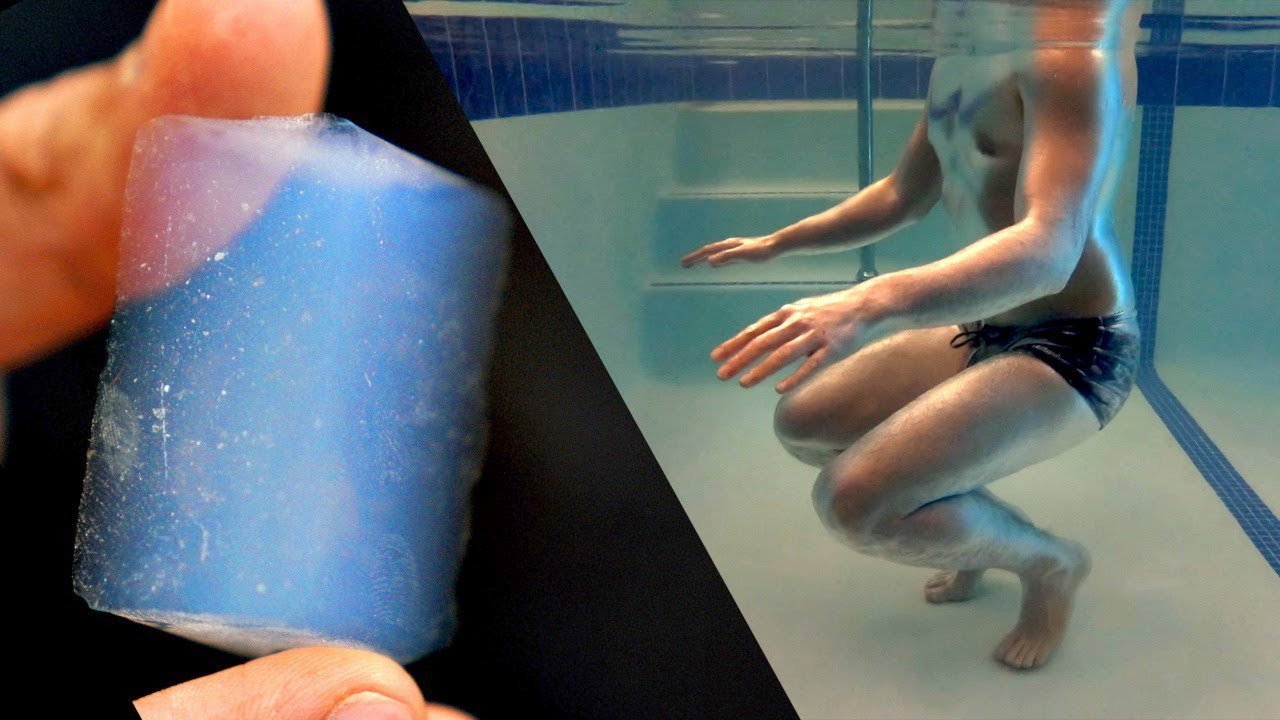
Aerogel has extraordinary properties but it can be tough to work with. This video looks at modifying aerogels to take advantage of their unique characteristics.
Subscribe to Veritasium: https://ve42.co/sub
Huge thanks to Dr. Stephen Steiner and the crew at Aerogel Technologies. To find out more or buy your own aerogel sample, check out: http://www.aerogeltechnologies.com/
Thanks to Dr. Steven Jones and Dr. Mihail Petkov at NASA's Jet Propulsion Laboratory
And thanks to FLIR for loaning us the awesome high definition thermal camera. The footage is amazing! https://www.flir.com
Aerogel’s extraordinary properties are due in large part to its structure. Aerogel is a solid but on the nanoscale it has a mesh or sponge-like structure. The struts of this structure are nanoscale, as are the pores at around 20nm across. This makes silica aerogel incredibly light (it was once the lightest solid but has now been superseded by graphene aerogel), transparent and adsorbent.
An ice-cube sized piece of aerogel has an internal surface area roughly equal to half a football field. Aerogel is used in high end museum cases to regulate humidity. Plus it helps maintain the vacuum on the Mars Insight seismometers - it adsorbs moisture and other outgassed volatiles that come from the spacecraft itself. Proposed uses include as a physical insecticide by ‘drying out insects’ reducing the need for chemical and toxic pesticides.
Special thanks to all my Patreon supporters especially those who contributed feedback to an earlier draft of this video:
a human, Albert Jachowicz-Brzeziński, Alfred Wallace, Arjun Chakroborty, Brent Stewart, Chris Vargas, Chuck Lauer Vose, Clip Tree, Coale Shifflett, Colin Bellmore, DALE HORNE, Eric Velazquez, Fedor Indutny, Fran Rodriguez, James Wong, Jasper Xin, Joar Wandborg, Johnny, Jorge Angel Sandoval, June Kang, Kevin Beavers, Kishore Tipirneni, Levan Ferr, Listen Money Matters, Manuel Zürcher, Mark Bevilacqua, Mathias Göransson, Michael Bradley Wirz, Michael Krugman, Mohammed Al Sahaf, Nicholas Hastings, OddJosh, Patrick Čalija, Peter Tajti, Philipp Volgger, Roberto Rezende, Robin DeBank, Ron Neal, Stan Presolski, Swante Scholz, Tiago Bruno, Tige Thorman, Warrior8252
Filmed by Paul Gramaglia
Thumbnail by Ignat Berbeci
Animations by Catherine Chooljian
Music from https://epidemicsound.com “Tonic Zone” “Betelgeuse” “Insidious Mice” “Seaweed” “It’s not that serious” “Platin00m - Sum It”
This is an educational, scientific video.

Michael Jackson's official video for "Man In The Mirror"
In keeping with the lyrical message of "Man in the Mirror," which was strongly identified with Michael Jackson and reflective of his own philosophies, the short film features powerful images of events and leaders whose work embodies the song's message to "make that change." Rolling Stone praised the short film in 2014 as "a powerful statement to deliver to personality-driven MTV."
Buy/Listen to Bad 25:
Amazon - http://smarturl.it/mj_bad25_amzn?IQid=ytd.mj.mitm
iTunes - http://smarturl.it/MJ_Bad25A_i....Tunes?IQid=ytd.mj.mi
Official Store - http://smarturl.it/MJBAD25_OS?IQid=ytd.mj.mitm
Spotify - http://smarturl.it/MJ_Bad_Sptfy?IQid=ytd.mj.mitm
Written by Siedah Garrett and Glen Ballard
Produced by Quincy Jones for Quincy Jones Productions
Co-Produced by Michael Jackson for MJJ Productions, Inc.
From the album Bad, released August 31, 1987
Released as a single January 16, 1988
THE SHORT FILM
Director: Don Wilson
Michael Jackson's short film for "Man in the Mirror" was the third of nine short films produced for recordings from Bad, one of the best selling albums of all time. The "Man in the Mirror" single hit No. 1 in four countries in 1988, topping the charts in the United States, Italy, Belgium and Poland and reaching Top 5 in Canada, Ireland and New Zealand. In the U.S., "Man in the Mirror" was the fourth of five consecutive No. 1 singles from one album on the Billboard Hot 100-making Michael the first artist to achieve this milestone.
"Man in the Mirror," written by Siedah Garrett (Michael's duet partner on "I Just Can't Stop Loving You") and Glen Ballard, is one of only two songs on Bad not written by Michael Jackson and, even though it wasn't a song he wrote himself, it was a message that was strongly identified with him and reflective of his own philosophies, as demonstrated through his actions and expressed in some of his own lyrics. "'Man in the Mirror' has a great message," he wrote in his 1988 memoir Moonwalk. "I love that song. ..Start with yourself. Don't be looking at all the other things. Start with you. That's the truth." A review of Bad in Rolling Stone in 1987 called the song "among the half dozen best things Jackson has done."
In contrast to Michael's other short films of the Bad era, "Man of the Mirror" tells a story not through performance, but through powerful images of oppression, homelessness, hunger, police brutality and other ills of the world, as well as events and leaders of the 20th century whose work is reflective of the song's message to "make that change."
Follow the Official Michael Jackson Accounts:
Facebook - http://smarturl.it/mj_facebook?IQid=ytd.mj.mitm
Twitter - http://smarturl.it/mj_twitter?IQid=ytd.mj.mitm
Spotify - http://smarturl.it/mj_spotify?IQid=ytd.mj.mitm
Newsletter - http://smarturl.it/mj_newsletter?IQid=ytd.mj.mitm
YouTube - http://smarturl.it/mj_youtube?IQid=ytd.mj.mitm
Website - http://smarturl.it/mj_website?IQid=ytd.mj.mitm
#MichaelJackson #ManInTheMirror #OfficialMusicVideo
